

 Product
 Brand
Brand Articles
 Tools
Tools
CD4047B Multivibrator IC: Datasheet, Pinout and Circuit

Tube 14 ROHS3 Compliant Active Multivibrators Multivibrator Surface Mount 14-SOIC (0.154, 3.90mm Width) 12V V 20μA μA
Unit Price: $1.574314
Ext Price: $1.57


Tube 14 ROHS3 Compliant Active Multivibrators Multivibrator Surface Mount 14-SOIC (0.154, 3.90mm Width) 12V V 20μA μA
The CD4047B is a-low-power CMOS logic based multivibrator circuit IC. This article mainly covers its datasheet, pinout, circuit and more information about CD4047B.

CD4047 Inverter | 12V to 230V 1000Watt
CD4047B Description
The CD4047B is a- low-power CMOS logic based multivibrator circuit IC. It can operate either in the monostable or astable mode. Also, this IC is easy to configure for both modes and requires few external components to operate. It has a voltage range of 3V-15V but works best at 5V.
CD4047B Pinout
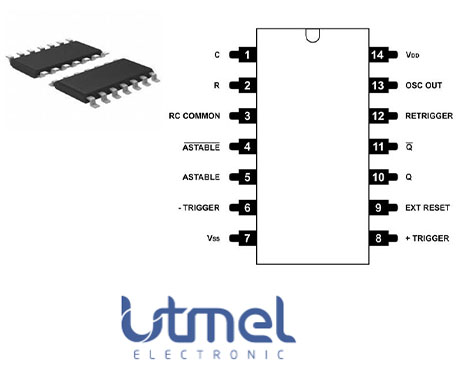
CD4047B CAD Model
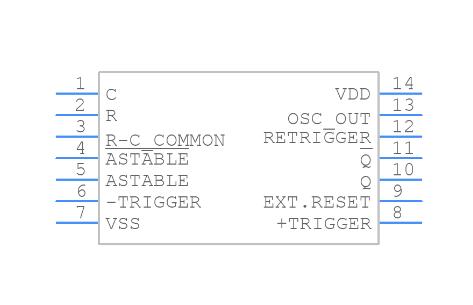
Symbol
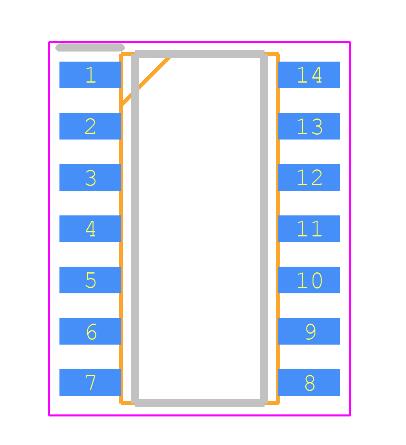
Footprint
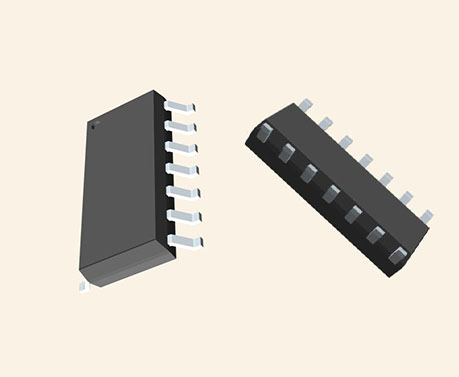
3D Model
CD4047B Features
Low power consumption: special CMOS oscillator for low power configuration.
Operating modes: unstable (one-shot) Mode and Astable (free-running) Mode.
Only one external R and C required.
Supply voltage range: 3.0V to 15V.
Maximum Power Dissipation(Pd): 700mW in DIP Package and 500mW in SOIC package.
Operating Temperature Range: -40°C to +85°C.
CD4047B Functional Block Diagram
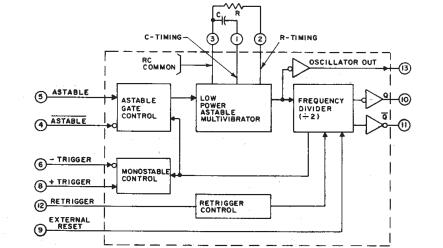
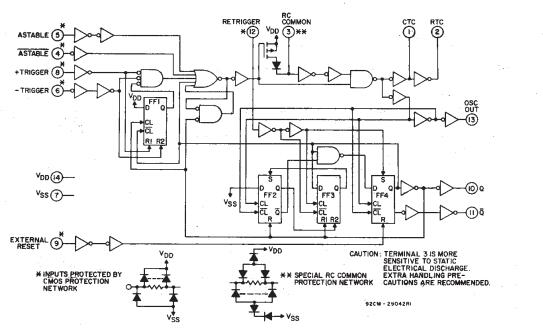
Specifications
- TypeParameter
- Lifecycle Status
Lifecycle Status refers to the current stage of an electronic component in its product life cycle, indicating whether it is active, obsolete, or transitioning between these states. An active status means the component is in production and available for purchase. An obsolete status indicates that the component is no longer being manufactured or supported, and manufacturers typically provide a limited time frame for support. Understanding the lifecycle status is crucial for design engineers to ensure continuity and reliability in their projects.
ACTIVE (Last Updated: 1 week ago) - Factory Lead Time6 Weeks
- Contact Plating
Contact plating (finish) provides corrosion protection for base metals and optimizes the mechanical and electrical properties of the contact interfaces.
Gold - Mount
In electronic components, the term "Mount" typically refers to the method or process of physically attaching or fixing a component onto a circuit board or other electronic device. This can involve soldering, adhesive bonding, or other techniques to secure the component in place. The mounting process is crucial for ensuring proper electrical connections and mechanical stability within the electronic system. Different components may have specific mounting requirements based on their size, shape, and function, and manufacturers provide guidelines for proper mounting procedures to ensure optimal performance and reliability of the electronic device.
Surface Mount - Mounting Type
The "Mounting Type" in electronic components refers to the method used to attach or connect a component to a circuit board or other substrate, such as through-hole, surface-mount, or panel mount.
Surface Mount - Package / Case
refers to the protective housing that encases an electronic component, providing mechanical support, electrical connections, and thermal management.
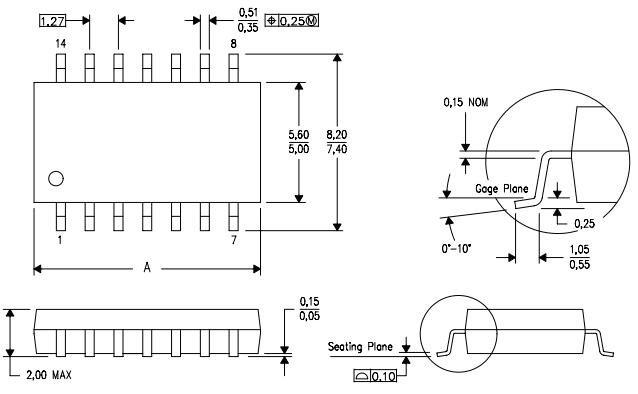
14-SOIC (0.154, 3.90mm Width) - Number of Pins14
- Weight129.387224mg
- Number of Elements1
- Operating Temperature
The operating temperature is the range of ambient temperature within which a power supply, or any other electrical equipment, operate in. This ranges from a minimum operating temperature, to a peak or maximum operating temperature, outside which, the power supply may fail.
-55°C~125°C - Packaging
Semiconductor package is a carrier / shell used to contain and cover one or more semiconductor components or integrated circuits. The material of the shell can be metal, plastic, glass or ceramic.
Tube - Series
In electronic components, the "Series" refers to a group of products that share similar characteristics, designs, or functionalities, often produced by the same manufacturer. These components within a series typically have common specifications but may vary in terms of voltage, power, or packaging to meet different application needs. The series name helps identify and differentiate between various product lines within a manufacturer's catalog.
4000B - JESD-609 Code
The "JESD-609 Code" in electronic components refers to a standardized marking code that indicates the lead-free solder composition and finish of electronic components for compliance with environmental regulations.
e4 - Pbfree Code
The "Pbfree Code" parameter in electronic components refers to the code or marking used to indicate that the component is lead-free. Lead (Pb) is a toxic substance that has been widely used in electronic components for many years, but due to environmental concerns, there has been a shift towards lead-free alternatives. The Pbfree Code helps manufacturers and users easily identify components that do not contain lead, ensuring compliance with regulations and promoting environmentally friendly practices. It is important to pay attention to the Pbfree Code when selecting electronic components to ensure they meet the necessary requirements for lead-free applications.
yes - Part Status
Parts can have many statuses as they progress through the configuration, analysis, review, and approval stages.
Active - Moisture Sensitivity Level (MSL)
Moisture Sensitivity Level (MSL) is a standardized rating that indicates the susceptibility of electronic components, particularly semiconductors, to moisture-induced damage during storage and the soldering process, defining the allowable exposure time to ambient conditions before they require special handling or baking to prevent failures
1 (Unlimited) - Number of Terminations14
- Additional Feature
Any Feature, including a modified Existing Feature, that is not an Existing Feature.
RETRIGGERABLE - Voltage - Supply
Voltage - Supply refers to the range of voltage levels that an electronic component or circuit is designed to operate with. It indicates the minimum and maximum supply voltage that can be applied for the device to function properly. Providing supply voltages outside this range can lead to malfunction, damage, or reduced performance. This parameter is critical for ensuring compatibility between different components in a circuit.
3V~18V - Terminal Position
In electronic components, the term "Terminal Position" refers to the physical location of the connection points on the component where external electrical connections can be made. These connection points, known as terminals, are typically used to attach wires, leads, or other components to the main body of the electronic component. The terminal position is important for ensuring proper connectivity and functionality of the component within a circuit. It is often specified in technical datasheets or component specifications to help designers and engineers understand how to properly integrate the component into their circuit designs.
DUAL - Terminal Form
Occurring at or forming the end of a series, succession, or the like; closing; concluding.
GULL WING - Peak Reflow Temperature (Cel)
Peak Reflow Temperature (Cel) is a parameter that specifies the maximum temperature at which an electronic component can be exposed during the reflow soldering process. Reflow soldering is a common method used to attach electronic components to a circuit board. The Peak Reflow Temperature is crucial because it ensures that the component is not damaged or degraded during the soldering process. Exceeding the specified Peak Reflow Temperature can lead to issues such as component failure, reduced performance, or even permanent damage to the component. It is important for manufacturers and assemblers to adhere to the recommended Peak Reflow Temperature to ensure the reliability and functionality of the electronic components.
260 - Number of Functions1
- Supply Voltage
Supply voltage refers to the electrical potential difference provided to an electronic component or circuit. It is crucial for the proper operation of devices, as it powers their functions and determines performance characteristics. The supply voltage must be within specified limits to ensure reliability and prevent damage to components. Different electronic devices have specific supply voltage requirements, which can vary widely depending on their design and intended application.
5V - Base Part Number
The "Base Part Number" (BPN) in electronic components serves a similar purpose to the "Base Product Number." It refers to the primary identifier for a component that captures the essential characteristics shared by a group of similar components. The BPN provides a fundamental way to reference a family or series of components without specifying all the variations and specific details.
CD4047 - Pin Count
a count of all of the component leads (or pins)
14 - Operating Supply Voltage
The voltage level by which an electrical system is designated and to which certain operating characteristics of the system are related.
12V - Supply Voltage-Min (Vsup)
The parameter "Supply Voltage-Min (Vsup)" in electronic components refers to the minimum voltage level required for the component to operate within its specified performance range. This parameter indicates the lowest voltage that can be safely applied to the component without risking damage or malfunction. It is crucial to ensure that the supply voltage provided to the component meets or exceeds this minimum value to ensure proper functionality and reliability. Failure to adhere to the specified minimum supply voltage may result in erratic behavior, reduced performance, or even permanent damage to the component.
3V - Load Capacitance
the amount of capacitance measured or computed across the crystal terminals on the PCB. Frequency Tolerance. Frequency tolerance refers to the allowable deviation from nominal, in parts per million (PPM), at a specific temperature, usually +25°C.
50pF - Output Current
The rated output current is the maximum load current that a power supply can provide at a specified ambient temperature. A power supply can never provide more current that it's rated output current unless there is a fault, such as short circuit at the load.
6.8mA - Number of Bits1
- Propagation Delay
the flight time of packets over the transmission link and is limited by the speed of light.
80ns - Quiescent Current
The quiescent current is defined as the current level in the amplifier when it is producing an output of zero.
20μA - Turn On Delay Time
Turn-on delay, td(on), is the time taken to charge the input capacitance of the device before drain current conduction can start.
1 μs - Logic Function
In electronic components, the term "Logic Function" refers to the specific operation or behavior of a component based on its input signals. It describes how the component processes the input signals to produce the desired output. Logic functions are fundamental to digital circuits and are used to perform logical operations such as AND, OR, NOT, and XOR.Each electronic component, such as logic gates or flip-flops, is designed to perform a specific logic function based on its internal circuitry. By understanding the logic function of a component, engineers can design and analyze complex digital systems to ensure proper functionality and performance. Different logic functions can be combined to create more complex operations, allowing for the creation of sophisticated digital devices and systems.
Multivibrator - Logic Type
Logic Type in electronic components refers to the classification of circuits based on the logical operations they perform. It includes types such as AND, OR, NOT, NAND, NOR, XOR, and XNOR, each defining the relationship between binary inputs and outputs. The logic type determines how the inputs affect the output state based on specific rules of Boolean algebra. This classification is crucial for designing digital circuits and systems, enabling engineers to select appropriate components for desired functionalities.
Astable, Monostable - Output Polarity
Output polarity in electronic components refers to the orientation of the output signal in relation to the ground or reference voltage. It indicates whether the output voltage is positive or negative with respect to the ground. Positive output polarity means the signal is higher than the ground potential, while negative output polarity signifies that the signal is lower than the ground. This characteristic is crucial for determining compatibility with other components in a circuit and ensuring proper signal processing.
COMPLEMENTARY - Max I(ol)
Max I(ol) refers to the maximum output current that a specific electronic component, such as a transistor or integrated circuit, can sink or source. This parameter is crucial in determining the capability of the component to drive external loads without being damaged. It is typically specified in the component's datasheet and is important for ensuring proper operation and reliability of the circuit in which the component is used. Designers must ensure that the output current requirements of the circuit do not exceed the specified "Max I(ol)" value to prevent overloading and potential failure of the component.
0.004 A - Power Supply Current-Max (ICC)
The parameter "Power Supply Current-Max (ICC)" in electronic components refers to the maximum amount of current that the component will draw from the power supply under specified operating conditions. It is an important specification as it helps determine the power consumption of the component and ensures that the power supply can provide enough current to meet the component's requirements without being overloaded. Exceeding the maximum power supply current can lead to overheating, component damage, or system failure. Designers use this parameter to select an appropriate power supply and ensure the reliable operation of the electronic system.
0.06mA - Schmitt Trigger Input
The Schmitt Trigger is a logic input type that provides hysteresis or two different threshold voltage levels for rising and falling edge.
No - Number of Data/Clock Inputs2
- Height1.75mm
- Length8.65mm
- Width3.91mm
- Thickness
Thickness in electronic components refers to the measurement of how thick a particular material or layer is within the component structure. It can pertain to various aspects, such as the thickness of a substrate, a dielectric layer, or conductive traces. This parameter is crucial as it impacts the electrical, mechanical, and thermal properties of the component, influencing its performance and reliability in electronic circuits.
1.58mm - RoHS Status
RoHS means “Restriction of Certain Hazardous Substances” in the “Hazardous Substances Directive” in electrical and electronic equipment.
ROHS3 Compliant - Lead Free
Lead Free is a term used to describe electronic components that do not contain lead as part of their composition. Lead is a toxic material that can have harmful effects on human health and the environment, so the electronics industry has been moving towards lead-free components to reduce these risks. Lead-free components are typically made using alternative materials such as silver, copper, and tin. Manufacturers must comply with regulations such as the Restriction of Hazardous Substances (RoHS) directive to ensure that their products are lead-free and environmentally friendly.
Lead Free
CD4047B Alternatives
CD4047BCMX, CD4047BCM, CD4047BCN.
Where to use CD4047B?
You can use CD4047B in designing low power square wave inverters. It can operate in a monostable mode. Monostable can be used in signal conditioning or time delay circuits. This IC is an ideal choice for frequency Division and time Delay applications due to its complemented buffered outputs. One drawback of this IC has a 50% duty cycle of astable output, as well as you can’t change it.
How to use CD4047B?
Multivibrators are devices that change the state of electrical signals on either a regular basis or according to the requirement. Also,CD4047B is a multivibrator IC. It can operate in two modes. A capacitor is connected externally between pins 1 and 3 to determine the pulse width of the output signal in the monostable mode and the output frequency is determined in astable mode by connecting a resistor between pins 2 and 3. A reset input is provided to reset the output of Q to 0 and the other output will be 1.
CD4047B Circuit
The diagram shown below indicates the behavior of CD4047B in monostable mode:

The diagram shown below indicates the behavior of CD4047B in astable mode:
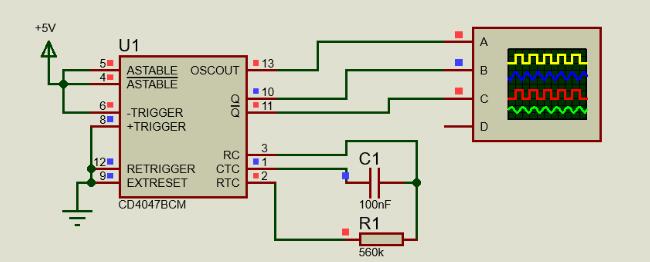
This circuit shows a complete circuit diagram with an output signal:
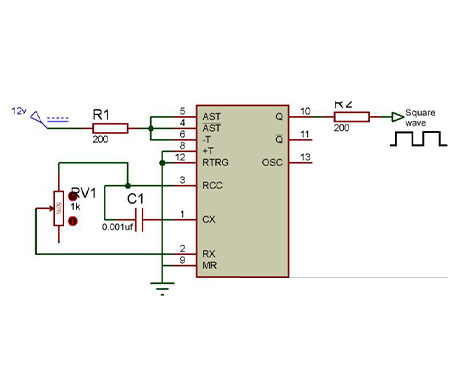
CD4047B Application
Envelope Detection
Frequency Multiplication
Frequency Division
Time Delay Circuits
Frequency Discriminators
Timing Circuits
CD4047B Package
CD4047B Manufacturer
Texas Instruments (TI) is first and foremost a reflection of its people. From the TIer who unveiled the first working integrated circuit in 1958 to the more than 30,000 TIers around the world today who design, manufacture and sell analog and embedded processing chips, TIers are problem-solvers collaborating to change the world through technology.
Datasheet PDF
- Datasheets :
Popularity by Region
Can the cd4070 replace the cd4047?
NO, the CD4070 is a four exclusive OR gate, but the CD4047 is a monostable, non-stable multivibrator.
What is the difference between the cd4047 and the cd4060?
The CD4047 is astable/monostable multivibrator NSC/MOT/TI.
The CD4060 is 14-level binary serial counter/divider NSC/TI/MOT.
What function does CD4047 have?
CD4047 is a CMOS astable/monostable multivibrator, which can be connected as a monostable single channel or as a self-excited multivibrator.
 PL602-21 HCSL Compatible Clock Generator: Pinout, Equivalent and Datasheet
22 February 2022587
 LM35 Sensor: Pinout, Alternatives and Datasheet
26 August 202113854
 L7805ACV Voltage Regulator: Pinout, Applications and Datasheet
21 November 20231650
 TDA7266 Amplifier: Datasheet, Circuit, Equivalents
27 September 202139290
 STUSB4500 USB PD Controller: Pinout, Features and Datasheet
06 January 202212892
 TPS2559DRCR:Power-Distribution, Pinout, Low-Resistance
15 February 2022884
 Yageo RC0402FR-0710KL SMD Resistor: Complete Guide to 0402 Thick Film Resistors
21 August 20254780
.png) A Comprehensive Overview of the Analog Devices Inc. 5962-88513012A Operational Amplifier
A Comprehensive Overview of the Analog Devices Inc. 5962-88513012A Operational Amplifier06 March 2024205
 NOR Flash: Working, Structure and Applications
18 November 202115173
 How to Validate a Pin-to-Pin LDO or Voltage Regulator Substitute
10 June 2026353
 Detailed Explanation About Twenty Kinds of Capacitor
08 November 20219333
 Switch-mode Power Supply Basics
14 December 20208192
 Basic Introduction to System on a Chip
02 December 20204908
 Diodes Tutorial: How to Test Diodes?
22 October 202511645
 Structure and Imaging Principle of Smartphone Camera
26 November 202123885
 What is Network Topology?
23 December 20214211
Texas Instruments
In Stock: 19
Minimum: 1 Multiples: 1
Qty
Unit Price
Ext Price
1
$1.574314
$1.57
10
$1.485202
$14.85
100
$1.401134
$140.11
500
$1.321824
$660.91
1000
$1.247004
$1,247.00
Not the price you want? Send RFQ Now and we'll contact you ASAP.
Inquire for More Quantity
![CD74HCT123M96]() CD74HCT123M96
CD74HCT123M96Texas Instruments
![CD74HCT221M96]() CD74HCT221M96
CD74HCT221M96Texas Instruments
![CD4047BPW]() CD4047BPW
CD4047BPWTexas Instruments
![CD74HC423NSR]() CD74HC423NSR
CD74HC423NSRTexas Instruments
![SN74AHC123ADR]() SN74AHC123ADR
SN74AHC123ADRTexas Instruments
![CD4047BM]() CD4047BM
CD4047BMTexas Instruments
![SN74LS123D]() SN74LS123D
SN74LS123DTexas Instruments
![SN74LS122N]() SN74LS122N
SN74LS122NTexas Instruments
![SN74LVC1G123DCUR]() SN74LVC1G123DCUR
SN74LVC1G123DCURTexas Instruments
![SN74LV123APWR]() SN74LV123APWR
SN74LV123APWRTexas Instruments


