

 Product
 Brand
Brand Articles
 Tools
Tools
CMWX1ZZABZ-078 LoRa Module: SX1276 FSK, RF Module, Datasheet

868MHz 915MHz General ISM < 1GHz -40°C~85°C 3.3V I2C, SPI, UART, USB Tape & Reel (TR) 14dBm LoRa™ -133dBm Module


868MHz 915MHz General ISM < 1GHz -40°C~85°C 3.3V I2C, SPI, UART, USB Tape & Reel (TR) 14dBm LoRa™ -133dBm Module
CMWX1ZZABZ-078 is an RF Transceiver Modules LORA MODULE. This article will cover more details about CMWX1ZZABZ-078, including its datasheet, Feature, CAD Model and so on... Welcome your RFQ!

How to configure Murata CMWX1ZZABZ with cubeMX
CMWX1ZZABZ-078 Description
Murata's CMWX1ZZABZ-078 Low Power Wide Area Network (LPWAN) wireless module is a stand-alone, compact, and low-power solution that supports both LoRaWANTM and Sigfox wireless protocols on a single hardware platform, making it one of the first to do so. The Murata LPWAN module is one of the world's smallest options for integrating LoRa and Sigfox connectivity to applications, measuring 12.5 x 11.6 x 1.76 mm in a metal shielded LGA container. The module is designed to be a fully self-contained solution, integrating a Semtech SX1276 RF transceiver and an ST Microelectronics STM32L Cortex M0+ microcontroller with 192 Kbytes of flash memory. This module supports all frequency bands required for LoRa and Sigfox applications globally, eliminating the need for separate solutions for different countries. Customers can choose which network technology best suits their application based on location, service requirements, and cost using the dual-mode approach.
CMWX1ZZABZ-078 CAD Model
Symbol
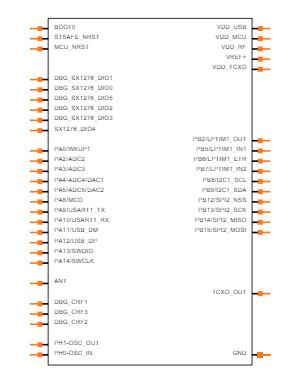
CMWX1ZZABZ-078 Symbol
Footprint
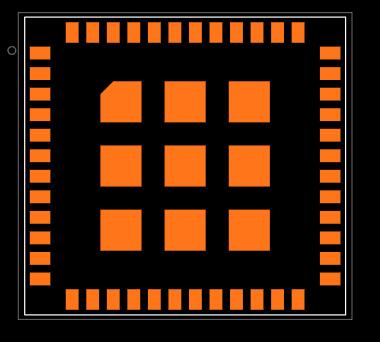
CMWX1ZZABZ-078 Footprint
CAD Model
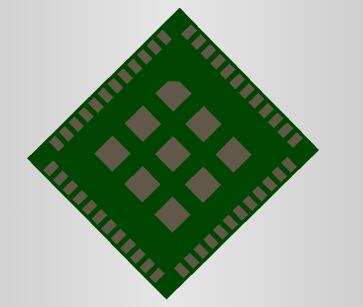
CMWX1ZZABZ-078 3D Model
CMWX1ZZABZ-078 Feature & Characteristic
Radio Chip - Semtech SX1276
Microcontroller – STMicro STM32L (Cortex M0+)
Flash – 192 Kbytes
Dimension – 12.5 x 11.6 x 1.7 max mm
Antenna configurations – external
Host interfaces – UART /SPI/I2C
Other interfaces – GPIO /ADC
LGA package (57 pads)
RF Tx Power - +14dBm (+20dBm with PA boost)
Vdd – 2.2V to 3.6V
Operating Temperature Range -40°C to +85°C
RoHS compliant
Metal Shield Can
CMWX1ZZABZ-078 Application
Smart metering (gas and water flow meters)
Internet of Things sensor nodes
Wearables
Machine-to-machine (M2M) communications
CMWX1ZZABZ-078 Alternatives
The alternatives for CMWX1ZZABZ-078:
CMWX1ZZABZ078
CMWX1ZZABZ-078 Block Diagram

How to Use CMWX1ZZABZ-078
Smart metering (gas and water flow meters), Internet of Things sensor nodes, wearables, and Machine to Machine (M2M) communications are all used for the Murata LPWAN module. The CMWX1ZZABZ-078 module has an operating temperature range of -40 to +85 °C thanks to an integrated TCXO crystal oscillator and is currently under development for a number of LoRaWANTM and Sigfox applications, including deploying sensor nodes in remote and unpredictable situations.
Lora and Sigfox are low-power wide-area network protocols (LPWANs) for applications that require long-range communications with low data rates — in non-urban situations, a range of up to 15 kilometres is achievable. The protocols' normal output power is + 14dBm and + 13dBm, respectively, with the LoRa range being extended by a power amplifier boost function to increase RF output to + 20dBm for long-range applications or those where the end-device is located in a weak signal location indoors.
Lora and Sigfox are low-power wide-area network (LPWAN) protocols for applications that require long-range communications with low data rates — in non-urban situations, a range of up to 15 kilometres is achievable. The protocols' normal output power is + 14dBm and + 13dBm, respectively, while the LoRa range can be extended further by a power amplifier boost function to increase RF output to + 20dBm for long-range applications or those where the end-device is located in a weak signal location indoors.
Specifications
- TypeParameter
- Factory Lead Time21 Weeks
- Mounting Type
The "Mounting Type" in electronic components refers to the method used to attach or connect a component to a circuit board or other substrate, such as through-hole, surface-mount, or panel mount.
Surface Mount - Package / Case
refers to the protective housing that encases an electronic component, providing mechanical support, electrical connections, and thermal management.
Module - Usage LevelIndustrial grade
- Operating Temperature
The operating temperature is the range of ambient temperature within which a power supply, or any other electrical equipment, operate in. This ranges from a minimum operating temperature, to a peak or maximum operating temperature, outside which, the power supply may fail.
-40°C~85°C - Packaging
Semiconductor package is a carrier / shell used to contain and cover one or more semiconductor components or integrated circuits. The material of the shell can be metal, plastic, glass or ceramic.
Tape & Reel (TR) - Part Status
Parts can have many statuses as they progress through the configuration, analysis, review, and approval stages.
Active - Moisture Sensitivity Level (MSL)
Moisture Sensitivity Level (MSL) is a standardized rating that indicates the susceptibility of electronic components, particularly semiconductors, to moisture-induced damage during storage and the soldering process, defining the allowable exposure time to ambient conditions before they require special handling or baking to prevent failures
3 (168 Hours) - Max Operating Temperature
The Maximum Operating Temperature is the maximum body temperature at which the thermistor is designed to operate for extended periods of time with acceptable stability of its electrical characteristics.
85°C - Min Operating Temperature
The "Min Operating Temperature" parameter in electronic components refers to the lowest temperature at which the component is designed to operate effectively and reliably. This parameter is crucial for ensuring the proper functioning and longevity of the component, as operating below this temperature may lead to performance issues or even damage. Manufacturers specify the minimum operating temperature to provide guidance to users on the environmental conditions in which the component can safely operate. It is important to adhere to this parameter to prevent malfunctions and ensure the overall reliability of the electronic system.
-40°C - Voltage - Supply
Voltage - Supply refers to the range of voltage levels that an electronic component or circuit is designed to operate with. It indicates the minimum and maximum supply voltage that can be applied for the device to function properly. Providing supply voltages outside this range can lead to malfunction, damage, or reduced performance. This parameter is critical for ensuring compatibility between different components in a circuit.
3.3V - Frequency
In electronic components, the parameter "Frequency" refers to the rate at which a signal oscillates or cycles within a given period of time. It is typically measured in Hertz (Hz) and represents how many times a signal completes a full cycle in one second. Frequency is a crucial aspect in electronic components as it determines the behavior and performance of various devices such as oscillators, filters, and communication systems. Understanding the frequency characteristics of components is essential for designing and analyzing electronic circuits to ensure proper functionality and compatibility with other components in a system.
868MHz 915MHz - Interface
In electronic components, the term "Interface" refers to the point at which two different systems, devices, or components connect and interact with each other. It can involve physical connections such as ports, connectors, or cables, as well as communication protocols and standards that facilitate the exchange of data or signals between the connected entities. The interface serves as a bridge that enables seamless communication and interoperability between different parts of a system or between different systems altogether. Designing a reliable and efficient interface is crucial in ensuring proper functionality and performance of electronic components and systems.
I2C, SPI, UART, USB - Max Supply Voltage
In general, the absolute maximum common-mode voltage is VEE-0.3V and VCC+0.3V, but for products without a protection element at the VCC side, voltages up to the absolute maximum rated supply voltage (i.e. VEE+36V) can be supplied, regardless of supply voltage.
3.6V - Min Supply Voltage
The minimum supply voltage (V min ) is explored for sequential logic circuits by statistically simulating the impact of within-die process variations and gate-dielectric soft breakdown on data retention and hold time.
1.8V - Utilized IC / Part
Utilized IC / Part is a parameter that refers to the extent to which an integrated circuit (IC) or electronic component is being used or consumed within a system or application. It typically indicates the percentage or ratio of the component's capabilities that are being utilized in a given scenario. This parameter is important for assessing the efficiency and performance of the component, as well as for determining if the component is being underutilized or overburdened in a particular application. Monitoring and optimizing the utilization of ICs and electronic parts can help improve overall system reliability, efficiency, and cost-effectiveness.
SX1276 - Protocol
In electronic components, the parameter "Protocol" refers to a set of rules and standards that govern the communication between devices. It defines the format, timing, sequencing, and error checking methods for data exchange between different components or systems. Protocols ensure that devices can understand and interpret data correctly, enabling them to communicate effectively with each other. Common examples of protocols in electronics include USB, Ethernet, SPI, I2C, and Bluetooth, each with its own specifications for data transmission. Understanding and adhering to protocols is essential for ensuring compatibility and reliable communication between electronic devices.
LoRa™ - Max Frequency
Max Frequency refers to the highest frequency at which an electronic component can operate effectively without degradation of performance. It is a critical parameter for devices such as transistors, capacitors, and oscillators, indicating their limitations in speed and response time. Exceeding the max frequency can lead to issues like signal distortion, heat generation, and potential failure of the component. Understanding this parameter is essential for designing circuits to ensure reliable and efficient operation.
915MHz - Power - Output
Power Output in electronic components refers to the amount of electrical power that a device can deliver to a load. It is typically measured in watts and indicates the effectiveness of the component in converting electrical energy into usable work or signal. Power Output can vary based on the component's design, operating conditions, and intended application, making it a critical factor in the performance of amplifiers, power supplies, and other electronic devices. Understanding the Power Output helps in selecting appropriate components for specific applications to ensure efficiency and reliability.
14dBm - RF Family/Standard
The parameter "RF Family/Standard" in electronic components refers to the specific radio frequency (RF) technology or standard that the component complies with or is designed for. RF technology encompasses a wide range of frequencies used for wireless communication, such as Wi-Fi, Bluetooth, cellular networks, and more. Different RF standards dictate the frequency bands, modulation techniques, data rates, and other specifications for communication systems. Understanding the RF family/standard of a component is crucial for ensuring compatibility and optimal performance in RF applications.
General ISM < 1GHz - Sensitivity
Sensitivity in electronic components refers to the degree to which the output of a device responds to changes in input. It indicates how effectively a component translates a specific input signal into an observable output. High sensitivity means that even small variations in input can produce significant changes in output, making the device more responsive to signals. Sensitivity is crucial in applications where precise measurements or signal detection are required.
-133dBm - Serial Interfaces
A serial interface is a communication interface between two digital systems that transmits data as a series of voltage pulses down a wire. Essentially, the serial interface encodes the bits of a binary number by their "temporal" location on a wire rather than their "spatial" location within a set of wires.
I2C, SPI, UART, USB - Current - Receiving
Current - Receiving refers to the amount of electrical current that an electronic component or device is capable of accepting from a power source or another component in a circuit. It indicates the maximum current that can be safely received without causing damage or malfunction. This parameter is crucial for ensuring compatibility and reliability in electronic designs, as exceeding the rated receiving current can lead to overheating or failure of the component.
23mA - Current - Transmitting
Current - Transmitting is a parameter used to describe the maximum amount of electrical current that an electronic component can handle while in the transmitting mode. This parameter is crucial for components such as transistors, diodes, and integrated circuits that are involved in transmitting signals or power within a circuit. Exceeding the specified current transmitting rating can lead to overheating, component failure, or even damage to the entire circuit. Designers and engineers must carefully consider this parameter when selecting components to ensure the reliability and performance of the electronic system.
106mA - Height1.76mm
- RoHS Status
RoHS means “Restriction of Certain Hazardous Substances” in the “Hazardous Substances Directive” in electrical and electronic equipment.
ROHS3 Compliant
CMWX1ZZABZ-078 Manufacturer
Murata is a global leader in the design, manufacture and supply of advanced electronic materials, leading-edge electronic components, and multi-functional, high-density modules. Murata innovations can be found in a wide range of applications from mobile phones to home appliances, and automotive applications to energy management systems and healthcare devices.
Datasheet PDF
- Datasheets :
- ReachStatement :
What is LoRa?
LoRaWAN™ is a Low Power Wide Area Network (LPWAN) specification intended for wireless, low power devices in regional, national or global networks. LoRaWAN™ targets the key requirements of Internet of Things such as secure bi-directional communication, mobility and localisation services. The LoRaWAN™ specification provides seamless interoperability among smart “Things” without the need for complex local installations and gives back the freedom to the user, developer, businesses enabling the roll-out of the Internet of Things.
What is the name of the Low Power Wide Area Network (LPWAN) wireless module?
CMWX1ZZABZ-078.
What is the Murata LPWAN module measuring in a metal shielded LGA container?
12.5 x 11.6 x 1.76 mm.
How much flash memory does the LPWAN module have?
192 Kbytes.
What module can be used for smart metering?
Murata LPWAN module.
What are low-power wide area network protocols?
Lora and Sigfox.
What type of supply can the Murata LPWAN module be powered with?
2.2 to 3.6 V DC.
 XC7S25-1FTGB196I FPGA Review: Performance vs Modern Alternatives
06 June 2025965
 Microchip PIC32MX130F064DVPT Technical Datasheet
29 February 2024215
 MOC3021M Optocoupler: Circuit, Pinout, and Datasheet
02 March 20228511
 Microchip MCP6004-ISL Rail to Rail,3V,5V,14-Pin SOIC: Datasheet, Pinout, 3D Model
17 January 20223260
 LP2951 Voltage Regulator: Pinout, Equivalent and Datasheet
23 October 20213789
 TL061 Operational Amplifier: Features, Pinout and Datasheet PDF
30 June 20215000
 Discovering the NXP LPC3141/3143 Microcontroller: A Technical Analysis
29 February 2024367
![The Comprehensive Introduction to 18650 Battery [Video & FAQ]](https://res.utmel.com/Images/Article/86da048d-acbf-47e6-b690-2c571e4e3008.jpg) The Comprehensive Introduction to 18650 Battery [Video & FAQ]
The Comprehensive Introduction to 18650 Battery [Video & FAQ]16 August 20224692
 Chip Packaging Lead Time Has Grown to 50 Weeks
07 April 20226318
 How Electric Fuses Work: Types, Ratings, and Selection Guide
14 July 202618550
 Semiconductor Industry's Uphill Battle Towards Net Zero
22 September 20232275
 What are Wire Wound Resistors?
19 January 202612915
 What is Keyboard and How to Choose It?
17 February 20227450
 New Crisis in Semiconductors: Neon Gas Prices Soar 9 Times
21 March 20229600
 Enhancing Wi-Fi Security and Its Impacts on IoT Connectivity
25 October 20242828
 What is eFPGA?
06 January 20223372
Murata Electronics
In Stock
United States
China
Canada
Japan
Russia
Germany
United Kingdom
Singapore
Italy
Hong Kong(China)
Taiwan(China)
France
Korea
Mexico
Netherlands
Malaysia
Austria
Spain
Switzerland
Poland
Thailand
Vietnam
India
United Arab Emirates
Afghanistan
Åland Islands
Albania
Algeria
American Samoa
Andorra
Angola
Anguilla
Antigua & Barbuda
Argentina
Armenia
Aruba
Australia
Azerbaijan
Bahamas
Bahrain
Bangladesh
Barbados
Belarus
Belgium
Belize
Benin
Bermuda
Bhutan
Bolivia
Bonaire, Sint Eustatius and Saba
Bosnia & Herzegovina
Botswana
Brazil
British Indian Ocean Territory
British Virgin Islands
Brunei
Bulgaria
Burkina Faso
Burundi
Cabo Verde
Cambodia
Cameroon
Cayman Islands
Central African Republic
Chad
Chile
Christmas Island
Cocos (Keeling) Islands
Colombia
Comoros
Congo
Congo (DRC)
Cook Islands
Costa Rica
Côte d’Ivoire
Croatia
Cuba
Curaçao
Cyprus
Czechia
Denmark
Djibouti
Dominica
Dominican Republic
Ecuador
Egypt
El Salvador
Equatorial Guinea
Eritrea
Estonia
Eswatini
Ethiopia
Falkland Islands
Faroe Islands
Fiji
Finland
French Guiana
French Polynesia
Gabon
Gambia
Georgia
Ghana
Gibraltar
Greece
Greenland
Grenada
Guadeloupe
Guam
Guatemala
Guernsey
Guinea
Guinea-Bissau
Guyana
Haiti
Honduras
Hungary
Iceland
Indonesia
Iran
Iraq
Ireland
Isle of Man
Israel
Jamaica
Jersey
Jordan
Kazakhstan
Kenya
Kiribati
Kosovo
Kuwait
Kyrgyzstan
Laos
Latvia
Lebanon
Lesotho
Liberia
Libya
Liechtenstein
Lithuania
Luxembourg
Macao(China)
Madagascar
Malawi
Maldives
Mali
Malta
Marshall Islands
Martinique
Mauritania
Mauritius
Mayotte
Micronesia
Moldova
Monaco
Mongolia
Montenegro
Montserrat
Morocco
Mozambique
Myanmar
Namibia
Nauru
Nepal
New Caledonia
New Zealand
Nicaragua
Niger
Nigeria
Niue
Norfolk Island
North Korea
North Macedonia
Northern Mariana Islands
Norway
Oman
Pakistan
Palau
Palestinian Authority
Panama
Papua New Guinea
Paraguay
Peru
Philippines
Pitcairn Islands
Portugal
Puerto Rico
Qatar
Réunion
Romania
Rwanda
Samoa
San Marino
São Tomé & Príncipe
Saudi Arabia
Senegal
Serbia
Seychelles
Sierra Leone
Sint Maarten
Slovakia
Slovenia
Solomon Islands
Somalia
South Africa
South Sudan
Sri Lanka
St Helena, Ascension, Tristan da Cunha
St. Barthélemy
St. Kitts & Nevis
St. Lucia
St. Martin
St. Pierre & Miquelon
St. Vincent & Grenadines
Sudan
Suriname
Svalbard & Jan Mayen
Sweden
Syria
Tajikistan
Tanzania
Timor-Leste
Togo
Tokelau
Tonga
Trinidad & Tobago
Tunisia
Turkey
Turkmenistan
Turks & Caicos Islands
Tuvalu
U.S. Outlying Islands
U.S. Virgin Islands
Uganda
Ukraine
Uruguay
Uzbekistan
Vanuatu
Vatican City
Venezuela
Wallis & Futuna
Yemen
Zambia
Zimbabwe
![LBEE5KL1DX-883]() LBEE5KL1DX-883
LBEE5KL1DX-883Murata Electronics
![LBCA2HNZYZ-711]() LBCA2HNZYZ-711
LBCA2HNZYZ-711Murata Electronics
![WSM-BL241-ADA-008]() WSM-BL241-ADA-008
WSM-BL241-ADA-008Murata Electronics
![LBWA1KL1FX-875]() LBWA1KL1FX-875
LBWA1KL1FX-875Murata Electronics
![LBWA1UZ1GC-901]() LBWA1UZ1GC-901
LBWA1UZ1GC-901Murata Electronics
![DNT24C]() DNT24C
DNT24CMurata Electronics
![LBEE5ZZ1MD-011]() LBEE5ZZ1MD-011
LBEE5ZZ1MD-011Murata Electronics
![LBWA1ZV1CD-716]() LBWA1ZV1CD-716
LBWA1ZV1CD-716Murata Electronics
![CMWX1ZZABZ-093]() CMWX1ZZABZ-093
CMWX1ZZABZ-093Murata Electronics


