Product
 Brand
Brand Articles
 Tools
Tools
LMR300 Coaxial Cable 50 Ohms BLACK PE[Video]
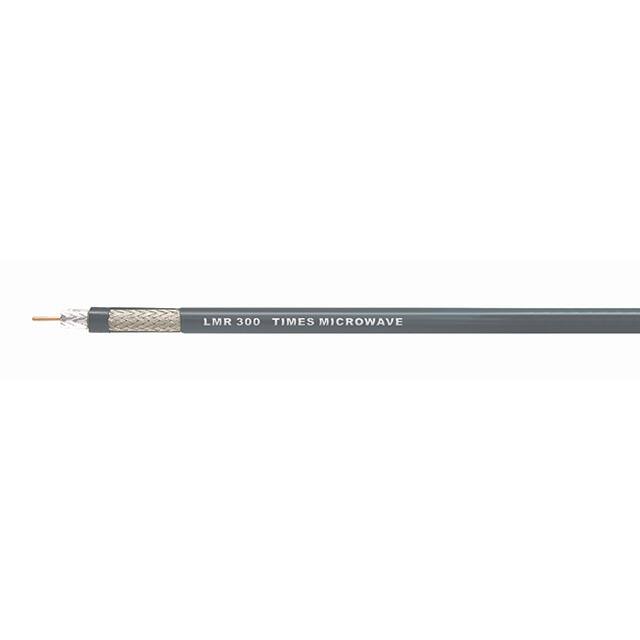


TIMES MICROWAVE - 5/16 LMR-300 COAX CABLE
LMR300 is a coaxial cable. So this article is going to talk about the detailed information about LMR300.

Termination of LMR-300 cable
Overview of LMR300
The Times Microwave LMR®-300 5/16 in low loss coaxial cable performs similarly to corrugated copper cables, but with more flexibility and a simpler connection. This 50 Ohm coaxial cable has a bare copper center conductor and a stranded outside conductor for a 1 in bending radius. The use of a shield that is 90% braided results in a minimal loss. Polyethylene foam provides insulation.
LMR300 Features
Priced Per Foot
Cable Type: LMR300
Impedance: 50 ohm
Outside Diameter: 10.29 mm
Capacitance: 78.4pF
Operating Temperature: -40°C~85°C
Shield Type: Braid
Jacket (Insulation) Material: Polyethylene (PE)
Max Continuous Length: 1000 FT
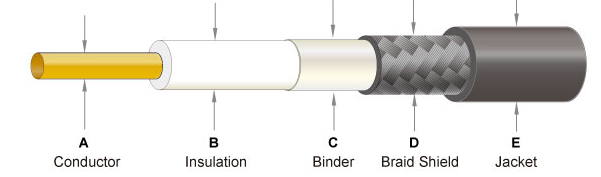
LMR300 Coaxial Cable Structure Figure

Specifications
- TypeParameter
- Factory Lead Time8 Weeks
- Mount
In electronic components, the term "Mount" typically refers to the method or process of physically attaching or fixing a component onto a circuit board or other electronic device. This can involve soldering, adhesive bonding, or other techniques to secure the component in place. The mounting process is crucial for ensuring proper electrical connections and mechanical stability within the electronic system. Different components may have specific mounting requirements based on their size, shape, and function, and manufacturers provide guidelines for proper mounting procedures to ensure optimal performance and reliability of the electronic device.
Cable - Package / Case
refers to the protective housing that encases an electronic component, providing mechanical support, electrical connections, and thermal management.
300 - Dielectric Material
a substance that is a poor conductor of electricity, but an efficient supporter of electrostatic field s.
Foam Polyethylene (FPE) - Conductor Material
A conductor is a material which contains movable electric charges. In metallic conductors, such as copper or aluminum, the movable charged particles are electrons, though in other cases they can be ions or other positively charged species.
Copper, Bare - Jacket (Insulation) Material
The parameter "Jacket (Insulation) Material" in electronic components refers to the material used to cover and protect the internal components of a cable or wire. This material provides insulation to prevent electrical interference, short circuits, and damage from environmental factors such as moisture, heat, and chemicals. Common jacket materials include PVC (polyvinyl chloride), Teflon, rubber, and polyethylene. The choice of jacket material depends on the specific application requirements, such as temperature range, flexibility, and resistance to abrasion. Selecting the appropriate jacket material is crucial for ensuring the reliability and longevity of the electronic component in its intended operating conditions.
Polyethylene (PE) - Shield Material
Shield Material in electronic components refers to the material used to create a shield or barrier that protects the component from electromagnetic interference (EMI) or radio frequency interference (RFI). The shield material is typically a conductive material such as copper or aluminum that is capable of blocking or absorbing unwanted electromagnetic signals. By using the appropriate shield material, electronic components can maintain their performance and reliability in environments where EMI or RFI may be present. The effectiveness of the shield material is crucial in ensuring the proper functioning of electronic devices and preventing interference from external sources.
Aluminum; Copper, Tinned - Cable TypesCoaxial
- Operating Temperature
The operating temperature is the range of ambient temperature within which a power supply, or any other electrical equipment, operate in. This ranges from a minimum operating temperature, to a peak or maximum operating temperature, outside which, the power supply may fail.
-40°C~85°C - Part Status
Parts can have many statuses as they progress through the configuration, analysis, review, and approval stages.
Active - Moisture Sensitivity Level (MSL)
Moisture Sensitivity Level (MSL) is a standardized rating that indicates the susceptibility of electronic components, particularly semiconductors, to moisture-induced damage during storage and the soldering process, defining the allowable exposure time to ambient conditions before they require special handling or baking to prevent failures
1 (Unlimited) - Impedance
In electrical engineering, impedance is the opposition to alternating current presented by the combined effect of resistance and reactance in a circuit.
50Ohms - Jacket Color
The parameter "Jacket Color" in electronic components refers to the color of the protective outer layer that encases wires, cables, or other electronic components. This color can indicate specific attributes such as the type of insulation material, intended use, or compliance with certain standards. Different colors might be used to distinguish between various types of signals, voltage levels, or applications, providing a visual means of identifying components in a system. Additionally, the jacket color can also influence heat dissipation and aesthetic appeal in electronic assemblies.
Black - Conductor Strand
Stranded conductors are composed of uninsulated “strands” of wire twisted together. The advantages of conductor stranding over a single strand of equal cross-section are increased flexibility and flex-fatigue life.
Solid - Jacket (Insulation) Diameter
The "Jacket (Insulation) Diameter" parameter in electronic components refers to the outer diameter of the insulation or protective jacket surrounding a wire or cable. This measurement is important for determining the overall size and compatibility of the component within a system or circuit. A larger jacket diameter may provide better protection against environmental factors and mechanical stress, while a smaller diameter may be more flexible and space-saving. It is crucial to consider the jacket diameter when selecting and installing electronic components to ensure proper fit and functionality.
0.300 (7.62mm) - Shield Type
Shield Type in electronic components refers to the method used to protect sensitive circuits from electromagnetic interference (EMI) and radio frequency interference (RFI). It encompasses the materials and techniques employed to create barriers around wires, circuits, or devices, which may include metallic enclosures, conductive coatings, or grounding practices. The choice of shield type can significantly impact the performance and reliability of electronic systems, especially in environments with high levels of interference.
Foil, Braid - Dielectric Diameter
Dielectric diameter is a parameter used in electronic components, particularly in capacitors. It refers to the physical size of the dielectric material within the capacitor. The dielectric material is an insulating substance that separates the two conductive plates of the capacitor. The dielectric diameter is important because it affects the capacitance value and performance of the capacitor. A larger dielectric diameter typically results in a higher capacitance value and better insulation properties. Manufacturers specify the dielectric diameter to ensure proper functioning of the capacitor in electronic circuits.
0.190 (4.83mm) - VoP, Velocity of Propagation
The Velocity of Propagation (VoP) is a parameter used to describe the speed at which an electrical signal travels through a medium, such as a cable or transmission line, in electronic components. It is typically expressed as a percentage of the speed of light in a vacuum. A higher VoP indicates that the signal propagates faster through the medium, which can affect the overall performance of the electronic system. VoP is an important consideration in designing and analyzing high-speed digital communication systems to ensure signal integrity and minimize signal distortion. It is also used in determining the delay characteristics of signals in transmission lines and is a key factor in determining the maximum operating frequency of a system.
82 - Length500.0' 152.40m
- RoHS Status
RoHS means “Restriction of Certain Hazardous Substances” in the “Hazardous Substances Directive” in electrical and electronic equipment.
RoHS Compliant
LMR300 Attentuation VS Frenquency
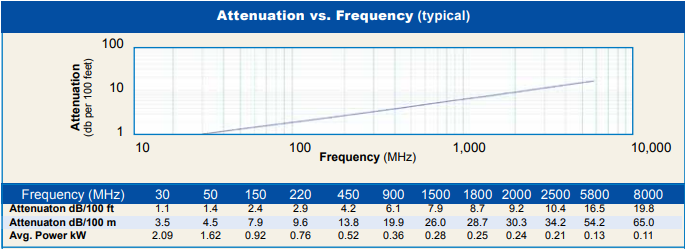
LMR300 Attentuation VS Frequency
LMR300 Parameters
| Typical Electrical Specifications | Typical Mechanical Specifications | ||
| Operating frequency range | DC to 24.5 GHz | Inner conductor (mm) | 1.78 |
| Capacitance (pF/m) | 79.1 | Dielectric (mm) | 4.83 |
| The velocity of propagation (%) | 85 | Outer conductor (mm) | 5.72 |
| Shielding effectiveness (dB) | >90 | Jacket (mm) | 7.62 |
| Maximum operating voltage (VK RMS ) | 5 | Operating temperature | -40 to +80 °C |
LMR300 Specifications
| Product Code | 201-302 |
| Series | LMR-300 |
| Inner Conductor | Solid BC |
| Inner Conductor | Solid BC |
| Dielectric | Foam PE |
| Outer Conductor | Aluminum Tape |
| Outer Conductor | Aluminum Tape |
| Overall Braid | Tinned Copper |
| Cable | LMR-300 |
| Outer Jacket | PE |
| Dia Inner Conductor | 1.78 |
| Dia Dielectric | 4.83 |
| Dia Outer Conductor | 4.98 |
| Dia Overall Braid | 5.72 |
| Dia Over Jacket | 7.62 |
| Max Frequency | 24.5 |
| Velocity | 85 |
| DC Breakdown | 2000 |
| Peak Power Rating | 10 |
| Jacket Spark | 5000 |
| Capacitance | 78.4 |
| Inductance | 0.2 |
| Operating Temp | Minus 40 to Plus 85 |
| Min Bending Radius | 22.2 |
| Cable Weight | 0.08 |
| Attenuation 30 MHz | 3.5 |
| Attenuation 50 MHz | 4.5 |
| Attenuation 150 MHz | 7.9 |
| Attenuation 220 MHz | 9.6 |
| Attenuation 450 MHz | 13.8 |
| Attenuation 900 MHz | 19.9 |
| Attenuation 1500 MHz | 26 |
| Attenuation 1800 MHz | 28.7 |
| Attenuation 2000 MHz | 30.3 |
| Attenuation 2500 MHz | 34.2 |
Related Articles about cables
LMR300 Manufacturer
Times Microwave Systems is a pioneer in the development and manufacture of coaxial transmission lines. For military, aerospace, wireless communications, and industrial applications, they offer a wide range of RF and microwave transmission line solutions. In the industry, its engineering competence and range of manufacturing capabilities are well acknowledged. They can serve both specialist applications with extremely demanding performance requirements and high volume commercial applications at frequencies ranging from a few kHz to 110 GHz, thanks to production sites in the United States and China. Since 2009, Times Microwave Systems has had access to the resources of Amphenol, one of the world's largest makers of interconnect components. Amphenol Corporation is a manufacturer of electrical, electronic, and fiber-optic connectors, as well as connection systems and coaxial and specialized cable.
Note: LMR® is a registered trademark of Times Microwave Systems.
Datasheet PDF
- Datasheets :
Popularity by Region
What is LMR-300 cable used for?
The Times Microwave LMR-300 5/16 in low loss coaxial cable provides similar performance but with more flexibility and a simpler connection.
What does LMR mean in coaxial cable?
Low Loss.
What’s the operating temperature of LMR-300?
-40 to +80 °C.
What’s the capacitance of LMR-300?
79.1 pF/m.
 TXB0104PWR: Overview, Features, and Applications
25 December 20231060
 What's the Difference between the BMP280 and the BME280 Atmospheric Sensors?
06 July 202211074
 IRFZ24N Transistor: Datasheet, Pinout, IRFZ24N MOSFET
07 December 202110028
 2N5306 Transistor: NPN Darlington Transistor, Datasheet, Pinout
21 December 20212033
 2N2222A NPN Transistor: Datasheet, Pinout and Equivalents
23 July 202123131
 74HC75 Transparant Latch: Pinout, Equivalent and Datasheet
25 November 20214222
 LM224 Operational Amplifier : Application, Pinout and Datasheet
06 September 20214791
 Yageo RC0603FR-0710KL Price Trends Across Suppliers 2025
20 August 20251696
 High-Capacity HDDs in the AI Era: Sourcing Massive Storage for Cold Data
04 July 2026378
 Role of On-Chip Optical Communication in Overcoming CMOS Scaling Challenges
22 August 20242394
 What is GDDR?
25 November 202114008
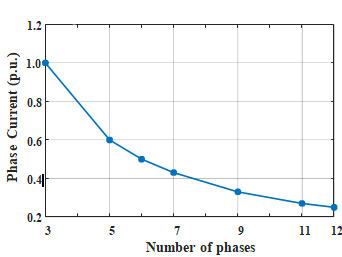 Revolutionizing Automotive Traction: A Comprehensive Review of Multiphase Drives for Next-Generation Vehicles
04 May 20234334
 What is Digital Signal Processing (DSP)?
17 March 20225215
 Unveiling the Magic Behind TWS Earbuds: An Analysis of Their Market, Working, and Core Components
24 July 20235972
 Detailed Introduction of the Chip Design Process
21 December 202118362
 The History of Thermometers
12 August 202619486
Amphenol Times Microwave Systems
In Stock
United States
China
Canada
Japan
Russia
Germany
United Kingdom
Singapore
Italy
Hong Kong(China)
Taiwan(China)
France
Korea
Mexico
Netherlands
Malaysia
Austria
Spain
Switzerland
Poland
Thailand
Vietnam
India
United Arab Emirates
Afghanistan
Åland Islands
Albania
Algeria
American Samoa
Andorra
Angola
Anguilla
Antigua & Barbuda
Argentina
Armenia
Aruba
Australia
Azerbaijan
Bahamas
Bahrain
Bangladesh
Barbados
Belarus
Belgium
Belize
Benin
Bermuda
Bhutan
Bolivia
Bonaire, Sint Eustatius and Saba
Bosnia & Herzegovina
Botswana
Brazil
British Indian Ocean Territory
British Virgin Islands
Brunei
Bulgaria
Burkina Faso
Burundi
Cabo Verde
Cambodia
Cameroon
Cayman Islands
Central African Republic
Chad
Chile
Christmas Island
Cocos (Keeling) Islands
Colombia
Comoros
Congo
Congo (DRC)
Cook Islands
Costa Rica
Côte d’Ivoire
Croatia
Cuba
Curaçao
Cyprus
Czechia
Denmark
Djibouti
Dominica
Dominican Republic
Ecuador
Egypt
El Salvador
Equatorial Guinea
Eritrea
Estonia
Eswatini
Ethiopia
Falkland Islands
Faroe Islands
Fiji
Finland
French Guiana
French Polynesia
Gabon
Gambia
Georgia
Ghana
Gibraltar
Greece
Greenland
Grenada
Guadeloupe
Guam
Guatemala
Guernsey
Guinea
Guinea-Bissau
Guyana
Haiti
Honduras
Hungary
Iceland
Indonesia
Iran
Iraq
Ireland
Isle of Man
Israel
Jamaica
Jersey
Jordan
Kazakhstan
Kenya
Kiribati
Kosovo
Kuwait
Kyrgyzstan
Laos
Latvia
Lebanon
Lesotho
Liberia
Libya
Liechtenstein
Lithuania
Luxembourg
Macao(China)
Madagascar
Malawi
Maldives
Mali
Malta
Marshall Islands
Martinique
Mauritania
Mauritius
Mayotte
Micronesia
Moldova
Monaco
Mongolia
Montenegro
Montserrat
Morocco
Mozambique
Myanmar
Namibia
Nauru
Nepal
New Caledonia
New Zealand
Nicaragua
Niger
Nigeria
Niue
Norfolk Island
North Korea
North Macedonia
Northern Mariana Islands
Norway
Oman
Pakistan
Palau
Palestinian Authority
Panama
Papua New Guinea
Paraguay
Peru
Philippines
Pitcairn Islands
Portugal
Puerto Rico
Qatar
Réunion
Romania
Rwanda
Samoa
San Marino
São Tomé & Príncipe
Saudi Arabia
Senegal
Serbia
Seychelles
Sierra Leone
Sint Maarten
Slovakia
Slovenia
Solomon Islands
Somalia
South Africa
South Sudan
Sri Lanka
St Helena, Ascension, Tristan da Cunha
St. Barthélemy
St. Kitts & Nevis
St. Lucia
St. Martin
St. Pierre & Miquelon
St. Vincent & Grenadines
Sudan
Suriname
Svalbard & Jan Mayen
Sweden
Syria
Tajikistan
Tanzania
Timor-Leste
Togo
Tokelau
Tonga
Trinidad & Tobago
Tunisia
Turkey
Turkmenistan
Turks & Caicos Islands
Tuvalu
U.S. Outlying Islands
U.S. Virgin Islands
Uganda
Ukraine
Uruguay
Uzbekistan
Vanuatu
Vatican City
Venezuela
Wallis & Futuna
Yemen
Zambia
Zimbabwe
![LMR-400-PVC]() LMR-400-PVC
LMR-400-PVCTimes Microwave Systems
![LMR-600-75]() LMR-600-75
LMR-600-75Times Microwave Systems
![LMR-600-LLPX]() LMR-600-LLPX
LMR-600-LLPXTimes Microwave Systems
![LMR-900-FR]() LMR-900-FR
LMR-900-FRTimes Microwave Systems
![LMR-600-FR]() LMR-600-FR
LMR-600-FRAmphenol Times Microwave Systems
![LMR-900-FR]() LMR-900-FR
LMR-900-FRAmphenol Times Microwave Systems
![LMR-240]() LMR-240
LMR-240Amphenol Times Microwave Systems
![LMR-400]() LMR-400
LMR-400Amphenol Times Microwave Systems
![FBT-240]() FBT-240
FBT-240Amphenol Times Microwave Systems