

 Product
 Brand
Brand Articles
 Tools
Tools
MC34064 Undervoltage Sensing Circuit: Pinout, Features and Datasheet

8 Terminals MC34064 Voltage supervisor 1 Channels
Unit Price: $0.984669
Ext Price: $0.98


8 Terminals MC34064 Voltage supervisor 1 Channels
The MC34064 is an undervoltage sensing circuit specifically designed for use as a reset controller in microprocessor−based systems. It offers the designer an economical solution for low voltage detection with a single external resistor. Furthermore, Huge range of Semiconductors, Capacitors, Resistors and IcS in stock. Welcome RFQ.

What is purpose of an Undervoltage Sensing Circuit? (5 Solutions!!)
MC34064 Pinout
The following figure is the diagram of MC34064 pinout.
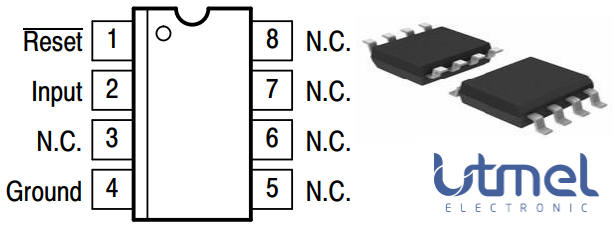
Pinout
MC34064 CAD Model
The followings are MC34064 Symbol, Footprint, and 3D Model.
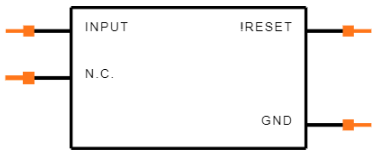
Symbol
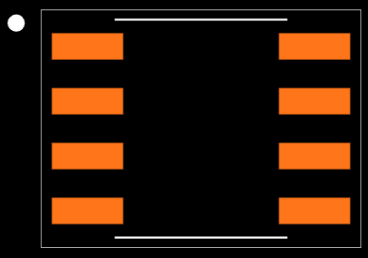
Footprint
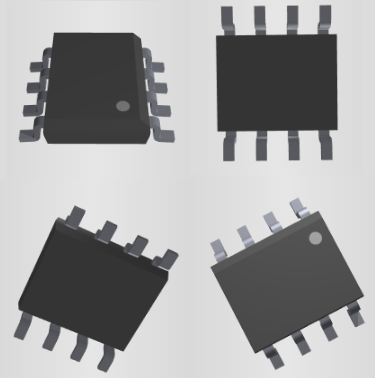
3D Model
MC34064 Overview
The MC34064 is an undervoltage sensing circuit specifically designed for use as a reset controller in microprocessor−based systems. It offers the designer an economical solution for low voltage detection with a single external resistor. The MC34064 features a trimmed−in−package bandgap reference, and a comparator with precise thresholds and built-in hysteresis to prevent erratic reset operation. The open collector reset output is capable of sinking in excess of 10 mA, and operation is guaranteed down to 1.0 V input with low standby current. The MC devices are packaged in 3−pin TO-92, micro size TSOP−5, 8−pin SOIC−8 and Micro8TM surface mount packages.
This article provides you with a basic overview of the MC34064 Undervoltage Sensing Circuit, including its pin descriptions, features and specifications, etc., to help you quickly understand what MC34064 is.
MC34064 Features
● Trimmed−In−Package Temperature Compensated Reference
● Comparator Threshold of 4.6 V at 25°C
● Precise Comparator Thresholds Guaranteed Over Temperature
● Comparator Hysteresis Prevents Erratic Reset
● Reset Output Capable of Sinking in Excess of 10 mA
● Internal Clamp Diode for Discharging Delay Capacitor
● Guaranteed Reset Operation with 1.0 V Input
● Low Standby Current
● Economical TO−92, TSOP−5, SOIC−8 and Micro8 Surface Mount Packages
● These Devices are Pb−Free and are RoHS Compliant
Specifications
- TypeParameter
- Lifecycle Status
Lifecycle Status refers to the current stage of an electronic component in its product life cycle, indicating whether it is active, obsolete, or transitioning between these states. An active status means the component is in production and available for purchase. An obsolete status indicates that the component is no longer being manufactured or supported, and manufacturers typically provide a limited time frame for support. Understanding the lifecycle status is crucial for design engineers to ensure continuity and reliability in their projects.
ACTIVE (Last Updated: 3 days ago) - Factory Lead Time4 Weeks
- Mounting Type
The "Mounting Type" in electronic components refers to the method used to attach or connect a component to a circuit board or other substrate, such as through-hole, surface-mount, or panel mount.
Surface Mount - Package / Case
refers to the protective housing that encases an electronic component, providing mechanical support, electrical connections, and thermal management.
8-SOIC (0.154, 3.90mm Width) - Number of Pins8
- Power Dissipation (Max)625mW
- Current - Supply (Nom)390μA
- Watchdog TimersNo
- Operating Temperature
The operating temperature is the range of ambient temperature within which a power supply, or any other electrical equipment, operate in. This ranges from a minimum operating temperature, to a peak or maximum operating temperature, outside which, the power supply may fail.
0°C~70°C TA - Packaging
Semiconductor package is a carrier / shell used to contain and cover one or more semiconductor components or integrated circuits. The material of the shell can be metal, plastic, glass or ceramic.
Tube - Published2002
- JESD-609 Code
The "JESD-609 Code" in electronic components refers to a standardized marking code that indicates the lead-free solder composition and finish of electronic components for compliance with environmental regulations.
e3 - Pbfree Code
The "Pbfree Code" parameter in electronic components refers to the code or marking used to indicate that the component is lead-free. Lead (Pb) is a toxic substance that has been widely used in electronic components for many years, but due to environmental concerns, there has been a shift towards lead-free alternatives. The Pbfree Code helps manufacturers and users easily identify components that do not contain lead, ensuring compliance with regulations and promoting environmentally friendly practices. It is important to pay attention to the Pbfree Code when selecting electronic components to ensure they meet the necessary requirements for lead-free applications.
yes - Part Status
Parts can have many statuses as they progress through the configuration, analysis, review, and approval stages.
Active - Moisture Sensitivity Level (MSL)
Moisture Sensitivity Level (MSL) is a standardized rating that indicates the susceptibility of electronic components, particularly semiconductors, to moisture-induced damage during storage and the soldering process, defining the allowable exposure time to ambient conditions before they require special handling or baking to prevent failures
1 (Unlimited) - Number of Terminations8
- ECCN Code
An ECCN (Export Control Classification Number) is an alphanumeric code used by the U.S. Bureau of Industry and Security to identify and categorize electronic components and other dual-use items that may require an export license based on their technical characteristics and potential for military use.
EAR99 - TypeSimple Reset/Power-On Reset
- Terminal Finish
Terminal Finish refers to the surface treatment applied to the terminals or leads of electronic components to enhance their performance and longevity. It can improve solderability, corrosion resistance, and overall reliability of the connection in electronic assemblies. Common finishes include nickel, gold, and tin, each possessing distinct properties suitable for various applications. The choice of terminal finish can significantly impact the durability and effectiveness of electronic devices.
Tin (Sn) - Voltage - Supply
Voltage - Supply refers to the range of voltage levels that an electronic component or circuit is designed to operate with. It indicates the minimum and maximum supply voltage that can be applied for the device to function properly. Providing supply voltages outside this range can lead to malfunction, damage, or reduced performance. This parameter is critical for ensuring compatibility between different components in a circuit.
4V - Terminal Position
In electronic components, the term "Terminal Position" refers to the physical location of the connection points on the component where external electrical connections can be made. These connection points, known as terminals, are typically used to attach wires, leads, or other components to the main body of the electronic component. The terminal position is important for ensuring proper connectivity and functionality of the component within a circuit. It is often specified in technical datasheets or component specifications to help designers and engineers understand how to properly integrate the component into their circuit designs.
DUAL - Terminal Form
Occurring at or forming the end of a series, succession, or the like; closing; concluding.
GULL WING - Peak Reflow Temperature (Cel)
Peak Reflow Temperature (Cel) is a parameter that specifies the maximum temperature at which an electronic component can be exposed during the reflow soldering process. Reflow soldering is a common method used to attach electronic components to a circuit board. The Peak Reflow Temperature is crucial because it ensures that the component is not damaged or degraded during the soldering process. Exceeding the specified Peak Reflow Temperature can lead to issues such as component failure, reduced performance, or even permanent damage to the component. It is important for manufacturers and assemblers to adhere to the recommended Peak Reflow Temperature to ensure the reliability and functionality of the electronic components.
260 - Number of Functions1
- Time@Peak Reflow Temperature-Max (s)
Time@Peak Reflow Temperature-Max (s) refers to the maximum duration that an electronic component can be exposed to the peak reflow temperature during the soldering process, which is crucial for ensuring reliable solder joint formation without damaging the component.
40 - Base Part Number
The "Base Part Number" (BPN) in electronic components serves a similar purpose to the "Base Product Number." It refers to the primary identifier for a component that captures the essential characteristics shared by a group of similar components. The BPN provides a fundamental way to reference a family or series of components without specifying all the variations and specific details.
MC34064 - Output
In electronic components, the parameter "Output" typically refers to the signal or data that is produced by the component and sent to another part of the circuit or system. The output can be in the form of voltage, current, frequency, or any other measurable quantity depending on the specific component. The output of a component is often crucial in determining its functionality and how it interacts with other components in the circuit. Understanding the output characteristics of electronic components is essential for designing and troubleshooting electronic circuits effectively.
Open Drain or Open Collector - Number of Channels1
- Power Dissipation
the process by which an electronic or electrical device produces heat (energy loss or waste) as an undesirable derivative of its primary action.
625mW - Adjustable Threshold
The "Adjustable Threshold" parameter in electronic components refers to the ability to manually set or modify the threshold level at which a specific function or operation is triggered. This feature allows users to customize the sensitivity or activation point of the component according to their specific requirements or preferences. By adjusting the threshold, users can fine-tune the performance of the component to suit different applications or environmental conditions. This flexibility in threshold adjustment can be particularly useful in various electronic devices and systems where precise control over triggering levels is necessary for optimal functionality.
NO - Current - Supply
Current - Supply is a parameter in electronic components that refers to the maximum amount of electrical current that the component can provide to the circuit it is connected to. It is typically measured in units of amperes (A) and is crucial for determining the power handling capability of the component. Understanding the current supply rating is important for ensuring that the component can safely deliver the required current without overheating or failing. It is essential to consider this parameter when designing circuits to prevent damage to the component and ensure proper functionality of the overall system.
390μA - Reset
The "Reset" parameter in electronic components refers to a function that initializes or sets a device to a predefined state. It is often used to clear any temporary data, errors, or configurations that may have been stored during operation. The reset process can ensure that the device starts from a known good state, allowing for reliable performance in subsequent tasks. This parameter is critical in digital circuits and systems where proper initialization is necessary for correct functioning.
Active Low - Voltage - Threshold
Voltage - Threshold is a parameter in electronic components that refers to the minimum voltage level required to trigger a specific function or operation within the component. It is the critical voltage level at which the component transitions from one state to another, such as turning on or off. This threshold voltage is essential for ensuring the proper functioning of the component and is often specified in the component's datasheet. Understanding the voltage threshold is crucial for designing and troubleshooting electronic circuits to ensure that the component operates within its specified voltage range.
4.6V - Number of Voltages Monitored
Voltage monitoring relays can detect not only under-voltages and over-voltages, but also voltage-related issues such as phase imbalances, phase loss, and phase sequence. Voltage monitoring relays are designed for either single-phase or three-phase systems.
1 - Halogen Free
The term "Halogen Free" in electronic components refers to a specific characteristic of the materials used in the manufacturing of the component. Halogens are a group of elements that include fluorine, chlorine, bromine, iodine, and astatine. These elements are commonly used in flame retardants and other materials in electronics. However, the presence of halogens can pose environmental and health risks when the components are disposed of or recycled.Therefore, electronic components labeled as "Halogen Free" are manufactured without the use of halogenated materials. This designation indicates that the components do not contain any halogens, making them safer for the environment and human health. Halogen-free components are becoming increasingly popular in the electronics industry due to the growing awareness of environmental concerns and regulations regarding hazardous substances in electronic products.
Halogen Free - Min Reset Threshold Voltage
Min Reset Threshold Voltage refers to the minimum voltage level at which a device, such as a microcontroller or a voltage supervisor, can reliably reset its internal state. When the supply voltage drops below this threshold, the device initiates a reset process to clear the current execution state and restore it to a known initial condition. This parameter is critical for ensuring proper operation during power fluctuations, preventing unintended behavior from occurring due to insufficient voltage.
4.5V - Max Reset Threshold Voltage
Max Reset Threshold Voltage refers to the maximum voltage level at which an electronic component, such as a voltage regulator or a reset circuit, will reset or initialize itself. When the input voltage exceeds this threshold, the component typically enters a defined state, often resetting its output or operational mode. It is a critical specification to ensure reliable operation and prevent unexpected behavior in electronic devices. This parameter is important for design considerations in applications where voltage fluctuations or spikes may occur.
4.7V - Threshold Voltage
The threshold voltage is a critical parameter in electronic components, particularly in field-effect transistors (FETs). It refers to the minimum voltage required at the input terminal of the FET to turn it on and allow current to flow between the source and drain terminals. Below the threshold voltage, the FET remains in the off state, acting as an open switch. Once the threshold voltage is exceeded, the FET enters the on state, conducting current between the source and drain.The threshold voltage is a key factor in determining the operating characteristics of FETs, such as their switching speed and power consumption. It is typically specified by the manufacturer and can vary depending on the specific type of FET and its design. Designers must consider the threshold voltage when selecting FETs for a particular application to ensure proper functionality and performance.
+4.6V - Undervoltage Threshold
During power up and power down, the UVLO function of the device has at least 0.1 V of hysteresis, but not more than 0.3 V. The UVLO function in power devices is a useful feature that enables robust system behavior across a wide range of operating conditions.
4.61V - Overvoltage Threshold
Overvoltages are all voltages that temporarily surpass the threshold value of the mains voltage. However, overvoltages can not only occur in the 230 V (normal household power supply voltage) mains, but can also reach the connected devices via telephone or aerial cables.
4.7V - Voltage - Supply (Max)
Voltage - Supply (Max) is a parameter in electronic components that specifies the maximum voltage that can be safely applied to the component for proper operation. This parameter is crucial for ensuring the component's longevity and preventing damage due to overvoltage conditions. Exceeding the maximum supply voltage can lead to component failure, reduced performance, or even permanent damage. Designers must carefully consider this parameter when selecting components and designing circuits to ensure reliable and safe operation within the specified voltage limits.
6.5V - Voltage - Supply (Min)
Voltage - Supply (Min) is a parameter in electronic components that specifies the minimum voltage required for the component to operate within its specified performance range. This parameter indicates the lowest voltage level that can be safely applied to the component without causing malfunctions or damage. It is crucial to ensure that the supply voltage provided to the component is equal to or higher than the specified minimum voltage to guarantee proper functionality and reliability. Failure to meet this requirement may result in erratic behavior, reduced performance, or even permanent damage to the component.
1V - Height1.5mm
- Length5mm
- Width4mm
- REACH SVHC
The parameter "REACH SVHC" in electronic components refers to the compliance with the Registration, Evaluation, Authorization, and Restriction of Chemicals (REACH) regulation regarding Substances of Very High Concern (SVHC). SVHCs are substances that may have serious effects on human health or the environment, and their use is regulated under REACH to ensure their safe handling and minimize their impact.Manufacturers of electronic components need to declare if their products contain any SVHCs above a certain threshold concentration and provide information on the safe use of these substances. This information allows customers to make informed decisions about the potential risks associated with using the components and take appropriate measures to mitigate any hazards.Ensuring compliance with REACH SVHC requirements is essential for electronics manufacturers to meet regulatory standards, protect human health and the environment, and maintain transparency in their supply chain. It also demonstrates a commitment to sustainability and responsible manufacturing practices in the electronics industry.
No SVHC - RoHS Status
RoHS means “Restriction of Certain Hazardous Substances” in the “Hazardous Substances Directive” in electrical and electronic equipment.
ROHS3 Compliant - Lead Free
Lead Free is a term used to describe electronic components that do not contain lead as part of their composition. Lead is a toxic material that can have harmful effects on human health and the environment, so the electronics industry has been moving towards lead-free components to reduce these risks. Lead-free components are typically made using alternative materials such as silver, copper, and tin. Manufacturers must comply with regulations such as the Restriction of Hazardous Substances (RoHS) directive to ensure that their products are lead-free and environmentally friendly.
Lead Free
MC34064 Functional Block Diagram
The following is the Block Diagram of MC34064.
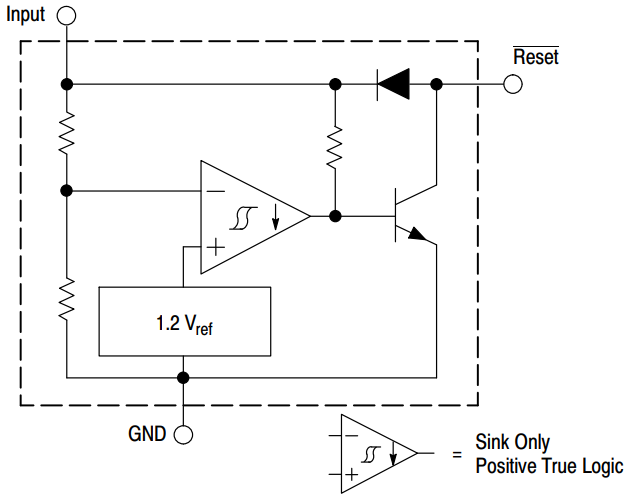
Representative Block Diagram
MC34064 Equivalent
| Model number | Manufacturer | Description |
| MC34064D-5 | ON Semiconductor | 1-CHANNEL POWER SUPPLY SUPPORT CKT, PDSO8, PLASTIC, SO-8 |
Parts with Similar Specs
- ImagePart NumberManufacturerPackage / CaseNumber of PinsNumber of Voltages MonitoredResetOvervoltage ThresholdUndervoltage ThresholdThreshold VoltageWatchdog TimerMin Supply VoltageSupply VoltageView Compare
![MC34064D-5G]()
MC34064D-5G
8-SOIC (0.154, 3.90mm Width)
8
1
Active Low
4.7 V
4.61 V
+4.6V
No
1 V
4 V
![MCP130-450I/SN]()
8-SOIC (0.154, 3.90mm Width)
8
1
Active Low
4.7 V
4.61 V
+4.6V
No
1 V
4 V
![MC33064D-5R2G]()
8-SOIC (0.154, 3.90mm Width)
8
1
Active Low
4.7 V
4.61 V
+4.6V
No
1 V
4 V
![MC33064D-5G]()
8-SOIC (0.154, 3.90mm Width)
8
1
Active Low
4.5 V
4.25 V
+4.38V
No
1 V
5 V
![MCP130-475I/SN]()
8-SOIC (0.154, 3.90mm Width)
8
1
Active Low
4.75 V
4.5 V
+4.63V
No
1 V
5 V


MC34064 Applications
Applications include direct monitoring of the 5.0 V MPU/logic power supply used in appliance, automotive, consumer and industrial equipment.
MC34064 Package
The following diagram shows the MC34064 package.
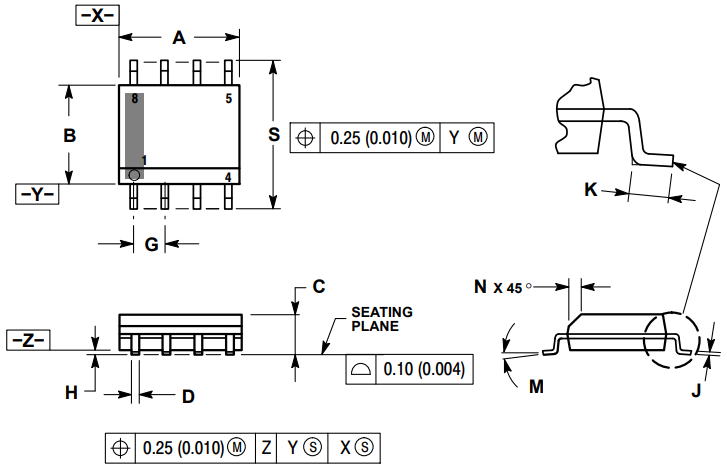
Package
MC34064 Marking Diagram
The following is the Marking Diagram of MC34064.
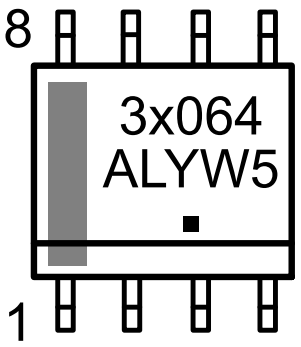
Marking Diagram
MC34064 Soldering Footprint
The following diagram shows the MC34064 Soldering Footprint.
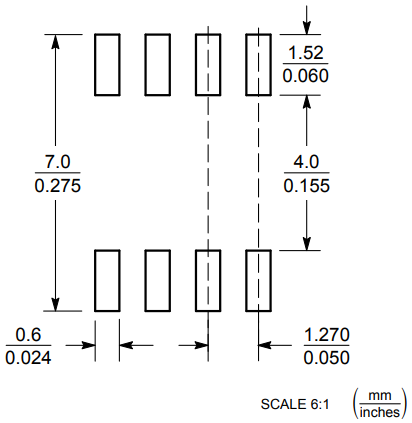
Soldering Footprint
MC34064 Manufacturer
ON Semiconductor (Nasdaq: ON) is driving energy efficient innovations, empowering customers to reduce global energy use. The company offers a comprehensive portfolio of energy efficient power and signal management, logic, discrete and custom solutions to help design engineers solve their unique design challenges in automotive, communications, computing, consumer, industrial, LED lighting, medical, military/aerospace and power supply applications. ON Semiconductor operates a responsive, reliable, world-class supply chain and quality program, and a network of manufacturing facilities, sales offices and design centers in key markets throughout North America, Europe, and the Asia Pacific regions.
Trend Analysis
Datasheet PDF
- Datasheets :
- Environmental Information :
How many pins of MC34064?
8 Pins.
What’s the operating temperature of MC34064?
0°C~70°C TA.
What is the essential property of the MC34064?
The MC34064 is an undervoltage sensing circuit specifically designed for use as a reset controller in microprocessor−based systems. It offers the designer an economical solution for low voltage detection with a single external resistor.
 Yageo RC0603JR-070RL Alternatives: Best 0603 Zero Ohm Resistor Replacements
08 September 20251390
 STM32F103ZET6 Microcontroller: Specification, Pinout and Datasheet
20 October 20217276
 TIP110 NPN Power Darlington Transistor: Pinout, Datasheet pdf and Equivalent
18 December 20213410
 TL072 OP-AMP: Where & How to Use TL072?
20 November 202125404
 PCA9615 Bus Buffer: Datasheet, Pinout and Applications
03 September 20214902
 1N5404 Rectifier : Pinout, Price, Datasheet
25 August 20212108
 74HC595 Shift Register IC : Pinout, Advantage and Datasheet
13 September 202111029
 AD5245 Digital Potentiometer: Specs, Application Fit, and I2C Design Cautions
23 April 2026411
 Improving the Energy Conversion Efficiency of Triboelectric Nanogenerators
19 November 20243310
 The 2026 Engineer’s Guide: Choosing the Right MCU for Your Next IoT & New Energy Project
30 April 20261994
 What is Safety Relay?
12 April 202526313
 Tunnel Diode: Definition, Features and Tunneling Process
25 August 202011573
 A User Guide to Automotive Relay
30 July 20217566
 Introduction to FinFET
18 March 202131457
 Xilinx FPGAs: From Getting Started to Advanced Application Development
09 September 20255421
 What are the Types of Audio Cables?
27 October 202110891
ON Semiconductor
In Stock: 42
Minimum: 1 Multiples: 1
Qty
Unit Price
Ext Price
1
$0.984669
$0.98
10
$0.928933
$9.29
100
$0.876352
$87.64
500
$0.826747
$413.37
1000
$0.779950
$779.95
Not the price you want? Send RFQ Now and we'll contact you ASAP.
Inquire for More Quantity
![CAT809JTBI-GT3]() CAT809JTBI-GT3
CAT809JTBI-GT3ON Semiconductor
![MAX809LTRG]() MAX809LTRG
MAX809LTRGON Semiconductor
![CAT809STBI-GT3]() CAT809STBI-GT3
CAT809STBI-GT3ON Semiconductor
![MC33161DMR2G]() MC33161DMR2G
MC33161DMR2GON Semiconductor
![MC33164D-5R2G]() MC33164D-5R2G
MC33164D-5R2GON Semiconductor
![MC33161DG]() MC33161DG
MC33161DGON Semiconductor
![MC34161DR2G]() MC34161DR2G
MC34161DR2GON Semiconductor
![NCP303LSN10T1G]() NCP303LSN10T1G
NCP303LSN10T1GON Semiconductor
![MC33161DR2G]() MC33161DR2G
MC33161DR2GON Semiconductor
![NCP303LSN09T1G]() NCP303LSN09T1G
NCP303LSN09T1GON Semiconductor


