

 Product
 Brand
Brand Articles
 Tools
Tools
TPS62745DSSR: Step-Down, Datasheet, Ultra-Low Power

12 Terminals 12-Pin TPS62745 DC DC Voltage Regulator SWITCHING REGULATOR 1 Outputs Up to 2.5MHz Tape & Reel (TR) 12-WFDFN Exposed Pad


12 Terminals 12-Pin TPS62745 DC DC Voltage Regulator SWITCHING REGULATOR 1 Outputs Up to 2.5MHz Tape & Reel (TR) 12-WFDFN Exposed Pad
The TPS62745DSSR is the first dual-cell, ultra-low power step-down converter with TI's DCS-ControlTM topology and ultra-low quiescent current consumption (400 nA average) while maintaining a controlled output voltage. The following article will introduce its features, applications, etc.
- TPS62745DSSR Description
- TPS62745DSSR Pinout
- TPS62745DSSR CAD Model
- TPS62745DSSR Features
- TPS62745DSSR Functional Block Diagram
- TPS62745DSSR Recommended Operating Conditions
- TPS62745DSSR Equivalents
- Specifications
- TPS62745DSSR Applications
- TPS62745DSSR Typical Application Circuit
- TPS62745DSSR Package
- TPS62745DSSR Manufacturer
- Trend Analysis
- Datasheet PDF
TPS62745DSSR Description
The TPS62745DSSR is the first dual-cell, ultra-low power step-down converter that combines TI's DCS-ControlTM topology with ultra-low quiescent current consumption (400 nA average) while maintaining a controlled output voltage. The device's high efficiency performance is extended to output currents as low as a few micro amperes.
TPS62745DSSR Pinout
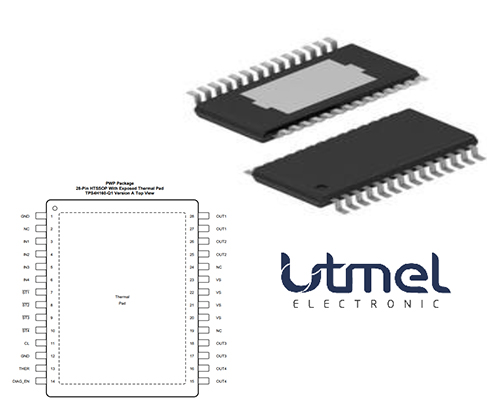
TPS62745DSSR CAD Model
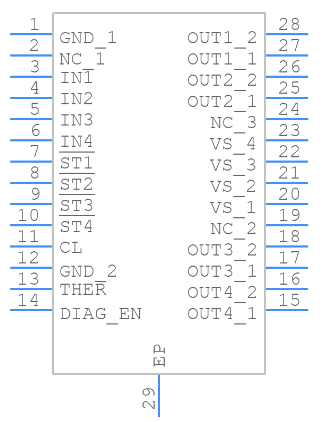
Symbol
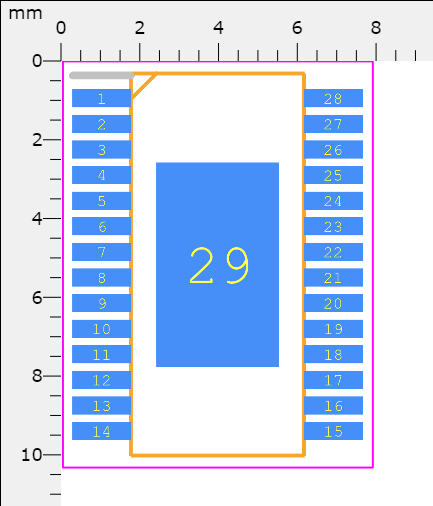
Footprint
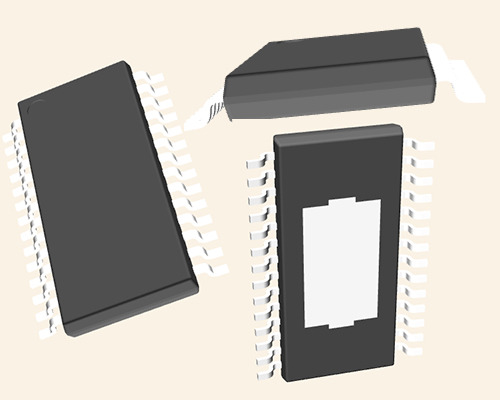
3D Model
TPS62745DSSR Features
• Input Voltage Range VIN from 3.3 V to 10 V
• Typical 400 nA Quiescent Current
• Up to 90% efficiency with load currents >15 µA
• Up to 300 mA Output Current
• RF Friendly DCS-Control™
• Low Output Ripple Voltage
• 16 Selectable Output Voltages from
– 1.8 V to 3.3 V (TPS62745)
– 1.3 V to 2.8 V (TPS627451)
• Integrated input voltage switch
• Integrated Discharge Function at VOUT
• Open Drain Power Good Output
• Operates with a Tiny 3.3 µH or 4.7 µH Inductor
• Small 3 mm x 2 mm WSON Package
TPS62745DSSR Functional Block Diagram
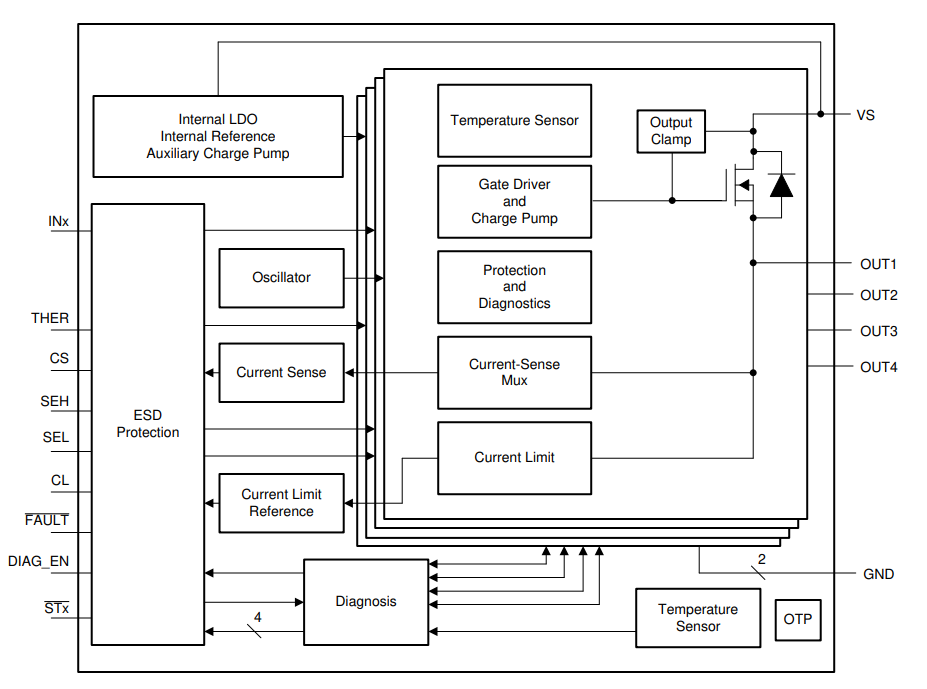
TPS62745DSSR Recommended Operating Conditions
| MIN | NOM | MAX | UNIT | ||
| Supply voltage Vin | 3.3 | 10 | V | ||
| Output current Iout | Vout + 0.7 V < Vin 兰 10 V | 300 | mA | ||
| Effective inductance | 2.8 | 4.7 | 6.2 | pH | |
| Capacitance connected to VIN pin | 3 | 10 | pF | ||
| Total effective capacitance connected to VOUT pin (1) | 5 | 10 | 22 | pF | |
| Operating junction temperature range, Tj | -40 | 125 | °C | ||
| Operating ambient temperature range, Ta | -40 | 85 | °C | ||
TPS62745DSSR Equivalents
| Part Number | Description | Manufacturer |
| TPS62745DSSTPOWER CIRCUITS | 3.3V-10V input, 300mA Ultra Low Iq step-down converter with VSEL and input voltage switch 12-WSON -40 to 125 | Texas Instruments |
| MCP1602-120I/MSPOWER CIRCUITS | 0.5 A SWITCHING REGULATOR, 2400 kHz SWITCHING FREQ-MAX, PDSO8, PLASTIC, MSOP-8 | Microchip Technology Inc |
| TPS62742DSSRPOWER CIRCUITS | 3V-5.5V input, 360-nA Iq step-down converter with 400mA and integrated load switch 12-WSON -40 to 85 | Texas Instruments |
| TPS62742DSSTPOWER CIRCUITS | 3V-5.5V input, 360-nA Iq step-down converter with 400mA and integrated load switch 12-WSON -40 to 85 | Texas Instruments |
| MCP1602T-120I/MFPOWER CIRCUITS | 0.5 A SWITCHING REGULATOR, 2400 kHz SWITCHING FREQ-MAX, PDSO8, 3 X 3 MM, 0.90 MM HEIGHT, PLASTIC, DFN-8 | Microchip Technology Inc |
| TPS627451DSSRPOWER CIRCUITS | 10Vin Ultra Low Iq Step-Down Converter 12-WSON -40 to 125 | Texas Instruments |
| TPS627451DSSTPOWER CIRCUITS | 10Vin Ultra Low Iq Step-Down Converter 12-WSON -40 to 125 | Texas Instruments |
| MCP1602-120I/MFPOWER CIRCUITS | 0.5 A SWITCHING REGULATOR, 2400 kHz SWITCHING FREQ-MAX, PDSO8, 3 X 3 MM, 0.90 MM HEIGHT, PLASTIC, DFN-8 | Microchip Technology Inc |
Specifications
- TypeParameter
- Factory Lead Time6 Weeks
- Mounting Type
The "Mounting Type" in electronic components refers to the method used to attach or connect a component to a circuit board or other substrate, such as through-hole, surface-mount, or panel mount.
Surface Mount - Package / Case
refers to the protective housing that encases an electronic component, providing mechanical support, electrical connections, and thermal management.
12-WFDFN Exposed Pad - Surface Mount
having leads that are designed to be soldered on the side of a circuit board that the body of the component is mounted on.
YES - Number of Pins12
- Voltage - Input (Nom)6V
- Operating Temperature
The operating temperature is the range of ambient temperature within which a power supply, or any other electrical equipment, operate in. This ranges from a minimum operating temperature, to a peak or maximum operating temperature, outside which, the power supply may fail.
-40°C~85°C TA - Packaging
Semiconductor package is a carrier / shell used to contain and cover one or more semiconductor components or integrated circuits. The material of the shell can be metal, plastic, glass or ceramic.
Tape & Reel (TR) - Series
In electronic components, the "Series" refers to a group of products that share similar characteristics, designs, or functionalities, often produced by the same manufacturer. These components within a series typically have common specifications but may vary in terms of voltage, power, or packaging to meet different application needs. The series name helps identify and differentiate between various product lines within a manufacturer's catalog.
DCS-Control™ - JESD-609 Code
The "JESD-609 Code" in electronic components refers to a standardized marking code that indicates the lead-free solder composition and finish of electronic components for compliance with environmental regulations.
e4 - Pbfree Code
The "Pbfree Code" parameter in electronic components refers to the code or marking used to indicate that the component is lead-free. Lead (Pb) is a toxic substance that has been widely used in electronic components for many years, but due to environmental concerns, there has been a shift towards lead-free alternatives. The Pbfree Code helps manufacturers and users easily identify components that do not contain lead, ensuring compliance with regulations and promoting environmentally friendly practices. It is important to pay attention to the Pbfree Code when selecting electronic components to ensure they meet the necessary requirements for lead-free applications.
yes - Part Status
Parts can have many statuses as they progress through the configuration, analysis, review, and approval stages.
ACTIVE (Last Updated: 6 days ago) - Moisture Sensitivity Level (MSL)
Moisture Sensitivity Level (MSL) is a standardized rating that indicates the susceptibility of electronic components, particularly semiconductors, to moisture-induced damage during storage and the soldering process, defining the allowable exposure time to ambient conditions before they require special handling or baking to prevent failures
2 (1 Year) - Number of Terminations12
- ECCN Code
An ECCN (Export Control Classification Number) is an alphanumeric code used by the U.S. Bureau of Industry and Security to identify and categorize electronic components and other dual-use items that may require an export license based on their technical characteristics and potential for military use.
EAR99 - Terminal Finish
Terminal Finish refers to the surface treatment applied to the terminals or leads of electronic components to enhance their performance and longevity. It can improve solderability, corrosion resistance, and overall reliability of the connection in electronic assemblies. Common finishes include nickel, gold, and tin, each possessing distinct properties suitable for various applications. The choice of terminal finish can significantly impact the durability and effectiveness of electronic devices.
Nickel/Palladium/Gold (Ni/Pd/Au) - Terminal Position
In electronic components, the term "Terminal Position" refers to the physical location of the connection points on the component where external electrical connections can be made. These connection points, known as terminals, are typically used to attach wires, leads, or other components to the main body of the electronic component. The terminal position is important for ensuring proper connectivity and functionality of the component within a circuit. It is often specified in technical datasheets or component specifications to help designers and engineers understand how to properly integrate the component into their circuit designs.
DUAL - Terminal Form
Occurring at or forming the end of a series, succession, or the like; closing; concluding.
NO LEAD - Terminal Pitch
The center distance from one pole to the next.
0.5mm - Base Part Number
The "Base Part Number" (BPN) in electronic components serves a similar purpose to the "Base Product Number." It refers to the primary identifier for a component that captures the essential characteristics shared by a group of similar components. The BPN provides a fundamental way to reference a family or series of components without specifying all the variations and specific details.
TPS62745 - Function
The parameter "Function" in electronic components refers to the specific role or purpose that the component serves within an electronic circuit. It defines how the component interacts with other elements, influences the flow of electrical signals, and contributes to the overall behavior of the system. Functions can include amplification, signal processing, switching, filtering, and energy storage, among others. Understanding the function of each component is essential for designing effective and efficient electronic systems.
Step-Down - Number of Outputs1
- Voltage - Input (Max)
Voltage - Input (Max) is a parameter in electronic components that specifies the maximum voltage that can be safely applied to the input of the component without causing damage. This parameter is crucial for ensuring the proper functioning and longevity of the component. Exceeding the maximum input voltage can lead to electrical overstress, which may result in permanent damage or failure of the component. It is important to carefully adhere to the specified maximum input voltage to prevent any potential issues and maintain the reliability of the electronic system.
10V - Output Type
The "Output Type" parameter in electronic components refers to the type of signal or data that is produced by the component as an output. This parameter specifies the nature of the output signal, such as analog or digital, and can also include details about the voltage levels, current levels, frequency, and other characteristics of the output signal. Understanding the output type of a component is crucial for ensuring compatibility with other components in a circuit or system, as well as for determining how the output signal can be utilized or processed further. In summary, the output type parameter provides essential information about the nature of the signal that is generated by the electronic component as its output.
Programmable - Analog IC - Other Type
Analog IC - Other Type is a parameter used to categorize electronic components that are integrated circuits (ICs) designed for analog signal processing but do not fall into more specific subcategories such as amplifiers, comparators, or voltage regulators. These ICs may include specialized analog functions such as analog-to-digital converters (ADCs), digital-to-analog converters (DACs), voltage references, or signal conditioning circuits. They are typically used in various applications where precise analog signal processing is required, such as in audio equipment, instrumentation, communication systems, and industrial control systems. Manufacturers provide detailed specifications for these components to help engineers select the most suitable IC for their specific design requirements.
SWITCHING REGULATOR - Output Configuration
Output Configuration in electronic components refers to the arrangement or setup of the output pins or terminals of a device. It defines how the output signals are structured and how they interact with external circuits or devices. The output configuration can determine the functionality and compatibility of the component in a circuit design. Common types of output configurations include single-ended, differential, open-drain, and push-pull configurations, each serving different purposes and applications in electronic systems. Understanding the output configuration of a component is crucial for proper integration and operation within a circuit.
Positive - Quiescent Current
The quiescent current is defined as the current level in the amplifier when it is producing an output of zero.
400nA - Max Output Voltage
The maximum output voltage refers to the dynamic area beyond which the output is saturated in the positive or negative direction, and is limited according to the load resistance value.
3.3V - Voltage - Output (Min/Fixed)
Voltage - Output (Min/Fixed) refers to the minimum fixed output voltage level that an electronic component, such as a voltage regulator or power supply, is designed to provide under specified load conditions. This parameter ensures that the device consistently delivers a reliable voltage that meets the requirements of the connected circuits or components. It is critical for applications where stable and predictable voltage is necessary for proper operation.
1.8V - Topology
In the context of electronic components, "topology" refers to the arrangement or configuration of the components within a circuit or system. It defines how the components are connected to each other and how signals flow between them. The choice of topology can significantly impact the performance, efficiency, and functionality of the electronic system. Common topologies include series, parallel, star, mesh, and hybrid configurations, each with its own advantages and limitations. Designers carefully select the appropriate topology based on the specific requirements of the circuit to achieve the desired performance and functionality.
Buck - Frequency - Switching
"Frequency - Switching" in electronic components refers to the rate at which a device, such as a transistor or switching regulator, turns on and off during operation. This parameter is crucial in determining the efficiency and performance of power converters, oscillators, and other circuits that rely on rapid switching. Higher switching frequencies typically allow for smaller component sizes but may require more advanced design considerations to manage heat and electromagnetic interference.
Up to 2.5MHz - Control Technique
In electronic components, "Control Technique" refers to the method or approach used to regulate and manage the operation of the component. This parameter is crucial in determining how the component functions within a circuit or system. Different control techniques can include analog control, digital control, pulse-width modulation (PWM), and various feedback mechanisms. The choice of control technique can impact the performance, efficiency, and overall functionality of the electronic component. It is important to select the appropriate control technique based on the specific requirements and characteristics of the application in which the component will be used.
PULSE WIDTH MODULATION - Synchronous Rectifier
Synchronous rectification is a technique for improving the efficiency of rectification by replacing diodes with actively controlled switches, usually power MOSFETs or power bipolar junction transistors (BJT).
Yes - Height800μm
- Length2mm
- Width3mm
- Thickness
Thickness in electronic components refers to the measurement of how thick a particular material or layer is within the component structure. It can pertain to various aspects, such as the thickness of a substrate, a dielectric layer, or conductive traces. This parameter is crucial as it impacts the electrical, mechanical, and thermal properties of the component, influencing its performance and reliability in electronic circuits.
750μm - RoHS Status
RoHS means “Restriction of Certain Hazardous Substances” in the “Hazardous Substances Directive” in electrical and electronic equipment.
ROHS3 Compliant - Lead Free
Lead Free is a term used to describe electronic components that do not contain lead as part of their composition. Lead is a toxic material that can have harmful effects on human health and the environment, so the electronics industry has been moving towards lead-free components to reduce these risks. Lead-free components are typically made using alternative materials such as silver, copper, and tin. Manufacturers must comply with regulations such as the Restriction of Hazardous Substances (RoHS) directive to ensure that their products are lead-free and environmentally friendly.
Lead Free
TPS62745DSSR Applications
• Bluetooth® Low Energy, RF4CE, Zigbee
• Industrial Metering
• Energy Harvesting
TPS62745DSSR Typical Application Circuit
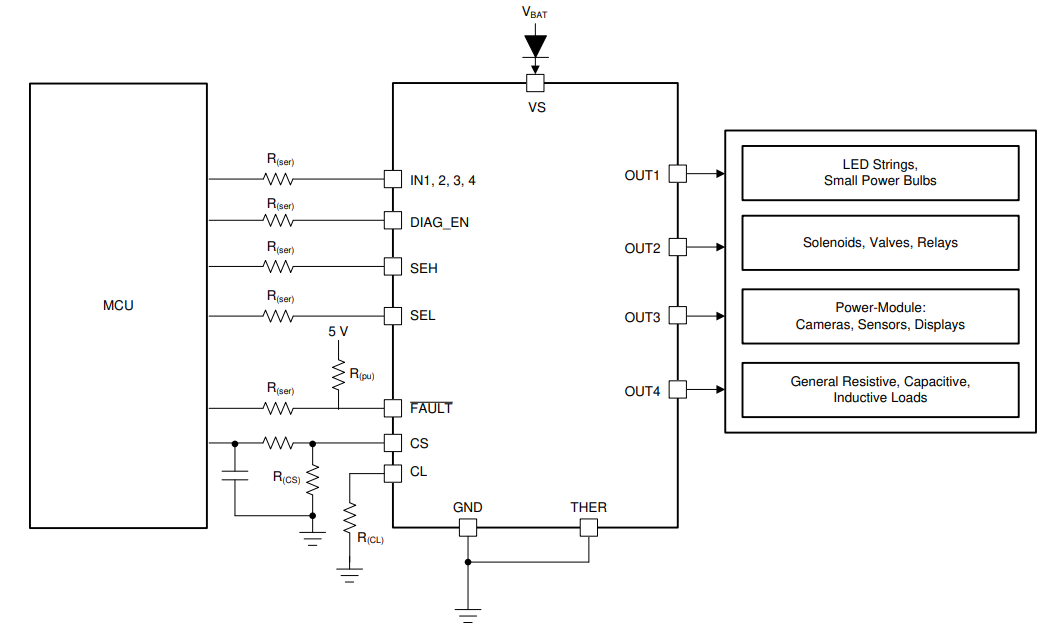
TPS62745DSSR Typical Application Circuit
TPS62745DSSR Package
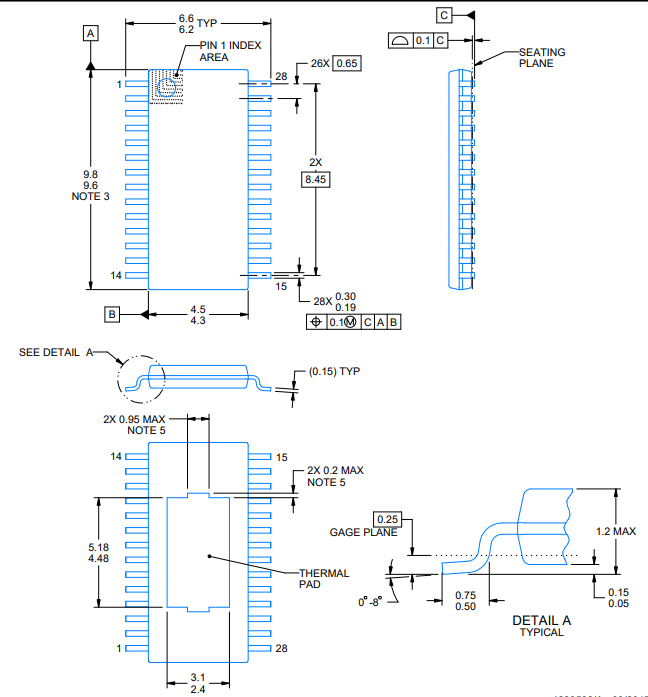
TPS62745DSSR Manufacturer
Texas Instruments Incorporated (TI) is an American technology company based in Dallas, Texas, that designs and manufactures semiconductors and various integrated circuits, which it sells to electronics designers and manufacturers globally. It is one of the top 10 semiconductor companies worldwide based on sales volume. The company's focus is on developing analog chips and embedded processors, which account for more than 80% of its revenue. TI also produces TI digital light processing technology and education technology products including calculators, micro-controllers, and multi-core processors. The company boasts 45,000 patents around the globe as of 2016.
Trend Analysis
Parts with Similar Specs
Datasheet PDF
- PCN Design/Specification :
- Datasheets :
What is TPS62745DSSR?
The TPS62745DSSR is the first dual-cell, ultra-low power step down converter that combines TI's DCS-ControlTM topology with ultra-low quiescent current consumption (400 nA average) while maintaining a controlled output voltage. The device's high efficiency performance is extended to output currents as low as a few micro amperes.
What is the recommended operating temperature of the component?
-40°C~85°C TA.
What is the package of the device?
12-WFDFN Exposed Pad.
What is the component’s number of pins?
12.
 PIC16F505 8-Bit Flash Microcontroller: Datasheet, Pinout, Feature
27 December 20214136
 TPL5110DDCT Programmable Timer: Pinout, Layout, Datasheet
13 May 20213103
 Intel EPCS4SI8N What You Need to Know
30 August 2025342
 AD202 2000V Isolation Amplifier: Datasheet, Pinout, and Performance Deep Dive
03 March 2026442
 MT3608 2A Step up Converter: Datasheet, Schematics and Circuit
18 October 202119236
 74LS47: Driver, Pinout, Circuit And Equivalents
30 March 20226838
 TDA2040 Hi-Fi Audio Power Amplifier: Replacement, Circuit and Datasheet
28 October 20217046
 LT1167 Precision Instrumentation Amplifier: 1-10,000 Gain Range and Performance Deep Dive
03 March 2026382
 What Makes Time Delay Relays Essential in Automation
10 July 20252016
 Introduction of 55 ADC and DAC Commonly Used Terms
02 December 20215736
 Role of Direct Memory Access in Modern Computing
12 November 20246464
 Chip Packaging Lead Time Has Grown to 50 Weeks
07 April 20226189
 Hall Effect: Definition, Principle, Measurement Methods
08 November 202211683
 What is a Great Choice for Digital Isolators to Build Isolation Barriers?
31 March 20225462
 What is Bluetooth Low Energy (BLE) Audio Technology?
26 April 20227194
 Hot Swap Controllers:Semiconductors That Provide In-circuit Protection and Control Functions
22 February 20234937
Texas Instruments
In Stock: 30000
United States
China
Canada
Japan
Russia
Germany
United Kingdom
Singapore
Italy
Hong Kong(China)
Taiwan(China)
France
Korea
Mexico
Netherlands
Malaysia
Austria
Spain
Switzerland
Poland
Thailand
Vietnam
India
United Arab Emirates
Afghanistan
Åland Islands
Albania
Algeria
American Samoa
Andorra
Angola
Anguilla
Antigua & Barbuda
Argentina
Armenia
Aruba
Australia
Azerbaijan
Bahamas
Bahrain
Bangladesh
Barbados
Belarus
Belgium
Belize
Benin
Bermuda
Bhutan
Bolivia
Bonaire, Sint Eustatius and Saba
Bosnia & Herzegovina
Botswana
Brazil
British Indian Ocean Territory
British Virgin Islands
Brunei
Bulgaria
Burkina Faso
Burundi
Cabo Verde
Cambodia
Cameroon
Cayman Islands
Central African Republic
Chad
Chile
Christmas Island
Cocos (Keeling) Islands
Colombia
Comoros
Congo
Congo (DRC)
Cook Islands
Costa Rica
Côte d’Ivoire
Croatia
Cuba
Curaçao
Cyprus
Czechia
Denmark
Djibouti
Dominica
Dominican Republic
Ecuador
Egypt
El Salvador
Equatorial Guinea
Eritrea
Estonia
Eswatini
Ethiopia
Falkland Islands
Faroe Islands
Fiji
Finland
French Guiana
French Polynesia
Gabon
Gambia
Georgia
Ghana
Gibraltar
Greece
Greenland
Grenada
Guadeloupe
Guam
Guatemala
Guernsey
Guinea
Guinea-Bissau
Guyana
Haiti
Honduras
Hungary
Iceland
Indonesia
Iran
Iraq
Ireland
Isle of Man
Israel
Jamaica
Jersey
Jordan
Kazakhstan
Kenya
Kiribati
Kosovo
Kuwait
Kyrgyzstan
Laos
Latvia
Lebanon
Lesotho
Liberia
Libya
Liechtenstein
Lithuania
Luxembourg
Macao(China)
Madagascar
Malawi
Maldives
Mali
Malta
Marshall Islands
Martinique
Mauritania
Mauritius
Mayotte
Micronesia
Moldova
Monaco
Mongolia
Montenegro
Montserrat
Morocco
Mozambique
Myanmar
Namibia
Nauru
Nepal
New Caledonia
New Zealand
Nicaragua
Niger
Nigeria
Niue
Norfolk Island
North Korea
North Macedonia
Northern Mariana Islands
Norway
Oman
Pakistan
Palau
Palestinian Authority
Panama
Papua New Guinea
Paraguay
Peru
Philippines
Pitcairn Islands
Portugal
Puerto Rico
Qatar
Réunion
Romania
Rwanda
Samoa
San Marino
São Tomé & Príncipe
Saudi Arabia
Senegal
Serbia
Seychelles
Sierra Leone
Sint Maarten
Slovakia
Slovenia
Solomon Islands
Somalia
South Africa
South Sudan
Sri Lanka
St Helena, Ascension, Tristan da Cunha
St. Barthélemy
St. Kitts & Nevis
St. Lucia
St. Martin
St. Pierre & Miquelon
St. Vincent & Grenadines
Sudan
Suriname
Svalbard & Jan Mayen
Sweden
Syria
Tajikistan
Tanzania
Timor-Leste
Togo
Tokelau
Tonga
Trinidad & Tobago
Tunisia
Turkey
Turkmenistan
Turks & Caicos Islands
Tuvalu
U.S. Outlying Islands
U.S. Virgin Islands
Uganda
Ukraine
Uruguay
Uzbekistan
Vanuatu
Vatican City
Venezuela
Wallis & Futuna
Yemen
Zambia
Zimbabwe
![LM2574HVMX-3.3]() LM2574HVMX-3.3
LM2574HVMX-3.3Texas Instruments
![LM25574MTX]() LM25574MTX
LM25574MTXTexas Instruments
![LM2577MX-ADJ]() LM2577MX-ADJ
LM2577MX-ADJTexas Instruments
![TLV62565DBVR]() TLV62565DBVR
TLV62565DBVRTexas Instruments
![LM25011MY/NOPB]() LM25011MY/NOPB
LM25011MY/NOPBTexas Instruments
![LM2575T-5.0/NOPB]() LM2575T-5.0/NOPB
LM2575T-5.0/NOPBTexas Instruments
![MC33063ADR]() MC33063ADR
MC33063ADRTexas Instruments
![LM2675MX-ADJ/NOPB]() LM2675MX-ADJ/NOPB
LM2675MX-ADJ/NOPBTexas Instruments
![LM2574N-5.0/NOPB]() LM2574N-5.0/NOPB
LM2574N-5.0/NOPBTexas Instruments
![LM2576SX-5.0/NOPB]() LM2576SX-5.0/NOPB
LM2576SX-5.0/NOPBTexas Instruments


