Product
 Brand
Brand Articles
 Tools
Tools
TSL2591 Converter: Datasheet, Pinout and Schematic


IC LIGHT TO DGTL CONV 6-DFN
The TSL2591 is a very high-sensitivity light-to-digital converter. This article enforces datasheet, pinout, benefits, applications, and other details about TSL2591.

ams TSL2591 Ambient Light Sensor -- Another Geek Moment | DigiKey
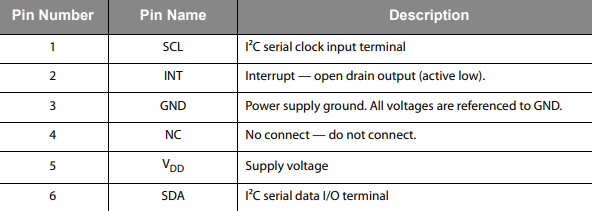
TSL2591 Pinout

TSL2591 CAD Model
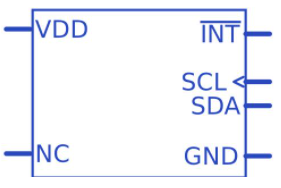
Symbol
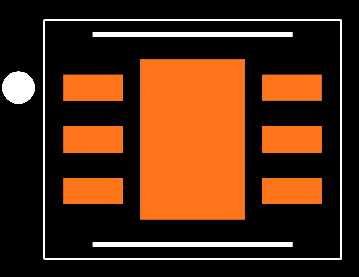
Footprint
What is TSL2591?
The TSL2591 is a very high-sensitivity light-to-digital converter that transforms light intensity into a digital signal output capable of a direct I2C interface. The device combines one broadband photodiode (visible plus infrared) and one infrared-responding photodiode on a single CMOS integrated circuit.
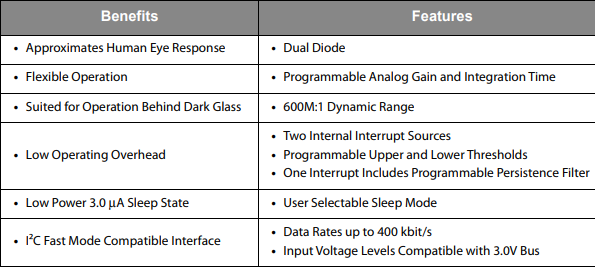
TSL2591 Benefits and Features
Specifications
- TypeParameter
- Factory Lead Time24 Weeks
- Mounting Type
The "Mounting Type" in electronic components refers to the method used to attach or connect a component to a circuit board or other substrate, such as through-hole, surface-mount, or panel mount.
Surface Mount - Package / Case
refers to the protective housing that encases an electronic component, providing mechanical support, electrical connections, and thermal management.
6-WFDFN - Number of Pins4
- Operating Temperature
The operating temperature is the range of ambient temperature within which a power supply, or any other electrical equipment, operate in. This ranges from a minimum operating temperature, to a peak or maximum operating temperature, outside which, the power supply may fail.
-30°C~70°C - Packaging
Semiconductor package is a carrier / shell used to contain and cover one or more semiconductor components or integrated circuits. The material of the shell can be metal, plastic, glass or ceramic.
Tape & Reel (TR) - Part Status
Parts can have many statuses as they progress through the configuration, analysis, review, and approval stages.
Active - Moisture Sensitivity Level (MSL)
Moisture Sensitivity Level (MSL) is a standardized rating that indicates the susceptibility of electronic components, particularly semiconductors, to moisture-induced damage during storage and the soldering process, defining the allowable exposure time to ambient conditions before they require special handling or baking to prevent failures
3 (168 Hours) - TypeAmbient
- Voltage - Supply
Voltage - Supply refers to the range of voltage levels that an electronic component or circuit is designed to operate with. It indicates the minimum and maximum supply voltage that can be applied for the device to function properly. Providing supply voltages outside this range can lead to malfunction, damage, or reduced performance. This parameter is critical for ensuring compatibility between different components in a circuit.
2.7V~3.6V - Output Type
The "Output Type" parameter in electronic components refers to the type of signal or data that is produced by the component as an output. This parameter specifies the nature of the output signal, such as analog or digital, and can also include details about the voltage levels, current levels, frequency, and other characteristics of the output signal. Understanding the output type of a component is crucial for ensuring compatibility with other components in a circuit or system, as well as for determining how the output signal can be utilized or processed further. In summary, the output type parameter provides essential information about the nature of the signal that is generated by the electronic component as its output.
I2C - Operating Supply Voltage
The voltage level by which an electrical system is designated and to which certain operating characteristics of the system are related.
3V - Data Bus Width
The data bus width in electronic components refers to the number of bits that can be transferred simultaneously between the processor and memory. It determines the amount of data that can be processed and transferred in a single operation. A wider data bus allows for faster data transfer speeds and improved overall performance of the electronic device. Common data bus widths include 8-bit, 16-bit, 32-bit, and 64-bit, with higher numbers indicating a larger capacity for data transfer. The data bus width is an important specification to consider when evaluating the speed and efficiency of a computer system or other electronic device.
16b - Max Frequency
Max Frequency refers to the highest frequency at which an electronic component can operate effectively without degradation of performance. It is a critical parameter for devices such as transistors, capacitors, and oscillators, indicating their limitations in speed and response time. Exceeding the max frequency can lead to issues like signal distortion, heat generation, and potential failure of the component. Understanding this parameter is essential for designing circuits to ensure reliable and efficient operation.
400kHz - Wavelength
In electronic components, "wavelength" refers to the distance between two consecutive points of a wave, typically measured from peak to peak or trough to trough. It is a crucial parameter in understanding the behavior of electromagnetic waves and signals in various electronic devices. The wavelength of a signal is inversely proportional to its frequency, meaning that higher frequencies have shorter wavelengths and vice versa. Understanding the wavelength of signals is important for designing and optimizing electronic circuits, antennas, and communication systems.
850 nm - Proximity Detection
A proximity sensor is a non-contact sensor that detects the presence of an object (often referred to as the “target”) when the target enters the sensor’s field. Depending on the type of proximity sensor, sound, light, infrared radiation (IR), or electromagnetic fields may be utilized by the sensor to detect a target.
No - RoHS Status
RoHS means “Restriction of Certain Hazardous Substances” in the “Hazardous Substances Directive” in electrical and electronic equipment.
RoHS Compliant - Lead Free
Lead Free is a term used to describe electronic components that do not contain lead as part of their composition. Lead is a toxic material that can have harmful effects on human health and the environment, so the electronics industry has been moving towards lead-free components to reduce these risks. Lead-free components are typically made using alternative materials such as silver, copper, and tin. Manufacturers must comply with regulations such as the Restriction of Hazardous Substances (RoHS) directive to ensure that their products are lead-free and environmentally friendly.
Lead Free
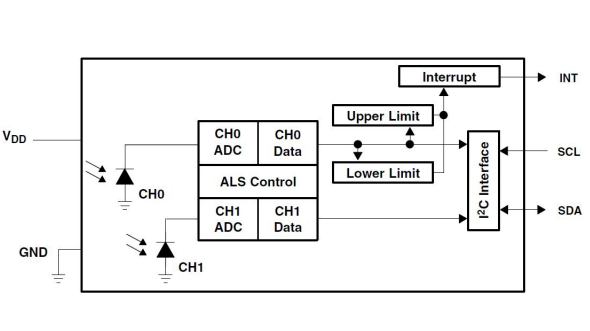
TSL2591 Block Diagram
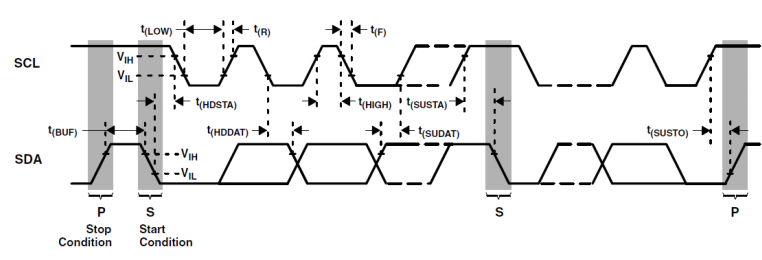
TSL2591 Timing Diagram
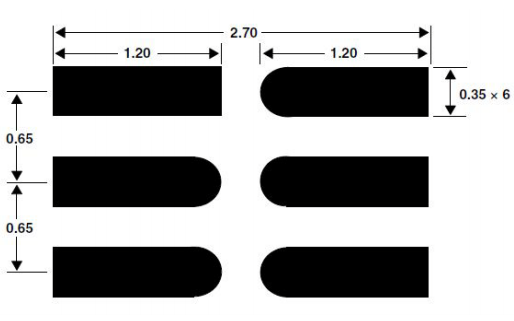
TSL2591 PCB Layout
Suggested land pattern based on the IPC-7351B Generic Requirements for Surface Mount Design and Land Pattern Standard(2010)for the small outline no-lead(SON) package is shown in the following figure.
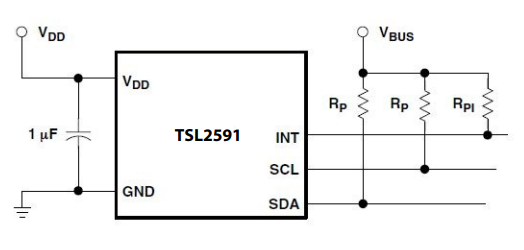
TSL2591 Application Circuit
The figure shows a typical hardware application circuit.
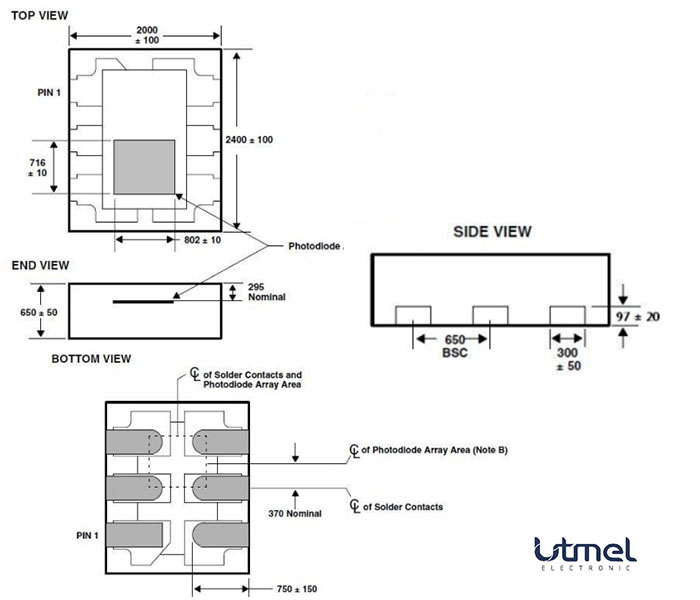
TSL2591 Package
TSL2591 Manufacturer
AMS is a global leader in the design and manufacture of advanced sensor solutions. Their mission is to shape the world with sensor solutions by providing a seamless interface between humans and technology. AMS focuses on sensor-rich market segments, providing high-performance sensor solutions and driving true leadership in three sensing areas: optical sensing, image sensing, and audio sensing. Headquartered in Austria, ams employs about 10,000 people globally and serves more than 8,000 customers worldwide. AMS is listed on the SIX Swiss stock exchange (ticker symbol: AMS).
Trend Analysis
Datasheet PDF
- Datasheets :
What is TSL2591 used for?
The TSL2591 is a very high-sensitivity light-to-digital converter that transforms light intensity into a digital signal output capable of a direct I2C interface. The device combines one broadband photodiode (visible plus infrared) and one infrared-responding photodiode on a single CMOS integrated circuit.
How does TSL2591 work?
The TSL2591 is a very high-sensitivity light-to-digital converter that transforms light intensity into a digital signal output capable of the direct I2C interface. Two integrating ADCs convert the photodiode currents into a digital output that represents the irradiance measured on each channel.
 AD9226 65 MSPS 12-bit ADC: High-Speed Data Acquisition and FPGA Integration Guide
14 March 2026598
 A940 PNP Transistor: 2SA940 150V 1.5A Power Transistor, TO-220 and Equivalents
19 January 20228102
 MCP1702 250 mA Low Quiescent Current LDO Regulator: Circuit, Datasheet pdf and Equivalents
26 November 20213616
 LM336 2.5V Regulator Diodes: Datasheet, Reference and Circuit
22 September 20218087
 DST2045AX Rectifier: Features, Pinout, and Datasheet
23 February 2022676
 2SD1047 Transistor: Circuit, Pinout, and Datasheet
25 November 20219953
 BR2032 Battery: Panasonic BR2032, BR2032 vs. CR2032, Datasheet
23 April 202212183
 CD4050 hex buffer:Pinout, Alternatives, Datasheet PDF
02 July 20215369
 What is SMT (Surface Mount Technology)?
02 December 20218865
 What is a Resistor Used For?
01 August 20252682
 Optimizing Energy Exchange with Vehicle-to-Grid Technology
25 April 20233298
 RF Front End in the 5G Era
25 October 20217705
 What is a Motor Starter?
26 December 20256340
 Will HBM replace DDR and become Computer Memory?
09 September 202128006
 Coping with Radiation-Induced Deterioration in Wide and UltraWide Bandgap Semiconductors
01 December 20232159
 How do Transistors Work?
10 August 202015421
ams
In Stock: 4745
Minimum: 1 Multiples: 1
Qty
Unit Price
Ext Price
1
$1.309932
$1.31
10
$1.235785
$12.36
100
$1.165835
$116.58
500
$1.099844
$549.92
1000
$1.037589
$1,037.59
Not the price you want? Send RFQ Now and we'll contact you ASAP.
Inquire for More Quantity
![TMD49033]() TMD49033
TMD49033ams
![TSL25403]() TSL25403
TSL25403ams
![TMG39931]() TMG39931
TMG39931ams
![TSL235R-LF]() TSL235R-LF
TSL235R-LFams
![TSL27713FN]() TSL27713FN
TSL27713FNams
![TSL252R-LF]() TSL252R-LF
TSL252R-LFams
![TSL27711FN]() TSL27711FN
TSL27711FNams
![TSL251R-LF]() TSL251R-LF
TSL251R-LFams
![TSL45315CL]() TSL45315CL
TSL45315CLams
![TSL25711FN]() TSL25711FN
TSL25711FNams