Product
 Brand
Brand Articles
 Tools
Tools
Understanding the STM32H750VBT6 Microcontroller

128KB 128K x 8 FLASH ARM® Cortex®-M7 32-Bit Microcontroller STM32H7 Series STM32H750 3.3V 100-LQFP


128KB 128K x 8 FLASH ARM® Cortex®-M7 32-Bit Microcontroller STM32H7 Series STM32H750 3.3V 100-LQFP
The STM32H750VBT6 microcontroller offers a 480 MHz Cortex-M7 core, 1 MB RAM, 128 KB flash, advanced security, low power modes, and versatile peripherals.
Product Introduction
The STM32H750VBT6 is a high-performance microcontroller designed to meet the demands of modern embedded systems. You’ll find it excels in processing capabilities thanks to its 32-bit data bus width and a maximum clock frequency of 48 MHz. This microcontroller stands out in the STM32H7 series due to its balance between advanced features and cost-effectiveness. With 39 GPIO pins, 12-bit ADC resolution, and integrated timers, it offers versatility for a wide range of applications. Its compact design and efficient power management make it ideal for projects requiring reliability and precision.
Specifications of the STM32H750VBT6
Processor and Core Architecture
The STM32H750VBT6 features a powerful 32-bit Arm Cortex-M7 core, designed to deliver exceptional processing capabilities. This core operates at a maximum frequency of 480 MHz, making it one of the fastest in its class. The Cortex-M7 architecture includes a double-precision floating-point unit (FPU) and L1 cache, which enhance its ability to handle complex mathematical computations and data-intensive tasks efficiently.
You’ll appreciate the inclusion of a Memory Protection Unit (MPU) in the core. It ensures robust security by isolating critical memory regions from unauthorized access. The STM32H750VBT6 also achieves an impressive 856 DMIPS (Dhrystone MIPS) performance, which translates to faster execution of instructions and improved responsiveness in real-time applications.
Here’s a quick comparison of the processor specifications:
| Document | Processor | Frequency | RAM | Flash Memory |
|---|---|---|---|---|
| STM32H750VBT6 | Cortex-M7 | 480 MHz | 1 MB | 128 KB |
| DevEBox H750VBTX | Cortex-M7 | 480 MHz | 512 KB | 128 KB |
The STM32H750 development board leverages this core architecture to provide a reliable platform for prototyping and development. Its schematic ensures compatibility with a wide range of applications, from industrial automation to IoT devices.
Memory and Storage
The STM32H750VBT6 offers a combination of high-speed embedded memory and efficient storage options. It includes 1 MB of Data RAM and 128 KB of flash memory. This configuration ensures that you have sufficient space for both program execution and data storage. The high-speed embedded memory allows the microcontroller to access data quickly, reducing latency and improving overall performance.
The flash memory is ideal for storing firmware and application code. It retains data even when the power is off, ensuring reliability in critical applications. With this memory setup, the STM32H750 development board provides a robust foundation for projects requiring real-time data processing and storage.
Clock Speed and Performance
The STM32H750VBT6 operates at a maximum clock frequency of 480 MHz, which is a key factor in its high performance. This clock speed enables the microcontroller to execute instructions rapidly, making it suitable for demanding applications. The Arm Cortex-M7 core, combined with this clock speed, ensures smooth operation even in resource-intensive tasks.
Key performance highlights include:
A high-performance Cortex-M7 32-bit RISC core.
Operation at a clock frequency of up to 480 MHz.
Low power consumption, with total current consumption as low as 4 µA.
These features make the STM32H750VBT6 an excellent choice for applications requiring both speed and efficiency. Whether you’re working on an STM32H750 development board schematic or designing a custom solution, this microcontroller delivers the performance you need.
Package and Dimensions
When working with the STM32H750VBT6 microcontroller, understanding its package and dimensions is crucial. These physical characteristics determine how you can integrate it into your designs and the type of applications it suits best.
The STM32H750VBT6 comes in a LQFP-100 package (Low-Profile Quad Flat Package). This package type is widely used in embedded systems due to its compact size and ease of soldering. The LQFP-100 package features 100 pins, which provide extensive connectivity options for peripherals and GPIOs.
Key Dimensions of the LQFP-100 Package:
Body Size: 14 mm x 14 mm
Pin Pitch: 0.5 mm (distance between adjacent pins)
Package Height: 1.4 mm (maximum)
These dimensions make the STM32H750VBT6 suitable for applications where space is limited. Its small footprint allows you to design compact PCBs (Printed Circuit Boards) without compromising functionality.
Tip: The 0.5 mm pin pitch requires precise soldering techniques. If you're new to soldering, consider using a development board to simplify prototyping.
Advantages of the LQFP-100 Package:
Compact Design: The small size helps you save space on your PCB.
Ease of Handling: The flat package design makes it easier to mount and solder.
High Pin Count: With 100 pins, you gain flexibility in connecting peripherals and external components.
Thermal Efficiency: The package dissipates heat effectively, ensuring stable performance even in demanding applications.
The package's design also ensures durability. It withstands mechanical stress during assembly and operation, making it reliable for industrial and consumer applications.
If you're designing a custom PCB, you can refer to the STM32H750VBT6 datasheet for detailed package drawings and recommended land patterns. These resources help you ensure proper alignment and soldering of the microcontroller.
Note: Always verify the package dimensions and pin layout before finalizing your PCB design. This step prevents costly errors during manufacturing.
By understanding the package and dimensions of the STM32H750VBT6, you can make informed decisions about its integration into your projects. Its compact size and robust design make it a versatile choice for a wide range of embedded systems.
Pin Configuration of the STM32H750VBT6
Pin Layout Overview
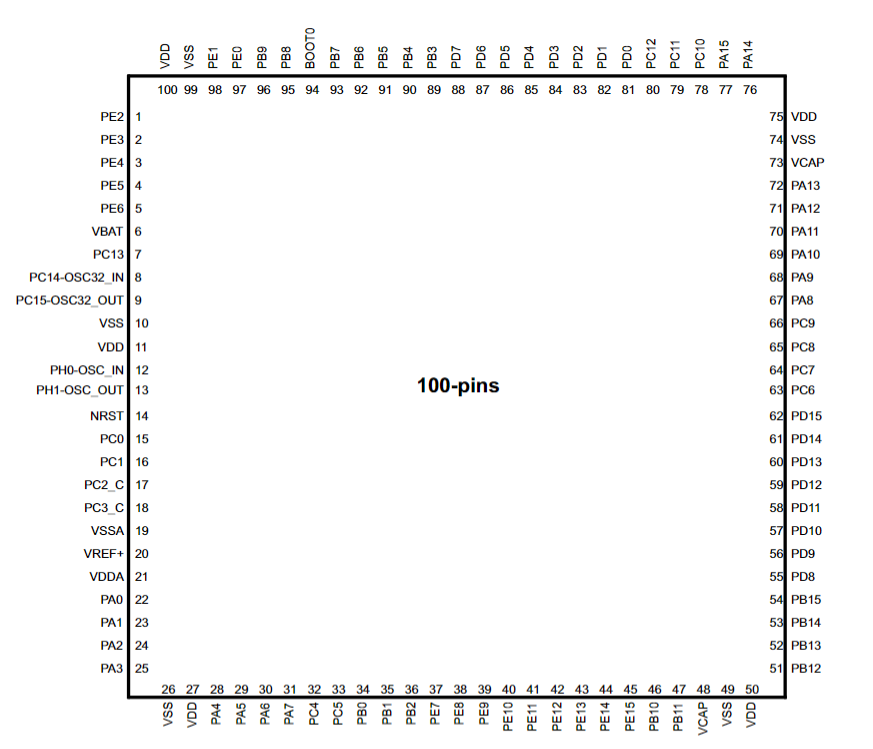
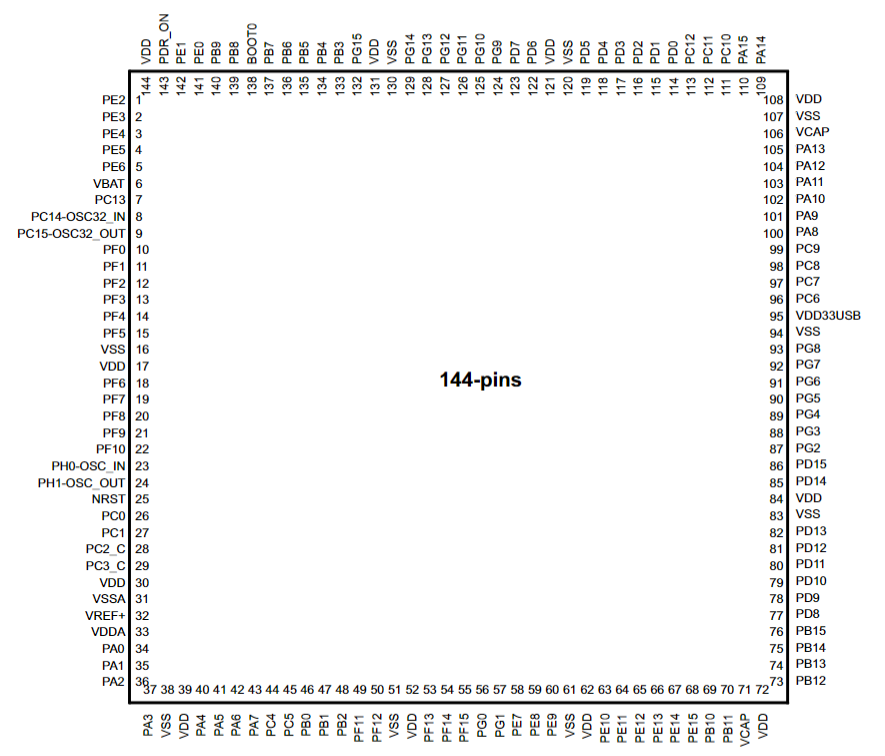
The STM32H750VBT6 microcontroller offers a versatile pin layout that supports a wide range of applications. It is available in multiple package options, including LQFP100, LQFP144, and LQFP176. Each package provides a different number of pins, allowing you to choose the one that best fits your project requirements. Below is a quick reference to the pin configurations for these packages:
| Pin Configuration | Description |
|---|---|
| LQFP100 | View Pinout |
| LQFP144 | View Pinout |
| LQFP176 | View Pinout |
Each pin serves a specific purpose, such as power supply, ground, or communication interfaces. You can refer to the Product Brief Datasheet or the Detailed Reference Manual Datasheet for detailed pin descriptions and schematics.
Key Pin Functions
The STM32H750VBT6 microcontroller includes pins that support essential functions for embedded systems. These functions include power management, communication, and general-purpose input/output (GPIO). Here are some key pin functions you should know:
Power Supply Pins: These pins provide the necessary voltage to the microcontroller. For example, VDD pins supply power, while VSS pins connect to the ground.
Reset Pin: The NRST pin allows you to reset the microcontroller during operation.
Clock Pins: Pins such as OSC_IN and OSC_OUT connect to external oscillators for clock signal generation.
Communication Pins: Dedicated pins support interfaces like UART, SPI, I2C, and USB. For instance, PA9 and PA10 are used for UART communication.
Analog Pins: These pins connect to the ADC (Analog-to-Digital Converter) for analog signal processing.
Understanding these functions helps you configure the stm32h750 board pinout effectively for your application.
GPIO and Peripheral Connectivity
The STM32H750VBT6 microcontroller features a robust GPIO system that allows you to interface with external peripherals. It supports multiple I/O modes, including input, output, and alternate functions. Each GPIO pin can be configured for specific tasks, such as controlling LEDs, reading sensor data, or communicating with other devices.
Here’s a table summarizing some common peripheral interfaces and their pin mappings:
| Interface Type | Pin Mapping | Description |
|---|---|---|
| UART | PA9/PA10 | UART_1 TX/RX available on the header pins |
| User LED | PC13 | User LED (blue) |
| SPI | PE11/PE12/PE14 | SPI4 NCS/CLK/MOSI for SPI LCD |
| QuadSPI | PB6/PB2/PD11/PD12/PE2/PD13 | QuadSPI NCS/CLK/IO0/IO1/IO2/IO3 for NOR Flash |
| USB | PA11/PA12 | USB DM/DP connections |
The microcontroller’s I/O flexibility ensures seamless integration with various devices. For example, you can use the GPIO pins to control motors or interface with displays. The stm32h750 board pinout provides a clear guide to connecting these peripherals efficiently.
Tip: Always consult the datasheet for detailed pin configurations and electrical characteristics. This ensures proper functionality and avoids damage to the microcontroller.
Features of the STM32H750VBT6
Security Features
The STM32H750VBT6 microcontroller offers robust security features to protect your applications from unauthorized access and tampering. These features ensure the integrity and confidentiality of your data, making the microcontroller suitable for sensitive applications like industrial automation and IoT devices.
Memory Protection Unit (MPU): The MPU isolates critical memory regions, preventing unauthorized access. This feature safeguards your firmware and sensitive data from accidental or malicious interference.
Secure Boot: The microcontroller supports a secure boot process, verifying the authenticity of the firmware before execution. This ensures that only trusted code runs on your device.
Cryptographic Accelerators: Hardware-based cryptographic accelerators enhance the performance of encryption and decryption operations. These accelerators support algorithms like AES, RSA, and SHA, enabling secure communication and data storage.
Tamper Detection: Dedicated tamper pins monitor external signals for unauthorized access attempts. If tampering is detected, the microcontroller can trigger an alert or erase sensitive data.
Tip: Use the tamper detection feature to add an extra layer of security to your designs, especially in applications where physical access to the device is a concern.
These security features make the STM32H750VBT6 a reliable choice for applications requiring high levels of protection.
Power Management
Efficient power management is a standout feature of the STM32H750VBT6. This microcontroller is designed to optimize power consumption without compromising performance, making it ideal for battery-powered and energy-sensitive applications.
Low-Power Modes: The microcontroller includes multiple low-power modes, such as Sleep, Stop, and Standby. These modes reduce power consumption significantly when the device is idle. For example, in Standby mode, the current consumption can drop to as low as 4 µA.
Dynamic Voltage Scaling: This feature adjusts the core voltage based on the processing load. By lowering the voltage during less demanding tasks, the microcontroller minimizes power usage.
Peripheral Clock Gating: You can disable unused peripherals to save power. This feature allows you to tailor the power consumption to your application's specific needs.
Battery Backup Domain: The STM32H750VBT6 includes a backup domain powered by a separate battery. This domain ensures that critical data, such as real-time clock (RTC) settings, remain intact even when the main power supply is off.
Here’s a quick comparison of power modes and their typical current consumption:
| Power Mode | Typical Current Consumption | Use Case Example |
|---|---|---|
| Run Mode | ~100 mA | High-performance tasks |
| Sleep Mode | ~10 mA | Short idle periods |
| Stop Mode | ~100 µA | Longer idle periods |
| Standby Mode | ~4 µA | Deep sleep or battery-powered devices |
Note: To maximize battery life, configure the microcontroller to enter low-power modes during idle periods.
The STM32H750VBT6’s advanced power management features allow you to balance performance and energy efficiency effectively.
Integrated Peripherals
The STM32H750VBT6 microcontroller comes equipped with a rich set of integrated peripherals, enabling you to build complex systems without the need for additional components. These peripherals enhance the microcontroller's versatility and simplify your design process.
Direct Memory Access (DMA): The DMA controller allows peripherals to transfer data directly to and from memory without CPU intervention. This feature reduces CPU load and improves overall system performance.
Timers: Multiple general-purpose and advanced timers support tasks like PWM generation, input capture, and time-based event triggering. These timers are essential for motor control, signal processing, and other real-time applications.
Communication Interfaces: The microcontroller includes a wide range of communication interfaces, such as UART, SPI, I2C, CAN, and USB. These interfaces make it easy to connect the STM32H750 to external devices like sensors, displays, and storage modules.
Analog Peripherals: The STM32H750VBT6 features a 12-bit ADC (Analog-to-Digital Converter) and DAC (Digital-to-Analog Converter). These peripherals enable precise analog signal processing, which is crucial for applications like audio processing and sensor data acquisition.
Graphics Accelerator: A built-in Chrom-ART Accelerator enhances graphical performance, making the microcontroller suitable for applications with graphical user interfaces (GUIs).
Here’s an example of how the DMA feature can improve efficiency:
// Example: Configuring DMA for UART data transfer
DMA_InitTypeDef DMA_InitStructure;
DMA_InitStructure.DMA_PeripheralBaseAddr = (uint32_t)&USART1->DR;
DMA_InitStructure.DMA_MemoryBaseAddr = (uint32_t)buffer;
DMA_InitStructure.DMA_DIR = DMA_DIR_PeripheralDST;
DMA_InitStructure.DMA_BufferSize = BUFFER_SIZE;
DMA_Init(DMA1_Channel4, &DMA_InitStructure);
DMA_Cmd(DMA1_Channel4, ENABLE);
Tip: Use the DMA controller to offload repetitive data transfer tasks from the CPU. This improves system responsiveness and reduces power consumption.
The integrated peripherals in the STM32H750VBT6 provide the tools you need to create efficient and feature-rich embedded systems.
RTOS Support
The STM32H750VBT6 microcontroller offers robust support for Real-Time Operating Systems (RTOS), making it an excellent choice for applications requiring precise timing and multitasking. If you’re working on a project that involves multiple tasks running simultaneously, RTOS can help you manage them efficiently.
Why Use RTOS with STM32H750VBT6?
RTOS provides a structured way to handle tasks, ensuring that each one gets the CPU time it needs. This is especially useful in embedded systems where timing is critical. Here’s why you should consider using RTOS with the STM32H750VBT6:
Task Scheduling: RTOS uses a scheduler to allocate CPU time to tasks based on their priority. This ensures that high-priority tasks, like sensor data processing, are not delayed by lower-priority ones.
Deterministic Behavior: RTOS guarantees predictable execution times, which is crucial for real-time applications like motor control or medical devices.
Resource Management: It helps you manage system resources like memory, peripherals, and communication interfaces more effectively.
Scalability: RTOS allows you to add new features or tasks without disrupting the existing system.
Tip: If your application involves time-sensitive operations, such as controlling a robotic arm or processing audio signals, RTOS can significantly improve performance and reliability.
Popular RTOS Options for STM32H750VBT6
The STM32H750VBT6 is compatible with several popular RTOS platforms. Each one offers unique features tailored to different use cases. Here’s a quick comparison:
| RTOS Name | Key Features | Use Case Examples |
|---|---|---|
| FreeRTOS | Lightweight, open-source, and widely used | IoT devices, consumer electronics |
| Zephyr OS | Modular design, supports multiple architectures | Industrial automation, wearables |
| ThreadX | High performance, small memory footprint | Medical devices, automotive systems |
| Micrium OS | Advanced debugging tools, safety-certified | Aerospace, critical systems |
FreeRTOS is a popular choice due to its simplicity and extensive community support. If you’re new to RTOS, starting with FreeRTOS can help you get up to speed quickly.
How to Implement RTOS on STM32H750VBT6
Getting started with RTOS on the STM32H750VBT6 is straightforward. You can use development tools like STM32CubeIDE, which integrates RTOS support seamlessly. Follow these steps to implement RTOS in your project:
Set Up Your Development Environment: Install STM32CubeIDE and create a new project for the STM32H750VBT6.
Enable RTOS Middleware: Use the STM32CubeMX tool to configure FreeRTOS or another RTOS of your choice. This tool generates the necessary code for task management and scheduling.
Define Tasks: Create tasks for each function in your application. For example, one task can handle sensor data, while another manages communication.
Configure Priorities: Assign priorities to tasks based on their importance. High-priority tasks should handle time-critical operations.
Test and Debug: Use debugging tools to monitor task execution and ensure that the system behaves as expected.
Here’s an example of how you can define tasks in FreeRTOS:
void vTask1(void *pvParameters) {
    for (;;) {
        // Task 1 code
    }
}

void vTask2(void *pvParameters) {
    for (;;) {
        // Task 2 code
    }
}

int main(void) {
    xTaskCreate(vTask1, "Task 1", 1000, NULL, 1, NULL);
    xTaskCreate(vTask2, "Task 2", 1000, NULL, 2, NULL);
    vTaskStartScheduler();
    while (1);
}Note: Always test your RTOS configuration thoroughly. Misconfigured tasks or priorities can lead to unexpected behavior.
Benefits of RTOS in Embedded Systems
Using RTOS with the STM32H750VBT6 unlocks several advantages for your embedded projects:
Improved Efficiency: RTOS ensures optimal use of the CPU by switching between tasks dynamically.
Simplified Development: It provides built-in mechanisms for task synchronization and communication, reducing the complexity of your code.
Enhanced Reliability: RTOS minimizes the risk of system crashes by isolating tasks and managing resources effectively.
Real-Time Performance: It enables your application to respond to events within strict time constraints.
By leveraging RTOS, you can build more robust and feature-rich systems with the STM32H750VBT6. Whether you’re designing an IoT device or an industrial controller, RTOS support ensures that your application meets its performance goals.
Pro Tip: Start with simple RTOS configurations and gradually add complexity as you become more comfortable with task management and scheduling.
Applications of the STM32H750VBT6 Microcontroller
Industrial Automation
The STM32H750VBT6 microcontroller plays a vital role in industrial automation. You can use it to control machinery, monitor processes, and improve efficiency in manufacturing environments. Its high processing speed and integrated peripherals make it ideal for tasks like motor control and real-time data acquisition. For example, the microcontroller’s timers and PWM capabilities allow precise control of motors and actuators. Its communication interfaces, such as CAN and UART, enable seamless interaction with sensors and other devices on the factory floor.
Tip: If you’re designing an industrial system, leverage the microcontroller’s low-power modes to reduce energy consumption during idle periods.
IoT and Smart Devices
The STM32H750VBT6 microcontroller is a perfect choice for IoT and smart devices. Its advanced features, such as low power consumption and robust connectivity options, make it suitable for applications like smart home systems and wearable technology. You can use its GPIO pins to connect sensors that monitor temperature, humidity, or motion. The microcontroller’s support for communication protocols like Wi-Fi and Bluetooth ensures reliable data transmission to cloud platforms or mobile apps.
Here’s an example of how it fits into IoT applications:
| Feature | Benefit for IoT Devices |
|---|---|
| Low Power Modes | Extends battery life |
| Communication Interfaces | Enables wireless connectivity |
| Compact Package | Fits into small devices |
Pro Tip: Use the microcontroller’s cryptographic accelerators to secure data in IoT applications.
Consumer Electronics
The STM32H750VBT6 microcontroller enhances the functionality of consumer electronics. You can integrate it into devices like smart TVs, gaming consoles, and audio systems. Its graphics accelerator supports smooth user interfaces, while its high-speed processing ensures quick response times. The microcontroller’s ADC and DAC capabilities make it suitable for audio applications, such as sound equalization and signal processing.
For example, in a smart speaker, you can use the microcontroller to process voice commands and manage audio playback. Its ability to handle multiple tasks simultaneously ensures a seamless user experience.
Note: When designing consumer electronics, consider using the microcontroller’s DMA feature to optimize data transfer between peripherals.
Automotive and Medical Use Cases
The STM32H750VBT6 microcontroller finds significant use in both automotive and medical fields. Its high performance, reliability, and advanced features make it a valuable component in these critical industries.
Automotive Use Cases
You can integrate the STM32H750VBT6 into various automotive systems. Its robust processing power supports advanced driver-assistance systems (ADAS), which enhance vehicle safety by detecting obstacles and assisting with navigation. The microcontroller’s real-time capabilities ensure precise control of braking, steering, and acceleration in autonomous vehicles.
In addition, its communication interfaces, such as CAN and LIN, allow seamless interaction with other electronic control units (ECUs) in the vehicle. This makes it ideal for managing engine control, infotainment systems, and climate control. The microcontroller’s low power consumption also helps reduce the overall energy demands of electric and hybrid vehicles.
Tip: Use the microcontroller’s tamper detection feature to secure critical automotive systems against unauthorized access.
Medical Use Cases
In the medical field, the STM32H750VBT6 plays a crucial role in developing reliable and efficient devices. Its high-speed processing enables accurate data acquisition and analysis in diagnostic equipment like ECG machines and blood analyzers. The microcontroller’s integrated ADC and DAC ensure precise signal conversion, which is essential for monitoring vital signs.
You can also use this microcontroller in portable medical devices, such as insulin pumps and wearable health monitors. Its low-power modes extend battery life, making these devices more convenient for patients. Additionally, the secure boot and cryptographic accelerators protect sensitive patient data, ensuring compliance with healthcare regulations.
Pro Tip: Leverage the microcontroller’s RTOS support to manage multiple tasks in complex medical applications, such as real-time monitoring and data logging.
The STM32H750VBT6’s versatility and advanced features make it a reliable choice for applications in both automotive and medical industries.
Comparing the STM32H750VBT6 to Other STM32H7 Microcontrollers
Performance and Features
When comparing the STM32H750 to other STM32H7 microcontrollers, you’ll notice its unique balance of speed and efficiency. The STM32H750 operates at a clock speed of up to 480 MHz, powered by the Arm Cortex-M7 core. This gives it an edge in handling demanding tasks like real-time data processing and complex computations. While other STM32H7 models may offer higher flash memory, the STM32H750 focuses on optimizing performance with its 128 KB of flash and 1 MB of RAM. This configuration ensures faster execution for applications that prioritize speed over storage.
Additionally, the STM32H750 includes advanced features like a double-precision FPU and L1 cache. These features enhance its ability to process mathematical operations and manage data efficiently. If your project involves tasks like motor control or graphical interfaces, this microcontroller delivers the performance you need without unnecessary overhead.
Cost and Use Case Differences
The STM32H750 stands out as a cost-effective option within the STM32H7 series. While some models in the series offer more extensive memory or additional peripherals, they often come at a higher price. The STM32H750 strikes a balance by providing essential features at a lower cost, making it ideal for budget-conscious projects.
For example, if you’re designing an IoT device or a consumer electronic product, the STM32H750 offers the right mix of performance and affordability. On the other hand, applications requiring extensive memory or advanced security features might benefit from higher-end STM32H7 models. Choosing the right microcontroller depends on your project’s specific needs and budget constraints.
Advantages of the STM32H750VBT6
The STM32H750VBT6 offers several advantages that make it a preferred choice for many developers. Its compact LQFP-100 package simplifies integration into space-constrained designs. The microcontroller’s low power consumption ensures energy efficiency, which is crucial for battery-powered devices. Additionally, its robust GPIO and peripheral connectivity provide flexibility for interfacing with external components.
Another key advantage is its compatibility with Real-Time Operating Systems (RTOS). This feature allows you to manage multiple tasks efficiently, making the STM32H750VBT6 suitable for real-time applications. Whether you’re working on industrial automation or smart devices, this microcontroller combines performance, affordability, and versatility to meet your requirements.
The STM32H750VBT6 combines advanced features with cost-effectiveness, making it a standout in the STM32H7 series. Its ARM Cortex-M7 core, running at 480 MHz, ensures high performance for demanding applications. With up to 1 MB of RAM, 128 KB of flash memory, and a full set of DSP instructions, this microcontroller delivers exceptional speed and efficiency. Its robust security features, integrated peripherals, and RTOS support enhance its versatility across industries.
Here’s a quick recap of its key specifications:
| Feature | Details |
|---|---|
| Core | ARM Cortex-M7 32-bit RISC core |
| Maximum Frequency | 480MHz |
| Flash Memory | 128KB |
| RAM | Up to 1MB (including 192KB TCM RAM, up to 864KB user SRAM, 4KB backup SRAM) |
| DSP Instructions | Full set of DSP instructions |
| Memory Protection Unit (MPU) | Yes |
| Interfaces | Various enhanced I/O and peripheral memory access capabilities |
| Bus Architecture | APB bus, AHB bus, 2×32-bit multi-AHB bus matrix, internal and external multi-layer AXI interconnects |
You’ll find this microcontroller excels in embedded systems, from IoT devices to industrial automation. Its compact design, low power consumption, and extensive connectivity options make it a reliable choice for developers. Whether you’re building a smart device or a medical application, the STM32H750 offers the right balance of performance and affordability.
Tip: Its RoHS compliance and flexible mounting style further enhance its appeal for environmentally conscious and space-constrained designs.
The STM32H750VBT6 stands as a versatile and valuable option in the STM32H7 series, offering a unique combination of speed, efficiency, and cost-effectiveness.
FAQ
What makes the STM32H750VBT6 unique in the STM32H7 series?
The STM32H750VBT6 stands out for its balance of performance and cost. Its 480 MHz Cortex-M7 core delivers high-speed processing, while its compact LQFP-100 package ensures easy integration. You’ll also benefit from its advanced security features and low power consumption.
Can I use the STM32H750VBT6 for battery-powered devices?
Yes, you can. The STM32H750VBT6 includes low-power modes like Sleep and Standby, which reduce energy usage. These modes make it ideal for battery-powered applications, such as IoT devices or portable medical equipment.
How do I program the STM32H750VBT6 microcontroller?
You can program it using STM32CubeIDE, which provides an integrated development environment. This tool supports code generation, debugging, and RTOS integration. You’ll also find extensive libraries and examples to simplify your development process.
Is the STM32H750VBT6 suitable for real-time applications?
Absolutely. Its 480 MHz Cortex-M7 core, combined with RTOS support, ensures precise task scheduling and execution. This makes it perfect for real-time applications like motor control, industrial automation, and medical monitoring systems.
Where can I find resources for the STM32H750VBT6?
You can access resources like datasheets, reference manuals, and application notes on the official STMicroelectronics website. These documents provide detailed technical information and examples to help you design your project effectively.
Tip: Bookmark the STM32H750VBT6 product page for quick access to updates and tools.
Specifications
- TypeParameter
- Factory Lead Time12 Weeks
- Mounting Type
The "Mounting Type" in electronic components refers to the method used to attach or connect a component to a circuit board or other substrate, such as through-hole, surface-mount, or panel mount.
Surface Mount - Package / Case
refers to the protective housing that encases an electronic component, providing mechanical support, electrical connections, and thermal management.
100-LQFP - Surface Mount
having leads that are designed to be soldered on the side of a circuit board that the body of the component is mounted on.
YES - Data ConvertersA/D 36x16b; D/A 2x12b
- Number of I/Os82
- Operating Temperature
The operating temperature is the range of ambient temperature within which a power supply, or any other electrical equipment, operate in. This ranges from a minimum operating temperature, to a peak or maximum operating temperature, outside which, the power supply may fail.
-40°C~85°C TA - Packaging
Semiconductor package is a carrier / shell used to contain and cover one or more semiconductor components or integrated circuits. The material of the shell can be metal, plastic, glass or ceramic.
Tray - Series
In electronic components, the "Series" refers to a group of products that share similar characteristics, designs, or functionalities, often produced by the same manufacturer. These components within a series typically have common specifications but may vary in terms of voltage, power, or packaging to meet different application needs. The series name helps identify and differentiate between various product lines within a manufacturer's catalog.
STM32H7 - Part Status
Parts can have many statuses as they progress through the configuration, analysis, review, and approval stages.
Active - Moisture Sensitivity Level (MSL)
Moisture Sensitivity Level (MSL) is a standardized rating that indicates the susceptibility of electronic components, particularly semiconductors, to moisture-induced damage during storage and the soldering process, defining the allowable exposure time to ambient conditions before they require special handling or baking to prevent failures
3 (168 Hours) - Number of Terminations100
- Additional Feature
Any Feature, including a modified Existing Feature, that is not an Existing Feature.
ALSO OPERATES AT 480 MHZ - Terminal Position
In electronic components, the term "Terminal Position" refers to the physical location of the connection points on the component where external electrical connections can be made. These connection points, known as terminals, are typically used to attach wires, leads, or other components to the main body of the electronic component. The terminal position is important for ensuring proper connectivity and functionality of the component within a circuit. It is often specified in technical datasheets or component specifications to help designers and engineers understand how to properly integrate the component into their circuit designs.
QUAD - Terminal Form
Occurring at or forming the end of a series, succession, or the like; closing; concluding.
GULL WING - Peak Reflow Temperature (Cel)
Peak Reflow Temperature (Cel) is a parameter that specifies the maximum temperature at which an electronic component can be exposed during the reflow soldering process. Reflow soldering is a common method used to attach electronic components to a circuit board. The Peak Reflow Temperature is crucial because it ensures that the component is not damaged or degraded during the soldering process. Exceeding the specified Peak Reflow Temperature can lead to issues such as component failure, reduced performance, or even permanent damage to the component. It is important for manufacturers and assemblers to adhere to the recommended Peak Reflow Temperature to ensure the reliability and functionality of the electronic components.
NOT SPECIFIED - Supply Voltage
Supply voltage refers to the electrical potential difference provided to an electronic component or circuit. It is crucial for the proper operation of devices, as it powers their functions and determines performance characteristics. The supply voltage must be within specified limits to ensure reliability and prevent damage to components. Different electronic devices have specific supply voltage requirements, which can vary widely depending on their design and intended application.
3.3V - Terminal Pitch
The center distance from one pole to the next.
0.5mm - Reach Compliance Code
Reach Compliance Code refers to a designation indicating that electronic components meet the requirements set by the Registration, Evaluation, Authorization, and Restriction of Chemicals (REACH) regulation in the European Union. It signifies that the manufacturer has assessed and managed the chemical substances within the components to ensure safety and environmental protection. This code is vital for compliance with regulations aimed at minimizing risks associated with hazardous substances in electronic products.
compliant - Time@Peak Reflow Temperature-Max (s)
Time@Peak Reflow Temperature-Max (s) refers to the maximum duration that an electronic component can be exposed to the peak reflow temperature during the soldering process, which is crucial for ensuring reliable solder joint formation without damaging the component.
NOT SPECIFIED - Base Part Number
The "Base Part Number" (BPN) in electronic components serves a similar purpose to the "Base Product Number." It refers to the primary identifier for a component that captures the essential characteristics shared by a group of similar components. The BPN provides a fundamental way to reference a family or series of components without specifying all the variations and specific details.
STM32H750 - JESD-30 Code
JESD-30 Code refers to a standardized descriptive designation system established by JEDEC for semiconductor-device packages. This system provides a systematic method for generating designators that convey essential information about the package's physical characteristics, such as size and shape, which aids in component identification and selection. By using JESD-30 codes, manufacturers and engineers can ensure consistency and clarity in the specification of semiconductor packages across various applications and industries.
S-PQFP-G100 - Supply Voltage-Max (Vsup)
The parameter "Supply Voltage-Max (Vsup)" in electronic components refers to the maximum voltage that can be safely applied to the component without causing damage. It is an important specification to consider when designing or using electronic circuits to ensure the component operates within its safe operating limits. Exceeding the maximum supply voltage can lead to overheating, component failure, or even permanent damage. It is crucial to adhere to the specified maximum supply voltage to ensure the reliable and safe operation of the electronic component.
3.6V - Supply Voltage-Min (Vsup)
The parameter "Supply Voltage-Min (Vsup)" in electronic components refers to the minimum voltage level required for the component to operate within its specified performance range. This parameter indicates the lowest voltage that can be safely applied to the component without risking damage or malfunction. It is crucial to ensure that the supply voltage provided to the component meets or exceeds this minimum value to ensure proper functionality and reliability. Failure to adhere to the specified minimum supply voltage may result in erratic behavior, reduced performance, or even permanent damage to the component.
1.71V - Oscillator Type
Wien Bridge Oscillator; RC Phase Shift Oscillator; Hartley Oscillator; Voltage Controlled Oscillator; Colpitts Oscillator; Clapp Oscillators; Crystal Oscillators; Armstrong Oscillator.
Internal - Speed
In electronic components, "Speed" typically refers to the rate at which data can be processed or transferred within the component. It is a measure of how quickly the component can perform its functions, such as executing instructions or transmitting signals. Speed is often specified in terms of frequency, such as clock speed in processors or data transfer rate in memory modules. Higher speed components can perform tasks more quickly, leading to improved overall performance in electronic devices. It is an important parameter to consider when designing or selecting electronic components for specific applications.
480MHz - RAM Size
RAM size refers to the amount of random access memory (RAM) available in an electronic component, such as a computer or smartphone. RAM is a type of volatile memory that stores data and instructions that are actively being used by the device's processor. The RAM size is typically measured in gigabytes (GB) and determines how much data the device can store and access quickly for processing. A larger RAM size allows for smoother multitasking, faster loading times, and better overall performance of the electronic component. It is an important factor to consider when choosing a device, especially for tasks that require a lot of memory, such as gaming, video editing, or running multiple applications simultaneously.
1M x 8 - Voltage - Supply (Vcc/Vdd)
Voltage - Supply (Vcc/Vdd) is a key parameter in electronic components that specifies the voltage level required for the proper operation of the device. It represents the power supply voltage that needs to be provided to the component for it to function correctly. This parameter is crucial as supplying the component with the correct voltage ensures that it operates within its specified limits and performance characteristics. It is typically expressed in volts (V) and is an essential consideration when designing and using electronic circuits to prevent damage and ensure reliable operation.
1.62V~3.6V - uPs/uCs/Peripheral ICs Type
The parameter "uPs/uCs/Peripheral ICs Type" refers to the classification of various integrated circuits used in electronic devices. It encompasses microprocessors (uPs), microcontrollers (uCs), and peripheral integrated circuits that provide additional functionalities. This classification helps in identifying the specific type of chip used for processing tasks, controlling hardware, or interfacing with other components in a system. Understanding this parameter is essential for selecting the appropriate electronic components for a given application.
MICROCONTROLLER, RISC - Core Processor
The term "Core Processor" typically refers to the central processing unit (CPU) of a computer or electronic device. It is the primary component responsible for executing instructions, performing calculations, and managing data within the system. The core processor is often considered the brain of the device, as it controls the overall operation and functionality. It is crucial for determining the speed and performance capabilities of the device, as well as its ability to handle various tasks and applications efficiently. In modern devices, core processors can have multiple cores, allowing for parallel processing and improved multitasking capabilities.
ARM® Cortex®-M7 - Peripherals
In the context of electronic components, "Peripherals" refer to devices or components that are connected to a main system or device to enhance its functionality or provide additional features. These peripherals can include input devices such as keyboards, mice, and touchscreens, as well as output devices like monitors, printers, and speakers. Other examples of peripherals include external storage devices, network adapters, and cameras. Essentially, peripherals are external devices that expand the capabilities of a main electronic system or device.
Brown-out Detect/Reset, DMA, I2S, LCD, POR, PWM, WDT - Clock Frequency
Clock frequency, also known as clock speed, refers to the rate at which a processor or electronic component can execute instructions. It is measured in hertz (Hz) and represents the number of cycles per second that the component can perform. A higher clock frequency typically indicates a faster processing speed and better performance. However, it is important to note that other factors such as architecture, efficiency, and workload also play a significant role in determining the overall performance of a component. In summary, clock frequency is a crucial parameter that influences the speed and efficiency of electronic components in processing data and executing tasks.
48MHz - Program Memory Type
Program memory typically refers to flash memory when it is used to hold the program (instructions). Program memory may also refer to a hard drive or solid state drive (SSD). Contrast with data memory.
FLASH - Core Size
Core size in electronic components refers to the physical dimensions of the core material used in devices such as inductors and transformers. The core size directly impacts the performance characteristics of the component, including its inductance, saturation current, and frequency response. A larger core size typically allows for higher power handling capabilities and lower core losses, while a smaller core size may result in a more compact design but with limitations on power handling and efficiency. Designers must carefully select the core size based on the specific requirements of the application to achieve optimal performance and efficiency.
32-Bit - Program Memory Size
Program Memory Size refers to the amount of memory available in an electronic component, such as a microcontroller or microprocessor, that is used to store program instructions. This memory is non-volatile, meaning that the data stored in it is retained even when the power is turned off. The program memory size determines the maximum amount of code that can be stored and executed by the electronic component. It is an important parameter to consider when selecting a component for a specific application, as insufficient program memory size may limit the functionality or performance of the device.
128KB 128K x 8 - Connectivity
In electronic components, "Connectivity" refers to the ability of a component to establish and maintain connections with other components or devices within a circuit. It is a crucial parameter that determines how easily signals can be transmitted between different parts of a circuit. Connectivity can be influenced by factors such as the number of input and output ports, the type of connectors used, and the overall design of the component. Components with good connectivity are essential for ensuring reliable and efficient operation of electronic systems.
CANbus, EBI/EMI, Ethernet, I2C, IrDA, LINbus, MDIO, MMC/SD/SDIO, QSPI, SAI, SPDIF, SPI, SWPMI, UART/USART, USB OTG - Bit Size
In electronic components, "Bit Size" refers to the number of bits that can be processed or stored by a particular component. A bit is the smallest unit of data in computing and can have a value of either 0 or 1. The Bit Size parameter is commonly used to describe the capacity or performance of components such as microprocessors, memory modules, and data buses. A larger Bit Size generally indicates a higher processing capability or storage capacity, allowing for more complex operations and larger amounts of data to be handled efficiently. It is an important specification to consider when selecting electronic components for specific applications that require certain levels of performance and data processing capabilities.
32 - Has ADC
Has ADC refers to the presence of an Analog-to-Digital Converter (ADC) in an electronic component. An ADC is a crucial component in many electronic devices as it converts analog signals, such as voltage or current, into digital data that can be processed by a digital system. Having an ADC allows the electronic component to interface with analog signals and convert them into a format that can be manipulated and analyzed digitally. This parameter is important for applications where analog signals need to be converted into digital form for further processing or control.
YES - DMA Channels
DMA (Direct Memory Access) Channels are a feature found in electronic components such as microcontrollers, microprocessors, and peripheral devices. DMA Channels allow data to be transferred directly between peripherals and memory without involving the CPU, thereby reducing the burden on the CPU and improving overall system performance. Each DMA Channel is typically assigned to a specific peripheral device or memory region, enabling efficient data transfer operations. The number of DMA Channels available in a system determines the concurrent data transfer capabilities and can vary depending on the specific hardware design. Overall, DMA Channels play a crucial role in optimizing data transfer efficiency and system performance in electronic devices.
YES - PWM Channels
PWM Channels, or Pulse Width Modulation Channels, refer to the number of independent PWM outputs available in an electronic component, such as a microcontroller or a motor driver. PWM is a technique used to generate analog-like signals by varying the duty cycle of a square wave signal. Each PWM channel can control the output of a specific device or component by adjusting the pulse width of the signal. Having multiple PWM channels allows for precise control of multiple devices simultaneously, making it a valuable feature in applications such as motor control, LED dimming, and audio signal generation. The number of PWM channels available in a component determines the flexibility and complexity of the system it can control.
YES - DAC Channels
DAC Channels refer to the number of independent analog output channels available in a digital-to-analog converter (DAC) electronic component. Each channel can convert a digital input signal into an analog output voltage or current. The number of DAC channels determines how many separate analog signals can be generated simultaneously by the DAC. For example, a DAC with two channels can output two different analog signals at the same time, while a DAC with only one channel can only output a single analog signal. The number of DAC channels is an important specification to consider when selecting a DAC for applications requiring multiple analog outputs.
YES - Address Bus Width
A computer system has an address bus with 8 parallel lines. This means that the address bus width is 8 bits.
8 - On Chip Program ROM Width
The parameter "On Chip Program ROM Width" refers to the data width of the read-only memory (ROM) implemented on a semiconductor chip. It indicates the number of bits that can be accessed simultaneously in each ROM read operation. A wider ROM width allows for faster data retrieval and processing, as more information can be transferred at once. This parameter is crucial in determining the overall performance and efficiency of electronic devices that utilize programmable ROM for storing firmware or application logic.
8 - External Data Bus Width
The External Data Bus Width refers to the number of bits that can be transmitted simultaneously between a microprocessor and external components, such as memory or peripherals. It determines the amount of data that can be transferred in a single clock cycle. A wider data bus allows for faster data transfer rates and can improve overall system performance. Common data bus widths include 8-bit, 16-bit, 32-bit, and 64-bit, with larger widths generally offering higher throughput but requiring more complex circuitry. The External Data Bus Width is an important parameter to consider when designing or evaluating electronic components to ensure compatibility and optimal performance.
16 - Length14mm
- Height Seated (Max)
Height Seated (Max) is a parameter in electronic components that refers to the maximum allowable height of the component when it is properly seated or installed on a circuit board or within an enclosure. This specification is crucial for ensuring proper fit and alignment within the overall system design. Exceeding the maximum seated height can lead to mechanical interference, electrical shorts, or other issues that may impact the performance and reliability of the electronic device. Manufacturers provide this information to help designers and engineers select components that will fit within the designated space and function correctly in the intended application.
1.6mm - Width14mm
- RoHS Status
RoHS means “Restriction of Certain Hazardous Substances” in the “Hazardous Substances Directive” in electrical and electronic equipment.
RoHS Compliant
Datasheet PDF
- Datasheets :
![The Comprehensive Introduction to SS14 Diode [Video]](https://res.utmel.com/Images/Article/23a63ed5-220a-478b-94ec-1bf5079c2fd9.jpg) The Comprehensive Introduction to SS14 Diode [Video]
The Comprehensive Introduction to SS14 Diode [Video]02 September 20227290
 A Comprehensive Guide to LTC6405IUD#PBF - ADC Driver Amplifier
06 March 2024179
 AD5160 Digital Potentiometer: How to Choose the Right Variant for Your Application
05 July 20251061
 What is LM5119PSQX/NOPB Dual Synchronous Buck Controller?
24 March 2022266
 A Comprehensive Guide to LTC6903IMS8#TRPBF Programmable Timer and Oscillator
06 March 2024503
 LT1083CK Voltage Regulator: Feature, Specification, and Datasheet
02 July 20211671
 SI4133 Integrated Circuit: Pinout, Features and Datasheet
24 December 20211315
 What's the Difference between the BMP280 and the BME280 Atmospheric Sensors?
06 July 202211087
 Understanding Power Management Units (PMUs)
06 June 20252642
 Basis of Fiber Optic and Fiber Optic Communication
22 October 20215329
 Beginners Guide to FPGA Design
29 December 20211258
 An Overview of Common Mode Chokes
10 August 202015666
 Semiconductor R&D Spending: Top 12 Countries
20 September 20233852
 3 Under-the-Radar Semiconductor Stocks Poised for Massive Growth
06 October 20233394
 The Impact of SMPS on LED Lighting and Diverse Industries
05 June 20252790
 TSMC's Global Distribution
25 March 20223916
STMicroelectronics
In Stock: 3160
United States
China
Canada
Japan
Russia
Germany
United Kingdom
Singapore
Italy
Hong Kong(China)
Taiwan(China)
France
Korea
Mexico
Netherlands
Malaysia
Austria
Spain
Switzerland
Poland
Thailand
Vietnam
India
United Arab Emirates
Afghanistan
Åland Islands
Albania
Algeria
American Samoa
Andorra
Angola
Anguilla
Antigua & Barbuda
Argentina
Armenia
Aruba
Australia
Azerbaijan
Bahamas
Bahrain
Bangladesh
Barbados
Belarus
Belgium
Belize
Benin
Bermuda
Bhutan
Bolivia
Bonaire, Sint Eustatius and Saba
Bosnia & Herzegovina
Botswana
Brazil
British Indian Ocean Territory
British Virgin Islands
Brunei
Bulgaria
Burkina Faso
Burundi
Cabo Verde
Cambodia
Cameroon
Cayman Islands
Central African Republic
Chad
Chile
Christmas Island
Cocos (Keeling) Islands
Colombia
Comoros
Congo
Congo (DRC)
Cook Islands
Costa Rica
Côte d’Ivoire
Croatia
Cuba
Curaçao
Cyprus
Czechia
Denmark
Djibouti
Dominica
Dominican Republic
Ecuador
Egypt
El Salvador
Equatorial Guinea
Eritrea
Estonia
Eswatini
Ethiopia
Falkland Islands
Faroe Islands
Fiji
Finland
French Guiana
French Polynesia
Gabon
Gambia
Georgia
Ghana
Gibraltar
Greece
Greenland
Grenada
Guadeloupe
Guam
Guatemala
Guernsey
Guinea
Guinea-Bissau
Guyana
Haiti
Honduras
Hungary
Iceland
Indonesia
Iran
Iraq
Ireland
Isle of Man
Israel
Jamaica
Jersey
Jordan
Kazakhstan
Kenya
Kiribati
Kosovo
Kuwait
Kyrgyzstan
Laos
Latvia
Lebanon
Lesotho
Liberia
Libya
Liechtenstein
Lithuania
Luxembourg
Macao(China)
Madagascar
Malawi
Maldives
Mali
Malta
Marshall Islands
Martinique
Mauritania
Mauritius
Mayotte
Micronesia
Moldova
Monaco
Mongolia
Montenegro
Montserrat
Morocco
Mozambique
Myanmar
Namibia
Nauru
Nepal
New Caledonia
New Zealand
Nicaragua
Niger
Nigeria
Niue
Norfolk Island
North Korea
North Macedonia
Northern Mariana Islands
Norway
Oman
Pakistan
Palau
Palestinian Authority
Panama
Papua New Guinea
Paraguay
Peru
Philippines
Pitcairn Islands
Portugal
Puerto Rico
Qatar
Réunion
Romania
Rwanda
Samoa
San Marino
São Tomé & Príncipe
Saudi Arabia
Senegal
Serbia
Seychelles
Sierra Leone
Sint Maarten
Slovakia
Slovenia
Solomon Islands
Somalia
South Africa
South Sudan
Sri Lanka
St Helena, Ascension, Tristan da Cunha
St. Barthélemy
St. Kitts & Nevis
St. Lucia
St. Martin
St. Pierre & Miquelon
St. Vincent & Grenadines
Sudan
Suriname
Svalbard & Jan Mayen
Sweden
Syria
Tajikistan
Tanzania
Timor-Leste
Togo
Tokelau
Tonga
Trinidad & Tobago
Tunisia
Turkey
Turkmenistan
Turks & Caicos Islands
Tuvalu
U.S. Outlying Islands
U.S. Virgin Islands
Uganda
Ukraine
Uruguay
Uzbekistan
Vanuatu
Vatican City
Venezuela
Wallis & Futuna
Yemen
Zambia
Zimbabwe
![STM32F103RBT6]() STM32F103RBT6
STM32F103RBT6STMicroelectronics
![STM32F103ZET6]() STM32F103ZET6
STM32F103ZET6STMicroelectronics
![STM32H743IIT6]() STM32H743IIT6
STM32H743IIT6STMicroelectronics
![STM32F407VET6]() STM32F407VET6
STM32F407VET6STMicroelectronics
![STM32F405RGT6]() STM32F405RGT6
STM32F405RGT6STMicroelectronics
![STM32F030C8T6]() STM32F030C8T6
STM32F030C8T6STMicroelectronics
![STM32F100C8T6B]() STM32F100C8T6B
STM32F100C8T6BSTMicroelectronics
![STM32F103VBT6]() STM32F103VBT6
STM32F103VBT6STMicroelectronics
![STM8S003F3U6TR]() STM8S003F3U6TR
STM8S003F3U6TRSTMicroelectronics
![STM32F429ZIT6]() STM32F429ZIT6
STM32F429ZIT6STMicroelectronics