

 Product
 Brand
Brand Articles
 Tools
Tools
Huawei's Mysterious Advanced Chip in New Mate 60 Pro Smartphone Sparks Speculation Amid US Sanctions
Huawei Technologies' silence concerning the advanced semiconductor that powers its latest flagship smartphone, the Mate 60 Pro, has sparked intense speculation in China. The company's silence has raised questions about where and how the chip was made, given the strict US trade sanctions. At the smartphone's surprise launch, Huawei did not give any details about the handset's processor or whether it supports 5G mobile networks. This has led industry analysts, tech bloggers, and consumers to seek answers outside the company. Chinese benchmarking website AnTuTu identified the Mate 60 Pro's central processing unit (CPU) as the Kirin 9000s, designed by Huawei's chip design unit, HiSilicon. This CPU has a 12-core configuration and a top clock speed of 2.62 gigahertz. Although HiSilicon's website did not provide any information about this CPU, the firm's existing Kirin 9000 and 9000e chipsets both support 5G connectivity and artificial intelligence applications, and are built on the advanced 5-nanometer manufacturing process. Huawei's lack of disclosure about the CPU reflects the company's efforts to quietly revive its smartphone business, which has been hampered by US sanctions. Both Huawei and HiSilicon were added to the US government's trade blacklist, known as the Entity List, in 2019. Under tightened US restrictions imposed in 2020, Huawei cannot obtain advanced integrated circuits (ICs) from major contract chip makers. Despite these restrictions, speculation that Semiconductor Manufacturing International Corp (SMIC), mainland China's largest chip foundry, might have progressed in making more advanced chips using less-advanced deep ultraviolet lithography systems, saw Chinese chip stocks rally. Huawei launched a surprise presale of the Mate 60 Pro, which sold out within a few hours. The early release can test the market's reaction, providing reference for stock levels amid an industry slowdown. This can also help manage expectations regarding its target consumers ahead of Apple's launch event in September. Amid the speculation surrounding the Mate 60 Pro's 5G CPU, Huawei is expected to face a number of supply chain challenges such as production yield rates. Huawei, which briefly surpassed Samsung to lead global smartphone shipments in early 2020, now faces the challenge of convincing consumers who have switched to other 5G smartphone brands in the past few years to reconsider its products in the market.
 UTMEL
UTMEL
We are the professional distributor of electronic components, providing a large variety of products to save you a lot of time, effort, and cost with our efficient self-customized service. careful order preparation fast delivery service
 Power Semiconductor Procurement After the Nexperia Shake-Up—NXP for Stability, ON for Technology, or Nexperia for Value?UTMEL04 November 20254931
The recent supply chain turmoil surrounding Netherlands-based Nexperia has sent shockwaves through the global semiconductor industry, forcing procurement professionals to re-evaluate their sourcing strategies.
Read More AI Computing Power Gap: How Token Consumption is Reshaping Server Component SourcingUTMEL23 June 2026989
As global token consumption drives the transition to high-density 100kW+ AI data centers, power delivery networks require advanced Wide-Bandgap semiconductors (SiC/GaN) and high-capacitance MLCCs. This shift has triggered a component procurement crisis with lead times exceeding 24 weeks. To bypass shortages, hardware buyers must abandon just-in-time manufacturing and leverage independent global distributor networks to secure critical power and passive components.
Read More The BSPDN Revolution: Overcoming IR Drop in Sub-2nm GAAFET Nodes with Backside Power DeliveryUTMEL25 June 20261008
As semiconductor manufacturing enters the sub-2nm era, Backside Power Delivery Networks (BSPDN) are replacing traditional front-side routing to overcome critical IR drop bottlenecks. By separating power and signal delivery, chipmakers like Intel and TSMC drastically improve performance and density in GAAFET designs. However, this radical shift introduces manufacturing complexities, thermal challenges, and demands advanced packaging and power management solutions.
Read More Power Management ICs Trends 2026: AI Demand, Supply Risks, and Sourcing StrategiesUTMEL06 July 20261498
As AI server racks surpass 100kW by 2026, data centers are shifting toward wide-bandgap semiconductors like SiC and GaN. However, this demand has triggered a critical shortage of mature-node Power Management ICs (PMICs). To prevent production halts, sourcing teams must abandon 'just-in-time' models, implement proactive 'just-in-case' strategies, and rapidly qualify pin-to-pin alternative components to secure their supply chains.
Read More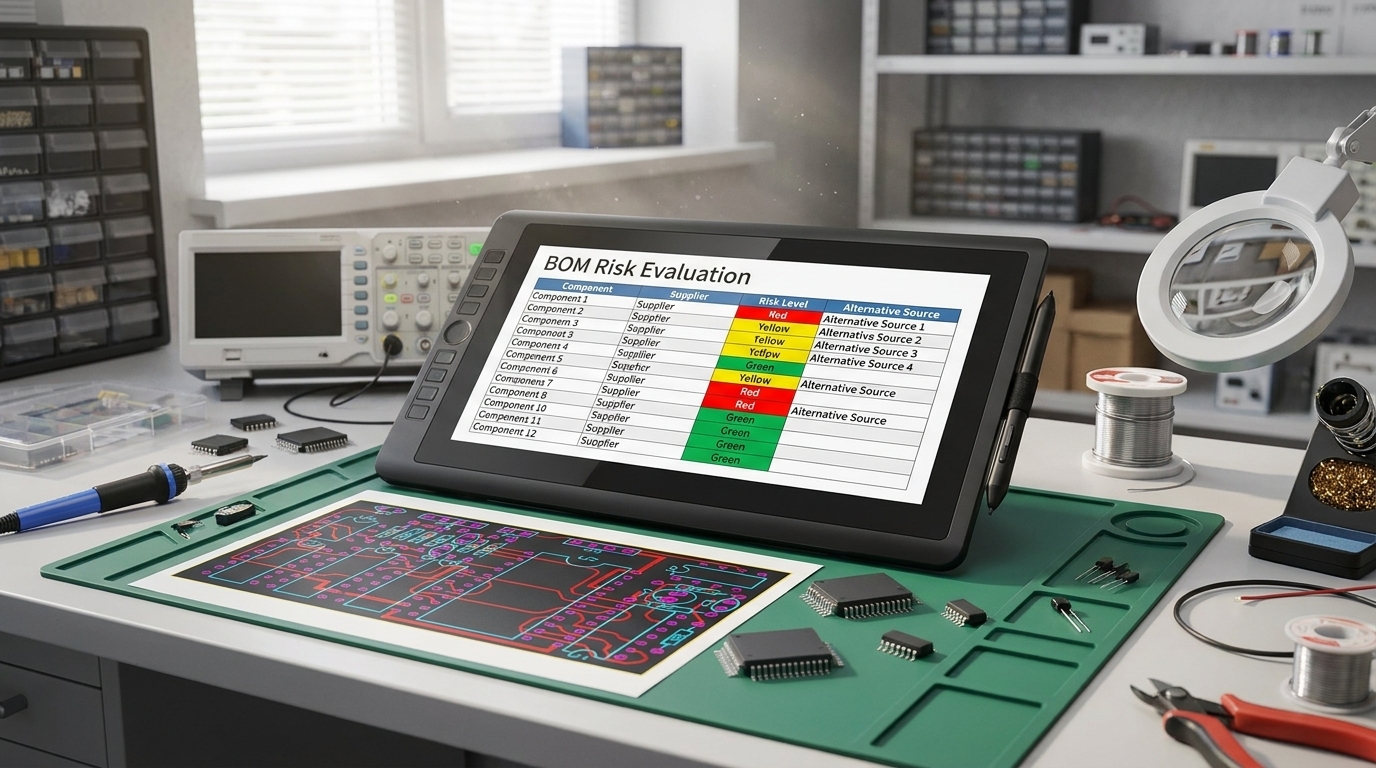 onsemi Synaptics Acquisition Impact: BOM Risk Checklist and Second-Source Strategy for Edge AI DesignsUTMEL27 July 2026385
The onsemi acquisition of Synaptics provides hardware program managers a 12-to-18-month window before potential product cancellations occur in mid-2027. This guide outlines how to audit BOM exposure across overlap and non-core product lines, calculate Last-Time-Buy volumes including hidden storage costs, establish proactive second-sourcing triggers, and implement supply chain monitoring to prevent line-down events.
Read More
Subscribe to Utmel !
![BLM02AX241SN1D]() BLM02AX241SN1D
BLM02AX241SN1DMurata Electronics
![URAM3C21]() URAM3C21
URAM3C21Vicor Corporation
![BLM03BB121SN1D]() BLM03BB121SN1D
BLM03BB121SN1DMurata Electronics
![BLM18PG471SH1D]() BLM18PG471SH1D
BLM18PG471SH1DMurata Electronics
![REC20-25-201-1]() REC20-25-201-1
REC20-25-201-1Nidec Copal Electronics
![WIZ1000]() WIZ1000
WIZ1000WIZnet
![01500274LXN]() 01500274LXN
01500274LXNLittelfuse Inc.
![ACC01E32-17P-003-B30-LC]() ACC01E32-17P-003-B30-LC
ACC01E32-17P-003-B30-LCAmphenol
![SP06E-14-18PX(SR)]() SP06E-14-18PX(SR)
SP06E-14-18PX(SR)Amphenol
![7BB-15-6]() 7BB-15-6
7BB-15-6Murata Electronics


