

 Product
 Brand
Brand Articles
 Tools
Tools
Northeast Ohio Poised to Become Major Player in Semiconductor Manufacturing Industry
Northeast Ohio is primed to become a significant contender in the semiconductor manufacturing sector, according to a recent report by Team NEO. The economic review highlights the region's significant employment concentration in industries that supply the semiconductor industry, with 16 out of the top 20 industries in the semiconductor supply chain boasting a high location quotient in the region. The region's iron and steel mills and related alloy manufacturing, for instance, have a location quotient of 5.93, indicating a concentration nearly six times the national average. The semiconductor industry also made purchases worth $112.6 million from the iron and steel mill sector. Other industries with high location quotients include precision turned product manufacturing at 5.44 and bolt, nut, screw, rivet, and washer manufacturing at 5.17. These industries provided goods and services worth $64.7 million and $63.1 million, respectively, in 2022. The report predicts growth in key industries that could serve the semiconductor industry over the next five years. The semiconductor and other electronic components sector is expected to grow by 34%, and the plastic product manufacturing sector by 16% in the Northeast Ohio region. Both growth rates are higher than the national average. Bill Koehler, CEO of Team NEO, believes that Northeast Ohio's dedicated workforce, strong STEM background, suitable sites for semiconductor and supply chain manufacturing, reliable water and power supply, and robust supply chain make the region attractive to companies considering investment in the semiconductor industry. Team NEO, a nonprofit economic development agency, serves 18 counties in northeast Ohio, including Trumbull and Mahoning. The agency publishes its quarterly economic review to provide a comprehensive view of the region's economy and attract new businesses and jobs to the area. Guy Coviello, president and CEO of the Youngstown/Warren Regional Chamber, echoed Koehler's sentiments, pointing out the region's abundant water, available sites, robust transportation, and manufacturing workforce as attractive features for the industry. In addition to these efforts, a workforce development initiative is underway among universities, including Youngstown State University, and other higher education institutions to ensure an adequate workforce for the industry. The Ohio TechNet Northeast Ohio Semiconductor Workforce Consortium, formed through a gift by Intel, is tasked with developing semiconductor-focused education and workforce programs.
 UTMEL
UTMEL
We are the professional distributor of electronic components, providing a large variety of products to save you a lot of time, effort, and cost with our efficient self-customized service. careful order preparation fast delivery service
 Power Semiconductor Procurement After the Nexperia Shake-Up—NXP for Stability, ON for Technology, or Nexperia for Value?UTMEL04 November 20254931
The recent supply chain turmoil surrounding Netherlands-based Nexperia has sent shockwaves through the global semiconductor industry, forcing procurement professionals to re-evaluate their sourcing strategies.
Read More AI Computing Power Gap: How Token Consumption is Reshaping Server Component SourcingUTMEL23 June 2026989
As global token consumption drives the transition to high-density 100kW+ AI data centers, power delivery networks require advanced Wide-Bandgap semiconductors (SiC/GaN) and high-capacitance MLCCs. This shift has triggered a component procurement crisis with lead times exceeding 24 weeks. To bypass shortages, hardware buyers must abandon just-in-time manufacturing and leverage independent global distributor networks to secure critical power and passive components.
Read More The BSPDN Revolution: Overcoming IR Drop in Sub-2nm GAAFET Nodes with Backside Power DeliveryUTMEL25 June 20261007
As semiconductor manufacturing enters the sub-2nm era, Backside Power Delivery Networks (BSPDN) are replacing traditional front-side routing to overcome critical IR drop bottlenecks. By separating power and signal delivery, chipmakers like Intel and TSMC drastically improve performance and density in GAAFET designs. However, this radical shift introduces manufacturing complexities, thermal challenges, and demands advanced packaging and power management solutions.
Read More Power Management ICs Trends 2026: AI Demand, Supply Risks, and Sourcing StrategiesUTMEL06 July 20261498
As AI server racks surpass 100kW by 2026, data centers are shifting toward wide-bandgap semiconductors like SiC and GaN. However, this demand has triggered a critical shortage of mature-node Power Management ICs (PMICs). To prevent production halts, sourcing teams must abandon 'just-in-time' models, implement proactive 'just-in-case' strategies, and rapidly qualify pin-to-pin alternative components to secure their supply chains.
Read More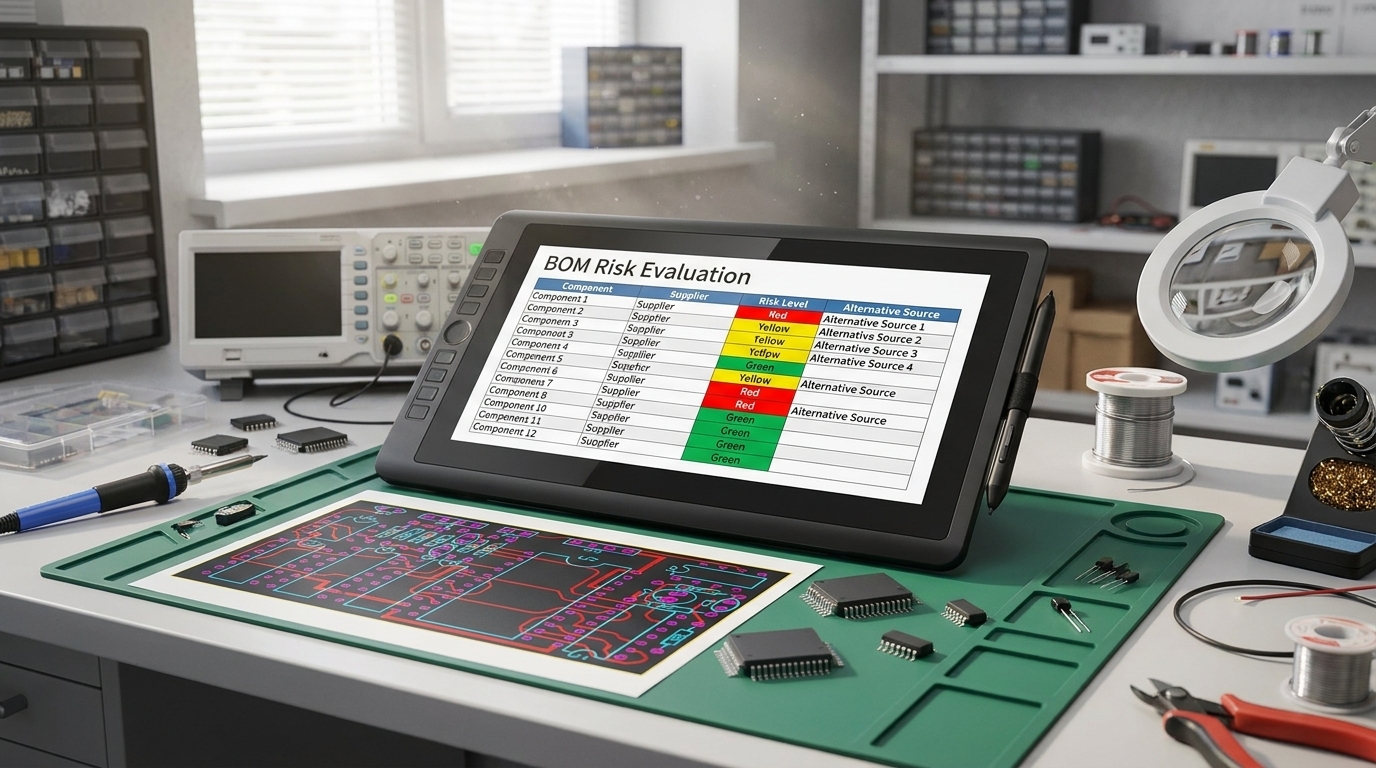 onsemi Synaptics Acquisition Impact: BOM Risk Checklist and Second-Source Strategy for Edge AI DesignsUTMEL27 July 2026385
The onsemi acquisition of Synaptics provides hardware program managers a 12-to-18-month window before potential product cancellations occur in mid-2027. This guide outlines how to audit BOM exposure across overlap and non-core product lines, calculate Last-Time-Buy volumes including hidden storage costs, establish proactive second-sourcing triggers, and implement supply chain monitoring to prevent line-down events.
Read More
Subscribe to Utmel !
![BLM02AX241SN1D]() BLM02AX241SN1D
BLM02AX241SN1DMurata Electronics
![URAM3C21]() URAM3C21
URAM3C21Vicor Corporation
![BLM03BB121SN1D]() BLM03BB121SN1D
BLM03BB121SN1DMurata Electronics
![BLM18PG471SH1D]() BLM18PG471SH1D
BLM18PG471SH1DMurata Electronics
![REC20-25-201-1]() REC20-25-201-1
REC20-25-201-1Nidec Copal Electronics
![WIZ1000]() WIZ1000
WIZ1000WIZnet
![01500274LXN]() 01500274LXN
01500274LXNLittelfuse Inc.
![ACC01E32-17P-003-B30-LC]() ACC01E32-17P-003-B30-LC
ACC01E32-17P-003-B30-LCAmphenol
![SP06E-14-18PX(SR)]() SP06E-14-18PX(SR)
SP06E-14-18PX(SR)Amphenol
![7BB-15-6]() 7BB-15-6
7BB-15-6Murata Electronics


