

 Product
 Brand
Brand Articles
 Tools
Tools
A1302 Hall Effect Sensor: Allegro A1302, Datasheet, A1302 Arduino


SENSOR, HALL EFFECT, LINEAR, 3SIP
The A1301 and A1302 are continuous-time, ratiometric, linear Hall-effect sensor ICs. This article will unlock more details about A1302. There is a huge range of Semiconductors, Capacitors, Resistors and ICs in stock. Welcome RFQ!
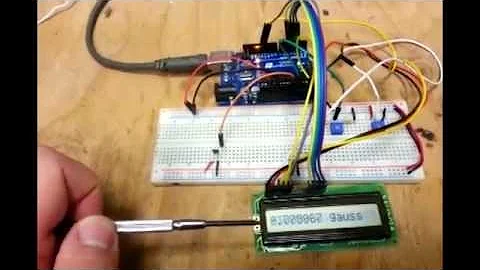
Hall Effect Sensor with Arduino - A1302
A1302 Pinout

A1302 Pinout
| Symbol | pin | Description |
| VCC | 1 | Connects power supply to the chip |
| VOUT | 3 | Output from circuit |
| GND | 2 | Ground |
A1302 CAD Model
Symbol

A1302 Symbol
Footprint

A1302 Footprint
A1302 Description
The A1302 is a continuous-time, ratiometric, linear Hall-effect sensor IC. They are optimized to accurately provide a voltage output that is proportional to an applied magnetic field. These devices have a quiescent output voltage that is 50% of the supply voltage.

The Hall-effect integrated circuit included in each device includes a Hall circuit, a linear amplifier, and a CMOS Class A output structure. Integrating the Hall circuit and the amplifier on a single chip minimizes many of the problems normally associated with low voltage level analogue signals. High precision in output levels is obtained by internal gain and offset trim adjustments made at the end-of-line during the manufacturing process.
A1302 Feature
▪ Low-noise output
▪ Fast power-on time
▪ Ratiometric rail-to-rail output
▪ 4.5 to 6.0 V operation
▪ Solid-state reliability
▪ Factory-programmed at end-of-line for optimum performance
▪ Robust ESD performance
A1302 Funtional Block Diagram

A1302 Functional Block Diagram
Specifications
- TypeParameter
- Factory Lead Time16 Weeks
- Contact Plating
Contact plating (finish) provides corrosion protection for base metals and optimizes the mechanical and electrical properties of the contact interfaces.
Tin - Mount
In electronic components, the term "Mount" typically refers to the method or process of physically attaching or fixing a component onto a circuit board or other electronic device. This can involve soldering, adhesive bonding, or other techniques to secure the component in place. The mounting process is crucial for ensuring proper electrical connections and mechanical stability within the electronic system. Different components may have specific mounting requirements based on their size, shape, and function, and manufacturers provide guidelines for proper mounting procedures to ensure optimal performance and reliability of the electronic device.
Through Hole - Mounting Type
The "Mounting Type" in electronic components refers to the method used to attach or connect a component to a circuit board or other substrate, such as through-hole, surface-mount, or panel mount.
Through Hole - Package / Case
refers to the protective housing that encases an electronic component, providing mechanical support, electrical connections, and thermal management.
3-SSIP - Number of Pins3
- Operating Temperature
The operating temperature is the range of ambient temperature within which a power supply, or any other electrical equipment, operate in. This ranges from a minimum operating temperature, to a peak or maximum operating temperature, outside which, the power supply may fail.
-40°C~125°C TA - Packaging
Semiconductor package is a carrier / shell used to contain and cover one or more semiconductor components or integrated circuits. The material of the shell can be metal, plastic, glass or ceramic.
Bulk - Published2007
- JESD-609 Code
The "JESD-609 Code" in electronic components refers to a standardized marking code that indicates the lead-free solder composition and finish of electronic components for compliance with environmental regulations.
e3 - Pbfree Code
The "Pbfree Code" parameter in electronic components refers to the code or marking used to indicate that the component is lead-free. Lead (Pb) is a toxic substance that has been widely used in electronic components for many years, but due to environmental concerns, there has been a shift towards lead-free alternatives. The Pbfree Code helps manufacturers and users easily identify components that do not contain lead, ensuring compliance with regulations and promoting environmentally friendly practices. It is important to pay attention to the Pbfree Code when selecting electronic components to ensure they meet the necessary requirements for lead-free applications.
yes - Part Status
Parts can have many statuses as they progress through the configuration, analysis, review, and approval stages.
Obsolete - Moisture Sensitivity Level (MSL)
Moisture Sensitivity Level (MSL) is a standardized rating that indicates the susceptibility of electronic components, particularly semiconductors, to moisture-induced damage during storage and the soldering process, defining the allowable exposure time to ambient conditions before they require special handling or baking to prevent failures
1 (Unlimited) - Number of Terminations3
- Resistance
Resistance is a fundamental property of electronic components that measures their opposition to the flow of electric current. It is denoted by the symbol "R" and is measured in ohms (Ω). Resistance is caused by the collisions of electrons with atoms in a material, which generates heat and reduces the flow of current. Components with higher resistance will impede the flow of current more than those with lower resistance. Resistance plays a crucial role in determining the behavior and functionality of electronic circuits, such as limiting current flow, voltage division, and controlling power dissipation.
2Ohm - Additional Feature
Any Feature, including a modified Existing Feature, that is not an Existing Feature.
MAGNETIC SENSITIVITY - Voltage - Supply
Voltage - Supply refers to the range of voltage levels that an electronic component or circuit is designed to operate with. It indicates the minimum and maximum supply voltage that can be applied for the device to function properly. Providing supply voltages outside this range can lead to malfunction, damage, or reduced performance. This parameter is critical for ensuring compatibility between different components in a circuit.
4.5V~6V - Output Type
The "Output Type" parameter in electronic components refers to the type of signal or data that is produced by the component as an output. This parameter specifies the nature of the output signal, such as analog or digital, and can also include details about the voltage levels, current levels, frequency, and other characteristics of the output signal. Understanding the output type of a component is crucial for ensuring compatibility with other components in a circuit or system, as well as for determining how the output signal can be utilized or processed further. In summary, the output type parameter provides essential information about the nature of the signal that is generated by the electronic component as its output.
Analog Voltage - Max Output Current
The maximum current that can be supplied to the load.
10mA - Operating Supply Voltage
The voltage level by which an electrical system is designated and to which certain operating characteristics of the system are related.
5V - Termination Type
Termination Type in electronic components refers to the method used to connect the component to a circuit board or other electronic devices. It specifies how the component's leads or terminals are designed for soldering or mounting onto a PCB. Common termination types include through-hole, surface mount, and wire lead terminations. The termination type is an important consideration when selecting components for a circuit design, as it determines how the component will be physically connected within the circuit. Different termination types offer varying levels of durability, ease of assembly, and suitability for specific applications.
SOLDER - Operating Supply Current
Operating Supply Current, also known as supply current or quiescent current, is a crucial parameter in electronic components that indicates the amount of current required for the device to operate under normal conditions. It represents the current drawn by the component from the power supply while it is functioning. This parameter is important for determining the power consumption of the component and is typically specified in datasheets to help designers calculate the overall power requirements of their circuits. Understanding the operating supply current is essential for ensuring proper functionality and efficiency of electronic systems.
11mA - Output Current
The rated output current is the maximum load current that a power supply can provide at a specified ambient temperature. A power supply can never provide more current that it's rated output current unless there is a fault, such as short circuit at the load.
10mA - Max Supply Current
Max Supply Current refers to the maximum amount of electrical current that a component can draw from its power supply under normal operating conditions. It is a critical parameter that ensures the component operates reliably without exceeding its thermal limits or damaging internal circuitry. Exceeding this current can lead to overheating, performance degradation, or failure of the component. Understanding this parameter is essential for designing circuits that provide adequate power while avoiding overload situations.
11mA - Linearity
In electronic components, linearity refers to the relationship between the input and output signals of the component. A component is said to be linear if its output is directly proportional to its input over a specified range. In other words, when the input signal changes, the output signal changes in a consistent and predictable manner without introducing distortion or non-linear effects.Linearity is an important parameter in electronic components such as amplifiers, filters, and sensors, as it determines the accuracy and fidelity of signal processing. Non-linearities in components can lead to signal distortion, harmonic generation, and other undesirable effects that can degrade the performance of electronic systems.Engineers often characterize the linearity of components by measuring parameters such as gain error, harmonic distortion, and intermodulation distortion. By ensuring that components exhibit good linearity characteristics, designers can create electronic systems that accurately process signals and faithfully reproduce the desired output.
2.5 % - Axis
In electronic components, the parameter "Axis" typically refers to the orientation or direction along which a specific characteristic or measurement is being considered. For example, in a sensor or accelerometer, the axis may indicate the direction in which the device is measuring acceleration. In a motor or actuator, the axis may refer to the direction of movement or rotation.Understanding the axis of a component is crucial for proper installation, calibration, and operation. It helps in determining how the component will interact with other parts of a system and how its performance can be optimized. Different components may have multiple axes to consider, especially in complex systems where movement or measurements occur in multiple directions.Overall, the axis parameter provides important information about the spatial orientation or directionality of an electronic component, guiding engineers and technicians in effectively utilizing the component within a larger system.
Single - Output Range
The parameter "Output Range" in electronic components refers to the range of voltage, current, or power levels that an electronic device can provide at its output terminals. This parameter indicates the minimum and maximum values that the device can reliably produce under specified conditions. The output range is crucial for determining the suitability of a component for a particular application, ensuring that it can operate within the required parameters without exceeding limits that could lead to damage or failure.
0.25-4.65V - Input Mode
Input mode in electronic components refers to the configuration in which a device receives signals or data from an external source. It defines how the component interacts with input signals, such as whether it is set to accept digital or analog inputs. Input mode also determines the electrical characteristics, such as impedance and voltage levels, that the device is designed to handle when processing incoming information. This setting is crucial for ensuring compatibility and proper functionality within an electronic circuit.
UNIPOLAR - Number of Axes1
- Height3.02mm
- Length4.09mm
- Width1.52mm
- REACH SVHC
The parameter "REACH SVHC" in electronic components refers to the compliance with the Registration, Evaluation, Authorization, and Restriction of Chemicals (REACH) regulation regarding Substances of Very High Concern (SVHC). SVHCs are substances that may have serious effects on human health or the environment, and their use is regulated under REACH to ensure their safe handling and minimize their impact.Manufacturers of electronic components need to declare if their products contain any SVHCs above a certain threshold concentration and provide information on the safe use of these substances. This information allows customers to make informed decisions about the potential risks associated with using the components and take appropriate measures to mitigate any hazards.Ensuring compliance with REACH SVHC requirements is essential for electronics manufacturers to meet regulatory standards, protect human health and the environment, and maintain transparency in their supply chain. It also demonstrates a commitment to sustainability and responsible manufacturing practices in the electronics industry.
No SVHC - Radiation Hardening
Radiation hardening is the process of making electronic components and circuits resistant to damage or malfunction caused by high levels of ionizing radiation, especially for environments in outer space (especially beyond the low Earth orbit), around nuclear reactors and particle accelerators, or during nuclear accidents or nuclear warfare.
No - RoHS Status
RoHS means “Restriction of Certain Hazardous Substances” in the “Hazardous Substances Directive” in electrical and electronic equipment.
ROHS3 Compliant - Lead Free
Lead Free is a term used to describe electronic components that do not contain lead as part of their composition. Lead is a toxic material that can have harmful effects on human health and the environment, so the electronics industry has been moving towards lead-free components to reduce these risks. Lead-free components are typically made using alternative materials such as silver, copper, and tin. Manufacturers must comply with regulations such as the Restriction of Hazardous Substances (RoHS) directive to ensure that their products are lead-free and environmentally friendly.
Lead Free
Parts with Similar Specs
- ImagePart NumberManufacturerPackage / CaseNumber of PinsMax Output CurrentOutput CurrentOperating Supply CurrentOperating TemperatureMounting TypeTechnologyView Compare
![A1302KUA-T]()
A1302KUA-T
3-SSIP
3
10 mA
10 mA
11 mA
-40°C ~ 125°C (TA)
Through Hole
Hall Effect
![SS46]()
3-SIP, Formed Leads
3
100 mA
100 mA
6 mA
-40°C ~ 125°C (TA)
Through Hole
Hall Effect
![SS41F]()
3-SIP
3
10 mA
10 mA
7 mA
-40°C ~ 150°C (TA)
Through Hole
Hall Effect
![SS495B]()
3-SIP
3
20 mA
20 mA
10 mA
-40°C ~ 150°C (TA)
Through Hole
Hall Effect
![AH1751-PG-A-A]()
3-SIP
3
10 mA
10 mA
8.7 mA
-55°C ~ 150°C (TA)
Through Hole
Hall Effect


A1302 Package

A1302 Package
A1302 Manufacturer
Allegro MicroSystems, LLC is a leader in developing, manufacturing and marketing high-performance semiconductors. Allegro's innovative solutions serve high-growth applications within the automotive market, with an additional focus on office automation, industrial, and consumer/communications solutions. Allegro is headquartered in Worcester, Massachusetts (USA) with design, applications, and sales support centres located worldwide.
Datasheet PDF
- Datasheets :
- PCN Part Status Change :
- PCN Obsolescence/ EOL :
Trend Analysis
What is A1302?
The A1302 is a continuous-time, ratiometric, linear Hall-effect sensor IC. They are optimized to accurately provide a voltage output that is proportional to an applied magnetic field. These devices have a quiescent output voltage that is 50% of the supply voltage. The Hall-effect integrated circuit included in each device includes a Hall circuit, a linear amplifier, and a CMOS Class A output structure. Integrating the Hall circuit and the amplifier on a single chip minimizes many of the problems normally associated with low voltage level analogue signals. High precision in output levels is obtained by internal gain and offset trim adjustments made at the end-of-line during the manufacturing process.
What does a Hall effect sensor do?
The Hall-effect sensor is able to distinguish between the positive and negative charges moving in the opposite direction. The magnetic field detected by the hall-effect sensor is converted to a suitable analogue or digital signal that can be read by the electronic system, usually a motor control system.
What are the advantages and disadvantages of using Hall effect sensors?
When packed immune to dust, air, water whereas capacitive sensor may get triggered by dust. It can measure zero speed. Non-contact operation so there is no wear and friction, hence the unlimited number of operating cycles. Highly repeatable operation.
What are some applications for the Hall effect sensor?
For examples. Some of the examples for the application of Hall Effect sensors are the current transformers, Position sensing, Galaxy S4 Accessories, Keyboard switch, computers, Proximity sensing, speed detection, current sensing applications, tachometers, anti-lock braking systems, magnetometers, DC motors, disk drives etc ...
 1N34A Diode: Datasheet, Circuit and Alternatives
27 August 202111191
 TL082 JFET Dual Op-Amp: Where & How to Use TL082?
08 December 202113670
 2N4401 VS 2N3904
25 February 20222526
 BC547 NPN Transistor: Pinout, Datasheet, and Circuit
28 July 202133669
 ADG1408 Multiplexer: Datasheet, Circuit and Price
12 November 20214267
 SM712-02HTG Asymmetrical TVS Diode: System, Pinout, and Datasheet
22 February 20225924
 SST39SF020A 2 Mbit Multi-Purpose Flash: Pinout, Equivalent and Datasheet
31 March 20221580
 dsPIC33FJ32MC202/204 and dsPIC33FJ16MC304: A Comprehensive Analysis
29 February 2024192
 Intel Launches First-of-its-Kind Semiconductor Technician Certificate Program to Address Workforce Shortage
28 September 20233612
 Laser diodes or LEDs what sets them apart
14 July 20252764
 The Difference and Application of SPI, UART, I2C Communication
15 October 202511946
 FPGA in Industry and Communication: Key Players, Technologies, and Future Trends
07 March 20252376
 How Can Memory Adapt and Influence the Smart Age of the Future?
11 October 20222454
 Chip Packaging Lead Time Has Grown to 50 Weeks
07 April 20226113
 Difference between Various Motors and How to Select a Motor?
10 January 20224888
 The Different Types of Circuit Breakers and Their Applications
11 April 20236863
Allegro MicroSystems
In Stock: 5230
United States
China
Canada
Japan
Russia
Germany
United Kingdom
Singapore
Italy
Hong Kong(China)
Taiwan(China)
France
Korea
Mexico
Netherlands
Malaysia
Austria
Spain
Switzerland
Poland
Thailand
Vietnam
India
United Arab Emirates
Afghanistan
Åland Islands
Albania
Algeria
American Samoa
Andorra
Angola
Anguilla
Antigua & Barbuda
Argentina
Armenia
Aruba
Australia
Azerbaijan
Bahamas
Bahrain
Bangladesh
Barbados
Belarus
Belgium
Belize
Benin
Bermuda
Bhutan
Bolivia
Bonaire, Sint Eustatius and Saba
Bosnia & Herzegovina
Botswana
Brazil
British Indian Ocean Territory
British Virgin Islands
Brunei
Bulgaria
Burkina Faso
Burundi
Cabo Verde
Cambodia
Cameroon
Cayman Islands
Central African Republic
Chad
Chile
Christmas Island
Cocos (Keeling) Islands
Colombia
Comoros
Congo
Congo (DRC)
Cook Islands
Costa Rica
Côte d’Ivoire
Croatia
Cuba
Curaçao
Cyprus
Czechia
Denmark
Djibouti
Dominica
Dominican Republic
Ecuador
Egypt
El Salvador
Equatorial Guinea
Eritrea
Estonia
Eswatini
Ethiopia
Falkland Islands
Faroe Islands
Fiji
Finland
French Guiana
French Polynesia
Gabon
Gambia
Georgia
Ghana
Gibraltar
Greece
Greenland
Grenada
Guadeloupe
Guam
Guatemala
Guernsey
Guinea
Guinea-Bissau
Guyana
Haiti
Honduras
Hungary
Iceland
Indonesia
Iran
Iraq
Ireland
Isle of Man
Israel
Jamaica
Jersey
Jordan
Kazakhstan
Kenya
Kiribati
Kosovo
Kuwait
Kyrgyzstan
Laos
Latvia
Lebanon
Lesotho
Liberia
Libya
Liechtenstein
Lithuania
Luxembourg
Macao(China)
Madagascar
Malawi
Maldives
Mali
Malta
Marshall Islands
Martinique
Mauritania
Mauritius
Mayotte
Micronesia
Moldova
Monaco
Mongolia
Montenegro
Montserrat
Morocco
Mozambique
Myanmar
Namibia
Nauru
Nepal
New Caledonia
New Zealand
Nicaragua
Niger
Nigeria
Niue
Norfolk Island
North Korea
North Macedonia
Northern Mariana Islands
Norway
Oman
Pakistan
Palau
Palestinian Authority
Panama
Papua New Guinea
Paraguay
Peru
Philippines
Pitcairn Islands
Portugal
Puerto Rico
Qatar
Réunion
Romania
Rwanda
Samoa
San Marino
São Tomé & Príncipe
Saudi Arabia
Senegal
Serbia
Seychelles
Sierra Leone
Sint Maarten
Slovakia
Slovenia
Solomon Islands
Somalia
South Africa
South Sudan
Sri Lanka
St Helena, Ascension, Tristan da Cunha
St. Barthélemy
St. Kitts & Nevis
St. Lucia
St. Martin
St. Pierre & Miquelon
St. Vincent & Grenadines
Sudan
Suriname
Svalbard & Jan Mayen
Sweden
Syria
Tajikistan
Tanzania
Timor-Leste
Togo
Tokelau
Tonga
Trinidad & Tobago
Tunisia
Turkey
Turkmenistan
Turks & Caicos Islands
Tuvalu
U.S. Outlying Islands
U.S. Virgin Islands
Uganda
Ukraine
Uruguay
Uzbekistan
Vanuatu
Vatican City
Venezuela
Wallis & Futuna
Yemen
Zambia
Zimbabwe
![A1324LUA-T]() A1324LUA-T
A1324LUA-TAllegro MicroSystems
![A1326LUA-T]() A1326LUA-T
A1326LUA-TAllegro MicroSystems
![A1393SEHLT-T]() A1393SEHLT-T
A1393SEHLT-TAllegro MicroSystems
![A1324LLHLT-T]() A1324LLHLT-T
A1324LLHLT-TAllegro MicroSystems
![A1301EUA-T]() A1301EUA-T
A1301EUA-TAllegro MicroSystems
![A1395SEHLT-T]() A1395SEHLT-T
A1395SEHLT-TAllegro MicroSystems
![A1324LLHLX-T]() A1324LLHLX-T
A1324LLHLX-TAllegro MicroSystems
![A1326LLHLX-T]() A1326LLHLX-T
A1326LLHLX-TAllegro MicroSystems
![A1308KUA-1-T]() A1308KUA-1-T
A1308KUA-1-TAllegro MicroSystems
![ALS31300EEJASR-500]() ALS31300EEJASR-500
ALS31300EEJASR-500Allegro MicroSystems


