

LPS53 Open Frame AC DC Converters Output 12V: Datasheet, Features, and LPS53 VS NPS63-M-006


AC/DC CONVERTER 12V 60W
The LPS53 is a 1-output 60W open-frame AC/DC Power Supply with 12V output voltage. This article is going to talk about more detailed information about LPS53.
Overview of LPS53
The LPS53 is a 60W open-frame AC/DC power supply with a 12V output voltage that has one output. Short-circuit protection is provided on all outputs, as well as case overload protection between 110 and 160 percent of nominal rating and 80 to 85 percent typical at maximum load efficiency.
LPS53 Features
Universal input
l2” x 4” footprint
Less than 1U high
Remote sense
Overload and short circuit protection
Adjustable output voltage
High efficiency
High MTBF
Built-in EMI filter (CISPR 22 Class B)
LED power good indicator
Input power < 74 watts
Complies with EN61000-3-2
RoHS compliant
UL Class I approved
LPS52(-I) and LPS53(-I) extended temperature option: -40 °C to +80 °C
LPX100 enclosure kit available
LPS53 Mechanical Drawings

LPS53 Mechanical Drawings
Specifications
- TypeParameter
- Factory Lead Time14 Weeks
- Mounting Type
The "Mounting Type" in electronic components refers to the method used to attach or connect a component to a circuit board or other substrate, such as through-hole, surface-mount, or panel mount.
Chassis Mount - Surface Mount
having leads that are designed to be soldered on the side of a circuit board that the body of the component is mounted on.
NO - Operating Temperature
The operating temperature is the range of ambient temperature within which a power supply, or any other electrical equipment, operate in. This ranges from a minimum operating temperature, to a peak or maximum operating temperature, outside which, the power supply may fail.
0°C~70°C With Derating - Series
In electronic components, the "Series" refers to a group of products that share similar characteristics, designs, or functionalities, often produced by the same manufacturer. These components within a series typically have common specifications but may vary in terms of voltage, power, or packaging to meet different application needs. The series name helps identify and differentiate between various product lines within a manufacturer's catalog.
LPS50 (60W) - Published2007
- Size / Dimension
In electronic components, the parameter "Size / Dimension" refers to the physical dimensions of the component, such as its length, width, and height. These dimensions are crucial for determining how the component will fit into a circuit or system, as well as for ensuring compatibility with other components and the overall design requirements. The size of a component can also impact its performance characteristics, thermal properties, and overall functionality within a given application. Engineers and designers must carefully consider the size and dimensions of electronic components to ensure proper integration and functionality within their designs.
4.00Lx2.00W x 1.30 H 101.6mmx50.8mmx33.0mm - Part Status
Parts can have many statuses as they progress through the configuration, analysis, review, and approval stages.
Obsolete - Moisture Sensitivity Level (MSL)
Moisture Sensitivity Level (MSL) is a standardized rating that indicates the susceptibility of electronic components, particularly semiconductors, to moisture-induced damage during storage and the soldering process, defining the allowable exposure time to ambient conditions before they require special handling or baking to prevent failures
1 (Unlimited) - Number of Terminations9
- TypeOpen Frame
- Applications
The parameter "Applications" in electronic components refers to the specific uses or functions for which a component is designed. It encompasses various fields such as consumer electronics, industrial automation, telecommunications, automotive, and medical devices. Understanding the applications helps in selecting the right components for a particular design based on performance, reliability, and compatibility requirements. This parameter also guides manufacturers in targeting their products to relevant markets and customer needs.
ITE (Commercial) - Power (Watts)
The parameter "Power (Watts)" in electronic components refers to the amount of electrical energy consumed or dissipated by the component. It is a measure of how much energy the component can handle or generate. Power is typically measured in watts, which is a unit of power that indicates the rate at which energy is transferred. Understanding the power rating of electronic components is crucial for ensuring they operate within their specified limits to prevent overheating and potential damage. It is important to consider power requirements when designing circuits or selecting components to ensure proper functionality and reliability.
60W - Terminal Position
In electronic components, the term "Terminal Position" refers to the physical location of the connection points on the component where external electrical connections can be made. These connection points, known as terminals, are typically used to attach wires, leads, or other components to the main body of the electronic component. The terminal position is important for ensuring proper connectivity and functionality of the component within a circuit. It is often specified in technical datasheets or component specifications to help designers and engineers understand how to properly integrate the component into their circuit designs.
UNSPECIFIED - Terminal Form
Occurring at or forming the end of a series, succession, or the like; closing; concluding.
UNSPECIFIED - Number of Functions1
- JESD-30 Code
JESD-30 Code refers to a standardized descriptive designation system established by JEDEC for semiconductor-device packages. This system provides a systematic method for generating designators that convey essential information about the package's physical characteristics, such as size and shape, which aids in component identification and selection. By using JESD-30 codes, manufacturers and engineers can ensure consistency and clarity in the specification of semiconductor packages across various applications and industries.
R-XXMA-X9 - Number of Outputs1
- Approval Agency
The parameter "Approval Agency" in electronic components refers to the organization responsible for testing and certifying that a component meets specific safety, quality, and performance standards. These agencies evaluate products to ensure compliance with industry regulations and standards, providing assurance to manufacturers and consumers. Approval from recognized agencies can enhance a component's marketability and acceptance in various applications, particularly in sectors like automotive, aerospace, and healthcare. Common approval agencies include Underwriters Laboratories (UL), International Electrotechnical Commission (IEC), and the American National Standards Institute (ANSI).
CB, CE - Efficiency
Efficiency in electronic components refers to the ratio of useful output energy or power to the input energy or power. It is a measure of how effectively a component converts input energy into output energy without wasting any energy in the process. Higher efficiency indicates that the component is more effective in performing its intended function while minimizing energy losses. Efficiency is an important parameter in electronic components such as power supplies, amplifiers, and motors, as it directly impacts the overall performance and energy consumption of the system. Manufacturers often specify the efficiency rating of their components to help users understand how efficiently the component operates under different conditions.
85% - Output Voltage
Output voltage is a crucial parameter in electronic components that refers to the voltage level produced by the component as a result of its operation. It represents the electrical potential difference between the output terminal of the component and a reference point, typically ground. The output voltage is a key factor in determining the performance and functionality of the component, as it dictates the level of voltage that will be delivered to the connected circuit or load. It is often specified in datasheets and technical specifications to ensure compatibility and proper functioning within a given system.
12V - Input Voltage-Nom
Input Voltage-Nom refers to the nominal or rated input voltage that an electronic component or device is designed to operate within. This parameter specifies the voltage level at which the component is expected to function optimally and safely. It is important to ensure that the actual input voltage supplied to the component does not exceed this nominal value to prevent damage or malfunction. Manufacturers provide this specification to guide users in selecting the appropriate power supply or input voltage source for the component. It is a critical parameter to consider when designing or using electronic circuits to ensure reliable performance and longevity of the component.
115V - Trim/Adjustable Output
Trim or adjustable output refers to the ability of an electronic component, such as a voltage regulator or power supply, to produce an output voltage that can be finely tuned or adjusted to meet specific requirements. This feature allows for precise control over the output voltage level, accommodating variations in load conditions or desired operational parameters. Users can typically achieve this adjustment through external resistors, potentiometers, or internal calibration mechanisms, ensuring optimal performance in diverse applications.
YES - Output Current
The rated output current is the maximum load current that a power supply can provide at a specified ambient temperature. A power supply can never provide more current that it's rated output current unless there is a fault, such as short circuit at the load.
5A - Output Power
That power available at a specified output of a device under specified conditions of operation.
60W - Minimum Load Required
The parameter "Minimum Load Required" in electronic components refers to the minimum amount of electrical load that must be connected to the component in order for it to function properly. This load is typically specified in terms of current or power and is necessary to ensure that the component operates within its specified operating conditions. Failing to meet the minimum load requirement can result in issues such as unstable operation, overheating, or even damage to the component. It is important to carefully adhere to the minimum load requirements specified by the manufacturer to ensure the reliable and safe operation of the electronic component.
No - Load Current
The Load Current can be defined as 1) Full load current the maximum current that an electrical machine can operate; 2) Rated Current the current rated on the nameplate of an electrical machine; 3) Nominal Current is generally mentioned in the specification documents that is normally the same value as the rated one.
0A - Features
In the context of electronic components, the term "Features" typically refers to the specific characteristics or functionalities that a particular component offers. These features can vary depending on the type of component and its intended use. For example, a microcontroller may have features such as built-in memory, analog-to-digital converters, and communication interfaces like UART or SPI.When evaluating electronic components, understanding their features is crucial in determining whether they meet the requirements of a particular project or application. Engineers and designers often look at features such as operating voltage, speed, power consumption, and communication protocols to ensure compatibility and optimal performance.In summary, the "Features" parameter in electronic components describes the unique attributes and capabilities that differentiate one component from another, helping users make informed decisions when selecting components for their electronic designs.
Adjustable Output, DC Input Capable, Remote Sense, Universal Input - Height33mm
- RoHS Status
RoHS means “Restriction of Certain Hazardous Substances” in the “Hazardous Substances Directive” in electrical and electronic equipment.
RoHS Compliant - Lead Free
Lead Free is a term used to describe electronic components that do not contain lead as part of their composition. Lead is a toxic material that can have harmful effects on human health and the environment, so the electronics industry has been moving towards lead-free components to reduce these risks. Lead-free components are typically made using alternative materials such as silver, copper, and tin. Manufacturers must comply with regulations such as the Restriction of Hazardous Substances (RoHS) directive to ensure that their products are lead-free and environmentally friendly.
Lead Free
LPS53 Electrical Specifications
| Input | |
| Input range | 90 - 264 Vac (wide range) 127 - 300 Vdc1 |
| Frequency | 47 - 63 / 440 Hz (Safety rating 50/60 Hz |
| Inrush current | <60 A peak @ 230 Vac, cold start @ 25 °C |
| Input power | <74 Watts |
| Efficiency | 80 - 85% typical at full load |
| EMI/RFI | FCC Class B conducted; CISPR22 Class B conducted; EN55022 Class B conducted; VDE0878PT3 Class B conducted. |
| Safety ground leakage current | <0.5 mA @ 50/60 Hz; 264 Vac input for class I; <0.25 mA @ 50/60 Hz; 264 Vac input for class II |
| Output | |
| Maximum power | 60 W for convection (LPS52 is 55 W) |
| Adjustment range | +20% minimum |
| Hold-up time | 10/20 ms 115/230 Vac input line |
| Overload protection | Short circuit protection on all outputs. Case overload protected @ 110-160% of normal rating |
| Overvoltage protection | 30% to 50% above the nominal output |
| Remote sense | Compensates for 0.5 V lead drop max. Will operate without remote sense connected. Reverse connection protected. |
LPS53 VS NPS63-M-006 Specifications
| LPS53 | NPS63-M-006 | |
| Operating Temperature | 0°C~70°C With Derating | 0°C~80°C With Derating |
| Size / Dimension | 4.00Lx2.00W x 1.30 H 101.6mmx50.8mmx33.0mm | 4.00Lx2.00W x 1.01 H 101.6mmx50.8mmx25.7mm |
| Output Voltage | 12V | 12V |
| Output Current | 5A | 5A |
| Efficiency | 85% | 87% |
| Approval Agency | CB, CE | CB, CCC, CE, CSA, NEMKO, TUV, UL |
| Images | 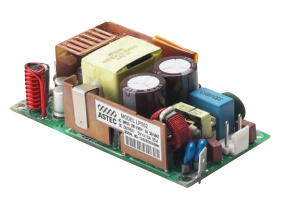 | 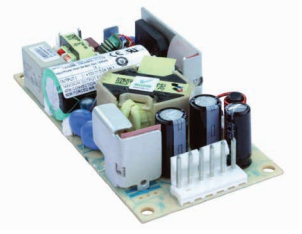 |
| Datasheet | LPS53 Datasheet | NPS63-M-006 Datasheet |
Conclusion of LPS53 VS NPS63-M-006
LPS53 can run the operating temperature from -40 °C to +80 °C and the NPS63-M-006 run the operating temperature from 0 °C to +80 °C. So the LPS53 can run at a lower temperature. LPS53’s inrush current is <60 A peak @ 230 Vac and NPS63-M-006 is < 50 A peak @ 230 Vac, which means that the LPS53 can endure more current to pass. Additionally, the efficiency of LPS53 is 80 - 85% typical at full load and NPS63-M-006 is 87% average. So compared to the LPS53, NPS63-M-006 can run more efficiently. But LPS53’s operation situation and change range are better than NPS63-M-006. So it’s up to your option.
LPS53 Manufacturer
Artesyn Embedded Power is a global pioneer in the design and manufacture of highly dependable power conversion systems for a variety of industries, including communications, computing, server storage, healthcare, and industrial. Customers have trusted Artesyn for more than 40 years to help them reduce risk and expedite time-to-market with cost-effective power conversion solutions. Artesyn employs nearly 8,000 people in numerous engineering centers of excellence, wholly-owned world-class manufacturing facilities, and global sales and support offices across the world. Artesyn Embedded Power is a trademark of Artesyn Embedded Technologies, Inc., a firm that specializes in advanced energy.
Popularity by Region
What’s the weight difference between the LPS53 and NPS63-M-006?
LPS53 is 0.41lbs/0.18kg and NPS63-M-006 is 0.26 lbs/0.118 kg
What’s the warranty period of LPS53 and NPS63-M-006?
2 years.
What’s the output current of LPS53?
5A.
What’s the output voltage of LPS53?
12V.
 MX25V1635FM1I Flash Memory: Features, Pinout, and Datasheet
18 March 20221383
 What you need to know about TPA3110 Bluetooth Audio Power Amplifier Board
26 April 202216650
 BCP56 Transistor: Features, Pinout, and Datasheet
13 October 20213091
 LIS3DH Accelerometer: Datasheet, Pinout, Functionality, and Block Diagram
08 July 20215975
 H11L1 Trigger Photocoupler: Pinout, Datasheet and Circuit
14 July 20218654
 2N2907A Bipolar Transistor PNP TO-18: Datasheet, Pinout, and Equivalents
09 February 20222114
 Everything you need to know about NE5532P
09 April 202219402
 AT24C08C EEPROM: Pinout, Equivalent and Datasheet
18 December 20213984
 10 Details to Improve the Anti-Interference Ability of MCU
29 December 20215055
 Introduction to Types of Motion Sensors
24 October 20259108
 Northeast Ohio Poised to Become Major Player in Semiconductor Manufacturing Industry
19 September 20233675
 HF PCB Circuit Design 10 Questions
16 March 20224950
 An Overview of Fiber Optic Cable
10 August 20216283
 Good News: UTMEL Electronic is now the Authorized Distributor for Isocom Components 2004 Ltd.
10 November 20237899
 Addressing Vulnerabilities in the U.S. Semiconductor Market
27 October 20231853
 Semiconductor Market Poised for Strong Rebound in 2024, Predicts WSTS
11 December 20234645
Artesyn Embedded Power
In Stock
United States
China
Canada
Japan
Russia
Germany
United Kingdom
Singapore
Italy
Hong Kong(China)
Taiwan(China)
France
Korea
Mexico
Netherlands
Malaysia
Austria
Spain
Switzerland
Poland
Thailand
Vietnam
India
United Arab Emirates
Afghanistan
Åland Islands
Albania
Algeria
American Samoa
Andorra
Angola
Anguilla
Antigua & Barbuda
Argentina
Armenia
Aruba
Australia
Azerbaijan
Bahamas
Bahrain
Bangladesh
Barbados
Belarus
Belgium
Belize
Benin
Bermuda
Bhutan
Bolivia
Bonaire, Sint Eustatius and Saba
Bosnia & Herzegovina
Botswana
Brazil
British Indian Ocean Territory
British Virgin Islands
Brunei
Bulgaria
Burkina Faso
Burundi
Cabo Verde
Cambodia
Cameroon
Cayman Islands
Central African Republic
Chad
Chile
Christmas Island
Cocos (Keeling) Islands
Colombia
Comoros
Congo
Congo (DRC)
Cook Islands
Costa Rica
Côte d’Ivoire
Croatia
Cuba
Curaçao
Cyprus
Czechia
Denmark
Djibouti
Dominica
Dominican Republic
Ecuador
Egypt
El Salvador
Equatorial Guinea
Eritrea
Estonia
Eswatini
Ethiopia
Falkland Islands
Faroe Islands
Fiji
Finland
French Guiana
French Polynesia
Gabon
Gambia
Georgia
Ghana
Gibraltar
Greece
Greenland
Grenada
Guadeloupe
Guam
Guatemala
Guernsey
Guinea
Guinea-Bissau
Guyana
Haiti
Honduras
Hungary
Iceland
Indonesia
Iran
Iraq
Ireland
Isle of Man
Israel
Jamaica
Jersey
Jordan
Kazakhstan
Kenya
Kiribati
Kosovo
Kuwait
Kyrgyzstan
Laos
Latvia
Lebanon
Lesotho
Liberia
Libya
Liechtenstein
Lithuania
Luxembourg
Macao(China)
Madagascar
Malawi
Maldives
Mali
Malta
Marshall Islands
Martinique
Mauritania
Mauritius
Mayotte
Micronesia
Moldova
Monaco
Mongolia
Montenegro
Montserrat
Morocco
Mozambique
Myanmar
Namibia
Nauru
Nepal
New Caledonia
New Zealand
Nicaragua
Niger
Nigeria
Niue
Norfolk Island
North Korea
North Macedonia
Northern Mariana Islands
Norway
Oman
Pakistan
Palau
Palestinian Authority
Panama
Papua New Guinea
Paraguay
Peru
Philippines
Pitcairn Islands
Portugal
Puerto Rico
Qatar
Réunion
Romania
Rwanda
Samoa
San Marino
São Tomé & Príncipe
Saudi Arabia
Senegal
Serbia
Seychelles
Sierra Leone
Sint Maarten
Slovakia
Slovenia
Solomon Islands
Somalia
South Africa
South Sudan
Sri Lanka
St Helena, Ascension, Tristan da Cunha
St. Barthélemy
St. Kitts & Nevis
St. Lucia
St. Martin
St. Pierre & Miquelon
St. Vincent & Grenadines
Sudan
Suriname
Svalbard & Jan Mayen
Sweden
Syria
Tajikistan
Tanzania
Timor-Leste
Togo
Tokelau
Tonga
Trinidad & Tobago
Tunisia
Turkey
Turkmenistan
Turks & Caicos Islands
Tuvalu
U.S. Outlying Islands
U.S. Virgin Islands
Uganda
Ukraine
Uruguay
Uzbekistan
Vanuatu
Vatican City
Venezuela
Wallis & Futuna
Yemen
Zambia
Zimbabwe


