

 Product
 Brand
Brand Articles
 Tools
Tools
BH1750 Ambient Light Sensor IC Series[Video]:Datasheet, Features, and Applications
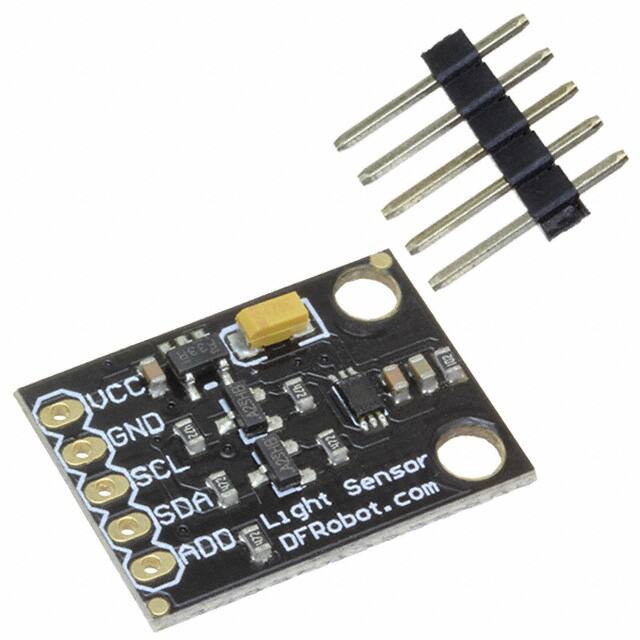


LIGHT SENSOR-BH1750
The BH1750 is a digital Ambient Light Sensor IC that connects to the I2C bus. So this article is going to talk about more detailed information about BH1750.
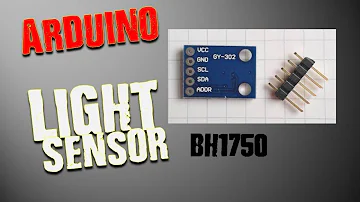
Light Sensor for Arduino- BH1750 Tutorial
Overview of BH1750
The BH1750 is a digital Ambient Light Sensor IC that connects to the I2C bus. This IC is the best for obtaining ambient light data in order to regulate the LCD and keypad backlight power of a mobile phone. At high resolution, a wide range can be detected. It is a digital Ambient Light Sensor IC with an I2C bus interface. This IC is the best for obtaining ambient light data in order to regulate the LCD and keypad backlight power of a mobile phone. At high resolution, a wide range can be detected.
BH1750 Features
Power Supply: 2.4V-3.6V (typically 3.0V)
Less current consumption: 0.12mA
Measuring Rang: 1-65535lx
Communication: I2C bus
Accuracy: +/-20%
Built-in A/D converter for converting analog illuminance into digital data.
Very small effect of IR radiation
Highly responsive near to the human eye.
BH1750 Pinout

BH1750 Pinout
BH1750 Pins Description
| Pin Number | Pin Name | Description |
| 1 | VCC | The power supply for the module can be 2.4V to 3.6V, typically 3.0V is used |
| 2 | GND | The ground of the module, connected to the ground of the circuit |
| 3 | SCL | Serial Clock Line used to provide clock pulse for I2C communication |
| 4 | SDA | Serial Data Address used to transfer the data through I2C communication |
| 5 | ADDR | The device address pin is used to select the address when more than two modules are connected |
Specifications
- TypeParameter
- Factory Lead Time4 Weeks
- Packaging
Semiconductor package is a carrier / shell used to contain and cover one or more semiconductor components or integrated circuits. The material of the shell can be metal, plastic, glass or ceramic.
Bulk - Published2011
- Part Status
Parts can have many statuses as they progress through the configuration, analysis, review, and approval stages.
Active - Moisture Sensitivity Level (MSL)
Moisture Sensitivity Level (MSL) is a standardized rating that indicates the susceptibility of electronic components, particularly semiconductors, to moisture-induced damage during storage and the soldering process, defining the allowable exposure time to ambient conditions before they require special handling or baking to prevent failures
1 (Unlimited) - Voltage - Supply
Voltage - Supply refers to the range of voltage levels that an electronic component or circuit is designed to operate with. It indicates the minimum and maximum supply voltage that can be applied for the device to function properly. Providing supply voltages outside this range can lead to malfunction, damage, or reduced performance. This parameter is critical for ensuring compatibility between different components in a circuit.
3V~5V - Interface
In electronic components, the term "Interface" refers to the point at which two different systems, devices, or components connect and interact with each other. It can involve physical connections such as ports, connectors, or cables, as well as communication protocols and standards that facilitate the exchange of data or signals between the connected entities. The interface serves as a bridge that enables seamless communication and interoperability between different parts of a system or between different systems altogether. Designing a reliable and efficient interface is crucial in ensuring proper functionality and performance of electronic components and systems.
I2C - Utilized IC / Part
Utilized IC / Part is a parameter that refers to the extent to which an integrated circuit (IC) or electronic component is being used or consumed within a system or application. It typically indicates the percentage or ratio of the component's capabilities that are being utilized in a given scenario. This parameter is important for assessing the efficiency and performance of the component, as well as for determining if the component is being underutilized or overburdened in a particular application. Monitoring and optimizing the utilization of ICs and electronic parts can help improve overall system reliability, efficiency, and cost-effectiveness.
BH1750 - Supplied Contents
Supplied Contents in electronic components refers to the items or materials that are included with the component when it is purchased. These contents can vary depending on the specific component and manufacturer, but typically include things like user manuals, installation guides, cables, connectors, and any additional accessories needed for the component to function properly. The supplied contents are important for ensuring that the user has everything they need to set up and use the electronic component correctly. It is recommended to carefully check the supplied contents upon receiving a new electronic component to make sure that nothing is missing and to familiarize oneself with the included materials for optimal use.
Board(s) - Sensor Type
In electronic components, the parameter "Sensor Type" refers to the specific type of sensor technology used in a particular component to detect and measure physical phenomena such as light, temperature, pressure, motion, or proximity. Different sensor types utilize various principles and mechanisms to convert the detected input into an electrical signal that can be processed by the electronic component. Common sensor types include photodiodes, thermistors, accelerometers, and proximity sensors, each designed for specific applications and environments. Understanding the sensor type is crucial for selecting the right component for a given task and ensuring accurate and reliable sensing capabilities in electronic systems.
Light, Ambient - Embedded
The term "Embedded" in electronic components refers to a system or device that is designed to perform specific functions within a larger system or product. These components are typically integrated into a larger system and are not meant to be easily removed or replaced. Embedded components are often used in applications where space is limited, and where specific functions need to be performed efficiently and reliably. These components can include microcontrollers, sensors, memory chips, and other specialized hardware that work together to provide the desired functionality within the overall system. Overall, embedded components play a crucial role in the operation of various electronic devices and systems by providing specific functions and capabilities.
No - RoHS Status
RoHS means “Restriction of Certain Hazardous Substances” in the “Hazardous Substances Directive” in electrical and electronic equipment.
ROHS3 Compliant
Where to Use BH1750 Light Sensor
The BH1750 is a light intensity sensor that may be used to regulate the brightness of LCD screens and mobile phones. It can also be used to turn on/off automobile headlights based on the lighting outside. Because the sensor communicates with microcontrollers using the I2C protocol, it's quite simple to use. I2C is supported by the SCL and SDA pins. The LUX value is directly provided by the sensor, therefore no calculations are required to determine it. In fact, it determines the intensity by the amount of light that strikes it. It functions between 2.4 and 3.6 volts and draws only 0.12 milliamperes. The sensor's output is unaffected by the light source used or the influence of the light source.
How to Use BH1750
The BH1750's hardware is fairly basic. The BH1750FVI IC is the key component. A voltage regulator is necessary because the module operates at 3.3V. A 4.7K pull-up resistor is utilized for I2C lines.

The lux readings are obtained from the BH1750 via the I2C bus. The analog illuminance is converted to a digital lux value by the ADC in the IC. With the help of I2C pins SCL and SDA, this data is now sent to the microcontroller. The clock pulse is provided by the SCL, while the lux value is transferred by the SDA. The IC employs a photodiode to produce a reaction that is comparable to that of the human eye. There is also an internal oscillator in the IC which is used for the clock of the internal logic of the IC.
The advantages of BH1750
1) Illuminance to Digital Converter
2) Wide range and High resolution. ( 1 - 65535 lx )
3) Low Current by power down function
4) 50Hz / 60Hz Light noise reject-function
5) I2C bus Interface ( f / s Mode Support )
6) No need for any external parts
7) It is possible to select 2 types of I2C slave addresses.
8) It is possible to detect min. 0.11 lx, max. 100000 lx by using this function.
BH1750 Applications
Manipulate brightness in mobile phones/LCD
Automobile Headlights on/off control based on surrounding lighting conditions.
Used as Ambient light sensors to control the brightness of Display screens.
BH1750 Manufacturer
ROHM was founded in 1958 in Kyoto, Japan. ROHM is a semiconductor, integrated circuits, and another electronic component manufacturer. The dynamic and ever-growing wireless, computer, automobile, and consumer electronics businesses all use these components. ROHM products are used in some of the most cutting-edge technology and technologies. With a logistic headquarters in San Diego, California, a design center in San Jose, California, a QA Center in Novi, Michigan, a sales office in Guadalajara, Mexico, and a sales network that covers marketing, sales, and engineering support for North and South American clients from Canada to Brazil, ROHM's presence in the North American market continues to grow. ROHM benefits from the collaboration of many sales-representative organizations and industry-leading electronics in addition to a direct sales team.
Datasheet PDF
- Datasheets :
- Design Resources :
Popularity by Region
What is BH1750?
A digital ambient light sensor is the BH1750. Because it employs the I2C communication standard, it's simple to connect to a microcontroller. It uses a relatively small quantity of electricity. A photodiode is used to detect light in this sensor.
How accurate is BH1750?
resolution is 1, 2, or 3: 1 - High-Resolution mode, accurate to 1 lx. Recommended by the manufacturer.
How to connect BH1750?
To begin, connect the BH1750 Light Sensor's VCC and GND to the Arduino's +5V and GND. Then connect the sensor's SCL and SDA pins to the Arduino's corresponding pins (A5 and A4). You can leave the ADD Pin open or connect it to GND.
What’s the voltage supply of BH1750?
3V~5V.
What’s the interface of BH1750?
I2C.
 2SB817 PNP Power Transistor: B817 Power Transistor, Datasheet pdf and Equivalent
15 December 202113640
 STM8S003F3P6TR: Overview, Features, and Applications
05 December 20232780
 4N36 Optocoupler: Datasheet, Pinout, 4N35 vs.4N36 vs.4N37
25 October 20214119
![CD4017BE CMOS Counter: Pinout, Features and Datasheet [FAQ & Video]](https://res.utmel.com/Images/Article/e6616c42-2f65-4016-a64d-afc463bfec8b.png) CD4017BE CMOS Counter: Pinout, Features and Datasheet [FAQ & Video]
CD4017BE CMOS Counter: Pinout, Features and Datasheet [FAQ & Video]24 April 20225891
 Exploring the STM32F410CBT6 Microcontroller: Features, Specifications, and Applications
29 February 2024285
 DS17285 Real Time Clock: Pinout, Equivalent and Datasheet
13 April 2022865
 Xilinx XC7K160T-2FFG676C FPGA: Specifications, Featrues and Application
06 June 20251036
 AD780 3 ppm/°C Voltage Reference: Datasheet, Specs, and Design Analysis
11 April 2026258
 SIA's Latest Report: Status and Challenges of US Semiconductors
22 February 20233179
 Load Resistor: Principles, Calculation and LED Applications
23 July 20255209
 Understanding Adapter Cards in Modern Computers
05 July 20255657
 What is an Operational Amplifier?
27 March 20254248
 What is PWM "Dead Band"?
21 April 20228430
 What is Safety Relay?
12 April 202526327
 Understanding Photodiodes: Working Principles and Applications - Part 2
24 May 20245591
 Ceramic Capacitors Explained: Dielectric Classes, MLCC Construction, and the Parameters That Actually Matter
14 July 20267647
DFRobot
In Stock
United States
China
Canada
Japan
Russia
Germany
United Kingdom
Singapore
Italy
Hong Kong(China)
Taiwan(China)
France
Korea
Mexico
Netherlands
Malaysia
Austria
Spain
Switzerland
Poland
Thailand
Vietnam
India
United Arab Emirates
Afghanistan
Åland Islands
Albania
Algeria
American Samoa
Andorra
Angola
Anguilla
Antigua & Barbuda
Argentina
Armenia
Aruba
Australia
Azerbaijan
Bahamas
Bahrain
Bangladesh
Barbados
Belarus
Belgium
Belize
Benin
Bermuda
Bhutan
Bolivia
Bonaire, Sint Eustatius and Saba
Bosnia & Herzegovina
Botswana
Brazil
British Indian Ocean Territory
British Virgin Islands
Brunei
Bulgaria
Burkina Faso
Burundi
Cabo Verde
Cambodia
Cameroon
Cayman Islands
Central African Republic
Chad
Chile
Christmas Island
Cocos (Keeling) Islands
Colombia
Comoros
Congo
Congo (DRC)
Cook Islands
Costa Rica
Côte d’Ivoire
Croatia
Cuba
Curaçao
Cyprus
Czechia
Denmark
Djibouti
Dominica
Dominican Republic
Ecuador
Egypt
El Salvador
Equatorial Guinea
Eritrea
Estonia
Eswatini
Ethiopia
Falkland Islands
Faroe Islands
Fiji
Finland
French Guiana
French Polynesia
Gabon
Gambia
Georgia
Ghana
Gibraltar
Greece
Greenland
Grenada
Guadeloupe
Guam
Guatemala
Guernsey
Guinea
Guinea-Bissau
Guyana
Haiti
Honduras
Hungary
Iceland
Indonesia
Iran
Iraq
Ireland
Isle of Man
Israel
Jamaica
Jersey
Jordan
Kazakhstan
Kenya
Kiribati
Kosovo
Kuwait
Kyrgyzstan
Laos
Latvia
Lebanon
Lesotho
Liberia
Libya
Liechtenstein
Lithuania
Luxembourg
Macao(China)
Madagascar
Malawi
Maldives
Mali
Malta
Marshall Islands
Martinique
Mauritania
Mauritius
Mayotte
Micronesia
Moldova
Monaco
Mongolia
Montenegro
Montserrat
Morocco
Mozambique
Myanmar
Namibia
Nauru
Nepal
New Caledonia
New Zealand
Nicaragua
Niger
Nigeria
Niue
Norfolk Island
North Korea
North Macedonia
Northern Mariana Islands
Norway
Oman
Pakistan
Palau
Palestinian Authority
Panama
Papua New Guinea
Paraguay
Peru
Philippines
Pitcairn Islands
Portugal
Puerto Rico
Qatar
Réunion
Romania
Rwanda
Samoa
San Marino
São Tomé & Príncipe
Saudi Arabia
Senegal
Serbia
Seychelles
Sierra Leone
Sint Maarten
Slovakia
Slovenia
Solomon Islands
Somalia
South Africa
South Sudan
Sri Lanka
St Helena, Ascension, Tristan da Cunha
St. Barthélemy
St. Kitts & Nevis
St. Lucia
St. Martin
St. Pierre & Miquelon
St. Vincent & Grenadines
Sudan
Suriname
Svalbard & Jan Mayen
Sweden
Syria
Tajikistan
Tanzania
Timor-Leste
Togo
Tokelau
Tonga
Trinidad & Tobago
Tunisia
Turkey
Turkmenistan
Turks & Caicos Islands
Tuvalu
U.S. Outlying Islands
U.S. Virgin Islands
Uganda
Ukraine
Uruguay
Uzbekistan
Vanuatu
Vatican City
Venezuela
Wallis & Futuna
Yemen
Zambia
Zimbabwe

