Product
 Brand
Brand Articles
 Tools
Tools
C2655 Transistor: Datasheet, Pinout, Equivalent, Uses[FAQ]


TRANS NPN 2A 50V TO226-3
C2655 is a TO-92L or TO-92MOD package BJT transistor. This article mainly covers its datasheet, pinout, equivalent, uses and more details about C2655.
C2655 Pinout

C2655 Pinout
C2655 CAD Model
Symbol
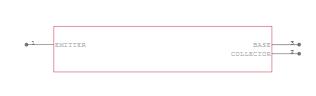
2SC2655 Symbol
Footprint

2SC2655 Footprint
3D Model

2SC2655 3D Model
C2655 Description
2SC2655 is a TO-92L or TO-92MOD packaging BJT transistor with many intriguing features in a tiny package that makes it perfect for use in a wide range of applications. It is an NPN transistor with a maximum collector current of 2A, allowing it to drive a wide range of electrical components that require 2A current.
However, the transistor can also be used as an audio amplifier, with a maximum audio output of 900mW and a maximum DC current gain of 70 to 240. However, some manufacturers provide these transistors in two different gain categories, which may be determined by glancing at the alphabet on the transistor below the component number. If the alphabet is "O," the gain is 70-120, and if the alphabet is "Y," the gain is 120-140.
Moreover, the transition frequency of the transistor is 100MHz due to which it can also be used in RF circuits under 100MHz.
C2655 Feature
• Low saturation voltage: VCE (sat) = 0.5 V (max) (IC = 1 A)
• High collector power dissipation: PC = 900 mW
• High-speed switching: tstg = 1.0 μs (typ.)
C2655 Application
Switching loads under 2000mA
Motor Controllers
Audio Amplifiers
Audio Amplifier Stages
AM & FM Radio & Transmitters
C2655 Equivalent
The equivalent for C2655:
2SC3328, STX715, KTC3209, MJE182 (TO-126 Package), 2SA1162 (TO-126 Package).
C2655 PNP Complementary
PNP Complementary of 2SC2655 is 2SA1020.
C2655 Uses
C2655 can be utilized in a wide range of general-purpose switching and amplification applications. When used as a switch, it may drive a variety of loads in 2A circuits. Loads can include high-power LEDs, relays, integrated circuits (ICs), and a variety of other electronic components.
It can offer 900mW of maximum audio amplification when used as an audio amplifier, allowing it to be utilized in audio amplifier stages or to drive a small 1-watt loudspeaker directly from a small audio input. It can be utilized as an amplifier in a variety of bell/chimes, mp3 player audio amplification, and a variety of other electrical applications that require audio amplification of 900mW. It can also be used for AM and FM broadcasting and receiving.
C2655 Safe Operating Guide
Always utilize the C2655 transistor at least 20% below its maximum ratings for long-term performance. Because the transistor's maximum collector current is 2A, do not drive a load greater than 1.6A for safety. The maximum collector-emitter voltage is 50V; for safety, no-load greater than 40V should be driven. The operation and storage temperatures of the transistor should be between -55 and +150 ℃.
C2655 Package

C2655 Package
C2655 Manufacturer
Toshiba Semiconductor & Storage offers a broad range of enabling technology solutions that allow OEMs, ODMs, CMs and fabless chip companies to develop advanced integrated products for the computing, networking, communications, digital consumer, automotive and other markets.
Specifications
- TypeParameter
- Mounting Type
The "Mounting Type" in electronic components refers to the method used to attach or connect a component to a circuit board or other substrate, such as through-hole, surface-mount, or panel mount.
Through Hole - Package / Case
refers to the protective housing that encases an electronic component, providing mechanical support, electrical connections, and thermal management.
TO-226-3, TO-92-3 Long Body - Supplier Device Package
The parameter "Supplier Device Package" in electronic components refers to the physical packaging or housing of the component as provided by the supplier. It specifies the form factor, dimensions, and layout of the component, which are crucial for compatibility and integration into electronic circuits and systems. The supplier device package information typically includes details such as the package type (e.g., DIP, SOP, QFN), number of pins, pitch, and overall size, allowing engineers and designers to select the appropriate component for their specific application requirements. Understanding the supplier device package is essential for proper component selection, placement, and soldering during the manufacturing process to ensure optimal performance and reliability of the electronic system.
TO-92MOD - Current-Collector (Ic) (Max)2A
- Operating Temperature
The operating temperature is the range of ambient temperature within which a power supply, or any other electrical equipment, operate in. This ranges from a minimum operating temperature, to a peak or maximum operating temperature, outside which, the power supply may fail.
150°C TJ - Packaging
Semiconductor package is a carrier / shell used to contain and cover one or more semiconductor components or integrated circuits. The material of the shell can be metal, plastic, glass or ceramic.
Bulk - Published2009
- Part Status
Parts can have many statuses as they progress through the configuration, analysis, review, and approval stages.
Obsolete - Moisture Sensitivity Level (MSL)
Moisture Sensitivity Level (MSL) is a standardized rating that indicates the susceptibility of electronic components, particularly semiconductors, to moisture-induced damage during storage and the soldering process, defining the allowable exposure time to ambient conditions before they require special handling or baking to prevent failures
1 (Unlimited) - Power - Max
Power - Max is a parameter that specifies the maximum amount of power that an electronic component can handle without being damaged. It is typically measured in watts and indicates the upper limit of power that can be safely supplied to the component. Exceeding the maximum power rating can lead to overheating, malfunction, or permanent damage to the component. It is important to consider the power-max rating when designing circuits or systems to ensure proper operation and longevity of the electronic components.
900mW - Transistor Type
Transistor type refers to the classification of transistors based on their operation and construction. The two primary types are bipolar junction transistors (BJTs) and field-effect transistors (FETs). BJTs use current to control the flow of current, while FETs utilize voltage to control current flow. Each type has its own subtypes, such as NPN and PNP for BJTs, and MOSFETs and JFETs for FETs, impacting their applications and characteristics in electronic circuits.
NPN - DC Current Gain (hFE) (Min) @ Ic, Vce
The parameter "DC Current Gain (hFE) (Min) @ Ic, Vce" in electronic components refers to the minimum value of the DC current gain, denoted as hFE, under specific operating conditions of collector current (Ic) and collector-emitter voltage (Vce). The DC current gain hFE represents the ratio of the collector current to the base current in a bipolar junction transistor (BJT), indicating the amplification capability of the transistor. The minimum hFE value at a given Ic and Vce helps determine the transistor's performance and efficiency in amplifying signals within a circuit. Designers use this parameter to ensure proper transistor selection and performance in various electronic applications.
70 @ 500mA 2V - Current - Collector Cutoff (Max)
The parameter "Current - Collector Cutoff (Max)" refers to the maximum current at which a transistor or other electronic component will cease to conduct current between the collector and emitter terminals. This parameter is important in determining the maximum current that can flow through the component when it is in the cutoff state. Exceeding this maximum cutoff current can lead to malfunction or damage of the component. It is typically specified in the component's datasheet and is crucial for proper circuit design and operation.
1μA ICBO - Vce Saturation (Max) @ Ib, Ic
The parameter "Vce Saturation (Max) @ Ib, Ic" in electronic components refers to the maximum voltage drop across the collector-emitter junction when the transistor is in saturation mode. This parameter is specified at a certain base current (Ib) and collector current (Ic) levels. It indicates the minimum voltage required to keep the transistor fully conducting in saturation mode, ensuring that the transistor operates efficiently and does not enter the cutoff region. Designers use this parameter to ensure proper transistor operation and to prevent overheating or damage to the component.
500mV @ 50mA, 1A - Voltage - Collector Emitter Breakdown (Max)
Voltage - Collector Emitter Breakdown (Max) is a parameter that specifies the maximum voltage that can be applied between the collector and emitter terminals of a transistor or other semiconductor device before it breaks down and allows excessive current to flow. This parameter is crucial for ensuring the safe and reliable operation of the component within its specified limits. Exceeding the maximum breakdown voltage can lead to permanent damage or failure of the device. Designers and engineers must carefully consider this parameter when selecting components for their circuits to prevent potential issues and ensure proper functionality.
50V - Frequency - Transition
The parameter "Frequency - Transition" in electronic components refers to the maximum frequency at which a signal transition can occur within the component. It is a crucial specification for digital circuits as it determines the speed at which data can be processed and transmitted. A higher frequency transition allows for faster operation and better performance of the electronic component. It is typically measured in hertz (Hz) or megahertz (MHz) and is specified by the manufacturer to ensure proper functioning of the component within a given frequency range.
100MHz
Datasheet PDF
- Datasheets :
What does the 2SC2655 transistor require?
2A current.
What is the maximum audio output of the 2SC2655 transistor?
900mW.
What is the gain of the 2SC2655 transistor if the alphabet is "O"?
120-140.
What is the transition frequency of the C2655?
100MHz.
What is 2SC2655?
A TO-92L or TO-92MOD packaging BJT transistor.
![The Guide to PIC16F1503 8-bit Microcontroller [FAQ]](https://res.utmel.com/Images/Article/ada937dc-8d7f-4372-a00a-b40f9463079c.jpg) The Guide to PIC16F1503 8-bit Microcontroller [FAQ]
The Guide to PIC16F1503 8-bit Microcontroller [FAQ]24 April 20225398
 NC7SZ125P5X: Overview, Features, and Applications
19 December 20231224
 Never Struggle Again With Microchip PG164140 Issues
16 August 2025231
 TPS2H160AQPWPRQ1: Dual-Channel, High-side, NMOs, FETs, Pinout
15 February 2022856
 SS33 Schottky Rectifier: Package, Pinout, and Datasheet
18 April 20221424
 Unraveling the Silicon Labs C8051F000/1/2/5/6/7 and C8051F010/1/2/5/6/7 Series Mixed-Signal 32KB ISP FLASH MCUs
29 February 2024268
![The Overview of MS5637 Pressure Sensor [Video]](https://res.utmel.com/Images/Article/03e2393d-b9f4-4c6b-ba73-6857e5ea7a29.jpg) The Overview of MS5637 Pressure Sensor [Video]
The Overview of MS5637 Pressure Sensor [Video]08 July 20211096
 LM358N Operational Amplifier: Pinout, Datasheet, and Schematic Diagram
02 July 202124703
 How to Select Stepper Motor Controllers for Precision
19 July 20251125
 Understanding Adapter Cards in Modern Computers
05 July 20255329
 Introduction To Different Types Of Relays
10 November 202020732
 Semiconductor Market Predicted to Witness Significant Growth by 2023
19 September 20233544
 What Determines the Maximum Operating Frequency of a Diode?
29 June 202213286
 Types and Application of Position Sensors
31 October 20257703
 Introduction to Mass Air Flow Sensor
15 September 202011158
 Memory ICs: Types, Applications & Selection (2025)
30 April 20255162
Toshiba Semiconductor and Storage
In Stock
United States
China
Canada
Japan
Russia
Germany
United Kingdom
Singapore
Italy
Hong Kong(China)
Taiwan(China)
France
Korea
Mexico
Netherlands
Malaysia
Austria
Spain
Switzerland
Poland
Thailand
Vietnam
India
United Arab Emirates
Afghanistan
Åland Islands
Albania
Algeria
American Samoa
Andorra
Angola
Anguilla
Antigua & Barbuda
Argentina
Armenia
Aruba
Australia
Azerbaijan
Bahamas
Bahrain
Bangladesh
Barbados
Belarus
Belgium
Belize
Benin
Bermuda
Bhutan
Bolivia
Bonaire, Sint Eustatius and Saba
Bosnia & Herzegovina
Botswana
Brazil
British Indian Ocean Territory
British Virgin Islands
Brunei
Bulgaria
Burkina Faso
Burundi
Cabo Verde
Cambodia
Cameroon
Cayman Islands
Central African Republic
Chad
Chile
Christmas Island
Cocos (Keeling) Islands
Colombia
Comoros
Congo
Congo (DRC)
Cook Islands
Costa Rica
Côte d’Ivoire
Croatia
Cuba
Curaçao
Cyprus
Czechia
Denmark
Djibouti
Dominica
Dominican Republic
Ecuador
Egypt
El Salvador
Equatorial Guinea
Eritrea
Estonia
Eswatini
Ethiopia
Falkland Islands
Faroe Islands
Fiji
Finland
French Guiana
French Polynesia
Gabon
Gambia
Georgia
Ghana
Gibraltar
Greece
Greenland
Grenada
Guadeloupe
Guam
Guatemala
Guernsey
Guinea
Guinea-Bissau
Guyana
Haiti
Honduras
Hungary
Iceland
Indonesia
Iran
Iraq
Ireland
Isle of Man
Israel
Jamaica
Jersey
Jordan
Kazakhstan
Kenya
Kiribati
Kosovo
Kuwait
Kyrgyzstan
Laos
Latvia
Lebanon
Lesotho
Liberia
Libya
Liechtenstein
Lithuania
Luxembourg
Macao(China)
Madagascar
Malawi
Maldives
Mali
Malta
Marshall Islands
Martinique
Mauritania
Mauritius
Mayotte
Micronesia
Moldova
Monaco
Mongolia
Montenegro
Montserrat
Morocco
Mozambique
Myanmar
Namibia
Nauru
Nepal
New Caledonia
New Zealand
Nicaragua
Niger
Nigeria
Niue
Norfolk Island
North Korea
North Macedonia
Northern Mariana Islands
Norway
Oman
Pakistan
Palau
Palestinian Authority
Panama
Papua New Guinea
Paraguay
Peru
Philippines
Pitcairn Islands
Portugal
Puerto Rico
Qatar
Réunion
Romania
Rwanda
Samoa
San Marino
São Tomé & Príncipe
Saudi Arabia
Senegal
Serbia
Seychelles
Sierra Leone
Sint Maarten
Slovakia
Slovenia
Solomon Islands
Somalia
South Africa
South Sudan
Sri Lanka
St Helena, Ascension, Tristan da Cunha
St. Barthélemy
St. Kitts & Nevis
St. Lucia
St. Martin
St. Pierre & Miquelon
St. Vincent & Grenadines
Sudan
Suriname
Svalbard & Jan Mayen
Sweden
Syria
Tajikistan
Tanzania
Timor-Leste
Togo
Tokelau
Tonga
Trinidad & Tobago
Tunisia
Turkey
Turkmenistan
Turks & Caicos Islands
Tuvalu
U.S. Outlying Islands
U.S. Virgin Islands
Uganda
Ukraine
Uruguay
Uzbekistan
Vanuatu
Vatican City
Venezuela
Wallis & Futuna
Yemen
Zambia
Zimbabwe
![2SA1943-O(Q)]() 2SA1943-O(Q)
2SA1943-O(Q)Toshiba Semiconductor and Storage
![2SC5200-O(Q)]() 2SC5200-O(Q)
2SC5200-O(Q)Toshiba Semiconductor and Storage
![TTC5200(Q)]() TTC5200(Q)
TTC5200(Q)Toshiba Semiconductor and Storage
![TTA1943(Q)]() TTA1943(Q)
TTA1943(Q)Toshiba Semiconductor and Storage
![2SA2061(TE85L,F)]() 2SA2061(TE85L,F)
2SA2061(TE85L,F)Toshiba Semiconductor and Storage
![2SC2881-Y(TE12L,ZC]() 2SC2881-Y(TE12L,ZC
2SC2881-Y(TE12L,ZCToshiba Semiconductor and Storage
![2SC3324-BL(TE85L,F]() 2SC3324-BL(TE85L,F
2SC3324-BL(TE85L,FToshiba Semiconductor and Storage
![2SC2655-Y(TE6,F,M)]() 2SC2655-Y(TE6,F,M)
2SC2655-Y(TE6,F,M)Toshiba Semiconductor and Storage
![2SA1832-Y,LF]() 2SA1832-Y,LF
2SA1832-Y,LFToshiba Semiconductor and Storage
![2SA2142(TE16L1,NQ)]() 2SA2142(TE16L1,NQ)
2SA2142(TE16L1,NQ)Toshiba Semiconductor and Storage