

 Product
 Brand
Brand Articles
 Tools
Tools
Cypress CY8C6247BZI-D34 Microcontroller Datasheet Overview
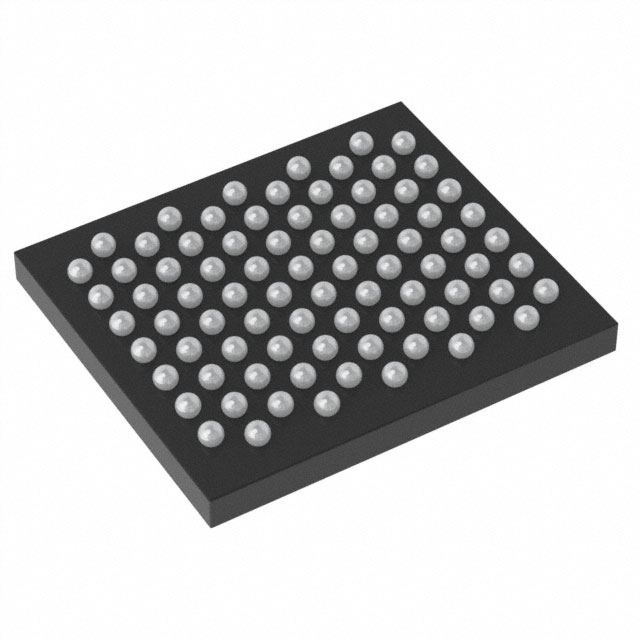
1MB 1M x 8 FLASH ARM® Cortex®-M4/M0 32-Bit Dual-Core Microcontroller PSoC® 6 Series 80-XFBGA, WLCSP


1MB 1M x 8 FLASH ARM® Cortex®-M4/M0 32-Bit Dual-Core Microcontroller PSoC® 6 Series 80-XFBGA, WLCSP
This technical article offers a comprehensive overview of the Cypress CY8C6247BZI-D34 microcontroller, focusing on its key features, memory organization, low-power modes, advanced peripherals, and security features as detailed in the datasheet.
Product Introduction
1. Description
The CY8C6247BZI-D34 microcontroller is a high-performance, ultra-low-power MCU designed for IoT applications. It combines a high-performance Arm Cortex-M4F CPU with advanced analog and digital capabilities to offer a versatile solution for a wide range of embedded systems.
2. Features
Dual CPU Subsystem
The microcontroller features a 150-MHz Arm Cortex-M4F CPU and a 100-MHz Cortex-M0+ CPU with ultra-low active CPU current slopes, user-selectable core logic operation, and two DMA controllers.
Memory Subsystem
It includes 1 MB of application flash, 32 KB of auxiliary flash, 32 KB of supervisory flash, and 288 KB of SRAM with power and data retention control.
Low-Power Operation
With six power modes for fine-grained power management and deep sleep mode current of 7 µA, the microcontroller provides efficient power utilization and on-chip DC-DC buck converter.
Flexible Clocking Options
The microcontroller offers on-chip crystal oscillators, phase-locked loop (PLL), ultra-low-power 32-kHz internal low-speed oscillator, and frequency-locked loop (FLL) for multiplying clock frequencies.
Advanced Peripheral Subsystems
It encompasses Quad SPI/Serial Memory Interface, Serial Communication Blocks, USB full-speed device interface, audio subsystem with PDM and I2S channels, and programmable analog and digital functionalities.
Security Architecture
The platform includes ROM-based root of trust via uninterruptible Secure Boot, step-wise authentication of execution images, secure execution of code in execute-only mode, and hardware acceleration for cryptographic methods.
3. Applications
The CY8C6247BZI-D34 microcontroller is suitable for IoT applications including wireless sensor networks, industrial monitoring, remote devices, and smart home automation due to its high-performance, low-power, and secure architecture.
4. Reference Designs
Reference designs utilizing the CY8C6247BZI-D34 microcontroller cover a wide range of applications such as wireless sensor networks, industrial monitoring systems, and smart home automation. These designs showcase the microcontroller's capabilities to address various application requirements.
5. Alternative Parts
The CY8C6247BZI-D34 microcontroller is part of a comprehensive product portfolio offering alternative parts with similar functionalities to cater to diverse application requirements and provide flexibility in embedded system designs.
6. FAQs
Q:What are the primary features of the CY8C6247BZI-D34 microcontroller?
A:The microcontroller features a dual CPU subsystem, extensive memory configuration, advanced peripherals, low-power operation, and robust security features.
Q:What applications is the CY8C6247BZI-D34 microcontroller suitable for?
A:The microcontroller is suitable for IoT applications including wireless sensor networks, industrial monitoring, remote devices, and smart home automation.
Q:Are there alternative parts within the Cypress microcontroller portfolio that offer similar functionalities?
A:Yes, Cypress offers a range of alternative parts with similar functionalities to provide diverse options for embedded system designs.
Specifications
- TypeParameter
- Factory Lead Time13 Weeks
- Mounting Type
The "Mounting Type" in electronic components refers to the method used to attach or connect a component to a circuit board or other substrate, such as through-hole, surface-mount, or panel mount.
Surface Mount - Package / Case
refers to the protective housing that encases an electronic component, providing mechanical support, electrical connections, and thermal management.
80-XFBGA, WLCSP - Data ConvertersA/D 8x12b SAR; D/A 1x12b
- Number of I/Os62
- Operating Temperature
The operating temperature is the range of ambient temperature within which a power supply, or any other electrical equipment, operate in. This ranges from a minimum operating temperature, to a peak or maximum operating temperature, outside which, the power supply may fail.
-40°C~85°C TA - Packaging
Semiconductor package is a carrier / shell used to contain and cover one or more semiconductor components or integrated circuits. The material of the shell can be metal, plastic, glass or ceramic.
Tape & Reel (TR) - Series
In electronic components, the "Series" refers to a group of products that share similar characteristics, designs, or functionalities, often produced by the same manufacturer. These components within a series typically have common specifications but may vary in terms of voltage, power, or packaging to meet different application needs. The series name helps identify and differentiate between various product lines within a manufacturer's catalog.
PSoC® 6 - Part Status
Parts can have many statuses as they progress through the configuration, analysis, review, and approval stages.
Active - Moisture Sensitivity Level (MSL)
Moisture Sensitivity Level (MSL) is a standardized rating that indicates the susceptibility of electronic components, particularly semiconductors, to moisture-induced damage during storage and the soldering process, defining the allowable exposure time to ambient conditions before they require special handling or baking to prevent failures
1 (Unlimited) - Oscillator Type
Wien Bridge Oscillator; RC Phase Shift Oscillator; Hartley Oscillator; Voltage Controlled Oscillator; Colpitts Oscillator; Clapp Oscillators; Crystal Oscillators; Armstrong Oscillator.
Internal - Speed
In electronic components, "Speed" typically refers to the rate at which data can be processed or transferred within the component. It is a measure of how quickly the component can perform its functions, such as executing instructions or transmitting signals. Speed is often specified in terms of frequency, such as clock speed in processors or data transfer rate in memory modules. Higher speed components can perform tasks more quickly, leading to improved overall performance in electronic devices. It is an important parameter to consider when designing or selecting electronic components for specific applications.
100MHz, 150MHz - RAM Size
RAM size refers to the amount of random access memory (RAM) available in an electronic component, such as a computer or smartphone. RAM is a type of volatile memory that stores data and instructions that are actively being used by the device's processor. The RAM size is typically measured in gigabytes (GB) and determines how much data the device can store and access quickly for processing. A larger RAM size allows for smoother multitasking, faster loading times, and better overall performance of the electronic component. It is an important factor to consider when choosing a device, especially for tasks that require a lot of memory, such as gaming, video editing, or running multiple applications simultaneously.
288K x 8 - Voltage - Supply (Vcc/Vdd)
Voltage - Supply (Vcc/Vdd) is a key parameter in electronic components that specifies the voltage level required for the proper operation of the device. It represents the power supply voltage that needs to be provided to the component for it to function correctly. This parameter is crucial as supplying the component with the correct voltage ensures that it operates within its specified limits and performance characteristics. It is typically expressed in volts (V) and is an essential consideration when designing and using electronic circuits to prevent damage and ensure reliable operation.
1.7V~3.6V - Core Processor
The term "Core Processor" typically refers to the central processing unit (CPU) of a computer or electronic device. It is the primary component responsible for executing instructions, performing calculations, and managing data within the system. The core processor is often considered the brain of the device, as it controls the overall operation and functionality. It is crucial for determining the speed and performance capabilities of the device, as well as its ability to handle various tasks and applications efficiently. In modern devices, core processors can have multiple cores, allowing for parallel processing and improved multitasking capabilities.
ARM® Cortex®-M4/M0 - Peripherals
In the context of electronic components, "Peripherals" refer to devices or components that are connected to a main system or device to enhance its functionality or provide additional features. These peripherals can include input devices such as keyboards, mice, and touchscreens, as well as output devices like monitors, printers, and speakers. Other examples of peripherals include external storage devices, network adapters, and cameras. Essentially, peripherals are external devices that expand the capabilities of a main electronic system or device.
Brown-out Detect/Reset, Cap Sense, DMA, I2S, POR, PWM, WDT - Program Memory Type
Program memory typically refers to flash memory when it is used to hold the program (instructions). Program memory may also refer to a hard drive or solid state drive (SSD). Contrast with data memory.
FLASH - Core Size
Core size in electronic components refers to the physical dimensions of the core material used in devices such as inductors and transformers. The core size directly impacts the performance characteristics of the component, including its inductance, saturation current, and frequency response. A larger core size typically allows for higher power handling capabilities and lower core losses, while a smaller core size may result in a more compact design but with limitations on power handling and efficiency. Designers must carefully select the core size based on the specific requirements of the application to achieve optimal performance and efficiency.
32-Bit Dual-Core - Program Memory Size
Program Memory Size refers to the amount of memory available in an electronic component, such as a microcontroller or microprocessor, that is used to store program instructions. This memory is non-volatile, meaning that the data stored in it is retained even when the power is turned off. The program memory size determines the maximum amount of code that can be stored and executed by the electronic component. It is an important parameter to consider when selecting a component for a specific application, as insufficient program memory size may limit the functionality or performance of the device.
1MB 1M x 8 - Connectivity
In electronic components, "Connectivity" refers to the ability of a component to establish and maintain connections with other components or devices within a circuit. It is a crucial parameter that determines how easily signals can be transmitted between different parts of a circuit. Connectivity can be influenced by factors such as the number of input and output ports, the type of connectors used, and the overall design of the component. Components with good connectivity are essential for ensuring reliable and efficient operation of electronic systems.
I2C, LINbus, QSPI, SPI, UART/USART, USB - EEPROM Size
EEPROM Size refers to the amount of memory capacity available in an Electrically Erasable Programmable Read-Only Memory (EEPROM) chip. This parameter indicates the total storage space in bytes or bits that can be used to store data in a non-volatile manner. The EEPROM size determines the maximum amount of information that can be written, read, and erased from the memory chip. It is an important specification to consider when selecting an EEPROM for a particular application, as it directly impacts the amount of data that can be stored and accessed by the electronic component.
32K x 8 - RoHS Status
RoHS means “Restriction of Certain Hazardous Substances” in the “Hazardous Substances Directive” in electrical and electronic equipment.
ROHS3 Compliant
Parts with Similar Specs
Datasheet PDF
- Datasheets :
- PCN Assembly/Origin :
- PCN Packaging :
 1N5399 Rectifier Diode: Pinout, Datasheet, and Specifications
17 August 202124468
 MCP4822 Digital-to-Analog Converter: Datasheet, Pinout and MCP4822 Arduino
25 November 20215792
 SG3525 Pulse width modulation controller IC: Datasheet, and Pinout
13 October 202223778
 ATTINY13V CMOS 8-bit Microcontroller: Features, Pinout and Datasheet
13 January 20221360
 DST2045AX Rectifier: Features, Pinout, and Datasheet
23 February 2022660
 LM1875T/NOPB Audio Amplifier: Feature,Specification,Datasheet
17 May 20214851
 TS555 CMOS Timer: Datasheet, Application, Schematic
24 September 20212920
 STM32F401CCU6 Microcontroller: 84MHz,48-UFQFN, Pinout and Features
08 February 202210682
 What is a Force Sensor?
19 April 202112111
 What is a Biosensor?
23 March 20213907
 Introduction to MSP430 Microcontroller
26 December 202512498
 CR123A vs 123A Batteries Explained for 2025
27 May 20254774
 Introduction to MD8002A Audio Amplifier
27 March 20259402
 Silicon Carbide: The Future of Power Electronics
06 March 20233825
 Introduction to USB Type-C
20 February 20232690
 Dynamic On-Resistance and its Impact on Power Converters
28 August 20232846
Cypress Semiconductor Corp
In Stock
United States
China
Canada
Japan
Russia
Germany
United Kingdom
Singapore
Italy
Hong Kong(China)
Taiwan(China)
France
Korea
Mexico
Netherlands
Malaysia
Austria
Spain
Switzerland
Poland
Thailand
Vietnam
India
United Arab Emirates
Afghanistan
Åland Islands
Albania
Algeria
American Samoa
Andorra
Angola
Anguilla
Antigua & Barbuda
Argentina
Armenia
Aruba
Australia
Azerbaijan
Bahamas
Bahrain
Bangladesh
Barbados
Belarus
Belgium
Belize
Benin
Bermuda
Bhutan
Bolivia
Bonaire, Sint Eustatius and Saba
Bosnia & Herzegovina
Botswana
Brazil
British Indian Ocean Territory
British Virgin Islands
Brunei
Bulgaria
Burkina Faso
Burundi
Cabo Verde
Cambodia
Cameroon
Cayman Islands
Central African Republic
Chad
Chile
Christmas Island
Cocos (Keeling) Islands
Colombia
Comoros
Congo
Congo (DRC)
Cook Islands
Costa Rica
Côte d’Ivoire
Croatia
Cuba
Curaçao
Cyprus
Czechia
Denmark
Djibouti
Dominica
Dominican Republic
Ecuador
Egypt
El Salvador
Equatorial Guinea
Eritrea
Estonia
Eswatini
Ethiopia
Falkland Islands
Faroe Islands
Fiji
Finland
French Guiana
French Polynesia
Gabon
Gambia
Georgia
Ghana
Gibraltar
Greece
Greenland
Grenada
Guadeloupe
Guam
Guatemala
Guernsey
Guinea
Guinea-Bissau
Guyana
Haiti
Honduras
Hungary
Iceland
Indonesia
Iran
Iraq
Ireland
Isle of Man
Israel
Jamaica
Jersey
Jordan
Kazakhstan
Kenya
Kiribati
Kosovo
Kuwait
Kyrgyzstan
Laos
Latvia
Lebanon
Lesotho
Liberia
Libya
Liechtenstein
Lithuania
Luxembourg
Macao(China)
Madagascar
Malawi
Maldives
Mali
Malta
Marshall Islands
Martinique
Mauritania
Mauritius
Mayotte
Micronesia
Moldova
Monaco
Mongolia
Montenegro
Montserrat
Morocco
Mozambique
Myanmar
Namibia
Nauru
Nepal
New Caledonia
New Zealand
Nicaragua
Niger
Nigeria
Niue
Norfolk Island
North Korea
North Macedonia
Northern Mariana Islands
Norway
Oman
Pakistan
Palau
Palestinian Authority
Panama
Papua New Guinea
Paraguay
Peru
Philippines
Pitcairn Islands
Portugal
Puerto Rico
Qatar
Réunion
Romania
Rwanda
Samoa
San Marino
São Tomé & Príncipe
Saudi Arabia
Senegal
Serbia
Seychelles
Sierra Leone
Sint Maarten
Slovakia
Slovenia
Solomon Islands
Somalia
South Africa
South Sudan
Sri Lanka
St Helena, Ascension, Tristan da Cunha
St. Barthélemy
St. Kitts & Nevis
St. Lucia
St. Martin
St. Pierre & Miquelon
St. Vincent & Grenadines
Sudan
Suriname
Svalbard & Jan Mayen
Sweden
Syria
Tajikistan
Tanzania
Timor-Leste
Togo
Tokelau
Tonga
Trinidad & Tobago
Tunisia
Turkey
Turkmenistan
Turks & Caicos Islands
Tuvalu
U.S. Outlying Islands
U.S. Virgin Islands
Uganda
Ukraine
Uruguay
Uzbekistan
Vanuatu
Vatican City
Venezuela
Wallis & Futuna
Yemen
Zambia
Zimbabwe
![CY7C60223-SXC]() CY7C60223-SXC
CY7C60223-SXCCypress Semiconductor Corp
![MB89635RPMC-G-1441-JNE1]() MB89635RPMC-G-1441-JNE1
MB89635RPMC-G-1441-JNE1Cypress Semiconductor Corp
![CP8479ATT]() CP8479ATT
CP8479ATTCypress Semiconductor Corp
![CY8C4014LQI-422]() CY8C4014LQI-422
CY8C4014LQI-422Cypress Semiconductor Corp
![CY8C5868AXI-LP035]() CY8C5868AXI-LP035
CY8C5868AXI-LP035Cypress Semiconductor Corp
![CY8C3866LTI-068]() CY8C3866LTI-068
CY8C3866LTI-068Cypress Semiconductor Corp
![CY8C3866AXI-039]() CY8C3866AXI-039
CY8C3866AXI-039Cypress Semiconductor Corp
![CY8C21434-24LTXI]() CY8C21434-24LTXI
CY8C21434-24LTXICypress Semiconductor Corp
![CY8C4014LQI-421]() CY8C4014LQI-421
CY8C4014LQI-421Cypress Semiconductor Corp
![CY8C4124LQI-443]() CY8C4124LQI-443
CY8C4124LQI-443Cypress Semiconductor Corp


