

 Product
 Brand
Brand Articles
 Tools
Tools
ESP-01 Wi-Fi Module: ESP-01 Pinout, Programming and ESP-01 VS ESP8266 [FAQ]
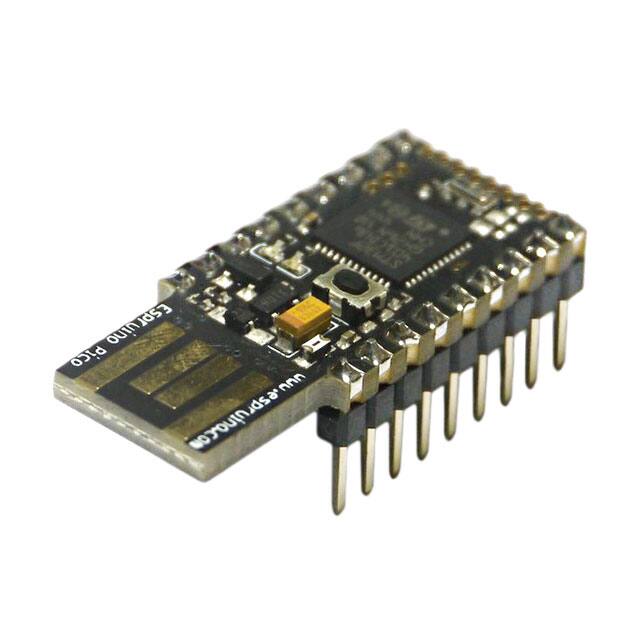


ESPRUINO PICO STM32F401 EVAL BRD
The ESP-01 WIFI Wireless Transceiver Module is a self-contained SOC with an integrated TCP/IP protocol stack that can give any microcontroller access to your Wi-Fi network. This article is going to explain pinout, programming, specifications, and more details about the ESP-01 WIFI module.
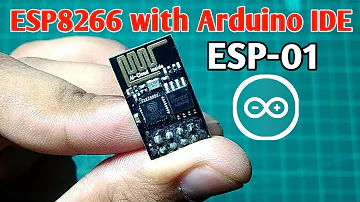
Getting Started with ESP 8266 ESP 01 with Arduino IDE | Programming esp-01 with Arduino ide
What is ESP-01?
ESP-01 Pinout

ESP-01 Pinout
ESP-01 CAD Model
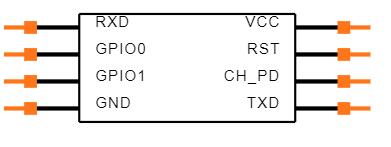
ESP-01 Symbol

ESP-01 Footprint

ESP-01 3D Model
Specifications
- TypeParameter
- Factory Lead Time5 Weeks
- Mounting Type
The "Mounting Type" in electronic components refers to the method used to attach or connect a component to a circuit board or other substrate, such as through-hole, surface-mount, or panel mount.
Fixed - Series
In electronic components, the "Series" refers to a group of products that share similar characteristics, designs, or functionalities, often produced by the same manufacturer. These components within a series typically have common specifications but may vary in terms of voltage, power, or packaging to meet different application needs. The series name helps identify and differentiate between various product lines within a manufacturer's catalog.
STM32F4 - Part Status
Parts can have many statuses as they progress through the configuration, analysis, review, and approval stages.
Active - Moisture Sensitivity Level (MSL)
Moisture Sensitivity Level (MSL) is a standardized rating that indicates the susceptibility of electronic components, particularly semiconductors, to moisture-induced damage during storage and the soldering process, defining the allowable exposure time to ambient conditions before they require special handling or baking to prevent failures
1 (Unlimited) - TypeMCU 32-Bit
- Core Processor
The term "Core Processor" typically refers to the central processing unit (CPU) of a computer or electronic device. It is the primary component responsible for executing instructions, performing calculations, and managing data within the system. The core processor is often considered the brain of the device, as it controls the overall operation and functionality. It is crucial for determining the speed and performance capabilities of the device, as well as its ability to handle various tasks and applications efficiently. In modern devices, core processors can have multiple cores, allowing for parallel processing and improved multitasking capabilities.
ARM® Cortex®-M4 - Utilized IC / Part
Utilized IC / Part is a parameter that refers to the extent to which an integrated circuit (IC) or electronic component is being used or consumed within a system or application. It typically indicates the percentage or ratio of the component's capabilities that are being utilized in a given scenario. This parameter is important for assessing the efficiency and performance of the component, as well as for determining if the component is being underutilized or overburdened in a particular application. Monitoring and optimizing the utilization of ICs and electronic parts can help improve overall system reliability, efficiency, and cost-effectiveness.
STM32F401 - ContentsBoard(s)
- Board Type
Board Type refers to the specific configuration or category of a printed circuit board (PCB) used in electronic devices. It defines the characteristics and design of the board, such as single-sided, double-sided, or multilayer constructions. The Board Type impacts factors like signal integrity, power distribution, and thermal management, influencing the overall performance and functionality of the electronic component. Different applications and environments may require specific Board Types to meet durability and operational requirements.
Evaluation Platform - Platform
In the context of electronic components, the parameter "Platform" typically refers to the specific hardware or software environment on which the component is designed to operate. This could include the type of operating system, processor architecture, communication protocols, or other technical specifications that the component is compatible with. Understanding the platform requirements of electronic components is crucial for ensuring proper functionality and integration within a larger system. Manufacturers often provide detailed information about the supported platforms to help users select the right components for their applications.
Espruino Pico
ESP-01 Features
802.11 b/g/n
Integrated low power 32-bit MCU
Integrated 10-bit ADC
Integrated TCP/IP protocol stack
Integrated TR switch, balun, LNA, power amplifier, and matching network
Integrated PLL, regulators, and power management units
Supports antenna diversity
Wi-Fi 2.4 GHz, support WPA/WPA2
Support STA/AP/STA+AP operation modes
Support Smart Link Function for both Android and iOS devices
Support Smart Link Function for both Android and iOS devices
How to use ESP-01 as a Wi-Fi Shield?
As a result, I devised a better way to utilize the ESP-01 as a WiFi shield, in which the ESP-01 is in charge of establishing WiFi and HTTP(S) connections, as seen in "Using the ESP-01 as an Arduino." As a sensor node, a Host (in my case and STM32 Blue Pill) will communicate with the ESP-01 via a serial interface. This is similar to using the ESP-01 with AT command firmware, except the ESP-01 's firmware is replaced with the Arduino web client, and we can design our communication requests and responses between the serials.

ESP01 connection with Host
ESP-01 VS ESP-01S

ESP-01 VS ESP-01S
The ESP-01 is on the left, and the ESP-01S is on the right. The ESP-01 includes two LEDs near the PCB antenna, one for the Tx line (GPIO1) and the other for the power indicator. The ESP-01 S, on the other hand, has only one Blue LED and is wired to GPIO2. Two more pull-up resistors were added to the ESP-01 S, which can be seen between the ESP8266EX chip and the header pins. Between the CH PD and 3v3 (VCC) pins is one of the pull-up resistors.
| ESP-01 | ESP-01S | |
| esp01 esp-01 esp8266ex blue 512MB | esp01s esp-01s esp8266ex black 1Mb | |
| Flash Memory | 512 Mo | 1 Mo |
| Color | Blue | Black |
| Possible mention | AI Cloud Inside | S Series |
| Note | The red (Power) and blue (WiFi) LEDs are placed next to the antenna engraved on the PCB |
Which one to choose ESP-01 or ESP8266?
The ESP01 is simply an ESP8266 module installed on a miniature development board (24.8 x 14.3mm). There are only 2 pins of the ESP8266EX module that are exposed on the GPIO GPIO0 and GPIO2 as well as the pins RX ET TXfor programming and debugging via the serial port.
The difference between the versions lies only in the amount of flash memory, 512 KB or 1 MB.
ESP-01 Manufacturer
Pimoroni designs manufacture and sell friendly products for Makers, Educators, and Creatives. Founded in 2012 by Jon Williamson and Paul Beech, Pimoroni makes tech treasure for tinkerers. The company started just after Paul won a competition to design the Raspberry Pi logo. Supported by the Raspberry Pi community, as well as the wider Maker community, Pimoroni wants to bring electronics to a larger audience by making electronics accessible and attractive. Pimoroni has seen 80% growth each year since they started and currently employ over 30 people from their headquarters in Sheffield, in the northern UK. This growth has been sustained by selling internationally through more than 50 worldwide distributors. Pimoroni is the largest Adafruit reseller in the UK. When Kickstarter launched their UK site, Pimoroni's Picade (a kit to convert your Raspberry Pi into a desktop arcade machine) was their first project.
Datasheet PDF
- Datasheets :
How Does ESP-01 Work?
The ESP-01 can be controlled from your local Wi-Fi network or the internet (after port forwarding). The ESP-01 module has GPIO pins that can be programmed to turn an LED or a relay ON/OFF through the internet. The module can be programmed using an Arduino/USB-to TTL converter through the serial pins (RX, TX).
What can you do with ESP-01?
The ESP-01 module has GPIO pins that can be programmed to turn an LED or a relay ON/OFF through the internet. The module can be programmed using an Arduino/USB-to-TTL converter through the serial pins (RX, TX).
How can I control ESP 01 without a router?
To control the ESP-01 ESP8266 module without a router or an internet connection, the ESP-01 is placed into AP mode (Access Point mode). A smartphone or a PC with wireless capability is then used to connect to the module. Command codes are then sent to it thru a browser or an application.
How do I connect my ESP-01 to Wi-Fi?
To see if it works, open the Wi-Fi settings on your computer, look for a network called "ESP8266 Access Point", enter the password "there is no spoon", and connect to it. Then open a terminal, and ping to 192.168. 4.1 (this is the default IP address of our ESP AP). You'll see that the ESP responds to your pings.
 BR2325 23.0mm Lithium Poly-Carbon 3 V Battery: Datasheet, BR2325 VS CR2032, and Equivalents
30 March 20226687
 Exploring the Cypress MB91520 Series: 32-bit FR81S Microcontroller for Automotive Devices
29 February 2024235
 1N4148 VS 1N4007 VS 1N5819: Brief introduction of 1N4148, 1N5819 and 1N4007 diodes
06 June 202211938
 BAT54S Diode: BAT54S Datasheet, Price, Pinout
27 January 20226139
 AD936x Series RF Agile Transceiver: Wideband Performance Review and SDR Design Guide
10 February 20261170
 LM741CN vs UA741CN : Which one is better?
26 February 202210207
 A Comprehensive Guide to LTC695ISW-3.3#TRPBF PMIC Supervisor from Linear Technology/Analog Devices
06 March 2024295
 LT1167 Precision Instrumentation Amplifier, 8 SOIC, LT1167 Circuit and Datasheet pdf
07 January 20223638
 What Is an ASIC? Design Flow, Applications, and the 2026 AI Custom Silicon Boom
01 July 20261202
 Electronic Components in the Smart Home System
24 April 20253039
 Semiconductor Devices: Impact on IoT and Modern Communication (Part- 2)
24 July 20243074
 Laser diodes or LEDs what sets them apart
14 July 20253052
 What are Laser Diodes?
20 October 202517860
 Silicon Carbide: The Future of Power Electronics
06 March 20233923
 India's Bold Leap Towards Semiconductor Supremacy
15 September 20233918
 What is AMOLED?
25 April 202111241
Pimoroni Ltd
In Stock
United States
China
Canada
Japan
Russia
Germany
United Kingdom
Singapore
Italy
Hong Kong(China)
Taiwan(China)
France
Korea
Mexico
Netherlands
Malaysia
Austria
Spain
Switzerland
Poland
Thailand
Vietnam
India
United Arab Emirates
Afghanistan
Åland Islands
Albania
Algeria
American Samoa
Andorra
Angola
Anguilla
Antigua & Barbuda
Argentina
Armenia
Aruba
Australia
Azerbaijan
Bahamas
Bahrain
Bangladesh
Barbados
Belarus
Belgium
Belize
Benin
Bermuda
Bhutan
Bolivia
Bonaire, Sint Eustatius and Saba
Bosnia & Herzegovina
Botswana
Brazil
British Indian Ocean Territory
British Virgin Islands
Brunei
Bulgaria
Burkina Faso
Burundi
Cabo Verde
Cambodia
Cameroon
Cayman Islands
Central African Republic
Chad
Chile
Christmas Island
Cocos (Keeling) Islands
Colombia
Comoros
Congo
Congo (DRC)
Cook Islands
Costa Rica
Côte d’Ivoire
Croatia
Cuba
Curaçao
Cyprus
Czechia
Denmark
Djibouti
Dominica
Dominican Republic
Ecuador
Egypt
El Salvador
Equatorial Guinea
Eritrea
Estonia
Eswatini
Ethiopia
Falkland Islands
Faroe Islands
Fiji
Finland
French Guiana
French Polynesia
Gabon
Gambia
Georgia
Ghana
Gibraltar
Greece
Greenland
Grenada
Guadeloupe
Guam
Guatemala
Guernsey
Guinea
Guinea-Bissau
Guyana
Haiti
Honduras
Hungary
Iceland
Indonesia
Iran
Iraq
Ireland
Isle of Man
Israel
Jamaica
Jersey
Jordan
Kazakhstan
Kenya
Kiribati
Kosovo
Kuwait
Kyrgyzstan
Laos
Latvia
Lebanon
Lesotho
Liberia
Libya
Liechtenstein
Lithuania
Luxembourg
Macao(China)
Madagascar
Malawi
Maldives
Mali
Malta
Marshall Islands
Martinique
Mauritania
Mauritius
Mayotte
Micronesia
Moldova
Monaco
Mongolia
Montenegro
Montserrat
Morocco
Mozambique
Myanmar
Namibia
Nauru
Nepal
New Caledonia
New Zealand
Nicaragua
Niger
Nigeria
Niue
Norfolk Island
North Korea
North Macedonia
Northern Mariana Islands
Norway
Oman
Pakistan
Palau
Palestinian Authority
Panama
Papua New Guinea
Paraguay
Peru
Philippines
Pitcairn Islands
Portugal
Puerto Rico
Qatar
Réunion
Romania
Rwanda
Samoa
San Marino
São Tomé & Príncipe
Saudi Arabia
Senegal
Serbia
Seychelles
Sierra Leone
Sint Maarten
Slovakia
Slovenia
Solomon Islands
Somalia
South Africa
South Sudan
Sri Lanka
St Helena, Ascension, Tristan da Cunha
St. Barthélemy
St. Kitts & Nevis
St. Lucia
St. Martin
St. Pierre & Miquelon
St. Vincent & Grenadines
Sudan
Suriname
Svalbard & Jan Mayen
Sweden
Syria
Tajikistan
Tanzania
Timor-Leste
Togo
Tokelau
Tonga
Trinidad & Tobago
Tunisia
Turkey
Turkmenistan
Turks & Caicos Islands
Tuvalu
U.S. Outlying Islands
U.S. Virgin Islands
Uganda
Ukraine
Uruguay
Uzbekistan
Vanuatu
Vatican City
Venezuela
Wallis & Futuna
Yemen
Zambia
Zimbabwe
