Product
 Brand
Brand Articles
 Tools
Tools
ESP32 vs ESP8266: Which is better?

2.4GHz~2.5GHz Bluetooth, WiFi -40°C~85°C 2.7V~3.6V ADC, GPIO, I2C, I2S, PWM, SDIO, SPI, UART 150Mbps 20.5dBm 802.11b/g/n, Bluetooth v4.2 + EDR, Class 1, 2 and 3 -97dBm Module


2.4GHz~2.5GHz Bluetooth, WiFi -40°C~85°C 2.7V~3.6V ADC, GPIO, I2C, I2S, PWM, SDIO, SPI, UART 150Mbps 20.5dBm 802.11b/g/n, Bluetooth v4.2 + EDR, Class 1, 2 and 3 -97dBm Module
The ESP32 and ESP8266 are cheap Wi-Fi modules perfectly suited for DIY projects in the Internet of Things (IoT) and Home Automation fields. So what is the difference between ESP32 and ESP8266? Should you use the ESP32 or the ESP8266 in your projects? It depends on what you want to do. In this article, we’ll compare the ESP32 with the ESP8266 and cover the pros and cons between them.
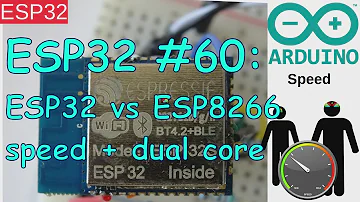
ESP32 #60: ESP32 vs ESP8266 Speed Comparison and Arduino Dual Core Speed
Introduction
The ESP32 is a dual-core 160MHz to 240MHz CPU, whereas the ESP8266 is a single-core processor that runs at 80MHz.The ESP32 and ESP8266 are both fantastic Wi-Fi modules. When it comes to particular aspects, one is sometimes chosen above the other. The ESP8266 has a lower current consumption than that of its competitor however one has more digital pins than the other. As a result, you should select the appropriate option. Therefore, this article is going to discuss the pros and cons between ESP32 and ESP8266 and which one is better for your choice. I hope you found this post to be informative.
What is ESP32?
ESP32 is a low-cost, low-power Microcontroller with integrated Wi-Fi and Bluetooth. It is the successor to the ESP8266 which is also a low-cost Wi-Fi microchip albeit with limited vastly limited functionality.
It is an integrated antenna and RF balun, power amplifier, low-noise amplifiers, filters, and power management module. The entire solution occupies the smallest amount of space on the printed circuit board. This board is used with TSMC 40nm low power technology 2.4 GHz dual-mode Wi-Fi and Bluetooth chips, which have the best power and RF attributes, are safe, dependable, and scalable to a variety of applications.


ESP32 Pinout
What is ESP8266?
The ESP8266 is a Wi-Fi SoC that integrates all the needed components to create a fully functional Wi-Fi device. The L106 is a custom 32-bit processor with 32KB of instruction space, 80KB of user data, 16 GPIO pins, and a variety of peripherals including a serial peripheral interface (SPI), inter-integrated circuit protocol (I2C), universal asynchronous receiver-transmitter (UART), and an analog-to-digital converter onboard the SoC. (ADC). Because the ESP8266 integrated circuit (IC) comes in a difficult-to-use maker package, most builders opt for the ESP-01, which includes the ESP8266, onboard flash memory, and other components.


ESP8266 Pinout
ESP32 vs. ESP8266: Specifications
| Category | ESP8266 | ESP32 | Winner |
| Processor | 80MHz 32-Bit RISC | Up to dual-core 240MHz 32-Bit processor | ESP32 |
| Memory | 32KB Instruction 80KB User Data | 520KM SRAM | ESP32 |
| Peripherals | 16 GPIO, UART, I2C, I2S, ADC | > 16 GPIO, UART, I2C, I2S, ADC, DAC, CAN | ESP32 |
| Wi-Fi | Yes | Yes | Neither |
| Bluetooth | No | Yes | ESP32 |
| Hardware Security | No | Yes | ESP32 |
| SSL Supported | Yes – Not very well | Yes | ESP32 |
| Price | Low | High | ESP8266 |
| Programmability | Not Easy | Easy | ESP32 |
| Maker Friendly | No – 8 Pin Device Not Friendly | Yes | ESP32 |
| Software Support | Yes but getting old | Yes – Still relevant | ESP32 |
ESP32 vs. ESP8266: Arduino IDE
Let's compare the two modules using the Arduino IDE, which is mostly used to program the ESP32 and ESP8266 microcontrollers. Both boards can be programmed using the Arduino IDE, which is a benefit for individuals who are familiar with the platform. Both share the same library and command set. Some libraries are only compatible with the ESP32 or ESP8266 modules, and will not run on both. However, only a few changes are required.
How to program ESP32 on Arduino IDE
In your Arduino IDE, go to File> Preferences.
Open the Boards Manager. Go to Tools > Board > Boards Manager…
Search for ESP32 and press the install button for the “ESP32 by Espressif Systems“:
That's it. It should be installed after a few seconds.
Install ESP8266 Add-on in Arduino IDE
To install the ESP8266 board in your Arduino IDE, follow these next instructions:
In your Arduino IDE, go to File> Preferences
Enter http://arduino.esp8266.com/stable/package_esp8266com_index.json into the “Additional Boards Manager URLs” field as shown in the figure below. Then, click the “OK” button:
Open the Boards Manager. Go to Tools > Board > Boards Manager…
Search for ESP8266 and press the install button for the “ESP8266 by ESP8266 Community“:
That’s it. It should be installed after a few seconds.
ESP32 vs. ESP8266: Pros and Cons
ESP32 Pros:
ESP32 offers you dual-core 160MHZ to 240MHZ
You can control and monitor your device with the help of Wi-fi or Bluetooth at a very low price.
ESP32 offers you more GPIOs
ESP32 gives you a high speed of 150Mbps.
ESP32 Cons:
ESP32 is more expensive than the ESP8266
ESP8266 Pros:
ESP8266 Module gives you powerful onboard processing and storage capability, which allows it to integrate with sensors and other applications.
It has a high level of on-chip integration. The on-chip integration allows the user for very little external refer circuitry.
The ESP8266 goes with APSD for the Bluetooth and VoIP applications coexistence interfaces. It also contains a self-calibrated radio frequency (RF) that allows it to work with all the conditions of operating and does not require any radio frequency parts.
ESP8266 Cons:
ESP8266 does not have Bluetooth connectivity, whereas in ESP32 you can use this feature.
The GPIO is very less in ESP8266 compared to ESP32.
ESP32 vs. ESP8266: What are the applications?
Using Wi-Fi to triangulate a location
Automated outlets in various stores and workshops
Industrial security in home and business sectors
Wireless monitoring CCTV cameras and sensors that feed data
In the field of robotics for both academic and professional purposes
Why is ESP32 special?
The ESP8266 and ESP32 SoC microcontrollers both provide builders with an Internet communication device, but the ESP32 comes out on top. The Arduino IDE can program the ESP8266 directly, however it is frequently more difficult, whereas the ESP32 is simple to program. The ESP32's quicker processor and larger memory allow for far larger projects to be created on a single SoC, while the ESP32's robust security features make it a more secure device. Furthermore, the ESP32 is a dependable board, even though its firmware and attached peripherals can be flaky at times. Secure sockets layer (SSL) connections become increasingly viable as memory and processing power increase, which are critical criteria in a society where security is crucial.
In general, ESP32 devices have more GPIO to work with, making them more useful in complex applications. Because many ESP32 development boards have small cameras, the ESP32 appears to be a very capable device.
Which one is better ESP32 or ESP8266?
Choose ESP32 or ESP8266? It depends on what you want to do.
ESP32 is better than ESP8266 because ESP32 has extra features such as CPU core, Faster Wi-Fi, Bluetooth 4.0 (BLE), touch sensitivity pins, and built-in Hall Effect sensors and temperature sensors. The ESP32 has more GPIO pins as compared to the ESP8266. The ESP32 contains 10 capacitive GPROS that detect touch and can be used to trigger events. The trigger event is a circuit in which action is initiated by an input pulse e.g. as in a radar module.
The ESP8266 is a less expensive alternative to the ESP32. Although it lacks several features, it suffices for the majority of simple DIY IoT projects. However, the GPIO mapping has some limits, and there may not be enough pins for what you want to achieve. If that's the case, an ESP32 is the way to go.
Product Datasheet pdf
Is ESP32 the same as ESP8266?
The ESP32 is a dual-core 160MHz to 240MHz CPU, whereas the ESP8266 is a single-core processor that runs at 80MHz. These modules come with GPIOs that support various protocols like SPI, I2C, UART, ADC, DAC, and PWM.
Can ESP32 use ESP8266 library?
Different CPUs, different hardware, different CPU registers. Some libraries from the ESP8266 framework are converted to work on ESP32, but if you compare them you can see significant differences in how the lib accesses the hardware/OS layers. It's like you want a Windows program to run on Linux.
Is ESP8266 better than ESP32?
The ESP32 is much more powerful than the ESP8266, comes with more GPIOs with multiple functions, faster Wi-Fi, and supports Bluetooth. However, many people think that the ESP32 is more difficult to deal with than the ESP8266 because it is more complex.
How many cores are ESP8266?
ESP8266 is based on a Tensilica L106 32-bit RISC processor ref which is a single-core processor and thus you can't do real multiprocessing on it.
Can ESP32 connect to 5 GHz Wi-Fi?
The devices of the ESP32 Ethernet & Wi-Fi & BLE PLC controller family have an integrated 5 GHz Wi-Fi specific chip, called ISM43340. As you may know, the 5 GHz Wi-Fi band is an improved version of the previous ones, such as the 2.4GHz band, for example.
What is ESP8266 used for?
The ESP8266 WiFi Module is a self-contained SOC with an integrated TCP/IP protocol stack that can give any microcontroller access to your WiFi network. The ESP8266 is capable of either hosting an application or offloading all WiFi networking functions from another application processor.
What is ESP32 used for?
ESP32 can perform as a complete standalone system or as a slave device to a host MCU, reducing communication stack overhead on the main application processor. ESP32 can interface with other systems to provide Wi-Fi and Bluetooth functionality through its SPI / SDIO or I2C / UART interfaces.
 MCP23008 Expander: Features, Pinout, and Datasheet
23 December 20214764
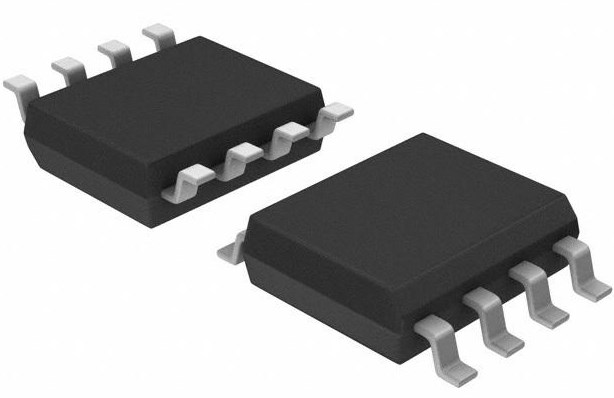 LM293D:Dual Comparator, 36V, Pinout, Datasheet
04 March 20221603
 LM139 Differential Comparator: Circuit, Pinout and Datasheet PDF
22 June 20214135
 ATmega16: Datasheet, Pinout, and Industrial Control Guide
27 January 20261341
 STM32MP157CAA3 Development: From Setup and Configuration to Advanced Features Implementation
07 June 20251340
 STM32L476RGT6 Microcontroller: Pinout, Features and Datasheet
08 December 20234960
 AD9144 DAC Integration Notes: JESD204B Synchronization, Blanking Instability, and Replacements
13 July 202612
 Xilinx XC95144XL-10TQG144I CPLD: Features, Performance and Applications
07 June 2025753
 VRLA Battery: Working Principle, Capacity and Maintenance
12 March 202110674
 A Guide to the Best AG13 Battery Substitutes
27 May 20252775
 The Future of Semiconductors: Chiplets and Super NoCs
30 August 20233825
 What is 3D XPoint?
09 November 20215157
 UTMEL Showcases One-Stop Electronic Component Sourcing Services at electronica Shanghai 2026
07 July 2026100
 What is 4G Router?
27 September 20217571
 What is an Inductive Sensor?
31 October 202513357
 Introduction To Different Types Of Relays
10 November 202020505
RF Solutions
In Stock: 109
United States
China
Canada
Japan
Russia
Germany
United Kingdom
Singapore
Italy
Hong Kong(China)
Taiwan(China)
France
Korea
Mexico
Netherlands
Malaysia
Austria
Spain
Switzerland
Poland
Thailand
Vietnam
India
United Arab Emirates
Afghanistan
Åland Islands
Albania
Algeria
American Samoa
Andorra
Angola
Anguilla
Antigua & Barbuda
Argentina
Armenia
Aruba
Australia
Azerbaijan
Bahamas
Bahrain
Bangladesh
Barbados
Belarus
Belgium
Belize
Benin
Bermuda
Bhutan
Bolivia
Bonaire, Sint Eustatius and Saba
Bosnia & Herzegovina
Botswana
Brazil
British Indian Ocean Territory
British Virgin Islands
Brunei
Bulgaria
Burkina Faso
Burundi
Cabo Verde
Cambodia
Cameroon
Cayman Islands
Central African Republic
Chad
Chile
Christmas Island
Cocos (Keeling) Islands
Colombia
Comoros
Congo
Congo (DRC)
Cook Islands
Costa Rica
Côte d’Ivoire
Croatia
Cuba
Curaçao
Cyprus
Czechia
Denmark
Djibouti
Dominica
Dominican Republic
Ecuador
Egypt
El Salvador
Equatorial Guinea
Eritrea
Estonia
Eswatini
Ethiopia
Falkland Islands
Faroe Islands
Fiji
Finland
French Guiana
French Polynesia
Gabon
Gambia
Georgia
Ghana
Gibraltar
Greece
Greenland
Grenada
Guadeloupe
Guam
Guatemala
Guernsey
Guinea
Guinea-Bissau
Guyana
Haiti
Honduras
Hungary
Iceland
Indonesia
Iran
Iraq
Ireland
Isle of Man
Israel
Jamaica
Jersey
Jordan
Kazakhstan
Kenya
Kiribati
Kosovo
Kuwait
Kyrgyzstan
Laos
Latvia
Lebanon
Lesotho
Liberia
Libya
Liechtenstein
Lithuania
Luxembourg
Macao(China)
Madagascar
Malawi
Maldives
Mali
Malta
Marshall Islands
Martinique
Mauritania
Mauritius
Mayotte
Micronesia
Moldova
Monaco
Mongolia
Montenegro
Montserrat
Morocco
Mozambique
Myanmar
Namibia
Nauru
Nepal
New Caledonia
New Zealand
Nicaragua
Niger
Nigeria
Niue
Norfolk Island
North Korea
North Macedonia
Northern Mariana Islands
Norway
Oman
Pakistan
Palau
Palestinian Authority
Panama
Papua New Guinea
Paraguay
Peru
Philippines
Pitcairn Islands
Portugal
Puerto Rico
Qatar
Réunion
Romania
Rwanda
Samoa
San Marino
São Tomé & Príncipe
Saudi Arabia
Senegal
Serbia
Seychelles
Sierra Leone
Sint Maarten
Slovakia
Slovenia
Solomon Islands
Somalia
South Africa
South Sudan
Sri Lanka
St Helena, Ascension, Tristan da Cunha
St. Barthélemy
St. Kitts & Nevis
St. Lucia
St. Martin
St. Pierre & Miquelon
St. Vincent & Grenadines
Sudan
Suriname
Svalbard & Jan Mayen
Sweden
Syria
Tajikistan
Tanzania
Timor-Leste
Togo
Tokelau
Tonga
Trinidad & Tobago
Tunisia
Turkey
Turkmenistan
Turks & Caicos Islands
Tuvalu
U.S. Outlying Islands
U.S. Virgin Islands
Uganda
Ukraine
Uruguay
Uzbekistan
Vanuatu
Vatican City
Venezuela
Wallis & Futuna
Yemen
Zambia
Zimbabwe
![RFD77101]() RFD77101
RFD77101RF Digital Corporation
![RFM95W-868S2]() RFM95W-868S2
RFM95W-868S2RF Solutions
![FOBBER-8T4]() FOBBER-8T4
FOBBER-8T4RF Solutions
![FOBBER-8T2]() FOBBER-8T2
FOBBER-8T2RF Solutions
![FOBBER-8T6]() FOBBER-8T6
FOBBER-8T6RF Solutions
![RFID3-13R5VUSB]() RFID3-13R5VUSB
RFID3-13R5VUSBRF Solutions
![FERRET-8R1]() FERRET-8R1
FERRET-8R1RF Solutions
![HiRK2-4RD]() HiRK2-4RD
HiRK2-4RDRF Solutions
![ESP32-C3-13]() ESP32-C3-13
ESP32-C3-13RF Solutions
![ZETAPLUS20-8S]() ZETAPLUS20-8S
ZETAPLUS20-8SRF Solutions