Product
 Brand
Brand Articles
 Tools
Tools
ESP32 Microcontroller: Datasheet, Pinout and Programming

2.4GHz~2.5GHz Bluetooth, WiFi -40°C~85°C 2.7V~3.6V ADC, GPIO, I2C, I2S, PWM, SDIO, SPI, UART 150Mbps 20.5dBm 802.11b/g/n, Bluetooth v4.2 + EDR, Class 1, 2 and 3 -97dBm Module


2.4GHz~2.5GHz Bluetooth, WiFi -40°C~85°C 2.7V~3.6V ADC, GPIO, I2C, I2S, PWM, SDIO, SPI, UART 150Mbps 20.5dBm 802.11b/g/n, Bluetooth v4.2 + EDR, Class 1, 2 and 3 -97dBm Module
ESP32 is a low-cost System on Chip (SoC) Microcontroller from Espressif Systems. This article mainly covers pinout, datasheet, features, applications, and other details about ESP32.
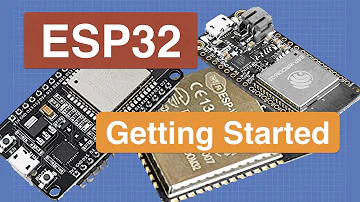
Introduction to ESP32 - Getting Started
ESP32 Pinout

ESP32 Pinout
ESP32 CAD Model
Symbol

Symbol
Footprint
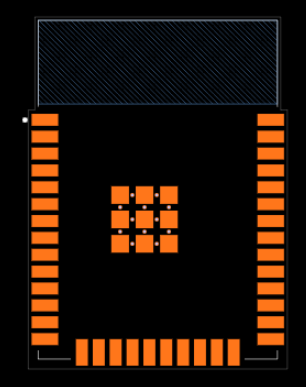
Footprint
3D Model

3D Model
ESP32 Description
ESP32 is a low-cost System on Chip (SoC) Microcontroller from Espressif Systems, the developers of the famous ESP8266 SoC. It is a successor to ESP8266 SoC and comes in both single-core and dual-core variations of the Tensilica’s 32-bit Xtensa LX6 Microprocessor with integrated Wi-Fi and Bluetooth.
Specifications
- TypeParameter
- Factory Lead Time4 Weeks
- Mounting Type
The "Mounting Type" in electronic components refers to the method used to attach or connect a component to a circuit board or other substrate, such as through-hole, surface-mount, or panel mount.
Surface Mount - Package / Case
refers to the protective housing that encases an electronic component, providing mechanical support, electrical connections, and thermal management.
Module - Operating Temperature
The operating temperature is the range of ambient temperature within which a power supply, or any other electrical equipment, operate in. This ranges from a minimum operating temperature, to a peak or maximum operating temperature, outside which, the power supply may fail.
-40°C~85°C - Part Status
Parts can have many statuses as they progress through the configuration, analysis, review, and approval stages.
Active - Moisture Sensitivity Level (MSL)
Moisture Sensitivity Level (MSL) is a standardized rating that indicates the susceptibility of electronic components, particularly semiconductors, to moisture-induced damage during storage and the soldering process, defining the allowable exposure time to ambient conditions before they require special handling or baking to prevent failures
Not Applicable - Voltage - Supply
Voltage - Supply refers to the range of voltage levels that an electronic component or circuit is designed to operate with. It indicates the minimum and maximum supply voltage that can be applied for the device to function properly. Providing supply voltages outside this range can lead to malfunction, damage, or reduced performance. This parameter is critical for ensuring compatibility between different components in a circuit.
2.7V~3.6V - Frequency
In electronic components, the parameter "Frequency" refers to the rate at which a signal oscillates or cycles within a given period of time. It is typically measured in Hertz (Hz) and represents how many times a signal completes a full cycle in one second. Frequency is a crucial aspect in electronic components as it determines the behavior and performance of various devices such as oscillators, filters, and communication systems. Understanding the frequency characteristics of components is essential for designing and analyzing electronic circuits to ensure proper functionality and compatibility with other components in a system.
2.4GHz~2.5GHz - Data Rate
Data Rate is defined as the amount of data transmitted during a specified time period over a network. It is the speed at which data is transferred from one device to another or between a peripheral device and the computer. It is generally measured in Mega bits per second(Mbps) or Mega bytes per second(MBps).
150Mbps - Protocol
In electronic components, the parameter "Protocol" refers to a set of rules and standards that govern the communication between devices. It defines the format, timing, sequencing, and error checking methods for data exchange between different components or systems. Protocols ensure that devices can understand and interpret data correctly, enabling them to communicate effectively with each other. Common examples of protocols in electronics include USB, Ethernet, SPI, I2C, and Bluetooth, each with its own specifications for data transmission. Understanding and adhering to protocols is essential for ensuring compatibility and reliable communication between electronic devices.
802.11b/g/n, Bluetooth v4.2 + EDR, Class 1, 2 and 3 - Power - Output
Power Output in electronic components refers to the amount of electrical power that a device can deliver to a load. It is typically measured in watts and indicates the effectiveness of the component in converting electrical energy into usable work or signal. Power Output can vary based on the component's design, operating conditions, and intended application, making it a critical factor in the performance of amplifiers, power supplies, and other electronic devices. Understanding the Power Output helps in selecting appropriate components for specific applications to ensure efficiency and reliability.
20.5dBm - RF Family/Standard
The parameter "RF Family/Standard" in electronic components refers to the specific radio frequency (RF) technology or standard that the component complies with or is designed for. RF technology encompasses a wide range of frequencies used for wireless communication, such as Wi-Fi, Bluetooth, cellular networks, and more. Different RF standards dictate the frequency bands, modulation techniques, data rates, and other specifications for communication systems. Understanding the RF family/standard of a component is crucial for ensuring compatibility and optimal performance in RF applications.
Bluetooth, WiFi - Sensitivity
Sensitivity in electronic components refers to the degree to which the output of a device responds to changes in input. It indicates how effectively a component translates a specific input signal into an observable output. High sensitivity means that even small variations in input can produce significant changes in output, making the device more responsive to signals. Sensitivity is crucial in applications where precise measurements or signal detection are required.
-97dBm - Serial Interfaces
A serial interface is a communication interface between two digital systems that transmits data as a series of voltage pulses down a wire. Essentially, the serial interface encodes the bits of a binary number by their "temporal" location on a wire rather than their "spatial" location within a set of wires.
ADC, GPIO, I2C, I2S, PWM, SDIO, SPI, UART - Modulation
In electronic components, modulation refers to the process of varying one or more properties of a periodic waveform, known as the carrier signal, in order to encode information. This modulation technique is commonly used in communication systems to transmit data efficiently over long distances. By modulating the carrier signal, information such as audio, video, or data can be embedded onto the signal for transmission and then demodulated at the receiving end to retrieve the original information. There are various types of modulation techniques, including amplitude modulation (AM), frequency modulation (FM), and phase modulation (PM), each with its own advantages and applications in different communication systems.
CCK, DSSS, OFDM - RoHS Status
RoHS means “Restriction of Certain Hazardous Substances” in the “Hazardous Substances Directive” in electrical and electronic equipment.
RoHS Compliant
ESP32 Features
Single or Dual-Core 32-bit LX6 Microprocessor with clock frequency up to 240 MHz.
520 KB of SRAM, 448 KB of ROM, and 16 KB of RTC SRAM.
Supports 802.11 b/g/n Wi-Fi connectivity with speeds up to 150 Mbps.
Support for both Classic Bluetooth v4.2 and BLE specifications.
34 Programmable GPIOs.
Up to 18 channels of 12-bit SAR ADC and 2 channels of 8-bit DAC
Serial Connectivity include 4 x SPI, 2 x I2C, 2 x I2S, 3 x UART.
Ethernet MAC for physical LAN Communication (requires external PHY).
1 Host controller for SD/SDIO/MMC and 1 Slave controller for SDIO/SPI.
Motor PWM and up to 16-channels of LED PWM.
Secure Boot and Flash Encryption.
Cryptographic Hardware Acceleration for AES, Hash (SHA-2), RSA, ECC, and RNG.
ESP32 Applications
Prototyping of IoT devices
Low power battery operated applications
Network projects
Easy to use for beginner-level DIYers and makers.
Projects requiring Multiple I/O interfaces with Wi-Fi and Bluetooth functionalities.
ESP32 Circuit

ESP32 Circuit
The schematic has two buttons. The sleep button will put the ESP32 in deep sleep mode and another switch is used for waking up the ESP32 from sleep mode. Both buttons are connected in PIN 16 and PIN 33. Both buttons are configured as active low when pressed; therefore an additional pull-up is given. However, to detect whether the ESP 32 is in sleep mode or normal working condition mode, LED is connected to IO Pin 4.
How to use ESP32
Plug your ESP32 development board into your computer and follow these next instructions:
Go to Tools > Board, scroll down to the ESP32 section, and select the name of your ESP32 board. In my case, it's the DOIT ESP32 DEVKIT V1 board.
Go to Tools > Port and select a COM port available.
Press the upload button.
How to program ESP32 on Arduino IDE?
In your Arduino IDE, go to File> Preferences.
Open the Boards Manager. Go to Tools > Board > Boards Manager.
Search for ESP32 and press the install button for the “ESP32 by Espressif Systems“:
That's it. It should be installed after a few seconds.
ESP32 Dimensions


ESP32 Dimension
ESP32 Manufacturer
RF Solutions LLC (RFS) is a wireless consulting and solutions firm. We offer end-to-end efficient and cost-effective comprehensive systems that stay on top of the ever-changing mobile IT environment and life-safety requirements.
Datasheet PDF
- Datasheets :
What do you use ESP32 for?
ESP32 can perform as a complete standalone system or as a slave device to a host MCU, reducing communication stack overhead on the main application processor. ESP32 can interface with other systems to provide Wi-Fi and Bluetooth functionality through its SPI / SDIO or I2C / UART interfaces.
Is ESP32 used in industry?
This ESP32 PLC has been designed for Industrial applications. It allows the use of WiFi, Bluetooth LE, Ethernet IP protocol, and other industrial Ethernet protocols such as Modbus TCP and others.
How does the ESP32 work?
ESP32 accesses the external QSPI flash and SRAM through high-speed caches. Up to 16 MBytes of external flash are memory-mapped onto the CPU code space, supporting 8, 16, and 32-bit access. Up to 8 MBytes of external SRAM are memory-mapped onto the CPU data space, supporting 8, 16, and 32-bit access.
What does ESP32 stand for?
ESP-WROOM-32. Compact development board created by Espressif. Silkscreen labeling on PCB reads "Core Board". ESP-WROVER-KIT. ESP-WROOM-32 or ESP32-ROVER.
 Panasonic ERJ-2RKF1002X vs Yageo 0402 Resistors
19 September 2025430
![LM7805 Voltage regulator[Video+FAQ]: LM7805 vs LM2596](https://res.utmel.com/Images/Article/9fbc0189-b685-406a-894d-0e648a28c6be.jpg) LM7805 Voltage regulator[Video+FAQ]: LM7805 vs LM2596
LM7805 Voltage regulator[Video+FAQ]: LM7805 vs LM259604 May 20226707
 SSH-003T-P0.2 Socket : JST SSH-003T-P0.2, Datasheet PDF, Feature
25 March 20222172
 AP63205WU-7 Switching Voltage Regulator: 5V 2A TSOT26, AP63205WU-7 Regulators Datasheet
14 January 20225112
 LM2576T Regulator: Circuit, Pinout, and Datasheet
03 December 202119849
 CD4511BE BCD to 7 Segment Decoder: Datasheet, Equivalent, Pinout, and Uses
12 April 202218361
 LM833N Operational Amplifier: Audio Amplifier, Datasheet, Pinout
30 December 20215366
 STM32F030C6T6 vs STM32F072C8T6 STMicroelectronics Microcontrollers
11 June 2025776
 What's the Difference Between Operational Amplifier and Comparator?
01 April 20226367
 Pulse Sensor-Definition, Working and Applications
28 January 20215005
 ChatGPT Will Drive Strong Long-term Growth in the Chip Market in the Future
22 February 20233826
 JSCJ Authorized Distributor | UTMEL Electronics
21 November 20234332
 CR123A vs 123A Batteries Explained for 2025
27 May 20255526
 Innovative Changes in Leading-Edge Chip Architectures
06 September 20231807
 Japan's Three-Stage Strategy to Revive the Semiconductor Industry
01 April 20228447
 How to make an Obstacle Avoiding Robot?
29 August 202315442
RF Solutions
In Stock
United States
China
Canada
Japan
Russia
Germany
United Kingdom
Singapore
Italy
Hong Kong(China)
Taiwan(China)
France
Korea
Mexico
Netherlands
Malaysia
Austria
Spain
Switzerland
Poland
Thailand
Vietnam
India
United Arab Emirates
Afghanistan
Åland Islands
Albania
Algeria
American Samoa
Andorra
Angola
Anguilla
Antigua & Barbuda
Argentina
Armenia
Aruba
Australia
Azerbaijan
Bahamas
Bahrain
Bangladesh
Barbados
Belarus
Belgium
Belize
Benin
Bermuda
Bhutan
Bolivia
Bonaire, Sint Eustatius and Saba
Bosnia & Herzegovina
Botswana
Brazil
British Indian Ocean Territory
British Virgin Islands
Brunei
Bulgaria
Burkina Faso
Burundi
Cabo Verde
Cambodia
Cameroon
Cayman Islands
Central African Republic
Chad
Chile
Christmas Island
Cocos (Keeling) Islands
Colombia
Comoros
Congo
Congo (DRC)
Cook Islands
Costa Rica
Côte d’Ivoire
Croatia
Cuba
Curaçao
Cyprus
Czechia
Denmark
Djibouti
Dominica
Dominican Republic
Ecuador
Egypt
El Salvador
Equatorial Guinea
Eritrea
Estonia
Eswatini
Ethiopia
Falkland Islands
Faroe Islands
Fiji
Finland
French Guiana
French Polynesia
Gabon
Gambia
Georgia
Ghana
Gibraltar
Greece
Greenland
Grenada
Guadeloupe
Guam
Guatemala
Guernsey
Guinea
Guinea-Bissau
Guyana
Haiti
Honduras
Hungary
Iceland
Indonesia
Iran
Iraq
Ireland
Isle of Man
Israel
Jamaica
Jersey
Jordan
Kazakhstan
Kenya
Kiribati
Kosovo
Kuwait
Kyrgyzstan
Laos
Latvia
Lebanon
Lesotho
Liberia
Libya
Liechtenstein
Lithuania
Luxembourg
Macao(China)
Madagascar
Malawi
Maldives
Mali
Malta
Marshall Islands
Martinique
Mauritania
Mauritius
Mayotte
Micronesia
Moldova
Monaco
Mongolia
Montenegro
Montserrat
Morocco
Mozambique
Myanmar
Namibia
Nauru
Nepal
New Caledonia
New Zealand
Nicaragua
Niger
Nigeria
Niue
Norfolk Island
North Korea
North Macedonia
Northern Mariana Islands
Norway
Oman
Pakistan
Palau
Palestinian Authority
Panama
Papua New Guinea
Paraguay
Peru
Philippines
Pitcairn Islands
Portugal
Puerto Rico
Qatar
Réunion
Romania
Rwanda
Samoa
San Marino
São Tomé & Príncipe
Saudi Arabia
Senegal
Serbia
Seychelles
Sierra Leone
Sint Maarten
Slovakia
Slovenia
Solomon Islands
Somalia
South Africa
South Sudan
Sri Lanka
St Helena, Ascension, Tristan da Cunha
St. Barthélemy
St. Kitts & Nevis
St. Lucia
St. Martin
St. Pierre & Miquelon
St. Vincent & Grenadines
Sudan
Suriname
Svalbard & Jan Mayen
Sweden
Syria
Tajikistan
Tanzania
Timor-Leste
Togo
Tokelau
Tonga
Trinidad & Tobago
Tunisia
Turkey
Turkmenistan
Turks & Caicos Islands
Tuvalu
U.S. Outlying Islands
U.S. Virgin Islands
Uganda
Ukraine
Uruguay
Uzbekistan
Vanuatu
Vatican City
Venezuela
Wallis & Futuna
Yemen
Zambia
Zimbabwe
![RFD77101]() RFD77101
RFD77101RF Digital Corporation
![RFM95W-868S2]() RFM95W-868S2
RFM95W-868S2RF Solutions
![FOBBER-8T4]() FOBBER-8T4
FOBBER-8T4RF Solutions
![FOBBER-8T2]() FOBBER-8T2
FOBBER-8T2RF Solutions
![FOBBER-8T6]() FOBBER-8T6
FOBBER-8T6RF Solutions
![RFID3-13R5VUSB]() RFID3-13R5VUSB
RFID3-13R5VUSBRF Solutions
![FERRET-8R1]() FERRET-8R1
FERRET-8R1RF Solutions
![HiRK2-4RD]() HiRK2-4RD
HiRK2-4RDRF Solutions
![ESP32-C3-13]() ESP32-C3-13
ESP32-C3-13RF Solutions
![ZETAPLUS20-8S]() ZETAPLUS20-8S
ZETAPLUS20-8SRF Solutions