

 Product
 Brand
Brand Articles
 Tools
Tools
STM32MP257F-EV1 Evaluation Board: Development Kit for IoT and AI Applications
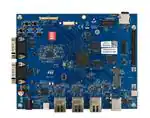


Development Boards & Kits - ARM Evaluation Board for STM32MP257F MPU
The STM32MP257F-EV1 evaluation board offers dual-core Cortex-A35, high-speed connectivity, and advanced memory, ideal for IoT, AI, and industrial automation.
Product Introduction
The stm32mp257f-ev1 evaluation kit redefines how you approach modern technology challenges. Designed for innovation, it combines a dual-core Cortex-A35 processor with robust capabilities to handle demanding applications like IoT, AI, and industrial automation. Its performance stands out with high-speed connectivity, advanced memory, and user-friendly development tools. Whether you're developing smart devices or automating industrial systems, the stm32mp25 series ensures you have the tools to succeed. Unlike the stm32mp257f-dk discovery kit, this evaluation kit provides a more comprehensive platform for prototyping and testing.
Key Features of STM32MP257F-EV1
Dual-core architecture with Cortex-A35 and Cortex-M33
The STM32MP257F-EV1 evaluation board features a powerful dual-core architecture that combines single or dual Arm Cortex-A35 cores with a Cortex-M33 processor. This setup ensures efficient multitasking and high performance for demanding applications. The Cortex-A35 cores operate at up to 1.5 GHz, delivering exceptional processing power for tasks like IoT device management and AI computations. Meanwhile, the Cortex-M33 processor, running at 400 MHz, handles real-time operations with precision, making it ideal for industrial automation and control systems.
Tip: The dual-core design allows you to separate high-level tasks from real-time operations, optimizing performance and resource allocation.
This architecture supports STM32MP23 microprocessors, ensuring compatibility with advanced software tools like STM32CubeMP2 and OpenSTLinux. Whether you're developing edge computing solutions or embedded systems, the STM32MP257F-EV1 provides the flexibility and power you need.
High-speed connectivity options (Ethernet, USB, CAN FD)
Connectivity is a cornerstone of modern technology, and the STM32MP257F-EV1 excels in this area. It offers multiple high-speed options, including Ethernet, USB, and CAN FD, to meet diverse application needs.
Ethernet: The board includes three 1-Gbit/s Ethernet ports, enabling seamless communication between devices. Ethernet is scalable and future-proof, making it suitable for advanced technologies like ADAS and infotainment systems.
USB: With USB Type-C DRD and two USB Host Type-A connectors, you can achieve transfer speeds ranging from 12 Mbit/s to 480 Mbit/s. This ensures fast data exchange for peripherals and external devices.
CAN FD: Supporting data rates up to 8 Mbit/s, CAN FD provides robust communication for industrial and automotive applications. It surpasses traditional CAN protocols, which are limited to 1 Mbit/s, offering greater flexibility and efficiency.
| Protocol | Bit Rate Range | Notes |
|---|---|---|
| High-speed CAN | 10 kbit/s to 1 Mbit/s | Classic CAN bus used in industrial apps. |
| Low-speed CAN | 40 kbit/s to 125 kbit/s | Designed for robustness, fault-tolerant. |
| CAN FD | Up to 8 Mbit/s | Supports higher transfer rates and data. |
| USB 2.0 | 12 Mbit/s to 480 Mbit/s | Increases speed significantly from USB 1.1. |
The STM32MP257F-EV1's connectivity options make it a versatile choice for IoT development, automotive systems, and industrial automation.
Advanced memory and storage capabilities
The STM32MP257F-EV1 evaluation board boasts advanced memory and storage features that ensure smooth operation and data management. It includes two 16-Gbit DDR4 DRAMs, providing high-speed access for complex computations. The 512-Mbit S-NOR flash memory offers reliable storage for firmware and critical data, while the 32-Gbit eMMC v5.0 ensures ample space for applications and operating systems.
| Feature | Description |
|---|---|
| Memory | Two 16‑Gbit DDR4 DRAMs, 512-Mbit S‑NOR flash memory, 32-Gbit eMMC v5.0 |
| Expansion | GPIO expansion connector for Raspberry Pi® shields, mikroBUS™ expansion connector |
| Debugging | On-board STLINK-V3EC debugger/programmer with USB re-enumeration capability |
| Software | STM32 MPU OpenSTLinux distribution and STM32CubeMP2 software with examples |
These memory specifications align with the STM32MP23 microprocessor family, ensuring compatibility and performance. The board's storage capabilities make it ideal for applications requiring large datasets, such as AI and machine learning.
Note: Technical documentation, such as the STM32MP257F-EV1 User Manual and STM32MP25xC/F Datasheet, provides detailed insights into these features. You can explore these resources to maximize the board's potential.
Versatile development tools and debugging features
The STM32MP257F-EV1 evaluation board equips you with a comprehensive suite of development tools and debugging features, making it easier to prototype, test, and refine your embedded systems. These tools streamline your workflow and enhance your ability to create reliable applications across industries.
Integrated Debugging Infrastructure
The board includes JTAG and SWD interfaces, which simplify testing and validation. These debugging protocols allow you to monitor and control your system during development, ensuring efficient troubleshooting. You can pinpoint issues faster and optimize your design without requiring additional equipment.
Tip: Use the JTAG interface to debug complex embedded systems with multi-core processors. It provides deeper insights into system behavior.
Factory-Calibrated Reference Circuits
Analog performance plays a critical role in many applications. The STM32MP257F-EV1 features factory-calibrated reference circuits that deliver precise analog measurements. This ensures your designs meet high accuracy standards, whether you're working on industrial automation or IoT devices.
Expansion Connectors for Peripheral Testing
The board includes multiple expansion connectors, such as GPIO and mikroBUS™, which allow you to test peripherals and integrate additional modules. These connectors make it easier to adapt the board to your specific project needs, whether you're developing a smart sensor or an edge computing device.
Pre-Validated Power Distribution System
Power management is crucial for embedded systems. The STM32MP257F-EV1 features a pre-validated power distribution system that supports multi-voltage designs. This simplifies your development process and ensures stable operation for complex applications.
Industry Standard Compliance
The board complies with IEEE 1149.1 (JTAG), an industry-standard debugging protocol. This compliance reduces the need for specialized equipment, saving you time and resources during development.
| Feature | Description |
|---|---|
| Integrated debugging infrastructure | Supports JTAG/SWD for efficient testing and validation of embedded systems. |
| Factory-calibrated reference circuits | Ensures accurate analog performance for reliable application development. |
| Multiple expansion connectors | Facilitates peripheral integration testing, enhancing versatility in various applications. |
| Pre-validated power distribution system | Supports multi-voltage designs, crucial for complex embedded systems. |
| Industry standard compliance | Compliant with IEEE 1149.1 (JTAG), minimizing additional equipment needs for debugging. |
| Reduction in debugging time | A medical device manufacturer reported a 45% reduction in hardware debugging time using this board. |
Faster Debugging for Complex Systems
The STM32MP257F-EV1 reduces debugging time significantly. For example, a medical device manufacturer reported a 45% reduction in hardware debugging time when using this board. This improvement allows you to focus on refining your application rather than troubleshooting hardware issues.
Note: The STM32CubeMP2 software suite complements the board's debugging features, offering examples and tools to accelerate your development process.
With these versatile tools and features, the STM32MP257F-EV1 empowers you to tackle complex projects with confidence and efficiency. Whether you're developing IoT devices, industrial systems, or AI applications, this board provides the resources you need to succeed.
Technical Specifications of STM32MP257F-EV1
Processor and architecture details
The STM32MP257F-EV1 evaluation board features a cutting-edge processor architecture designed to meet modern technological demands. It incorporates a dual-core Arm Cortex-A35 64-bit RISC core, operating at speeds of up to 1.5 GHz. This ensures high performance for tasks requiring significant computational power, such as IoT device management and AI workloads. Alongside this, the Cortex-M33 32-bit RISC core runs at up to 400 MHz, providing precise real-time control for industrial automation and embedded systems.
The architecture also supports advanced AI workloads. You can leverage its neural processing unit (NPU) to optimize performance and energy efficiency for machine learning applications. Additionally, the integrated 3D GPU enhances multimedia capabilities, supporting displays up to 1080p resolution. This makes the board suitable for applications requiring high-quality visual output, such as infotainment systems or smart displays.
Key highlights of the processor and architecture include:
Dual-core Arm Cortex-A35 with a clock speed of up to 1.5 GHz.
Cortex-M33 core operating at 400 MHz for real-time tasks.
NPU for efficient AI and machine learning operations.
3D GPU capable of handling 1080p displays.
Compatibility with interfaces like PCIe Gen2 and three Gigabit Ethernet ports.
This robust architecture ensures the STM32MP257F-EV1 can handle complex applications while maintaining energy efficiency and reliability.
Memory and storage specifications (DDR4, eMMC, NOR flash)
The STM32MP257F-EV1 evaluation board offers advanced memory and storage capabilities to support demanding applications. It includes two 16-Gbit DDR4 DRAMs, which provide high-speed access for data-intensive tasks. This ensures smooth operation even when running complex computations or multitasking. The 512-Mbit S-NOR flash memory offers reliable storage for firmware and critical data, while the 32-Gbit eMMC v5.0 provides ample space for applications and operating systems.
The eMMC storage stands out for its durability and performance. Industrial-grade eMMC solutions, like the one used in this board, maintain 98% data retention even after 5,000 cycles at extreme temperatures. This makes it ideal for applications in harsh environments, such as aerospace or automotive systems. Additionally, the global adoption of eMMC in factory automation and electric vehicles highlights its reliability and growing importance.
Key memory and storage features include:
Two 16-Gbit DDR4 DRAMs for high-speed data access.
512-Mbit S-NOR flash memory for firmware storage.
32-Gbit eMMC v5.0 for applications and operating systems.
Industrial-grade eMMC with power-loss protection and high data retention.
These specifications ensure the STM32MP257F-EV1 can handle large datasets and operate reliably in challenging conditions.
Connectivity options (Ethernet, USB Type-C, CAN FD)
The STM32MP257F-EV1 excels in connectivity, offering multiple high-speed options to meet diverse application needs. It includes three Gigabit Ethernet ports, which enable seamless communication between devices. These ports are ideal for advanced technologies like autonomous driving systems and industrial networks. The board also features USB Type-C DRD and two USB Host Type-A connectors, supporting transfer speeds of up to 480 Mbit/s. This ensures fast data exchange for peripherals and external devices.
For industrial and automotive applications, the board supports the CAN FD protocol. This protocol handles data rates up to 8 Mbit/s, surpassing traditional CAN protocols limited to 1 Mbit/s. It provides robust communication for systems requiring high-speed and reliable data transfer.
| Feature | Description |
|---|---|
| Ethernet | Three Gigabit Ethernet ports for seamless device communication. |
| USB | USB Type-C DRD and two USB Host Type-A connectors with speeds up to 480 Mbit/s. |
| CAN FD | Supports data rates up to 8 Mbit/s, ideal for industrial and automotive applications. |
| Compatibility | Backward compatible with CAN 2.0 for legacy systems. |
| Additional Features | Software-controlled CAN termination and improved USB latency performance. |
The STM32MP257F-EV1's connectivity options make it a versatile choice for IoT development, automotive systems, and industrial automation. Whether you're building a smart factory or a connected vehicle, this board provides the tools you need to succeed.
User interface and debugging tools
The STM32MP257F-EV1 evaluation board offers a user-friendly interface and robust debugging tools to simplify your development process. These features ensure you can focus on building innovative solutions without getting bogged down by technical challenges.
Intuitive User Interface
The board includes a high-resolution LCD touchscreen, which provides a responsive and interactive experience. This display allows you to visualize data, monitor system performance, and interact with your applications in real time. Whether you're testing IoT devices or industrial systems, the touchscreen makes it easier to manage your projects.
You can also customize the interface to suit your specific needs. The STM32CubeMP2 software suite supports graphical user interface (GUI) development, enabling you to design dashboards and controls tailored to your application. This flexibility ensures the board adapts to your workflow, not the other way around.
Tip: Use the touchscreen to test and debug your applications directly on the board. This hands-on approach saves time and improves efficiency.
Advanced Debugging Tools
Debugging is a critical part of development, and the STM32MP257F-EV1 equips you with tools to streamline this process. The board features an on-board STLINK-V3EC debugger/programmer, which supports USB re-enumeration and high-speed data transfer. This debugger allows you to monitor system behavior, identify issues, and implement fixes quickly.
The board also includes JTAG and SWD interfaces, which provide deep insights into your system's operation. These interfaces let you debug multi-core processors and complex embedded systems with precision. You can use them to optimize performance, reduce errors, and ensure your application runs smoothly.
| Factor | What to Consider |
|---|---|
| Scalability | Ensure the tool can grow with your team and handle increased workloads. |
| Integrations | Check if the tool integrates with your existing tech stack to enhance productivity. |
| Customizability | Look for tools that allow you to tailor dashboards and reports to suit your needs. |
| Ease of Use | Choose a tool with an intuitive interface that your team can easily navigate. |
| Budget | Consider the total cost, including any hidden fees or charges for additional features. |
| Security Safeguards | Prioritize tools that offer robust security features to protect your data. |
| Support Services | Evaluate the availability and quality of customer support. |
| Performance Metrics | Ensure the tool provides comprehensive performance metrics to resolve bottlenecks. |
These metrics highlight the importance of choosing tools that align with your project's requirements. The STM32MP257F-EV1 meets these benchmarks, offering scalability, ease of use, and robust performance metrics.
Real-Time Monitoring and Control
The STM32MP257F-EV1 supports real-time monitoring, allowing you to track system performance as it happens. You can use the integrated debugging tools to analyze data, identify bottlenecks, and make adjustments on the fly. This capability is invaluable for applications requiring high reliability, such as industrial automation or medical devices.
Note: The board's debugging tools comply with industry standards like IEEE 1149.1 (JTAG), ensuring compatibility with a wide range of development environments.
With its intuitive interface and advanced debugging features, the STM32MP257F-EV1 empowers you to develop, test, and refine your applications efficiently. Whether you're working on IoT devices, AI systems, or industrial controls, this board provides the tools you need to succeed.
Use Cases for STM32MP257F-EV1
IoT development and prototyping
The STM32MP257F-EV1 is an excellent choice for IoT development and prototyping. Its dual-core architecture allows you to separate high-level tasks from real-time operations, making it easier to design efficient IoT systems. The board’s high-speed connectivity options, such as Ethernet and USB, ensure seamless communication between devices. This makes it ideal for building smart home systems, wearable devices, or connected sensors.
You can also benefit from its debugging tools, which simplify hardware validation. For example:
A medical device manufacturer reduced hardware debugging time by 45% when developing a patient monitoring system.
Independent testing shows that the board can cut hardware validation cycles by up to 60% compared to custom boards.
Laboratory tests confirm its ability to support high-speed communication protocols while maintaining deterministic response times.
These features make the STM32MP257F-EV1 a reliable platform for IoT prototyping, helping you bring your ideas to life faster.
AI and machine learning applications
The STM32MP257F-EV1 supports AI and ML applications with its advanced processing capabilities. Its neural processing unit (NPU) optimizes machine learning tasks, while the Cortex-A35 cores handle computational workloads efficiently. Whether you’re training models or deploying them on edge devices, this board provides the tools you need.
Key performance metrics include:
| Metric Type | Description |
|---|---|
| Evaluation | Assess the performance of AI models |
| Benchmarking | Compare model performance against standards |
| Visualization | Graphical representation of model performance metrics |
You can train models, evaluate their performance, and benchmark them using tools like the ST Edge AI Developer Cloud. The board also supports visualization, allowing you to analyze metrics and refine your models. These capabilities make it a strong candidate for AI-driven applications, such as predictive maintenance or smart cameras.
Industrial automation and control systems
The STM32MP257F-EV1 excels in industrial automation and control systems. Its real-time processing capabilities ensure precise control, while its robust connectivity options enable seamless communication in industrial IoT environments. For instance, a customer upgraded outdated cap machine controls using this board. The re-engineered system replaced obsolete parts with modern devices, reducing costs and keeping the machines operational.
The board’s reliability and flexibility make it suitable for various industrial applications. You can use it to automate production lines, monitor equipment, or implement predictive maintenance. Its compatibility with off-the-shelf components further simplifies integration, saving you time and resources.
Edge computing and embedded systems
Edge computing and embedded systems demand high performance, reliability, and adaptability. The STM32MP257F-EV1 evaluation board provides the tools you need to meet these requirements. Its dual-core architecture, advanced connectivity, and robust memory make it an ideal choice for edge computing applications.
Why Choose STM32MP257F-EV1 for Edge Computing?
Edge computing processes data closer to its source, reducing latency and improving efficiency. The STM32MP257F-EV1 excels in this area with its powerful Cortex-A35 cores and real-time Cortex-M33 processor. You can use this board to deploy edge AI models, manage IoT devices, or control industrial systems.
Tip: Use the board’s neural processing unit (NPU) to optimize machine learning tasks at the edge. This reduces the need for cloud-based processing and enhances data security.
Embedded Systems Made Simple
Embedded systems require precise control and reliable operation. The STM32MP257F-EV1 supports real-time monitoring and control, making it perfect for applications like smart sensors, medical devices, and automotive systems. Its compatibility with industry-standard protocols ensures seamless integration into existing setups.
Key Features for Edge and Embedded Applications
High-speed connectivity: Ethernet, USB Type-C, and CAN FD ensure fast and reliable communication.
Robust memory: DDR4 DRAM and eMMC storage handle large datasets efficiently.
Expansion options: GPIO and mikroBUS™ connectors allow easy customization.
| Feature | Benefit |
|---|---|
| Neural Processing Unit | Efficient AI model deployment at the edge. |
| Real-time Cortex-M33 | Precise control for embedded systems. |
| High-speed Ethernet | Reliable communication for industrial networks. |
The STM32MP257F-EV1 empowers you to build smarter, faster, and more reliable edge computing and embedded solutions. Whether you're prototyping or deploying, this board delivers the performance you need.
Comparison with Similar Evaluation Boards
Advantages of STM32MP257F-EV1 over competitors
The STM32MP257F-EV1 stands out among evaluation boards due to its dual-core architecture and high-speed connectivity. Many competitors lack the combination of Cortex-A35 and Cortex-M33 cores, which provide both computational power and real-time processing. You can use this board to handle complex tasks like AI workloads while maintaining precise control for embedded systems.
Its connectivity options also surpass those of similar boards. With three Gigabit Ethernet ports, USB Type-C, and CAN FD, the STM32MP257F-EV1 ensures reliable communication across diverse applications. Competing boards often limit connectivity to fewer protocols or slower speeds, which can hinder performance in industrial or IoT environments.
Tip: If your project requires multitasking and high-speed data transfer, the STM32MP257F-EV1 offers unmatched versatility compared to other boards.
Unique features like Cortex-A35 and high-speed connectivity
The STM32MP257F-EV1 integrates advanced features that set it apart from competitors. Its dual-core Cortex-A35 processor operates at up to 1.5 GHz, delivering exceptional performance for demanding applications. The Cortex-M33 core complements this with real-time processing at 400 MHz, making it ideal for automation and control systems.
The board also includes a 3D GPU running at 400 MHz, supporting technologies like OpenGL ES 3.1 and Vulkan 1.3. This feature enhances multimedia capabilities, allowing you to develop applications with high-quality visual output. Additionally, its extensive range of I/Os and peripherals ensures seamless integration with various devices.
| Feature | Description |
|---|---|
| Processor | Dual-core Arm® Cortex®-A35, up to 1.5 GHz |
| Cache | 32-Kbyte L1 instruction cache and 32-Kbyte L1 data cache per CPU, 512-Kbyte L2 cache |
| Additional Core | Cortex®-M33 32-bit RISC core, up to 400 MHz |
| Graphics Processing Unit | 3D GPU (VeriSilicon®) running at up to 400 MHz, supporting OpenGL ES 3.1, Vulkan 1.3, etc. |
| Memory | 776 Kbytes of internal SRAM, including various types of SRAM |
| Connectivity | Extensive range of enhanced I/Os and peripherals connected to multiple bus architectures |
These features make the STM32MP257F-EV1 a powerful and flexible choice for developers working on cutting-edge projects.
Cost-effectiveness and value for developers
The STM32MP257F-EV1 offers excellent value for developers. Its comprehensive feature set eliminates the need for additional hardware, reducing overall costs. You can prototype, test, and deploy applications without investing in multiple tools or boards.
Compared to competitors, this board provides a higher return on investment. Its robust architecture and connectivity options ensure long-term usability, making it a cost-effective solution for projects ranging from IoT to industrial automation. Developers also benefit from its compatibility with STM32CubeMP2 and OpenSTLinux, which streamline the development process and save time.
Note: By choosing the STM32MP257F-EV1, you gain access to advanced features and reliable performance at a competitive price point.
The stm32mp257f-ev1 delivers exceptional performance with its dual-core architecture, high-speed connectivity, and advanced memory. You can rely on its robust design to meet the demands of IoT, AI, and industrial automation. Its versatility allows you to prototype and deploy innovative solutions efficiently. Whether you are building smart devices or automating systems, this evaluation board provides the tools you need. Its reliability and comprehensive features make it an excellent choice for developers seeking a modern, adaptable platform.
FAQ
What makes the STM32MP257F-EV1 suitable for IoT applications?
The STM32MP257F-EV1 offers dual-core architecture, high-speed connectivity, and robust debugging tools. These features allow you to manage IoT devices efficiently, ensuring seamless communication and real-time operations. Its compatibility with STM32CubeMP2 simplifies development, making it ideal for IoT prototyping and deployment.
Can beginners use the STM32MP257F-EV1 for development?
Yes, beginners can use this board. It includes user-friendly tools like STM32CubeMP2 and OpenSTLinux, which provide examples and guides. The intuitive interface and debugging features help you learn and develop projects without extensive prior experience.
How does the STM32MP257F-EV1 handle AI workloads?
The board includes a neural processing unit (NPU) optimized for AI tasks. You can train and deploy machine learning models efficiently. Its Cortex-A35 cores handle computational tasks, while the Cortex-M33 ensures real-time control, making it perfect for AI-driven applications like smart cameras or predictive maintenance.
What industries benefit most from the STM32MP257F-EV1?
Industries like IoT, industrial automation, automotive, and healthcare benefit the most. The board’s real-time processing, high-speed connectivity, and robust memory make it suitable for applications like smart factories, connected vehicles, and medical devices.
Is the STM32MP257F-EV1 cost-effective for developers?
Yes, it is cost-effective. The board combines advanced features, eliminating the need for additional hardware. Its compatibility with STM32CubeMP2 and OpenSTLinux reduces development time, offering excellent value for prototyping and deployment.
Tip: Explore the STM32MP257F-EV1 User Manual for detailed insights and maximize its potential in your projects.
Specifications
- TypeParameter
- RoHSRoHS Compliant
- Tool Is For Evaluation OfSTM32MP257
- Factory Pack Quantity1
- Unit Weight1.653 lbs
- Series
In electronic components, the "Series" refers to a group of products that share similar characteristics, designs, or functionalities, often produced by the same manufacturer. These components within a series typically have common specifications but may vary in terms of voltage, power, or packaging to meet different application needs. The series name helps identify and differentiate between various product lines within a manufacturer's catalog.
STM32MP25 - Packaging
Semiconductor package is a carrier / shell used to contain and cover one or more semiconductor components or integrated circuits. The material of the shell can be metal, plastic, glass or ceramic.
Bulk - Product
In the context of electronic components, the parameter "Product" typically refers to the specific item or device being discussed or analyzed. It can refer to a physical electronic component such as a resistor, capacitor, transistor, or integrated circuit. The product parameter may also encompass more complex electronic devices like sensors, displays, microcontrollers, or communication modules.Understanding the product parameter is crucial in electronics as it helps identify the characteristics, specifications, and functionality of the component or device in question. This information is essential for selecting the right components for a circuit design, troubleshooting issues, or comparing different products for a particular application. Manufacturers often provide detailed product datasheets that outline key specifications, performance characteristics, and application guidelines to assist engineers and designers in utilizing the component effectively.
Evaluation Boards
Datasheet PDF
- Datasheets :
 2N3906 VS 2N2222 VS 2N3904: What are the Differences?
13 April 202216121
 2SA1302 PNP Transistor, 15A, 200V, TO-3PL Silicon Transistor, 2SA1302 Pinout
29 December 20213356
![CR123A VS. RCR123A: Are They Interchangeable? [FAQ & Video]](https://res.utmel.com/Images/Article/01bb2481-28f2-4c64-8e83-1e5d54f739fe.jpg) CR123A VS. RCR123A: Are They Interchangeable? [FAQ & Video]
CR123A VS. RCR123A: Are They Interchangeable? [FAQ & Video]24 August 202211126
![39-01-2040 Receptacle Housing Dual Row 4 Circuits [FAQ]:Datasheet, Applications, and Technical Data](https://res.utmel.com/Images/Article/cbccf151-74f5-443a-a951-343628aa422c.jpg) 39-01-2040 Receptacle Housing Dual Row 4 Circuits [FAQ]:Datasheet, Applications, and Technical Data
39-01-2040 Receptacle Housing Dual Row 4 Circuits [FAQ]:Datasheet, Applications, and Technical Data22 March 20221180
 TL072A JFET Dual Op-Amp: Pinout, Equivalent and Datasheet
08 December 20214468
 An Introduction for Motor Driver IC ULN2003
25 April 202231449
![A Basic Overview of BD139 NPN transistor[FAQ+Video]](https://res.utmel.com/Images/Article/0aacea9e-1010-4f26-8f3b-49fb7e276555.jpg) A Basic Overview of BD139 NPN transistor[FAQ+Video]
A Basic Overview of BD139 NPN transistor[FAQ+Video]05 May 20229865
![MTB30P06VT4G MOSFET: Pinout, Features and Datasheet [FAQ]](https://res.utmel.com/Images/Article/c7fe577b-e322-43f6-96c8-decba188a2fb.png) MTB30P06VT4G MOSFET: Pinout, Features and Datasheet [FAQ]
MTB30P06VT4G MOSFET: Pinout, Features and Datasheet [FAQ]23 April 20222379
 Types, Working, and Selection of DC Motor
27 March 202518819
 Accelerometer Sensors Guide: Working Principle, Circuit Design, Specifications, and Applications
25 June 20261046
 How are Integrated Circuits produced?
20 October 202526885
 What are the Testing Method and Types of Transistors?
21 October 202514916
 What is eFPGA?
06 January 20223336
 How to Choose MOSFET for Switching Power Supply?
02 March 20229276
 Protect USB Ports From Nefarious USB Killers
15 November 20191850
 What is a Microcontroller?
30 October 2025118598
STMicroelectronics
In Stock
United States
China
Canada
Japan
Russia
Germany
United Kingdom
Singapore
Italy
Hong Kong(China)
Taiwan(China)
France
Korea
Mexico
Netherlands
Malaysia
Austria
Spain
Switzerland
Poland
Thailand
Vietnam
India
United Arab Emirates
Afghanistan
Åland Islands
Albania
Algeria
American Samoa
Andorra
Angola
Anguilla
Antigua & Barbuda
Argentina
Armenia
Aruba
Australia
Azerbaijan
Bahamas
Bahrain
Bangladesh
Barbados
Belarus
Belgium
Belize
Benin
Bermuda
Bhutan
Bolivia
Bonaire, Sint Eustatius and Saba
Bosnia & Herzegovina
Botswana
Brazil
British Indian Ocean Territory
British Virgin Islands
Brunei
Bulgaria
Burkina Faso
Burundi
Cabo Verde
Cambodia
Cameroon
Cayman Islands
Central African Republic
Chad
Chile
Christmas Island
Cocos (Keeling) Islands
Colombia
Comoros
Congo
Congo (DRC)
Cook Islands
Costa Rica
Côte d’Ivoire
Croatia
Cuba
Curaçao
Cyprus
Czechia
Denmark
Djibouti
Dominica
Dominican Republic
Ecuador
Egypt
El Salvador
Equatorial Guinea
Eritrea
Estonia
Eswatini
Ethiopia
Falkland Islands
Faroe Islands
Fiji
Finland
French Guiana
French Polynesia
Gabon
Gambia
Georgia
Ghana
Gibraltar
Greece
Greenland
Grenada
Guadeloupe
Guam
Guatemala
Guernsey
Guinea
Guinea-Bissau
Guyana
Haiti
Honduras
Hungary
Iceland
Indonesia
Iran
Iraq
Ireland
Isle of Man
Israel
Jamaica
Jersey
Jordan
Kazakhstan
Kenya
Kiribati
Kosovo
Kuwait
Kyrgyzstan
Laos
Latvia
Lebanon
Lesotho
Liberia
Libya
Liechtenstein
Lithuania
Luxembourg
Macao(China)
Madagascar
Malawi
Maldives
Mali
Malta
Marshall Islands
Martinique
Mauritania
Mauritius
Mayotte
Micronesia
Moldova
Monaco
Mongolia
Montenegro
Montserrat
Morocco
Mozambique
Myanmar
Namibia
Nauru
Nepal
New Caledonia
New Zealand
Nicaragua
Niger
Nigeria
Niue
Norfolk Island
North Korea
North Macedonia
Northern Mariana Islands
Norway
Oman
Pakistan
Palau
Palestinian Authority
Panama
Papua New Guinea
Paraguay
Peru
Philippines
Pitcairn Islands
Portugal
Puerto Rico
Qatar
Réunion
Romania
Rwanda
Samoa
San Marino
São Tomé & Príncipe
Saudi Arabia
Senegal
Serbia
Seychelles
Sierra Leone
Sint Maarten
Slovakia
Slovenia
Solomon Islands
Somalia
South Africa
South Sudan
Sri Lanka
St Helena, Ascension, Tristan da Cunha
St. Barthélemy
St. Kitts & Nevis
St. Lucia
St. Martin
St. Pierre & Miquelon
St. Vincent & Grenadines
Sudan
Suriname
Svalbard & Jan Mayen
Sweden
Syria
Tajikistan
Tanzania
Timor-Leste
Togo
Tokelau
Tonga
Trinidad & Tobago
Tunisia
Turkey
Turkmenistan
Turks & Caicos Islands
Tuvalu
U.S. Outlying Islands
U.S. Virgin Islands
Uganda
Ukraine
Uruguay
Uzbekistan
Vanuatu
Vatican City
Venezuela
Wallis & Futuna
Yemen
Zambia
Zimbabwe
![NUCLEO-F030R8]() NUCLEO-F030R8
NUCLEO-F030R8STMicroelectronics
![SPC560B-DIS]() SPC560B-DIS
SPC560B-DISSTMicroelectronics
![NUCLEO-L152RE]() NUCLEO-L152RE
NUCLEO-L152RESTMicroelectronics
![NUCLEO-F411RE]() NUCLEO-F411RE
NUCLEO-F411RESTMicroelectronics
![NUCLEO-F767ZI]() NUCLEO-F767ZI
NUCLEO-F767ZISTMicroelectronics
![NUCLEO-F401RE]() NUCLEO-F401RE
NUCLEO-F401RESTMicroelectronics
![NUCLEO-F412ZG]() NUCLEO-F412ZG
NUCLEO-F412ZGSTMicroelectronics
![STM32F769I-DISCO]() STM32F769I-DISCO
STM32F769I-DISCOSTMicroelectronics
![NUCLEO-F429ZI]() NUCLEO-F429ZI
NUCLEO-F429ZISTMicroelectronics
![STM32F746G-DISCO]() STM32F746G-DISCO
STM32F746G-DISCOSTMicroelectronics


