

 Product
 Brand
Brand Articles
 Tools
Tools
An Introduction for Motor Driver IC ULN2003

STMICROELECTRONICS - ULN2003A - Bipolares Transistor-Array, Darlington, NPN, 50 V, 2.25 W, 500 mA, 1000 hFE, DIP


STMICROELECTRONICS - ULN2003A - Bipolares Transistor-Array, Darlington, NPN, 50 V, 2.25 W, 500 mA, 1000 hFE, DIP
ULN2003 IC is one of the most commonly used Motor driver IC generally used when we need to drive high current loads using digital logic circuits like Op-maps, Timers, Gates, Arduino, PIC, ARM, etc. This article covers ULN2003 driver IC pinout, datasheet, equivalent, features, and other information on how to use and where to use this device.

28BYJ-48 stepper motor and ULN2003 Arduino (Quick tutorial for beginners)
- ULN2003 Description
- ULN2003 Application
- ULN2003 CAD Models
- Specifications
- ULN2003 Features
- ULN2003 Diagram
- ULN2003 Equivalent ICs
- Where to use ULN2003?
- How to use ULN2003?
- ULN2003 Circuit
- ULN2003 Package
- ULN2003 Manufacturer
- ULN2003 vs ULN2001 vs ULN2002 vs ULN2004
- Trend Analysis
- Datasheet PDF
- Parts with Similar Specs
ULN2003 Description
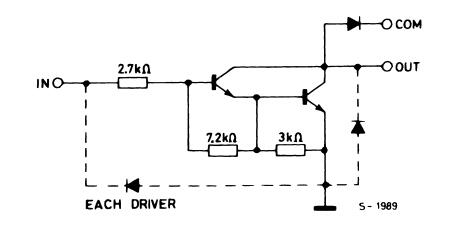
The ULN2003 is a monolithic high voltage and high current Darlington transistor array. It consists of seven NPN Darlington pairs that feature high-voltage outputs with a common-cathode clamp diode for switching inductive loads. The collector-current rating of a single Darlington pair is 500mA. The Darlington pairs may be paralleled for higher current capability. Applications include relay drivers, hammer drivers, lamp drivers, display drivers(LED gas discharge), line drivers, and logic buffers. The ULN2003 has a 2.7kW series base resistor for each Darlington pair for operation directly with TTL or 5V CMOS devices.
ULN2003 Application
Used to drive high current loads using Digital Circuits
Can be used to drive Stepper motors
High current LED’s can be driven
Relay Driver module (can drive 7 relays)
Logic Buffers in digital electronics
Used as a Touch sensor for Arduino
ULN2003 CAD Models
Symbol

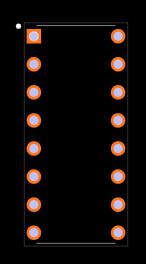
Footprint
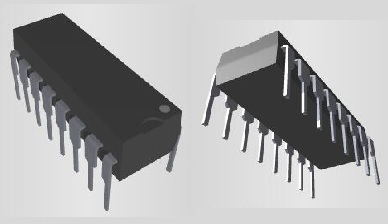
3D Models
Specifications
- TypeParameter
- Factory Lead Time15 Weeks
- Contact Plating
Contact plating (finish) provides corrosion protection for base metals and optimizes the mechanical and electrical properties of the contact interfaces.
Gold - Mount
In electronic components, the term "Mount" typically refers to the method or process of physically attaching or fixing a component onto a circuit board or other electronic device. This can involve soldering, adhesive bonding, or other techniques to secure the component in place. The mounting process is crucial for ensuring proper electrical connections and mechanical stability within the electronic system. Different components may have specific mounting requirements based on their size, shape, and function, and manufacturers provide guidelines for proper mounting procedures to ensure optimal performance and reliability of the electronic device.
Through Hole - Mounting Type
The "Mounting Type" in electronic components refers to the method used to attach or connect a component to a circuit board or other substrate, such as through-hole, surface-mount, or panel mount.
Through Hole - Package / Case
refers to the protective housing that encases an electronic component, providing mechanical support, electrical connections, and thermal management.
16-DIP (0.300, 7.62mm) - Number of Pins16
- Weight1.627801g
- Transistor Element Material
The "Transistor Element Material" parameter in electronic components refers to the material used to construct the transistor within the component. Transistors are semiconductor devices that amplify or switch electronic signals and are a fundamental building block in electronic circuits. The material used for the transistor element can significantly impact the performance and characteristics of the component. Common materials used for transistor elements include silicon, germanium, and gallium arsenide, each with its own unique properties and suitability for different applications. The choice of transistor element material is crucial in designing electronic components to meet specific performance requirements such as speed, power efficiency, and temperature tolerance.
SILICON - Collector-Emitter Breakdown Voltage50V
- Collector-Emitter Saturation Voltage1.1V
- Number of Elements7
- Operating Temperature
The operating temperature is the range of ambient temperature within which a power supply, or any other electrical equipment, operate in. This ranges from a minimum operating temperature, to a peak or maximum operating temperature, outside which, the power supply may fail.
-40°C~85°C TA - Packaging
Semiconductor package is a carrier / shell used to contain and cover one or more semiconductor components or integrated circuits. The material of the shell can be metal, plastic, glass or ceramic.
Tube - JESD-609 Code
The "JESD-609 Code" in electronic components refers to a standardized marking code that indicates the lead-free solder composition and finish of electronic components for compliance with environmental regulations.
e3 - Part Status
Parts can have many statuses as they progress through the configuration, analysis, review, and approval stages.
Active - Moisture Sensitivity Level (MSL)
Moisture Sensitivity Level (MSL) is a standardized rating that indicates the susceptibility of electronic components, particularly semiconductors, to moisture-induced damage during storage and the soldering process, defining the allowable exposure time to ambient conditions before they require special handling or baking to prevent failures
1 (Unlimited) - Number of Terminations16
- ECCN Code
An ECCN (Export Control Classification Number) is an alphanumeric code used by the U.S. Bureau of Industry and Security to identify and categorize electronic components and other dual-use items that may require an export license based on their technical characteristics and potential for military use.
EAR99 - Terminal Finish
Terminal Finish refers to the surface treatment applied to the terminals or leads of electronic components to enhance their performance and longevity. It can improve solderability, corrosion resistance, and overall reliability of the connection in electronic assemblies. Common finishes include nickel, gold, and tin, each possessing distinct properties suitable for various applications. The choice of terminal finish can significantly impact the durability and effectiveness of electronic devices.
Matte Tin (Sn) - Additional Feature
Any Feature, including a modified Existing Feature, that is not an Existing Feature.
LOGIC LEVEL COMPATIBLE - Voltage - Rated DC
Voltage - Rated DC is a parameter that specifies the maximum direct current (DC) voltage that an electronic component can safely handle without being damaged. This rating is crucial for ensuring the proper functioning and longevity of the component in a circuit. Exceeding the rated DC voltage can lead to overheating, breakdown, or even permanent damage to the component. It is important to carefully consider this parameter when designing or selecting components for a circuit to prevent any potential issues related to voltage overload.
50V - Max Power Dissipation
The maximum power that the MOSFET can dissipate continuously under the specified thermal conditions.
2.25W - Terminal Position
In electronic components, the term "Terminal Position" refers to the physical location of the connection points on the component where external electrical connections can be made. These connection points, known as terminals, are typically used to attach wires, leads, or other components to the main body of the electronic component. The terminal position is important for ensuring proper connectivity and functionality of the component within a circuit. It is often specified in technical datasheets or component specifications to help designers and engineers understand how to properly integrate the component into their circuit designs.
DUAL - Current Rating
Current rating is the maximum current that a fuse will carry for an indefinite period without too much deterioration of the fuse element.
500mA - Base Part Number
The "Base Part Number" (BPN) in electronic components serves a similar purpose to the "Base Product Number." It refers to the primary identifier for a component that captures the essential characteristics shared by a group of similar components. The BPN provides a fundamental way to reference a family or series of components without specifying all the variations and specific details.
ULN2003 - Pin Count
a count of all of the component leads (or pins)
16 - Output Voltage
Output voltage is a crucial parameter in electronic components that refers to the voltage level produced by the component as a result of its operation. It represents the electrical potential difference between the output terminal of the component and a reference point, typically ground. The output voltage is a key factor in determining the performance and functionality of the component, as it dictates the level of voltage that will be delivered to the connected circuit or load. It is often specified in datasheets and technical specifications to ensure compatibility and proper functioning within a given system.
50V - Polarity
In electronic components, polarity refers to the orientation or direction in which the component must be connected in a circuit to function properly. Components such as diodes, capacitors, and LEDs have polarity markings to indicate which terminal should be connected to the positive or negative side of the circuit. Connecting a component with incorrect polarity can lead to malfunction or damage. It is important to pay attention to polarity markings and follow the manufacturer's instructions to ensure proper operation of electronic components.
NPN - Configuration
The parameter "Configuration" in electronic components refers to the specific arrangement or setup of the components within a circuit or system. It encompasses how individual elements are interconnected and their physical layout. Configuration can affect the functionality, performance, and efficiency of the electronic system, and may influence factors such as signal flow, impedance, and power distribution. Understanding the configuration is essential for design, troubleshooting, and optimizing electronic devices.
COMPLEX - Number of Channels7
- Output Current
The rated output current is the maximum load current that a power supply can provide at a specified ambient temperature. A power supply can never provide more current that it's rated output current unless there is a fault, such as short circuit at the load.
500mA - Transistor Application
In the context of electronic components, the parameter "Transistor Application" refers to the specific purpose or function for which a transistor is designed and used. Transistors are semiconductor devices that can amplify or switch electronic signals and are commonly used in various electronic circuits. The application of a transistor can vary widely depending on its design and characteristics, such as whether it is intended for audio amplification, digital logic, power control, or radio frequency applications. Understanding the transistor application is important for selecting the right type of transistor for a particular circuit or system to ensure optimal performance and functionality.
SWITCHING - Transistor Type
Transistor type refers to the classification of transistors based on their operation and construction. The two primary types are bipolar junction transistors (BJTs) and field-effect transistors (FETs). BJTs use current to control the flow of current, while FETs utilize voltage to control current flow. Each type has its own subtypes, such as NPN and PNP for BJTs, and MOSFETs and JFETs for FETs, impacting their applications and characteristics in electronic circuits.
7 NPN Darlington - Collector Emitter Voltage (VCEO)
Collector-Emitter Voltage (VCEO) is a key parameter in electronic components, particularly in transistors. It refers to the maximum voltage that can be applied between the collector and emitter terminals of a transistor while the base terminal is open or not conducting. Exceeding this voltage limit can lead to breakdown and potential damage to the transistor. VCEO is crucial for ensuring the safe and reliable operation of the transistor within its specified limits. Designers must carefully consider VCEO when selecting transistors for a circuit to prevent overvoltage conditions that could compromise the performance and longevity of the component.
50V - Max Collector Current
Max Collector Current is a parameter used to specify the maximum amount of current that can safely flow through the collector terminal of a transistor or other electronic component without causing damage. It is typically expressed in units of amperes (A) and is an important consideration when designing circuits to ensure that the component operates within its safe operating limits. Exceeding the specified max collector current can lead to overheating, degradation of performance, or even permanent damage to the component. Designers must carefully consider this parameter when selecting components and designing circuits to ensure reliable and safe operation.
500mA - DC Current Gain (hFE) (Min) @ Ic, Vce
The parameter "DC Current Gain (hFE) (Min) @ Ic, Vce" in electronic components refers to the minimum value of the DC current gain, denoted as hFE, under specific operating conditions of collector current (Ic) and collector-emitter voltage (Vce). The DC current gain hFE represents the ratio of the collector current to the base current in a bipolar junction transistor (BJT), indicating the amplification capability of the transistor. The minimum hFE value at a given Ic and Vce helps determine the transistor's performance and efficiency in amplifying signals within a circuit. Designers use this parameter to ensure proper transistor selection and performance in various electronic applications.
1000 @ 350mA 2V - Current - Collector Cutoff (Max)
The parameter "Current - Collector Cutoff (Max)" refers to the maximum current at which a transistor or other electronic component will cease to conduct current between the collector and emitter terminals. This parameter is important in determining the maximum current that can flow through the component when it is in the cutoff state. Exceeding this maximum cutoff current can lead to malfunction or damage of the component. It is typically specified in the component's datasheet and is crucial for proper circuit design and operation.
50μA - Vce Saturation (Max) @ Ib, Ic
The parameter "Vce Saturation (Max) @ Ib, Ic" in electronic components refers to the maximum voltage drop across the collector-emitter junction when the transistor is in saturation mode. This parameter is specified at a certain base current (Ib) and collector current (Ic) levels. It indicates the minimum voltage required to keep the transistor fully conducting in saturation mode, ensuring that the transistor operates efficiently and does not enter the cutoff region. Designers use this parameter to ensure proper transistor operation and to prevent overheating or damage to the component.
1.6V @ 500μA, 350mA - VCEsat-Max
VCEsat-Max refers to the maximum collector-emitter saturation voltage of a bipolar junction transistor (BJT) or an insulated gate bipolar transistor (IGBT). It is a crucial parameter that indicates the minimum voltage drop across the collector-emitter junction when the transistor is in saturation mode. This parameter is important for determining the efficiency and performance of the transistor in switching applications. A lower VCEsat-Max value indicates better performance and reduced power losses in the transistor during operation. Designers often consider this parameter when selecting transistors for applications where minimizing power dissipation is critical.
1.6 V - Height4.59mm
- Length20mm
- Width7.1mm
- REACH SVHC
The parameter "REACH SVHC" in electronic components refers to the compliance with the Registration, Evaluation, Authorization, and Restriction of Chemicals (REACH) regulation regarding Substances of Very High Concern (SVHC). SVHCs are substances that may have serious effects on human health or the environment, and their use is regulated under REACH to ensure their safe handling and minimize their impact.Manufacturers of electronic components need to declare if their products contain any SVHCs above a certain threshold concentration and provide information on the safe use of these substances. This information allows customers to make informed decisions about the potential risks associated with using the components and take appropriate measures to mitigate any hazards.Ensuring compliance with REACH SVHC requirements is essential for electronics manufacturers to meet regulatory standards, protect human health and the environment, and maintain transparency in their supply chain. It also demonstrates a commitment to sustainability and responsible manufacturing practices in the electronics industry.
No SVHC - Radiation Hardening
Radiation hardening is the process of making electronic components and circuits resistant to damage or malfunction caused by high levels of ionizing radiation, especially for environments in outer space (especially beyond the low Earth orbit), around nuclear reactors and particle accelerators, or during nuclear accidents or nuclear warfare.
No - RoHS Status
RoHS means “Restriction of Certain Hazardous Substances” in the “Hazardous Substances Directive” in electrical and electronic equipment.
ROHS3 Compliant - Lead Free
Lead Free is a term used to describe electronic components that do not contain lead as part of their composition. Lead is a toxic material that can have harmful effects on human health and the environment, so the electronics industry has been moving towards lead-free components to reduce these risks. Lead-free components are typically made using alternative materials such as silver, copper, and tin. Manufacturers must comply with regulations such as the Restriction of Hazardous Substances (RoHS) directive to ensure that their products are lead-free and environmentally friendly.
Lead Free
ULN2003 Features
Contains 7 high-voltage and high current Darlington pairs
Each pair is rated for 50V and 500mA
Input pins can be triggered by +5V
All seven Output pins can be connected to gather to drive loads up to (7×500mA) ~3.5A.
Can be directly controlled by logic devices like Digital Gates, Arduino, PIC, etc
Available in 16-pin DIP, TSSOP, SOIC packages
ULN2003 Diagram
Where to use ULN2003?
One of the most often utilized motor driver ICs is the ULN2003. When employing digital logic circuits such as Op-maps, Timers, Gates, Arduino, PIC, ARM, and others to drive high current loads, this IC comes in useful. For example, an Arduino I/O cannot power a motor that requires 9V and 300mA to run, thus we utilize this IC to provide appropriate current and voltage for the load. Relay modules, motors, high-current LEDs, and even stepper motors are all driven by this IC. So, if you need to work with anything that requires more than 5V 80mA, this IC is the one for you.
How to use ULN2003?
The ULN2003 is a 16-pin IC. It has seven Darlington Pairs inside, where each can drive loads up to 50V and 500mA. For these seven Darlington Pairs, we have seven Input and Output Pins. Adding to that we can ground and Common pin. The ground pin, as usual, is grounded and the usage of the Common pin is optional. It might be surprising to note that this IC does not have any Vcc (power) pin; this is because the power required for the transistors to work will be drawn from the input pin itself. The below circuit is a simple circuit that can be used to test the working of the ULN2003 IC.

In the circuit consider the LED to be the loads and the logic pins (blue color) as the pins connected to the Digital circuit or Microcontroller like Arduino. Notice that the Positive pin of the LED is connected to the positive load voltage and the negative pin is connected to the output pin of the IC. This is because when the input pin of the IC gets high the respective output pin will get connected to the ground. So when the negative terminal of the LED is grounded it completes the circuit and thus glows. The loads connected to the output pin can be maximum of 50C and 500mA each. However you can run higher current loads by combining two or more output pins to gather. For example, if you combine three pins you can drive up to (3*500mA) ~1.5A.
The COM pin is connected to ground through a switch, this connection is optional. It can be used as a test switch, meaning when this pin is grounded all the output pins will be grounded.
ULN2003 Circuit


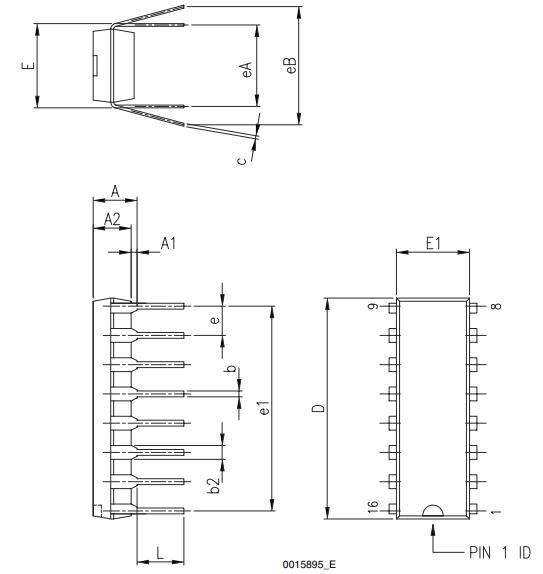
ULN2003 Package
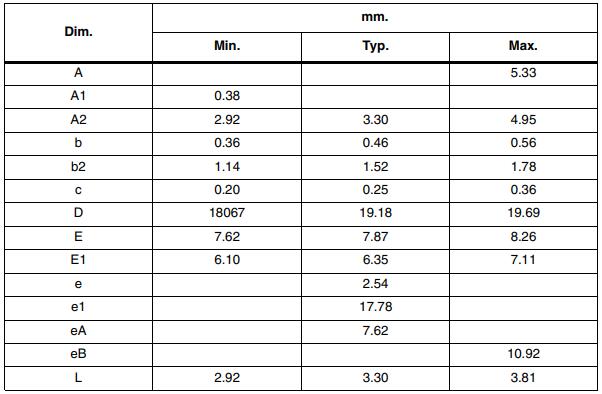
ULN2003 Manufacturer
STMicroelectronics is a French-Italian multinational electronics and semiconductors manufacturer headquartered in Plan-les-Oates near Geneva, Switzerland. The company resulted from the merger of two government-owned semiconductor companies in 1987: "Thomson Semiconductors" of France and "SGS Microelettronica [it]" of Italy. It is commonly called "ST". While STMicroelectronics's corporate headquarters and the headquarters for the EMEA region are based in the Canton of Geneva, the holding company, STMicroelectronics N.V. is incorporated in the Netherlands.
ULN2003 vs ULN2001 vs ULN2002 vs ULN2004
The ULN2001, ULN2002, ULN2003, and ULN2004 are high voltage, high current Darlington arrays each containing seven open collectors Darlington pairs with common emitters. Each channel is rated at 500 mA and can withstand peak currents of 600 mA. Suppression diodes are included for inductive load driving and the inputs are pinned opposite the outputs to simplify board layout.
The four versions interface to all common logic families :
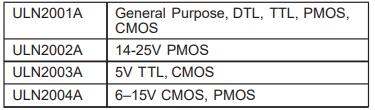
These versatile devices are useful for driving a wide range of loads including solenoids, relays DC motors, LED displays filament lamps, thermal print heads, and high power buffers.
The ULN2001A/2002A/2003Aand 2004A are supplied in 16 pin plastic DIP packages with a copper
Lead frame to reduce thermal resistance. They are available also in a small outline package (SO-16) as ULN2001D/2002D/2003D/2004D.
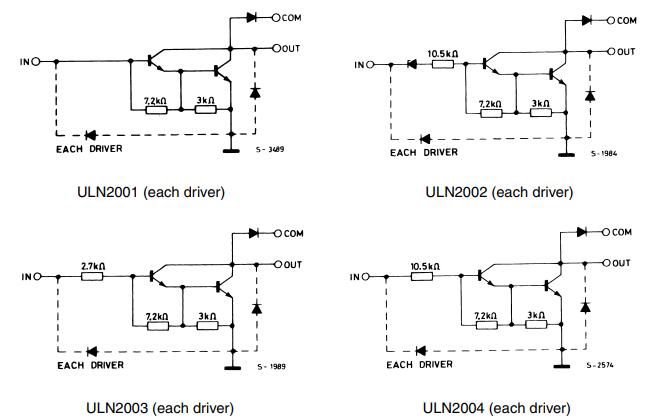
schematic diagram
Trend Analysis
Datasheet PDF
- Datasheets :
ULN2003A-STMicroelectronics-datasheet-46749186.pdf
ULN2003A-STMicroelectronics-datasheet-11784232.pdf
ULN2003A-STMicroelectronics-datasheet-12515461.pdf
ULN2003A-STMicroelectronics-datasheet-14122859.pdf
ULN2003A-STMicroelectronics-datasheet-10124200.pdf
ULN2003A-STMicroelectronics-datasheet-165970.pdf
ULN2003A-STMicroelectronics-datasheet-7413.pdf
ULN2003A-STMicroelectronics-datasheet-114520.pdf
ULN2003A-STMicroelectronics-datasheet-38184.pdf
ULN2003A-STMicroelectronics-datasheet-109153.pdf
pid_6269665_uln2003a-stmicroelectronics-datasheet-12515461.pdf
Parts with Similar Specs
- ImagePart NumberManufacturerMountPackage / CaseCollector Emitter Breakdown VoltageMax Collector CurrentTransistor TypeMoisture Sensitivity Level (MSL)ConfigurationCurrent - Collector Cutoff (Max)View Compare
![ULN2003A]()
ULN2003A
Through Hole
16-DIP (0.300, 7.62mm)
50 V
500 mA
7 NPN Darlington
1 (Unlimited)
COMPLEX
50μA
![ULN2004AD16-U]()
Through Hole
16-DIP (0.300, 7.62mm)
50 V
500 mA
7 NPN Darlington
1 (Unlimited)
COMPLEX
50μA


What is ULN2003?
ULN2003 IC is one of the most commonly used Motor driver IC generally used when we need to drive high current loads using digital logic circuits like Op-maps, Timers, Gates, Arduino, PIC, ARM, etc.
What is the function of uln2003 driver in interfacing of stepper motor?
Known for its high current and high voltage capacity, the ULN2003 gives a higher current gain than a single transistor and enables the low voltage and low current output of a microcontroller to drive a higher current stepper motor.
What is a Darlington array?
Darlington devices are high-voltage, high-current switch arrays containing multiple open-collector Darlington pairs or multiple Darlington transistors with common emitters, and integral suppression diodes for inductive loads.
How many pins does uln2003 have?
16
What’s uln2003 recommended operating temperature?
-40°C~85°C
 STM32F030C8T6: Overview, Features and Datasheet
16 October 20236553
 A Comprehensive Guide to LTC7130IY#PBF DC-DC Switching Regulator
06 March 2024248
 CC2530 Zigbee SoC Deep Dive: Datasheet, Pinout, and Modern Design Challenges
25 February 20261635
 TDA7377 Class AB Car Radio Amplifier: Pinout, Datasheet pdf and Circuit
07 December 202127269
 MCP73831T-2ACI/OT IC Controller Lithium Ion 4.2V: Datasheet, Pinout,and Equivalents
22 February 20225634
 D44H8 Power Transistor: Pinout, Datasheet, and Applications
21 July 20211396
 A Comprehensive Guide to LTC6800HMS8#TRPBF Instrumentation Amplifier
06 March 2024238
 LM334D Adjustable Current Source: Feature, Specification, and Datasheet
03 July 20211020
 cr2450 vs cr2032 what to know before replacing
20 August 20254274
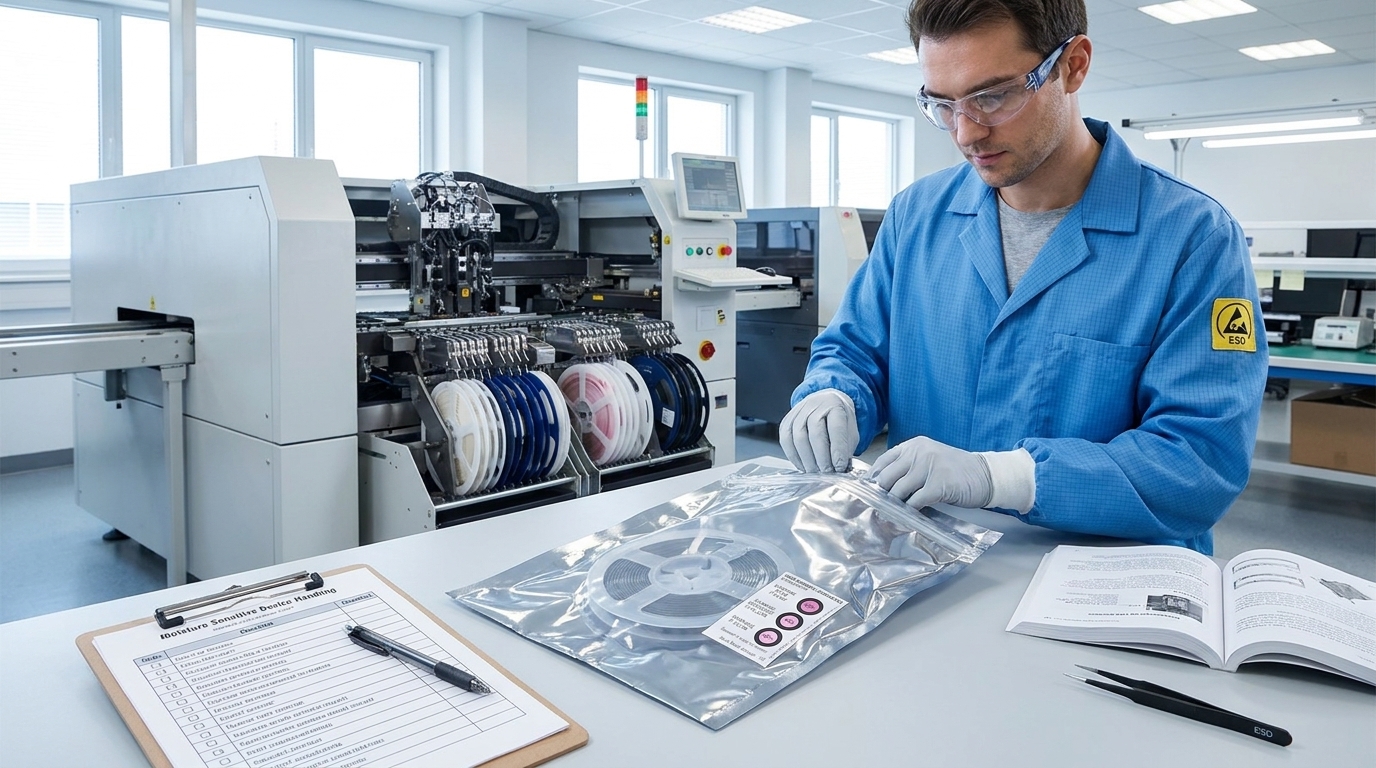 MSL and Floor Life: A Receiving-to-Reflow Checklist for ICs
22 September 2026239
 Introduction to the Types of SDRAM
13 July 202114967
 Selection and Optimization of Peripheral Components for DC-DC Boost Regulator
15 April 20222380
 LLC Converter with Planar Matrix Transformer for High-Current-High-Power Applications
15 March 20245336
 What is PWM "Dead Band"?
21 April 20228326
 DC Bias Characteristic of a Capacitor: Why MLCC Capacitance Drops Under Voltage
03 July 202613070
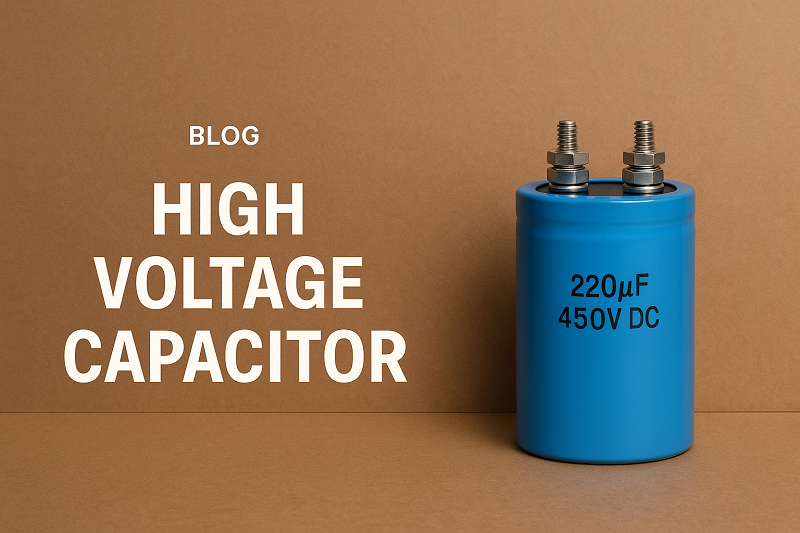 High Voltage Capacitor Safety: The Ultimate Guide
10 August 202614708
STMicroelectronics
In Stock: 10000
United States
China
Canada
Japan
Russia
Germany
United Kingdom
Singapore
Italy
Hong Kong(China)
Taiwan(China)
France
Korea
Mexico
Netherlands
Malaysia
Austria
Spain
Switzerland
Poland
Thailand
Vietnam
India
United Arab Emirates
Afghanistan
Åland Islands
Albania
Algeria
American Samoa
Andorra
Angola
Anguilla
Antigua & Barbuda
Argentina
Armenia
Aruba
Australia
Azerbaijan
Bahamas
Bahrain
Bangladesh
Barbados
Belarus
Belgium
Belize
Benin
Bermuda
Bhutan
Bolivia
Bonaire, Sint Eustatius and Saba
Bosnia & Herzegovina
Botswana
Brazil
British Indian Ocean Territory
British Virgin Islands
Brunei
Bulgaria
Burkina Faso
Burundi
Cabo Verde
Cambodia
Cameroon
Cayman Islands
Central African Republic
Chad
Chile
Christmas Island
Cocos (Keeling) Islands
Colombia
Comoros
Congo
Congo (DRC)
Cook Islands
Costa Rica
Côte d’Ivoire
Croatia
Cuba
Curaçao
Cyprus
Czechia
Denmark
Djibouti
Dominica
Dominican Republic
Ecuador
Egypt
El Salvador
Equatorial Guinea
Eritrea
Estonia
Eswatini
Ethiopia
Falkland Islands
Faroe Islands
Fiji
Finland
French Guiana
French Polynesia
Gabon
Gambia
Georgia
Ghana
Gibraltar
Greece
Greenland
Grenada
Guadeloupe
Guam
Guatemala
Guernsey
Guinea
Guinea-Bissau
Guyana
Haiti
Honduras
Hungary
Iceland
Indonesia
Iran
Iraq
Ireland
Isle of Man
Israel
Jamaica
Jersey
Jordan
Kazakhstan
Kenya
Kiribati
Kosovo
Kuwait
Kyrgyzstan
Laos
Latvia
Lebanon
Lesotho
Liberia
Libya
Liechtenstein
Lithuania
Luxembourg
Macao(China)
Madagascar
Malawi
Maldives
Mali
Malta
Marshall Islands
Martinique
Mauritania
Mauritius
Mayotte
Micronesia
Moldova
Monaco
Mongolia
Montenegro
Montserrat
Morocco
Mozambique
Myanmar
Namibia
Nauru
Nepal
New Caledonia
New Zealand
Nicaragua
Niger
Nigeria
Niue
Norfolk Island
North Korea
North Macedonia
Northern Mariana Islands
Norway
Oman
Pakistan
Palau
Palestinian Authority
Panama
Papua New Guinea
Paraguay
Peru
Philippines
Pitcairn Islands
Portugal
Puerto Rico
Qatar
Réunion
Romania
Rwanda
Samoa
San Marino
São Tomé & Príncipe
Saudi Arabia
Senegal
Serbia
Seychelles
Sierra Leone
Sint Maarten
Slovakia
Slovenia
Solomon Islands
Somalia
South Africa
South Sudan
Sri Lanka
St Helena, Ascension, Tristan da Cunha
St. Barthélemy
St. Kitts & Nevis
St. Lucia
St. Martin
St. Pierre & Miquelon
St. Vincent & Grenadines
Sudan
Suriname
Svalbard & Jan Mayen
Sweden
Syria
Tajikistan
Tanzania
Timor-Leste
Togo
Tokelau
Tonga
Trinidad & Tobago
Tunisia
Turkey
Turkmenistan
Turks & Caicos Islands
Tuvalu
U.S. Outlying Islands
U.S. Virgin Islands
Uganda
Ukraine
Uruguay
Uzbekistan
Vanuatu
Vatican City
Venezuela
Wallis & Futuna
Yemen
Zambia
Zimbabwe
![ULQ2003D1013TR]() ULQ2003D1013TR
ULQ2003D1013TRSTMicroelectronics
![ULN2803A]() ULN2803A
ULN2803ASTMicroelectronics
![ULN2001D1013TR]() ULN2001D1013TR
ULN2001D1013TRSTMicroelectronics
![ULN2064B]() ULN2064B
ULN2064BSTMicroelectronics
![ULN2801A]() ULN2801A
ULN2801ASTMicroelectronics
![ULN2002D1013TR]() ULN2002D1013TR
ULN2002D1013TRSTMicroelectronics
![ULN2804A]() ULN2804A
ULN2804ASTMicroelectronics
![ULN2068B]() ULN2068B
ULN2068BSTMicroelectronics
![ULN2069B]() ULN2069B
ULN2069BSTMicroelectronics

