

 Product
 Brand
Brand Articles
 Tools
Tools
LM3900 Norton Op Amp: Circuit, Pinout, and Datasheet

4 Channels 10mA per Channel 30nA Instrumentational OP Amps 0.2μA 5V 4.5V~32V ±2.2V~16V LM3900 14 Pins 14-DIP (0.300, 7.62mm)


4 Channels 10mA per Channel 30nA Instrumentational OP Amps 0.2μA 5V 4.5V~32V ±2.2V~16V LM3900 14 Pins 14-DIP (0.300, 7.62mm)
The LM3900 is designed to work in temperatures ranging from 0 to 70 degrees Celsius. This article mainly introduces Circuit, Pinout, Datasheet and other detailed information about Texas Instruments LM3900.

Synthchaser #107 - Homemade LM3900 Norton Op Amp Tester
- LM3900 Description
- LM3900 Pinout
- LM3900 CAD Model
- LM3900 Features
- Specifications
- Parts with Similar Specs
- LM3900 Symbol (Each Amplifier)
- LM3900 Schematic (Each Amplifier)
- LM3900 Application Information
- LM3900 Circuit Diagram
- The Architecture and Pin Configuration of LM3900
- LM3900 Applications
- LM3900 Package
- LM3900 Manufacturer
- Trend Analysis
- Datasheet PDF
LM3900 Description
The LM3900 is designed to work in temperatures ranging from 0 to 70 degrees Celsius. These devices are made up of four independent, highgain frequency-compensated Norton operational amplifiers that were designed to operate over a wide variety of voltages from a single source. It's also feasible to run on split supplies. The amount of the supply voltage has little effect on the low supply current drain. These devices have a big output voltage swing and a wide bandwidth.
LM3900 Pinout
The following is LM3900 Pinout.

Pinout
| Pin Number | Pin Name | Description |
| 1 | 1IN+ | Non-Inverting Input 1 |
| 2 | 2IN+ | Non-Inverting Input 2 |
| 3 | 2IN- | Inverting Input 2 |
| 4 | 2OUT | Output Pin 2 |
| 5 | 1OUT | Output Pin 1 |
| 6 | 1IN- | Inverting Input 1 |
| 7 | GND | Ground Pin |
| 8 | 3IN- | Inverting Input 3 |
| 9 | 3OUT | Output Pin 3 |
| 10 | 4OUT | Output Pin 4 |
| 11 | 4IN- | Inverting Input 4 |
| 12 | 4IN+ | Non-Inverting Input 4 |
| 13 | 3IN+ | Non-Inverting Input 3 |
| 14 | VCC | Positive Supply Voltage |
LM3900 CAD Model

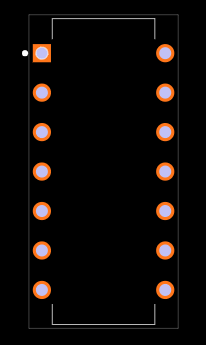
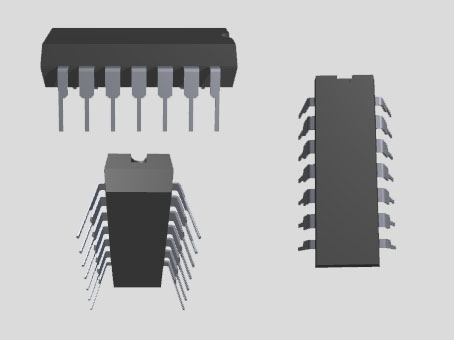
LM3900 Features
• Wide Range of Supply Voltages, Single or Dual Supplies
• Wide Bandwidth
• Large Output Voltage Swing
• Output Short-Circuit Protection
• Internal Frequency Compensation
• Low Input Bias Current
• Designed to Be Interchangeable With National Semiconductor LM2900 and LM3900, Respectively
• Wide Single Supply Voltage 4 VDC to 32 VDC
• Range or Dual Supplies g2 VDC to g16 VDC
• Supply Current Drain Independent of Supply Voltage
• Low Input Biasing Current 30 nA
• High Open-loop Gain 70 dB
• Wide Bandwidth 2.5 MHz (Unity Gain)
• Large Output Voltage Swing (Va b 1) Vp-p
• Internally Frequency Compensated for Unity Gain
• Output Short-circuit Protection
Specifications
- TypeParameter
- Lifecycle Status
Lifecycle Status refers to the current stage of an electronic component in its product life cycle, indicating whether it is active, obsolete, or transitioning between these states. An active status means the component is in production and available for purchase. An obsolete status indicates that the component is no longer being manufactured or supported, and manufacturers typically provide a limited time frame for support. Understanding the lifecycle status is crucial for design engineers to ensure continuity and reliability in their projects.
ACTIVE (Last Updated: 2 days ago) - Factory Lead Time6 Weeks
- Contact Plating
Contact plating (finish) provides corrosion protection for base metals and optimizes the mechanical and electrical properties of the contact interfaces.
Gold - Mount
In electronic components, the term "Mount" typically refers to the method or process of physically attaching or fixing a component onto a circuit board or other electronic device. This can involve soldering, adhesive bonding, or other techniques to secure the component in place. The mounting process is crucial for ensuring proper electrical connections and mechanical stability within the electronic system. Different components may have specific mounting requirements based on their size, shape, and function, and manufacturers provide guidelines for proper mounting procedures to ensure optimal performance and reliability of the electronic device.
Through Hole - Mounting Type
The "Mounting Type" in electronic components refers to the method used to attach or connect a component to a circuit board or other substrate, such as through-hole, surface-mount, or panel mount.
Through Hole - Package / Case
refers to the protective housing that encases an electronic component, providing mechanical support, electrical connections, and thermal management.
14-DIP (0.300, 7.62mm) - Number of Pins14
- Operating Temperature
The operating temperature is the range of ambient temperature within which a power supply, or any other electrical equipment, operate in. This ranges from a minimum operating temperature, to a peak or maximum operating temperature, outside which, the power supply may fail.
0°C~70°C - Packaging
Semiconductor package is a carrier / shell used to contain and cover one or more semiconductor components or integrated circuits. The material of the shell can be metal, plastic, glass or ceramic.
Tube - JESD-609 Code
The "JESD-609 Code" in electronic components refers to a standardized marking code that indicates the lead-free solder composition and finish of electronic components for compliance with environmental regulations.
e4 - Pbfree Code
The "Pbfree Code" parameter in electronic components refers to the code or marking used to indicate that the component is lead-free. Lead (Pb) is a toxic substance that has been widely used in electronic components for many years, but due to environmental concerns, there has been a shift towards lead-free alternatives. The Pbfree Code helps manufacturers and users easily identify components that do not contain lead, ensuring compliance with regulations and promoting environmentally friendly practices. It is important to pay attention to the Pbfree Code when selecting electronic components to ensure they meet the necessary requirements for lead-free applications.
yes - Part Status
Parts can have many statuses as they progress through the configuration, analysis, review, and approval stages.
Active - Moisture Sensitivity Level (MSL)
Moisture Sensitivity Level (MSL) is a standardized rating that indicates the susceptibility of electronic components, particularly semiconductors, to moisture-induced damage during storage and the soldering process, defining the allowable exposure time to ambient conditions before they require special handling or baking to prevent failures
1 (Unlimited) - Number of Terminations14
- ECCN Code
An ECCN (Export Control Classification Number) is an alphanumeric code used by the U.S. Bureau of Industry and Security to identify and categorize electronic components and other dual-use items that may require an export license based on their technical characteristics and potential for military use.
EAR99 - Max Power Dissipation
The maximum power that the MOSFET can dissipate continuously under the specified thermal conditions.
1.15W - Terminal Position
In electronic components, the term "Terminal Position" refers to the physical location of the connection points on the component where external electrical connections can be made. These connection points, known as terminals, are typically used to attach wires, leads, or other components to the main body of the electronic component. The terminal position is important for ensuring proper connectivity and functionality of the component within a circuit. It is often specified in technical datasheets or component specifications to help designers and engineers understand how to properly integrate the component into their circuit designs.
DUAL - Number of Functions4
- Supply Voltage
Supply voltage refers to the electrical potential difference provided to an electronic component or circuit. It is crucial for the proper operation of devices, as it powers their functions and determines performance characteristics. The supply voltage must be within specified limits to ensure reliability and prevent damage to components. Different electronic devices have specific supply voltage requirements, which can vary widely depending on their design and intended application.
15V - Base Part Number
The "Base Part Number" (BPN) in electronic components serves a similar purpose to the "Base Product Number." It refers to the primary identifier for a component that captures the essential characteristics shared by a group of similar components. The BPN provides a fundamental way to reference a family or series of components without specifying all the variations and specific details.
LM3900 - Pin Count
a count of all of the component leads (or pins)
14 - Operating Supply Voltage
The voltage level by which an electrical system is designated and to which certain operating characteristics of the system are related.
5V - Number of Channels4
- Operating Supply Current
Operating Supply Current, also known as supply current or quiescent current, is a crucial parameter in electronic components that indicates the amount of current required for the device to operate under normal conditions. It represents the current drawn by the component from the power supply while it is functioning. This parameter is important for determining the power consumption of the component and is typically specified in datasheets to help designers calculate the overall power requirements of their circuits. Understanding the operating supply current is essential for ensuring proper functionality and efficiency of electronic systems.
6.2mA - Nominal Supply Current
Nominal current is the same as the rated current. It is the current drawn by the motor while delivering rated mechanical output at its shaft.
10mA - Power Dissipation
the process by which an electronic or electrical device produces heat (energy loss or waste) as an undesirable derivative of its primary action.
1.15W - Max Supply Current
Max Supply Current refers to the maximum amount of electrical current that a component can draw from its power supply under normal operating conditions. It is a critical parameter that ensures the component operates reliably without exceeding its thermal limits or damaging internal circuitry. Exceeding this current can lead to overheating, performance degradation, or failure of the component. Understanding this parameter is essential for designing circuits that provide adequate power while avoiding overload situations.
10mA - Slew Rate
the maximum rate of output voltage change per unit time.
20V/μs - Architecture
In electronic components, the parameter "Architecture" refers to the overall design and structure of the component. It encompasses the arrangement of internal components, the layout of circuitry, and the physical form of the component. The architecture of an electronic component plays a crucial role in determining its functionality, performance, and compatibility with other components in a system. Different architectures can result in variations in power consumption, speed, size, and other key characteristics of the component. Designers often consider the architecture of electronic components carefully to ensure optimal performance and integration within a larger system.
VOLTAGE-FEEDBACK - Amplifier Type
Amplifier Type refers to the classification or categorization of amplifiers based on their design, functionality, and characteristics. Amplifiers are electronic devices that increase the amplitude of a signal, such as voltage or current. The type of amplifier determines its specific application, performance capabilities, and operating characteristics. Common types of amplifiers include operational amplifiers (op-amps), power amplifiers, audio amplifiers, and radio frequency (RF) amplifiers. Understanding the amplifier type is crucial for selecting the right component for a particular circuit or system design.
General Purpose - Current - Input Bias
The parameter "Current - Input Bias" in electronic components refers to the amount of current required at the input terminal of a device to maintain proper operation. It is a crucial specification as it determines the minimum input current needed for the component to function correctly. Input bias current can affect the performance and accuracy of the device, especially in precision applications where small signal levels are involved. It is typically specified in datasheets for operational amplifiers, transistors, and other semiconductor devices to provide users with important information for circuit design and analysis.
30nA - Voltage - Supply, Single/Dual (±)
The parameter "Voltage - Supply, Single/Dual (±)" in electronic components refers to the power supply voltage required for the proper operation of the component. This parameter indicates whether the component requires a single power supply voltage (e.g., 5V) or a dual power supply voltage (e.g., ±15V). For components that require a single power supply voltage, only one voltage level is needed for operation. On the other hand, components that require a dual power supply voltage need both positive and negative voltage levels to function correctly.Understanding the voltage supply requirements of electronic components is crucial for designing and integrating them into circuits to ensure proper functionality and prevent damage due to incorrect voltage levels.
4.5V~32V ±2.2V~16V - Output Current per Channel
Output Current per Channel is a specification commonly found in electronic components such as amplifiers, audio interfaces, and power supplies. It refers to the maximum amount of electrical current that can be delivered by each individual output channel of the component. This parameter is important because it determines the capacity of the component to drive connected devices or loads. A higher output current per channel means the component can deliver more power to connected devices, while a lower output current may limit the performance or functionality of the component in certain applications. It is crucial to consider the output current per channel when selecting electronic components to ensure they can meet the power requirements of the intended system or setup.
10mA - Bandwidth
In electronic components, "Bandwidth" refers to the range of frequencies over which the component can effectively operate or pass signals without significant loss or distortion. It is a crucial parameter for devices like amplifiers, filters, and communication systems. The bandwidth is typically defined as the difference between the upper and lower frequencies at which the component's performance meets specified criteria, such as a certain level of signal attenuation or distortion. A wider bandwidth indicates that the component can handle a broader range of frequencies, making it more versatile for various applications. Understanding the bandwidth of electronic components is essential for designing and optimizing circuits to ensure proper signal transmission and reception within the desired frequency range.
2.5MHz - Unity Gain BW-Nom
Unity Gain Bandwidth, often abbreviated as Unity Gain BW or UGBW, refers to the frequency at which an amplifier can provide a gain of one (0 dB). It is a critical parameter in assessing the performance of operational amplifiers and other amplifying devices, indicating the range of frequencies over which the amplifier can operate without distortion. Unity Gain BW is particularly important in applications where signal fidelity is crucial, as it helps determine the maximum frequency of operation for a given gain level. As the gain is reduced, the bandwidth typically increases, ensuring that the amplifier can still operate effectively across various signal frequencies.
2500 kHz - Voltage Gain
Voltage gain is a measure of how much an electronic component or circuit amplifies an input voltage signal to produce an output voltage signal. It is typically expressed as a ratio or in decibels (dB). A higher voltage gain indicates a greater amplification of the input signal. Voltage gain is an important parameter in amplifiers, where it determines the level of amplification provided by the circuit. It is calculated by dividing the output voltage by the input voltage and is a key factor in determining the overall performance and functionality of electronic devices.
68.94dB - Average Bias Current-Max (IIB)
The parameter "Average Bias Current-Max (IIB)" in electronic components refers to the maximum average bias current that the component can handle without exceeding its specified operating limits. Bias current is the current that flows through a component when it is in its quiescent state or when it is not actively processing a signal. Exceeding the maximum average bias current can lead to overheating, reduced performance, or even damage to the component. Therefore, it is important to ensure that the bias current does not exceed the specified maximum value to maintain the reliability and longevity of the electronic component.
0.2μA - Low-Offset
Low-offset is a parameter used to describe the level of offset voltage in electronic components, particularly in operational amplifiers. Offset voltage refers to the small voltage difference that exists between the input terminals of the amplifier when the input voltage is zero. A low-offset value indicates that this voltage difference is minimal, which is desirable for accurate signal processing and amplification. Components with low-offset specifications are preferred in applications where precision and accuracy are critical, such as in instrumentation and measurement systems. Minimizing offset voltage helps reduce errors and ensures the faithful reproduction of input signals by the amplifier.
NO - Frequency Compensation
Frequency compensation is implemented by modifying the gain and phase characteristics of the amplifier's open loop output or of its feedback network, or both, in such a way as to avoid the conditions leading to oscillation. This is usually done by the internal or external use of resistance-capacitance networks.
YES - Supply Voltage Limit-Max
The parameter "Supply Voltage Limit-Max" in electronic components refers to the maximum voltage that the component can safely handle without getting damaged. This specification is crucial for ensuring the reliable operation and longevity of the component within a given electrical system. Exceeding the maximum supply voltage limit can lead to overheating, electrical breakdown, or permanent damage to the component. It is important to carefully adhere to this limit when designing and operating electronic circuits to prevent potential failures and ensure the overall system's performance and safety.
32V - Low-Bias
Low-bias in electronic components refers to a design or configuration that minimizes the amount of bias current flowing through the component. Bias current is a small, steady current that is used to establish the operating point of a component, such as a transistor or amplifier. By reducing the bias current to a low level, the component can operate with lower power consumption and potentially lower distortion. Low-bias components are often used in applications where power efficiency and signal fidelity are important, such as in audio amplifiers or battery-powered devices. Overall, the low-bias parameter indicates the ability of the component to operate efficiently and accurately with minimal bias current.
NO - Micropower
the use of very small electric generators and prime movers or devices to convert heat or motion to electricity, for use close to the generator.
NO - Bias Current-Max (IIB) @25C
The parameter "Bias Current-Max (IIB) @25C" in electronic components refers to the maximum input bias current that the component can handle at a specified temperature of 25 degrees Celsius. Bias current is the current flowing into the input terminal of a device when no signal is applied. This parameter is important because excessive bias current can affect the performance and stability of the component, leading to potential issues such as distortion or offset errors in the output signal. By specifying the maximum bias current allowed at a certain temperature, manufacturers provide users with important information to ensure proper operation and reliability of the component in their circuit designs.
0.2μA - Programmable Power
A programmable power supply provides remote control capability of the output voltage(s) via an analog control signal controlled by keypad or rotary switch from the front panel of the power supply or via a computer interface such as RS232, GPIB, or USB.
NO - Dual Supply Voltage
Dual Supply Voltage refers to an electronic component's requirement for two separate power supply voltages, typically one positive and one negative. This configuration is commonly used in operational amplifiers, analog circuits, and certain digital devices to allow for greater signal handling capabilities and improved performance. The use of dual supply voltages enables the device to process bipolar signals, thereby enhancing its functionality in various applications.
3V - Height5.08mm
- Length19.3mm
- Width6.35mm
- Thickness
Thickness in electronic components refers to the measurement of how thick a particular material or layer is within the component structure. It can pertain to various aspects, such as the thickness of a substrate, a dielectric layer, or conductive traces. This parameter is crucial as it impacts the electrical, mechanical, and thermal properties of the component, influencing its performance and reliability in electronic circuits.
3.9mm - REACH SVHC
The parameter "REACH SVHC" in electronic components refers to the compliance with the Registration, Evaluation, Authorization, and Restriction of Chemicals (REACH) regulation regarding Substances of Very High Concern (SVHC). SVHCs are substances that may have serious effects on human health or the environment, and their use is regulated under REACH to ensure their safe handling and minimize their impact.Manufacturers of electronic components need to declare if their products contain any SVHCs above a certain threshold concentration and provide information on the safe use of these substances. This information allows customers to make informed decisions about the potential risks associated with using the components and take appropriate measures to mitigate any hazards.Ensuring compliance with REACH SVHC requirements is essential for electronics manufacturers to meet regulatory standards, protect human health and the environment, and maintain transparency in their supply chain. It also demonstrates a commitment to sustainability and responsible manufacturing practices in the electronics industry.
No SVHC - Radiation Hardening
Radiation hardening is the process of making electronic components and circuits resistant to damage or malfunction caused by high levels of ionizing radiation, especially for environments in outer space (especially beyond the low Earth orbit), around nuclear reactors and particle accelerators, or during nuclear accidents or nuclear warfare.
No - RoHS Status
RoHS means “Restriction of Certain Hazardous Substances” in the “Hazardous Substances Directive” in electrical and electronic equipment.
ROHS3 Compliant - Lead Free
Lead Free is a term used to describe electronic components that do not contain lead as part of their composition. Lead is a toxic material that can have harmful effects on human health and the environment, so the electronics industry has been moving towards lead-free components to reduce these risks. Lead-free components are typically made using alternative materials such as silver, copper, and tin. Manufacturers must comply with regulations such as the Restriction of Hazardous Substances (RoHS) directive to ensure that their products are lead-free and environmentally friendly.
Lead Free
Parts with Similar Specs
- ImagePart NumberManufacturerPackage / CaseNumber of PinsSlew RateSupply VoltageOperating Supply CurrentTechnologyPbfree CodeNumber of FunctionsView Compare
![LM3900N]()
LM3900N
14-DIP (0.300, 7.62mm)
14
20V/μs
15 V
6.2 mA
BIPOLAR
yes
4
![LM2900NE4]()
14-DIP (0.300, 7.62mm)
14
20V/μs
15 V
6.2 mA
BIPOLAR
yes
4
![LM3900NE4]()
14-DIP (0.300, 7.62mm)
14
0.6V/μs
5 V
1.4 mA
BIPOLAR
yes
4
![LM224NG]()
PDIP
14
20 V/μs
15 V
6.2 mA
BIPOLAR
yes
4
![LM2900N]()
PDIP
14
20 V/μs
15 V
6.2 mA
BIPOLAR
yes
4


LM3900 Symbol (Each Amplifier)
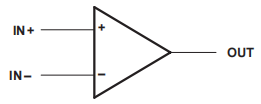
LM3900 Schematic (Each Amplifier)
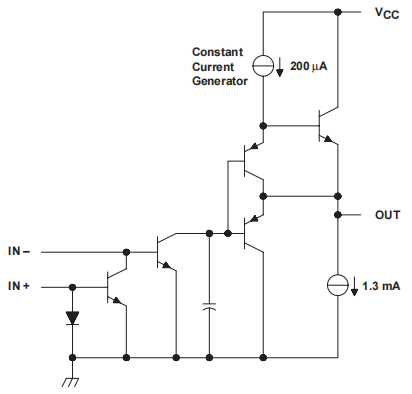
LM3900 Application Information
Most conventional general-purpose operational amplifier applications can benefit from Norton (or current-differencing) amplifiers. The performance of a single-power-supply dc amplifier is not as precise as that of a dual-power-supply standard integrated-circuit operational amplifier, The best way to understand how the amplifier works is to remember that input currents diverge at the inverting input wire, and that this current then passes through the external feedback resistor to form the output voltage. Common-mode current biasing is commonly used to allow signal levels close (or even below) ground to be used.
Negative input voltages are clamped by internal transistors at around –0.3 V, however the magnitude of current flow is limited by the external input network. This limit should be around –100 µA for operating at high temperatures.
Norton amplifiers have worse noise immunity than typical bipolar amplifiers. Because coupling from the output to the noninverting input might create oscillations, the circuit arrangement is more important. When driving either input from a low-impedance source, extra caution is required. To limit the peak input current, a limiting resistor should be connected in series with the input lead. The device will not be damaged by current up to 20 mA, but at greater current levels, especially at high working temperatures, the current mirror on the noninverting input will saturate and cause a loss of mirror gain.
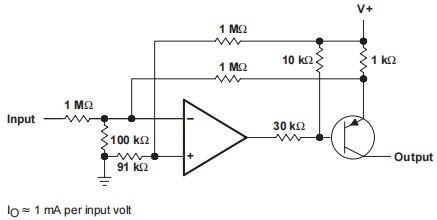
Voltage-Controlled Current Source
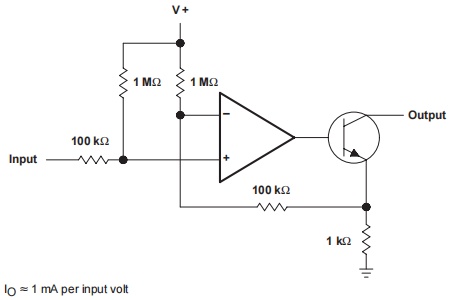
Voltage-Controlled Current Sink
LM3900 Circuit Diagram
The circuit for a simple multi-channel audio mixer using the LM3900 quad amplifier is shown below. The circuit is made up of four quad amplifier channels (LM3900). This circuit features two mic audio inputs and two direct line inputs. You can increase the number of inputs by adding the same circuit in parallel with this, depending on the uses. Each input is connected to the LM3900's inverting terminal. Each section's built-in amplifier amplifies each audio input separately and feeds it to the output terminal s. Each channel's output terminal is connected to a single output line with a resistance of no more than 680K, resulting in a mixed audio output with very low noise. To combine optimal sources, this audio mixer circuit does not use a low impedance input. The decoupling capacitors for the corresponding channels are capacitors C1 through C4. The output decoupling capacitor is C5.

Multi-Channel Audio Mixer Circuit
The main features of this audio mixer circuit as compared to the other audio mixers are given below.
1) Wide range of supply voltage input (4volt to 32volt)
2) Dual voltage supplies also adoptable (+/- 2.2volt to +/-16volt)
3) Low input biasing current(30nA)
4) Providing very high open loop gain(70dB)
5) Output short circuit protection
6) Simple and compatible design
7) Low distortion
8) Good frequency response
The Architecture and Pin Configuration of LM3900
The LM3900 is described in general terms.
The LM3900 series amplifiers are made up of four separate, internally compensated amplifiers that are designed to work with a single or wide power supply voltage. These amplifiers accept a wide range of voltage inputs and have excellent frequency response over the whole audio spectrum. They also have a wide output range.
The LM3900's architecture and pin configuration are depicted in the diagram below.

The Architecture and Pin Configuration of LM3900
LM3900 Applications
• AC Amplifiers
• RC Active Filters
• Low-frequency Triangle
• Square Wave
• Pulse Waveform Generation Circuits
• Tachometers
• Low Speed
• High Voltage
• Digital Logic Gates
LM3900 Package

LM3900 Manufacturer
Texas Instruments Incorporated (TI) is an American technology corporation based in Dallas, Texas, that creates and manufactures semiconductors and integrated circuits for electronic designers and manufacturers around the world. Based on sales volume, it is one of the top ten semiconductor businesses in the world. Analog chips and embedded processors, which account for more than 80% of the company's revenue, are the company's main focus.
Trend Analysis
Datasheet PDF
- PCN Design/Specification :
- Datasheets :
What is LM3900?
The LM3900 series consists of four independent, dual input, internally compensated amplifiers which were designed specifically to operate off of a single power supply voltage and to provide a large output voltage swing. These amplifiers make use of a current mirror to achieve the non-inverting input function.
What is a Norton op amp?
A Norton amplifier or current differencing amplifier (CDA) is an electronic amplifier with two low impedance current inputs and one low impedance voltage output where the output voltage is proportional to the difference between the two input currents.
What is the temperature range of the LM3900?
0 to 70 degrees Celsius.
How many Norton operational amplifiers are there?
Four.
What is the LM3900 possible to run on?
Split supplies.
What does the amount of supply voltage have little effect on?
Low supply current drain.
 Technical Features and Specifications of STM32F030R8T6 Microcontroller
24 July 2025371
 Kintex-7 Series Technical Guide: Selection, Design, Alternatives
14 January 20261081
 LM323K Voltage Regulator: LM323K, Datasheet, Pinout, Equivalent
31 December 20214952
 SHT31 Humidity Sensor: Pinout, Datasheet and Advantages
01 September 202112988
 DS3232 RTC: Pinout, Datasheet and DS3232 vs. DS3231
28 March 20245451
 LM393DR: LM393, 36V, Pinout, Datasheet
15 March 20223729
 STM32F410RBT7 Microcontroller: Pinout, Datasheet, and Circuit
30 June 20212223
 LR43 Battery, 1.5 V Alkaline Button Cell Battery and LR43 Equivalents
23 February 202210302
 IOT-Based Anti-theft Handbag
29 August 20237701
 Shift Register: Classification and Working Principle
26 December 202011026
 Comparing Popular Jumper Wires for Electronics Projects
10 July 20252210
 What are Motherboards?
23 June 20216105
 5 Easy Ways to Choose Sample-and-Hold Amplifiers
06 June 20253237
 Power of Dual and Isomorphic Principles in Power Electronics
24 July 20232941
 13 Semiconductor Startups Poised for Success in 2024, According to Investors
11 December 20236994
 Role of On-Chip Optical Communication in Overcoming CMOS Scaling Challenges
22 August 20242295
Texas Instruments
In Stock: 350
United States
China
Canada
Japan
Russia
Germany
United Kingdom
Singapore
Italy
Hong Kong(China)
Taiwan(China)
France
Korea
Mexico
Netherlands
Malaysia
Austria
Spain
Switzerland
Poland
Thailand
Vietnam
India
United Arab Emirates
Afghanistan
Åland Islands
Albania
Algeria
American Samoa
Andorra
Angola
Anguilla
Antigua & Barbuda
Argentina
Armenia
Aruba
Australia
Azerbaijan
Bahamas
Bahrain
Bangladesh
Barbados
Belarus
Belgium
Belize
Benin
Bermuda
Bhutan
Bolivia
Bonaire, Sint Eustatius and Saba
Bosnia & Herzegovina
Botswana
Brazil
British Indian Ocean Territory
British Virgin Islands
Brunei
Bulgaria
Burkina Faso
Burundi
Cabo Verde
Cambodia
Cameroon
Cayman Islands
Central African Republic
Chad
Chile
Christmas Island
Cocos (Keeling) Islands
Colombia
Comoros
Congo
Congo (DRC)
Cook Islands
Costa Rica
Côte d’Ivoire
Croatia
Cuba
Curaçao
Cyprus
Czechia
Denmark
Djibouti
Dominica
Dominican Republic
Ecuador
Egypt
El Salvador
Equatorial Guinea
Eritrea
Estonia
Eswatini
Ethiopia
Falkland Islands
Faroe Islands
Fiji
Finland
French Guiana
French Polynesia
Gabon
Gambia
Georgia
Ghana
Gibraltar
Greece
Greenland
Grenada
Guadeloupe
Guam
Guatemala
Guernsey
Guinea
Guinea-Bissau
Guyana
Haiti
Honduras
Hungary
Iceland
Indonesia
Iran
Iraq
Ireland
Isle of Man
Israel
Jamaica
Jersey
Jordan
Kazakhstan
Kenya
Kiribati
Kosovo
Kuwait
Kyrgyzstan
Laos
Latvia
Lebanon
Lesotho
Liberia
Libya
Liechtenstein
Lithuania
Luxembourg
Macao(China)
Madagascar
Malawi
Maldives
Mali
Malta
Marshall Islands
Martinique
Mauritania
Mauritius
Mayotte
Micronesia
Moldova
Monaco
Mongolia
Montenegro
Montserrat
Morocco
Mozambique
Myanmar
Namibia
Nauru
Nepal
New Caledonia
New Zealand
Nicaragua
Niger
Nigeria
Niue
Norfolk Island
North Korea
North Macedonia
Northern Mariana Islands
Norway
Oman
Pakistan
Palau
Palestinian Authority
Panama
Papua New Guinea
Paraguay
Peru
Philippines
Pitcairn Islands
Portugal
Puerto Rico
Qatar
Réunion
Romania
Rwanda
Samoa
San Marino
São Tomé & Príncipe
Saudi Arabia
Senegal
Serbia
Seychelles
Sierra Leone
Sint Maarten
Slovakia
Slovenia
Solomon Islands
Somalia
South Africa
South Sudan
Sri Lanka
St Helena, Ascension, Tristan da Cunha
St. Barthélemy
St. Kitts & Nevis
St. Lucia
St. Martin
St. Pierre & Miquelon
St. Vincent & Grenadines
Sudan
Suriname
Svalbard & Jan Mayen
Sweden
Syria
Tajikistan
Tanzania
Timor-Leste
Togo
Tokelau
Tonga
Trinidad & Tobago
Tunisia
Turkey
Turkmenistan
Turks & Caicos Islands
Tuvalu
U.S. Outlying Islands
U.S. Virgin Islands
Uganda
Ukraine
Uruguay
Uzbekistan
Vanuatu
Vatican City
Venezuela
Wallis & Futuna
Yemen
Zambia
Zimbabwe
![LMV722MX]() LMV722MX
LMV722MXTexas Instruments
![LMC6082AIN]() LMC6082AIN
LMC6082AINTexas Instruments
![RC4558P]() RC4558P
RC4558PTexas Instruments
![LMC6482IMM/NOPB]() LMC6482IMM/NOPB
LMC6482IMM/NOPBTexas Instruments
![LM324MX/NOPB]() LM324MX/NOPB
LM324MX/NOPBTexas Instruments
![LM324AM/NOPB]() LM324AM/NOPB
LM324AM/NOPBTexas Instruments
![LMV324IDR]() LMV324IDR
LMV324IDRTexas Instruments
![LMC7101BIM5/NOPB]() LMC7101BIM5/NOPB
LMC7101BIM5/NOPBTexas Instruments
![TLV2372IDR]() TLV2372IDR
TLV2372IDRTexas Instruments
![NE5532P]() NE5532P
NE5532PTexas Instruments


