

 Product
 Brand
Brand Articles
 Tools
Tools
STM32U575VGT6 Price Trends 2025: Best Buying Strategies & Vendor Comparison


1 MB FLASH ARM® Cortex®-M33 32-Bit Microcontroller STM32U5 Series 100-LQFP
Analyze STM32U575VGT6 price trends in 2025, compare vendor pricing, and discover cost-saving strategies like bulk orders and timing purchases effectively.
Product Introduction
Understanding how prices for the STM32U575VGT6 might change in 2025 can help you plan smarter purchases. Market conditions, vendor pricing strategies, and supply chain challenges often influence costs. You should pay attention to these factors to avoid overpaying or facing delays. Comparing vendors is equally important, as availability and discounts can vary widely. By staying informed, you can make better decisions and secure components at optimal prices.
Key Factors Influencing STM32U575VGT6 Prices
Understanding the factors that affect the price of the STM32U575VGT6 can help you make smarter purchasing decisions. These factors include supply chain dynamics, technological advancements, and market demand. Each plays a significant role in shaping the cost of this microcontroller.
Supply Chain Dynamics
Supply chain issues often have a direct impact on pricing. When disruptions occur, such as material shortages or shipping delays, prices tend to rise. For example, during global semiconductor shortages, many components, including the STM32U575VGT6, experienced price increases.
Bulk purchasing can help you save money. The table below shows how the unit price decreases as the order quantity increases:
| Quantity | Unit Price (USD) | Ext. Price (USD) |
|---|---|---|
| 1 | $8.11 | $8.11 |
| 10 | $6.74 | $67.40 |
| 25 | $6.48 | $162.00 |
| 100 | $5.81 | $581.00 |
| 250 | $5.62 | $1,405.00 |
| 540 | $5.24 | $2,829.60 |
| 1,080 | $4.86 | $5,248.80 |
The chart below illustrates how the unit price drops as the quantity increases:
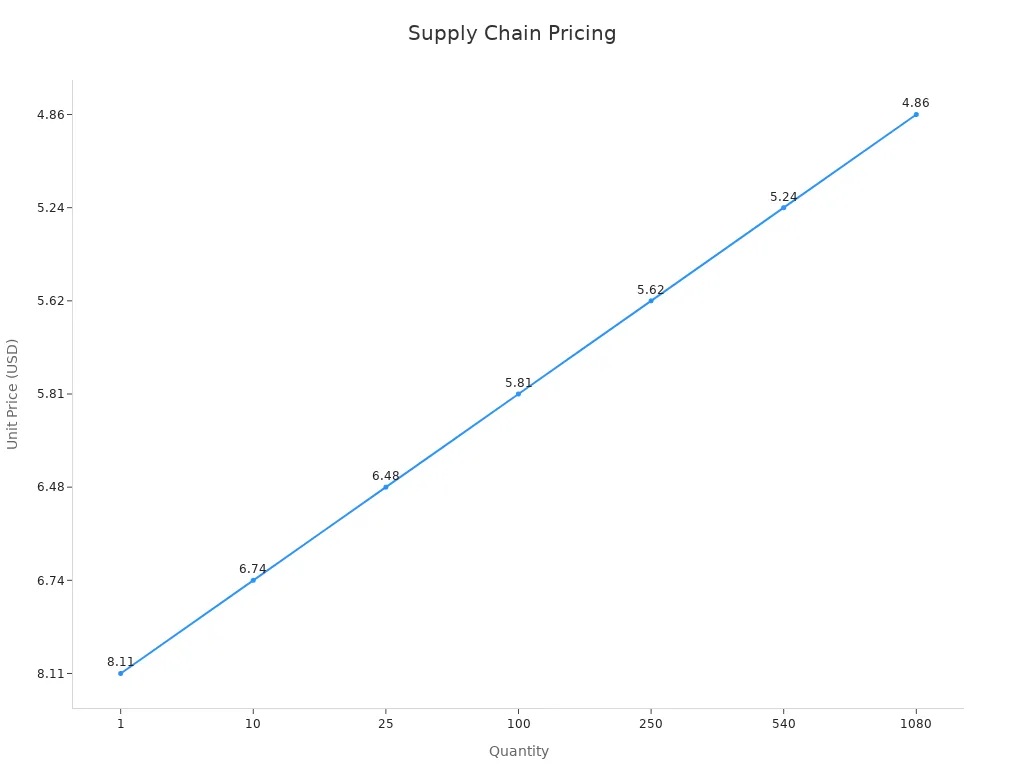
By planning your purchases and ordering in bulk, you can take advantage of these price reductions.
Technological Advancements
Advancements in technology can also influence the price of the STM32U575VGT6. As newer microcontrollers with improved features enter the market, older models may see price adjustments. However, if the STM32U575VGT6 remains in high demand due to its specific capabilities, its price might stay stable or even increase. Keeping track of technological trends can help you predict these changes.
Market Demand and Industry Trends
Market demand plays a crucial role in determining prices. When industries like automotive or IoT experience growth, the demand for microcontrollers like the STM32U575VGT6 increases. This higher demand can lead to price hikes, especially if supply cannot keep up. On the other hand, if demand slows down, prices may drop. Staying informed about industry trends can help you anticipate these shifts.
Global Economic Conditions
Global economic conditions significantly influence the price of the STM32U575VGT6. Economic trends, currency fluctuations, and inflation rates all play a role in shaping the cost of this microcontroller. Understanding these factors can help you anticipate price changes and make informed purchasing decisions.
Currency Exchange Rates
Currency exchange rates directly impact the cost of imported components. If the currency in your region weakens against the U.S. dollar, you may notice higher prices for the STM32U575VGT6. Conversely, a stronger local currency can lead to cost savings. Monitoring exchange rate trends can help you plan your purchases more effectively.
Tip: Use online tools or financial apps to track currency exchange rates. This can help you identify the best time to buy imported components.
Inflation and Manufacturing Costs
Inflation affects the cost of raw materials and labor, which in turn impacts the price of microcontrollers. For example, rising energy costs can increase manufacturing expenses, leading to higher prices for the STM32U575VGT6. Keeping an eye on global inflation trends can give you a better understanding of potential price hikes.
Trade Policies and Tariffs
Changes in trade policies or tariffs can also influence prices. For instance, if new tariffs are imposed on electronic components, you might see an increase in the cost of the STM32U575VGT6. Staying updated on trade agreements and regulations can help you prepare for such changes.
Economic Growth and Consumer Spending
Economic growth often leads to increased consumer spending, which can drive up demand for electronic devices. This higher demand can result in price increases for components like the STM32U575VGT6. On the other hand, during economic slowdowns, reduced spending may lead to lower prices.
Note: Economic conditions vary by region. Consider how local and global trends might affect your specific market.
By staying informed about global economic conditions, you can better predict price trends and plan your purchases strategically. This knowledge can help you avoid unexpected costs and secure the STM32U575VGT6 at competitive prices.
Vendor Comparison for STM32U575VGT6
When purchasing the STM32U575VGT6, comparing vendors can help you find the best deal. Vendors differ in pricing, availability, lead times, and additional benefits. Understanding these differences ensures you make an informed decision.
Pricing Across Major Vendors
Prices for the STM32U575VGT6 vary across vendors. Some offer competitive rates for small orders, while others provide better discounts for bulk purchases. For example, a vendor might charge $8.11 per unit for a single piece but reduce the price to $4.86 per unit for orders exceeding 1,000 units. Comparing these rates helps you identify the most cost-effective option for your needs.
Tip: Always check if the listed price includes additional fees like shipping or taxes. These hidden costs can impact the total price significantly.
Availability and Lead Times
Availability and lead times play a crucial role in vendor selection. Some vendors maintain a large inventory, ensuring immediate delivery. Others rely on factory orders, which can take weeks. For instance:
Availability: 1,312 units currently in stock.
Factory Lead-Time: 13 weeks for larger quantities.
If you need the STM32U575VGT6 urgently, choosing a vendor with ready stock is essential. However, if your project allows for longer timelines, you might benefit from lower prices offered by vendors with extended lead times.
Note: Lead times can fluctuate due to supply chain disruptions. Always confirm the estimated delivery date before placing an order.
Bulk Discounts and Additional Benefits
Bulk purchasing often leads to significant savings. Vendors typically offer tiered pricing, where the cost per unit decreases as the order quantity increases. For example, ordering 1,080 units might reduce the price to $4.86 per unit, compared to $6.74 per unit for a smaller order of 10 pieces.
Some vendors also provide additional benefits, such as:
Free shipping for large orders.
Extended warranties or return policies.
Access to technical support or design resources.
These perks can add value to your purchase and reduce overall costs. Always inquire about such benefits when comparing vendors.
By evaluating pricing, availability, and additional benefits, you can choose a vendor that aligns with your budget and project requirements. This approach ensures you get the STM32U575VGT6 at the best possible value.
Strategies for Cost-Effective Purchasing
Timing Your Purchase
Timing plays a crucial role in securing the best price for the STM32U575VGT6. Prices often fluctuate based on market conditions, seasonal demand, and supply chain stability. You should monitor trends and plan your purchases during periods of low demand. For example, the end of a fiscal quarter or year often sees vendors offering discounts to meet sales targets.
Tip: Subscribe to vendor newsletters or set up price alerts to stay informed about promotions and price drops.
Avoid last-minute purchases whenever possible. Urgent orders may force you to pay a premium or settle for less reliable vendors. By planning ahead, you can avoid these pitfalls and save money.
Evaluating Vendor Reliability
Choosing a reliable vendor ensures you receive quality components on time. You should research vendors thoroughly before making a purchase. Look for customer reviews, ratings, and testimonials to gauge their reputation. A vendor with a proven track record is less likely to delay shipments or provide defective products.
Create a checklist to evaluate vendors:
Do they offer clear pricing with no hidden fees?
Is their customer support responsive and helpful?
Do they provide warranties or return policies?
Note: Reliable vendors often have certifications or partnerships with manufacturers. These credentials can indicate their trustworthiness.
Leveraging Bulk Orders
Bulk purchasing is one of the most effective ways to reduce costs. Vendors typically offer tiered pricing, where the cost per unit decreases as the order quantity increases. For instance, ordering 1,000 units might save you up to 40% compared to buying smaller quantities.
If your project requires large volumes, negotiate with vendors for additional discounts or perks. Some vendors may offer free shipping, extended warranties, or even priority support for bulk orders.
Pro Tip: Collaborate with other buyers in your industry to pool orders. This strategy can help you reach higher discount tiers without overstocking.
By timing your purchases, choosing reliable vendors, and leveraging bulk orders, you can significantly reduce your costs while ensuring a smooth procurement process.
Exploring Alternative Sources
When sourcing the STM32U575VGT6, exploring alternative suppliers can help you find better prices or faster delivery. You should consider non-traditional sources, such as independent distributors, online marketplaces, or surplus inventory vendors. These options often provide flexibility and cost savings.
Independent Distributors
Independent distributors specialize in sourcing components from various manufacturers. They often have access to hard-to-find items or offer competitive pricing for bulk orders. You can benefit from their ability to negotiate directly with suppliers. However, always verify their reliability before purchasing.
Tip: Check if the distributor is certified or has partnerships with reputable manufacturers. This ensures the authenticity of the components.
Online Marketplaces
Platforms like Digi-Key, Mouser, and Arrow Electronics provide a wide range of electronic components, including the STM32U575VGT6. These marketplaces often feature user-friendly interfaces for comparing prices and availability. Some even offer real-time stock updates and lead-time estimates.
Advantages of Online Marketplaces:
Transparent pricing.
Easy access to technical specifications.
Convenient ordering process.
Note: Be cautious when buying from lesser-known marketplaces. Always read customer reviews and check return policies to avoid counterfeit products.
Surplus Inventory Vendors
Surplus inventory vendors sell excess stock from manufacturers or other businesses. These vendors often offer significant discounts, especially for older models. If your project doesn’t require the latest version of the STM32U575VGT6, this option can save you money.
| Vendor Type | Key Benefit | Potential Risk |
|---|---|---|
| Independent Distributors | Access to rare components | Higher prices for small orders |
| Online Marketplaces | Transparent pricing | Risk of counterfeit items |
| Surplus Vendors | Deep discounts | Limited warranty |
By exploring alternative sources, you can diversify your procurement strategy and reduce costs. Always evaluate the reliability of these sources to ensure you receive genuine components.
Understanding the price trends of the STM32U575VGT6 in 2025 can help you make smarter purchasing decisions. Factors like supply chain dynamics, technological advancements, and global economic conditions play a major role in price variations. Vendor differences, such as pricing tiers and lead times, also impact your buying experience.
To secure the best deal, plan your purchases strategically. Compare vendors, monitor market trends, and consider bulk orders when possible. Staying informed ensures you get the most value while avoiding unnecessary costs.
FAQ
What is the typical price range for the STM32U575VGT6 in 2025?
The price typically ranges from $4.86 to $8.11 per unit, depending on the order quantity. Bulk orders often result in significant discounts. For example, purchasing over 1,000 units can reduce the price to as low as $4.86 per unit.
How can you monitor price changes for the STM32U575VGT6?
You can subscribe to vendor newsletters or set up price alerts on platforms like Digi-Key or Mouser. These tools notify you about promotions, discounts, or price fluctuations, helping you plan your purchases effectively.
Are there risks in buying from alternative sources?
Yes, risks include counterfeit products, limited warranties, or unreliable delivery. Always verify the supplier's reputation by checking reviews, certifications, and return policies. Trusted platforms like Digi-Key or Arrow Electronics minimize these risks.
What factors influence lead times for the STM32U575VGT6?
Lead times depend on stock availability, supply chain stability, and vendor policies. Factory orders may take up to 13 weeks. Choosing vendors with ready stock ensures faster delivery.
Can you negotiate prices with vendors?
Yes, especially for bulk orders. Vendors often provide additional discounts, free shipping, or extended warranties for large purchases. Negotiating can help you secure better deals and added benefits.
Tip: Always ask vendors about tiered pricing and potential perks for bulk orders.
Specifications
- TypeParameter
- Mounting Type
The "Mounting Type" in electronic components refers to the method used to attach or connect a component to a circuit board or other substrate, such as through-hole, surface-mount, or panel mount.
Surface Mount - Package / Case
refers to the protective housing that encases an electronic component, providing mechanical support, electrical connections, and thermal management.
100-LQFP - Supplier Device Package
The parameter "Supplier Device Package" in electronic components refers to the physical packaging or housing of the component as provided by the supplier. It specifies the form factor, dimensions, and layout of the component, which are crucial for compatibility and integration into electronic circuits and systems. The supplier device package information typically includes details such as the package type (e.g., DIP, SOP, QFN), number of pins, pitch, and overall size, allowing engineers and designers to select the appropriate component for their specific application requirements. Understanding the supplier device package is essential for proper component selection, placement, and soldering during the manufacturing process to ensure optimal performance and reliability of the electronic system.
100-LQFP (14x14) - Data ConvertersA/D 20x12/14b SAR; D/A 2x12b
- Factory Pack QuantityFactory Pack Quantity540
- MfrSTMicroelectronics
- Moisture SensitiveYes
- Number of I/Os82
- PackageBulk
- Product StatusActive
- RoHSDetails
- TradenameSTM32
- Operating Temperature
The operating temperature is the range of ambient temperature within which a power supply, or any other electrical equipment, operate in. This ranges from a minimum operating temperature, to a peak or maximum operating temperature, outside which, the power supply may fail.
-40°C ~ 85°C (TA) - Packaging
Semiconductor package is a carrier / shell used to contain and cover one or more semiconductor components or integrated circuits. The material of the shell can be metal, plastic, glass or ceramic.
Tray - Series
In electronic components, the "Series" refers to a group of products that share similar characteristics, designs, or functionalities, often produced by the same manufacturer. These components within a series typically have common specifications but may vary in terms of voltage, power, or packaging to meet different application needs. The series name helps identify and differentiate between various product lines within a manufacturer's catalog.
STM32U5 - Interface
In electronic components, the term "Interface" refers to the point at which two different systems, devices, or components connect and interact with each other. It can involve physical connections such as ports, connectors, or cables, as well as communication protocols and standards that facilitate the exchange of data or signals between the connected entities. The interface serves as a bridge that enables seamless communication and interoperability between different parts of a system or between different systems altogether. Designing a reliable and efficient interface is crucial in ensuring proper functionality and performance of electronic components and systems.
CAN/LPUART/I2S/SAI/S - Oscillator Type
Wien Bridge Oscillator; RC Phase Shift Oscillator; Hartley Oscillator; Voltage Controlled Oscillator; Colpitts Oscillator; Clapp Oscillators; Crystal Oscillators; Armstrong Oscillator.
External, Internal - Speed
In electronic components, "Speed" typically refers to the rate at which data can be processed or transferred within the component. It is a measure of how quickly the component can perform its functions, such as executing instructions or transmitting signals. Speed is often specified in terms of frequency, such as clock speed in processors or data transfer rate in memory modules. Higher speed components can perform tasks more quickly, leading to improved overall performance in electronic devices. It is an important parameter to consider when designing or selecting electronic components for specific applications.
160MHz - RAM Size
RAM size refers to the amount of random access memory (RAM) available in an electronic component, such as a computer or smartphone. RAM is a type of volatile memory that stores data and instructions that are actively being used by the device's processor. The RAM size is typically measured in gigabytes (GB) and determines how much data the device can store and access quickly for processing. A larger RAM size allows for smoother multitasking, faster loading times, and better overall performance of the electronic component. It is an important factor to consider when choosing a device, especially for tasks that require a lot of memory, such as gaming, video editing, or running multiple applications simultaneously.
784K x 8 - Voltage - Supply (Vcc/Vdd)
Voltage - Supply (Vcc/Vdd) is a key parameter in electronic components that specifies the voltage level required for the proper operation of the device. It represents the power supply voltage that needs to be provided to the component for it to function correctly. This parameter is crucial as supplying the component with the correct voltage ensures that it operates within its specified limits and performance characteristics. It is typically expressed in volts (V) and is an essential consideration when designing and using electronic circuits to prevent damage and ensure reliable operation.
1.71V ~ 3.6V - Core Processor
The term "Core Processor" typically refers to the central processing unit (CPU) of a computer or electronic device. It is the primary component responsible for executing instructions, performing calculations, and managing data within the system. The core processor is often considered the brain of the device, as it controls the overall operation and functionality. It is crucial for determining the speed and performance capabilities of the device, as well as its ability to handle various tasks and applications efficiently. In modern devices, core processors can have multiple cores, allowing for parallel processing and improved multitasking capabilities.
ARM® Cortex®-M33 - Peripherals
In the context of electronic components, "Peripherals" refer to devices or components that are connected to a main system or device to enhance its functionality or provide additional features. These peripherals can include input devices such as keyboards, mice, and touchscreens, as well as output devices like monitors, printers, and speakers. Other examples of peripherals include external storage devices, network adapters, and cameras. Essentially, peripherals are external devices that expand the capabilities of a main electronic system or device.
Brown-out Detect/Reset, DMA, Motor Control PWM, POR, PWM, WDT - Program Memory Type
Program memory typically refers to flash memory when it is used to hold the program (instructions). Program memory may also refer to a hard drive or solid state drive (SSD). Contrast with data memory.
FLASH - Core Size
Core size in electronic components refers to the physical dimensions of the core material used in devices such as inductors and transformers. The core size directly impacts the performance characteristics of the component, including its inductance, saturation current, and frequency response. A larger core size typically allows for higher power handling capabilities and lower core losses, while a smaller core size may result in a more compact design but with limitations on power handling and efficiency. Designers must carefully select the core size based on the specific requirements of the application to achieve optimal performance and efficiency.
32-Bit - Program Memory Size
Program Memory Size refers to the amount of memory available in an electronic component, such as a microcontroller or microprocessor, that is used to store program instructions. This memory is non-volatile, meaning that the data stored in it is retained even when the power is turned off. The program memory size determines the maximum amount of code that can be stored and executed by the electronic component. It is an important parameter to consider when selecting a component for a specific application, as insufficient program memory size may limit the functionality or performance of the device.
1 MB - Connectivity
In electronic components, "Connectivity" refers to the ability of a component to establish and maintain connections with other components or devices within a circuit. It is a crucial parameter that determines how easily signals can be transmitted between different parts of a circuit. Connectivity can be influenced by factors such as the number of input and output ports, the type of connectors used, and the overall design of the component. Components with good connectivity are essential for ensuring reliable and efficient operation of electronic systems.
CANbus, I²C, IrDA, LINbus, MMC/SD/SDIO, SAI, SmartCard, SPDIF, SPI, UART/USART, USB, USB OTG - Data Bus Width
The data bus width in electronic components refers to the number of bits that can be transferred simultaneously between the processor and memory. It determines the amount of data that can be processed and transferred in a single operation. A wider data bus allows for faster data transfer speeds and improved overall performance of the electronic device. Common data bus widths include 8-bit, 16-bit, 32-bit, and 64-bit, with higher numbers indicating a larger capacity for data transfer. The data bus width is an important specification to consider when evaluating the speed and efficiency of a computer system or other electronic device.
32 Bit - EEPROM Size
EEPROM Size refers to the amount of memory capacity available in an Electrically Erasable Programmable Read-Only Memory (EEPROM) chip. This parameter indicates the total storage space in bytes or bits that can be used to store data in a non-volatile manner. The EEPROM size determines the maximum amount of information that can be written, read, and erased from the memory chip. It is an important specification to consider when selecting an EEPROM for a particular application, as it directly impacts the amount of data that can be stored and accessed by the electronic component.
- - Device Core
Used in casting and moulding processes to produce internal cavities and reentrant angles (an interior angle that is greater than 18°).
ARM Cortex-M33F
Datasheet PDF
- Datasheets :
 Arduino Uno R4 Minima Microcontroller: Descritpion, Features and FAQs
06 October 20238322
 AT89C51CC03: Enhanced 8-bit MCU with CAN Controller and Flash Memory
28 February 2024228
 BU406 Transistor: Equivalent, Datasheet and Pinout
15 November 202115254
 ATmega2560 Design Guide: High-Pin Count 8-bit Microcontrollers
20 January 2026503
 AT89C51 Microcontroller: Pin Description, Datasheet, Programming
18 November 202121910
 Detailed Features and Specifications of STM32F051C8T6
24 July 2025286
 STMPE811QTR Microcontroller: 6.5MHz,16-VFQFN, Pinout and Features
11 February 2022964
![STA8088EXG RF RX GALILEO 1.575GHZ 169TFBGA[FAQ]: Datasheet, Block Diagram, and Features](https://res.utmel.com/Images/Article/3fe63125-18b6-441c-8483-4490b58e8e35.jpg) STA8088EXG RF RX GALILEO 1.575GHZ 169TFBGA[FAQ]: Datasheet, Block Diagram, and Features
STA8088EXG RF RX GALILEO 1.575GHZ 169TFBGA[FAQ]: Datasheet, Block Diagram, and Features14 March 2022693
 Global Semiconductor Market Expected to Shrink by 4.1 Percent in 2023
22 February 20232375
 Vision Capabilities Are at the Heart of AI's Evolutionary Possession of Intelligence
06 July 20222208
 Intel CEO Reiterates: 2024 Will Achieve Process Leadership
05 May 20221216
 Monolithic Microwave Integrated Circuits (MMICs): Materials, Design, and Applications
23 June 20251388
 Basic Introduction to RF Connector
30 October 20257524
 Basic Introduction to Photocell
09 April 202514374
 What's the Difference Between Operational Amplifier and Comparator?
01 April 20225837
 Basic Guidelines for Mixed-Signal PCB Layout Design
15 March 20245950
STMicroelectronics
In Stock: 2160
United States
China
Canada
Japan
Russia
Germany
United Kingdom
Singapore
Italy
Hong Kong(China)
Taiwan(China)
France
Korea
Mexico
Netherlands
Malaysia
Austria
Spain
Switzerland
Poland
Thailand
Vietnam
India
United Arab Emirates
Afghanistan
Åland Islands
Albania
Algeria
American Samoa
Andorra
Angola
Anguilla
Antigua & Barbuda
Argentina
Armenia
Aruba
Australia
Azerbaijan
Bahamas
Bahrain
Bangladesh
Barbados
Belarus
Belgium
Belize
Benin
Bermuda
Bhutan
Bolivia
Bonaire, Sint Eustatius and Saba
Bosnia & Herzegovina
Botswana
Brazil
British Indian Ocean Territory
British Virgin Islands
Brunei
Bulgaria
Burkina Faso
Burundi
Cabo Verde
Cambodia
Cameroon
Cayman Islands
Central African Republic
Chad
Chile
Christmas Island
Cocos (Keeling) Islands
Colombia
Comoros
Congo
Congo (DRC)
Cook Islands
Costa Rica
Côte d’Ivoire
Croatia
Cuba
Curaçao
Cyprus
Czechia
Denmark
Djibouti
Dominica
Dominican Republic
Ecuador
Egypt
El Salvador
Equatorial Guinea
Eritrea
Estonia
Eswatini
Ethiopia
Falkland Islands
Faroe Islands
Fiji
Finland
French Guiana
French Polynesia
Gabon
Gambia
Georgia
Ghana
Gibraltar
Greece
Greenland
Grenada
Guadeloupe
Guam
Guatemala
Guernsey
Guinea
Guinea-Bissau
Guyana
Haiti
Honduras
Hungary
Iceland
Indonesia
Iran
Iraq
Ireland
Isle of Man
Israel
Jamaica
Jersey
Jordan
Kazakhstan
Kenya
Kiribati
Kosovo
Kuwait
Kyrgyzstan
Laos
Latvia
Lebanon
Lesotho
Liberia
Libya
Liechtenstein
Lithuania
Luxembourg
Macao(China)
Madagascar
Malawi
Maldives
Mali
Malta
Marshall Islands
Martinique
Mauritania
Mauritius
Mayotte
Micronesia
Moldova
Monaco
Mongolia
Montenegro
Montserrat
Morocco
Mozambique
Myanmar
Namibia
Nauru
Nepal
New Caledonia
New Zealand
Nicaragua
Niger
Nigeria
Niue
Norfolk Island
North Korea
North Macedonia
Northern Mariana Islands
Norway
Oman
Pakistan
Palau
Palestinian Authority
Panama
Papua New Guinea
Paraguay
Peru
Philippines
Pitcairn Islands
Portugal
Puerto Rico
Qatar
Réunion
Romania
Rwanda
Samoa
San Marino
São Tomé & Príncipe
Saudi Arabia
Senegal
Serbia
Seychelles
Sierra Leone
Sint Maarten
Slovakia
Slovenia
Solomon Islands
Somalia
South Africa
South Sudan
Sri Lanka
St Helena, Ascension, Tristan da Cunha
St. Barthélemy
St. Kitts & Nevis
St. Lucia
St. Martin
St. Pierre & Miquelon
St. Vincent & Grenadines
Sudan
Suriname
Svalbard & Jan Mayen
Sweden
Syria
Tajikistan
Tanzania
Timor-Leste
Togo
Tokelau
Tonga
Trinidad & Tobago
Tunisia
Turkey
Turkmenistan
Turks & Caicos Islands
Tuvalu
U.S. Outlying Islands
U.S. Virgin Islands
Uganda
Ukraine
Uruguay
Uzbekistan
Vanuatu
Vatican City
Venezuela
Wallis & Futuna
Yemen
Zambia
Zimbabwe
![STM32F103RBT6]() STM32F103RBT6
STM32F103RBT6STMicroelectronics
![STM32F103ZET6]() STM32F103ZET6
STM32F103ZET6STMicroelectronics
![STM32H743IIT6]() STM32H743IIT6
STM32H743IIT6STMicroelectronics
![STM32F407VET6]() STM32F407VET6
STM32F407VET6STMicroelectronics
![STM32F405RGT6]() STM32F405RGT6
STM32F405RGT6STMicroelectronics
![STM32F030C8T6]() STM32F030C8T6
STM32F030C8T6STMicroelectronics
![STM32F100C8T6B]() STM32F100C8T6B
STM32F100C8T6BSTMicroelectronics
![STM32F103VBT6]() STM32F103VBT6
STM32F103VBT6STMicroelectronics
![STM8S003F3U6TR]() STM8S003F3U6TR
STM8S003F3U6TRSTMicroelectronics
![STM32F429ZIT6]() STM32F429ZIT6
STM32F429ZIT6STMicroelectronics


