

 Product
 Brand
Brand Articles
 Tools
Tools
SX1509 Shifting GPIO: Datasheet, Pinout and Applications

28 Termination 0.4mm I/O Expander SX150 28 Pin 3.3V 28-UFQFN Exposed Pad
Unit Price: $3.716086
Ext Price: $3.72


28 Termination 0.4mm I/O Expander SX150 28 Pin 3.3V 28-UFQFN Exposed Pad
SX1509 is the world’s lowest voltage level shifting GPIO with a led driver and keypad engine. This article enforces datasheet, pinout, applications, and other details about SX1509.

SX1509 GPIO Expander on Dragonboard 410c
SX1509 Pinout
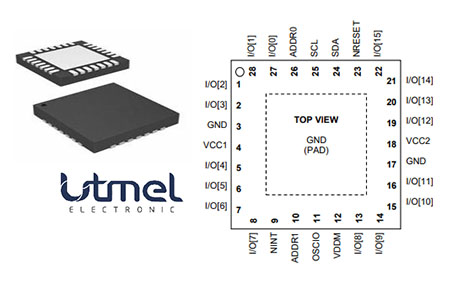
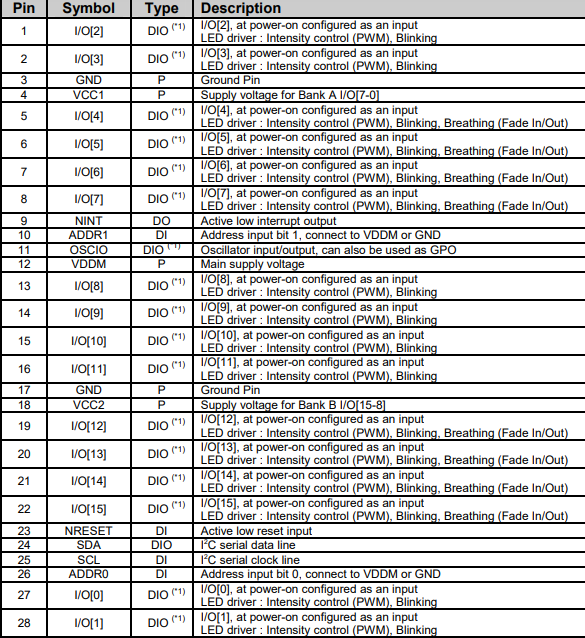
SX1509 CAD Model
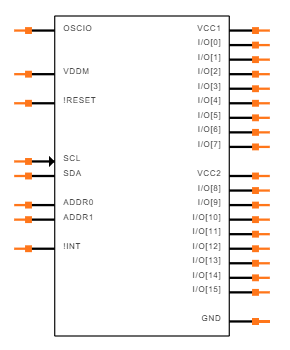
Symbol
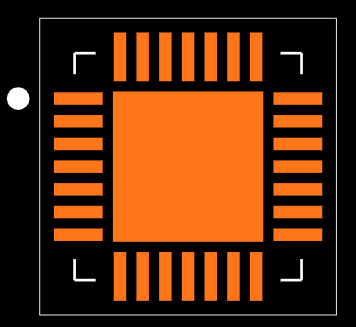
Footprint
3D Model
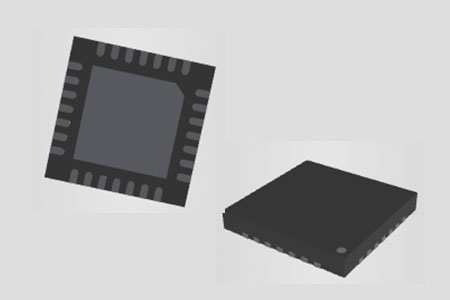
SX1509 Description
The SX1509 is complete with an ultra-low voltage General Purpose parallels Input/Output (GPIO) expanders ideal for low power handheld battery-powered equipment. This device can also act as a level shifter to connect a microcontroller running at one voltage level to a component running at a different voltage level, thus eliminating the need for extra level translating circuits.
Specifications
- TypeParameter
- Factory Lead Time16 Weeks
- Mount
In electronic components, the term "Mount" typically refers to the method or process of physically attaching or fixing a component onto a circuit board or other electronic device. This can involve soldering, adhesive bonding, or other techniques to secure the component in place. The mounting process is crucial for ensuring proper electrical connections and mechanical stability within the electronic system. Different components may have specific mounting requirements based on their size, shape, and function, and manufacturers provide guidelines for proper mounting procedures to ensure optimal performance and reliability of the electronic device.
Surface Mount - Mounting Type
The "Mounting Type" in electronic components refers to the method used to attach or connect a component to a circuit board or other substrate, such as through-hole, surface-mount, or panel mount.
Surface Mount - Package / Case
refers to the protective housing that encases an electronic component, providing mechanical support, electrical connections, and thermal management.
28-UFQFN Exposed Pad - Number of Pins28
- Number of I/Os16
- Operating Temperature
The operating temperature is the range of ambient temperature within which a power supply, or any other electrical equipment, operate in. This ranges from a minimum operating temperature, to a peak or maximum operating temperature, outside which, the power supply may fail.
-40°C~85°C - Packaging
Semiconductor package is a carrier / shell used to contain and cover one or more semiconductor components or integrated circuits. The material of the shell can be metal, plastic, glass or ceramic.
Tape & Reel (TR) - Published2009
- Pbfree Code
The "Pbfree Code" parameter in electronic components refers to the code or marking used to indicate that the component is lead-free. Lead (Pb) is a toxic substance that has been widely used in electronic components for many years, but due to environmental concerns, there has been a shift towards lead-free alternatives. The Pbfree Code helps manufacturers and users easily identify components that do not contain lead, ensuring compliance with regulations and promoting environmentally friendly practices. It is important to pay attention to the Pbfree Code when selecting electronic components to ensure they meet the necessary requirements for lead-free applications.
yes - Part Status
Parts can have many statuses as they progress through the configuration, analysis, review, and approval stages.
Active - Moisture Sensitivity Level (MSL)
Moisture Sensitivity Level (MSL) is a standardized rating that indicates the susceptibility of electronic components, particularly semiconductors, to moisture-induced damage during storage and the soldering process, defining the allowable exposure time to ambient conditions before they require special handling or baking to prevent failures
1 (Unlimited) - Number of Terminations28
- HTS Code
HTS (Harmonized Tariff Schedule) codes are product classification codes between 8-1 digits. The first six digits are an HS code, and the countries of import assign the subsequent digits to provide additional classification. U.S. HTS codes are 1 digits and are administered by the U.S. International Trade Commission.
8542.39.00.01 - Voltage - Supply
Voltage - Supply refers to the range of voltage levels that an electronic component or circuit is designed to operate with. It indicates the minimum and maximum supply voltage that can be applied for the device to function properly. Providing supply voltages outside this range can lead to malfunction, damage, or reduced performance. This parameter is critical for ensuring compatibility between different components in a circuit.
1.425V~3.6V - Terminal Position
In electronic components, the term "Terminal Position" refers to the physical location of the connection points on the component where external electrical connections can be made. These connection points, known as terminals, are typically used to attach wires, leads, or other components to the main body of the electronic component. The terminal position is important for ensuring proper connectivity and functionality of the component within a circuit. It is often specified in technical datasheets or component specifications to help designers and engineers understand how to properly integrate the component into their circuit designs.
QUAD - Number of Functions1
- Supply Voltage
Supply voltage refers to the electrical potential difference provided to an electronic component or circuit. It is crucial for the proper operation of devices, as it powers their functions and determines performance characteristics. The supply voltage must be within specified limits to ensure reliability and prevent damage to components. Different electronic devices have specific supply voltage requirements, which can vary widely depending on their design and intended application.
3.3V - Terminal Pitch
The center distance from one pole to the next.
0.4mm - Base Part Number
The "Base Part Number" (BPN) in electronic components serves a similar purpose to the "Base Product Number." It refers to the primary identifier for a component that captures the essential characteristics shared by a group of similar components. The BPN provides a fundamental way to reference a family or series of components without specifying all the variations and specific details.
SX150 - Pin Count
a count of all of the component leads (or pins)
28 - Output Type
The "Output Type" parameter in electronic components refers to the type of signal or data that is produced by the component as an output. This parameter specifies the nature of the output signal, such as analog or digital, and can also include details about the voltage levels, current levels, frequency, and other characteristics of the output signal. Understanding the output type of a component is crucial for ensuring compatibility with other components in a circuit or system, as well as for determining how the output signal can be utilized or processed further. In summary, the output type parameter provides essential information about the nature of the signal that is generated by the electronic component as its output.
Open Drain, Push-Pull - Interface
In electronic components, the term "Interface" refers to the point at which two different systems, devices, or components connect and interact with each other. It can involve physical connections such as ports, connectors, or cables, as well as communication protocols and standards that facilitate the exchange of data or signals between the connected entities. The interface serves as a bridge that enables seamless communication and interoperability between different parts of a system or between different systems altogether. Designing a reliable and efficient interface is crucial in ensuring proper functionality and performance of electronic components and systems.
I2C - Clock Frequency
Clock frequency, also known as clock speed, refers to the rate at which a processor or electronic component can execute instructions. It is measured in hertz (Hz) and represents the number of cycles per second that the component can perform. A higher clock frequency typically indicates a faster processing speed and better performance. However, it is important to note that other factors such as architecture, efficiency, and workload also play a significant role in determining the overall performance of a component. In summary, clock frequency is a crucial parameter that influences the speed and efficiency of electronic components in processing data and executing tasks.
400kHz - Telecom IC Type
Telecom IC Type refers to integrated circuits specifically designed for telecommunications applications. These components facilitate various functions such as signal processing, data modulation and demodulation, and communication protocol handling. They can be used in devices like mobile phones, modems, and network equipment, ensuring reliable data transmission and reception. Telecom ICs support different standards and technologies, making them essential for modern communication systems.
TELECOM CIRCUIT - Interrupt Output
In electronic components, "Interrupt Output" refers to a feature that allows a device to signal the occurrence of a specific event or condition that requires immediate attention from the system or user. When the specified event occurs, the interrupt output generates a signal to pause the normal operation of the device and divert the attention to handle the urgent task. This feature is commonly used in microcontrollers, processors, and other integrated circuits to efficiently manage tasks and prioritize critical operations. By utilizing interrupt outputs, electronic systems can respond promptly to important events, improve overall performance, and enhance real-time responsiveness.
Yes - Current - Output Source/Sink
The parameter "Current - Output Source/Sink" in electronic components refers to the maximum amount of current that the component can either source (provide) or sink (absorb) at its output pin. This parameter is crucial in determining the capability of the component to drive external loads such as other components or devices. The source current indicates the maximum current that the component can supply to the load, while the sink current indicates the maximum current that the component can draw from the load. Understanding this parameter is essential for designing circuits that require specific current-handling capabilities to ensure proper functionality and reliability.
8mA 15mA - Features
In the context of electronic components, the term "Features" typically refers to the specific characteristics or functionalities that a particular component offers. These features can vary depending on the type of component and its intended use. For example, a microcontroller may have features such as built-in memory, analog-to-digital converters, and communication interfaces like UART or SPI.When evaluating electronic components, understanding their features is crucial in determining whether they meet the requirements of a particular project or application. Engineers and designers often look at features such as operating voltage, speed, power consumption, and communication protocols to ensure compatibility and optimal performance.In summary, the "Features" parameter in electronic components describes the unique attributes and capabilities that differentiate one component from another, helping users make informed decisions when selecting components for their electronic designs.
Keypad Controller, LED Output, POR - Length4mm
- Height Seated (Max)
Height Seated (Max) is a parameter in electronic components that refers to the maximum allowable height of the component when it is properly seated or installed on a circuit board or within an enclosure. This specification is crucial for ensuring proper fit and alignment within the overall system design. Exceeding the maximum seated height can lead to mechanical interference, electrical shorts, or other issues that may impact the performance and reliability of the electronic device. Manufacturers provide this information to help designers and engineers select components that will fit within the designated space and function correctly in the intended application.
0.6mm - Width4mm
- Radiation Hardening
Radiation hardening is the process of making electronic components and circuits resistant to damage or malfunction caused by high levels of ionizing radiation, especially for environments in outer space (especially beyond the low Earth orbit), around nuclear reactors and particle accelerators, or during nuclear accidents or nuclear warfare.
No - RoHS Status
RoHS means “Restriction of Certain Hazardous Substances” in the “Hazardous Substances Directive” in electrical and electronic equipment.
RoHS Compliant - Lead Free
Lead Free is a term used to describe electronic components that do not contain lead as part of their composition. Lead is a toxic material that can have harmful effects on human health and the environment, so the electronics industry has been moving towards lead-free components to reduce these risks. Lead-free components are typically made using alternative materials such as silver, copper, and tin. Manufacturers must comply with regulations such as the Restriction of Hazardous Substances (RoHS) directive to ensure that their products are lead-free and environmentally friendly.
Lead Free
SX1509 Features
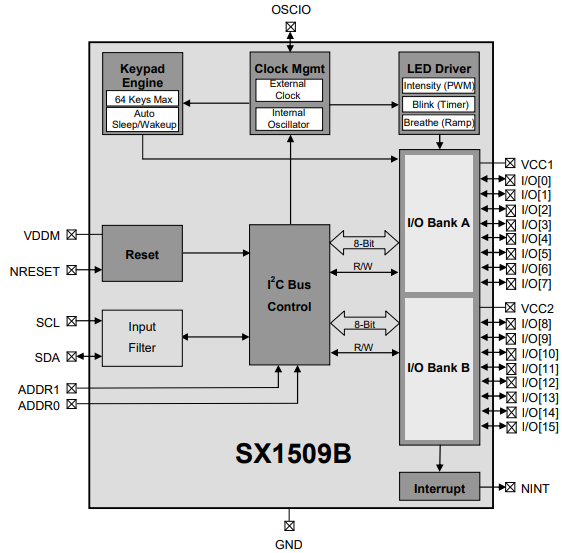
• 1.2V to 3.6V Low Operating Voltage with Dual Independent I/O Rails (VCC1, VCC2)
Enable Direct Level Shifting Between I/O Banks and Host Controller
• 5.5V Tolerant I/Os, Up to 15mA Output Sink on All I/Os (No Total Sink Current Limit)
• Integrated LED Driver for Enhanced Lighting
Intensity Control (256-step PWM)
Blink Control (224 On/Off values)
Breathing Control (224 Fade In/Out values)
• On-Chip Keypad Scanning Engine
Support Up to 8x8 Matrix (64 Keys)
Configurable Input Debouncer
• 8/16 Channels of True Bi-directional Style I/O
Programmable Pull-up/Pull-down
Push/Pull or Open-drain outputs
Programmable Polarity
• Open Drain Active Low Interrupt Output (NINT)
Bit Maskable
Programmable Edge Sensitivity
• Built-in Clock Management (Internal 2MHz Oscillator/External Clock Input, 7 clock values)
OSCIO can be Configured as GPO
• 400kHz I2C Compatible Slave Interface
• 4 User-Selectable I²C Slave Addresses
• Power-On Reset and Reset Input (NRESET)
• Ultra Low Current Consumption: 1uA Typ
• -40°C to +85°C Operating Temperature Range
• Up to 2kV HBM ESD Protection
• Small Footprint Packages
• Pb & Halogen Free, RoHS/WEEE compliant
SX1509 Block Diagram
SX1509 Applications
• Cell phones, PDAs, MP3 players
• Digital camera, Notebooks, GPS Units
• Any battery-powered equipment
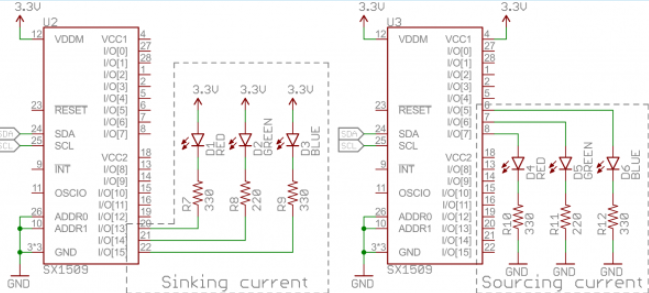
SX1509 Circuit
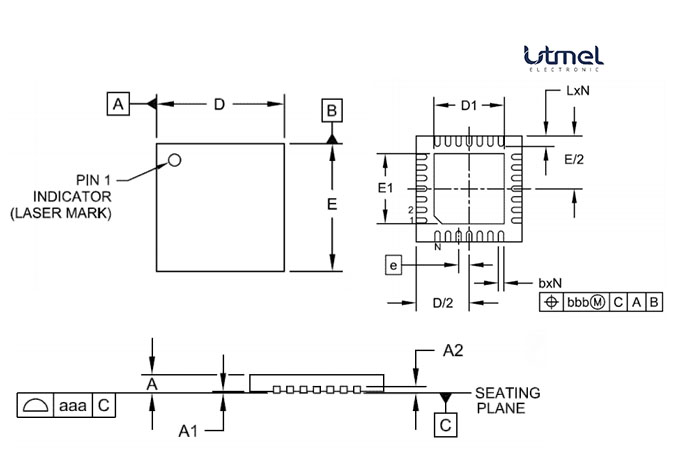
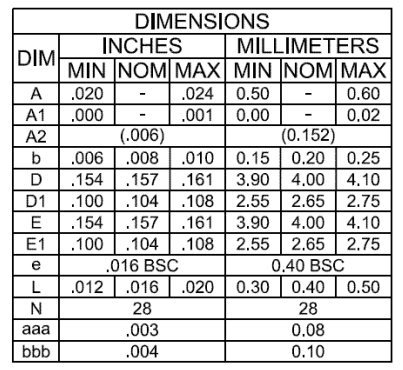
SX1509 Dimension
SX1509 Manufacturer
Semtech Corporation is a leading supplier of high-performance analog and mixed-signal semiconductor platforms and advanced algorithms. We are dedicated to providing proprietary platforms, differentiated by innovation, size, efficiency, performance, and reach. Our solutions are used in some of the most innovative systems and products in the fastest-growing markets today. These markets include Smartphones, LCD TVs, notebooks, tablets, smart grid, automotive, automatic meter reading, medical, wireless infrastructure, PON, Internet of Things, optical transport, and datacenters.
Trend Analysis
Datasheet PDF
- Datasheets :
- PCN Packaging :
What is SX1509?
The SX1509 is a 16-channel GPIO expander with an I2C interface -- that means with just two wires, your microcontroller can interface with 16 fully configurable digital input/output pins. And, with a built-in keypad engine, it can interface with up to 64 buttons set up in an 8x8 matrix.
What is SX1509 used for?
The SX1509 Breakout is a 16-channel GPIO expander with an I2C interface – that means with just two wires, your microcontroller can interface with 16 fully configurable digital input/output pins. But the SX1509 can do so much more than just simple digital pin control. It can produce PWM signals, so you can dim LEDs.
How does SX1509 work?
The SX1509 Breakout is a 16-channel GPIO expander with an I2C interface – that means with just two wires, your microcontroller can interface with 16 fully configurable digital input/output pins. But the SX1509 can do so much more than just simple digital pin control. It can produce PWM signals, so you can dim LEDs.
 BC639 NPN Transistor: Pinout, Datasheet, and Equivalents
02 September 20214246
 MC1488 Line Driver: Pinout, Equivalent and Datasheet
04 November 20212475
 AO3400A 30V N-Channel MOSFET, 5.7A SOT23-3L and AO3400A Equivalents
24 February 202213113
 6N138 Optocouplers: Features, Pinout, and Datasheet
15 December 20216556
 STM8L052C6T6 Features, Specifications and Applications
24 July 2025244
 Mastering Multi-Rail Power Monitoring with the INA3221: A Technical Deep Dive
06 February 2026406
 LM2904N Operational Amplifier: Datasheet, Pinout, and Circuit
26 August 20215364
 BF494 Transistor: Circuits, Pinout, and Datasheet
30 December 202112093
 Huawei Responded How to Solve the Problem of Chip Supply
29 March 20224164
 What are the Testing Method and Types of Transistors?
21 October 202514529
 What is a MOSFET?
16 April 20217389
 Amorphous Silicon Solar Cells: Features, Structure and Applications
22 August 20226610
 The Role of SiC in Extended Space Missions
20 September 20242431
 What are Graphene Transistors?
21 October 20259985
 What is a Ground Fault Circuit Interrupter?
27 March 20255581
 50 Frequently Asked Questions about Oscilloscope
22 November 202113256
Semtech Corporation
In Stock: 5
Minimum: 1 Multiples: 1
Qty
Unit Price
Ext Price
1
$3.716086
$3.72
10
$3.505742
$35.06
100
$3.307304
$330.73
500
$3.120098
$1,560.05
1000
$2.943488
$2,943.49
Not the price you want? Send RFQ Now and we'll contact you ASAP.
Inquire for More Quantity
![SX1503I091TRT]() SX1503I091TRT
SX1503I091TRTSemtech Corporation
![SX1502I087TRT]() SX1502I087TRT
SX1502I087TRTSemtech Corporation
![SX1508BIULTRT]() SX1508BIULTRT
SX1508BIULTRTSemtech Corporation
![SX1508QBIULTRT]() SX1508QBIULTRT
SX1508QBIULTRTSemtech Corporation
![SX1509QBIULTRT]() SX1509QBIULTRT
SX1509QBIULTRTSemtech Corporation
![SX1505I087TRT]() SX1505I087TRT
SX1505I087TRTSemtech Corporation
![SX1501I087TRT]() SX1501I087TRT
SX1501I087TRTSemtech Corporation
![SX1506I091TRT]() SX1506I091TRT
SX1506I091TRTSemtech Corporation
![SX1511BIULTRT]() SX1511BIULTRT
SX1511BIULTRTSemtech Corporation

