

 Product
 Brand
Brand Articles
 Tools
Tools
TDK C3216X5R1E476M160AC: 47µF MLCC Capacitor Review & Comparison

C 47μF Ceramic Capacitor ±20% X5R 0.126Lx0.063W 3.20mmx1.60mm -55°C~85°C Surface Mount, MLCC 1206 (3216 Metric)
Unit Price: $0.563924
Ext Price: $0.56


C 47μF Ceramic Capacitor ±20% X5R 0.126Lx0.063W 3.20mmx1.60mm -55°C~85°C Surface Mount, MLCC 1206 (3216 Metric)
TDK C3216X5R1E476M160AC offers high capacitance, reliability, and short lead times, making it a top MLCC choice for power and automotive designs in 2025.
Product Introduction
Engineers often select the tdk c3216x5r1e476m160ac over other capacitors in 2025 for its strong balance of capacitance and voltage within a compact 1206 (3216 metric) footprint. This tdk component stands out with its 47 µF/25 V rating and X5R dielectric, offering high reliability for demanding designs. Procurement specialists recognize the tdk c3216x5r1e476m160ac as an efficient choice for commercial and power supply applications, where space and performance matter most.
Comparison Criteria
When engineers and procurement specialists compare multilayer ceramic capacitors, they focus on several key factors. These criteria help them select the right components for their designs and ensure reliable performance in demanding applications.
Capacitance & Voltage
Capacitance and voltage ratings define the core function of capacitors. The TDK C3216X5R1E476M160AC offers 47 μF at 25 V, which stands out among similar 1206-sized MLCCs. For comparison, a 100v-rated MLCC such as the TDK C3216X7R2A105K provides only 1μF at 100v. The table below highlights these differences:
| Specification | TDK C3216X5R1E476M160AC | TDK C3216X7R2A105K | KEMET C321C473K5R5TA |
|---|---|---|---|
| Capacitance | 47 μF | 1 μF | 0.047 μF (47 nF) |
| Voltage Rating | 25 V | 100 V | 50 V |
| Dielectric | X5R | X7R | X7R |
| Package Size | 1206 (3216 metric) | 1206 | Radial |
| Tolerance | ±20% | 10% | 10% |
| Max Operating Temp | 85°C | 125°C | 125°C |
Size & Package
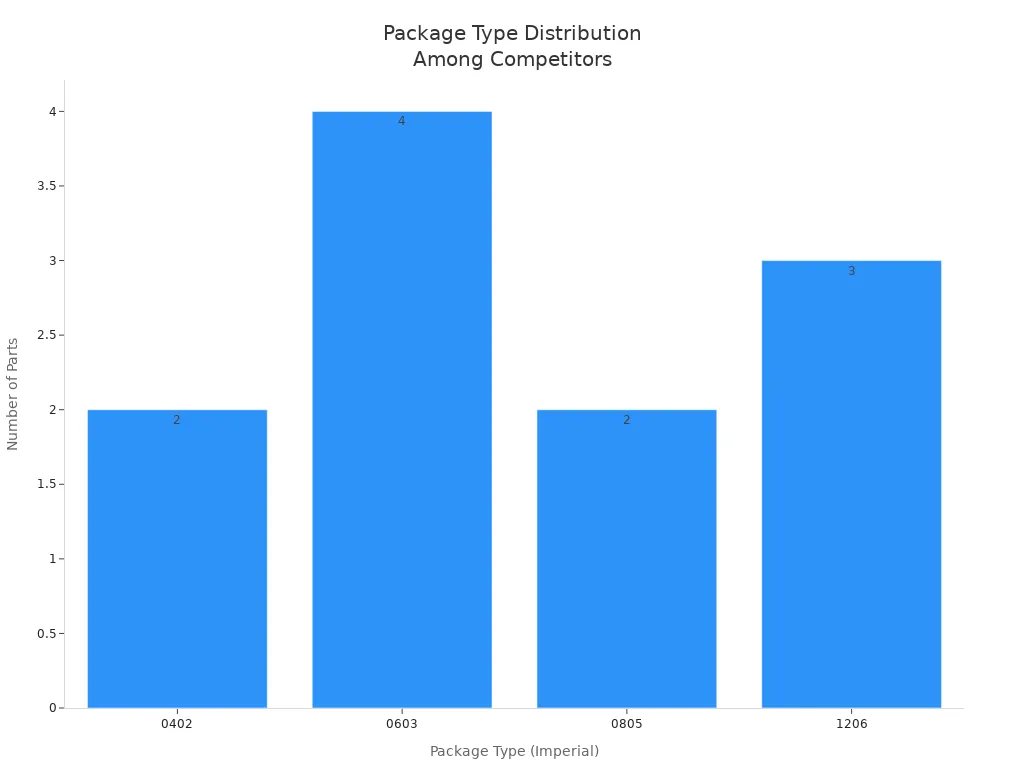
Physical size and package type affect board layout and future-proofing. The TDK C3216X5R1E476M160AC uses a 1206 (3216 metric) package, measuring 3.20 mm by 1.60 mm. This size balances high capacitance with compact design. The chart below shows the distribution of package types among leading MLCCs:
Reliability
Reliability remains a top concern. Engineers look for capacitors that maintain performance over time and under stress. The TDK C3216X5R1E476M160AC operates reliably from -55°C to +85°C. Its low ESR supports stable operation in power supply circuits and high-frequency environments.
Cost
Cost influences every procurement decision. Teams consider not only unit price but also total cost of ownership. They weigh return on investment, especially when capital budgets are tight or supply chain risks increase.
Application Fit
Application-specific requirements guide final selection. The TDK C3216X5R1E476M160AC suits mobile devices, automotive systems, and telecommunications equipment. Its RoHS compliance and stable performance under varying conditions make it a strong choice for decoupling, filtering, and noise suppression.
Tip: Always check for supply chain stability and lead times when selecting MLCCs, as availability can shift quickly.
Engineers and buyers also consider environmental compliance, alternative technologies, and supply chain risks when comparing 100v MLCCs and other components.
tdk c3216x5r1e476m160ac vs Other Capacitors
Electrical Performance
The TDK C3216X5R1E476M160AC delivers strong electrical performance in a compact package. Engineers often compare this part to 100v-rated mlccs and find that it offers much higher capacitance in the same 1206 size. For example, while a 100v MLCC may only provide 1μf, the TDK C3216X5R1E476M160AC achieves 47 μF at 25 V. This high capacitance supports stable voltage levels in power supply circuits and decoupling applications. The X5R dielectric and monolithic structure help maintain consistent performance across a wide range of frequencies. Many designers choose this part when they need more than 1μf but cannot increase board size.
Stability
Stability remains a key factor for engineers selecting capacitors. The TDK C3216X5R1E476M160AC uses an X5R dielectric, which provides reliable performance from -55°C to +85°C. This temperature range covers most commercial and industrial environments. The capacitance value remains stable under normal operating conditions, although some drop may occur at higher temperatures or voltages. In comparison, some multilayer ceramic capacitors with X7R dielectric offer better temperature stability but often at lower capacitance values in the same size. The TDK part strikes a balance between stability and high capacitance, making it suitable for many modern designs.
Note: For applications that demand the tightest tolerance, engineers may still prefer X7R or C0G dielectrics, but these options rarely reach the high capacitance levels found in X5R types.
ESR & ESL
Engineers evaluate ESR (Equivalent Series Resistance) and ESL (Equivalent Series Inductance) to ensure capacitors perform well in high-frequency circuits. The TDK C3216X5R1E476M160AC features low ESR and ESL due to its monolithic construction and optimized internal electrode design. Low ESR reduces heat generation and power loss, while low ESL improves filtering at high frequencies. In comparison, a typical 1μf MLCC may also offer low ESR, but it cannot match the high capacitance of the TDK part. The combination of low ESR, low ESL, and high capacitance in a 1206 package sets this component apart from many alternatives.
Engineers often select the TDK C3216X5R1E476M160AC for circuits where both high capacitance and low impedance matter.
The part performs well in power supply input filtering, output smoothing, and noise suppression.
Reliability & tdk Quality
Endurance
TDK stands out in the capacitor industry for its focus on endurance and mechanical strength. The C3216X5R1E476M160AC passes strict endurance tests that simulate real-world stress. Engineers often select this part because it meets aec-q200 standards. These tests include temperature cycling, vibration, and humidity exposure. The capacitor maintains stable performance after thousands of cycles. TDK uses advanced ceramic materials and a robust monolithic structure. This design helps the part resist cracking and failure during board assembly or thermal shock. Many engineers trust this capacitor for automotive and industrial designs that demand high reliability qualified components.
Note: AEC-Q200 certification means the part can handle harsh automotive environments without losing performance.
Failure Rates
Manufacturers track failure rates to ensure product quality. TDK reports very low failure rates for the C3216X5R1E476M160AC. The company uses automated inspection and strict process controls. These steps help catch defects before shipping. When compared to other leading brands, TDK often shows better consistency in quality. The aec-q200 qualification further reduces the risk of early-life failures. Procurement teams value this track record. They know that using TDK parts can lower warranty claims and field returns. The focus on quality assurance makes TDK a preferred choice for critical applications.
Value & Cost
Pricing
TDK positions the C3216X5R1E476M160AC as a cost-effective solution in the high-capacitance MLCC market. Many distributors list this part at a unit price between $0.18 and $0.30 for standard reel quantities in 2025. This price sits in the mid-range for 1206-sized, 47 μF, 25 V MLCCs. Some competitors, such as Murata and Samsung, offer similar parts at slightly lower prices, but these often come with trade-offs in lead time or reliability.
| Manufacturer | Part Number | Capacitance | Voltage | Unit Price (USD) | Lead Time (weeks) |
|---|---|---|---|---|---|
| TDK | C3216X5R1E476M160AC | 47 μF | 25 V | $0.22 | 8 |
| Murata | GRM31CR61E476ME15L | 47 μF | 25 V | $0.19 | 12 |
| Samsung | CL31A476MPHNNNE | 47 μF | 25 V | $0.18 | 14 |
Note: Prices may vary based on order volume and distributor agreements.
Ownership Cost
Engineers and procurement teams look beyond unit price. They consider the total cost of ownership, which includes reliability, warranty risk, and supply chain stability. TDK’s strong quality control reduces the risk of early failures. This reliability can lower long-term costs by minimizing field returns and warranty claims.
Shorter lead times also help manufacturers avoid costly production delays. In 2025, TDK maintains a stable supply chain for the C3216X5R1E476M160AC. Many buyers report consistent availability, even during periods of high demand. This stability gives TDK an advantage over some competitors who struggle with longer lead times or allocation issues.
TDK’s robust global distribution network supports fast delivery.
Reliable performance reduces the need for costly rework or replacements.
Tip: When evaluating MLCCs, always factor in both upfront price and long-term reliability. A slightly higher unit cost can deliver greater value over the product’s lifecycle.
Application Suitability
Power Supply
The TDK C3216X5R1E476M160AC performs exceptionally well in power supply circuits. Engineers often select this capacitor for input and output decoupling. Its 47 µF capacitance and 25V rating support stable voltage levels in demanding environments. The low ESR and ESL values help reduce self-heating and allow the capacitor to handle high ripple currents. Devices such as servers, PCs, and tablets benefit from this stability. The compact 1206 package saves board space, making it ideal for modern, high-density designs. Many power supply applications require reliable filtering, and this MLCC delivers consistent performance across a wide frequency range.
automotive
Automotive engineers trust the TDK C3216X5R1E476M160AC for critical circuits. The capacitor meets aec-q200 standards, which ensures it can withstand harsh conditions found in vehicles. Its monolithic multilayer structure provides high mechanical strength, reducing the risk of failure during vibration or thermal cycling. Automotive applications often demand components that maintain performance under temperature extremes. This MLCC keeps its capacitance stable from -55°C to +85°C, supporting reliable operation in engine control units, infotainment systems, and advanced driver-assistance modules. The 1206 size fits well in compact automotive designs, where space and reliability are both essential.
Note: Automotive systems require components that resist cracking and maintain electrical integrity over time. The TDK C3216X5R1E476M160AC addresses these needs with proven durability.
Consumer Devices
Consumer electronics manufacturers rely on this capacitor for smartphones, tablets, and wearable devices. The high capacitance in a small footprint allows designers to build thinner, lighter products without sacrificing performance. The capacitor’s low ESR and ESL help filter noise and smooth voltage fluctuations, which improves device stability. Many consumer devices operate in environments where voltage spikes or drops can occur. The TDK C3216X5R1E476M160AC protects sensitive circuits and extends product life. Its versatility also makes it suitable for telecommunications and general electronic applications, where mid-voltage and high-capacitance needs are common. While some designs may require a 100v rating, most consumer and automotive applications find the 25V rating sufficient.
c series mlccs Technology
High Capacitance
TDK’s c series mlccs use advanced ceramic dielectric thin-layer and multi-layering technologies. These innovations reduce the gaps between ceramic layers by about 40% compared to earlier products. Engineers can now achieve much higher capacitance in the same or even smaller package sizes. For example:
The C series MLCCs reach 1 μF at 100 V in the compact 1608 size, which is ten times the capacitance of older products in that size.
Optimized sintering conditions help maintain reliability while increasing capacitance.
The result is components that are about 50% smaller but deliver the same capacitance as previous models.
This approach allows designers to use fewer capacitors and reduce the mounting area on circuit boards. It supports the trend toward miniaturization and helps lower the total component count in electronic devices.
Compact Design
The TDK C3216X5R1E476M160AC stands out for its compact surface-mount design. Its small form factor as a 1206 SMD allows it to occupy minimal space on circuit boards. Circuit designers benefit from this by creating high-density layouts and supporting the miniaturization of modern electronics. The compact design makes it easier to integrate into complex circuits where space is limited.
Despite the release of newer MLCCs in 2025, such as the C1608X7R2A105K080AC with higher voltage ratings and smaller sizes, the C3216X5R1E476M160AC remains competitive. Its monolithic structure provides strong mechanical strength and high reliability. It offers low ESR and ESL, which means stable performance and low self-heating. While newer models focus on advanced needs like 48-V systems and further miniaturization, the C3216X5R1E476M160AC continues to deliver proven reliability and stable capacitance for a wide range of general-purpose applications.
User & Industry Feedback
Engineer Insights
Engineers often praise the TDK C3216X5R1E476M160AC for its consistent performance in demanding circuits. Many report that this MLCC maintains stable capacitance even under high ripple currents. They highlight the low ESR and ESL as key advantages in power supply and decoupling applications. Some engineers note that the compact 1206 size allows for flexible board layouts without sacrificing capacitance.
"The C3216X5R1E476M160AC gives us the reliability we need for automotive and industrial designs," says one senior hardware engineer. "We rarely see failures, even after extended thermal cycling."
Engineers also appreciate the AEC-Q200 qualification. This certification assures them that the capacitor can handle harsh environments. In comparison tests, many engineers find that TDK's part outperforms lower-cost alternatives in both endurance and electrical stability. They often choose this MLCC when project timelines demand proven, off-the-shelf solutions.
Procurement Views
Procurement specialists value the TDK C3216X5R1E476M160AC for its supply chain reliability. They report that TDK maintains steady inventory levels, even during periods of high demand. This stability helps manufacturers avoid costly production delays.
A typical feedback summary from procurement teams includes:
Consistent lead times, usually shorter than competitors.
Minimal field returns due to high part quality.
Competitive pricing for the performance offered.
Note: Many buyers mention that TDK’s global distribution network simplifies sourcing, especially for large-scale projects.
Procurement professionals also point out that the total cost of ownership remains low. They see fewer warranty claims and less need for rework. These factors make the C3216X5R1E476M160AC a preferred choice for companies that prioritize both quality and operational efficiency.
Comparison Table
At-a-Glance
Selecting the right MLCC often depends on a quick comparison of key features. The table below shows how the TDK C3216X5R1E476M160AC stacks up against a leading competitor, the Samsung CL31A476MQHNNNE. This summary helps engineers and procurement teams make informed decisions at a glance.
| Feature | TDK C3216X5R1E476M160AC | Samsung CL31A476MQHNNNE |
|---|---|---|
| Rated Voltage | 25V | 6.3V |
| Capacitance | 47µF | 47µF |
| Tolerance | ±20% | ±20% |
| Operating Temperature | -55°C to 85°C | -55°C to 85°C |
| Thickness (Max) | 1.8mm | 1.6mm |
| Factory Lead Time | 12 weeks | 22 weeks |
| Packaging | Cut Tape | Tape & Reel |
| RoHS3 Compliant | Yes | Yes |
| Non-Polarized | Yes | Yes |
| Mechanical Strength | High | Standard |
Note: The TDK C3216X5R1E476M160AC offers a higher voltage rating and shorter lead time. These features support faster production schedules and broader application use. The Samsung part provides a thinner profile, which may suit ultra-compact designs.
The TDK capacitor stands out for its robust monolithic multilayer ceramic structure. This design gives it superior mechanical strength and high reliability. Its low ESR and ESL help reduce self-heating and improve performance in power supply circuits. The 25V rating allows use in more demanding environments than the Samsung alternative, which only supports 6.3V. Both capacitors operate reliably from -55°C to 85°C and meet RoHS3 standards.
However, the TDK part has a slightly thicker profile at 1.8mm. This may not fit every ultra-slim device. Its ±20% tolerance may not suit precision circuits. The lack of detailed ESR values means engineers may need to test for specialized high-frequency uses. Pricing for the TDK part also trends higher, reflecting its reliability and performance.
The tdk c3216x5r1e476m160ac stands out for its high capacitance, compact size, and strong reliability. Engineers and procurement specialists find it excels in power supply and automotive applications. Some may prefer alternatives for ultra-slim designs or tighter tolerances. For those evaluating MLCC options, consider these next steps:
Compare polymer capacitors for technical fit.
Note that tantalum capacitors face longer lead times.
Consult technical experts and request samples.
Review supply chain resources for current availability.
Explore other MLCC brands and polymer options.
FAQ
What makes the TDK C3216X5R1E476M160AC different from other MLCCs?
The TDK C3216X5R1E476M160AC offers high capacitance in a compact 1206 package. It combines low ESR, strong mechanical strength, and AEC-Q200 qualification. Engineers choose it for reliability and stable supply.
Can this capacitor handle automotive environments?
Yes. This MLCC meets AEC-Q200 standards. It resists vibration, temperature swings, and humidity. Automotive engineers use it in engine control units and infotainment systems.
Is the TDK C3216X5R1E476M160AC suitable for power supply filtering?
Absolutely. Its 47 µF capacitance and low ESR make it ideal for input and output filtering. Power supply designers rely on it for stable voltage and noise suppression.
How does the lead time compare to similar capacitors?
TDK maintains shorter lead times than many competitors. Most distributors list 8–12 weeks for this part. Reliable supply helps manufacturers avoid production delays.
Does this MLCC meet environmental standards?
Yes. The TDK C3216X5R1E476M160AC is RoHS3 compliant and halogen-free. Manufacturers can use it in eco-friendly designs without concern for hazardous substances.
Specifications
- TypeParameter
- Lifecycle Status
Lifecycle Status refers to the current stage of an electronic component in its product life cycle, indicating whether it is active, obsolete, or transitioning between these states. An active status means the component is in production and available for purchase. An obsolete status indicates that the component is no longer being manufactured or supported, and manufacturers typically provide a limited time frame for support. Understanding the lifecycle status is crucial for design engineers to ensure continuity and reliability in their projects.
PRODUCTION (Last Updated: 1 month ago) - Factory Lead Time12 Weeks
- Mount
In electronic components, the term "Mount" typically refers to the method or process of physically attaching or fixing a component onto a circuit board or other electronic device. This can involve soldering, adhesive bonding, or other techniques to secure the component in place. The mounting process is crucial for ensuring proper electrical connections and mechanical stability within the electronic system. Different components may have specific mounting requirements based on their size, shape, and function, and manufacturers provide guidelines for proper mounting procedures to ensure optimal performance and reliability of the electronic device.
Surface Mount - Mounting Type
The "Mounting Type" in electronic components refers to the method used to attach or connect a component to a circuit board or other substrate, such as through-hole, surface-mount, or panel mount.
Surface Mount, MLCC - Package / Case
refers to the protective housing that encases an electronic component, providing mechanical support, electrical connections, and thermal management.
1206 (3216 Metric) - Material
In electronic components, the parameter "Material" refers to the substance or material used in the construction of the component. The choice of material is crucial as it directly impacts the component's performance, durability, and other characteristics. Different materials have varying properties such as conductivity, resistance to heat, corrosion resistance, and mechanical strength, which determine how the component functions in a circuit. Common materials used in electronic components include metals like copper and aluminum, semiconductors like silicon, insulators like ceramics and plastics, and various alloys. Selecting the appropriate material is essential for designing reliable and efficient electronic components.
Ceramic - Dielectric Material
a substance that is a poor conductor of electricity, but an efficient supporter of electrostatic field s.
Ceramic - Weight16.187578mg
- Voltage Rated
RATED voltage is the voltage on the nameplate - the "design point" for maximum power throughput and safe thermal operation.
25V - Operating Temperature
The operating temperature is the range of ambient temperature within which a power supply, or any other electrical equipment, operate in. This ranges from a minimum operating temperature, to a peak or maximum operating temperature, outside which, the power supply may fail.
-55°C~85°C - Packaging
Semiconductor package is a carrier / shell used to contain and cover one or more semiconductor components or integrated circuits. The material of the shell can be metal, plastic, glass or ceramic.
Cut Tape (CT) - Series
In electronic components, the "Series" refers to a group of products that share similar characteristics, designs, or functionalities, often produced by the same manufacturer. These components within a series typically have common specifications but may vary in terms of voltage, power, or packaging to meet different application needs. The series name helps identify and differentiate between various product lines within a manufacturer's catalog.
C - Published2010
- Size / Dimension
In electronic components, the parameter "Size / Dimension" refers to the physical dimensions of the component, such as its length, width, and height. These dimensions are crucial for determining how the component will fit into a circuit or system, as well as for ensuring compatibility with other components and the overall design requirements. The size of a component can also impact its performance characteristics, thermal properties, and overall functionality within a given application. Engineers and designers must carefully consider the size and dimensions of electronic components to ensure proper integration and functionality within their designs.
0.126Lx0.063W 3.20mmx1.60mm - Tolerance
In electronic components, "tolerance" refers to the acceptable deviation or variation from the specified or ideal value of a particular parameter, such as resistance, capacitance, or voltage. It indicates the range within which the actual value of the component can fluctuate while still being considered acceptable for use in a circuit. Tolerance is typically expressed as a percentage or a specific value and is important for ensuring the accuracy and reliability of electronic devices. Components with tighter tolerances are more precise but may also be more expensive. It is crucial to consider tolerance when selecting components to ensure proper functionality and performance of the circuit.
±20% - Part Status
Parts can have many statuses as they progress through the configuration, analysis, review, and approval stages.
Active - Moisture Sensitivity Level (MSL)
Moisture Sensitivity Level (MSL) is a standardized rating that indicates the susceptibility of electronic components, particularly semiconductors, to moisture-induced damage during storage and the soldering process, defining the allowable exposure time to ambient conditions before they require special handling or baking to prevent failures
1 (Unlimited) - Termination
Termination in electronic components refers to the practice of matching the impedance of a circuit to prevent signal reflections and ensure maximum power transfer. It involves the use of resistors or other components at the end of transmission lines or connections. Proper termination is crucial in high-frequency applications to maintain signal integrity and reduce noise.
SMD/SMT - Temperature Coefficient
The resistance-change factor per degree Celsius of temperature change is called the temperature coefficient of resistance. This factor is represented by the Greek lower-case letter “alpha” (α). A positive coefficient for a material means that its resistance increases with an increase in temperature.
X5R - Max Operating Temperature
The Maximum Operating Temperature is the maximum body temperature at which the thermistor is designed to operate for extended periods of time with acceptable stability of its electrical characteristics.
85°C - Min Operating Temperature
The "Min Operating Temperature" parameter in electronic components refers to the lowest temperature at which the component is designed to operate effectively and reliably. This parameter is crucial for ensuring the proper functioning and longevity of the component, as operating below this temperature may lead to performance issues or even damage. Manufacturers specify the minimum operating temperature to provide guidance to users on the environmental conditions in which the component can safely operate. It is important to adhere to this parameter to prevent malfunctions and ensure the overall reliability of the electronic system.
-55°C - Composition
Parameter "Composition" in electronic components refers to the specific materials and substances used in the construction of the component. It encompasses the chemical and physical elements that make up the component, influencing its electrical, thermal, and mechanical properties. The composition can affect the performance, reliability, and durability of the component in various applications. Understanding the composition is essential for optimizing the design and functionality of electronic devices.
Ceramic - Applications
The parameter "Applications" in electronic components refers to the specific uses or functions for which a component is designed. It encompasses various fields such as consumer electronics, industrial automation, telecommunications, automotive, and medical devices. Understanding the applications helps in selecting the right components for a particular design based on performance, reliability, and compatibility requirements. This parameter also guides manufacturers in targeting their products to relevant markets and customer needs.
General Purpose - Capacitance
Capacitance is a fundamental electrical property of electronic components that describes their ability to store electrical energy in the form of an electric field. It is measured in farads (F) and represents the ratio of the amount of electric charge stored on a component to the voltage across it. Capacitors are passive components that exhibit capacitance and are commonly used in electronic circuits for various purposes such as filtering, energy storage, timing, and coupling. Capacitance plays a crucial role in determining the behavior and performance of electronic systems by influencing factors like signal propagation, frequency response, and power consumption.
47μF - Voltage - Rated DC
Voltage - Rated DC is a parameter that specifies the maximum direct current (DC) voltage that an electronic component can safely handle without being damaged. This rating is crucial for ensuring the proper functioning and longevity of the component in a circuit. Exceeding the rated DC voltage can lead to overheating, breakdown, or even permanent damage to the component. It is important to carefully consider this parameter when designing or selecting components for a circuit to prevent any potential issues related to voltage overload.
25V - Depth
In electronic components, "Depth" typically refers to the measurement of the distance from the front to the back of the component. It is an important parameter to consider when designing or selecting components for a project, as it determines how much space the component will occupy within a circuit or device. The depth of a component can impact the overall size and layout of the circuit board or enclosure in which it will be installed. It is usually specified in millimeters or inches and is crucial for ensuring proper fit and functionality within the intended application.
1.6mm - Case Code (Metric)
Case Code (Metric) in electronic components refers to a standardized system that specifies the dimensions of surface-mount devices (SMD) in millimeters, consisting of a four-digit number where the first two digits represent the width and the last two digits represent the height of the component, measured in tenths of a millimeter. The metric case codes are standardized by organizations such as the EIA and IEC, and are often compared to the Imperial code which uses inches, allowing for easier identification and selection of components across different regions and industries. This coding system is widely used in the design and manufacturing of electronic devices, particularly in applications requiring compact and efficient component layouts, and is essential for engineers and designers to ensure proper component selection and facilitate the assembly process in electronic manufacturing.
3216 - Case Code (Imperial)
The term "Case Code (Imperial)" in electronic components refers to a standardized system used to specify the physical dimensions and package types of components, particularly capacitors and resistors. This code helps manufacturers and engineers identify the size and form factor of the component, ensuring compatibility with circuit designs and PCB layouts. In the context of electronic components, the Case Code (Imperial) typically follows a numerical format that indicates the length and width of the component in inches. For example, a Case Code of 1206 signifies a component that measures 0.12 inches by 0.06 inches. This coding system is essential for selecting the correct components for specific applications, as it provides a quick reference to the physical characteristics of the part, including its footprint and mounting style.
1206 - Dielectric
Dielectric is a term used in the context of electronic components to refer to a material's ability to store electrical energy in an electric field. It is a key parameter in capacitors, insulators, and other electronic devices. Dielectric materials have high electrical resistance and low conductivity, allowing them to separate and insulate conductive materials while still allowing the passage of electric fields. The dielectric constant, also known as relative permittivity, is a measure of a material's ability to store electrical energy and is an important factor in determining the capacitance of a component. Overall, the dielectric property plays a crucial role in the design and performance of various electronic components.
X5R - Voltage
Voltage is a measure of the electric potential difference between two points in an electrical circuit. It is typically represented by the symbol "V" and is measured in volts. Voltage is a crucial parameter in electronic components as it determines the flow of electric current through a circuit. It is responsible for driving the movement of electrons from one point to another, providing the energy needed for electronic devices to function properly. In summary, voltage is a fundamental concept in electronics that plays a key role in the operation and performance of electronic components.
25V - Features
In the context of electronic components, the term "Features" typically refers to the specific characteristics or functionalities that a particular component offers. These features can vary depending on the type of component and its intended use. For example, a microcontroller may have features such as built-in memory, analog-to-digital converters, and communication interfaces like UART or SPI.When evaluating electronic components, understanding their features is crucial in determining whether they meet the requirements of a particular project or application. Engineers and designers often look at features such as operating voltage, speed, power consumption, and communication protocols to ensure compatibility and optimal performance.In summary, the "Features" parameter in electronic components describes the unique attributes and capabilities that differentiate one component from another, helping users make informed decisions when selecting components for their electronic designs.
Low ESL - Height1.8mm
- Length3.2mm
- Width1.6002mm
- Thickness (Max)
Thickness (Max) is a parameter in electronic components that refers to the maximum allowable thickness of the component. This measurement is important for ensuring proper fit and compatibility within a circuit or device. It is typically specified in the component's datasheet and is crucial for mechanical design considerations, such as determining clearance requirements and ensuring that the component can be properly mounted or soldered onto a PCB. Exceeding the maximum thickness limit can lead to issues such as interference with neighboring components, improper assembly, or mechanical stress that may affect the component's performance or reliability.
0.071 1.80mm - Thickness
Thickness in electronic components refers to the measurement of how thick a particular material or layer is within the component structure. It can pertain to various aspects, such as the thickness of a substrate, a dielectric layer, or conductive traces. This parameter is crucial as it impacts the electrical, mechanical, and thermal properties of the component, influencing its performance and reliability in electronic circuits.
1.6mm - REACH SVHC
The parameter "REACH SVHC" in electronic components refers to the compliance with the Registration, Evaluation, Authorization, and Restriction of Chemicals (REACH) regulation regarding Substances of Very High Concern (SVHC). SVHCs are substances that may have serious effects on human health or the environment, and their use is regulated under REACH to ensure their safe handling and minimize their impact.Manufacturers of electronic components need to declare if their products contain any SVHCs above a certain threshold concentration and provide information on the safe use of these substances. This information allows customers to make informed decisions about the potential risks associated with using the components and take appropriate measures to mitigate any hazards.Ensuring compliance with REACH SVHC requirements is essential for electronics manufacturers to meet regulatory standards, protect human health and the environment, and maintain transparency in their supply chain. It also demonstrates a commitment to sustainability and responsible manufacturing practices in the electronics industry.
No SVHC - RoHS Status
RoHS means “Restriction of Certain Hazardous Substances” in the “Hazardous Substances Directive” in electrical and electronic equipment.
ROHS3 Compliant - Lead Free
Lead Free is a term used to describe electronic components that do not contain lead as part of their composition. Lead is a toxic material that can have harmful effects on human health and the environment, so the electronics industry has been moving towards lead-free components to reduce these risks. Lead-free components are typically made using alternative materials such as silver, copper, and tin. Manufacturers must comply with regulations such as the Restriction of Hazardous Substances (RoHS) directive to ensure that their products are lead-free and environmentally friendly.
Lead Free
Parts with Similar Specs
- ImagePart NumberManufacturerCapacitanceDielectricMountPackage / CaseToleranceHeightRoHS StatusOperating TemperatureView Compare
![C3216X5R1E476M160AC]()
C3216X5R1E476M160AC
47μF
X5R
Surface Mount
1206 (3216 Metric)
±20%
1.8 mm
ROHS3 Compliant
-55°C ~ 85°C
![CL31A476MQHNNNE]()
47μF
-
Surface Mount
1206 (3216 Metric)
±20%
1.6 mm
ROHS3 Compliant
-55°C ~ 85°C
![C3216X5R0J476M160AC]()
47μF
-
Surface Mount
1206 (3216 Metric)
±20%
1.6 mm
ROHS3 Compliant
-55°C ~ 85°C
![GRM31CR60J476ME19L]()
47μF
-
Surface Mount
1206 (3216 Metric)
±20%
1.6 mm
ROHS3 Compliant
-55°C ~ 85°C
![GRM31CR61A476ME15L]()
47μF
X5R
Surface Mount
1206 (3216 Metric)
±20%
1.6 mm
ROHS3 Compliant
-55°C ~ 85°C


Datasheet PDF
- Datasheets :
- PCN Part Number :
- PCN Part Status Change :
- Environmental Information :
 MT8870 DTMF Receiver: Pin Description, Price and Datasheet
16 August 20214375
![LM741 Op Amp: Datasheet, Pinout, Applications, Equivalent , LM741 vs LM358[FAQ+Video]](https://res.utmel.com/Images/Article/982185fd-9ad4-49d4-a815-4b79ef0651a6.jpg) LM741 Op Amp: Datasheet, Pinout, Applications, Equivalent , LM741 vs LM358[FAQ+Video]
LM741 Op Amp: Datasheet, Pinout, Applications, Equivalent , LM741 vs LM358[FAQ+Video]18 April 202222749
 AD7606 16-Bit 8-Channel ADC: Datasheet Analysis, Pinout, and Performance Review
10 February 20262622
 LP5036RJVR LED Display Driver:Circuit, Datasheet, and Pinout
18 March 20221158
 AS6C62256 CMOS SRAM: Features, Pinout and Datasheet
24 February 20225715
![DB3 DIAC 36V 0.05mA 2-Pin DO-35[video]: Datasheet, Features, and Applications](https://res.utmel.com/Images/Article/3a7f1099-b47a-4f73-a691-bdaf9b8ced33.jpg) DB3 DIAC 36V 0.05mA 2-Pin DO-35[video]: Datasheet, Features, and Applications
DB3 DIAC 36V 0.05mA 2-Pin DO-35[video]: Datasheet, Features, and Applications11 March 20229010
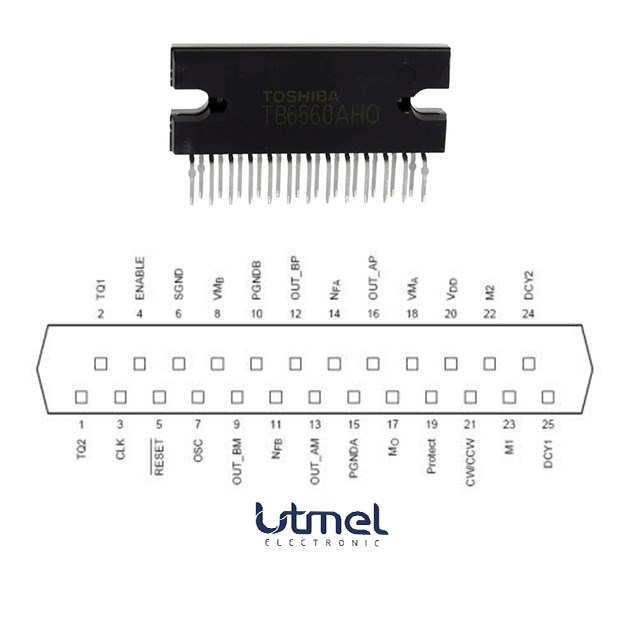 TB6560AHQ:PWM chopper-type stepping motor driver IC
17 April 20251773
 BC558 Transistor: Pinout, Alternatives and Datasheet
06 August 20219500
 Filters Explained: Principles, Parameters and Application Guide
09 April 202512423
 Introduction to AC motor
05 March 20219508
 Analysis of Common Misunderstandings of Isolation Technology
25 April 20226019
 Trimmer Resistors: From Principles to Selection and Applications
11 August 20253515
 What is a Gyroscope Sensor?
11 September 202018060
 What are Comparators?
03 December 20206113
 Electric Car Rechargeable Batteries: How Long Do They Last?
13 April 20234157
 An Overview of Fiber Optic Cable
10 August 20216948
TDK Corporation
In Stock: 478193
Minimum: 5 Multiples: 1
Qty
Unit Price
Ext Price
1
$0.563924
$0.56
Not the price you want? Send RFQ Now and we'll contact you ASAP.
Inquire for More Quantity
![C1005X7R1H471K050BA]() C1005X7R1H471K050BA
C1005X7R1H471K050BATDK Corporation
![C1608X5R1E106M]() C1608X5R1E106M
C1608X5R1E106MTDK Corporation
![FK26X7R1E155K]() FK26X7R1E155K
FK26X7R1E155KTDK Corporation
![C1608X7R1H104K080AA]() C1608X7R1H104K080AA
C1608X7R1H104K080AATDK Corporation
![C1608X5R1A106M080AC]() C1608X5R1A106M080AC
C1608X5R1A106M080ACTDK Corporation
![C5750X7R1E226M250KA]() C5750X7R1E226M250KA
C5750X7R1E226M250KATDK Corporation
![C1005X7R1H104K050BB]() C1005X7R1H104K050BB
C1005X7R1H104K050BBTDK Corporation
![C1608X5R0J106M080AB]() C1608X5R0J106M080AB
C1608X5R0J106M080ABTDK Corporation
![YFF31HC2A105M]() YFF31HC2A105M
YFF31HC2A105MTDK Corporation
![C3225X7S2A475K200AE]() C3225X7S2A475K200AE
C3225X7S2A475K200AETDK Corporation


