

 Product
 Brand
Brand Articles
 Tools
Tools
The Rj9 VS Rj11 Connectors-Who is the winner?
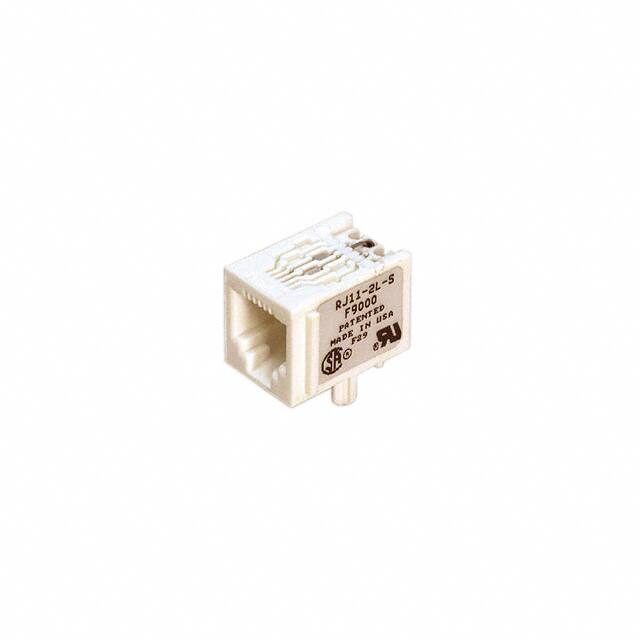
TE Connectivity Corcom Filters
L Jack Bulk Unshielded 6p2c (RJ11) 1 Port 90° Angle (Right) Solder Through Hole


L Jack Bulk Unshielded 6p2c (RJ11) 1 Port 90° Angle (Right) Solder Through Hole
The purpose of these two little gadgets is to connect phone cables to networks. They may appear to be similar, yet there are several differences that distinguish them. This article is going to find their differences separately and decide the winner.

RJ12 RJ11 RJ9 Patch Lock Telephone Cord Hand Set Cord made by RJLOCKDOWN
Introduction
Most of the time, when we pick up the phone to make a call, we don't consider the intricate intricacies that allow us to do so. Connectors, for example, are relatively little devices, yet they are quite important. Different connectors exist for various cables, including Ethernet cables, telephone lines, and modems.
There are two configuration variants for the Rj11, which are most typically used for telephone and modem connections. The Rj9 connector isn't something you'll come across every day. It is sometimes referred to as the Rj10 or Rj22, and it has its own configuration type.
Overview of Rj9

This connector has a compact square design and is widely used. It's composed of tough plastic, so it'll endure a long time. The material utilized is interesting because it is see-through, which makes for an aesthetically appealing device. This connector is available in two different configurations.
The 6P2C connection is the first configuration type. There are 6 locations and 2 connecting points on this gadget. The conductors are the components that make contact with the copper wires and hence are the connection sites. The Rj11 connector in this configuration type can only send data at slow speeds. It's a device that connects phone lines.
Overview of Rj11
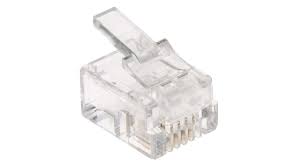
There's a lot of misunderstanding about this connector. It's sometimes referred to as the Rj10, and it's also known as the Rj22. Because all of these connector types have comparable dimensions and configurations, this is the case.
This connector has a rectangular shape rather than a square shape. It measures 7.6 mm in width, making it slightly smaller than the Rj11 connector, It does, however, have a very comparable build. It's made of clear plastic that's both robust and durable. The connection of wires is exposed by this plastic.
The 4P4C configuration of this connection is identical to that of the Rj10 and Rj22. which is why they are regarded as the same. It has four places and four connection points, according to its arrangement. It's perfect for securing phone handset cords.
Rj9 VS. Rj11
The key distinction between RJ9 and RJ11 is that the RJ9 is only available in one configuration, namely the 4 P4C connection type. RJ11, on the other hand, has two different configurations. The connection types are 6 P2C and 6P4C, respectively.
Differences between Rj9 and Rj11
| Parameters of Comparison | Rj9 | Rj11 |
| Functionality | Telephone handset cables | Phones and modem cables |
| Configuration | 4p4C Configuration | 6p2C/64pC Configuration |
| Shape and structure | Rectangular | Square |
| size | Rj9 is smaller in comparison to Rj11. | Rj11 is bigger in size. |
| Versatility | Less as it has only one configuration type to connect. | More versatile as it comes with two configuration types. |
Pros and Cons of Rj9 and Rj11
RJ11
Pros
It has two configuration types
It is made with durable material
It is aesthetically pleasing
It is easy to attach and terminate
Its pins are gold coated to prevent rusting
Cons
It may not be ideal for heavy transmissions and cables with many wires
RJ9
Pros
It is made with durable see-through plastic
It has pins that are gold and nickel coated to prevent them from rusting
It is aesthetically appealing
It is easy to attach and terminate
Cons
It can only take 4 wires at a time
Conclusion
The fact that the Rj11 and Rj9 are connections designed for distinct uses makes determining which is superior nearly difficult. The Rj11, on the other hand, appears to be a more planned connector because it comes in two different builds with two different configuration options. This increases the connector's adaptability by allowing it to connect to a wider range of cables. As a result, it stands out as the superior performer.
What is RJ9 used for?
The RJ9 connector is used for telephone handset cables, while the RJ12 connector is used in system phones. The 4P4C connector on RJ9 is different from the 6P6C connector on RJ12. Registered Jack 9 is abbreviated as RJ9.
What is the connector on a phone handset?
The four-position four-conductor (4P4C) connection is sometimes referred to as a handset connector since it is used on both ends of telephone handset cords. Because it was not designed to connect directly to telephone lines, this handset connector is not a registered jack.
What kind of connectors does the RJ9 have?
The Rj9 has only one connector type, 4P4C, which means it has four positions and four connection points, making it perfect for connecting phone lines. Because phone handsets/headsets aren't always directly associated with the government, they don't have a unique enlisted jack code.
Are RJ9 and RJ11 the same size?
Rj9 is smaller in comparison to Rj11. Rj11 is bigger in size. There are fewer because there is only one configuration type to connect.
Is it possible to utilize RJ9 instead of RJ11?
RJ12 and RJ11 are backward compatible, although RJ11 will not operate with RJ12. RJ9 or RJ22 connectors are used in coiled handset wires (both names refer to the same thing). These have four conductors and are physically smaller than RJ11/RJ12.
 SR621SW Silver Oxide Watch Battery 1.55V, 23 mAh : SR621SW VS SR626SW, Datasheet and Equivalents
23 March 202218481
 AR8031 Ethernet Transceiver: Features, Equivalent and Datasheet
19 January 20224666
 MC1488 Line Driver: Pinout, Equivalent and Datasheet
04 November 20212551
 KSZ8081MNX Transceiver: Pinout, Equivalent and Datasheet
24 January 20223102
 Navigating the XA-H4 Single-Chip 16-bit Microcontroller: An In-depth Analysis
29 February 2024201
 2N3819 JFET: Substitute, Pinout and Datasheet
23 August 20217735
 MJE13007 NPN Bipolar Power Transistor: Equivalent, Datasheet and Pinout
22 October 202129566
 74LS245: Transistor, Pinout, Datasheet
22 March 20225147
 13 Semiconductor Startups Poised for Success in 2024, According to Investors
11 December 20237120
 What are TPMS Sensors?
21 November 20205482
 Introduction to Optical Amplifier
27 March 202510240
 Radiation Robustness of Gallium Nitride Power Devices
16 January 20242997
 What is Chiplet?
17 November 20214426
 What is a High-pass Filter?
10 March 202115042
 What is IMU: Definition, Features and Prospects
12 April 20224291
 What is a Decoder?
15 June 202623943
TE Connectivity Corcom Filters
In Stock
United States
China
Canada
Japan
Russia
Germany
United Kingdom
Singapore
Italy
Hong Kong(China)
Taiwan(China)
France
Korea
Mexico
Netherlands
Malaysia
Austria
Spain
Switzerland
Poland
Thailand
Vietnam
India
United Arab Emirates
Afghanistan
Åland Islands
Albania
Algeria
American Samoa
Andorra
Angola
Anguilla
Antigua & Barbuda
Argentina
Armenia
Aruba
Australia
Azerbaijan
Bahamas
Bahrain
Bangladesh
Barbados
Belarus
Belgium
Belize
Benin
Bermuda
Bhutan
Bolivia
Bonaire, Sint Eustatius and Saba
Bosnia & Herzegovina
Botswana
Brazil
British Indian Ocean Territory
British Virgin Islands
Brunei
Bulgaria
Burkina Faso
Burundi
Cabo Verde
Cambodia
Cameroon
Cayman Islands
Central African Republic
Chad
Chile
Christmas Island
Cocos (Keeling) Islands
Colombia
Comoros
Congo
Congo (DRC)
Cook Islands
Costa Rica
Côte d’Ivoire
Croatia
Cuba
Curaçao
Cyprus
Czechia
Denmark
Djibouti
Dominica
Dominican Republic
Ecuador
Egypt
El Salvador
Equatorial Guinea
Eritrea
Estonia
Eswatini
Ethiopia
Falkland Islands
Faroe Islands
Fiji
Finland
French Guiana
French Polynesia
Gabon
Gambia
Georgia
Ghana
Gibraltar
Greece
Greenland
Grenada
Guadeloupe
Guam
Guatemala
Guernsey
Guinea
Guinea-Bissau
Guyana
Haiti
Honduras
Hungary
Iceland
Indonesia
Iran
Iraq
Ireland
Isle of Man
Israel
Jamaica
Jersey
Jordan
Kazakhstan
Kenya
Kiribati
Kosovo
Kuwait
Kyrgyzstan
Laos
Latvia
Lebanon
Lesotho
Liberia
Libya
Liechtenstein
Lithuania
Luxembourg
Macao(China)
Madagascar
Malawi
Maldives
Mali
Malta
Marshall Islands
Martinique
Mauritania
Mauritius
Mayotte
Micronesia
Moldova
Monaco
Mongolia
Montenegro
Montserrat
Morocco
Mozambique
Myanmar
Namibia
Nauru
Nepal
New Caledonia
New Zealand
Nicaragua
Niger
Nigeria
Niue
Norfolk Island
North Korea
North Macedonia
Northern Mariana Islands
Norway
Oman
Pakistan
Palau
Palestinian Authority
Panama
Papua New Guinea
Paraguay
Peru
Philippines
Pitcairn Islands
Portugal
Puerto Rico
Qatar
Réunion
Romania
Rwanda
Samoa
San Marino
São Tomé & Príncipe
Saudi Arabia
Senegal
Serbia
Seychelles
Sierra Leone
Sint Maarten
Slovakia
Slovenia
Solomon Islands
Somalia
South Africa
South Sudan
Sri Lanka
St Helena, Ascension, Tristan da Cunha
St. Barthélemy
St. Kitts & Nevis
St. Lucia
St. Martin
St. Pierre & Miquelon
St. Vincent & Grenadines
Sudan
Suriname
Svalbard & Jan Mayen
Sweden
Syria
Tajikistan
Tanzania
Timor-Leste
Togo
Tokelau
Tonga
Trinidad & Tobago
Tunisia
Turkey
Turkmenistan
Turks & Caicos Islands
Tuvalu
U.S. Outlying Islands
U.S. Virgin Islands
Uganda
Ukraine
Uruguay
Uzbekistan
Vanuatu
Vatican City
Venezuela
Wallis & Futuna
Yemen
Zambia
Zimbabwe
