

 Product
 Brand
Brand Articles
 Tools
Tools
TSC2011IST Amplifier: Pinout, CAD Model and Datasheet


350μA Instrumentational OP Amps 2.7V~5.5V 8-TSSOP, 8-MSOP (0.118, 3.00mm Width)
The TSC2011IST is especially designed to accurately measure the current by amplifying the voltage across a shunt resistor connected to its input. Furthermore, Huge range of Semiconductors, Capacitors, Resistors and IcS in stock. Welcome RFQ.
Description
The TSC2011IST is especially designed to accurately measure the current by amplifying the voltage across a shunt resistor connected to its input. Furthermore, Huge range of Semiconductors, Capacitors, Resistors and IcS in stock. Welcome RFQ.
TSC2011IST Pinout
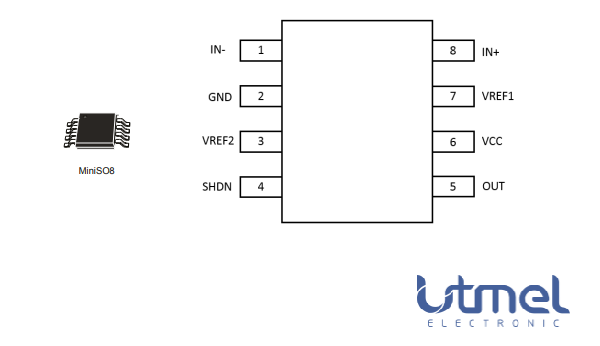
TSC2011IST Pinout
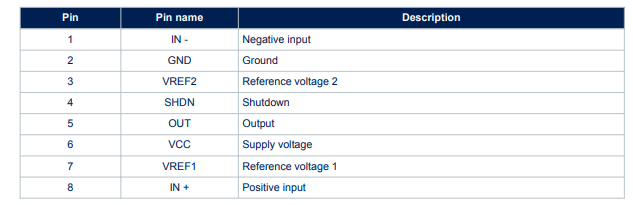
Pin name
TSC2011IST CAD Model
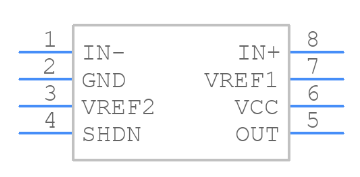
Symbol
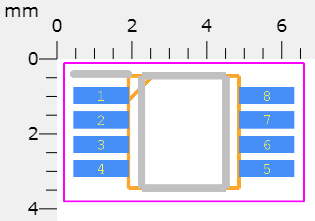
Footprint
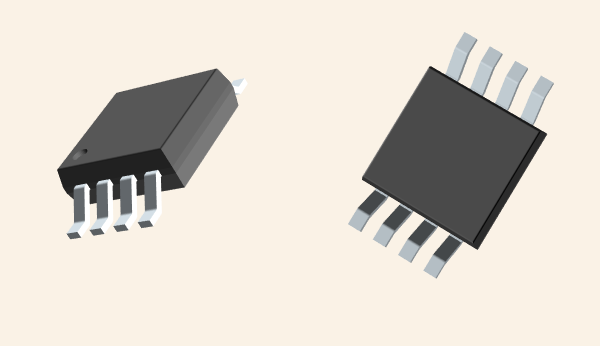
3D Model
TSC2011IST Features
• Wide common mode voltage: -20 to 70 V
• Offset voltage: ±200 µV max
• 2.7 to 5.5 V supply voltage
• Different gain available
–TSC2010: 20 V/V
–TSC2011: 60 V/V
–TSC2012: 100 V/V
• Gain error: 0.3% max
• Offset drift: 5 µV/ ℃ max
• Quiescent current: 20 µA in shutdown mode
• SO8 and MiniSO8 package
TSC2011IST Diagram
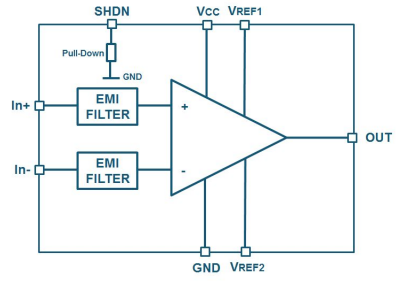
Block diagram
TSC2011IST Advantages
The TSC2011 is a fixed gain current sensing amplifier of 60 V/V. Thanks to a thin film resistor, the TSC2011 offers an extremely precise gain and a very high CMRR performance even in a high frequency range. Moreover, by fixing the output common mode voltage, the TSC2011 can be either used as unidirectional or bidirectional current sensing amplifier. The TSC2011 provides an extended input common range from -20 V below the negative supply voltage, and up to 70 V allowing either low-side or high-side current sensing, while the TSC2011 device can operate from 2.7 to 5.5 V. The parameters are very stable in the full Vcc range and characterization curves show the TSC2011 characteristics at 2.7 V and 5.0 V. Moreover, the main specifications are guaranteed in an extended temperature range from -40 to 125 ℃.
The main feature of the TSC2011 is the ability to work with an input common mode voltage largely beyond the power supply Vcc range (2.7 V to 5.5 V). It is ideal, for example for automotive applications where a reverse battery can be supported by the TSC2011 without any damage. It also works with 48 V battery applications as the TSC2011 can support and measure the current on line at voltage up to 70 V. No additional protective components are needed in that range.
Some ADCs get their signal thanks to a sample and hold capacitor. If before a sampling this capacitance is fully discharged, a fast current load can appear on the output of the TSC2011 during the sampling phase. The scope probe in the figure below shows the output voltage of the TSC2011 excited by a 40 pF capacitor with a 3.3 Vpp signal at 50 kHz to simulate the sample and hold circuit of the ADC120. The ADC120 has a conversion rate of 50 ksps, which is perfect to sample and hold the output of the TSC2011 without any error.
The graph shows the behavior of the output of the TSC2011 under the worst case condition, as for example, when there is an ADC120 channel change between two measurements. If a single channel is used, for sure the change on the sample and hold capacitance are very small, and so the recovery time is extremely low as described by the figure below. The effect of the ADC sampling and hold can be easily smoothed thanks to an RC filter. As suggested on the schematic below. The capacitor of the external filter must be chosen much higher than the internal ADC capacitor, in order to easily absorb the sudden voltage variation on the output due to the sampling and hold of the ADC. The resistance must be chosen accordingly to the application speed of the system in order not to impact the whole application. The main advantage of using an RC filter is to have an antialiasing system. For sure the used ADC must have sample and hold conversion in accordance with the RC filter value, in order to let the output recover before sampling.
Specifications
- TypeParameter
- Mounting Type
The "Mounting Type" in electronic components refers to the method used to attach or connect a component to a circuit board or other substrate, such as through-hole, surface-mount, or panel mount.
Surface Mount - Package / Case
refers to the protective housing that encases an electronic component, providing mechanical support, electrical connections, and thermal management.
8-TSSOP, 8-MSOP (0.118, 3.00mm Width) - Operating Temperature
The operating temperature is the range of ambient temperature within which a power supply, or any other electrical equipment, operate in. This ranges from a minimum operating temperature, to a peak or maximum operating temperature, outside which, the power supply may fail.
-40°C~125°C TA - Packaging
Semiconductor package is a carrier / shell used to contain and cover one or more semiconductor components or integrated circuits. The material of the shell can be metal, plastic, glass or ceramic.
Tape & Reel (TR) - Part Status
Parts can have many statuses as they progress through the configuration, analysis, review, and approval stages.
Active - Moisture Sensitivity Level (MSL)
Moisture Sensitivity Level (MSL) is a standardized rating that indicates the susceptibility of electronic components, particularly semiconductors, to moisture-induced damage during storage and the soldering process, defining the allowable exposure time to ambient conditions before they require special handling or baking to prevent failures
1 (Unlimited) - Number of Circuits1
- Analog IC - Other Type
Analog IC - Other Type is a parameter used to categorize electronic components that are integrated circuits (ICs) designed for analog signal processing but do not fall into more specific subcategories such as amplifiers, comparators, or voltage regulators. These ICs may include specialized analog functions such as analog-to-digital converters (ADCs), digital-to-analog converters (DACs), voltage references, or signal conditioning circuits. They are typically used in various applications where precise analog signal processing is required, such as in audio equipment, instrumentation, communication systems, and industrial control systems. Manufacturers provide detailed specifications for these components to help engineers select the most suitable IC for their specific design requirements.
ANALOG CIRCUIT - Current - Supply
Current - Supply is a parameter in electronic components that refers to the maximum amount of electrical current that the component can provide to the circuit it is connected to. It is typically measured in units of amperes (A) and is crucial for determining the power handling capability of the component. Understanding the current supply rating is important for ensuring that the component can safely deliver the required current without overheating or failing. It is essential to consider this parameter when designing circuits to prevent damage to the component and ensure proper functionality of the overall system.
1.6mA - Slew Rate
the maximum rate of output voltage change per unit time.
3.5V/μs - Amplifier Type
Amplifier Type refers to the classification or categorization of amplifiers based on their design, functionality, and characteristics. Amplifiers are electronic devices that increase the amplitude of a signal, such as voltage or current. The type of amplifier determines its specific application, performance capabilities, and operating characteristics. Common types of amplifiers include operational amplifiers (op-amps), power amplifiers, audio amplifiers, and radio frequency (RF) amplifiers. Understanding the amplifier type is crucial for selecting the right component for a particular circuit or system design.
Current Sense - Current - Input Bias
The parameter "Current - Input Bias" in electronic components refers to the amount of current required at the input terminal of a device to maintain proper operation. It is a crucial specification as it determines the minimum input current needed for the component to function correctly. Input bias current can affect the performance and accuracy of the device, especially in precision applications where small signal levels are involved. It is typically specified in datasheets for operational amplifiers, transistors, and other semiconductor devices to provide users with important information for circuit design and analysis.
350μA - Voltage - Supply, Single/Dual (±)
The parameter "Voltage - Supply, Single/Dual (±)" in electronic components refers to the power supply voltage required for the proper operation of the component. This parameter indicates whether the component requires a single power supply voltage (e.g., 5V) or a dual power supply voltage (e.g., ±15V). For components that require a single power supply voltage, only one voltage level is needed for operation. On the other hand, components that require a dual power supply voltage need both positive and negative voltage levels to function correctly.Understanding the voltage supply requirements of electronic components is crucial for designing and integrating them into circuits to ensure proper functionality and prevent damage due to incorrect voltage levels.
2.7V~5.5V - Voltage - Input Offset
Voltage - Input Offset is a parameter that refers to the difference in voltage between the input terminals of an electronic component, such as an operational amplifier, when the input voltage is zero. It is an important characteristic that can affect the accuracy and performance of the component in various applications. A low input offset voltage is desirable as it indicates that the component will have minimal error in its output when the input signal is near zero. Manufacturers typically provide this specification in the component's datasheet to help users understand the component's behavior and make informed decisions when designing circuits.
500μV - -3db Bandwidth
The "-3dB bandwidth" of an electronic component refers to the frequency range over which the component's output signal power is reduced by 3 decibels (dB) compared to its maximum output power. This parameter is commonly used to describe the frequency response of components such as amplifiers, filters, and other signal processing devices. The -3dB point is significant because it represents the half-power point, where the output signal power is reduced to half of its maximum value. Understanding the -3dB bandwidth is important for designing and analyzing electronic circuits to ensure that signals are accurately processed within the desired frequency range.
750kHz - RoHS Status
RoHS means “Restriction of Certain Hazardous Substances” in the “Hazardous Substances Directive” in electrical and electronic equipment.
ROHS3 Compliant
Parts with Similar Specs
TSC2011IST Applications
• High-side current sensing
• Low-side current sensing
• Data acquisition and instrumentation
• Test and measurement equipment
• Industrial process control
• Motor control
• Solenoid control
TSC2011IST Package
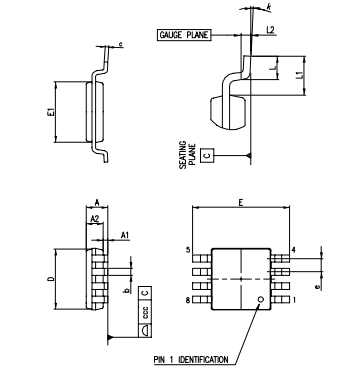
MiniSO8 Package Outline
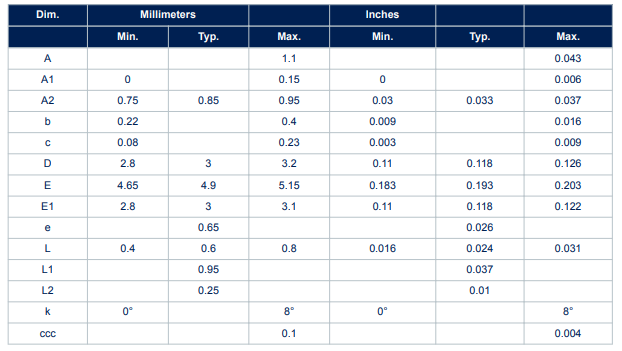
MiniSO8 mechanical data
TSC2011IST Manufacturer
STMicroelectronics is a globally recognized semiconductor company. They are dedicated to developing semiconductor solutions for various microelectronics applications. STMicroelectronics enjoys unrivaled silicon and system expertise, strong manufacturing strength, IP portfolio,and solid relationships with their strategic partners. Based on these advantages, STMicroelectronics has become a pioneer in System-on-Chip (SoC) technology and its products has a positive effect in realizing today's convergence trends.
Trend Analysis
Datasheet PDF
- Datasheets :
1. What’s the TSC2011IST?
The TSC2011IST is especially designed to accurately measure the current by amplifying the voltage across a shunt resistor connected to its input.
2. What’s the main feature of the TSC2011IST?
The main feature of the TSC2011IST is the ability to work with an input common mode voltage largely beyond the power supply Vcc range (2.7 V to 5.5 V).
3. Who is the manufacturer of the TSC2011IST?
STMicroelectronics. STMicroelectronics is a globally recognized semiconductor company. They are dedicated to developing semiconductor solutions for various microelectronics applications.
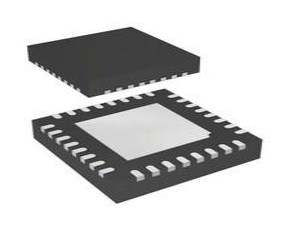 STM32F302K8U7 Microcontroller: 72MHz, 64 KB Flash and 32-Pin UFQFPN
12 January 2022737
![A4988 VS DRV8825[Video]: What are the differences between them?](https://res.utmel.com/Images/Article/f171b290-e30c-4c91-bb39-5bea7b78c028.png) A4988 VS DRV8825[Video]: What are the differences between them?
A4988 VS DRV8825[Video]: What are the differences between them?27 April 202227710
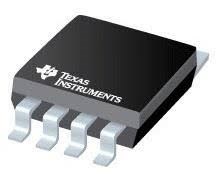 ISO1050DUB Isolated CAN Transceiver: Pinout, Specification, and Datasheet
07 July 20214402
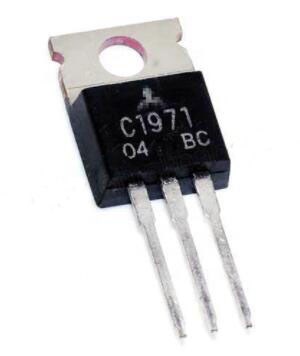 2SC1971 NPN Transistor: 2SC1971 Power Transistor, 17V, 2A, Datasheet pdf and Substitute
23 December 20219189
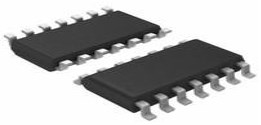 UC3844 PWM Controller: Uses, Pinout and Datasheet
11 August 20216084
 AD590 Temperature Sensor: Datasheet, Schematic Diagram, Alternatives
29 September 20217604
 A Comprehensive Guide to the Microchip PIC12F629/675 Microcontroller
29 February 20241006
 SB330 Schottky Barrier Rectifier: Package, Pinout, and Datasheet
18 April 20221623
 The Through Hole of the PCB Circuit Board Must be Plugged, Why?
14 February 20235233
 How does the CPU Calculate 1+1?
12 January 20224889
 Electronic Components in Aerospace Aircraft
15 March 20244105
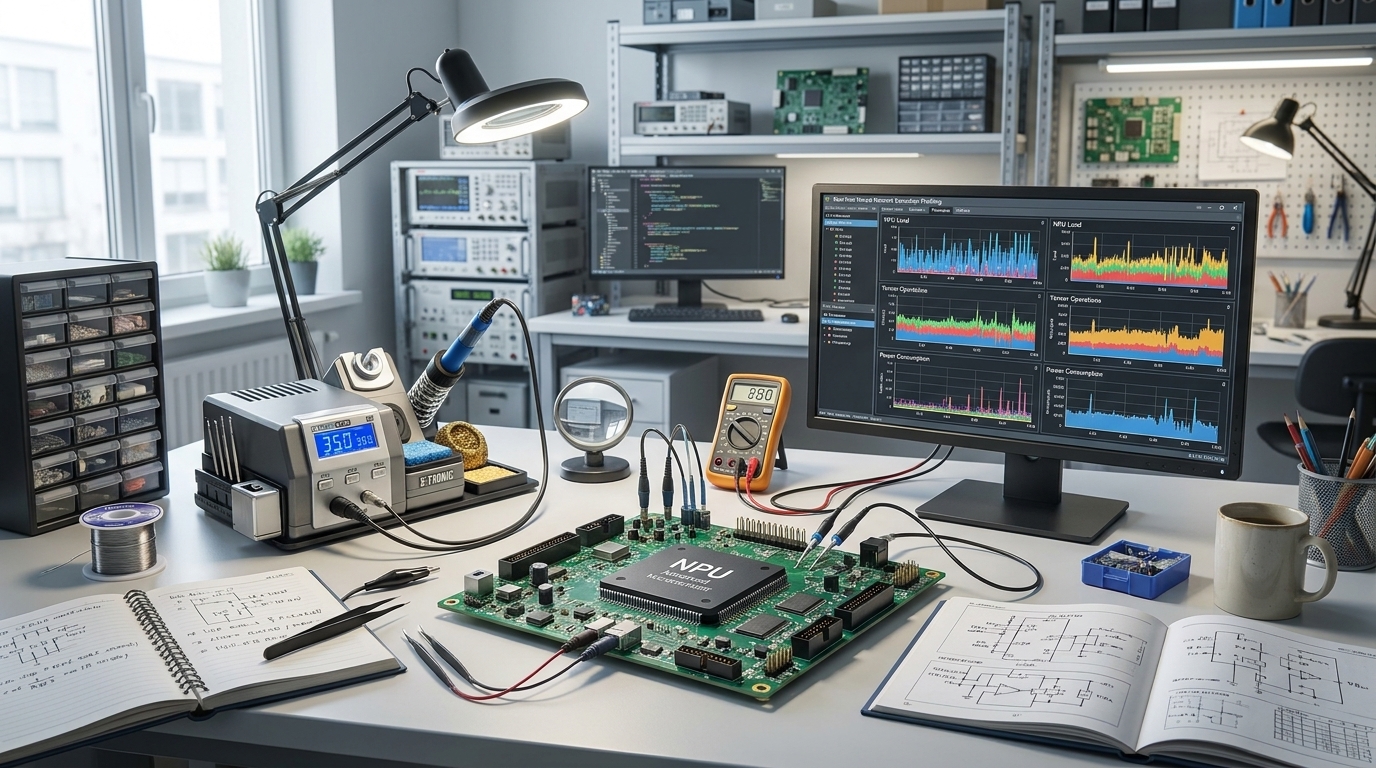 MCU with Built-in NPU: How to Pick an Edge AI Microcontroller in 2026
30 July 2026709
 Parking Access Control System using Arduino
29 August 20236413
 Tough Times for Japanese Component Manufacturers
10 August 20223018
 Apple Will Help TSMC to Be in the Leading Position in the Next Era
16 March 20223495
 What is Solid-state Battery
08 March 20216278
STMicroelectronics
In Stock: 4000
United States
China
Canada
Japan
Russia
Germany
United Kingdom
Singapore
Italy
Hong Kong(China)
Taiwan(China)
France
Korea
Mexico
Netherlands
Malaysia
Austria
Spain
Switzerland
Poland
Thailand
Vietnam
India
United Arab Emirates
Afghanistan
Åland Islands
Albania
Algeria
American Samoa
Andorra
Angola
Anguilla
Antigua & Barbuda
Argentina
Armenia
Aruba
Australia
Azerbaijan
Bahamas
Bahrain
Bangladesh
Barbados
Belarus
Belgium
Belize
Benin
Bermuda
Bhutan
Bolivia
Bonaire, Sint Eustatius and Saba
Bosnia & Herzegovina
Botswana
Brazil
British Indian Ocean Territory
British Virgin Islands
Brunei
Bulgaria
Burkina Faso
Burundi
Cabo Verde
Cambodia
Cameroon
Cayman Islands
Central African Republic
Chad
Chile
Christmas Island
Cocos (Keeling) Islands
Colombia
Comoros
Congo
Congo (DRC)
Cook Islands
Costa Rica
Côte d’Ivoire
Croatia
Cuba
Curaçao
Cyprus
Czechia
Denmark
Djibouti
Dominica
Dominican Republic
Ecuador
Egypt
El Salvador
Equatorial Guinea
Eritrea
Estonia
Eswatini
Ethiopia
Falkland Islands
Faroe Islands
Fiji
Finland
French Guiana
French Polynesia
Gabon
Gambia
Georgia
Ghana
Gibraltar
Greece
Greenland
Grenada
Guadeloupe
Guam
Guatemala
Guernsey
Guinea
Guinea-Bissau
Guyana
Haiti
Honduras
Hungary
Iceland
Indonesia
Iran
Iraq
Ireland
Isle of Man
Israel
Jamaica
Jersey
Jordan
Kazakhstan
Kenya
Kiribati
Kosovo
Kuwait
Kyrgyzstan
Laos
Latvia
Lebanon
Lesotho
Liberia
Libya
Liechtenstein
Lithuania
Luxembourg
Macao(China)
Madagascar
Malawi
Maldives
Mali
Malta
Marshall Islands
Martinique
Mauritania
Mauritius
Mayotte
Micronesia
Moldova
Monaco
Mongolia
Montenegro
Montserrat
Morocco
Mozambique
Myanmar
Namibia
Nauru
Nepal
New Caledonia
New Zealand
Nicaragua
Niger
Nigeria
Niue
Norfolk Island
North Korea
North Macedonia
Northern Mariana Islands
Norway
Oman
Pakistan
Palau
Palestinian Authority
Panama
Papua New Guinea
Paraguay
Peru
Philippines
Pitcairn Islands
Portugal
Puerto Rico
Qatar
Réunion
Romania
Rwanda
Samoa
San Marino
São Tomé & Príncipe
Saudi Arabia
Senegal
Serbia
Seychelles
Sierra Leone
Sint Maarten
Slovakia
Slovenia
Solomon Islands
Somalia
South Africa
South Sudan
Sri Lanka
St Helena, Ascension, Tristan da Cunha
St. Barthélemy
St. Kitts & Nevis
St. Lucia
St. Martin
St. Pierre & Miquelon
St. Vincent & Grenadines
Sudan
Suriname
Svalbard & Jan Mayen
Sweden
Syria
Tajikistan
Tanzania
Timor-Leste
Togo
Tokelau
Tonga
Trinidad & Tobago
Tunisia
Turkey
Turkmenistan
Turks & Caicos Islands
Tuvalu
U.S. Outlying Islands
U.S. Virgin Islands
Uganda
Ukraine
Uruguay
Uzbekistan
Vanuatu
Vatican City
Venezuela
Wallis & Futuna
Yemen
Zambia
Zimbabwe


