

 Product
 Brand
Brand Articles
 Tools
Tools
XC2331D 16/32-Bit Single-Chip Microcontroller: A Technical Overview
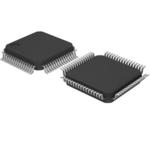


160KB 160K x 8 FLASH C166SV2 16/32-Bit Microcontroller XC23xxD Series
The XC2331D is a 16/32-bit single-chip microcontroller designed to provide 32-bit performance within the XC2000 Family/Econo Line. This article provides a detailed technical insight into the features, applications, reference designs, alternative parts, and frequently asked questions related to the XC2331D microcontroller.
Product Introduction
1. Description:
The XC2331D is an advanced 16/32-bit single-chip microcontroller that offers 32-bit performance. It is designed as part of the XC2000 Family/Econo Line, providing a compact and powerful solution for embedded systems.
2. Features:
The microcontroller likely includes a range of features such as memory subsystem, CPU, memory protection unit, interrupt system, on-chip debug support, capture/compare unit, timers, A/D converters, universal serial interface channel modules, multiCAN module, system timer, watchdog timer, clock generation, and power management. It is essential to explore these features in detail to understand the capabilities this microcontroller provides.
3. Applications:
The primary applications of the XC2331D microcontroller may include automotive systems, industrial control, motor control, power management, and similar embedded applications. Secondary applications could span across consumer electronics, Internet of Things (IoT) devices, and more. Specific modules applicable to this product would range from sensor interfaces to communication modules and various control circuits.
4. Reference Designs:
The XC2331D microcontroller is likely to have been utilized in various reference designs. These designs may include but are not limited to motor control systems, industrial automation, automotive electronic control units (ECUs), and smart sensor interfaces. Understanding the reference designs provides insights into real-world applications and can be a valuable resource for engineers and developers.
Specifications
- TypeParameter
- Data ConvertersA/D 10x12b
- Number of I/Os49
- Watchdog TimersYes
- Operating Temperature
The operating temperature is the range of ambient temperature within which a power supply, or any other electrical equipment, operate in. This ranges from a minimum operating temperature, to a peak or maximum operating temperature, outside which, the power supply may fail.
-40°C~125°C TA - Packaging
Semiconductor package is a carrier / shell used to contain and cover one or more semiconductor components or integrated circuits. The material of the shell can be metal, plastic, glass or ceramic.
Tape & Reel (TR) - Series
In electronic components, the "Series" refers to a group of products that share similar characteristics, designs, or functionalities, often produced by the same manufacturer. These components within a series typically have common specifications but may vary in terms of voltage, power, or packaging to meet different application needs. The series name helps identify and differentiate between various product lines within a manufacturer's catalog.
XC23xxD - Published2015
- Part Status
Parts can have many statuses as they progress through the configuration, analysis, review, and approval stages.
Obsolete - Moisture Sensitivity Level (MSL)
Moisture Sensitivity Level (MSL) is a standardized rating that indicates the susceptibility of electronic components, particularly semiconductors, to moisture-induced damage during storage and the soldering process, defining the allowable exposure time to ambient conditions before they require special handling or baking to prevent failures
3 (168 Hours) - HTS Code
HTS (Harmonized Tariff Schedule) codes are product classification codes between 8-1 digits. The first six digits are an HS code, and the countries of import assign the subsequent digits to provide additional classification. U.S. HTS codes are 1 digits and are administered by the U.S. International Trade Commission.
8542.31.00.01 - Voltage - Supply
Voltage - Supply refers to the range of voltage levels that an electronic component or circuit is designed to operate with. It indicates the minimum and maximum supply voltage that can be applied for the device to function properly. Providing supply voltages outside this range can lead to malfunction, damage, or reduced performance. This parameter is critical for ensuring compatibility between different components in a circuit.
3V~5.5V - Peak Reflow Temperature (Cel)
Peak Reflow Temperature (Cel) is a parameter that specifies the maximum temperature at which an electronic component can be exposed during the reflow soldering process. Reflow soldering is a common method used to attach electronic components to a circuit board. The Peak Reflow Temperature is crucial because it ensures that the component is not damaged or degraded during the soldering process. Exceeding the specified Peak Reflow Temperature can lead to issues such as component failure, reduced performance, or even permanent damage to the component. It is important for manufacturers and assemblers to adhere to the recommended Peak Reflow Temperature to ensure the reliability and functionality of the electronic components.
NOT SPECIFIED - Time@Peak Reflow Temperature-Max (s)
Time@Peak Reflow Temperature-Max (s) refers to the maximum duration that an electronic component can be exposed to the peak reflow temperature during the soldering process, which is crucial for ensuring reliable solder joint formation without damaging the component.
NOT SPECIFIED - Memory Size
The memory capacity is the amount of data a device can store at any given time in its memory.
160kB - Oscillator Type
Wien Bridge Oscillator; RC Phase Shift Oscillator; Hartley Oscillator; Voltage Controlled Oscillator; Colpitts Oscillator; Clapp Oscillators; Crystal Oscillators; Armstrong Oscillator.
Internal - RAM Size
RAM size refers to the amount of random access memory (RAM) available in an electronic component, such as a computer or smartphone. RAM is a type of volatile memory that stores data and instructions that are actively being used by the device's processor. The RAM size is typically measured in gigabytes (GB) and determines how much data the device can store and access quickly for processing. A larger RAM size allows for smoother multitasking, faster loading times, and better overall performance of the electronic component. It is an important factor to consider when choosing a device, especially for tasks that require a lot of memory, such as gaming, video editing, or running multiple applications simultaneously.
12K x 8 - uPs/uCs/Peripheral ICs Type
The parameter "uPs/uCs/Peripheral ICs Type" refers to the classification of various integrated circuits used in electronic devices. It encompasses microprocessors (uPs), microcontrollers (uCs), and peripheral integrated circuits that provide additional functionalities. This classification helps in identifying the specific type of chip used for processing tasks, controlling hardware, or interfacing with other components in a system. Understanding this parameter is essential for selecting the appropriate electronic components for a given application.
MICROCONTROLLER, RISC - Core Processor
The term "Core Processor" typically refers to the central processing unit (CPU) of a computer or electronic device. It is the primary component responsible for executing instructions, performing calculations, and managing data within the system. The core processor is often considered the brain of the device, as it controls the overall operation and functionality. It is crucial for determining the speed and performance capabilities of the device, as well as its ability to handle various tasks and applications efficiently. In modern devices, core processors can have multiple cores, allowing for parallel processing and improved multitasking capabilities.
C166SV2 - Peripherals
In the context of electronic components, "Peripherals" refer to devices or components that are connected to a main system or device to enhance its functionality or provide additional features. These peripherals can include input devices such as keyboards, mice, and touchscreens, as well as output devices like monitors, printers, and speakers. Other examples of peripherals include external storage devices, network adapters, and cameras. Essentially, peripherals are external devices that expand the capabilities of a main electronic system or device.
DMA, I2S, POR, PWM, WDT - Program Memory Type
Program memory typically refers to flash memory when it is used to hold the program (instructions). Program memory may also refer to a hard drive or solid state drive (SSD). Contrast with data memory.
FLASH - Core Size
Core size in electronic components refers to the physical dimensions of the core material used in devices such as inductors and transformers. The core size directly impacts the performance characteristics of the component, including its inductance, saturation current, and frequency response. A larger core size typically allows for higher power handling capabilities and lower core losses, while a smaller core size may result in a more compact design but with limitations on power handling and efficiency. Designers must carefully select the core size based on the specific requirements of the application to achieve optimal performance and efficiency.
16/32-Bit - Program Memory Size
Program Memory Size refers to the amount of memory available in an electronic component, such as a microcontroller or microprocessor, that is used to store program instructions. This memory is non-volatile, meaning that the data stored in it is retained even when the power is turned off. The program memory size determines the maximum amount of code that can be stored and executed by the electronic component. It is an important parameter to consider when selecting a component for a specific application, as insufficient program memory size may limit the functionality or performance of the device.
160KB 160K x 8 - Connectivity
In electronic components, "Connectivity" refers to the ability of a component to establish and maintain connections with other components or devices within a circuit. It is a crucial parameter that determines how easily signals can be transmitted between different parts of a circuit. Connectivity can be influenced by factors such as the number of input and output ports, the type of connectors used, and the overall design of the component. Components with good connectivity are essential for ensuring reliable and efficient operation of electronic systems.
CANbus, EBI/EMI, I2C, LINbus, SPI, UART/USART - Halogen Free
The term "Halogen Free" in electronic components refers to a specific characteristic of the materials used in the manufacturing of the component. Halogens are a group of elements that include fluorine, chlorine, bromine, iodine, and astatine. These elements are commonly used in flame retardants and other materials in electronics. However, the presence of halogens can pose environmental and health risks when the components are disposed of or recycled.Therefore, electronic components labeled as "Halogen Free" are manufactured without the use of halogenated materials. This designation indicates that the components do not contain any halogens, making them safer for the environment and human health. Halogen-free components are becoming increasingly popular in the electronics industry due to the growing awareness of environmental concerns and regulations regarding hazardous substances in electronic products.
Halogen Free - Max Frequency
Max Frequency refers to the highest frequency at which an electronic component can operate effectively without degradation of performance. It is a critical parameter for devices such as transistors, capacitors, and oscillators, indicating their limitations in speed and response time. Exceeding the max frequency can lead to issues like signal distortion, heat generation, and potential failure of the component. Understanding this parameter is essential for designing circuits to ensure reliable and efficient operation.
66MHz - RoHS Status
RoHS means “Restriction of Certain Hazardous Substances” in the “Hazardous Substances Directive” in electrical and electronic equipment.
RoHS Compliant - Lead Free
Lead Free is a term used to describe electronic components that do not contain lead as part of their composition. Lead is a toxic material that can have harmful effects on human health and the environment, so the electronics industry has been moving towards lead-free components to reduce these risks. Lead-free components are typically made using alternative materials such as silver, copper, and tin. Manufacturers must comply with regulations such as the Restriction of Hazardous Substances (RoHS) directive to ensure that their products are lead-free and environmentally friendly.
Lead Free
Parts with Similar Specs
Datasheet PDF
- Datasheets :
- PCN Obsolescence/ EOL :
- PCN Assembly/Origin :
- Other Related Documents :
- ConflictMineralStatement :
 LM340T-5.0 Voltage Regulator: LM340T-5.0 Pinout, Application and Circuit
30 March 20223889
 AD8237 Instrumentation Amplifier: Pinout, Features and Datasheet
17 January 20225202
 MCP2551 Transceiver: Circuits, Pinout, and Datasheet
22 December 202112032
 L7806CV Voltage Regulator: Pinout, Schematic Diagram, and Circuits
16 August 202110659
 M95M01-R EEPROM: Pinout, Equivalent and Datasheet
20 December 20213093
 TCRT5000 IR Sensor: Datasheet, Pinout and Circuit
19 October 202139787
 IR2153 Half-Bridge Driver: Datasheet, Circuit and Equivalent
14 October 202116481
 TPS92515QDGQRQ1 LED Drivers: Equivalence, Datasheet, and Pinout
21 March 20221948
 What Size Wire for a 60 Amp Breaker? The Complete NEC Guide
22 May 20267624
 MCU Power Management Availability Forecast 2026: Lead-Time Risks and Alternatives
08 July 20261532
 What is a variable capacitor?
16 April 202567306
 Linear Induction Motor: Working Principle, Characteristics, and Applications
02 March 202116230
 Substitute Part Validation: How to Cross-Reference and Verify Obsolete Components
04 June 2026483
 The Development Trends in the Field of Electronic Component Applications
28 July 20235252
 European Chipmakers Experience Decline Following SMIC's Profit Slump
20 November 20233388
 Structure, Types and Working of Dry Cell
04 March 202113732
Infineon Technologies
In Stock
United States
China
Canada
Japan
Russia
Germany
United Kingdom
Singapore
Italy
Hong Kong(China)
Taiwan(China)
France
Korea
Mexico
Netherlands
Malaysia
Austria
Spain
Switzerland
Poland
Thailand
Vietnam
India
United Arab Emirates
Afghanistan
Åland Islands
Albania
Algeria
American Samoa
Andorra
Angola
Anguilla
Antigua & Barbuda
Argentina
Armenia
Aruba
Australia
Azerbaijan
Bahamas
Bahrain
Bangladesh
Barbados
Belarus
Belgium
Belize
Benin
Bermuda
Bhutan
Bolivia
Bonaire, Sint Eustatius and Saba
Bosnia & Herzegovina
Botswana
Brazil
British Indian Ocean Territory
British Virgin Islands
Brunei
Bulgaria
Burkina Faso
Burundi
Cabo Verde
Cambodia
Cameroon
Cayman Islands
Central African Republic
Chad
Chile
Christmas Island
Cocos (Keeling) Islands
Colombia
Comoros
Congo
Congo (DRC)
Cook Islands
Costa Rica
Côte d’Ivoire
Croatia
Cuba
Curaçao
Cyprus
Czechia
Denmark
Djibouti
Dominica
Dominican Republic
Ecuador
Egypt
El Salvador
Equatorial Guinea
Eritrea
Estonia
Eswatini
Ethiopia
Falkland Islands
Faroe Islands
Fiji
Finland
French Guiana
French Polynesia
Gabon
Gambia
Georgia
Ghana
Gibraltar
Greece
Greenland
Grenada
Guadeloupe
Guam
Guatemala
Guernsey
Guinea
Guinea-Bissau
Guyana
Haiti
Honduras
Hungary
Iceland
Indonesia
Iran
Iraq
Ireland
Isle of Man
Israel
Jamaica
Jersey
Jordan
Kazakhstan
Kenya
Kiribati
Kosovo
Kuwait
Kyrgyzstan
Laos
Latvia
Lebanon
Lesotho
Liberia
Libya
Liechtenstein
Lithuania
Luxembourg
Macao(China)
Madagascar
Malawi
Maldives
Mali
Malta
Marshall Islands
Martinique
Mauritania
Mauritius
Mayotte
Micronesia
Moldova
Monaco
Mongolia
Montenegro
Montserrat
Morocco
Mozambique
Myanmar
Namibia
Nauru
Nepal
New Caledonia
New Zealand
Nicaragua
Niger
Nigeria
Niue
Norfolk Island
North Korea
North Macedonia
Northern Mariana Islands
Norway
Oman
Pakistan
Palau
Palestinian Authority
Panama
Papua New Guinea
Paraguay
Peru
Philippines
Pitcairn Islands
Portugal
Puerto Rico
Qatar
Réunion
Romania
Rwanda
Samoa
San Marino
São Tomé & Príncipe
Saudi Arabia
Senegal
Serbia
Seychelles
Sierra Leone
Sint Maarten
Slovakia
Slovenia
Solomon Islands
Somalia
South Africa
South Sudan
Sri Lanka
St Helena, Ascension, Tristan da Cunha
St. Barthélemy
St. Kitts & Nevis
St. Lucia
St. Martin
St. Pierre & Miquelon
St. Vincent & Grenadines
Sudan
Suriname
Svalbard & Jan Mayen
Sweden
Syria
Tajikistan
Tanzania
Timor-Leste
Togo
Tokelau
Tonga
Trinidad & Tobago
Tunisia
Turkey
Turkmenistan
Turks & Caicos Islands
Tuvalu
U.S. Outlying Islands
U.S. Virgin Islands
Uganda
Ukraine
Uruguay
Uzbekistan
Vanuatu
Vatican City
Venezuela
Wallis & Futuna
Yemen
Zambia
Zimbabwe
![XMC4500F144K1024ACXQMA1]() XMC4500F144K1024ACXQMA1
XMC4500F144K1024ACXQMA1Infineon Technologies
![XMC4500F100K1024ACXQSA1]() XMC4500F100K1024ACXQSA1
XMC4500F100K1024ACXQSA1Infineon Technologies
![XC167CI32F40FBBAKXQMA1]() XC167CI32F40FBBAKXQMA1
XC167CI32F40FBBAKXQMA1Infineon Technologies
![TC297TP128F300NBCKXUMA1]() TC297TP128F300NBCKXUMA1
TC297TP128F300NBCKXUMA1Infineon Technologies
![XE167F96F66LACFXQMA1]() XE167F96F66LACFXQMA1
XE167F96F66LACFXQMA1Infineon Technologies
![XC167CI16F40FBBKXQMA1]() XC167CI16F40FBBKXQMA1
XC167CI16F40FBBKXQMA1Infineon Technologies
![XMC4500F144F1024ACXQMA1]() XMC4500F144F1024ACXQMA1
XMC4500F144F1024ACXQMA1Infineon Technologies
![TC277TP64F200NDCKXUMA1]() TC277TP64F200NDCKXUMA1
TC277TP64F200NDCKXUMA1Infineon Technologies
![XC167CI16F40FBBFXQMA1]() XC167CI16F40FBBFXQMA1
XC167CI16F40FBBFXQMA1Infineon Technologies
![TC1782F320F180HRBAKXUMA2]() TC1782F320F180HRBAKXUMA2
TC1782F320F180HRBAKXUMA2Infineon Technologies


