Product
 Brand
Brand Articles
 Tools
Tools
Applications of Sensors on CNC Machine Tools
Topics covered in this article: |
Due to the characteristics of high precision, high speed, high efficiency, and safety and reliability, CNC machine tools are rapidly gaining popularity in enterprises during the renewal of manufacturing technology and equipment. A CNC machine tool is an automated machine tool equipped with a program control system, which can make the machine tool move and process parts according to the program. It integrates the latest technologies such as machinery, automation, computers, measurement, and microelectronics, and uses a variety of sensors.
Definition of sensor
A sensor (measuring element; transducer) is a device that can feel the prescribed measurement and convert it into a usable output signal according to a certain rule.
The sensor is generally composed of three parts: sensitive element, conversion element, and basic conversion circuit.
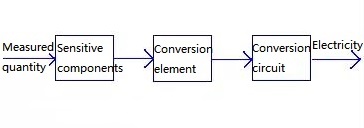
The composition of the sensor
A sensor is a physical device or biological organ that can detect and sense external signals, physical conditions (such as light, heat, humidity), or chemical composition (such as smoke). It also transmits the detected information to other devices or organs. A sensor meets the needs of information transmission, processing, storage, display, record, and control requirements. It is the first link to realize automatic detection and automatic control.
The function of the sensor
The function of the sensor is often compared with the five human sensory organs: photosensitive sensor-vision, sound-sensitive sensor-hearing, air sensor-smell, chemical sensor-taste, pressure-sensitive, temperature-sensitive, fluid sensor- Tactile
Classification of sensitive components:
①Physics, based on physical effects such as force, heat, light, electricity, magnetism, and sound.
②Chemistry, based on the principle of the chemical reaction.
③Biology, based on molecular recognition functions such as enzymes, antibodies, and hormones.
Usually, according to its basic sensing function, it can be divided into ten major components, such as thermal element, photosensitive element, gas sensor, force sensor, magnetic sensor, humidity sensor, acoustic sensor, radiation sensor, color sensor, and taste sensor.
Applications of sensors in CNC machine tools
Basic requirements of sensors in CNC machine tools
1) Strong anti-interference and high reliability;
2) The sensor must meet the standards and requirements in terms of speed and accuracy;
3) The use and maintenance of the sensor is more convenient;
4) The cost of the sensor is lower.
Different types of CNC machine tools also have different requirements for sensors. Normally, high-precision, medium-sized CNC machine tools require sensors for accuracy, while large-scale CNC machine tools require sensors for speed responsiveness.
1. Application of displacement detection
The sensors in CNC machine tools for displacement detection mainly include linear gratings, pulse encoders, and resolvers.
1) Some applications of linear gratings
Linear gratings are made by applying the phenomenon of light reflection and projection. They are usually used in the detection of displacement. They have higher recognition ability and higher detection accuracy than optical encoders. They are widely used in the dynamic measurement.
During the feed drive process, the grating is fixed on the bed. The actual displacement of the carriage movement is directly reflected on some pulse signals generated by the linear grating. The servo system that uses linear grating to detect the specific position of the worktable is a fully closed-loop control system.
2) Some applications of pulse encoders
The pulse encoder is a kind of speed sensor or angular displacement sensor, this sensor can convert mechanical rotation angle into a kind of electric pulse. There are three types of pulse encoders, namely electromagnetic, contact, and photoelectric. Among the above three kinds of pulse encoders, the photoelectric type is the most widely used. There is a light spot encoder at each of the x-axis and z-axis. It is mainly used for the detection of digital and angular displacement.

pulse encoder
3) Some applications of resolver
The resolver is an induction micromotor. In the resolver, the angular displacement and the output voltage are in a continuous function relationship. The rotor and the stator together constitute a resolver. In detail, the resolver is composed of two rotor windings, an iron core, and two stator windings. On the rotor and the stator, the secondary winding and the primary winding of the resolver.
2. Application of position detection
There is a certain difference between the position sensor and the displacement sensor. Position sensors are mainly divided into proximity sensors and contact sensors.
1) Application of contact sensor
The contacts of the contact sensor are usually contacted and pressed by two objects to carry out corresponding work. There are often limit switches and two-dimensional matrix position sensors and so on. The structure of the limit switch is relatively simple, low in cost, and reliable in operation. If an object touches the travel switch during operation, the internal contact of the travel switch will produce action, thereby realizing the control of the entire process. If a travel switch is configured at both ends of the x-axis, y-axis, and z-axis, then the travel switch will control the range of movement. The two-dimensional matrix position sensor is installed and configured on the inner side of the manipulator's palm. The sensor is mainly used to detect the contact position between itself and an object.
2) Application of proximity switch
The so-called proximity switch refers to a kind of switch that can send out an "action" signal when a certain object and the proximity switch are separated by a predetermined distance. There is no need for direct contact between the proximity switch and the object. Proximity switches mainly include Hall type, self-inductance type, and capacitive type. In CNC machine tools, the proximity switch is mainly used to control the stroke of the worktable, the tool selection of the tool post, and the oil cylinder.
In the tool post tool selection control, as shown in the figure below, the four cams from left to right correspond to the proximity switches SQ4~SQ1, forming a four-bit binary code. And each code corresponds to a tool position, such as 0110 corresponds to the No. 6 tool Position. Proximity switch SQ5 is used for parity check to reduce errors. Each time the tool post rotates a tool position, a signal is sent out. This signal is compared with the tool position command of the CNC system. When the tool position signal of the tool post matches the command tool position signal, it means that the tool selection is completed.
The Hall sensor is a sensor made using the Hall phenomenon. When semiconductors such as germanium are placed in a magnetic field and a current flows in one direction, a potential difference will appear in the vertical direction, which is the Hall phenomenon. Fix the small magnet on the moving part. When the part is close to the Hall element, a Hall phenomenon occurs to determine whether the object is in place.
3. Application of speed detection
The speed sensor is a kind of sensor that converts speed into an electric signal. On the one hand, this kind of sensor can detect linear speed. On the other hand, it can also detect angular speed. Commonly used sensors in CNC machine tools are pulse encoders and tachogenerators.
The pulse encoder generates a pulse every time a unit angular displacement passes. At the same time, it cooperates with the timer to detect the angular velocity. There are two types of tachogenerators: DC and AC tachogenerators. Tachogenerators have the following two characteristics. First, the slope of the ratio of the speed of the tachogenerator to the output voltage is relatively large. Second, there is a linear relationship between the speed and the output voltages of the tachogenerator.
Under normal circumstances, the speed sensor is mainly used in the speed detection of the CNC system servo unit in the CNC machine tool.
4. Application of pressure detection
A pressure sensor is a kind of sensor that converts pressure into an electrical signal. According to the working principle of the pressure sensor, it can be divided into capacitive, piezoelectric, and piezoresistive sensors.
A pressure sensor is a collective term for detecting a kind of interaction energy between solids and gases. The distance between the two electrodes of the capacitive pressure sensor and the electrode area determines the capacitance of the sensor. The capacitive pressure sensor is widely used in CNC machine tools due to its stable performance and high sensitivity.
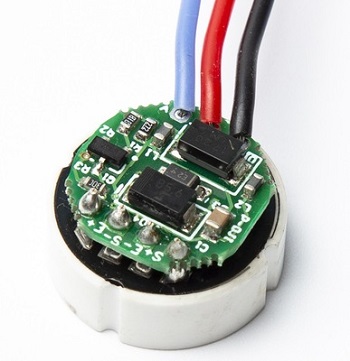
pressure sensor
The pressure sensor can detect the clamping of the workpiece in the CNC machine tool. If the set value is greater than the clamping force, the clamped workpiece will become loose. At the same time, the system will sound an alarm and stop working. In addition, the pressure sensor can also be used to detect some changes in the cutting force of the turning tool.
5. Temperature detection and application
A temperature sensor is a device that converts the temperature into another signal and resistance value. What you usually see is a thermistor sensor or thermal resistance sensor. The temperature sensor detects the temperature in the CNC machine tool and then performs corresponding overheat protection and temperature compensation.
During the operation of the CNC machine tool, the cutting of moving parts and the operation of the motor will produce different degrees of temperature. And the heat is not easy to dissipate as soon as possible. This phenomenon affects the machining accuracy of the parts to a large extent. In order to avoid the occurrence of the above phenomenon, install temperature sensors on some parts of the CNC machine tool that are susceptible to temperature. This setting can convert the temperature signal into an electrical signal. It is transmitted to the numerical control system for certain temperature compensation.
In addition, in areas where some equipment or components such as motors require overheating protection, corresponding temperature sensors should be installed to provide certain overheating protection.
6. Tool wear monitoring
Tool wear will affect the surface roughness and dimensional accuracy of the workpiece to a certain extent. Therefore, in order to avoid the occurrence of the above phenomenon in CNC machine tools, it is necessary to monitor tool wear accordingly. When the tool wears out, the load will increase on the spindle motor of the machine tool. At the same time, the voltage and current of the motor will change accordingly, and the power of the motor will also change. The power change is detected by the Hall sensor. When the power changes to an alarm in the CNC system and the locomotive stops running, the tool should be adjusted or replaced immediately.
 UTMEL
UTMEL
We are the professional distributor of electronic components, providing a large variety of products to save you a lot of time, effort, and cost with our efficient self-customized service. careful order preparation fast delivery service
1.What sensors are used in CNC machines?
A process monitoring sensor groups consist of accelerometers, RTDs (Resistance Temperature Detectors), image sensors, microphones, and position sensors. Accelerometers are used to detect vibration so that active vibration control can be achieved.
2.What are the different types of sensors?
List of Sensors

Vision and Imaging Sensors.

Temperature Sensors.

Radiation Sensors.

Proximity Sensors.

Pressure Sensors.

Position Sensors.

Photoelectric Sensors.

Particle Sensors.
3.What is actuation system in CNC?
An actuator is a component of a machine that is responsible for moving and controlling a mechanism or system, for example by opening a valve. In simple terms, it is a "mover". When it receives a control signal, an actuator responds by converting the source's energy into mechanical motion.
 The Key Role of Electronic Components in IoT DevicesUTMEL01 September 20236186
The article discusses the pivotal role of electronic components in Internet of Things (IoT) devices. IoT devices work by capturing real-world data using sensors, processing it through a microcontroller, and then sending it to the cloud for further analysis.
Read More Accelerometer Sensors Guide: Working Principle, Circuit Design, Specifications, and ApplicationsUTMEL25 June 2026940
A practical accelerometer sensor guide covering working principles, MEMS and piezoelectric types, datasheet specifications, circuit design, mounting, applications, and selection.
Read More 2026 ADAS Sensors: Supply Outlook and Alternative SourcingUTMEL18 July 20261087
Automotive cleanroom assembly integrating advanced driver assistance systems. The automotive industry faces a structural semiconductor deficit in 2026, driven not by pandemic-era demand shocks but by AI data centers absorbing global foundry capacity on legacy nodes (40nm-90nm) where 95% of automotive-grade components are manufactured. Video demonstrations of these systems show a "machine view" overlay with red crosshairs tracking pedestrian movement and sudden cut-ins before traditional collision thresholds are triggered.
Read More Magnetic Sensors for Position Detection: Hall Effect vs. AMR vs. TMR Engineering GuideUTMEL21 August 2026520
This guide compares Hall effect, AMR, and TMR magnetic sensors for position detection in motor control and robotics. It explains their physical principles, key performance metrics, and selection criteria. Hall effect suits low-cost commutation, AMR offers high-speed angle sensing, and TMR provides maximum precision and low power, with practical integration advice.
Read More Temperature Sensor Types Comparison: Thermocouple, RTD, and Semiconductor IC Selection GuideUTMEL17 August 2026432
This comprehensive selection guide compares thermocouples, platinum RTDs, and semiconductor ICs across measurement range, accuracy limits, and signal conditioning complexity. It covers fundamental operating physics, mathematical transfer functions, lead-wire compensation topologies, and power budgets. Engineers will find practical design checklists, benchtop multimeter diagnostic techniques, and an architectural decision workflow to optimize system performance and bill-of-materials cost.
Read More
Subscribe to Utmel !