Product
 Brand
Brand Articles
 Tools
Tools
BMP280 Sensor: Pinout, Application, Circuit and Comparison

Absolute Pressure Sensor I2C, SPI -40°C~85°C 4.35PSI ~ 15.95PSI (30kPa ~ 110kPa) No Port ±0.015PSI (±0.1kPa) 16b 1.71V~3.6V
Unit Price: $22.400765
Ext Price: $22.40


Absolute Pressure Sensor I2C, SPI -40°C~85°C 4.35PSI ~ 15.95PSI (30kPa ~ 110kPa) No Port ±0.015PSI (±0.1kPa) 16b 1.71V~3.6V
This article will unlock more details about the BMP280, Digital Pressure Sensor.
BMP280 Pinout


BMP280 CAD Model
Symbol

Footprint
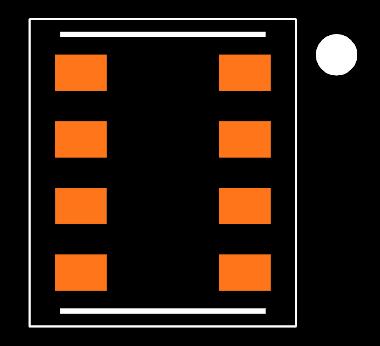
BMP280 Description
The BMP280 is an absolute barometric pressure sensor, which is especially feasible for mobile applications. Its small dimensions and its low power consumption allow for the implementation in battery-powered devices such as mobile phones, GPS modules or watches.
Specifications
- TypeParameter
- Factory Lead Time14 Weeks
- Package / Case
refers to the protective housing that encases an electronic component, providing mechanical support, electrical connections, and thermal management.
8-SMD - Surface Mount
having leads that are designed to be soldered on the side of a circuit board that the body of the component is mounted on.
YES - Mounting Feature
a process by which the operating system makes files and directories on a storage device (such as hard drive, CD-ROM, or network share) available for users to access via the computer's file system.
SURFACE MOUNT - Operating Temperature
The operating temperature is the range of ambient temperature within which a power supply, or any other electrical equipment, operate in. This ranges from a minimum operating temperature, to a peak or maximum operating temperature, outside which, the power supply may fail.
-40°C~85°C - Packaging
Semiconductor package is a carrier / shell used to contain and cover one or more semiconductor components or integrated circuits. The material of the shell can be metal, plastic, glass or ceramic.
Tape & Reel (TR) - Published2014
- Part Status
Parts can have many statuses as they progress through the configuration, analysis, review, and approval stages.
Active - Moisture Sensitivity Level (MSL)
Moisture Sensitivity Level (MSL) is a standardized rating that indicates the susceptibility of electronic components, particularly semiconductors, to moisture-induced damage during storage and the soldering process, defining the allowable exposure time to ambient conditions before they require special handling or baking to prevent failures
1 (Unlimited) - Applications
The parameter "Applications" in electronic components refers to the specific uses or functions for which a component is designed. It encompasses various fields such as consumer electronics, industrial automation, telecommunications, automotive, and medical devices. Understanding the applications helps in selecting the right components for a particular design based on performance, reliability, and compatibility requirements. This parameter also guides manufacturers in targeting their products to relevant markets and customer needs.
Board Mount - Additional Feature
Any Feature, including a modified Existing Feature, that is not an Existing Feature.
IT ALSO HAS 3-WIRE INTERFACE - Voltage - Supply
Voltage - Supply refers to the range of voltage levels that an electronic component or circuit is designed to operate with. It indicates the minimum and maximum supply voltage that can be applied for the device to function properly. Providing supply voltages outside this range can lead to malfunction, damage, or reduced performance. This parameter is critical for ensuring compatibility between different components in a circuit.
1.71V~3.6V - Output
In electronic components, the parameter "Output" typically refers to the signal or data that is produced by the component and sent to another part of the circuit or system. The output can be in the form of voltage, current, frequency, or any other measurable quantity depending on the specific component. The output of a component is often crucial in determining its functionality and how it interacts with other components in the circuit. Understanding the output characteristics of electronic components is essential for designing and troubleshooting electronic circuits effectively.
16b - Termination Style
"Termination style" in electronic components refers to the method used to connect the component to a circuit board or other electronic devices. It determines how the component's leads or terminals are designed for soldering or mounting onto the circuit board. Common termination styles include through-hole, surface mount, and wire lead terminations.Through-hole components have leads that are inserted through holes in the circuit board and soldered on the other side. Surface mount components have flat terminals that are soldered directly onto the surface of the circuit board. Wire lead terminations involve attaching wires to the component for connection.The choice of termination style depends on factors such as the type of component, the manufacturing process, and the space available on the circuit board. Different termination styles offer various advantages in terms of ease of assembly, reliability, and space efficiency in electronic designs.
SMD (SMT) Tab - Body Length or Diameter
Body length or diameter in electronic components refers to the physical dimensions of a component's housing, typically measured in millimeters or inches. It indicates the size of the component that affects its fit within a circuit board or system. This parameter is crucial for ensuring compatibility with the design and mounting of electronic devices. It can impact heat dissipation, electrical performance, and overall assembly efficiency. Accurate measurement of body length or diameter is essential for proper component selection and placement in electronic applications.
2.5mm - Body Breadth
Body breadth in electronic components refers to the width of the physical body of a component, such as a resistor, capacitor, or integrated circuit. This measurement is crucial for ensuring proper fit within a circuit board or enclosure. It can affect the component's thermal performance, mechanical stability, and overall compatibility with other components in a design. Body breadth is typically specified in millimeters or inches and is an important factor in the selection and design of electronic assemblies.
2 mm - Output Type
The "Output Type" parameter in electronic components refers to the type of signal or data that is produced by the component as an output. This parameter specifies the nature of the output signal, such as analog or digital, and can also include details about the voltage levels, current levels, frequency, and other characteristics of the output signal. Understanding the output type of a component is crucial for ensuring compatibility with other components in a circuit or system, as well as for determining how the output signal can be utilized or processed further. In summary, the output type parameter provides essential information about the nature of the signal that is generated by the electronic component as its output.
I2C, SPI - Number of Bits20
- Accuracy
Accuracy in electronic components refers to the degree to which a measured value agrees with the true or accepted value. It evaluates the precision of a component in providing correct output or measurement under specified conditions. High accuracy indicates minimal deviation from the actual value, while low accuracy shows significant error in measurement. This parameter is crucial in applications where precise data is essential for reliable performance and decision-making.
±0.015PSI (±0.1kPa) - Response Time
the time taken for a circuit or measuring device, when subjected to a change in input signal, to change its state by a specified fraction of its total response to that change.
2000 μs - Operating Pressure
An operating pressure is the amount of internal force applied to the walls of some type of pressure vessel during normal conditions.
4.35PSI ~ 15.95PSI (30kPa ~ 110kPa) - Pressure Type
Pressure Type in electronic components refers to the type of pressure that the component can withstand without being damaged or malfunctioning. This parameter is important in applications where the component may be exposed to varying levels of pressure, such as in industrial or automotive settings. The pressure type specification typically includes information on the maximum pressure the component can handle, whether it is positive or negative pressure, and any specific conditions under which the component can operate safely. It is crucial to consider the pressure type rating when selecting electronic components for use in environments where pressure variations are a concern.
Absolute - Port Style
Port style in electronic components refers to the physical and electrical characteristics of a connection point on a device or circuit. It encompasses the design and configuration of ports used for input and output, including their shape, size, and pin arrangement. Different port styles are used to ensure compatibility and facilitate connections between various electronic devices and systems. This parameter is crucial for defining how components interface with one another in electronic design and integration.
No Port - Maximum Pressure
The parameter "Maximum Pressure" in electronic components refers to the maximum amount of pressure or force that the component can withstand without being damaged or failing. This specification is important for components that may be exposed to external pressure, such as in high-pressure environments or applications where physical pressure may be applied. Exceeding the maximum pressure rating of a component can lead to deformation, cracking, or complete failure of the component, potentially causing system malfunctions or safety hazards. It is crucial to adhere to the specified maximum pressure limits to ensure the reliable operation and longevity of electronic components in various applications.
290.08PSI (2000kPa) - Sensors/Transducers Type
In electronic components, the parameter "Sensors/Transducers Type" refers to the specific type of sensor or transducer that is integrated into the component. Sensors are devices that detect changes in physical properties and convert them into electrical signals, while transducers are devices that convert one form of energy into another. The type of sensor or transducer used in an electronic component can vary widely depending on the intended application, such as temperature sensors, pressure sensors, proximity sensors, accelerometers, and more. Understanding the Sensors/Transducers Type parameter is crucial for selecting the right component for a particular electronic system or device, as different types of sensors/transducers have different functionalities and performance characteristics.
PRESSURE SENSOR,PEIZORESISTIVE - Pressure Range-Max
Pressure Range-Max in electronic components refers to the maximum amount of pressure that the component can withstand without being damaged or malfunctioning. This parameter is crucial in applications where the component may be exposed to varying levels of pressure, such as in industrial or automotive settings. It is typically specified in units such as pounds per square inch (psi) or pascals (Pa). Ensuring that electronic components are rated for the appropriate pressure range is essential to prevent failures and maintain the reliability of the overall system.
15.95 Psi - Features
In the context of electronic components, the term "Features" typically refers to the specific characteristics or functionalities that a particular component offers. These features can vary depending on the type of component and its intended use. For example, a microcontroller may have features such as built-in memory, analog-to-digital converters, and communication interfaces like UART or SPI.When evaluating electronic components, understanding their features is crucial in determining whether they meet the requirements of a particular project or application. Engineers and designers often look at features such as operating voltage, speed, power consumption, and communication protocols to ensure compatibility and optimal performance.In summary, the "Features" parameter in electronic components describes the unique attributes and capabilities that differentiate one component from another, helping users make informed decisions when selecting components for their electronic designs.
Standby Mode - Body Height
In electronic components, "Body Height" refers to the vertical dimension of the component's physical body or package. It is the measurement from the bottom of the component to the top, excluding any leads or terminals. Body Height is an important parameter to consider when designing circuit boards or enclosures to ensure proper fit and clearance. It is typically specified in datasheets or technical drawings provided by the component manufacturer. Understanding the Body Height of electronic components is crucial for proper placement and integration within a circuit or system.
0.95mm - RoHS Status
RoHS means “Restriction of Certain Hazardous Substances” in the “Hazardous Substances Directive” in electrical and electronic equipment.
ROHS3 Compliant - Lead Free
Lead Free is a term used to describe electronic components that do not contain lead as part of their composition. Lead is a toxic material that can have harmful effects on human health and the environment, so the electronics industry has been moving towards lead-free components to reduce these risks. Lead-free components are typically made using alternative materials such as silver, copper, and tin. Manufacturers must comply with regulations such as the Restriction of Hazardous Substances (RoHS) directive to ensure that their products are lead-free and environmentally friendly.
Lead Free
BMP280 Application
●Enhancement of GPS navigation (e.g. time-to-first-fix improvement, dead-reckoning, slope detection)
●Indoor navigation (floor detection, elevator detection)
●Outdoor navigation, leisure and sports applications
●Weather forecast
●Vertical velocity indication (e.g. rise/sink speed)
BMP280 Target Devices
●Handsets such as mobile phones, tablet PCs, GPS devices
●Navigation systems
●Home weather stations
●Flying toys
●Watches
BMP280 Operating Modes
BMP280 can be operated in three power modes:
sleep mode
normal mode
forced mode
In sleep mode, no measurements are performed. Normal mode comprises automated perpetual cycling between an active measurement period and an inactive standby period. In forced mode, a single measurement is performed. When the measurement is finished, the sensor forced mode, a single measurement is performed. When the measurement is finished, the sensor returns to sleep mode.
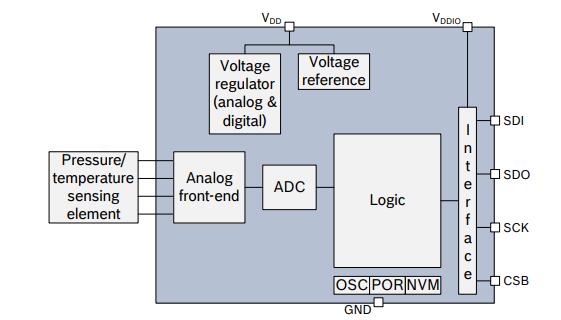
BMP280 Functional Block Diagram
The BMP280 provides the highest flexibility to the designer and can be adapted to the requirements regarding accuracy, measurement time and power consumption by selecting from a high number of possible combinations of the sensor settings.
The block diagram of BMP280 is given below.
BMP280 VS.BMP180
As the successor to the widely adopted BMP180, the BMP280 delivers high performance in all applications that require precise pressure measurement. The BMP280 operates at lower noise, supports new filter modes and an SPI interface within a footprint 63% smaller than the BMP180. The emerging applications of indoor navigation, fitness as well as GPS refinement require high relative accuracy and a low TCO at the same time.
BMP180 and BMP280 are perfectly suitable for applications like floor detection since both sensors feature excellent relative accuracy is +0.12 hPa, which is equivalent to a +1 m difference in altitude. The very low offset temperature coefficient (TCO) of 1.5 Pa/K translates to a temperature drift of only 12.6 cm/K.
A Simple table for their comparison is shown below.

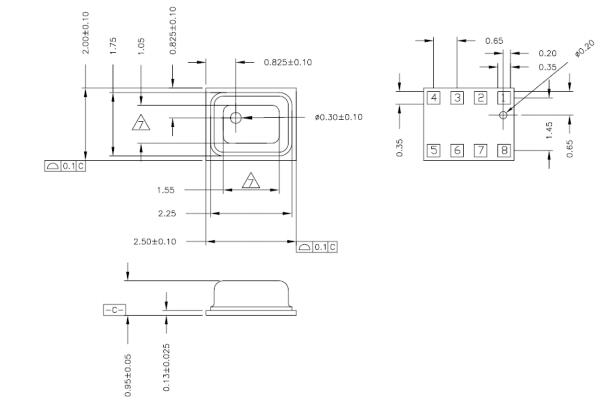
BMP280 Package
BMP280 Manufacturer
Bosch Sensortec GmbH is a fully owned subsidiary of Robert Bosch GmbH dedicated to the world of consumer electronics; offering a complete portfolio of micro-electro-mechanical systems (MEMS) based sensors and solutions that enable mobile devices to feel and sense the world around them. Bosch Sensortec develops and markets a broad portfolio of MEMS sensors, solutions and systems for applications in smartphones, tablets, wearable devices, and various products within the IoT (Internet of Things).
Datasheet PDF
- PCN Manufacturer Information :
- Datasheets :
- Environmental Information :
Popularity by Region
What is BMP280?
The BMP280 is an absolute barometric pressure sensor, which is especially feasible for mobile applications. Its small dimensions and its low power consumption allow for the implementation in battery-powered devices such as mobile phones, GPS modules or watches.
What is barometer sensor?
A barometric pressure sensor is a sensor that detects atmospheric pressure. Various types of pressure sensors exist utilizing different materials and methods as shown below based on the pressure values to be measured. Among these, sensors that detect atmospheric pressure are called barometric pressure sensors.
How about the BMP280?
Its small dimensions and its low power consumption of 2.7 μA @1Hz allow the implementation in battery-driven devices such as mobile phones, GPS modules or watches.
 23LCV512 SPI Serial SRAM: Pinout, Equivalent and Datasheet
20 April 20221595
 BAS416 Diode: NXP BAS416, 75V, SOD 323, Datasheet PDF
17 February 20221950
 TPS61022RWUR Boost Converter, 0.5-V 7-VQFN and Switching Voltage Regulators
17 March 20223114
 TM1618 LED Driver--feature, datasheet, and circuit
02 March 20224236
![SN74LS47N Decoder/Driver: Features, Pinout, and Datasheet [Video&FAQ]](https://res.utmel.com/Images/Article/eb1c86dc-0f82-4ac9-8440-314d68b78f25.png) SN74LS47N Decoder/Driver: Features, Pinout, and Datasheet [Video&FAQ]
SN74LS47N Decoder/Driver: Features, Pinout, and Datasheet [Video&FAQ]28 October 202123324
 C1815 NPN Transistor: Pinout, Equivalents, and Uses
11 August 202144617
 Unveiling the PIC16CR7X Microcontroller: Technical Insights and Applications
29 February 2024187
 STM32F303CCT6 Microcontroller: 72MHz, 48-LQFP, Pinout and Datasheet
20 January 20222324
 What Makes Rocker Switches Unique
18 July 20251335
 Introduction To Different Types Of Relays
10 November 202020635
 Comprehensive Guide to Xilinx SoC Boards and Tools
04 June 2025853
 Analysis of Semiconductor Wafers
22 October 202517214
 How Proper Thermal Management Extends the Life of Your Electronics
18 July 20251968
 MLCC vs Polymer Tantalum Capacitors: Overcoming 2026 Shortages in AI Server PDNs
07 August 2026493
 Dismantling and Analyzing Each Component in the Switching Power Supply
16 February 20229564
 The Through Hole of the PCB Circuit Board Must be Plugged, Why?
14 February 20235243
Bosch Sensortec
In Stock: 6665
Minimum: 1 Multiples: 1
Qty
Unit Price
Ext Price
1
$22.400765
$22.40
10
$21.132797
$211.33
100
$19.936601
$1,993.66
500
$18.808114
$9,404.06
1000
$17.743504
$17,743.50
Not the price you want? Send RFQ Now and we'll contact you ASAP.
Inquire for More Quantity