Product
 Brand
Brand Articles
 Tools
Tools
CR2025 vs. CR2032: How to differentiate?


BATTERY LITHIUM 3V COIN 20MM
Batteries are available in a number of shapes, sizes, voltages, and currents to satisfy a variety of requirements, depending on the application. Coin cells, also known as button cells, are a type of battery commonly used in small gadgets such as automobile key fobs, miniature flashlights, calculators, and more. This article will compare and contrast the characteristics and applications of CR2025 and CR2032 batteries in order to help users use these oft-confused battery types appropriately.

Cr2025 vs. CR2032 - The Differences between These Batteries!
- Foreword
- Overview of CR2032
- Overview of CR2025
- CR2025 vs. CR2032: Applications
- CR2025 vs. CR2032: Similarities
- CR2025 vs. CR2032: Differences
- CR2025 vs. CR2032: Pros and Cons
- Can I use a CR2025 battery instead of a CR2032?
- Factors to Consider When Using CR2032 Instead Of CR2025
- CR2025 vs. CR2032: Manufacturer
- Conclusion
Foreword
What models are CR2032 and CR2025? What does CR stand for in battery? Lithium coin cell batteries are usually designated with a CR followed by a set of numbers.
The letter C stands for Lithium Manganese Dioxide.
R-after another letter stands a round cell with the chemistry shown by the first letter.
Digit-The next four digits indicate the size, the first two digits indicate the diameter, and the last two digits indicate the thickness.
All the batteries that have this chemical substance in their batteries can use this abbreviation CR.

Overview of CR2032
A CR2032 battery is a 20mm diameter x 3.2mm thickness non-rechargeable (primary) lithium coin or "button" cell battery. Depending on the manufacturer, the CR2032 battery has a voltage of 3 volts and a capacity of up to 240mAh. The CR2032 is the most widely used lithium coin cell battery today. The CR2032 battery is used in a variety of commercial applications, including automobile key fobs, motherboards, security system panels, and weapons sighting systems. The CR2032 battery can also be fitted with connecting tabs, allowing it to be installed in practically any position. The CR2032 battery is an excellent choice for a wide range of applications due to its small size, large capacity, long service life, and consistent discharge.
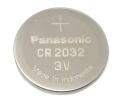
CR2032
Features & Benefits
Good pulse capability
High discharge characteristics
Stable voltage level during discharge
Long-term reliability
Specifications
Nominal Capacity: 225 mAh
Nominal Voltage: 3V
Weight: 2.9g
Operating Temperature: -30°C - +60°C
Overview of CR2025
A CR2025 battery is a non-rechargeable lithium coin or "button" cell with a diameter of 20mm and a thickness of 2.5mm. Depending on manufacturer specifications, the CR2025 battery has a high voltage of 3V and a capacity of up to 170mAh. The CR2025 battery is a very common lithium coin cell battery that is used in the same quantities and for the same purposes as the CR2032. The CR2025 is marginally more suited for goods with limited mounting space than the CR2032. When used in similar applications, however, the CR2025's lesser capacity (mAh) will result in somewhat shorter service life than a CR2032.

CR2025
Features & Benefits
Good pulse capability
High discharge characteristics
Stable voltage level during discharge
Long-term reliability
Specifications
Nominal Capacity: 165 mAh
Nominal Voltage: 3V
Weight: 2.3g
Operating Temperature: -30°C - +60°C
CR2025 vs. CR2032: Applications
Wristwatches
Pocket calculator
Key fob
Children’s toys
Garage door opener

CR2025 vs. CR2032: Similarities
As you can see, CR2025 and CR2032 are very similar. Both are 3V button cells with the same diameter and are interchangeable if they fit in the casing. They are not rechargeable and are all lithium primary batteries. Lithium coin batteries have a 10-year shelf life when maintained at ambient temperature and relative humidity. Both batteries can power small devices like calculators, computer motherboards, fitness appliances, laser pens, POS systems, security devices, sensors, smart carport keyless entry devices, wristwatches, and various medical devices such as clinical thermometers, glucose monitors, heart pacemakers, and tensiometers.
CR2025 vs. CR2032: Differences
The obvious difference between the two battery types would be thickness and mAh. The CR2025 has a diameter of 20mm and a thickness of 2.5mm while the CR2032 has a diameter of 20mm and a thickness of 3.2mm. Because the CR2032 is 0.7mm thicker than the CR2025, it has a higher capacity (mAh) to deliver current to the load. The CR2025 generally has a 165mAh and the CR2032 has a slightly higher mAh of 225. Depending on how frequently the device is used, it might be worth choosing the CR2032 battery.
CR2025 vs. CR2032: Pros and Cons
| CR2032 | CR2025 | |
| Pros | 1. Higher capacity, which will lead to a longer life. | 1. It takes less space, and you won’t worry about damaging the battery when you put it in the device |
| 2. Perfect for watches, heart monitor scans, and hearing aids. | 2. It is best used for children’s toys and calculators. | |
| Cons | Takes more space | 1. Less capacity |
| 2. Shorter duration |
Can I use a CR2025 battery instead of a CR2032?
The CR2025 and CR2032 can be used interchangeably as long as they fit in the battery box, though the CR2032 will probably last slightly longer simply because it has a bigger capacity (mAh). If you're in a pinch and only have the CR2025 on hand, you can fold a piece of aluminum foil or another conductor to fill the 0.7mm gap. Close the compartment and lay it on top of the positive (+) side of the battery to keep it in place. If you don't make proper contact with the battery and spring, the battery may become intermittent. Although this isn't ideal because the CR2025 won't last as long in a device meant for the CR2032, it can be beneficial in an emergency or when you're out of batteries.
Factors to Consider When Using CR2032 Instead Of CR2025
If you're replacing a CR2032 with a CR2032, the size of the battery is the most important consideration. And there are also other factors to consider when doing so.
Voltage
Electronic gadgets have a set operating voltage that they are meant to operate at for best performance. This implies you'll need to match the battery voltage to the operational voltage of the device you're using it with.
If you're replacing a CR2025 with a CR2032, the voltage of the CR2032 must be the same.
Both batteries have the same voltage of 3 volts.
Current
Devices are rated for a particular amount of current that they draw under typical functioning conditions, just like voltage.
Both batteries deliver the same amount of 0.2mA current.
Current capacity
Last but not least, current capacity must be considered. A battery's capacity refers to how much total charge (current) it can hold.
It's like glass and the amount of water it can hold.
The more water (charge) a glass can carry, the bigger it is, and vice versa.
The chemical composition of a battery, on the other hand, can have an impact on current capacity.
It isn't only a matter of the battery's physical dimensions.
However, because both batteries have the same chemical makeup in this instance, the capacity is determined by their size.
Because the CR2032 is 0.7mm larger than the CR2025, it can carry more charge and so deliver a higher current.
The CR2032’s capacity is 220mAh, whereas the CR2025’s capacity is 165mAh.
CR2025 vs. CR2032: Manufacturer
As the industrial components and electronic devices division of Panasonic Corporation of North Americ, Panasonic Industrial Devices Sales Company of America provides key components that power the home appliances, consumer electronics, computers, communications, and commercial and healthcare products used by millions of people each day. in addition to a wide range of high-quality industrial products, global manufacturing, and advanced research and development facilities, we are also committed to customer service, for which we are preferred by customers. From the smallest resistor to the highest technology wireless communications modules, all of them can be found on our product list, which means a wide selection for you.
Conclusion
There is very little difference between the CR2025 and the CR2032. As you probably expected, coin battery shelf life differs by brand. As they say, “You get what you pay for”. The only real difference when comparing brands is in the mAh. Although the CR2032 appears to be a logical choice due to its capacity, the battery you should purchase is determined by your purpose, frequency of usage, and budget. Another factor to consider is the amount of storage space available on your device's battery. It won't work if it doesn't fit, no matter how small or large it is.
CR2025 may be preferable for children's toys and pocket calculators. However, CR2032 may be used in wristwatches, heart monitor scans, and hearing aids. So your decision will be made on the capacity of those batteries.
Can I use a CR2032 in place of a CR2025?
2032 and 2025 are the dimensions of the battery. For as long as either fit in the battery compartment, the CR2025 and CR2032 may be used interchangeably with minimal effect although the CR2032 would probably last slightly longer simply because it has a higher capacity (mAh).
What does CR2032 stand for?
The name defines the size of the battery like for CR2032, the first two digits stand for diameter and second for height or thickness in tenths of mm. So, according to this 20mm is the diameter of CR2032 and 3.2mm is the thickness.
Will a CR2025 work for a CR2032?
Can I use a CR2025 battery instead of a CR2032? For as long as either fit in the battery compartment, the CR2025 and CR2032 may be used interchangeably with minimal effect although the CR2032 would probably last slightly longer simply because it has a higher capacity (mAh).
How long does a cr2025 battery last?
10 years
At what voltage is a CR2025 dead?
When the battery drops down to 2.8-2.7 volt it is considered dead.
 AP7313 Linear Regulator: Pinout, Features and Datasheet
11 April 20221034
 What you need to know about TPA3110 Bluetooth Audio Power Amplifier Board
26 April 202216928
 SST25VF020 2 Mbit SPI Serial Flash: Pinout, Equivalent and Datasheet
24 March 2022804
 RF101 Diode: Datasheet, Features, Dimensions
21 July 2021771
 LM2576 vs LM2596: How to differentiate?
28 April 202217272
 LM2577 Voltage Regulator: Pinout, Features and Datasheet
29 October 20216282
 Atmel SAM D21E / SAM D21G / SAM D21J Microcontrollers: Comprehensive Technical Analysis
29 February 2024197
 Understanding STM32G0B0RET6 Troubleshooting Techniques
09 July 2025299
 Basic Introduction to Hall Effect Sensors
13 November 20258832
 Introduction to Lead Acid Battery: Construction, Working Principle and Types
04 March 20219658
 What is a Ground Fault Circuit Interrupter?
27 March 20255121
 OLED, QLED, MicroLED: Who is the Next Generation Display Technology?
02 September 20223079
 How to Avoid Common Mistakes When Choosing Electrical Fuses
14 July 2025718
 What is a Radar Sensor?
04 September 202011087
 Semiconductor Industry's Uphill Battle Towards Net Zero
22 September 20232050
 Volkswagen CFO: Chip Supply Shortage Will Continue Until 2024
11 April 20224739
Panasonic - BSG
In Stock
United States
China
Canada
Japan
Russia
Germany
United Kingdom
Singapore
Italy
Hong Kong(China)
Taiwan(China)
France
Korea
Mexico
Netherlands
Malaysia
Austria
Spain
Switzerland
Poland
Thailand
Vietnam
India
United Arab Emirates
Afghanistan
Åland Islands
Albania
Algeria
American Samoa
Andorra
Angola
Anguilla
Antigua & Barbuda
Argentina
Armenia
Aruba
Australia
Azerbaijan
Bahamas
Bahrain
Bangladesh
Barbados
Belarus
Belgium
Belize
Benin
Bermuda
Bhutan
Bolivia
Bonaire, Sint Eustatius and Saba
Bosnia & Herzegovina
Botswana
Brazil
British Indian Ocean Territory
British Virgin Islands
Brunei
Bulgaria
Burkina Faso
Burundi
Cabo Verde
Cambodia
Cameroon
Cayman Islands
Central African Republic
Chad
Chile
Christmas Island
Cocos (Keeling) Islands
Colombia
Comoros
Congo
Congo (DRC)
Cook Islands
Costa Rica
Côte d’Ivoire
Croatia
Cuba
Curaçao
Cyprus
Czechia
Denmark
Djibouti
Dominica
Dominican Republic
Ecuador
Egypt
El Salvador
Equatorial Guinea
Eritrea
Estonia
Eswatini
Ethiopia
Falkland Islands
Faroe Islands
Fiji
Finland
French Guiana
French Polynesia
Gabon
Gambia
Georgia
Ghana
Gibraltar
Greece
Greenland
Grenada
Guadeloupe
Guam
Guatemala
Guernsey
Guinea
Guinea-Bissau
Guyana
Haiti
Honduras
Hungary
Iceland
Indonesia
Iran
Iraq
Ireland
Isle of Man
Israel
Jamaica
Jersey
Jordan
Kazakhstan
Kenya
Kiribati
Kosovo
Kuwait
Kyrgyzstan
Laos
Latvia
Lebanon
Lesotho
Liberia
Libya
Liechtenstein
Lithuania
Luxembourg
Macao(China)
Madagascar
Malawi
Maldives
Mali
Malta
Marshall Islands
Martinique
Mauritania
Mauritius
Mayotte
Micronesia
Moldova
Monaco
Mongolia
Montenegro
Montserrat
Morocco
Mozambique
Myanmar
Namibia
Nauru
Nepal
New Caledonia
New Zealand
Nicaragua
Niger
Nigeria
Niue
Norfolk Island
North Korea
North Macedonia
Northern Mariana Islands
Norway
Oman
Pakistan
Palau
Palestinian Authority
Panama
Papua New Guinea
Paraguay
Peru
Philippines
Pitcairn Islands
Portugal
Puerto Rico
Qatar
Réunion
Romania
Rwanda
Samoa
San Marino
São Tomé & Príncipe
Saudi Arabia
Senegal
Serbia
Seychelles
Sierra Leone
Sint Maarten
Slovakia
Slovenia
Solomon Islands
Somalia
South Africa
South Sudan
Sri Lanka
St Helena, Ascension, Tristan da Cunha
St. Barthélemy
St. Kitts & Nevis
St. Lucia
St. Martin
St. Pierre & Miquelon
St. Vincent & Grenadines
Sudan
Suriname
Svalbard & Jan Mayen
Sweden
Syria
Tajikistan
Tanzania
Timor-Leste
Togo
Tokelau
Tonga
Trinidad & Tobago
Tunisia
Turkey
Turkmenistan
Turks & Caicos Islands
Tuvalu
U.S. Outlying Islands
U.S. Virgin Islands
Uganda
Ukraine
Uruguay
Uzbekistan
Vanuatu
Vatican City
Venezuela
Wallis & Futuna
Yemen
Zambia
Zimbabwe
![CR2450]() CR2450
CR2450Panasonic - BSG
![BR-1225/VCN]() BR-1225/VCN
BR-1225/VCNPanasonic - BSG
![BR-1632A/FAN]() BR-1632A/FAN
BR-1632A/FANPanasonic - BSG
![CR1632]() CR1632
CR1632Panasonic - BSG
![CR-2032N/BN]() CR-2032N/BN
CR-2032N/BNPanasonic
![BR-1225A/FAN]() BR-1225A/FAN
BR-1225A/FANPanasonic - BSG
![CR-2032/HFN]() CR-2032/HFN
CR-2032/HFNPanasonic - BSG
![CR-2032/VCN]() CR-2032/VCN
CR-2032/VCNPanasonic - BSG
![CR-123PE/BN]() CR-123PE/BN
CR-123PE/BNPanasonic - BSG