

 Product
 Brand
Brand Articles
 Tools
Tools
FN2000121 Oscillator: Datasheet, Test Circuit, Application


OSCILLATOR XO 20.000MHZ CMOS SMD
The FN2000121 is from the FN Series 3.3V crystal clock oscillator. This article will unlock more details about FN2000121.
FN2000121 Pinout
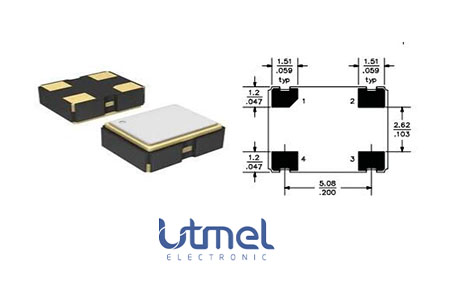
Pinout
| Pin | Function |
| 1 | OE Function |
| 2 | Ground |
| 3 | Clock Output |
| 4 | VDD |
Pin Description
FN2000121 Description
The FN2000121 is from the FN Series 3.3V crystal clock oscillator. It achieves superb jitter and stability over a broad range of operating conditions and frequencies. The output clock signal, generated internally with a non-PLL oscillator design, is compatible with LVCMOS/LVTTL logic levels. The device, available on tape and reel, is contained in a 7.0 x 5.0mm surface-mount ceramic package.
Specifications
- TypeParameter
- Factory Lead Time15 Weeks
- Mount
In electronic components, the term "Mount" typically refers to the method or process of physically attaching or fixing a component onto a circuit board or other electronic device. This can involve soldering, adhesive bonding, or other techniques to secure the component in place. The mounting process is crucial for ensuring proper electrical connections and mechanical stability within the electronic system. Different components may have specific mounting requirements based on their size, shape, and function, and manufacturers provide guidelines for proper mounting procedures to ensure optimal performance and reliability of the electronic device.
Surface Mount - Mounting Type
The "Mounting Type" in electronic components refers to the method used to attach or connect a component to a circuit board or other substrate, such as through-hole, surface-mount, or panel mount.
Surface Mount - Package / Case
refers to the protective housing that encases an electronic component, providing mechanical support, electrical connections, and thermal management.
4-SMD, No Lead - Operating Temperature
The operating temperature is the range of ambient temperature within which a power supply, or any other electrical equipment, operate in. This ranges from a minimum operating temperature, to a peak or maximum operating temperature, outside which, the power supply may fail.
-20°C~70°C - Packaging
Semiconductor package is a carrier / shell used to contain and cover one or more semiconductor components or integrated circuits. The material of the shell can be metal, plastic, glass or ceramic.
Bulk - Series
In electronic components, the "Series" refers to a group of products that share similar characteristics, designs, or functionalities, often produced by the same manufacturer. These components within a series typically have common specifications but may vary in terms of voltage, power, or packaging to meet different application needs. The series name helps identify and differentiate between various product lines within a manufacturer's catalog.
SaRonix-eCera™ FN - Size / Dimension
In electronic components, the parameter "Size / Dimension" refers to the physical dimensions of the component, such as its length, width, and height. These dimensions are crucial for determining how the component will fit into a circuit or system, as well as for ensuring compatibility with other components and the overall design requirements. The size of a component can also impact its performance characteristics, thermal properties, and overall functionality within a given application. Engineers and designers must carefully consider the size and dimensions of electronic components to ensure proper integration and functionality within their designs.
0.276Lx0.197W 7.00mmx5.00mm - Pbfree Code
The "Pbfree Code" parameter in electronic components refers to the code or marking used to indicate that the component is lead-free. Lead (Pb) is a toxic substance that has been widely used in electronic components for many years, but due to environmental concerns, there has been a shift towards lead-free alternatives. The Pbfree Code helps manufacturers and users easily identify components that do not contain lead, ensuring compliance with regulations and promoting environmentally friendly practices. It is important to pay attention to the Pbfree Code when selecting electronic components to ensure they meet the necessary requirements for lead-free applications.
yes - Part Status
Parts can have many statuses as they progress through the configuration, analysis, review, and approval stages.
Active - Moisture Sensitivity Level (MSL)
Moisture Sensitivity Level (MSL) is a standardized rating that indicates the susceptibility of electronic components, particularly semiconductors, to moisture-induced damage during storage and the soldering process, defining the allowable exposure time to ambient conditions before they require special handling or baking to prevent failures
1 (Unlimited) - TypeXO (Standard)
- Voltage - Supply
Voltage - Supply refers to the range of voltage levels that an electronic component or circuit is designed to operate with. It indicates the minimum and maximum supply voltage that can be applied for the device to function properly. Providing supply voltages outside this range can lead to malfunction, damage, or reduced performance. This parameter is critical for ensuring compatibility between different components in a circuit.
3.3V - Supply Voltage
Supply voltage refers to the electrical potential difference provided to an electronic component or circuit. It is crucial for the proper operation of devices, as it powers their functions and determines performance characteristics. The supply voltage must be within specified limits to ensure reliability and prevent damage to components. Different electronic devices have specific supply voltage requirements, which can vary widely depending on their design and intended application.
3.3V - Frequency
In electronic components, the parameter "Frequency" refers to the rate at which a signal oscillates or cycles within a given period of time. It is typically measured in Hertz (Hz) and represents how many times a signal completes a full cycle in one second. Frequency is a crucial aspect in electronic components as it determines the behavior and performance of various devices such as oscillators, filters, and communication systems. Understanding the frequency characteristics of components is essential for designing and analyzing electronic circuits to ensure proper functionality and compatibility with other components in a system.
20MHz - Frequency Stability
the variation of output frequency of a crystal oscillator due to external conditions like temperature variation, voltage variation, output load variation, and frequency aging.
±50ppm - Output
In electronic components, the parameter "Output" typically refers to the signal or data that is produced by the component and sent to another part of the circuit or system. The output can be in the form of voltage, current, frequency, or any other measurable quantity depending on the specific component. The output of a component is often crucial in determining its functionality and how it interacts with other components in the circuit. Understanding the output characteristics of electronic components is essential for designing and troubleshooting electronic circuits effectively.
CMOS - Function
The parameter "Function" in electronic components refers to the specific role or purpose that the component serves within an electronic circuit. It defines how the component interacts with other elements, influences the flow of electrical signals, and contributes to the overall behavior of the system. Functions can include amplification, signal processing, switching, filtering, and energy storage, among others. Understanding the function of each component is essential for designing effective and efficient electronic systems.
Enable/Disable - Base Resonator
Base resonator is a component used in electronic circuits to establish a specific resonant frequency. It typically consists of a combination of inductors and capacitors that create a resonant LC circuit. The primary function of a base resonator is to filter signals, allowing certain frequencies to pass while attenuating others. This makes it essential in applications like radio transmitters and receivers where precise frequency selection is critical.
Crystal - Physical Dimension
The parameter "Physical Dimension" in electronic components refers to the measurable size and shape characteristics of a component. This includes dimensions such as length, width, height, and diameter, which are critical for ensuring proper fit and integration into electronic circuits and systems. Physical dimensions also influence the component's performance, thermal management, and overall reliability in application environments. Understanding these dimensions is essential for designers to maintain compatibility with circuit boards and reduce issues related to space constraints.
7.0mm x 5.0mm x 1.8mm - Operating Frequency
Operating frequency is the frequency at which the communications are being made with the total bandwidth occupied by the carrier signal with modulation. Usually bandwidth of the antenna will be wider than the bandwidth of the signal so that more than one center frequency the antenna can be put in to effective use.
20MHz - Rise Time-Max
Rise Time-Max is a parameter used in electronic components to indicate the maximum time it takes for a signal to transition from a low state to a high state. It is typically measured from 10% to 90% of the output voltage swing. This parameter is crucial for assessing the speed and performance of circuits, particularly in digital signal applications where fast switching times are essential. A shorter rise time generally signifies better performance and faster response in electronic devices.
7ns - Fall Time-Max
Fall Time-Max is a parameter used to describe the time it takes for a signal to transition from a high level to a low level in electronic components such as transistors, diodes, and integrated circuits. It is typically measured in nanoseconds or microseconds and is an important characteristic that affects the overall performance of the component. A shorter fall time indicates faster switching speeds and can be crucial in applications where high-speed signal processing is required. Designers often consider the fall time-max specification when selecting components for circuits that require precise timing and fast response times.
7ns - Current - Supply (Disable) (Max)
The parameter "Current - Supply (Disable) (Max)" refers to the maximum current that an electronic component will draw from the supply when it is in a disabled or inactive state. This parameter is critical for power management, as it helps designers understand the power consumption of the component when it is not performing its primary function. Lower values for this parameter are generally preferred in battery-powered or energy-sensitive applications to minimize power waste.
10μA - Max Supply Current
Max Supply Current refers to the maximum amount of electrical current that a component can draw from its power supply under normal operating conditions. It is a critical parameter that ensures the component operates reliably without exceeding its thermal limits or damaging internal circuitry. Exceeding this current can lead to overheating, performance degradation, or failure of the component. Understanding this parameter is essential for designing circuits that provide adequate power while avoiding overload situations.
15mA - Height1.8034mm
- Height Seated (Max)
Height Seated (Max) is a parameter in electronic components that refers to the maximum allowable height of the component when it is properly seated or installed on a circuit board or within an enclosure. This specification is crucial for ensuring proper fit and alignment within the overall system design. Exceeding the maximum seated height can lead to mechanical interference, electrical shorts, or other issues that may impact the performance and reliability of the electronic device. Manufacturers provide this information to help designers and engineers select components that will fit within the designated space and function correctly in the intended application.
0.071 1.80mm - RoHS Status
RoHS means “Restriction of Certain Hazardous Substances” in the “Hazardous Substances Directive” in electrical and electronic equipment.
RoHS Compliant
Parts with Similar Specs"
FN2000121 Features
• 1 to 166 MHz Frequency Range
•<1 ps RMS jitter
•3.3V CMOS/TTL compatible logic levels
•Pin-compatible with standard 7.0 x 5.0mm packages
•Designed for standard reflow and washing techniques
•Low power standby mode
•Pb-free and RoHS/Green compliant
FN2000121 Application
Ideal for low jitter or tight stability applications:
• Ethernet
• Fibre Channel
• SONET/SDH line cards
• T1/E1, T3/E3 line cards
• Serial Attached SCSI (SAS)
• Server & Storage platforms
• 802.11a/b/g WiFi
• EPON
• DSLAM
FN2000121 Test Circuit
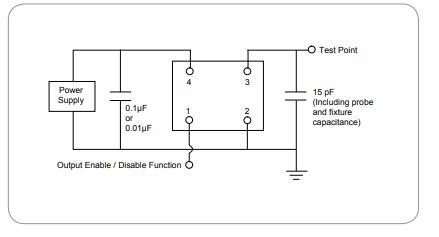
FN2000121 Test Circuit
FN2000121 Package
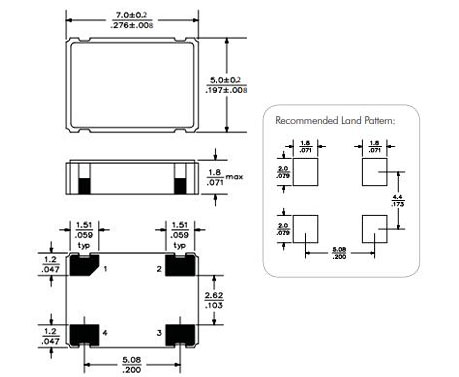
FN2000121 Package
FN2000121 Manufacturer
Diodes Incorporated is devoted to being the leading provider for large-volume and high-growing markets. With cutting-edge products of package technology, analogue, discrete and mixed-signal products, Diodes Incorporated is capable to provide high-quality semiconductor products to meet the customers’ needs from walks of communications, computing, consumer electronics, automotive and industrial markets. Their product lines cover a wide range of application solutions together with 25 operations around the world which serve with the examination, engineering, manufacturing and customer service.
Datasheet PDF
- PCN Packaging :
- Datasheets :
What is FN2000121?
The FN2000121 is FN Series 3.3V crystal clock oscillator. It achieves superb jitter and stability over a broad range of operating conditions and frequencies. The output clock signal, generated internally with a non-PLL oscillator design, is compatible with LVCMOS/LVTTL logic levels. The device, available on tape and reel, is contained in a 7.0 x 5.0mm surface-mount ceramic package.
What is the FN2000121 designed for?
It is designed for standard reflow and washing techniques.
What package does the FN2000121 come?
It comes with a 7.0 x 5.0mm Ceramic SMD package.
 TDA2040 Hi-Fi Audio Power Amplifier: Replacement, Circuit and Datasheet
28 October 20216899
 Navigating the XA-H4 Single-Chip 16-bit Microcontroller: An In-depth Analysis
29 February 2024178
 TIP120 vs TIP122 Darlington NPN Transistor
29 July 202210272
 2SA1837 PNP Epitaxial Silicon Transistor: 2SA1837 Power, Datasheet pdf and Equivalents
23 December 20217509
 BC327 PNP Transistor: Equivalents, Uses, and Pinout
12 August 202114451
![LTC4054 Single-cell Lithium-ion Battery: Circuits, Pinout, and Datasheet [Video]](https://res.utmel.com/Images/Article/a849e0f4-9fdc-4e4e-9f76-e520361f732a.png) LTC4054 Single-cell Lithium-ion Battery: Circuits, Pinout, and Datasheet [Video]
LTC4054 Single-cell Lithium-ion Battery: Circuits, Pinout, and Datasheet [Video]04 January 202216124
 MPSA05 NPN Transistor: Datasheet, Test Circuit and Equivalent
09 November 20213979
 IRF4905 P-Channel MOSFET: Datasheet pdf, Pinout and Equivalents
13 December 202120606
 Power Semiconductor Procurement After the Nexperia Shake-Up—NXP for Stability, ON for Technology, or Nexperia for Value?
04 November 20254494
 How Can Memory Adapt and Influence the Smart Age of the Future?
11 October 20222441
 In Circuit Design, What are the Differences Between the 6 Types of Grounding?
25 March 20245221
 HIKSEMI Authorized Distributor | UTMEL Electronics
15 November 20234120
 LVDT - Linear Variable Differential Transformer Basics
16 January 20219373
 Diode Basis: Symbol, Types and Applications
09 January 202614865
 Arduino Based Gas Leakage Detection
29 August 20239449
 High Voltage Capacitor Safety: The Ultimate Guide
21 August 202513034
Diodes Incorporated
In Stock: 46
Minimum: 1 Multiples: 1
Qty
Unit Price
Ext Price
1
$1.012805
$1.01
10
$0.955476
$9.55
100
$0.901393
$90.14
500
$0.850371
$425.19
1000
$0.802236
$802.24
Not the price you want? Send RFQ Now and we'll contact you ASAP.
Inquire for More Quantity


