

 Product
 Brand
Brand Articles
 Tools
Tools
FT232R USB UART IC: Features, Pinout and Datasheet

FTDI, Future Technology Devices International Ltd
3.3V~5.25V USB 2.0 UART Controllers Interface ICs QUAD 32 Pins Bridge, USB to UART 32-VFQFN Exposed Pad


3.3V~5.25V USB 2.0 UART Controllers Interface ICs QUAD 32 Pins Bridge, USB to UART 32-VFQFN Exposed Pad
The FT232R is a USB to serial UART interface device which simplifies USB to serial designs and reduces external component count by fully integrating an external EEPROM, USB termination resistors and an integrated clock circuit which requires no external crystal, into the device. Furthermore, Huge range of Semiconductors, Capacitors, Resistors and IcS in stock. Welcome RFQ.

FT232R USB
FT232R Pinout
The following figure is the diagram of FT232R pinout.

Pinout
FT232R CAD Model
The followings are FT232R Symbol, Footprint, and 3D Model.

PCB Symbol

PCB Footprint
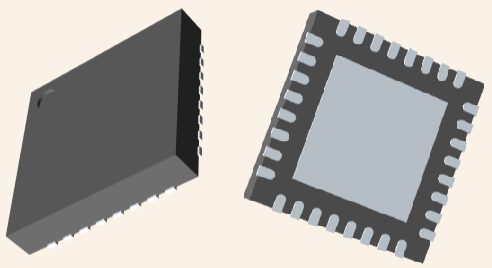
3D Model
FT232R Overview
The FT232R is a USB to serial UART interface device which simplifies USB to serial designs and reduces external component count by fully integrating an external EEPROM, USB termination resistors and an integrated clock circuit which requires no external crystal, into the device. It has been designed to operate efficiently with a USB host controller by using as little as possible of the total USB bandwidth available.
This article provides you with a basic overview of the FT232R USB UART IC, including its pin descriptions, features and specifications, etc., to help you quickly understand what FT232R is.
FT232R Features
● Single chip USB to asynchronous serial data transfer interface.
● Entire USB protocol handled on the chip. No USB specific firmware programming required.
● Fully integrated 1024 bit EEPROM storing device descriptors and CBUS I/O configuration.
● Fully integrated USB termination resistors.
● Fully integrated clock generation with no external crystal required plus optional clock output selection enabling a glue-less interface to external MCU or FPGA.
● Data transfer rates from 300 baud to 3 Mbaud (RS422, RS485, RS232) at TTL levels.
● 128 byte receive buffer and 256 byte transmit buffer utilising buffer smoothing technology to allow for high data throughput.
● FTDI's royalty-free Virtual Com Port (VCP) and Direct (D2XX) drivers eliminate the requirement for USB driver development in most cases.
● Unique USB FTDIChip-ID™ feature.
● Configurable CBUS I/O pins.
● Transmit and receive LED drive signals.
● UART interface support for 7 or 8 data bits, 1 or 2 stop bits and odd / even / mark / space / no parity
● FIFO receives and transmits buffers for high data throughput.
● Synchronous and asynchronous bit bang interface options with RD# and WR# strobes.
● Device supplied pre-programmed with unique USB serial number.
● Supports bus powered, self-powered and high-power bus powered USB configurations.
● Integrated +3.3V level converter for USB I/O.
● Integrated level converter on UART and CBUS for interfacing to between +1.8V and +5V logic.
● True 5V/3.3V/2.8V/1.8V CMOS drive output and TTL input.
● Configurable I/O pin output drive strength.
● Integrated power-on-reset circuit.
● Fully integrated AVCC supply filtering - no external filtering required.
● UART signal inversion option.
● +3.3V (using external oscillator) to +5.25V (internal oscillator) Single Supply Operation.
● Low operating and USB suspend current.
● Low USB bandwidth consumption.
● UHCI/OHCI/EHCI host controller compatible.
● USB 2.0 Full Speed compatible.
● -40°C to 85°C extended operating temperature range.
● Available in compact Pb-free 28 Pin SSOP and QFN-32 packages (both RoHS compliant).
Specifications
- TypeParameter
- Factory Lead Time11 Weeks
- Mount
In electronic components, the term "Mount" typically refers to the method or process of physically attaching or fixing a component onto a circuit board or other electronic device. This can involve soldering, adhesive bonding, or other techniques to secure the component in place. The mounting process is crucial for ensuring proper electrical connections and mechanical stability within the electronic system. Different components may have specific mounting requirements based on their size, shape, and function, and manufacturers provide guidelines for proper mounting procedures to ensure optimal performance and reliability of the electronic device.
Surface Mount - Package / Case
refers to the protective housing that encases an electronic component, providing mechanical support, electrical connections, and thermal management.
32-VFQFN Exposed Pad - Number of Pins32
- Weight188.609377mg
- Operating Temperature
The operating temperature is the range of ambient temperature within which a power supply, or any other electrical equipment, operate in. This ranges from a minimum operating temperature, to a peak or maximum operating temperature, outside which, the power supply may fail.
-40°C~85°C - Packaging
Semiconductor package is a carrier / shell used to contain and cover one or more semiconductor components or integrated circuits. The material of the shell can be metal, plastic, glass or ceramic.
Tape & Reel (TR) - Series
In electronic components, the "Series" refers to a group of products that share similar characteristics, designs, or functionalities, often produced by the same manufacturer. These components within a series typically have common specifications but may vary in terms of voltage, power, or packaging to meet different application needs. The series name helps identify and differentiate between various product lines within a manufacturer's catalog.
USBmadeEZ-UART - Published2004
- Pbfree Code
The "Pbfree Code" parameter in electronic components refers to the code or marking used to indicate that the component is lead-free. Lead (Pb) is a toxic substance that has been widely used in electronic components for many years, but due to environmental concerns, there has been a shift towards lead-free alternatives. The Pbfree Code helps manufacturers and users easily identify components that do not contain lead, ensuring compliance with regulations and promoting environmentally friendly practices. It is important to pay attention to the Pbfree Code when selecting electronic components to ensure they meet the necessary requirements for lead-free applications.
yes - Part Status
Parts can have many statuses as they progress through the configuration, analysis, review, and approval stages.
Active - Moisture Sensitivity Level (MSL)
Moisture Sensitivity Level (MSL) is a standardized rating that indicates the susceptibility of electronic components, particularly semiconductors, to moisture-induced damage during storage and the soldering process, defining the allowable exposure time to ambient conditions before they require special handling or baking to prevent failures
3 (168 Hours) - Number of Terminations32
- ECCN Code
An ECCN (Export Control Classification Number) is an alphanumeric code used by the U.S. Bureau of Industry and Security to identify and categorize electronic components and other dual-use items that may require an export license based on their technical characteristics and potential for military use.
EAR99 - Voltage - Supply
Voltage - Supply refers to the range of voltage levels that an electronic component or circuit is designed to operate with. It indicates the minimum and maximum supply voltage that can be applied for the device to function properly. Providing supply voltages outside this range can lead to malfunction, damage, or reduced performance. This parameter is critical for ensuring compatibility between different components in a circuit.
3.3V~5.25V - Terminal Position
In electronic components, the term "Terminal Position" refers to the physical location of the connection points on the component where external electrical connections can be made. These connection points, known as terminals, are typically used to attach wires, leads, or other components to the main body of the electronic component. The terminal position is important for ensuring proper connectivity and functionality of the component within a circuit. It is often specified in technical datasheets or component specifications to help designers and engineers understand how to properly integrate the component into their circuit designs.
QUAD - Function
The parameter "Function" in electronic components refers to the specific role or purpose that the component serves within an electronic circuit. It defines how the component interacts with other elements, influences the flow of electrical signals, and contributes to the overall behavior of the system. Functions can include amplification, signal processing, switching, filtering, and energy storage, among others. Understanding the function of each component is essential for designing effective and efficient electronic systems.
Bridge, USB to UART - Operating Supply Voltage
The voltage level by which an electrical system is designated and to which certain operating characteristics of the system are related.
5V - Number of Channels1
- Interface
In electronic components, the term "Interface" refers to the point at which two different systems, devices, or components connect and interact with each other. It can involve physical connections such as ports, connectors, or cables, as well as communication protocols and standards that facilitate the exchange of data or signals between the connected entities. The interface serves as a bridge that enables seamless communication and interoperability between different parts of a system or between different systems altogether. Designing a reliable and efficient interface is crucial in ensuring proper functionality and performance of electronic components and systems.
UART - Operating Supply Current
Operating Supply Current, also known as supply current or quiescent current, is a crucial parameter in electronic components that indicates the amount of current required for the device to operate under normal conditions. It represents the current drawn by the component from the power supply while it is functioning. This parameter is important for determining the power consumption of the component and is typically specified in datasheets to help designers calculate the overall power requirements of their circuits. Understanding the operating supply current is essential for ensuring proper functionality and efficiency of electronic systems.
15mA - uPs/uCs/Peripheral ICs Type
The parameter "uPs/uCs/Peripheral ICs Type" refers to the classification of various integrated circuits used in electronic devices. It encompasses microprocessors (uPs), microcontrollers (uCs), and peripheral integrated circuits that provide additional functionalities. This classification helps in identifying the specific type of chip used for processing tasks, controlling hardware, or interfacing with other components in a system. Understanding this parameter is essential for selecting the appropriate electronic components for a given application.
BUS CONTROLLER, UNIVERSAL SERIAL BUS - Data Rate
Data Rate is defined as the amount of data transmitted during a specified time period over a network. It is the speed at which data is transferred from one device to another or between a peripheral device and the computer. It is generally measured in Mega bits per second(Mbps) or Mega bytes per second(MBps).
12 Mbps - Protocol
In electronic components, the parameter "Protocol" refers to a set of rules and standards that govern the communication between devices. It defines the format, timing, sequencing, and error checking methods for data exchange between different components or systems. Protocols ensure that devices can understand and interpret data correctly, enabling them to communicate effectively with each other. Common examples of protocols in electronics include USB, Ethernet, SPI, I2C, and Bluetooth, each with its own specifications for data transmission. Understanding and adhering to protocols is essential for ensuring compatibility and reliable communication between electronic devices.
USB - Standards
The parameter "Standards" in electronic components refers to established criteria or specifications that ensure interoperability, safety, and performance across various electronic devices and systems. These standards are often set by recognized organizations and describe the characteristics, dimensions, and testing methods for components. Adherence to these standards helps manufacturers produce compatible and reliable products, facilitates communication between devices, and ensures compliance with regulatory requirements. Standards play a crucial role in the consistency and quality of electronic components in the industry.
USB 2.0 - Length5mm
- Width5mm
- Radiation Hardening
Radiation hardening is the process of making electronic components and circuits resistant to damage or malfunction caused by high levels of ionizing radiation, especially for environments in outer space (especially beyond the low Earth orbit), around nuclear reactors and particle accelerators, or during nuclear accidents or nuclear warfare.
No - RoHS Status
RoHS means “Restriction of Certain Hazardous Substances” in the “Hazardous Substances Directive” in electrical and electronic equipment.
RoHS Compliant - Lead Free
Lead Free is a term used to describe electronic components that do not contain lead as part of their composition. Lead is a toxic material that can have harmful effects on human health and the environment, so the electronics industry has been moving towards lead-free components to reduce these risks. Lead-free components are typically made using alternative materials such as silver, copper, and tin. Manufacturers must comply with regulations such as the Restriction of Hazardous Substances (RoHS) directive to ensure that their products are lead-free and environmentally friendly.
Lead Free
FT232R Functional Block Diagram
The following is the Block Diagram of FT232R.
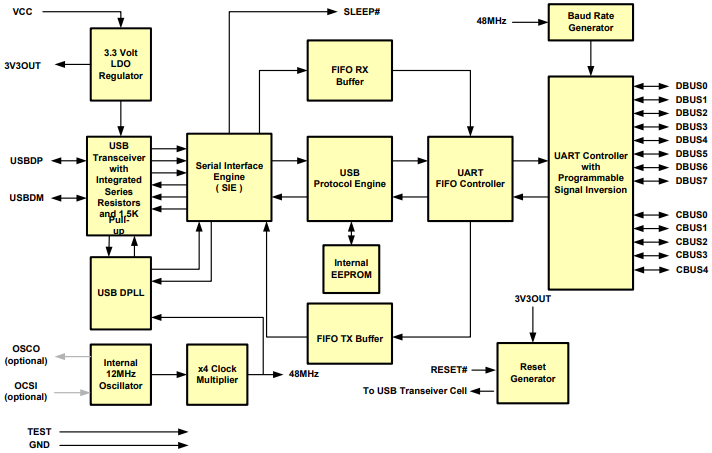
FT232R Block Diagram
FT232R Equivalent
| Model number | Manufacturer | Description |
| UPD1002-A/MQ | Microchip Technology Inc | IC UNIVERSAL SERIAL BUS CONTROLLER, Bus Controller |
| FT232RL-TUBE | FTDI Chip | USB Bus Controller, CMOS, PDSO28, 10.20 X 5.30 MM, GREEN, SSOP-28 |
| UPD1002T-AI/MQ | Microchip Technology Inc | IC UNIVERSAL SERIAL BUS CONTROLLER, Bus Controller |
FT232R Applications
● USB to RS232/RS422/RS485 Converters
● Upgrading Legacy Peripherals to USB
● Cellular and Cordless Phone USB data transfer cables and interfaces
● Interfacing MCU/PLD/FPGA based designs to USB
● USB Audio and Low Bandwidth Video data transfer
● PDA to USB data transfer
● USB Smart Card Readers
● USB Instrumentation
● USB Industrial Control
● USB MP3 Player Interface
● USB FLASH Card Reader and Writers
● Set Top Box PC - USB interface
● USB Digital Camera Interface
● USB Hardware Modems
● USB Wireless Modems
● USB Bar Code Readers
● USB Software and Hardware Encryption Dongles
FT232R Package
The following diagram shows the FT232R package.

Top View
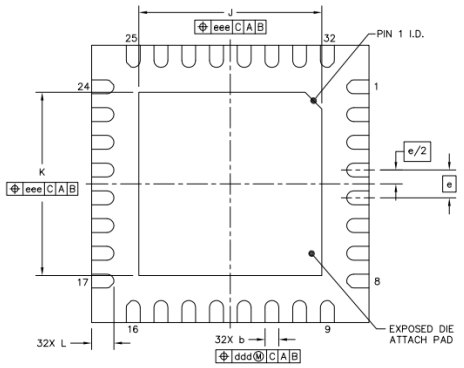
Bottom View
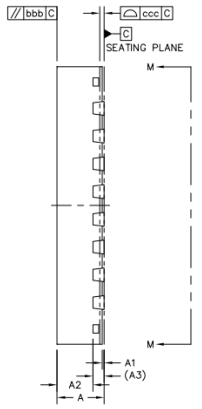
Side View
FT232R Manufacturer
FTDI Chip develops innovative silicon solutions that enhance interaction with today's technology. Through application of its “Design Made Easy” ethos, the company is able to support engineers with highly sophisticated, feature-rich, robust and simple-to-use product platforms. FTDI Chip's long-established, continuously expanding Universal Serial Bus (USB) product line boasts universally recognized products. The company's Embedded Video Engine (EVE) graphic controllers each pack display, audio and touch functionality onto a single chip allowing dramatic reductions in the development time and bill-of-materials costs involved in Human Machine Interfaces (HMIs) implementation. FTDI Chip also provides families of highly differentiated, speed-optimised microcontrollers with augmented connectivity. FTDI Chip is a fab-less semiconductor company headquartered in Glasgow, UK, with research and development facilities located in Glasgow, Singapore and Taipei (Taiwan), plus regional sales and technical support sites in Glasgow, Taipei, Portland (Oregon, USA) and Shanghai (China).
Trend Analysis
Datasheet PDF
- Datasheets :
- Environmental Information :
- PCN Design/Specification :
What is the essential property of the FT232R?
The FT232R is a USB to serial UART interface device which simplifies USB to serial designs and reduces external component count by fully integrating an external EEPROM, USB termination resistors and an integrated clock circuit which requires no external crystal, into the device.
Is the oscillator needed for FT232R operation supplied internally or externally?
The FT232R defaults to operating using its own internal oscillator.
 STM32F070CBT6 Microcontroller: 48MHz,48-LQFP, Pinout and Features
15 February 20222394
 2N5306 Transistor: NPN Darlington Transistor, Datasheet, Pinout
21 December 20212143
![The Comprehensive Introduction to AD8310 [FAQ]](https://res.utmel.com/Images/Article/90927bcc-34e5-4a68-ab26-ab6a12161379.jpg) The Comprehensive Introduction to AD8310 [FAQ]
The Comprehensive Introduction to AD8310 [FAQ]27 May 20222883
 BC107 Transistor: Pinout, Equivalent and Datasheet
17 September 202130456
 BF246 N-Channel Switch: Pinout, Datasheet, Equivalent
27 April 20222740
 AD9850 DDS Synthesizer: Pinout, Schematic and Datasheet
20 July 20215714
 74HC595D Shift Register: Pinout, Datasheet, and System Diagram
22 July 20214725
 LM35 Sensor: Pinout, Alternatives and Datasheet
26 August 202114095
 Working Principle and Development of Magnetic Sensors
31 October 20254872
 Degson Authorized Distributor | UTMEL Electronics
21 November 20234283
 Introduction to TTL and CMOS Logic Gate Circuits
24 November 202524313
 Antenna: Principles, Performance Parameters and Classification
15 November 20218952
 How to Design an Accurate DC Power Supply
15 October 20255792
 An Analysis of Current-Source Inverters Using High-Frequency WBG Switches
09 May 20235120
 STMicroelectronics: The European Powerhouse in Silicon Carbide Semiconductor Technology
05 October 20233518
 What are Resonators?
07 January 202618401
FTDI, Future Technology Devices International Ltd
In Stock: 13
United States
China
Canada
Japan
Russia
Germany
United Kingdom
Singapore
Italy
Hong Kong(China)
Taiwan(China)
France
Korea
Mexico
Netherlands
Malaysia
Austria
Spain
Switzerland
Poland
Thailand
Vietnam
India
United Arab Emirates
Afghanistan
Åland Islands
Albania
Algeria
American Samoa
Andorra
Angola
Anguilla
Antigua & Barbuda
Argentina
Armenia
Aruba
Australia
Azerbaijan
Bahamas
Bahrain
Bangladesh
Barbados
Belarus
Belgium
Belize
Benin
Bermuda
Bhutan
Bolivia
Bonaire, Sint Eustatius and Saba
Bosnia & Herzegovina
Botswana
Brazil
British Indian Ocean Territory
British Virgin Islands
Brunei
Bulgaria
Burkina Faso
Burundi
Cabo Verde
Cambodia
Cameroon
Cayman Islands
Central African Republic
Chad
Chile
Christmas Island
Cocos (Keeling) Islands
Colombia
Comoros
Congo
Congo (DRC)
Cook Islands
Costa Rica
Côte d’Ivoire
Croatia
Cuba
Curaçao
Cyprus
Czechia
Denmark
Djibouti
Dominica
Dominican Republic
Ecuador
Egypt
El Salvador
Equatorial Guinea
Eritrea
Estonia
Eswatini
Ethiopia
Falkland Islands
Faroe Islands
Fiji
Finland
French Guiana
French Polynesia
Gabon
Gambia
Georgia
Ghana
Gibraltar
Greece
Greenland
Grenada
Guadeloupe
Guam
Guatemala
Guernsey
Guinea
Guinea-Bissau
Guyana
Haiti
Honduras
Hungary
Iceland
Indonesia
Iran
Iraq
Ireland
Isle of Man
Israel
Jamaica
Jersey
Jordan
Kazakhstan
Kenya
Kiribati
Kosovo
Kuwait
Kyrgyzstan
Laos
Latvia
Lebanon
Lesotho
Liberia
Libya
Liechtenstein
Lithuania
Luxembourg
Macao(China)
Madagascar
Malawi
Maldives
Mali
Malta
Marshall Islands
Martinique
Mauritania
Mauritius
Mayotte
Micronesia
Moldova
Monaco
Mongolia
Montenegro
Montserrat
Morocco
Mozambique
Myanmar
Namibia
Nauru
Nepal
New Caledonia
New Zealand
Nicaragua
Niger
Nigeria
Niue
Norfolk Island
North Korea
North Macedonia
Northern Mariana Islands
Norway
Oman
Pakistan
Palau
Palestinian Authority
Panama
Papua New Guinea
Paraguay
Peru
Philippines
Pitcairn Islands
Portugal
Puerto Rico
Qatar
Réunion
Romania
Rwanda
Samoa
San Marino
São Tomé & Príncipe
Saudi Arabia
Senegal
Serbia
Seychelles
Sierra Leone
Sint Maarten
Slovakia
Slovenia
Solomon Islands
Somalia
South Africa
South Sudan
Sri Lanka
St Helena, Ascension, Tristan da Cunha
St. Barthélemy
St. Kitts & Nevis
St. Lucia
St. Martin
St. Pierre & Miquelon
St. Vincent & Grenadines
Sudan
Suriname
Svalbard & Jan Mayen
Sweden
Syria
Tajikistan
Tanzania
Timor-Leste
Togo
Tokelau
Tonga
Trinidad & Tobago
Tunisia
Turkey
Turkmenistan
Turks & Caicos Islands
Tuvalu
U.S. Outlying Islands
U.S. Virgin Islands
Uganda
Ukraine
Uruguay
Uzbekistan
Vanuatu
Vatican City
Venezuela
Wallis & Futuna
Yemen
Zambia
Zimbabwe
![FT4232HL-REEL]() FT4232HL-REEL
FT4232HL-REELFTDI, Future Technology Devices International Ltd
![FT230XQ-R]() FT230XQ-R
FT230XQ-RFTDI, Future Technology Devices International Ltd
![FT4232HQ-REEL]() FT4232HQ-REEL
FT4232HQ-REELFTDI, Future Technology Devices International Ltd
![FT230XS-R]() FT230XS-R
FT230XS-RFTDI, Future Technology Devices International Ltd
![FT245RL-REEL]() FT245RL-REEL
FT245RL-REELFTDI, Future Technology Devices International Ltd
![FT232BL-TRAY]() FT232BL-TRAY
FT232BL-TRAYFTDI, Future Technology Devices International Ltd
![FT2232HL-REEL]() FT2232HL-REEL
FT2232HL-REELFTDI, Future Technology Devices International Ltd
![FT231XQ-R]() FT231XQ-R
FT231XQ-RFTDI, Future Technology Devices International Ltd
![FT232RL-TUBE]() FT232RL-TUBE
FT232RL-TUBEFTDI, Future Technology Devices International Ltd


