Product
 Brand
Brand Articles
 Tools
Tools
MPU6000 Sensor: Comparison, Pinout, and Datasheet

INVENSENSE - MPU-6000 - MEMS Module, MotionTracking Series, 3-Axis Gyroscope/Accelerometer, ±16g, 2.375 V to 3.46 V, QFN-24


INVENSENSE - MPU-6000 - MEMS Module, MotionTracking Series, 3-Axis Gyroscope/Accelerometer, ±16g, 2.375 V to 3.46 V, QFN-24
The MPU6000 is the most widely used IMU sensor, and it's used in nearly all of the greatest flight controllers. This article mainly introduces comparison, pinout, datasheet and other detailed information about TDK InvenSense MPU6000.

What is the BEST gyro chip?!?! | MPU6000 vs. ICM20689 vs. ICM20602?
- MPU6000 Description
- MPU6000 Pinout
- MPU6000 CAD Model
- MPU6000 Features
- Specifications
- Parts with Similar Specs
- MPU6000 Functional Block Diagram
- MPU6000 Typical Operating Circuit
- MPU6000 vs MPU6050 vs MPU6500
- Inertial Sensor Comparison MPU6000 vs MPU6050 vs MPU6500 vs ICM20602
- MPU6000 Applications
- MPU6000 Package
- MPU6000 Manufacturer
- Datasheet PDF
MPU6000 Description
The MPU6000 is the most widely used IMU sensor, and it's used in nearly all of the greatest flight controllers. The reason for this is that it has a high vibration tolerance and can sample the gyro at 8kHz over an SPI interface.
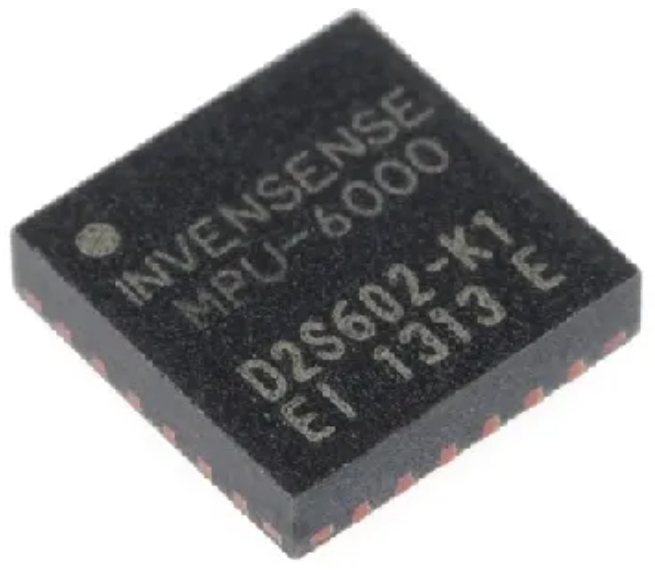
The TDK Invensense MPU-6000 3-axis gyroscope, 3-axis accelerometer in a 4x4 package. The MPU-6000 is the world's first 6-axis I²C MotionTracking device, developed for smartphones, tablets, and wearable sensors that require low power, low cost, and great performance. The MPU-6000 is made up of two sections, each with its own set of features, which are listed in the table below. The packaging size of the devices has been reduced to 4x4x0.9mm in order to conserve space (QFN).
MPU6000 Pinout

Pinout
MPU6000 CAD Model
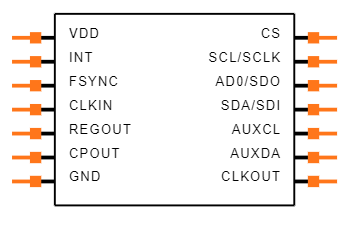
Symbol
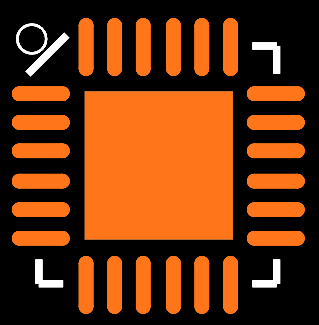
Footprint
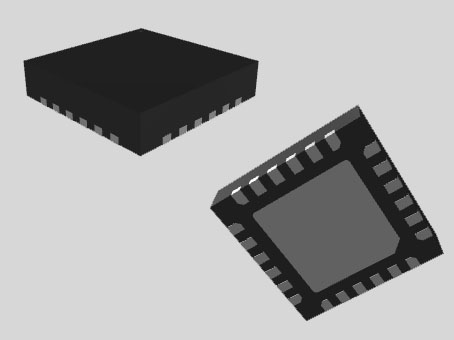
3D Model
MPU6000 Features
• User-programmable digital filters for gyroscope, accelerometer, and temp sensor
• Digital-output temperature sensor
• 9-Axis MotionFusion by the on-chip Digital Motion Processor (DMP)
• Auxiliary master I2C and SPI bus for reading data from external sensors
• Minimal cross-axis sensitivity between the accelerometer and gyroscope axes
• MEMS structure hermetically sealed and bonded at the wafer level
• 10,000 g shock tolerant
• 400kHz Fast Mode I2C for communicating with all registers
• User-programmable interrupts
• Orientation detection and signaling
• 1MHz SPI serial interface for communicating with all registers
• 20MHz SPI serial interface for reading sensor and interrupt registers
Specifications
- TypeParameter
- Factory Lead Time17 Weeks
- Mount
In electronic components, the term "Mount" typically refers to the method or process of physically attaching or fixing a component onto a circuit board or other electronic device. This can involve soldering, adhesive bonding, or other techniques to secure the component in place. The mounting process is crucial for ensuring proper electrical connections and mechanical stability within the electronic system. Different components may have specific mounting requirements based on their size, shape, and function, and manufacturers provide guidelines for proper mounting procedures to ensure optimal performance and reliability of the electronic device.
Surface Mount - Mounting Type
The "Mounting Type" in electronic components refers to the method used to attach or connect a component to a circuit board or other substrate, such as through-hole, surface-mount, or panel mount.
Surface Mount - Package / Case
refers to the protective housing that encases an electronic component, providing mechanical support, electrical connections, and thermal management.
24-VFQFN Module Exposed Pad - Number of Pins24
- Supplier Device Package
The parameter "Supplier Device Package" in electronic components refers to the physical packaging or housing of the component as provided by the supplier. It specifies the form factor, dimensions, and layout of the component, which are crucial for compatibility and integration into electronic circuits and systems. The supplier device package information typically includes details such as the package type (e.g., DIP, SOP, QFN), number of pins, pitch, and overall size, allowing engineers and designers to select the appropriate component for their specific application requirements. Understanding the supplier device package is essential for proper component selection, placement, and soldering during the manufacturing process to ensure optimal performance and reliability of the electronic system.
24-QFN (4x4) - Usage LevelIndustrial grade
- Operating Temperature
The operating temperature is the range of ambient temperature within which a power supply, or any other electrical equipment, operate in. This ranges from a minimum operating temperature, to a peak or maximum operating temperature, outside which, the power supply may fail.
-40°C~85°C TA - Packaging
Semiconductor package is a carrier / shell used to contain and cover one or more semiconductor components or integrated circuits. The material of the shell can be metal, plastic, glass or ceramic.
Tape & Reel (TR) - Published2010
- Part Status
Parts can have many statuses as they progress through the configuration, analysis, review, and approval stages.
Not For New Designs - Moisture Sensitivity Level (MSL)
Moisture Sensitivity Level (MSL) is a standardized rating that indicates the susceptibility of electronic components, particularly semiconductors, to moisture-induced damage during storage and the soldering process, defining the allowable exposure time to ambient conditions before they require special handling or baking to prevent failures
3 (168 Hours) - Max Operating Temperature
The Maximum Operating Temperature is the maximum body temperature at which the thermistor is designed to operate for extended periods of time with acceptable stability of its electrical characteristics.
85°C - Min Operating Temperature
The "Min Operating Temperature" parameter in electronic components refers to the lowest temperature at which the component is designed to operate effectively and reliably. This parameter is crucial for ensuring the proper functioning and longevity of the component, as operating below this temperature may lead to performance issues or even damage. Manufacturers specify the minimum operating temperature to provide guidance to users on the environmental conditions in which the component can safely operate. It is important to adhere to this parameter to prevent malfunctions and ensure the overall reliability of the electronic system.
-40°C - Output Type
The "Output Type" parameter in electronic components refers to the type of signal or data that is produced by the component as an output. This parameter specifies the nature of the output signal, such as analog or digital, and can also include details about the voltage levels, current levels, frequency, and other characteristics of the output signal. Understanding the output type of a component is crucial for ensuring compatibility with other components in a circuit or system, as well as for determining how the output signal can be utilized or processed further. In summary, the output type parameter provides essential information about the nature of the signal that is generated by the electronic component as its output.
I2C, SPI - Interface
In electronic components, the term "Interface" refers to the point at which two different systems, devices, or components connect and interact with each other. It can involve physical connections such as ports, connectors, or cables, as well as communication protocols and standards that facilitate the exchange of data or signals between the connected entities. The interface serves as a bridge that enables seamless communication and interoperability between different parts of a system or between different systems altogether. Designing a reliable and efficient interface is crucial in ensuring proper functionality and performance of electronic components and systems.
I2C, SPI - Max Supply Voltage
In general, the absolute maximum common-mode voltage is VEE-0.3V and VCC+0.3V, but for products without a protection element at the VCC side, voltages up to the absolute maximum rated supply voltage (i.e. VEE+36V) can be supplied, regardless of supply voltage.
3.46V - Min Supply Voltage
The minimum supply voltage (V min ) is explored for sequential logic circuits by statistically simulating the impact of within-die process variations and gate-dielectric soft breakdown on data retention and hold time.
2.375V - Sensor Type
In electronic components, the parameter "Sensor Type" refers to the specific type of sensor technology used in a particular component to detect and measure physical phenomena such as light, temperature, pressure, motion, or proximity. Different sensor types utilize various principles and mechanisms to convert the detected input into an electrical signal that can be processed by the electronic component. Common sensor types include photodiodes, thermistors, accelerometers, and proximity sensors, each designed for specific applications and environments. Understanding the sensor type is crucial for selecting the right component for a given task and ensuring accurate and reliable sensing capabilities in electronic systems.
Accelerometer, Gyroscope, 6 Axis - Height900μm
- Length4.1mm
- Width4.1mm
- REACH SVHC
The parameter "REACH SVHC" in electronic components refers to the compliance with the Registration, Evaluation, Authorization, and Restriction of Chemicals (REACH) regulation regarding Substances of Very High Concern (SVHC). SVHCs are substances that may have serious effects on human health or the environment, and their use is regulated under REACH to ensure their safe handling and minimize their impact.Manufacturers of electronic components need to declare if their products contain any SVHCs above a certain threshold concentration and provide information on the safe use of these substances. This information allows customers to make informed decisions about the potential risks associated with using the components and take appropriate measures to mitigate any hazards.Ensuring compliance with REACH SVHC requirements is essential for electronics manufacturers to meet regulatory standards, protect human health and the environment, and maintain transparency in their supply chain. It also demonstrates a commitment to sustainability and responsible manufacturing practices in the electronics industry.
No SVHC - RoHS Status
RoHS means “Restriction of Certain Hazardous Substances” in the “Hazardous Substances Directive” in electrical and electronic equipment.
ROHS3 Compliant
Parts with Similar Specs
- ImagePart NumberManufacturerPackage / CaseNumber of PinsInterfaceMin Supply VoltageMax Supply VoltageOperating TemperatureMountMounting TypeView Compare
![MPU-6000]()
MPU-6000
24-VFQFN Module Exposed Pad
24
I2C, SPI
2.375 V
3.46 V
-40°C ~ 85°C (TA)
Surface Mount
Surface Mount
![ICM-20648]()
24-TFQFN Module Exposed Pad
25
I2C, SPI
2.4 V
3.6 V
-40°C ~ 85°C (TA)
Surface Mount
Surface Mount
![MPU-6050]()
24-VFQFN Module Exposed Pad
24
-
1.71 V
3.45 V
-40°C ~ 85°C (TA)
Surface Mount
Surface Mount
![MPU-9250]()
24-VFQFN Module Exposed Pad
24
-
2.5 V
3.6 V
-40°C ~ 85°C (TA)
Surface Mount
Surface Mount
![MPU-6500]()
24-VFQFN Module Exposed Pad
24
-
-
-
-40°C ~ 85°C (TA)
Surface Mount
Surface Mount


MPU6000 Functional Block Diagram
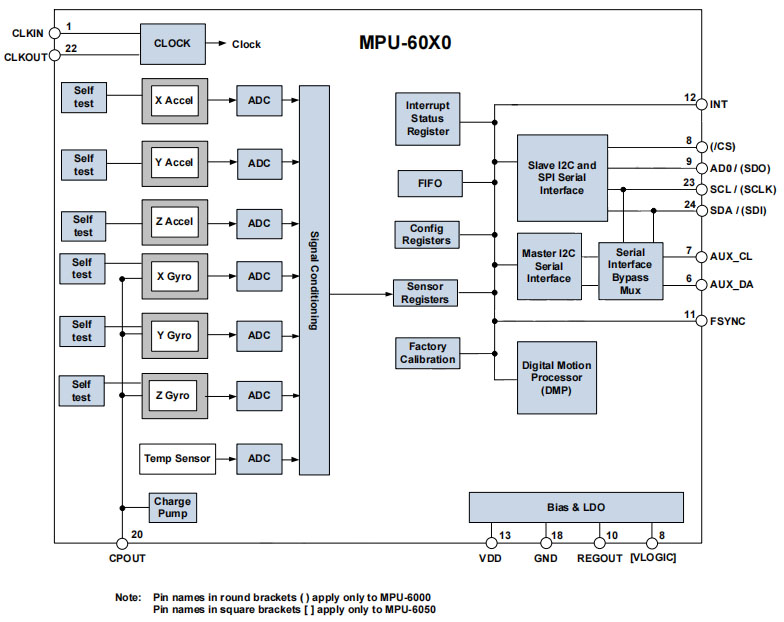
Functional Block Diagram
MPU6000 Typical Operating Circuit
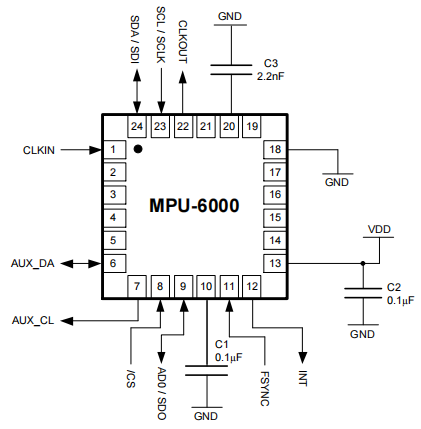
Typical Operating Circuit
MPU6000 vs MPU6050 vs MPU6500
• MPU6000 vs MPU6050
MPU6000 and MPU6050 are essentially the same hardware. Both have a three-axis gyroscope and a three-axis accelerometer. Both support a maximum gyro sampling rate of 8kHz. The only difference between them from the perspective of a flight controller is the bus that connects them to the CPU. MPU6000 supports both I2C and SPI, whereas MPU6050 only supports I2C. This improves the MPU6000's performance, but only when the SPI bus is used. I2C can't handle 8kHz gyro updates since it's too sluggish.
• MPU6500
The MPU6500 offers I2C and SPI capabilities, as well as a 32kHz gyro update rate and a substantially larger gyro signal bandwidth. It's also more compact and uses less energy. In theory, it is a far superior device to the MPU6000. There are a few issues with it. First and foremost, it is far more sensitive to vibration than the MPU6000. While MPU6000 soft mounting is not normally required, MPU6500 will greatly benefit from it. It is frequently even essential. Second, at present time, only RaceFlight is capable of using 32kHz gyro update rates.
• MPU9150 and MPU9250
MPU9150 is a MPU6050 with integrated AK8975 magnetometer.
MPU9250 is a MPU6500 with integrated AK8963 magnetometer.
Inertial Sensor Comparison MPU6000 vs MPU6050 vs MPU6500 vs ICM20602
The most suitable products for FPV racing flight controllers are as follows. All MPU/ICM series sensors include a built-in 3-axis accelerometer and a 3-axis gyroscope, integrated in a microchip.
|
|
| MPU6000 | MPU6050 |
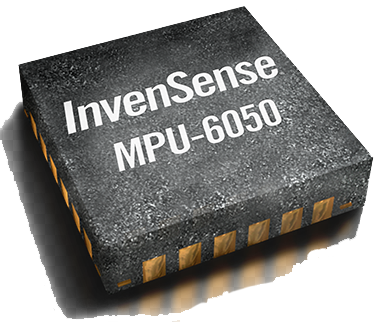
| The MPU6000 is the most prevalent IMU sensor right now, and it's found in almost all of the finest flight controllers. The reason for this is that it has a high vibration tolerance and can sample the gyro at 8kHz over an SPI interface. One thing to keep in mind is that this sensor must be connected to the processor via SPI in order to take advantage of the high-speed updates. | The MPU6050 is identical to the MPU6000 above, but it communicates using the I2C protocol, which is not commonly used on flight controllers because I2C is too sluggish for this type of application and can't read the gyro at 8Khz. I would avoid any aircraft controllers that use this sensor. |
|
|
| MPU6500 | ICM20602 |
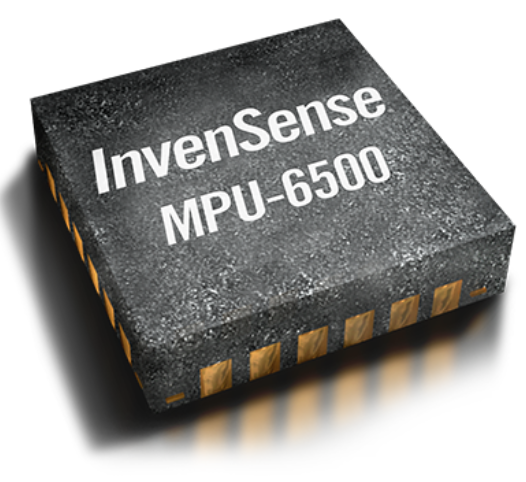
| The MPU6500 is a newer IMU sensor than the ones mentioned above, however, it is not as popular. This IMU supports up to 32kHz gyro updates, and the gyro is more sensitive. Because of its increased sensitivity, it is more vulnerable to vibrations, hence vibration isolation devices such as foam are frequently used when mounting this flight controller. However, because few flight controllers are powerful enough to sample this sensor faster than 8Khz, this sensor's reputation for poor vibration tolerance is entirely due to the flight controller not utilizing the full 32Khz gyro update rate. This means that the FC only receives every fourth reading, some of which may be severely influenced by vibrations. You can acquire readings at the full 32Khz by using a more powerful flight controller (using an STM F4 or F7 CPU), which greatly lowers the detrimental vibration effects. This is the one to choose if your flight controller has an STM F4 or F7 CPU and your firmware supports up to 32Khz update rates. Only BetaFlight and RaceFlight now offer 32Khz gyro updates, but CleanFlight will follow suit soon. | The ICM20602 is one of InvenSense's newest IMUs, designed for drones and featuring significantly more precise sensors with less noise. It can also read gyro measurements at 32 kHz, making it a good choice for future flight controllers with additional processing capacity, such as the F4 or F7 boards. This IMU is beginning to appear on newer boards, such as the Omnibus F4 V3 and SPF4 Evo flight controllers. However, I am confident that this will become the standard IMU sensor for flight controls in the future! |
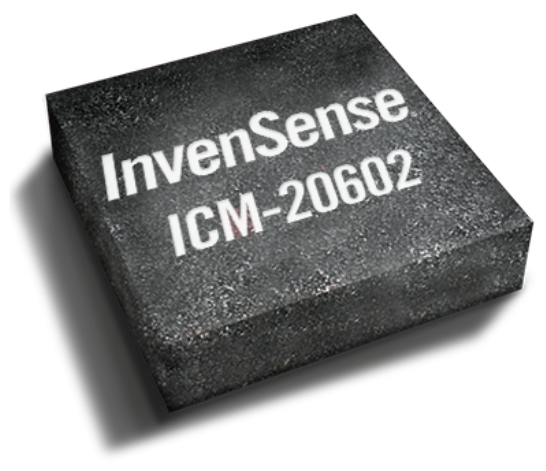
Other IMU sensor chips with additional sensors, such as a compass, are available from a variety of manufacturers. However, in the case of InvenSense (the first firm to develop an all-in-one IMU sensor chip), the other sensors in the family are essentially the same chip with the addition of a compass (magnetometer), such as:What about the IMU sensors with 9 or 10 degrees of freedom?
• MPU9150 is based on the MPU6050 with and added compass
• MPU9250 is based on the MPU6500 with and added compass
MPU6000 Applications
• Consumer Electronics
• Sensing & Instrumentation
• System Monitoring
• Robotics
• Automation & Process Control
• BlurFree™ technology (for image stabilization in video and still images)
• TouchAnywhere™ technology (for "no touch" UI Application Control/Navigation)
• AirSign™ technology (for security/authentication)
• MotionCommand™ is a motion-control technology (for Gesture Short-cuts)
• InstantGesture™ iG™ gesture detection
• Location-based services, points of interest, and dead reckoning
• Handset and portable gaming
• Motion-enabled game and application framework
• Motion-based game controllers
• 3D remote controls for Internet-connected DTVs and set-top boxes, as well as 3D mice
• Health, fitness, and sports wearable sensors
• Toys
MPU6000 Package
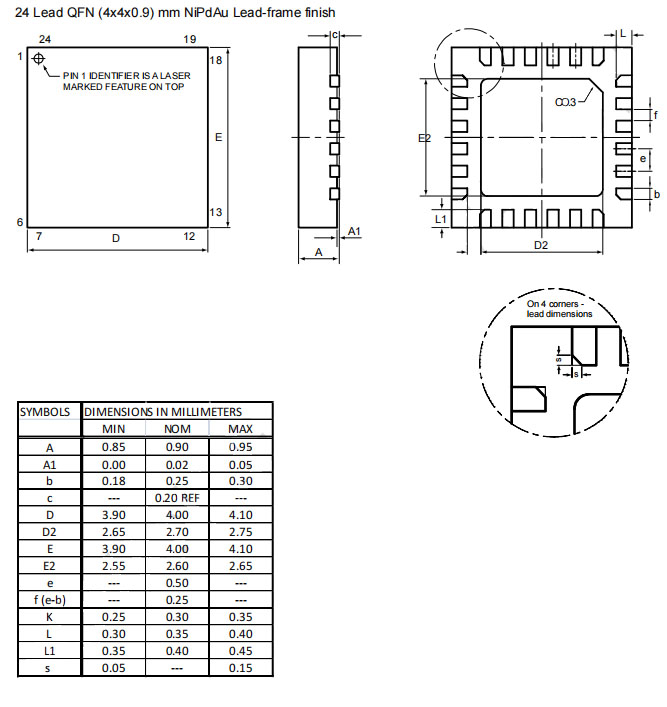
Package
MPU6000 Manufacturer
InvenSense, Inc., a subsidiary of the TDK Group: InvenSense is the global leader in MEMS Motion, Audio, and Pressure Solutions for the consumer, industrial, automotive, and IoT business segments, and is part of TDK's Sensor System Business Company. TDK continues to push the frontiers of performance and quality, setting new benchmarks of innovation across numerous industries, with a very broad portfolio of MEMS 3/6/7/9 axis motion sensors, accompanied by the highest performing MEMS audio microphones, and pressure sensors.
Datasheet PDF
- Datasheets :
 LTC4260 Hot Swap Controller: Pinout, Datasheet and Schematics
14 September 20212080
![Understanding of TP5100 2A Lithium Battery Charger Module [FAQ]](https://res.utmel.com/Images/Article/418b1a45-e558-4b3e-9fc7-c3c70e1c638a.jpg) Understanding of TP5100 2A Lithium Battery Charger Module [FAQ]
Understanding of TP5100 2A Lithium Battery Charger Module [FAQ]12 April 202218766
 Unveiling the Texas Instruments MSP430F20x Microcontroller Series: A Comprehensive Analysis
29 February 2024272
 PIC16F1776ISS Microcontroller Datasheet Overview
29 February 2024281
 Exploring the STM32F410CBT6 Microcontroller: Features, Specifications, and Applications
29 February 2024285
 CR123A 3V Lithium Battery, CR123 VS CR123A, CR123A Equivalents
07 March 202233842
 M24512-DF 512-Kbit serial I²C bus EEPROM: Pinout, Features and Datasheet
06 April 20221710
 LM334Z Adjustable Current Sources
24 June 20213537
 How Many Smart Sensors Should a Car Be Equipped With?
28 March 20224957
 What are Avalanche Diodes?
02 April 202014317
 Designing a GaN-based Dual Active Bridge for PHEV Chargers
17 May 20242559
 An Overview of SD Card
12 April 202112502
 Top 10 OSAT (Outsourced Semiconductor Assembly and Test) Companies
26 August 202680762
 Analog-to-Digital Converters (ADCs): Decrypting Resolutions and Sampling Rates
24 February 20225698
 How New Battery Charger Technology is Shaping the Future
10 July 20251327
 Discovering Optimal Materials for Wide Bandgap Semiconductors
20 January 20242308
TDK InvenSense
In Stock: 5000
United States
China
Canada
Japan
Russia
Germany
United Kingdom
Singapore
Italy
Hong Kong(China)
Taiwan(China)
France
Korea
Mexico
Netherlands
Malaysia
Austria
Spain
Switzerland
Poland
Thailand
Vietnam
India
United Arab Emirates
Afghanistan
Åland Islands
Albania
Algeria
American Samoa
Andorra
Angola
Anguilla
Antigua & Barbuda
Argentina
Armenia
Aruba
Australia
Azerbaijan
Bahamas
Bahrain
Bangladesh
Barbados
Belarus
Belgium
Belize
Benin
Bermuda
Bhutan
Bolivia
Bonaire, Sint Eustatius and Saba
Bosnia & Herzegovina
Botswana
Brazil
British Indian Ocean Territory
British Virgin Islands
Brunei
Bulgaria
Burkina Faso
Burundi
Cabo Verde
Cambodia
Cameroon
Cayman Islands
Central African Republic
Chad
Chile
Christmas Island
Cocos (Keeling) Islands
Colombia
Comoros
Congo
Congo (DRC)
Cook Islands
Costa Rica
Côte d’Ivoire
Croatia
Cuba
Curaçao
Cyprus
Czechia
Denmark
Djibouti
Dominica
Dominican Republic
Ecuador
Egypt
El Salvador
Equatorial Guinea
Eritrea
Estonia
Eswatini
Ethiopia
Falkland Islands
Faroe Islands
Fiji
Finland
French Guiana
French Polynesia
Gabon
Gambia
Georgia
Ghana
Gibraltar
Greece
Greenland
Grenada
Guadeloupe
Guam
Guatemala
Guernsey
Guinea
Guinea-Bissau
Guyana
Haiti
Honduras
Hungary
Iceland
Indonesia
Iran
Iraq
Ireland
Isle of Man
Israel
Jamaica
Jersey
Jordan
Kazakhstan
Kenya
Kiribati
Kosovo
Kuwait
Kyrgyzstan
Laos
Latvia
Lebanon
Lesotho
Liberia
Libya
Liechtenstein
Lithuania
Luxembourg
Macao(China)
Madagascar
Malawi
Maldives
Mali
Malta
Marshall Islands
Martinique
Mauritania
Mauritius
Mayotte
Micronesia
Moldova
Monaco
Mongolia
Montenegro
Montserrat
Morocco
Mozambique
Myanmar
Namibia
Nauru
Nepal
New Caledonia
New Zealand
Nicaragua
Niger
Nigeria
Niue
Norfolk Island
North Korea
North Macedonia
Northern Mariana Islands
Norway
Oman
Pakistan
Palau
Palestinian Authority
Panama
Papua New Guinea
Paraguay
Peru
Philippines
Pitcairn Islands
Portugal
Puerto Rico
Qatar
Réunion
Romania
Rwanda
Samoa
San Marino
São Tomé & Príncipe
Saudi Arabia
Senegal
Serbia
Seychelles
Sierra Leone
Sint Maarten
Slovakia
Slovenia
Solomon Islands
Somalia
South Africa
South Sudan
Sri Lanka
St Helena, Ascension, Tristan da Cunha
St. Barthélemy
St. Kitts & Nevis
St. Lucia
St. Martin
St. Pierre & Miquelon
St. Vincent & Grenadines
Sudan
Suriname
Svalbard & Jan Mayen
Sweden
Syria
Tajikistan
Tanzania
Timor-Leste
Togo
Tokelau
Tonga
Trinidad & Tobago
Tunisia
Turkey
Turkmenistan
Turks & Caicos Islands
Tuvalu
U.S. Outlying Islands
U.S. Virgin Islands
Uganda
Ukraine
Uruguay
Uzbekistan
Vanuatu
Vatican City
Venezuela
Wallis & Futuna
Yemen
Zambia
Zimbabwe