

 Product
 Brand
Brand Articles
 Tools
Tools
The Review of W5500 Hardwired TCP IP Embedded Ethernet Controller

2.97V~3.63V 10/100 Base-T/TX PHY SPI Controllers Interface ICs QUAD 48 Pins Controller 0.5mm 48-LQFP


2.97V~3.63V 10/100 Base-T/TX PHY SPI Controllers Interface ICs QUAD 48 Pins Controller 0.5mm 48-LQFP
The W5500 chip is a Hardwired TCP/IP integrated Ethernet controller that makes it easier for embedded systems to connect to the Internet. This article is going to explain a review of the W5500 Hardwired TCP IP Embedded Ethernet Controller.

Ethernet for the microchips W5500 and ENC28J60. MQTT
What is W5500?
The W5500 chip is a Hardwired TCP/IP integrated Ethernet controller that makes it easier for embedded systems to connect to the Internet. W5500 allows customers to integrate Internet access into their applications using a single chip that includes a TCP/IP stack, a 10/100 Ethernet MAC, and a PHY.
The W5500 is ideal for consumers that require reliable internet connectivity, as it combines TCP /IP Stack, 10/100 Ethernet MAC, and PHY on a single chip, TCP, UDP, IPv4, ICMP, ARP, IGMP, and PPPoE are all supported by the hardwired TCP/IP stack, which has been demonstrated in several applications over the years. The data transmission memory of the W5500 is a 32Kbyte internal buffer.
W5500 Pinout
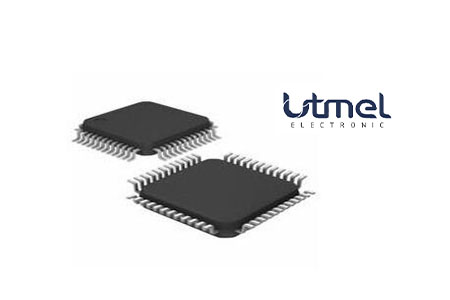

W5500 Pinout
W5500 CAD Model
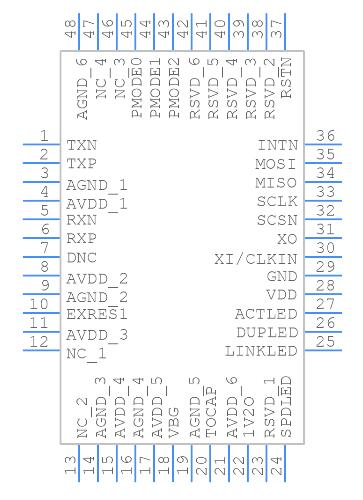
W5500 Symbol
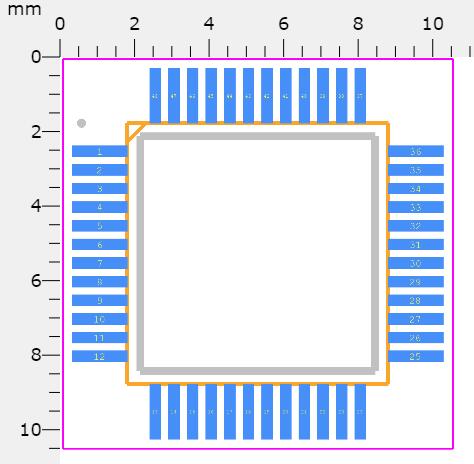
W5500 Footprint

W5500 3D Model
W5500 Block Diagram

W5500 Block Diagram
Specifications
- TypeParameter
- Factory Lead Time8 Weeks
- Package / Case
refers to the protective housing that encases an electronic component, providing mechanical support, electrical connections, and thermal management.
48-LQFP - Surface Mount
having leads that are designed to be soldered on the side of a circuit board that the body of the component is mounted on.
YES - Number of Pins48
- Operating Temperature
The operating temperature is the range of ambient temperature within which a power supply, or any other electrical equipment, operate in. This ranges from a minimum operating temperature, to a peak or maximum operating temperature, outside which, the power supply may fail.
-40°C~85°C - Packaging
Semiconductor package is a carrier / shell used to contain and cover one or more semiconductor components or integrated circuits. The material of the shell can be metal, plastic, glass or ceramic.
Strip - Published2013
- Part Status
Parts can have many statuses as they progress through the configuration, analysis, review, and approval stages.
Active - Moisture Sensitivity Level (MSL)
Moisture Sensitivity Level (MSL) is a standardized rating that indicates the susceptibility of electronic components, particularly semiconductors, to moisture-induced damage during storage and the soldering process, defining the allowable exposure time to ambient conditions before they require special handling or baking to prevent failures
3 (168 Hours) - Number of Terminations48
- Voltage - Supply
Voltage - Supply refers to the range of voltage levels that an electronic component or circuit is designed to operate with. It indicates the minimum and maximum supply voltage that can be applied for the device to function properly. Providing supply voltages outside this range can lead to malfunction, damage, or reduced performance. This parameter is critical for ensuring compatibility between different components in a circuit.
2.97V~3.63V - Terminal Position
In electronic components, the term "Terminal Position" refers to the physical location of the connection points on the component where external electrical connections can be made. These connection points, known as terminals, are typically used to attach wires, leads, or other components to the main body of the electronic component. The terminal position is important for ensuring proper connectivity and functionality of the component within a circuit. It is often specified in technical datasheets or component specifications to help designers and engineers understand how to properly integrate the component into their circuit designs.
QUAD - Terminal Form
Occurring at or forming the end of a series, succession, or the like; closing; concluding.
GULL WING - Peak Reflow Temperature (Cel)
Peak Reflow Temperature (Cel) is a parameter that specifies the maximum temperature at which an electronic component can be exposed during the reflow soldering process. Reflow soldering is a common method used to attach electronic components to a circuit board. The Peak Reflow Temperature is crucial because it ensures that the component is not damaged or degraded during the soldering process. Exceeding the specified Peak Reflow Temperature can lead to issues such as component failure, reduced performance, or even permanent damage to the component. It is important for manufacturers and assemblers to adhere to the recommended Peak Reflow Temperature to ensure the reliability and functionality of the electronic components.
NOT SPECIFIED - Supply Voltage
Supply voltage refers to the electrical potential difference provided to an electronic component or circuit. It is crucial for the proper operation of devices, as it powers their functions and determines performance characteristics. The supply voltage must be within specified limits to ensure reliability and prevent damage to components. Different electronic devices have specific supply voltage requirements, which can vary widely depending on their design and intended application.
3.3V - Terminal Pitch
The center distance from one pole to the next.
0.5mm - Time@Peak Reflow Temperature-Max (s)
Time@Peak Reflow Temperature-Max (s) refers to the maximum duration that an electronic component can be exposed to the peak reflow temperature during the soldering process, which is crucial for ensuring reliable solder joint formation without damaging the component.
NOT SPECIFIED - Function
The parameter "Function" in electronic components refers to the specific role or purpose that the component serves within an electronic circuit. It defines how the component interacts with other elements, influences the flow of electrical signals, and contributes to the overall behavior of the system. Functions can include amplification, signal processing, switching, filtering, and energy storage, among others. Understanding the function of each component is essential for designing effective and efficient electronic systems.
Controller - Number of Channels8
- Interface
In electronic components, the term "Interface" refers to the point at which two different systems, devices, or components connect and interact with each other. It can involve physical connections such as ports, connectors, or cables, as well as communication protocols and standards that facilitate the exchange of data or signals between the connected entities. The interface serves as a bridge that enables seamless communication and interoperability between different parts of a system or between different systems altogether. Designing a reliable and efficient interface is crucial in ensuring proper functionality and performance of electronic components and systems.
SPI - Operating Supply Current
Operating Supply Current, also known as supply current or quiescent current, is a crucial parameter in electronic components that indicates the amount of current required for the device to operate under normal conditions. It represents the current drawn by the component from the power supply while it is functioning. This parameter is important for determining the power consumption of the component and is typically specified in datasheets to help designers calculate the overall power requirements of their circuits. Understanding the operating supply current is essential for ensuring proper functionality and efficiency of electronic systems.
132mA - Max Supply Current
Max Supply Current refers to the maximum amount of electrical current that a component can draw from its power supply under normal operating conditions. It is a critical parameter that ensures the component operates reliably without exceeding its thermal limits or damaging internal circuitry. Exceeding this current can lead to overheating, performance degradation, or failure of the component. Understanding this parameter is essential for designing circuits that provide adequate power while avoiding overload situations.
132mA - uPs/uCs/Peripheral ICs Type
The parameter "uPs/uCs/Peripheral ICs Type" refers to the classification of various integrated circuits used in electronic devices. It encompasses microprocessors (uPs), microcontrollers (uCs), and peripheral integrated circuits that provide additional functionalities. This classification helps in identifying the specific type of chip used for processing tasks, controlling hardware, or interfacing with other components in a system. Understanding this parameter is essential for selecting the appropriate electronic components for a given application.
MICROPROCESSOR CIRCUIT - Protocol
In electronic components, the parameter "Protocol" refers to a set of rules and standards that govern the communication between devices. It defines the format, timing, sequencing, and error checking methods for data exchange between different components or systems. Protocols ensure that devices can understand and interpret data correctly, enabling them to communicate effectively with each other. Common examples of protocols in electronics include USB, Ethernet, SPI, I2C, and Bluetooth, each with its own specifications for data transmission. Understanding and adhering to protocols is essential for ensuring compatibility and reliable communication between electronic devices.
Ethernet - Number of Transceivers1
- Standards
The parameter "Standards" in electronic components refers to established criteria or specifications that ensure interoperability, safety, and performance across various electronic devices and systems. These standards are often set by recognized organizations and describe the characteristics, dimensions, and testing methods for components. Adherence to these standards helps manufacturers produce compatible and reliable products, facilitates communication between devices, and ensures compliance with regulatory requirements. Standards play a crucial role in the consistency and quality of electronic components in the industry.
10/100 Base-T/TX PHY - Length7mm
- Width7mm
- RoHS Status
RoHS means “Restriction of Certain Hazardous Substances” in the “Hazardous Substances Directive” in electrical and electronic equipment.
ROHS3 Compliant - Lead Free
Lead Free is a term used to describe electronic components that do not contain lead as part of their composition. Lead is a toxic material that can have harmful effects on human health and the environment, so the electronics industry has been moving towards lead-free components to reduce these risks. Lead-free components are typically made using alternative materials such as silver, copper, and tin. Manufacturers must comply with regulations such as the Restriction of Hazardous Substances (RoHS) directive to ensure that their products are lead-free and environmentally friendly.
Lead Free
W5500 Technical Details
Not support IP Fragmentation
Supports Power-down mode
Supports Wake on LAN over UDP
Supports the following Hardwired TCP/IP Protocols: TCP. UDP. ICMP. IPv4. ARP, IGMP. PPPoE
Supports 8 independent sockets simultaneously
Supports High-Speed Serial Peripheral Interface (SPI MODE 0, 3)
Internal 32Kbytes Memory for Tx/Rx Buffers
10BaseT/100BaseTX Ethernet PHY embedded
Support Auto-Negotiation (Full and half-duplex, 10 and 100-based)
3.3V operation with 5V I/O signal tolerance
LED outputs (Full/Half duplex, Link, Speed, Active)
48 Pin LQFP Lead-Free Package (7x7mm, 0.5mm pitch)
W5500 Environmental and Export Classification
| Attribute | Description |
| RoHS Status | ROHS3 Compliant |
| Moisture Sensitivity Level (MSL) | 3 (168 Hours) |
| ECCN | 5A991B1 |
| HTSUS | 8542.31.0001 |
W5500 Applications
Factory and Building Automation
Medical Monitoring Equipment
Embedded Servers
Home Network Devices: Set-Top Boxes, PVRs, Digital Media Adapters
Serial-to-Ethernet: Access Controls, LED displays, Wireless AP relays, etc.
Parallel-to-Ethernet: POS / Mini Printers, Copiers
USB-to-Ethernet: Storage Devices, Network Printers
GPIO-to-Ethernet: Home Network Sensors
Security Systems: DVRs, Network Cameras, Kiosks
W5500 VS W5100
W5500 is less expensive, performs better, and has eight sockets. As a result, the W5500 is a better choice for a web server. However, if RST packets are a serious concern, the W5100 might be a decent choice.
W5500 Dimensions
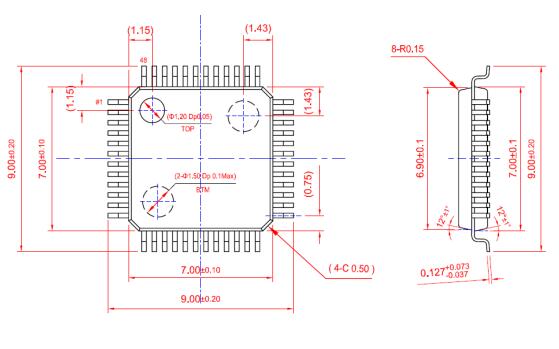
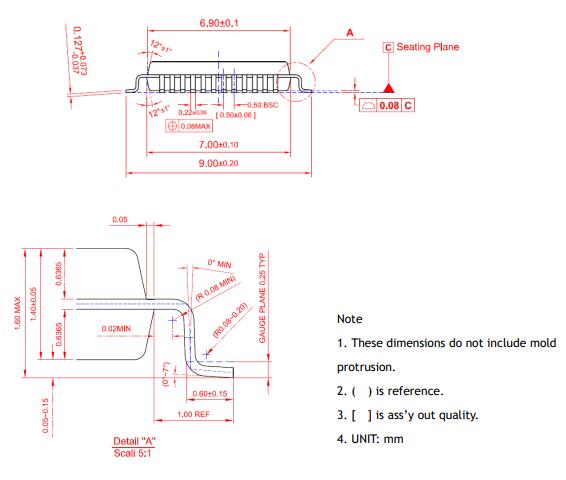
W5500 Dimensions
W5500 Manufacturer
WIZnet is a private, fabless semiconductor company founded in Korea in 1998. Products include an Internet Processor, the iMCU™, which is specialized by TOE (TCP/IP Offload Engine) technology, based on a unique patented fully hardwired TCP /IP. The iMCU is aimed at Embedded Internet Devices in a wide variety of applications, segmented both locally and regionally.
Parts with Similar Specs
- ImagePart NumberManufacturerPackage / CaseNumber of PinsInterfaceSupply VoltageTerminal PitchLead FreeNumber of TerminationsTerminal PositionView Compare
![W5500]()
W5500
48-LQFP
48
SPI
3.3 V
0.5 mm
Lead Free
48
QUAD
![TMS320F28021PTT]()
48-LQFP
48
I2C, SPI, UART, USART
3.3 V
0.5 mm
Lead Free
48
QUAD
![STM32F030C8T6]()
48-LQFP
48
I2C, SCI, SPI, UART, USART
1.8 V
0.5 mm
Lead Free
48
QUAD
![TMS320F28027PTT]()
48-LQFP
48
I2C, SCI, SPI, UART, USART
3.3 V
0.5 mm
Lead Free
48
QUAD
![TMS320F280200PTT]()
48-LQFP
48
I2C, SCI, SPI, UART, USART
1.8 V
0.5 mm
Lead Free
48
QUAD


Datasheet PDF
- Datasheets :
- Environmental Information :
- Design Resources :
What is the voltage range of W5500?
2.97V~3.63V
What is the operating temperature of W5500?
-40°C~85°C
What is the difference between W5500 and W5100?
W5500 is less expensive, performs better, and has eight sockets. As a result, the W5500 is a better choice for a web server. However, if RST packets are a serious concern, the W5100 might be a decent choice.
What is the use of W5500?
The W5500 chip is a Hardwired TCP/IP embedded Ethernet controller that provides an easier Internet connection to embedded systems.
How does W5500 work?
W5500 enables users to have Internet connectivity in their applications just by using the single chip in which TCP/IP stack, 10/100 Ethernet MAC, and PHY are embedded.
 74HC10 Triple 3-input NAND Gate: Pinout, Equivalent and Datasheet
17 November 20215123
 SigmaDSP Audio Processors 294.912 MHz Performance: Datasheet, Pinout, and Design Analysis
12 February 20261132
 Kioxia America THGBMJG6C1LBAU7 Memory Overview
28 August 20251565
 Designing with AD5933: Datasheet, Pinout, and Impedance Spectroscopy Guide
05 February 2026505
 MAX3082ESA Transceiver: Circuit, Pinout, and Datasheet
17 April 2025881
 LPS53 Open Frame AC DC Converters Output 12V: Datasheet, Features, and LPS53 VS NPS63-M-006
12 April 2022661
 Discovering the Microchip PIC32MX230F128HVMR Microcontroller: Architecture, Modules, and Guidelines
29 February 2024184
 MCP4151 Dual SPI Digital POT: Pinout, Equivalent and Datasheet
31 December 20214117
 How Many Smart Sensors Should a Car Be Equipped With?
28 March 20224849
 0 Ohm Resistor Explained
10 December 202120375
 Introduction to Five Types of Classic Power Supply Circuits
08 March 20227805
 Advanced Wide-Bandgap Semiconductor Ultraviolet Photodetectors for Enhanced Detection and Imaging
04 December 20231997
 The Art of Microchips: A Journey from Sand to Silicon
12 September 20233972
 Ceramic Capacitor Dielectrics Explained: C0G, X7R, Y5V and How to Choose
14 July 202613509
 European Chipmakers Experience Decline Following SMIC's Profit Slump
20 November 20233328
 Basic Introduction to RF Connector
30 October 20258677
WIZnet
In Stock: 25824
United States
China
Canada
Japan
Russia
Germany
United Kingdom
Singapore
Italy
Hong Kong(China)
Taiwan(China)
France
Korea
Mexico
Netherlands
Malaysia
Austria
Spain
Switzerland
Poland
Thailand
Vietnam
India
United Arab Emirates
Afghanistan
Åland Islands
Albania
Algeria
American Samoa
Andorra
Angola
Anguilla
Antigua & Barbuda
Argentina
Armenia
Aruba
Australia
Azerbaijan
Bahamas
Bahrain
Bangladesh
Barbados
Belarus
Belgium
Belize
Benin
Bermuda
Bhutan
Bolivia
Bonaire, Sint Eustatius and Saba
Bosnia & Herzegovina
Botswana
Brazil
British Indian Ocean Territory
British Virgin Islands
Brunei
Bulgaria
Burkina Faso
Burundi
Cabo Verde
Cambodia
Cameroon
Cayman Islands
Central African Republic
Chad
Chile
Christmas Island
Cocos (Keeling) Islands
Colombia
Comoros
Congo
Congo (DRC)
Cook Islands
Costa Rica
Côte d’Ivoire
Croatia
Cuba
Curaçao
Cyprus
Czechia
Denmark
Djibouti
Dominica
Dominican Republic
Ecuador
Egypt
El Salvador
Equatorial Guinea
Eritrea
Estonia
Eswatini
Ethiopia
Falkland Islands
Faroe Islands
Fiji
Finland
French Guiana
French Polynesia
Gabon
Gambia
Georgia
Ghana
Gibraltar
Greece
Greenland
Grenada
Guadeloupe
Guam
Guatemala
Guernsey
Guinea
Guinea-Bissau
Guyana
Haiti
Honduras
Hungary
Iceland
Indonesia
Iran
Iraq
Ireland
Isle of Man
Israel
Jamaica
Jersey
Jordan
Kazakhstan
Kenya
Kiribati
Kosovo
Kuwait
Kyrgyzstan
Laos
Latvia
Lebanon
Lesotho
Liberia
Libya
Liechtenstein
Lithuania
Luxembourg
Macao(China)
Madagascar
Malawi
Maldives
Mali
Malta
Marshall Islands
Martinique
Mauritania
Mauritius
Mayotte
Micronesia
Moldova
Monaco
Mongolia
Montenegro
Montserrat
Morocco
Mozambique
Myanmar
Namibia
Nauru
Nepal
New Caledonia
New Zealand
Nicaragua
Niger
Nigeria
Niue
Norfolk Island
North Korea
North Macedonia
Northern Mariana Islands
Norway
Oman
Pakistan
Palau
Palestinian Authority
Panama
Papua New Guinea
Paraguay
Peru
Philippines
Pitcairn Islands
Portugal
Puerto Rico
Qatar
Réunion
Romania
Rwanda
Samoa
San Marino
São Tomé & Príncipe
Saudi Arabia
Senegal
Serbia
Seychelles
Sierra Leone
Sint Maarten
Slovakia
Slovenia
Solomon Islands
Somalia
South Africa
South Sudan
Sri Lanka
St Helena, Ascension, Tristan da Cunha
St. Barthélemy
St. Kitts & Nevis
St. Lucia
St. Martin
St. Pierre & Miquelon
St. Vincent & Grenadines
Sudan
Suriname
Svalbard & Jan Mayen
Sweden
Syria
Tajikistan
Tanzania
Timor-Leste
Togo
Tokelau
Tonga
Trinidad & Tobago
Tunisia
Turkey
Turkmenistan
Turks & Caicos Islands
Tuvalu
U.S. Outlying Islands
U.S. Virgin Islands
Uganda
Ukraine
Uruguay
Uzbekistan
Vanuatu
Vatican City
Venezuela
Wallis & Futuna
Yemen
Zambia
Zimbabwe
![W5100]() W5100
W5100WIZnet
![W5300]() W5300
W5300WIZnet
![W5200]() W5200
W5200WIZnet
![W3150A]() W3150A
W3150AWIZnet
![W5100S-Q]() W5100S-Q
W5100S-QWIZnet
![W5100S (L/Q)]() W5100S (L/Q)
W5100S (L/Q)WIZnet
![W6100L]() W6100L
W6100LWIZnet
![W6100 (L/Q)]() W6100 (L/Q)
W6100 (L/Q)WIZnet
![W6100Q]() W6100Q
W6100QWIZnet


