

 Product
 Brand
Brand Articles
 Tools
Tools
W25Q16JVSNIQ: Overview, Features, and Applications


SpiFlash® Memory IC SpiFlash® Series 4.85mm mm
Systems with restricted space, pins, and power can benefit from the storage solution offered by the W25Q16JV (16M-bit) Serial Flash memory.
W25Q16JVSNIQ Description
Systems with restricted space, pins, and power can benefit from the storage solution offered by the W25Q16JV (16M-bit) Serial Flash memory. Performance and flexibility of the 25Q series surpass those of regular Serial Flash devices. They are perfect for storing voice, text, and data as well as for code shadowing to RAM and direct code execution from Dual/Quad SPI (XIP). With a single 2.7V to 3.6V power supply, the device can run on as little as 1µA of current during power down.
There are 8,192 programmable pages with 256 bytes each in the W25Q16JV array. A maximum of 256 bytes can be programmed concurrently. Groups of 16 (4KB sector erase), 128 (32KB block erase), 256 (64KB block erase), or the entire chip (chip erase) can have pages erased. 32 erasable blocks and 512 erasable sectors, respectively, are present in the W25Q16JV. More flexibility is possible in applications that need to store data and parameters thanks to the small 4KB sectors.
W25Q16JVSNIQ Pinout
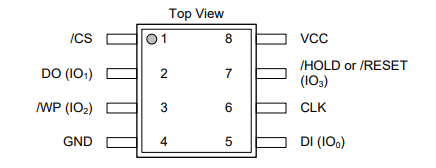
W25Q16JVSNIQ CAD Model
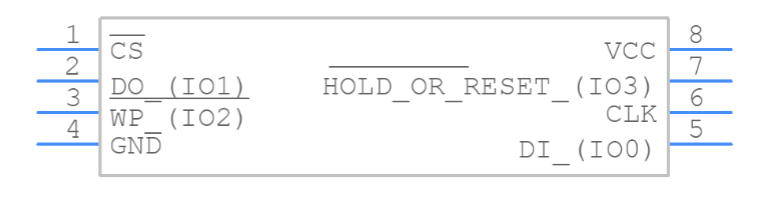
Symbol
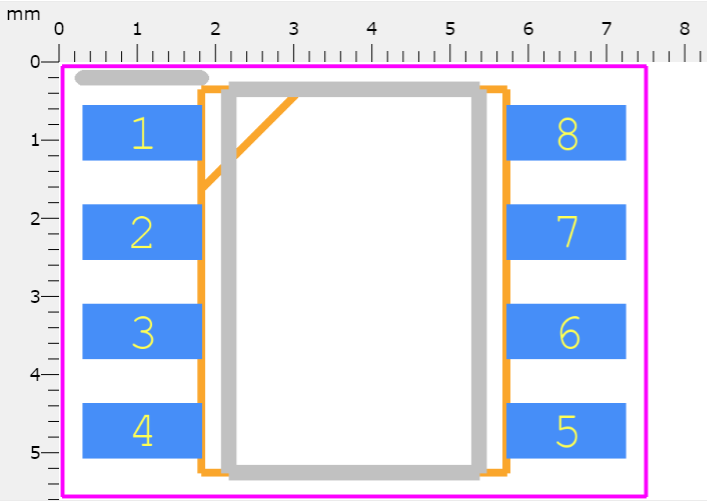
Footprint
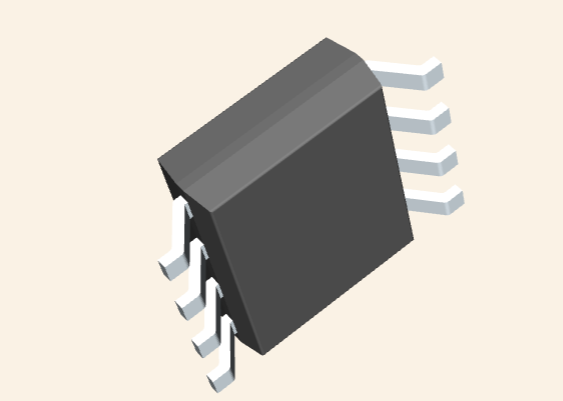
3D Model
W25Q16JVSNIQ Features
Write-Protect for Hardware and Software
Lock-Down Power Supply and
Unique OTP safeguarding
Complement array protection at the top and bottom
Protection of individual blocks and sectors
Specifications
- TypeParameter
- Factory Lead Time10 Weeks
- Mounting Type
The "Mounting Type" in electronic components refers to the method used to attach or connect a component to a circuit board or other substrate, such as through-hole, surface-mount, or panel mount.
Surface Mount - Package / Case
refers to the protective housing that encases an electronic component, providing mechanical support, electrical connections, and thermal management.
8-SOIC (0.154, 3.90mm Width) - Surface Mount
having leads that are designed to be soldered on the side of a circuit board that the body of the component is mounted on.
YES - Memory TypesNon-Volatile
- Operating Temperature
The operating temperature is the range of ambient temperature within which a power supply, or any other electrical equipment, operate in. This ranges from a minimum operating temperature, to a peak or maximum operating temperature, outside which, the power supply may fail.
-40°C~85°C TA - Packaging
Semiconductor package is a carrier / shell used to contain and cover one or more semiconductor components or integrated circuits. The material of the shell can be metal, plastic, glass or ceramic.
Tube - Series
In electronic components, the "Series" refers to a group of products that share similar characteristics, designs, or functionalities, often produced by the same manufacturer. These components within a series typically have common specifications but may vary in terms of voltage, power, or packaging to meet different application needs. The series name helps identify and differentiate between various product lines within a manufacturer's catalog.
SpiFlash® - Published2016
- Part Status
Parts can have many statuses as they progress through the configuration, analysis, review, and approval stages.
Active - Moisture Sensitivity Level (MSL)
Moisture Sensitivity Level (MSL) is a standardized rating that indicates the susceptibility of electronic components, particularly semiconductors, to moisture-induced damage during storage and the soldering process, defining the allowable exposure time to ambient conditions before they require special handling or baking to prevent failures
3 (168 Hours) - Number of Terminations8
- Additional Feature
Any Feature, including a modified Existing Feature, that is not an Existing Feature.
ALSO IT OPERATES AT 2.7V TO 3V WITH 104 MHZ - HTS Code
HTS (Harmonized Tariff Schedule) codes are product classification codes between 8-1 digits. The first six digits are an HS code, and the countries of import assign the subsequent digits to provide additional classification. U.S. HTS codes are 1 digits and are administered by the U.S. International Trade Commission.
8542.32.00.51 - Voltage - Supply
Voltage - Supply refers to the range of voltage levels that an electronic component or circuit is designed to operate with. It indicates the minimum and maximum supply voltage that can be applied for the device to function properly. Providing supply voltages outside this range can lead to malfunction, damage, or reduced performance. This parameter is critical for ensuring compatibility between different components in a circuit.
2.7V~3.6V - Terminal Position
In electronic components, the term "Terminal Position" refers to the physical location of the connection points on the component where external electrical connections can be made. These connection points, known as terminals, are typically used to attach wires, leads, or other components to the main body of the electronic component. The terminal position is important for ensuring proper connectivity and functionality of the component within a circuit. It is often specified in technical datasheets or component specifications to help designers and engineers understand how to properly integrate the component into their circuit designs.
DUAL - Peak Reflow Temperature (Cel)
Peak Reflow Temperature (Cel) is a parameter that specifies the maximum temperature at which an electronic component can be exposed during the reflow soldering process. Reflow soldering is a common method used to attach electronic components to a circuit board. The Peak Reflow Temperature is crucial because it ensures that the component is not damaged or degraded during the soldering process. Exceeding the specified Peak Reflow Temperature can lead to issues such as component failure, reduced performance, or even permanent damage to the component. It is important for manufacturers and assemblers to adhere to the recommended Peak Reflow Temperature to ensure the reliability and functionality of the electronic components.
NOT SPECIFIED - Number of Functions1
- Supply Voltage
Supply voltage refers to the electrical potential difference provided to an electronic component or circuit. It is crucial for the proper operation of devices, as it powers their functions and determines performance characteristics. The supply voltage must be within specified limits to ensure reliability and prevent damage to components. Different electronic devices have specific supply voltage requirements, which can vary widely depending on their design and intended application.
3.3V - Terminal Pitch
The center distance from one pole to the next.
1.27mm - Time@Peak Reflow Temperature-Max (s)
Time@Peak Reflow Temperature-Max (s) refers to the maximum duration that an electronic component can be exposed to the peak reflow temperature during the soldering process, which is crucial for ensuring reliable solder joint formation without damaging the component.
NOT SPECIFIED - JESD-30 Code
JESD-30 Code refers to a standardized descriptive designation system established by JEDEC for semiconductor-device packages. This system provides a systematic method for generating designators that convey essential information about the package's physical characteristics, such as size and shape, which aids in component identification and selection. By using JESD-30 codes, manufacturers and engineers can ensure consistency and clarity in the specification of semiconductor packages across various applications and industries.
R-PDSO-G8 - Supply Voltage-Max (Vsup)
The parameter "Supply Voltage-Max (Vsup)" in electronic components refers to the maximum voltage that can be safely applied to the component without causing damage. It is an important specification to consider when designing or using electronic circuits to ensure the component operates within its safe operating limits. Exceeding the maximum supply voltage can lead to overheating, component failure, or even permanent damage. It is crucial to adhere to the specified maximum supply voltage to ensure the reliable and safe operation of the electronic component.
3.6V - Supply Voltage-Min (Vsup)
The parameter "Supply Voltage-Min (Vsup)" in electronic components refers to the minimum voltage level required for the component to operate within its specified performance range. This parameter indicates the lowest voltage that can be safely applied to the component without risking damage or malfunction. It is crucial to ensure that the supply voltage provided to the component meets or exceeds this minimum value to ensure proper functionality and reliability. Failure to adhere to the specified minimum supply voltage may result in erratic behavior, reduced performance, or even permanent damage to the component.
3V - Memory Size
The memory capacity is the amount of data a device can store at any given time in its memory.
16Mb 2M x 8 - Operating Mode
A phase of operation during the operation and maintenance stages of the life cycle of a facility.
SYNCHRONOUS - Clock Frequency
Clock frequency, also known as clock speed, refers to the rate at which a processor or electronic component can execute instructions. It is measured in hertz (Hz) and represents the number of cycles per second that the component can perform. A higher clock frequency typically indicates a faster processing speed and better performance. However, it is important to note that other factors such as architecture, efficiency, and workload also play a significant role in determining the overall performance of a component. In summary, clock frequency is a crucial parameter that influences the speed and efficiency of electronic components in processing data and executing tasks.
133MHz - Memory Format
Memory Format in electronic components refers to the specific organization and structure of data storage within a memory device. It defines how data is stored, accessed, and managed within the memory module. Different memory formats include RAM (Random Access Memory), ROM (Read-Only Memory), and various types of flash memory. The memory format determines the speed, capacity, and functionality of the memory device, and it is crucial for compatibility with other components in a system. Understanding the memory format is essential for selecting the right memory module for a particular application or device.
FLASH - Memory Interface
An external memory interface is a bus protocol for communication from an integrated circuit, such as a microprocessor, to an external memory device located on a circuit board.
SPI - Quad I/O - Organization
In the context of electronic components, the parameter "Organization" typically refers to the arrangement or structure of the internal components within a device or system. It can describe how various elements such as transistors, resistors, capacitors, and other components are physically arranged and interconnected on a circuit board or within a semiconductor chip.The organization of electronic components plays a crucial role in determining the functionality, performance, and efficiency of a device. It can impact factors such as signal propagation, power consumption, thermal management, and overall system complexity. Engineers carefully design the organization of components to optimize the operation of electronic devices and ensure reliable performance.Different types of electronic components may have specific organizational requirements based on the intended application and design considerations. For example, integrated circuits may have a highly compact and intricate organization to maximize functionality within a small footprint, while larger electronic systems may have a more modular and distributed organization to facilitate maintenance and scalability.
2MX8 - Memory Width
Memory width refers to the number of bits that can be read or written to memory at one time. It is an important specification in electronic components, particularly in memory devices like RAM and cache. A wider memory width allows for greater data throughput, enabling faster performance as more data can be processed simultaneously. Memory width can vary among different types of memory and can impact both the complexity and efficiency of data handling within electronic systems.
8 - Write Cycle Time - Word, Page
Write Cycle Time - Word, Page refers to the duration required to write data to a specific memory cell or a page of memory in electronic components, particularly in non-volatile memories like Flash or EEPROM. It indicates the time taken to complete a writing operation for a single word or an entire page of data. This parameter is crucial for determining the performance and speed of memory devices in applications where quick data storage is essential. It impacts the overall efficiency in data handling, affecting both read and write speeds in memory-related operations.
3ms - Memory Density
Memory density in electronic components refers to the amount of data that can be stored in a given physical space or memory module. It is typically measured in bits or bytes per unit area, such as bits per square inch. Higher memory density means that more data can be stored in a smaller space, which is important for devices with limited physical size or power constraints. Memory density is a key factor in determining the capacity and performance of memory devices, such as RAM, ROM, and flash memory, and is a critical consideration in the design and manufacturing of electronic products.
16777216 bit - Parallel/Serial
The parameter "Parallel/Serial" in electronic components refers to the method of data transmission or communication within the component. In parallel communication, multiple bits of data are transmitted simultaneously over multiple channels or wires. This allows for faster data transfer rates but requires more physical connections and can be more susceptible to signal interference.On the other hand, in serial communication, data is transmitted sequentially over a single channel or wire. While serial communication may have slower data transfer rates compared to parallel communication, it is more cost-effective, requires fewer connections, and is less prone to signal interference.The choice between parallel and serial communication depends on the specific requirements of the electronic component and the overall system design, balancing factors such as speed, cost, complexity, and reliability.
SERIAL - Programming Voltage
A special high-voltage supply that supplies the potential and energy for altering the state of certain nonvolatile memory arrays. On some devices, the presence of VPP also acts as a program enable signal (P).
3V - Alternate Memory Width
Alternate Memory Width is a parameter in electronic components that refers to the ability of a memory device to operate with different data bus widths. This means that the memory device can support various configurations of data bus widths, allowing for flexibility in system design and compatibility with different applications. By offering alternate memory widths, the device can be used in a wider range of systems without requiring significant changes to the overall design. This parameter is important for optimizing performance and efficiency in electronic systems by providing options for data transfer and storage based on specific requirements.
1 - Length4.85mm
- Height Seated (Max)
Height Seated (Max) is a parameter in electronic components that refers to the maximum allowable height of the component when it is properly seated or installed on a circuit board or within an enclosure. This specification is crucial for ensuring proper fit and alignment within the overall system design. Exceeding the maximum seated height can lead to mechanical interference, electrical shorts, or other issues that may impact the performance and reliability of the electronic device. Manufacturers provide this information to help designers and engineers select components that will fit within the designated space and function correctly in the intended application.
1.75mm - Width3.9mm
- RoHS Status
RoHS means “Restriction of Certain Hazardous Substances” in the “Hazardous Substances Directive” in electrical and electronic equipment.
ROHS3 Compliant
Parts with Similar Specs
W25Q16JVSNIQ Package
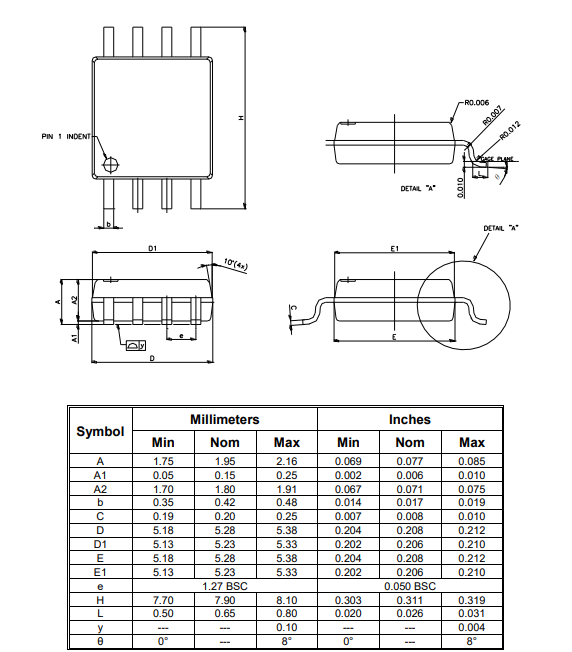
Datasheet PDF
- Datasheets :
What applications can the W25Q16JVSNIQ be used for?
The W25Q16JVSNIQ is commonly used in a wide range of electronic devices and applications. It is often utilized in consumer electronics, automotive systems, industrial equipment, networking devices, and various other products that require non-volatile storage for data or firmware.
How does the W25Q16JVSNIQ interface with microcontrollers or other devices?
The W25Q16JVSNIQ utilizes the Serial Peripheral Interface (SPI) protocol to communicate with microcontrollers or other devices. It operates as a slave device, allowing the host to read from or write to the memory using SPI commands.
 STMPE811QTR S-Touch 8-bit GPIO expander QFN16: 3D Model, Datasheet, and Application
17 January 2022334
 LM393DR: LM393, 36V, Pinout, Datasheet
15 March 20224212
 HMC344LC3TR-R5 RF Switch: Pinout, Feature, Datasheet
14 August 2024473
 Exploring the Microchip ATtiny461V Microcontroller
28 February 2024223
 Infineon IRLML2502TRPBF price hacks every buyer should know
18 August 2025307
 IRF520 MOSFET: Pinout, Datasheet, Test Circuit, and Equivalents
31 July 202118311
 AD4004 16-Bit 1 MSPS SAR ADC: Datasheet, Performance, and Integration Deep Dive
20 March 2026183
 ATTINY2313-20PU AVR ATtiny Microcontroller 20MHz 20-pin DIP: Datasheet, Pinout, and Features
25 February 20222127
 CR2450 vs CR2032 Batteries
18 June 20253226
 What is a Resistor Used For?
01 August 20252449
 A Complete Guide to 2025 Battery vs 2032 Swapping
29 August 20254667
 Things You Need to Know about Seven-segment Display
14 October 20217858
 Rectifier Diode: Function and Circuit
12 August 202022672
 What Is an Electrical Connector? Types and Selection Checklist
14 July 20269169
 Semiconductor Market Expected to Surge, Driven by Rising Number of Data Centers
04 June 20242852
 Addressing Vulnerabilities in the U.S. Semiconductor Market
27 October 20232189
Winbond Electronics
In Stock: 7175
Minimum: 1 Multiples: 1
Qty
Unit Price
Ext Price
1
$1.494255
$1.49
10
$1.409674
$14.10
100
$1.329881
$132.99
500
$1.254605
$627.30
1000
$1.183590
$1,183.59
Not the price you want? Send RFQ Now and we'll contact you ASAP.
Inquire for More Quantity
![W25Q128JVSIQ]() W25Q128JVSIQ
W25Q128JVSIQWinbond Electronics
![W25Q80DVSSIG]() W25Q80DVSSIG
W25Q80DVSSIGWinbond Electronics
![W9825G6KH-6]() W9825G6KH-6
W9825G6KH-6Winbond Electronics
![W27C512-45Z]() W27C512-45Z
W27C512-45ZWinbond Electronics
![W25Q32JWBYIQ TR]() W25Q32JWBYIQ TR
W25Q32JWBYIQ TRWinbond Electronics
![W9812G6KH-6]() W9812G6KH-6
W9812G6KH-6Winbond Electronics
![W25Q64FVSSIG]() W25Q64FVSSIG
W25Q64FVSSIGWinbond Electronics
![W25Q64JVSSIQ]() W25Q64JVSSIQ
W25Q64JVSSIQWinbond Electronics
![W25X40CLSNIG]() W25X40CLSNIG
W25X40CLSNIGWinbond Electronics
![W25Q128FVSIG]() W25Q128FVSIG
W25Q128FVSIGWinbond Electronics


