

 Product
 Brand
Brand Articles
 Tools
Tools
ADG1419 iCMOS SPDT Switch: Pinout, Features and Datasheet

110ns, 140ns SPDT 2.4Ohm BOTTOM Analog Switches BREAK-BEFORE-MAKE ADG1419 500pA 8-WFDFN Exposed Pad, CSP
Unit Price: $14.745692
Ext Price: $14.75


110ns, 140ns SPDT 2.4Ohm BOTTOM Analog Switches BREAK-BEFORE-MAKE ADG1419 500pA 8-WFDFN Exposed Pad, CSP
The ADG1419 is a monolithic iCMOS® device containing a single-pole/double-throw (SPDT) switch. An EN input on the LFCSP is used to enable or disable the device. When disabled, all channels are switched off. The industrial CMOS (iCMOS) modular manufacturing process combines high voltage, complementary metal-oxide semiconductor (CMOS) and bipolar technologies. Furthermore, Huge range of Semiconductors, Capacitors, Resistors and IcS in stock. Welcome RFQ.

What is the difference between a SPST, SPDT, DPST, and DPDT switch? - Detailed
ADG1419 Pinout
The following figure is the diagram of ADG1419 pinout.
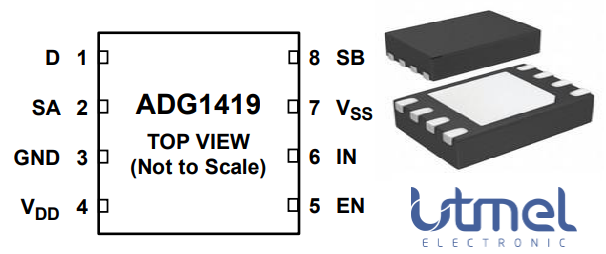
Pinout
ADG1419 CAD Model
The followings are ADG1419 Symbol, Footprint, and 3D Model.
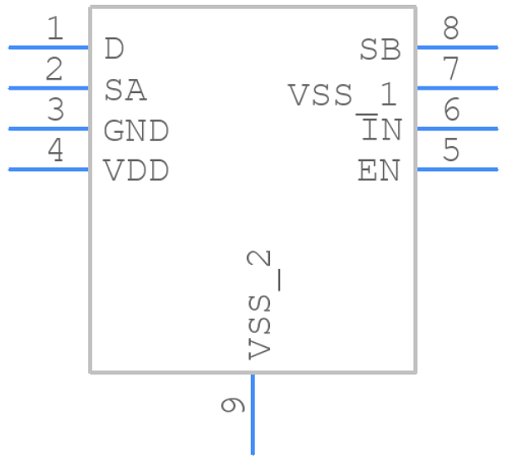
PCB Symbol
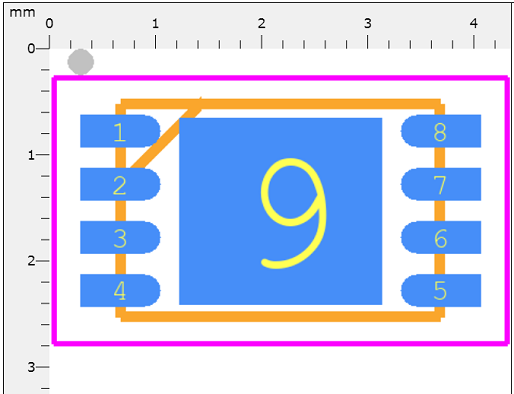
PCB Footprint
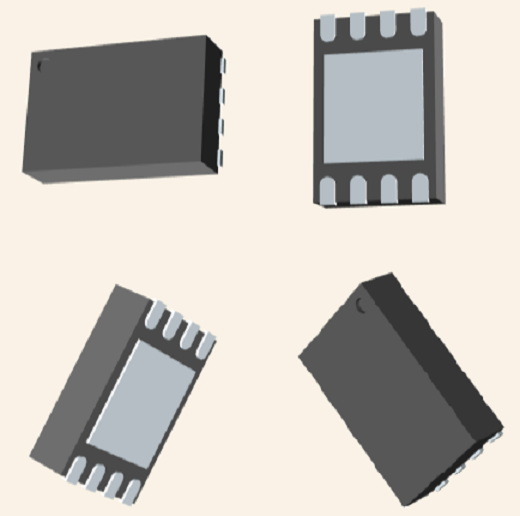
3D Model
ADG1419 Overview
The ADG1419 is a monolithic iCMOS® device containing a single-pole/double-throw (SPDT) switch. An EN input on the LFCSP is used to enable or disable the device. When disabled, all channels are switched off. The industrial CMOS (iCMOS) modular manufacturing process combines high voltage, complementary metal-oxide semiconductor (CMOS) and bipolar technologies. It enables the development of a wide range of high performance analog ICs capable of 33 V operation in a footprint that no other generation of high voltage parts has achieved. Unlike analog ICs using conventional CMOS processes, iCMOS components can tolerate high supply voltages while providing increased performance, dramatically lower power consumption, and reduced package size. The on-resistance profile is very flat over the full analog input range, ensuring excellent linearity and low distortion when switching audio signals. The iCMOS construction ensures ultralow power dissipation, making the part ideally suited for portable and battery-powered instruments. Each switch conducts equally well in both directions when on and has an input signal range that extends to the supplies. In the off condition, signal levels up to the supplies are blocked. The ADG1419 exhibits break-before-make switching action for use in multiplexer applications.
This article provides you with a basic overview of the ADG1419 iCMOS SPDT Switch, including its pin descriptions, features and specifications, etc., to help you quickly understand what ADG1419 is.
ADG1419 Features
● 2.1 Ω on resistance
● 0.5 Ω maximum on-resistance flatness at 25°C
● Up to 390 mA continuous current
● Fully specified at +12 V, ±15 V, ±5 V
● No VL supply required
● 3 V logic-compatible inputs
● Rail-to-rail operation
● 8-lead MSOP and 8-lead, 3 mm × 2 mm LFCSP
ADG1419 Product Highlights
● 2.4 Ω maximum on resistance at 25°C.
● Minimum distortion.
● 3 V logic-compatible digital inputs: VINH = 2.0 V, VINL = 0.8 V.
● No VL logic power supply required.
● 8-lead MSOP and 8-lead, 3 mm × 2 mm LFCSP.
Specifications
- TypeParameter
- Lifecycle Status
Lifecycle Status refers to the current stage of an electronic component in its product life cycle, indicating whether it is active, obsolete, or transitioning between these states. An active status means the component is in production and available for purchase. An obsolete status indicates that the component is no longer being manufactured or supported, and manufacturers typically provide a limited time frame for support. Understanding the lifecycle status is crucial for design engineers to ensure continuity and reliability in their projects.
PRODUCTION (Last Updated: 1 month ago) - Factory Lead Time10 Weeks
- Contact Plating
Contact plating (finish) provides corrosion protection for base metals and optimizes the mechanical and electrical properties of the contact interfaces.
Tin - Mounting Type
The "Mounting Type" in electronic components refers to the method used to attach or connect a component to a circuit board or other substrate, such as through-hole, surface-mount, or panel mount.
Surface Mount - Package / Case
refers to the protective housing that encases an electronic component, providing mechanical support, electrical connections, and thermal management.
8-WFDFN Exposed Pad, CSP - Surface Mount
having leads that are designed to be soldered on the side of a circuit board that the body of the component is mounted on.
YES - Number of Pins8
- Turn Off Delay Time
It is the time from when Vgs drops below 90% of the gate drive voltage to when the drain current drops below 90% of the load current. It is the delay before current starts to transition in the load, and depends on Rg. Ciss.
140 ns - Operating Temperature
The operating temperature is the range of ambient temperature within which a power supply, or any other electrical equipment, operate in. This ranges from a minimum operating temperature, to a peak or maximum operating temperature, outside which, the power supply may fail.
-40°C~125°C TA - Packaging
Semiconductor package is a carrier / shell used to contain and cover one or more semiconductor components or integrated circuits. The material of the shell can be metal, plastic, glass or ceramic.
Tape & Reel (TR) - JESD-609 Code
The "JESD-609 Code" in electronic components refers to a standardized marking code that indicates the lead-free solder composition and finish of electronic components for compliance with environmental regulations.
e3 - Pbfree Code
The "Pbfree Code" parameter in electronic components refers to the code or marking used to indicate that the component is lead-free. Lead (Pb) is a toxic substance that has been widely used in electronic components for many years, but due to environmental concerns, there has been a shift towards lead-free alternatives. The Pbfree Code helps manufacturers and users easily identify components that do not contain lead, ensuring compliance with regulations and promoting environmentally friendly practices. It is important to pay attention to the Pbfree Code when selecting electronic components to ensure they meet the necessary requirements for lead-free applications.
no - Part Status
Parts can have many statuses as they progress through the configuration, analysis, review, and approval stages.
Active - Moisture Sensitivity Level (MSL)
Moisture Sensitivity Level (MSL) is a standardized rating that indicates the susceptibility of electronic components, particularly semiconductors, to moisture-induced damage during storage and the soldering process, defining the allowable exposure time to ambient conditions before they require special handling or baking to prevent failures
1 (Unlimited) - Number of Terminations8
- ECCN Code
An ECCN (Export Control Classification Number) is an alphanumeric code used by the U.S. Bureau of Industry and Security to identify and categorize electronic components and other dual-use items that may require an export license based on their technical characteristics and potential for military use.
EAR99 - Resistance
Resistance is a fundamental property of electronic components that measures their opposition to the flow of electric current. It is denoted by the symbol "R" and is measured in ohms (Ω). Resistance is caused by the collisions of electrons with atoms in a material, which generates heat and reduces the flow of current. Components with higher resistance will impede the flow of current more than those with lower resistance. Resistance plays a crucial role in determining the behavior and functionality of electronic circuits, such as limiting current flow, voltage division, and controlling power dissipation.
2.4Ohm - Max Power Dissipation
The maximum power that the MOSFET can dissipate continuously under the specified thermal conditions.
2mW - Voltage - Supply
Voltage - Supply refers to the range of voltage levels that an electronic component or circuit is designed to operate with. It indicates the minimum and maximum supply voltage that can be applied for the device to function properly. Providing supply voltages outside this range can lead to malfunction, damage, or reduced performance. This parameter is critical for ensuring compatibility between different components in a circuit.
15V - Terminal Position
In electronic components, the term "Terminal Position" refers to the physical location of the connection points on the component where external electrical connections can be made. These connection points, known as terminals, are typically used to attach wires, leads, or other components to the main body of the electronic component. The terminal position is important for ensuring proper connectivity and functionality of the component within a circuit. It is often specified in technical datasheets or component specifications to help designers and engineers understand how to properly integrate the component into their circuit designs.
BOTTOM - Terminal Form
Occurring at or forming the end of a series, succession, or the like; closing; concluding.
BALL - Peak Reflow Temperature (Cel)
Peak Reflow Temperature (Cel) is a parameter that specifies the maximum temperature at which an electronic component can be exposed during the reflow soldering process. Reflow soldering is a common method used to attach electronic components to a circuit board. The Peak Reflow Temperature is crucial because it ensures that the component is not damaged or degraded during the soldering process. Exceeding the specified Peak Reflow Temperature can lead to issues such as component failure, reduced performance, or even permanent damage to the component. It is important for manufacturers and assemblers to adhere to the recommended Peak Reflow Temperature to ensure the reliability and functionality of the electronic components.
260 - Number of Functions1
- Terminal Pitch
The center distance from one pole to the next.
0.5mm - Time@Peak Reflow Temperature-Max (s)
Time@Peak Reflow Temperature-Max (s) refers to the maximum duration that an electronic component can be exposed to the peak reflow temperature during the soldering process, which is crucial for ensuring reliable solder joint formation without damaging the component.
40 - Base Part Number
The "Base Part Number" (BPN) in electronic components serves a similar purpose to the "Base Product Number." It refers to the primary identifier for a component that captures the essential characteristics shared by a group of similar components. The BPN provides a fundamental way to reference a family or series of components without specifying all the variations and specific details.
ADG1419 - Current - Supply (Max)
The parameter "Current - Supply (Max)" in electronic components refers to the maximum amount of current that a component can draw from a power supply for its operation. This parameter is critical for ensuring that the power supply can adequately meet the demands of the component without causing damage or malfunction. Exceeding this specified maximum current can lead to overheating, reduced performance, or failure of the component. It is essential to consider this value when designing or integrating components into electronic circuits to maintain reliability and functionality.
190μA - Number of Outputs2
- Operating Supply Voltage
The voltage level by which an electrical system is designated and to which certain operating characteristics of the system are related.
12V - Polarity
In electronic components, polarity refers to the orientation or direction in which the component must be connected in a circuit to function properly. Components such as diodes, capacitors, and LEDs have polarity markings to indicate which terminal should be connected to the positive or negative side of the circuit. Connecting a component with incorrect polarity can lead to malfunction or damage. It is important to pay attention to polarity markings and follow the manufacturer's instructions to ensure proper operation of electronic components.
Non-Inverting - Number of Channels1
- Interface
In electronic components, the term "Interface" refers to the point at which two different systems, devices, or components connect and interact with each other. It can involve physical connections such as ports, connectors, or cables, as well as communication protocols and standards that facilitate the exchange of data or signals between the connected entities. The interface serves as a bridge that enables seamless communication and interoperability between different parts of a system or between different systems altogether. Designing a reliable and efficient interface is crucial in ensuring proper functionality and performance of electronic components and systems.
Parallel - Test Frequency
a statistical procedure for assessing data that contain counts or the numbers of occurrences of various categories or classes.
1MHz - Power Dissipation
the process by which an electronic or electrical device produces heat (energy loss or waste) as an undesirable derivative of its primary action.
2mW - Turn On Delay Time
Turn-on delay, td(on), is the time taken to charge the input capacitance of the device before drain current conduction can start.
110 ns - Number of Inputs1
- Voltage - Supply, Single/Dual (±)
The parameter "Voltage - Supply, Single/Dual (±)" in electronic components refers to the power supply voltage required for the proper operation of the component. This parameter indicates whether the component requires a single power supply voltage (e.g., 5V) or a dual power supply voltage (e.g., ±15V). For components that require a single power supply voltage, only one voltage level is needed for operation. On the other hand, components that require a dual power supply voltage need both positive and negative voltage levels to function correctly.Understanding the voltage supply requirements of electronic components is crucial for designing and integrating them into circuits to ensure proper functionality and prevent damage due to incorrect voltage levels.
5V~16.5V ±4.5V~16.5V - Supply Type
Supply Type in electronic components refers to the classification of power sources used to operate the component. It indicates whether the component requires DC or AC power, and if DC, specifies the voltage levels such as low, medium, or high. Different supply types can affect the performance, compatibility, and application of the component in electronic circuits. Understanding the supply type is crucial for proper component selection and integration into electronic designs.
Dual, Single - Bandwidth
In electronic components, "Bandwidth" refers to the range of frequencies over which the component can effectively operate or pass signals without significant loss or distortion. It is a crucial parameter for devices like amplifiers, filters, and communication systems. The bandwidth is typically defined as the difference between the upper and lower frequencies at which the component's performance meets specified criteria, such as a certain level of signal attenuation or distortion. A wider bandwidth indicates that the component can handle a broader range of frequencies, making it more versatile for various applications. Understanding the bandwidth of electronic components is essential for designing and optimizing circuits to ensure proper signal transmission and reception within the desired frequency range.
135MHz - Neg Supply Voltage-Nom (Vsup)
The parameter "Neg Supply Voltage-Nom (Vsup)" in electronic components refers to the nominal negative supply voltage that the component requires to operate within its specified performance characteristics. This parameter indicates the minimum voltage level that must be provided to the component's negative supply pin for proper functionality. It is important to ensure that the negative supply voltage provided to the component does not exceed the maximum specified value to prevent damage or malfunction. Understanding and adhering to the specified negative supply voltage requirements is crucial for the reliable operation of the electronic component in a circuit.
-15V - Max Dual Supply Voltage
A Dual power supply is a regular direct current power supply. It can provide a positive as well as negative voltage. It ensures stable power supply to the device as well as it helps to prevent system damage.
16.5V - On-State Resistance (Max)
The "On-State Resistance (Max)" parameter in electronic components refers to the maximum resistance exhibited by the component when it is in the fully conducting state. This resistance is typically measured when the component is carrying the maximum specified current. A lower on-state resistance indicates better conductivity and efficiency of the component when it is in the on-state. It is an important parameter to consider when selecting components for applications where low power dissipation and high efficiency are critical factors.
2.4Ohm - Min Dual Supply Voltage
The parameter "Min Dual Supply Voltage" in electronic components refers to the minimum voltage required for the proper operation of a device that uses dual power supplies. Dual power supplies typically consist of a positive and a negative voltage source. The "Min Dual Supply Voltage" specification ensures that both the positive and negative supply voltages are within a certain range to guarantee the device functions correctly. It is important to adhere to this parameter to prevent damage to the component and ensure reliable performance.
4.5V - Dual Supply Voltage
Dual Supply Voltage refers to an electronic component's requirement for two separate power supply voltages, typically one positive and one negative. This configuration is commonly used in operational amplifiers, analog circuits, and certain digital devices to allow for greater signal handling capabilities and improved performance. The use of dual supply voltages enables the device to process bipolar signals, thereby enhancing its functionality in various applications.
15V - Multiplexer/Demultiplexer Circuit
A Multiplexer/Demultiplexer Circuit is an electronic component used in digital circuits to select one of several input signals and route it to a single output. A multiplexer, also known as a "mux," is used to combine multiple input signals into a single output, while a demultiplexer, also known as a "demux," is used to take a single input and route it to one of several possible outputs. These circuits are commonly used in data transmission, communication systems, and digital signal processing applications to efficiently manage and control the flow of data. Multiplexers and demultiplexers play a crucial role in optimizing the use of resources and improving the overall performance of electronic systems.
2:1 - Off-state Isolation-Nom
Off-state Isolation-Nom is a parameter used to measure the level of isolation between two electronic components or circuits when one of them is in the off state. It indicates the ability of the component to prevent unwanted signals or interference from passing through when it is not actively conducting. The parameter is typically expressed in decibels (dB) and is an important consideration in designing and selecting components for applications where isolation between different parts of a circuit is critical to prevent crosstalk or interference. Higher values of Off-state Isolation-Nom indicate better isolation performance, leading to improved overall system reliability and performance.
64 dB - Current - Leakage (IS(off)) (Max)
Current - Leakage (IS(off)) (Max) refers to the maximum amount of current that flows through a device when it is in its off state, meaning it is not conducting or not intended to be active. This parameter is crucial in determining the efficiency of electronic components, especially in battery-operated devices, as higher leakage currents can lead to increased power consumption and reduced battery life. It is typically measured in microamperes (µA) or milliamperes (mA) and helps engineers assess the suitability of a component for low-power applications.
500pA - Channel Capacitance (CS(off), CD(off))
Channel capacitance (CS(off), CD(off)) in electronic components refers to the capacitance associated with the channel of a field-effect transistor (FET) when it is turned off. CS(off) represents the capacitance between the source and the gate of the FET, while CD(off) represents the capacitance between the drain and the gate. These capacitances play a crucial role in determining the high-frequency performance and switching characteristics of the FET. Understanding and controlling these capacitances is essential for optimizing the performance of electronic circuits, especially in high-speed applications where minimizing parasitic capacitances is critical for achieving desired signal integrity and efficiency.
19pF 44pF - On-state Resistance Match-Nom
On-state Resistance Match-Nom refers to the nominal or standard value of the on-state resistance for a specific electronic component, such as a transistor or a MOSFET, when it is in its "on" state. This parameter indicates how much resistance the component presents to current flow during its conducting phase, which affects power dissipation and efficiency. Matching this value across multiple devices is crucial for ensuring consistent performance in applications where several components operate together.
0.05Ohm - Switch Circuit
establishes connections between links, on demand and as available, in order to establish an end-to-end circuit between devices.
SPDT - Switch Time (Ton, Toff) (Max)
The parameter "Switch Time (Ton, Toff) (Max)" in electronic components refers to the maximum time it takes for a device to transition between its on and off states. Ton represents the turn-on time, which is the time taken for the device to switch from the off state to the on state, while Toff represents the turn-off time, which is the time taken for the device to switch from the on state to the off state. This parameter is crucial in determining the speed and efficiency of the device's switching operation. A shorter switch time generally indicates faster switching speeds and better performance of the electronic component.
110ns, 140ns - Insertion Loss (dB)
Insertion Loss (dB) is a parameter used to measure the amount of signal loss that occurs when a component is inserted into a transmission line or circuit. It is typically expressed in decibels (dB) and represents the difference in signal power before and after the insertion of the component. A higher insertion loss value indicates greater signal attenuation or reduction in signal strength. Insertion loss is an important consideration in electronic components such as filters, amplifiers, and connectors, as it can impact the overall performance and efficiency of a system. Minimizing insertion loss is often a key design goal to ensure optimal signal integrity and transmission quality.
0.16 dB - Charge Injection
A Charge injection in analog switches and multiplexers is a level change caused by stray capacitance associated with the NMOS and PMOS transistors that make up the analog switch.
-16pC - Channel-to-Channel Matching (ΔRon)
Channel-to-Channel Matching (ΔRon) refers to the variation in the on-resistance of multiple channels within a multi-channel electronic component, such as a multiplexer or a switch. It is a measure of how closely the on-resistance values of different channels match each other. The lower the ΔRon value, the better the matching between channels, which is important for ensuring consistent performance across all channels in a system. Channel-to-Channel Matching is critical in applications where precise and uniform signal processing is required, such as in instrumentation, audio equipment, and communication systems. Manufacturers provide specifications for ΔRon to help designers select components that meet their performance requirements.
50m Ω - Switching
In electronic components, "Switching" refers to the process of turning a device on or off, or changing its state from one condition to another. This parameter is crucial in determining the speed and efficiency of a component's operation. It is often measured in terms of switching time, which is the time taken for a device to transition from one state to another. The switching characteristics of a component play a significant role in its overall performance and reliability in electronic circuits.
BREAK-BEFORE-MAKE - Drain to Source Resistance
The Drain to Source Resistance, often denoted as RDS(on), is a crucial parameter in electronic components, particularly in field-effect transistors (FETs) such as MOSFETs. It represents the resistance between the drain and source terminals when the FET is in its on-state, conducting current. A lower RDS(on) value indicates better conductivity and efficiency, as it results in less power dissipation and heat generation in the component. Designers often aim to minimize RDS(on) to improve the performance and overall efficiency of electronic circuits, especially in power applications where minimizing losses is critical.
2.4Ohm - Voltage - Supply (Max)
Voltage - Supply (Max) is a parameter in electronic components that specifies the maximum voltage that can be safely applied to the component for proper operation. This parameter is crucial for ensuring the component's longevity and preventing damage due to overvoltage conditions. Exceeding the maximum supply voltage can lead to component failure, reduced performance, or even permanent damage. Designers must carefully consider this parameter when selecting components and designing circuits to ensure reliable and safe operation within the specified voltage limits.
16.5V - Voltage - Supply (Min)
Voltage - Supply (Min) is a parameter in electronic components that specifies the minimum voltage required for the component to operate within its specified performance range. This parameter indicates the lowest voltage level that can be safely applied to the component without causing malfunctions or damage. It is crucial to ensure that the supply voltage provided to the component is equal to or higher than the specified minimum voltage to guarantee proper functionality and reliability. Failure to meet this requirement may result in erratic behavior, reduced performance, or even permanent damage to the component.
5V - Length3mm
- REACH SVHC
The parameter "REACH SVHC" in electronic components refers to the compliance with the Registration, Evaluation, Authorization, and Restriction of Chemicals (REACH) regulation regarding Substances of Very High Concern (SVHC). SVHCs are substances that may have serious effects on human health or the environment, and their use is regulated under REACH to ensure their safe handling and minimize their impact.Manufacturers of electronic components need to declare if their products contain any SVHCs above a certain threshold concentration and provide information on the safe use of these substances. This information allows customers to make informed decisions about the potential risks associated with using the components and take appropriate measures to mitigate any hazards.Ensuring compliance with REACH SVHC requirements is essential for electronics manufacturers to meet regulatory standards, protect human health and the environment, and maintain transparency in their supply chain. It also demonstrates a commitment to sustainability and responsible manufacturing practices in the electronics industry.
No SVHC - Radiation Hardening
Radiation hardening is the process of making electronic components and circuits resistant to damage or malfunction caused by high levels of ionizing radiation, especially for environments in outer space (especially beyond the low Earth orbit), around nuclear reactors and particle accelerators, or during nuclear accidents or nuclear warfare.
No - RoHS Status
RoHS means “Restriction of Certain Hazardous Substances” in the “Hazardous Substances Directive” in electrical and electronic equipment.
ROHS3 Compliant - Lead Free
Lead Free is a term used to describe electronic components that do not contain lead as part of their composition. Lead is a toxic material that can have harmful effects on human health and the environment, so the electronics industry has been moving towards lead-free components to reduce these risks. Lead-free components are typically made using alternative materials such as silver, copper, and tin. Manufacturers must comply with regulations such as the Restriction of Hazardous Substances (RoHS) directive to ensure that their products are lead-free and environmentally friendly.
Contains Lead
ADG1419 Functional Block Diagram
The following is the Functional Block Diagram of ADG1419.
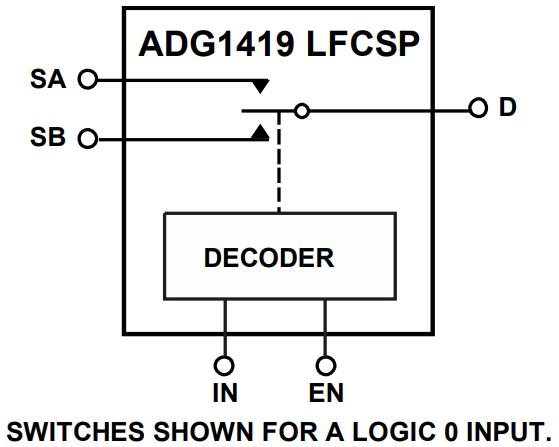
Functional Block Diagram
Parts with Similar Specs
- ImagePart NumberManufacturerPackage / CaseNumber of InputsNumber of PinsNumber of OutputsSupply TypeMin Dual Supply VoltageMin Supply VoltageSupply VoltageMax Dual Supply VoltageView Compare
![ADG1419BCPZ-REEL7]()
ADG1419BCPZ-REEL7
8-WFDFN Exposed Pad, CSP
1
8
2
Dual, Single
4.5 V
5 V
15 V
16.5 V
![ADG1402BCPZ-REEL7]()
8-WFDFN Exposed Pad, CSP
1
8
-
Dual, Single
4.5 V
5 V
5 V
16.5 V
![ADG1401BCPZ-REEL7]()
8-WFDFN Exposed Pad, CSP
1
8
1
Dual, Single
4.5 V
5 V
-
16.5 V
![ADV3220ACPZ]()
8-WFDFN Exposed Pad, CSP
-
8
-
-
4.5 V
-
5 V
5.5 V


ADG1419 Applications
● Automatic test equipment
● Data acquisition systems
● Battery-powered systems
● Relay replacements
● Sample-and-hold systems
● Audio signal routing
● Video signal routing
● Communication systems
ADG1419 Package
The following diagrams show the ADG1419 package.
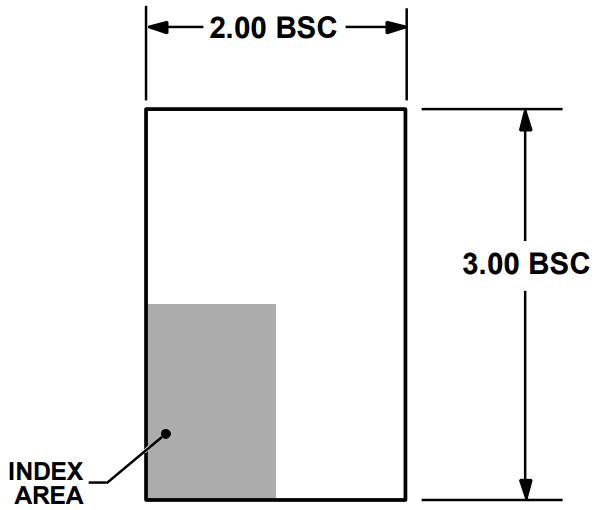
Top View
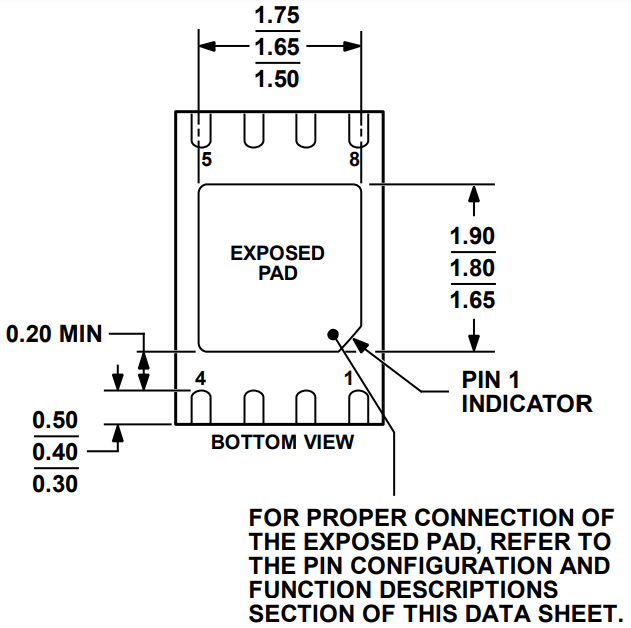
Bottom View
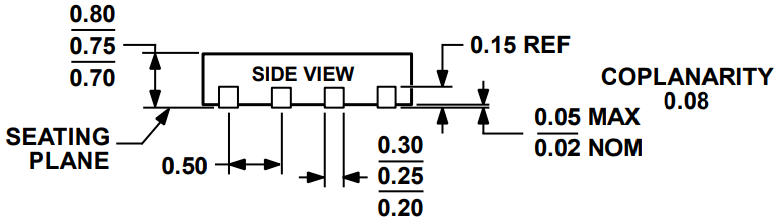
Side View
ADG1419 Manufacturer
Analog Devices (NASDAQ: ADI) is a world leader in the design, manufacture, and marketing of a broad portfolio of high performance analog, mixed-signal, and digital signal processing (DSP) integrated circuits (ICs) used in virtually all types of electronic equipment. Since our inception in 1965, we have focused on solving the engineering challenges associated with signal processing in electronic equipment. Used by over 100,000 customers worldwide, our signal processing products play a fundamental role in converting, conditioning, and processing real-world phenomena such as temperature, pressure, sound, light, speed, and motion into electrical signals to be used in a wide array of electronic devices.
Datasheet PDF
- Datasheets :
- PCN Assembly/Origin :
- ConflictMineralStatement :
What is the essential property of the ADG1419?
The ADG1419 is a monolithic iCMOS® device containing a single-pole/double-throw (SPDT) switch.
What happens when the ADG1419 is disabled?
When disabled, all channels are switched off.
What is the on-resistance profile of the ADG1419?
The on-resistance profile is very flat over the full analog input range, ensuring excellent linearity and low distortion when switching audio signals.
What does the ADG1419 look like when it's off?
In the off condition, signal levels up to the supplies are blocked.
What does the ADG1419 exhibit for use in multiplexer applications?
The ADG1419 exhibits break-before-make switching action for use in multiplexer applications.
 Intel EP1C12Q240C8N FPGA: Key Features and Applications
07 June 2025222
 MSP430F1121AIRGER Microcontroller Datasheet Overview
29 February 2024160
 LM111 Differential Comparators: Alternative, Pinout and Datasheet
16 July 20211915
 IRF540 N-Channel MOSFET: Circuit, Datasheet, and Pinout
06 August 202119580
 LTC3588 Energy harvester: Datasheet, Circuit and Pinout
10 August 202111383
![SIM800L How to use SIM800L GSM Module with Arduino?[Video]](https://res.utmel.com/Images/Article/37707472-93f2-4011-a845-027095acee4e.png) SIM800L How to use SIM800L GSM Module with Arduino?[Video]
SIM800L How to use SIM800L GSM Module with Arduino?[Video]23 September 202311518
 AD8237 Instrumentation Amplifier: Pinout, Features and Datasheet
17 January 20225126
 What’s the relationship between CR1616 and CR1632?
31 May 202231019
 Photoresistor Basics: Types, Principles and Applications
16 October 202547413
 Image Sensor: How do CCD and CMOS Sensors work?
24 October 202514633
 What are the Applications of Filters?
17 January 202617030
 Is Digital Radio Frequency Memory (DRFM) Suitable for Spoofing Interference?
12 November 20215538
 Optical Gates for High-Speed Optical Processing Using Semiconductor-Based Amplifiers
30 December 20222113
 Silicon Carbide: The Future of Power Electronics
06 March 20233887
 Metal Oxide Varistor: Specifications, Working and Construction
26 January 202110767
 Smart Sensors: Definition, Structures and Applications
04 July 20226011
Analog Devices Inc.
In Stock: 6195
Minimum: 1 Multiples: 1
Qty
Unit Price
Ext Price
1
$14.745692
$14.75
10
$13.911030
$139.11
100
$13.123613
$1,312.36
500
$12.380767
$6,190.38
1000
$11.679969
$11,679.97
Not the price you want? Send RFQ Now and we'll contact you ASAP.
Inquire for More Quantity
![ADG1408YRUZ-REEL7]() ADG1408YRUZ-REEL7
ADG1408YRUZ-REEL7Analog Devices Inc.
![ADG419BRZ-REEL]() ADG419BRZ-REEL
ADG419BRZ-REELAnalog Devices Inc.
![ADG408BRZ-REEL7]() ADG408BRZ-REEL7
ADG408BRZ-REEL7Analog Devices Inc.
![ADG211AKNZ]() ADG211AKNZ
ADG211AKNZAnalog Devices Inc.
![ADG201AKRZ-REEL7]() ADG201AKRZ-REEL7
ADG201AKRZ-REEL7Analog Devices Inc.
![ADG1334BRSZ-REEL]() ADG1334BRSZ-REEL
ADG1334BRSZ-REELAnalog Devices Inc.
![ADG202AKRZ-REEL7]() ADG202AKRZ-REEL7
ADG202AKRZ-REEL7Analog Devices Inc.
![ADG212AKPZ]() ADG212AKPZ
ADG212AKPZAnalog Devices Inc.
![ADG201AKPZ]() ADG201AKPZ
ADG201AKPZAnalog Devices Inc.
![ADG201HSJPZ]() ADG201HSJPZ
ADG201HSJPZAnalog Devices Inc.


