

 Product
 Brand
Brand Articles
 Tools
Tools
AS1120 LCD Driver: Datasheet, Pinout, Application


Obsolete QUAD 3.3V V Display Drivers ICs Tray unknown 46 unknown
This article will unlock more details about AS1120, an LCD direct-driver.
AS1120 Pinout
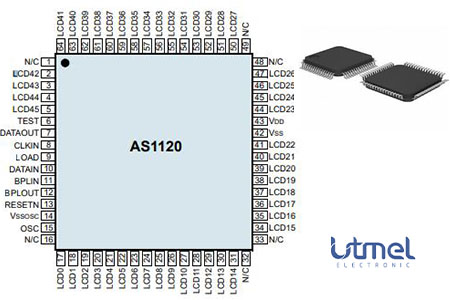
Pinout
| Pin Number | Pin Name | Description |
| 1, 16, 32, 33, 48 49 | NC | Not Connected |
| 2:05 | LCD42:L CD45 | LCD Output Segments 42:45 |
| 6 | TEST | Test pin. This pin must be tied to pin VD |
| 7 | DATA OUT | Serial Data Output |
| 8 | CL KIN | Shift Register Clock |
| 9 | L OAD | Load Strobe from Shift Register to Latch |
| 10 | DATAIN | Serial Data Input |
| 11 | BPLIN | Backplane Input |
| 12 | BPLOUT | Backplane Output |
| 13 | RESETN | Active-Low Asynchronous Reset |
| 0:00 | VSSosc | Intemal Oscillator Power Ground |
| 360:00:00 | OSC | Oscillator Pad. a). Intermal clock (see page 8) b.). Extemal clock; tied to VSSOSC |
| 17:31:00 | LCD0:LCD14 | LCD Output Segments 0:14 |
| 34:41:00 | LCD15:LCD22 | LCD Output Segments 1522 |
| 1008:00:00 | Vss | Power Ground |
| 1032:00:00 | VDD | Positive Power Supply |
| 44:47:00 | LCD23:L CD26 | LCD Output Segments 23:26 |
| 50:64 | LCD27:L CD41 | LCD Output Segments 27:41 |
Pin Description
AS1120 Description
The AS1120 is an LCD direct-driver capable of driving up to 46 LCD segments with one non-multiplexed backplane. The device contains an integrated serial-to-parallel interface and generates the necessary signals to drive LCD panels.
Specifications
- TypeParameter
- Mount
In electronic components, the term "Mount" typically refers to the method or process of physically attaching or fixing a component onto a circuit board or other electronic device. This can involve soldering, adhesive bonding, or other techniques to secure the component in place. The mounting process is crucial for ensuring proper electrical connections and mechanical stability within the electronic system. Different components may have specific mounting requirements based on their size, shape, and function, and manufacturers provide guidelines for proper mounting procedures to ensure optimal performance and reliability of the electronic device.
Surface Mount - Mounting Type
The "Mounting Type" in electronic components refers to the method used to attach or connect a component to a circuit board or other substrate, such as through-hole, surface-mount, or panel mount.
Surface Mount - Package / Case
refers to the protective housing that encases an electronic component, providing mechanical support, electrical connections, and thermal management.
64-LQFP - Number of Pins64
- Operating Temperature
The operating temperature is the range of ambient temperature within which a power supply, or any other electrical equipment, operate in. This ranges from a minimum operating temperature, to a peak or maximum operating temperature, outside which, the power supply may fail.
-40°C~85°C - Packaging
Semiconductor package is a carrier / shell used to contain and cover one or more semiconductor components or integrated circuits. The material of the shell can be metal, plastic, glass or ceramic.
Tray - Part Status
Parts can have many statuses as they progress through the configuration, analysis, review, and approval stages.
Obsolete - Moisture Sensitivity Level (MSL)
Moisture Sensitivity Level (MSL) is a standardized rating that indicates the susceptibility of electronic components, particularly semiconductors, to moisture-induced damage during storage and the soldering process, defining the allowable exposure time to ambient conditions before they require special handling or baking to prevent failures
3 (168 Hours) - Number of Terminations64
- ECCN Code
An ECCN (Export Control Classification Number) is an alphanumeric code used by the U.S. Bureau of Industry and Security to identify and categorize electronic components and other dual-use items that may require an export license based on their technical characteristics and potential for military use.
EAR99 - HTS Code
HTS (Harmonized Tariff Schedule) codes are product classification codes between 8-1 digits. The first six digits are an HS code, and the countries of import assign the subsequent digits to provide additional classification. U.S. HTS codes are 1 digits and are administered by the U.S. International Trade Commission.
8542.39.00.01 - Voltage - Supply
Voltage - Supply refers to the range of voltage levels that an electronic component or circuit is designed to operate with. It indicates the minimum and maximum supply voltage that can be applied for the device to function properly. Providing supply voltages outside this range can lead to malfunction, damage, or reduced performance. This parameter is critical for ensuring compatibility between different components in a circuit.
3V~5.5V - Terminal Position
In electronic components, the term "Terminal Position" refers to the physical location of the connection points on the component where external electrical connections can be made. These connection points, known as terminals, are typically used to attach wires, leads, or other components to the main body of the electronic component. The terminal position is important for ensuring proper connectivity and functionality of the component within a circuit. It is often specified in technical datasheets or component specifications to help designers and engineers understand how to properly integrate the component into their circuit designs.
QUAD - Terminal Form
Occurring at or forming the end of a series, succession, or the like; closing; concluding.
GULL WING - Number of Functions1
- Supply Voltage
Supply voltage refers to the electrical potential difference provided to an electronic component or circuit. It is crucial for the proper operation of devices, as it powers their functions and determines performance characteristics. The supply voltage must be within specified limits to ensure reliability and prevent damage to components. Different electronic devices have specific supply voltage requirements, which can vary widely depending on their design and intended application.
3.3V - Terminal Pitch
The center distance from one pole to the next.
0.8mm - Reach Compliance Code
Reach Compliance Code refers to a designation indicating that electronic components meet the requirements set by the Registration, Evaluation, Authorization, and Restriction of Chemicals (REACH) regulation in the European Union. It signifies that the manufacturer has assessed and managed the chemical substances within the components to ensure safety and environmental protection. This code is vital for compliance with regulations aimed at minimizing risks associated with hazardous substances in electronic products.
unknown - Pin Count
a count of all of the component leads (or pins)
64 - Qualification Status
An indicator of formal certification of qualifications.
Not Qualified - Operating Supply Voltage
The voltage level by which an electrical system is designated and to which certain operating characteristics of the system are related.
5.5V - Power Supplies
an electronic circuit that converts the voltage of an alternating current (AC) into a direct current (DC) voltage.?
3.3/5V - Configuration
The parameter "Configuration" in electronic components refers to the specific arrangement or setup of the components within a circuit or system. It encompasses how individual elements are interconnected and their physical layout. Configuration can affect the functionality, performance, and efficiency of the electronic system, and may influence factors such as signal flow, impedance, and power distribution. Understanding the configuration is essential for design, troubleshooting, and optimizing electronic devices.
46 Segment - Interface
In electronic components, the term "Interface" refers to the point at which two different systems, devices, or components connect and interact with each other. It can involve physical connections such as ports, connectors, or cables, as well as communication protocols and standards that facilitate the exchange of data or signals between the connected entities. The interface serves as a bridge that enables seamless communication and interoperability between different parts of a system or between different systems altogether. Designing a reliable and efficient interface is crucial in ensuring proper functionality and performance of electronic components and systems.
Parallel/Serial - Operating Supply Current
Operating Supply Current, also known as supply current or quiescent current, is a crucial parameter in electronic components that indicates the amount of current required for the device to operate under normal conditions. It represents the current drawn by the component from the power supply while it is functioning. This parameter is important for determining the power consumption of the component and is typically specified in datasheets to help designers calculate the overall power requirements of their circuits. Understanding the operating supply current is essential for ensuring proper functionality and efficiency of electronic systems.
5μA - Nominal Supply Current
Nominal current is the same as the rated current. It is the current drawn by the motor while delivering rated mechanical output at its shaft.
5μA - Display Type
Display Type in electronic components refers to the technology used to display information or visuals on a screen or panel. It describes the specific method or technology employed to present data, such as LCD (Liquid Crystal Display), OLED (Organic Light-Emitting Diode), LED (Light-Emitting Diode), or CRT (Cathode Ray Tube). Each display type has its own characteristics, including factors like resolution, color accuracy, viewing angles, power consumption, and response time. Choosing the right display type is crucial for determining the quality and performance of the visual output in electronic devices, such as smartphones, TVs, monitors, and digital signage.
LCD - fmax-Min
fmax-Min refers to the frequency range that an electronic component or system can operate within. It represents the difference between the maximum frequency (fmax) and the minimum frequency (Min) limits of operation. This parameter is crucial in defining the bandwidth of the component, indicating how effectively it can transmit or receive signals over that range. A wider fmax-Min value typically signifies better performance for applications that require broad frequency response.
0.1 MHz - Number of Segments46
- Multiplexed Display Capability
Multiplexed Display Capability refers to the ability of an electronic component or system to control multiple display elements using fewer input/output lines. This is achieved by rapidly switching between different displays or segments, allowing for efficient communication and reduced wiring complexity. In multiplexed systems, each display is activated sequentially, creating the illusion of simultaneous display to the user. This capability is commonly utilized in devices like LED matrices and LCD screens to enhance functionality while conserving space and resources.
NO - Display Mode
Display Mode in electronic components refers to the specific way in which information or data is presented on a display screen or panel. This parameter determines how the content is shown to the user, such as through text, graphics, images, or a combination of these elements. The display mode can also include characteristics like resolution, color depth, refresh rate, and aspect ratio, which all contribute to the overall visual experience. Different electronic devices and components may offer various display modes to cater to different user preferences and requirements.
BAR GRAPH - Number of Backplanes1-BP
- Length14mm
- Height Seated (Max)
Height Seated (Max) is a parameter in electronic components that refers to the maximum allowable height of the component when it is properly seated or installed on a circuit board or within an enclosure. This specification is crucial for ensuring proper fit and alignment within the overall system design. Exceeding the maximum seated height can lead to mechanical interference, electrical shorts, or other issues that may impact the performance and reliability of the electronic device. Manufacturers provide this information to help designers and engineers select components that will fit within the designated space and function correctly in the intended application.
2.45mm - Width14mm
- RoHS Status
RoHS means “Restriction of Certain Hazardous Substances” in the “Hazardous Substances Directive” in electrical and electronic equipment.
RoHS Compliant - Lead Free
Lead Free is a term used to describe electronic components that do not contain lead as part of their composition. Lead is a toxic material that can have harmful effects on human health and the environment, so the electronics industry has been moving towards lead-free components to reduce these risks. Lead-free components are typically made using alternative materials such as silver, copper, and tin. Manufacturers must comply with regulations such as the Restriction of Hazardous Substances (RoHS) directive to ensure that their products are lead-free and environmentally friendly.
Lead Free
AS1120 Features
46-Segment LCD Driver
Serial-to-Parallel Interface
Integrated Oscillator w/ External R/C and Backplane Input
Supports Alphanumeric and Bar-Graph Devices
Two Data Transfer Configurations:
- Cascade
- Parallel
Non-Multiplexed Backplane
Very-Low Current Consumption
Power Supply Range: -0.3 to +7.0V
Operating Temperature Range: -40 to +85ºC
64-pin LQFP Package
AS1120 Application
AS1120 is ideal for industrial LCD systems, portable system displays, panel meters with wide temperature ranges, high-performance optical displays, or for any other space-limited A/D applications with low power consumption and single-supply requirements.
AS1120 Application Schematic
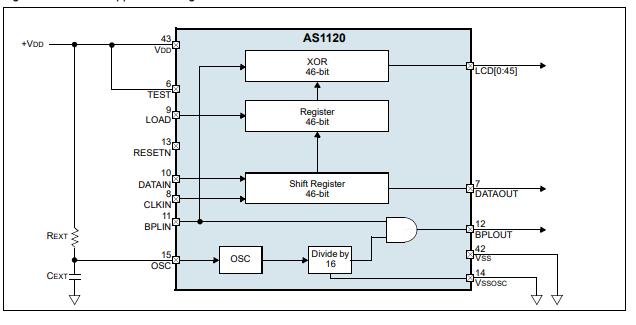
Application Diagram
AS1120 Circuit
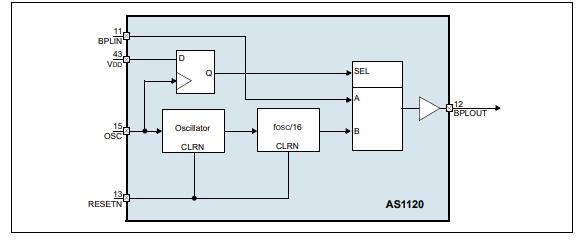
Clock Circuit
AS1120 Package
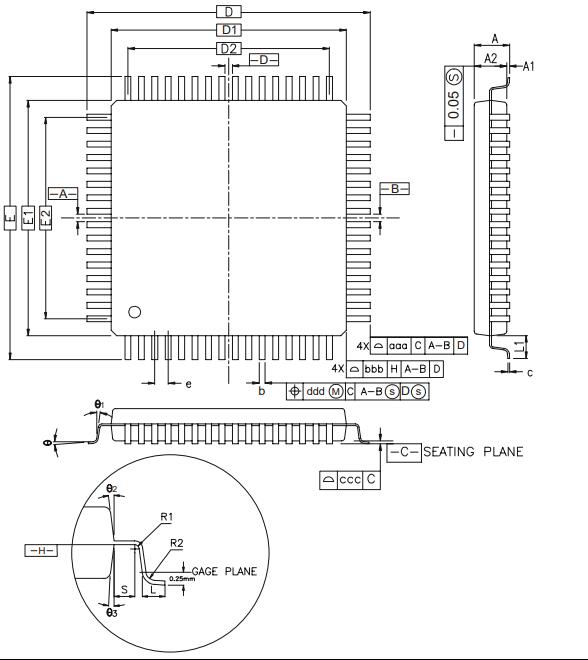
Package
AS1120 Manufacturer
Headquartered in Austria, AMS(listed on the SIX Swiss stock exchange (ticker symbol: AMS)) is a global leader with about 10,000 employees worldwide and serves more than 8,000 customers globally. AMS, as a leading designer and manufacturer of cutting-edge sensor solutions, are committed to shaping the world with sensor solutions by offering a no-obstacle interface between human and technology. In areas of optical sensing, image sensing and audio sensing, AMS keeps focusing on sensor-rich market segmentation, delivering high-performance sensor solutions and enhancing its unique leadership.
Datasheet PDF
- Datasheets :
- PCN Obsolescence/ EOL :
What is AS1120?
The AS1120 is an LCD direct-driver capable of driving up to 46 LCD segments with one non-multiplexed backplane. The device contains an integrated serial-to-parallel interface and generates the necessary signals to drive LCD panels.
What package is AS1120 available in?
The AS1120 is available in a 64-pin LQFP package.
Where is A1120 applied?
The device is ideal for industrial LCD systems, portable system displays, panel meters with wide temperature ranges, high-performance optical displays, or for any other space-limited A/D application with low power consumption and single-supply requirements.
How about the operating temperature range of AS1120?
The operating temperature range: -40 to +85ºC.
 MLX90614 Infra Red Thermometer: Pinout, Datasheet and Applications
30 July 20217874
 TPS54340QDDARQ1: Pinout, Switching Regulator, Step-down, N-channel
14 February 2022682
 STMIPID02 vs Competitors: The Clear Choice
11 July 2025213
 LM741CN Operational Amplifier: Pinout, Datasheet, and Typical Application
19 July 202113402
 25LC640 64K SPI Bus Serial EEPROM: Pinout, Equivalent and Datasheet
03 March 20223869
 IR2104 Half-Bridge Driver:Datasheet, Schematic, Pinout
14 October 202115632
 NC7SB3157P6X: Overview, Features, and Applications
14 December 2023743
 LMV324 - Rail-to-Rail Operational Amplifier
07 December 20214198
 How much do you know about Button Battery?
15 March 20245219
 What is a Water Level Indicator?
19 February 202127462
 Working and Types of Touch Screen
20 March 20216286
 What is Low Pass Filter
18 November 20217265
 The History of Thermometers
15 June 202618848
 FPGA vs. Microcontroller Technology: Similarities and Differences
13 March 20245670
 STMicroelectronics: The European Powerhouse in Silicon Carbide Semiconductor Technology
05 October 20233388
 Best Practices for Panel Meter Maintenance
11 July 20251356
ams
In Stock
United States
China
Canada
Japan
Russia
Germany
United Kingdom
Singapore
Italy
Hong Kong(China)
Taiwan(China)
France
Korea
Mexico
Netherlands
Malaysia
Austria
Spain
Switzerland
Poland
Thailand
Vietnam
India
United Arab Emirates
Afghanistan
Åland Islands
Albania
Algeria
American Samoa
Andorra
Angola
Anguilla
Antigua & Barbuda
Argentina
Armenia
Aruba
Australia
Azerbaijan
Bahamas
Bahrain
Bangladesh
Barbados
Belarus
Belgium
Belize
Benin
Bermuda
Bhutan
Bolivia
Bonaire, Sint Eustatius and Saba
Bosnia & Herzegovina
Botswana
Brazil
British Indian Ocean Territory
British Virgin Islands
Brunei
Bulgaria
Burkina Faso
Burundi
Cabo Verde
Cambodia
Cameroon
Cayman Islands
Central African Republic
Chad
Chile
Christmas Island
Cocos (Keeling) Islands
Colombia
Comoros
Congo
Congo (DRC)
Cook Islands
Costa Rica
Côte d’Ivoire
Croatia
Cuba
Curaçao
Cyprus
Czechia
Denmark
Djibouti
Dominica
Dominican Republic
Ecuador
Egypt
El Salvador
Equatorial Guinea
Eritrea
Estonia
Eswatini
Ethiopia
Falkland Islands
Faroe Islands
Fiji
Finland
French Guiana
French Polynesia
Gabon
Gambia
Georgia
Ghana
Gibraltar
Greece
Greenland
Grenada
Guadeloupe
Guam
Guatemala
Guernsey
Guinea
Guinea-Bissau
Guyana
Haiti
Honduras
Hungary
Iceland
Indonesia
Iran
Iraq
Ireland
Isle of Man
Israel
Jamaica
Jersey
Jordan
Kazakhstan
Kenya
Kiribati
Kosovo
Kuwait
Kyrgyzstan
Laos
Latvia
Lebanon
Lesotho
Liberia
Libya
Liechtenstein
Lithuania
Luxembourg
Macao(China)
Madagascar
Malawi
Maldives
Mali
Malta
Marshall Islands
Martinique
Mauritania
Mauritius
Mayotte
Micronesia
Moldova
Monaco
Mongolia
Montenegro
Montserrat
Morocco
Mozambique
Myanmar
Namibia
Nauru
Nepal
New Caledonia
New Zealand
Nicaragua
Niger
Nigeria
Niue
Norfolk Island
North Korea
North Macedonia
Northern Mariana Islands
Norway
Oman
Pakistan
Palau
Palestinian Authority
Panama
Papua New Guinea
Paraguay
Peru
Philippines
Pitcairn Islands
Portugal
Puerto Rico
Qatar
Réunion
Romania
Rwanda
Samoa
San Marino
São Tomé & Príncipe
Saudi Arabia
Senegal
Serbia
Seychelles
Sierra Leone
Sint Maarten
Slovakia
Slovenia
Solomon Islands
Somalia
South Africa
South Sudan
Sri Lanka
St Helena, Ascension, Tristan da Cunha
St. Barthélemy
St. Kitts & Nevis
St. Lucia
St. Martin
St. Pierre & Miquelon
St. Vincent & Grenadines
Sudan
Suriname
Svalbard & Jan Mayen
Sweden
Syria
Tajikistan
Tanzania
Timor-Leste
Togo
Tokelau
Tonga
Trinidad & Tobago
Tunisia
Turkey
Turkmenistan
Turks & Caicos Islands
Tuvalu
U.S. Outlying Islands
U.S. Virgin Islands
Uganda
Ukraine
Uruguay
Uzbekistan
Vanuatu
Vatican City
Venezuela
Wallis & Futuna
Yemen
Zambia
Zimbabwe
![AS1105WL]() AS1105WL
AS1105WLams
![AS1115-BQFT]() AS1115-BQFT
AS1115-BQFTams
![AS1106WL]() AS1106WL
AS1106WLams
![AS1130-BWLT]() AS1130-BWLT
AS1130-BWLTams
![AS1130B-BWLT]() AS1130B-BWLT
AS1130B-BWLTams
![AS1106WE]() AS1106WE
AS1106WEams
![AS1105WL-T]() AS1105WL-T
AS1105WL-Tams
![AS1130-BSST]() AS1130-BSST
AS1130-BSSTams
![AS1116-BQFT]() AS1116-BQFT
AS1116-BQFTams
![AS1115-BSST]() AS1115-BSST
AS1115-BSSTams


