

 Product
 Brand
Brand Articles
 Tools
Tools
ATMEGA168 Microcontrollers: Features, Pinout, and Datasheet

16KB 8K x 16 FLASH AVR 8-Bit Microcontroller AVR® ATmega Series ATMEGA168A 32 Pin 20MHz 5V 32-TQFP
Unit Price: $7.398758
Ext Price: $7.40


16KB 8K x 16 FLASH AVR 8-Bit Microcontroller AVR® ATmega Series ATMEGA168A 32 Pin 20MHz 5V 32-TQFP
The ATMEGA168 is a CMOS 8-bit microcontroller with low power consumption based on the AVR® enhanced RISC architecture that is available in three packages: PDIP, MLF, and TQFP. This article mainly introduces features, pinout, datasheet and other detailed information about Microchip Technology ATMEGA168.
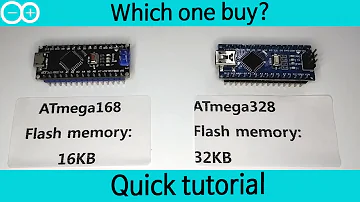
Which one buy? Arduino ATmega328 vs ATmega168. because..
ATMEGA168 Description
The ATMEGA168 is a CMOS 8-bit microcontroller with low power consumption based on the AVR® enhanced RISC architecture that is available in three packages: PDIP, MLF, and TQFP. The devices achieve CPU throughput approaching one million instructions per second (MIPS) per megahertz by executing instructions in a single clock cycle, allowing the system designer to optimize power consumption versus processing performance. The first two have 28 pins on each module, while the third has a 32-pin interface.
The program memory is 16K and is based on Flash, while the other two memories, RAM and EEPROM, each comprise 1K and 512 Bytes and have a data retention capacity of roughly 20 years.
The device has a 10-bit ADC module, which is critical for sensor interface and has a total of 8 channels, adequate to give analog to digital conversion to a number of pins.
Only a few controllers, including the ATmega168, support all three communication protocols: SPI, I2C, and USART. These protocols are commonly used when communicating with external devices.
Other features of this module include a watchdog timer, power-up timer, oscillator start-up timer, Brown out Detection, and In-Circuit Serial Programming, in addition to giving a sufficient pace for executing a number of instructions.
The instruction set distinguishes this AVR module from PIC Microcontrollers. AVR microcontrollers perform most instructions in a single clock cycle, but PIC microcontrollers take a number of clock cycles per instruction. In addition, the PIC has a 'W' register, but the AVR has 32 general-purpose registers, three pairs of which can be used as pointers.
ATMEGA168 Pinout

Pinout
ATMEGA168 CAD Model

Symbol

Footprint

3D Model
ATMEGA168 Features
• High Performance, Low Power AVR® 8-Bit Microcontroller Family
• Advanced RISC Architecture
̶ 131 Powerful Instructions – Most Single Clock Cycle Execution
̶ 32 x 8 General Purpose Working Registers
̶ Fully Static Operation
̶ Up to 20 MIPS Throughput at 20MHz
̶ On-chip 2-cycle Multiplier
• High Endurance Non-volatile Memory Segments
̶ 4/8/16/32KBytes of In-System Self-Programmable Flash program memory
̶ 256/512/512/1KBytes EEPROM
̶ 512/1K/1K/2KBytes Internal SRAM
̶ Write/Erase Cycles: 10,000 Flash/100,000 EEPROM
̶ Data retention: 20 years at 85°C/100 years at 25°C(1)
̶ Optional Boot Code Section with Independent Lock Bits
In-System Programming by On-chip Boot Program
True Read-While-Write Operation
̶ Programming Lock for Software Security
• QTouch® library support
̶ Capacitive touch buttons, sliders and wheels
̶ QTouch and QMatrix™ acquisition
̶ Up to 64 sense channels
• Peripheral Features
̶ Two 8-bit Timer/Counters with Separate Prescaler and Compare Mode
̶ One 16-bit Timer/Counter with Separate Prescaler, Compare Mode, and Capture Mode
̶ Real Time Counter with Separate Oscillator
̶ Six PWM Channels
̶ 8-channel 10-bit ADC in TQFP and QFN/MLF package
Temperature Measurement
̶ 6-channel 10-bit ADC in PDIP Package
Temperature Measurement
̶ Programmable Serial USART
̶ Master/Slave SPI Serial Interface
̶ Byte-oriented 2-wire Serial Interface (Philips I2C compatible)
̶ Programmable Watchdog Timer with Separate On-chip Oscillator
̶ On-chip Analog Comparator
̶ Interrupt and Wake-up on Pin Change
• Special Microcontroller Features
̶ Power-on Reset and Programmable Brown-out Detection
̶ Internal Calibrated Oscillator
̶ External and Internal Interrupt Sources
̶ Six Sleep Modes: Idle, ADC Noise Reduction, Power-save, Power-down, Standby, and Extended Standby
• I/O and Packages
̶ 23 Programmable I/O Lines
̶ 28-pin PDIP, 32-lead TQFP, 28-pad QFN/MLF and 32-pad QFN/MLF
• Operating Voltage:
̶ 1.8 - 5.5V
• Temperature Range:
̶ -40°C to 85°C
• Speed Grade:
̶ 0 - 4MHz@1.8 - 5.5V, 0 - 10MHz@2.7 - 5.5.V, 0 - 20MHz @ 4.5 - 5.5V
• Power Consumption at 1MHz, 1.8V, 25°C
̶ Active Mode: 0.2mA
̶ Power-down Mode: 0.1µA
Power-save Mode: 0.75µA (Including 32kHz RTC)
Specifications
- TypeParameter
- Factory Lead Time8 Weeks
- Contact Plating
Contact plating (finish) provides corrosion protection for base metals and optimizes the mechanical and electrical properties of the contact interfaces.
Tin - Mount
In electronic components, the term "Mount" typically refers to the method or process of physically attaching or fixing a component onto a circuit board or other electronic device. This can involve soldering, adhesive bonding, or other techniques to secure the component in place. The mounting process is crucial for ensuring proper electrical connections and mechanical stability within the electronic system. Different components may have specific mounting requirements based on their size, shape, and function, and manufacturers provide guidelines for proper mounting procedures to ensure optimal performance and reliability of the electronic device.
Surface Mount - Mounting Type
The "Mounting Type" in electronic components refers to the method used to attach or connect a component to a circuit board or other substrate, such as through-hole, surface-mount, or panel mount.
Surface Mount - Package / Case
refers to the protective housing that encases an electronic component, providing mechanical support, electrical connections, and thermal management.
32-TQFP - Number of Pins32
- Data ConvertersA/D 8x10b
- Number of I/Os23
- Watchdog TimersYes
- Operating Temperature
The operating temperature is the range of ambient temperature within which a power supply, or any other electrical equipment, operate in. This ranges from a minimum operating temperature, to a peak or maximum operating temperature, outside which, the power supply may fail.
-40°C~85°C TA - Packaging
Semiconductor package is a carrier / shell used to contain and cover one or more semiconductor components or integrated circuits. The material of the shell can be metal, plastic, glass or ceramic.
Tray - Series
In electronic components, the "Series" refers to a group of products that share similar characteristics, designs, or functionalities, often produced by the same manufacturer. These components within a series typically have common specifications but may vary in terms of voltage, power, or packaging to meet different application needs. The series name helps identify and differentiate between various product lines within a manufacturer's catalog.
AVR® ATmega - Published1997
- JESD-609 Code
The "JESD-609 Code" in electronic components refers to a standardized marking code that indicates the lead-free solder composition and finish of electronic components for compliance with environmental regulations.
e3 - Pbfree Code
The "Pbfree Code" parameter in electronic components refers to the code or marking used to indicate that the component is lead-free. Lead (Pb) is a toxic substance that has been widely used in electronic components for many years, but due to environmental concerns, there has been a shift towards lead-free alternatives. The Pbfree Code helps manufacturers and users easily identify components that do not contain lead, ensuring compliance with regulations and promoting environmentally friendly practices. It is important to pay attention to the Pbfree Code when selecting electronic components to ensure they meet the necessary requirements for lead-free applications.
yes - Part Status
Parts can have many statuses as they progress through the configuration, analysis, review, and approval stages.
Active - Moisture Sensitivity Level (MSL)
Moisture Sensitivity Level (MSL) is a standardized rating that indicates the susceptibility of electronic components, particularly semiconductors, to moisture-induced damage during storage and the soldering process, defining the allowable exposure time to ambient conditions before they require special handling or baking to prevent failures
3 (168 Hours) - Number of Terminations32
- Terminal Position
In electronic components, the term "Terminal Position" refers to the physical location of the connection points on the component where external electrical connections can be made. These connection points, known as terminals, are typically used to attach wires, leads, or other components to the main body of the electronic component. The terminal position is important for ensuring proper connectivity and functionality of the component within a circuit. It is often specified in technical datasheets or component specifications to help designers and engineers understand how to properly integrate the component into their circuit designs.
QUAD - Terminal Form
Occurring at or forming the end of a series, succession, or the like; closing; concluding.
GULL WING - Peak Reflow Temperature (Cel)
Peak Reflow Temperature (Cel) is a parameter that specifies the maximum temperature at which an electronic component can be exposed during the reflow soldering process. Reflow soldering is a common method used to attach electronic components to a circuit board. The Peak Reflow Temperature is crucial because it ensures that the component is not damaged or degraded during the soldering process. Exceeding the specified Peak Reflow Temperature can lead to issues such as component failure, reduced performance, or even permanent damage to the component. It is important for manufacturers and assemblers to adhere to the recommended Peak Reflow Temperature to ensure the reliability and functionality of the electronic components.
260 - Supply Voltage
Supply voltage refers to the electrical potential difference provided to an electronic component or circuit. It is crucial for the proper operation of devices, as it powers their functions and determines performance characteristics. The supply voltage must be within specified limits to ensure reliability and prevent damage to components. Different electronic devices have specific supply voltage requirements, which can vary widely depending on their design and intended application.
5V - Frequency
In electronic components, the parameter "Frequency" refers to the rate at which a signal oscillates or cycles within a given period of time. It is typically measured in Hertz (Hz) and represents how many times a signal completes a full cycle in one second. Frequency is a crucial aspect in electronic components as it determines the behavior and performance of various devices such as oscillators, filters, and communication systems. Understanding the frequency characteristics of components is essential for designing and analyzing electronic circuits to ensure proper functionality and compatibility with other components in a system.
20MHz - Time@Peak Reflow Temperature-Max (s)
Time@Peak Reflow Temperature-Max (s) refers to the maximum duration that an electronic component can be exposed to the peak reflow temperature during the soldering process, which is crucial for ensuring reliable solder joint formation without damaging the component.
40 - Base Part Number
The "Base Part Number" (BPN) in electronic components serves a similar purpose to the "Base Product Number." It refers to the primary identifier for a component that captures the essential characteristics shared by a group of similar components. The BPN provides a fundamental way to reference a family or series of components without specifying all the variations and specific details.
ATMEGA168A - Supply Voltage-Max (Vsup)
The parameter "Supply Voltage-Max (Vsup)" in electronic components refers to the maximum voltage that can be safely applied to the component without causing damage. It is an important specification to consider when designing or using electronic circuits to ensure the component operates within its safe operating limits. Exceeding the maximum supply voltage can lead to overheating, component failure, or even permanent damage. It is crucial to adhere to the specified maximum supply voltage to ensure the reliable and safe operation of the electronic component.
5.5V - Power Supplies
an electronic circuit that converts the voltage of an alternating current (AC) into a direct current (DC) voltage.?
2/5V - Supply Voltage-Min (Vsup)
The parameter "Supply Voltage-Min (Vsup)" in electronic components refers to the minimum voltage level required for the component to operate within its specified performance range. This parameter indicates the lowest voltage that can be safely applied to the component without risking damage or malfunction. It is crucial to ensure that the supply voltage provided to the component meets or exceeds this minimum value to ensure proper functionality and reliability. Failure to adhere to the specified minimum supply voltage may result in erratic behavior, reduced performance, or even permanent damage to the component.
4.5V - Interface
In electronic components, the term "Interface" refers to the point at which two different systems, devices, or components connect and interact with each other. It can involve physical connections such as ports, connectors, or cables, as well as communication protocols and standards that facilitate the exchange of data or signals between the connected entities. The interface serves as a bridge that enables seamless communication and interoperability between different parts of a system or between different systems altogether. Designing a reliable and efficient interface is crucial in ensuring proper functionality and performance of electronic components and systems.
2-Wire, I2C, SPI, Serial, UART, USART - Memory Size
The memory capacity is the amount of data a device can store at any given time in its memory.
16kB - Oscillator Type
Wien Bridge Oscillator; RC Phase Shift Oscillator; Hartley Oscillator; Voltage Controlled Oscillator; Colpitts Oscillator; Clapp Oscillators; Crystal Oscillators; Armstrong Oscillator.
Internal - RAM Size
RAM size refers to the amount of random access memory (RAM) available in an electronic component, such as a computer or smartphone. RAM is a type of volatile memory that stores data and instructions that are actively being used by the device's processor. The RAM size is typically measured in gigabytes (GB) and determines how much data the device can store and access quickly for processing. A larger RAM size allows for smoother multitasking, faster loading times, and better overall performance of the electronic component. It is an important factor to consider when choosing a device, especially for tasks that require a lot of memory, such as gaming, video editing, or running multiple applications simultaneously.
1K x 8 - Voltage - Supply (Vcc/Vdd)
Voltage - Supply (Vcc/Vdd) is a key parameter in electronic components that specifies the voltage level required for the proper operation of the device. It represents the power supply voltage that needs to be provided to the component for it to function correctly. This parameter is crucial as supplying the component with the correct voltage ensures that it operates within its specified limits and performance characteristics. It is typically expressed in volts (V) and is an essential consideration when designing and using electronic circuits to prevent damage and ensure reliable operation.
1.8V~5.5V - uPs/uCs/Peripheral ICs Type
The parameter "uPs/uCs/Peripheral ICs Type" refers to the classification of various integrated circuits used in electronic devices. It encompasses microprocessors (uPs), microcontrollers (uCs), and peripheral integrated circuits that provide additional functionalities. This classification helps in identifying the specific type of chip used for processing tasks, controlling hardware, or interfacing with other components in a system. Understanding this parameter is essential for selecting the appropriate electronic components for a given application.
MICROCONTROLLER, RISC - Core Processor
The term "Core Processor" typically refers to the central processing unit (CPU) of a computer or electronic device. It is the primary component responsible for executing instructions, performing calculations, and managing data within the system. The core processor is often considered the brain of the device, as it controls the overall operation and functionality. It is crucial for determining the speed and performance capabilities of the device, as well as its ability to handle various tasks and applications efficiently. In modern devices, core processors can have multiple cores, allowing for parallel processing and improved multitasking capabilities.
AVR - Peripherals
In the context of electronic components, "Peripherals" refer to devices or components that are connected to a main system or device to enhance its functionality or provide additional features. These peripherals can include input devices such as keyboards, mice, and touchscreens, as well as output devices like monitors, printers, and speakers. Other examples of peripherals include external storage devices, network adapters, and cameras. Essentially, peripherals are external devices that expand the capabilities of a main electronic system or device.
Brown-out Detect/Reset, POR, PWM, WDT - Program Memory Type
Program memory typically refers to flash memory when it is used to hold the program (instructions). Program memory may also refer to a hard drive or solid state drive (SSD). Contrast with data memory.
FLASH - Core Size
Core size in electronic components refers to the physical dimensions of the core material used in devices such as inductors and transformers. The core size directly impacts the performance characteristics of the component, including its inductance, saturation current, and frequency response. A larger core size typically allows for higher power handling capabilities and lower core losses, while a smaller core size may result in a more compact design but with limitations on power handling and efficiency. Designers must carefully select the core size based on the specific requirements of the application to achieve optimal performance and efficiency.
8-Bit - Program Memory Size
Program Memory Size refers to the amount of memory available in an electronic component, such as a microcontroller or microprocessor, that is used to store program instructions. This memory is non-volatile, meaning that the data stored in it is retained even when the power is turned off. The program memory size determines the maximum amount of code that can be stored and executed by the electronic component. It is an important parameter to consider when selecting a component for a specific application, as insufficient program memory size may limit the functionality or performance of the device.
16KB 8K x 16 - Connectivity
In electronic components, "Connectivity" refers to the ability of a component to establish and maintain connections with other components or devices within a circuit. It is a crucial parameter that determines how easily signals can be transmitted between different parts of a circuit. Connectivity can be influenced by factors such as the number of input and output ports, the type of connectors used, and the overall design of the component. Components with good connectivity are essential for ensuring reliable and efficient operation of electronic systems.
I2C, SPI, UART/USART - Bit Size
In electronic components, "Bit Size" refers to the number of bits that can be processed or stored by a particular component. A bit is the smallest unit of data in computing and can have a value of either 0 or 1. The Bit Size parameter is commonly used to describe the capacity or performance of components such as microprocessors, memory modules, and data buses. A larger Bit Size generally indicates a higher processing capability or storage capacity, allowing for more complex operations and larger amounts of data to be handled efficiently. It is an important specification to consider when selecting electronic components for specific applications that require certain levels of performance and data processing capabilities.
8 - Has ADC
Has ADC refers to the presence of an Analog-to-Digital Converter (ADC) in an electronic component. An ADC is a crucial component in many electronic devices as it converts analog signals, such as voltage or current, into digital data that can be processed by a digital system. Having an ADC allows the electronic component to interface with analog signals and convert them into a format that can be manipulated and analyzed digitally. This parameter is important for applications where analog signals need to be converted into digital form for further processing or control.
YES - DMA Channels
DMA (Direct Memory Access) Channels are a feature found in electronic components such as microcontrollers, microprocessors, and peripheral devices. DMA Channels allow data to be transferred directly between peripherals and memory without involving the CPU, thereby reducing the burden on the CPU and improving overall system performance. Each DMA Channel is typically assigned to a specific peripheral device or memory region, enabling efficient data transfer operations. The number of DMA Channels available in a system determines the concurrent data transfer capabilities and can vary depending on the specific hardware design. Overall, DMA Channels play a crucial role in optimizing data transfer efficiency and system performance in electronic devices.
NO - Data Bus Width
The data bus width in electronic components refers to the number of bits that can be transferred simultaneously between the processor and memory. It determines the amount of data that can be processed and transferred in a single operation. A wider data bus allows for faster data transfer speeds and improved overall performance of the electronic device. Common data bus widths include 8-bit, 16-bit, 32-bit, and 64-bit, with higher numbers indicating a larger capacity for data transfer. The data bus width is an important specification to consider when evaluating the speed and efficiency of a computer system or other electronic device.
8b - Number of Timers/Counters3
- EEPROM Size
EEPROM Size refers to the amount of memory capacity available in an Electrically Erasable Programmable Read-Only Memory (EEPROM) chip. This parameter indicates the total storage space in bytes or bits that can be used to store data in a non-volatile manner. The EEPROM size determines the maximum amount of information that can be written, read, and erased from the memory chip. It is an important specification to consider when selecting an EEPROM for a particular application, as it directly impacts the amount of data that can be stored and accessed by the electronic component.
512 x 8 - Boundary Scan
Boundary scan is a testing technique used in electronic components to verify the interconnections between integrated circuits on a printed circuit board. It allows for the testing of digital circuits by providing a way to shift data in and out of devices through a serial interface. This method helps in identifying faults such as short circuits, open circuits, and incorrect connections without the need for physical access to the individual components. Boundary scan is commonly used during manufacturing, testing, and debugging processes to ensure the quality and reliability of electronic products.
NO - Low Power Mode
Low Power Mode is a feature found in electronic components, such as microcontrollers, processors, and devices, that allows them to operate at reduced power consumption levels. When activated, the component typically reduces its clock speed, voltage, or disables certain functions to conserve energy. This mode is often used to extend battery life in portable devices or reduce overall power consumption in energy-efficient systems. Low Power Mode can be triggered automatically based on certain conditions, such as low battery levels, or manually by the user or software. It is a crucial feature in modern electronics to balance performance with energy efficiency.
NO - Format
In electronic components, the parameter "Format" typically refers to the physical size, shape, and configuration of the component. It describes the overall dimensions and layout of the component, including factors such as package type, lead spacing, and mounting options. The format of an electronic component is important for determining how it can be installed, connected, and integrated into a circuit or system. Different formats are designed to meet specific requirements for space constraints, heat dissipation, electrical performance, and compatibility with other components. Manufacturers often provide detailed specifications for the format of their components to ensure proper selection and usage in electronic designs.
FIXED-POINT - Integrated Cache
Integrated Cache refers to a type of memory storage that is built directly into a microprocessor or other electronic component. It is used to temporarily store frequently accessed data and instructions to speed up processing and reduce latency. The integrated cache is designed to provide quick access to data that the processor needs to perform its tasks efficiently. By storing data closer to the processor, the integrated cache helps improve overall system performance by reducing the time it takes to retrieve information from the main memory. The size and speed of the integrated cache can have a significant impact on the performance of the electronic component, making it an important parameter to consider when evaluating the capabilities of a device.
NO - Number of ADC Channels8
- Number of Serial I/Os1
- Number of External Interrupts2
- Number of PWM Channels6
- Number of I2C Channels1
- Height1.05mm
- Length7mm
- Width7mm
- REACH SVHC
The parameter "REACH SVHC" in electronic components refers to the compliance with the Registration, Evaluation, Authorization, and Restriction of Chemicals (REACH) regulation regarding Substances of Very High Concern (SVHC). SVHCs are substances that may have serious effects on human health or the environment, and their use is regulated under REACH to ensure their safe handling and minimize their impact.Manufacturers of electronic components need to declare if their products contain any SVHCs above a certain threshold concentration and provide information on the safe use of these substances. This information allows customers to make informed decisions about the potential risks associated with using the components and take appropriate measures to mitigate any hazards.Ensuring compliance with REACH SVHC requirements is essential for electronics manufacturers to meet regulatory standards, protect human health and the environment, and maintain transparency in their supply chain. It also demonstrates a commitment to sustainability and responsible manufacturing practices in the electronics industry.
No SVHC - Radiation Hardening
Radiation hardening is the process of making electronic components and circuits resistant to damage or malfunction caused by high levels of ionizing radiation, especially for environments in outer space (especially beyond the low Earth orbit), around nuclear reactors and particle accelerators, or during nuclear accidents or nuclear warfare.
No - RoHS Status
RoHS means “Restriction of Certain Hazardous Substances” in the “Hazardous Substances Directive” in electrical and electronic equipment.
ROHS3 Compliant - Lead Free
Lead Free is a term used to describe electronic components that do not contain lead as part of their composition. Lead is a toxic material that can have harmful effects on human health and the environment, so the electronics industry has been moving towards lead-free components to reduce these risks. Lead-free components are typically made using alternative materials such as silver, copper, and tin. Manufacturers must comply with regulations such as the Restriction of Hazardous Substances (RoHS) directive to ensure that their products are lead-free and environmentally friendly.
Lead Free
Parts with Similar Specs
- ImagePart NumberManufacturerPackage / CaseNumber of PinsData Bus WidthNumber of I/OInterfaceMemory SizeSupply VoltagePeripheralsView Compare
![ATMEGA168A-AU]()
ATMEGA168A-AU
32-TQFP
32
8 b
23
2-Wire, I2C, SPI, Serial, UART, USART
16 kB
5 V
Brown-out Detect/Reset, POR, PWM, WDT
![ATMEGA48A-AU]()
32-TQFP
32
8 b
23
I2C, SPI, Serial, UART, USART
4 kB
5 V
Brown-out Detect/Reset, POR, PWM, WDT
![ATMEGA88PA-AU]()
32-TQFP
32
8 b
23
2-Wire, I2C, SPI, Serial, UART, USART
8 kB
5 V
Brown-out Detect/Reset, POR, PWM, WDT
![ATMEGA88A-AU]()
32-TQFP
32
8 b
23
I2C, SPI, USART
8 kB
5 V
Brown-out Detect/Reset, POR, PWM, WDT

ATMEGA168 Functional Block Diagram

Functional Block Diagram
The AVR core has 32 general-purpose working registers and a large instruction set. The Arithmetic Logic Unit (ALU) is directly coupled to all 32 registers, allowing two independent registers to be accessed in a single instruction executed in one clock cycle. The resulting architecture is more code efficient than traditional CISC microcontrollers, with throughputs up to ten times faster.
The ATMEGA168 has the following capabilities: 4K/8Kbytes of Read-While-Write In-System Programmable Flash, 256/512/512/1Kbytes EEPROM, 512/1K/1K/2Kbytes SRAM, 23 general-purpose I/O lines, 32 general purpose working registers, three flexible Timer/Counters with compare modes, internal and external interrupts, a serial programmable USART, a byte-oriented 2-wire Serial Interface, an SPI serial port, a 6-channel 10-bit ADC The CPU is turned off in Idle mode, while the SRAM, Timer/Counters, USART, 2-wire Serial Interface, SPI interface, and interrupt system remain operational. The Oscillator is frozen in the Power-down mode, which disables all other chip functions until the next interrupt or hardware reset. The asynchronous timer continues to run in Power-save mode, allowing the user to keep a timer base while the rest of the device sleeps. To reduce switching noise during ADC conversions, the ADC Noise Reduction mode turns off the CPU and all I/O modules except the asynchronous timer and ADC. The crystal/resonator Oscillator runs in Standby mode while the rest of the device sleeps. This enables for a very quick start-up while also consuming extremely little power.
While the Application Flash part is being updated, the software in the Boot Flash area will continue to operate, allowing for genuine Read-While-Write operation. The ATMEGA168 is a sophisticated microcontroller that combines an 8-bit RISC CPU with In-System Self-Programmable Flash on a monolithic device to provide a highly versatile and cost effective solution to many embedded control applications.
C Compilers, Macro Assemblers, Program Debuggers/Simulators, In-Circuit Emulators, and Evaluation Kits are all available for the ATMEGA168 AVR.
ATMEGA168 vs ATMEGA328
What is the difference between ATMEGA168 and ATMEGA328?
To be honest, for most hobby maker apps, it's almost zero!
The most significant difference between ATmega168/328 is the amount of "flash" storage space in the chip, which is roughly similar to the hard disk (program space) in a PC. The sizes are 8kb, 16kb and 32kb.
ATMEGA168 Alternative
| Part Number | Description | Manufacturer |
| ATMEGA168-24AIMICROCONTROLLERS AND PROCESSORS | RISC Microcontroller, 8-Bit, FLASH, 24MHz, CMOS, PQFP32, 7 X 7 MM, 1 MM HEIGHT, 0.80 MM PITCH, PLASTIC, MS-026ABA, TQFP-32 | Atmel Corporation |
ATMEGA168 Applications
• Students Projects
• Embedded and Robotics System
• Industrial Automation
• Home Security System
• For the Designing of Quadcopters
ATMEGA168 Package

Package
ATMEGA168 Manufacturer
Microchip Technology Inc., a leader in microcontroller and analog semiconductors, is a market leader. The headquarters of Microchip were in Chandler, Arizona. We strive to provide low-risk product development while lowering total system costs and shortening time to market. We primarily service consumers in a variety of fields all across the world. Our mission is to provide outstanding technical support as well as consistent delivery and quality.
Trend Analysis
Datasheet PDF
- PCN Obsolescence/ EOL :
- PCN Design/Specification :
- PCN Packaging :
- ConflictMineralStatement :
- Datasheets :
1.What tools are needed for ATMEGA168 development?
(1) ATMEGA168 has a complete set of programming and system development tools, including C language compiler, macro assembly, program debugger/software simulator, simulator and evaluation board.
(2) ATMEGA168 has the following features: 16K bytes of in-system programmable Flash (with simultaneous read and write capability, namely RWW), 512 bytes of EEPROM, 1K bytes of SRAM, 23 general-purpose I/O lines, 32 general-purpose Working register, DebuyWIRE interface for boundary scan, support for on-chip debugging and programming, three flexible timers/counters (T/C) with comparison mode, on-chip/outside interrupts, programmable serial USART, available The universal serial interface of the initial condition detector, 8-channel 10-bit ADC with optional differential input stage programmable gain (TQFP package), programmable watchdog timer with an on-chip oscillator, an SPI serial port, And five power-saving modes that can be selected through software.
2.The single-chip microcomputer main control chip ATMEGA8/ATNEGA48/ATMEGA88/ATMEGA168 which is better?
ATmega48, ATmega88 and ATmega168 only differ in memory size, boot loader support and interrupt vector length. ATmega88 and ATmega168 support true simultaneous read and write self-programming operations. The chip has an independent BootLoader area, and SPM instructions can only be executed in this FLASH area. However, ATmega48 does not support simultaneous read and write operations. It does not have a separate Boot Loader area. SPM commands can access the entire Flash area.
The main difference between ATmega8 and the other three is the lack of external interrupt function and the difference in storage size.
The pins of these 4 chips are exactly the same, as long as the packages are the same, they can be upgraded perfectly.
3.What chip is ATMEGA168V-10PU?
Single-chip microcomputer, memory chip.
 Microchip PIC32MX Series: Technical Overview
29 February 2024368
 MX25R8035FZUIL0 Flash Memory: Features, Pinout, and Datasheet
16 February 20222599
 TXS0108EPWR: Applications, Features and Datasheet
18 October 20231988
 BMP085 Pressure Sensor: Datasheet, Pinout, BMP085 vs.BMP180
01 November 20213065
 AVR® ATtiny 2KB Flash MCU: Hardware UART & 20MHz Performance Analysis
05 February 2026173
 STMicroelectronics STM32L476QGI6: Microcontroller for Energy-Efficient IoT and Wearable Applications
07 June 20252827
 Navigating the TLK100 Ethernet PHY Lifecycle: Specs, Pinout, and Modern Migration Strategies
25 February 2026234
![The Guide to BFW10 30V N-Channel JFET [Datasheet]](https://res.utmel.com/Images/Article/6a2ddfe6-f3b4-4bba-88df-9090bebad922.jpg) The Guide to BFW10 30V N-Channel JFET [Datasheet]
The Guide to BFW10 30V N-Channel JFET [Datasheet]30 March 202225156
 Introduction to FinFET
18 March 202130789
 PWM vs MPPT Solar Charge Controllers: A Complete Comparison Guide
06 June 20254734
 Understanding of Coaxial Cable
06 August 202139819
 Pull-Down Circuit Guide: Working Principle, Resistor Value, Circuit Design, and Applications
26 June 2026342
 What are Quantum Sensors?
27 October 20212625
 High Voltage Capacitor Safety: The Ultimate Guide
10 August 202614063
 2 Semiconductor Stocks to Buy Hand Over Fist in 2024 and 1 to Avoid Like the Plague
18 December 20234404
 What Size Wire for a 60 Amp Breaker? The Complete NEC Guide
22 May 20264412
Microchip Technology
In Stock: 8500
Minimum: 1 Multiples: 1
Qty
Unit Price
Ext Price
1
$7.398758
$7.40
10
$6.979960
$69.80
100
$6.584868
$658.49
500
$6.212140
$3,106.07
1000
$5.860509
$5,860.51
Not the price you want? Send RFQ Now and we'll contact you ASAP.
Inquire for More Quantity
![ATMEGA8515L-8AU]() ATMEGA8515L-8AU
ATMEGA8515L-8AUMicrochip Technology
![DSPIC30F6014A-30I/PF]() DSPIC30F6014A-30I/PF
DSPIC30F6014A-30I/PFMicrochip Technology
![ATMEGA32A-AU]() ATMEGA32A-AU
ATMEGA32A-AUMicrochip Technology
![ATXMEGA128A1U-AU]() ATXMEGA128A1U-AU
ATXMEGA128A1U-AUMicrochip Technology
![PIC18F46K20-I/PT]() PIC18F46K20-I/PT
PIC18F46K20-I/PTMicrochip Technology
![PIC18F6722-I/PT]() PIC18F6722-I/PT
PIC18F6722-I/PTMicrochip Technology
![PIC16F883-I/SS]() PIC16F883-I/SS
PIC16F883-I/SSMicrochip Technology
![PIC16F877-20I/PT]() PIC16F877-20I/PT
PIC16F877-20I/PTMicrochip Technology
![ATMEGA8535L-8AU]() ATMEGA8535L-8AU
ATMEGA8535L-8AUMicrochip Technology
![PIC18F4685-I/PT]() PIC18F4685-I/PT
PIC18F4685-I/PTMicrochip Technology


