

 Product
 Brand
Brand Articles
 Tools
Tools
BT151 Rectifier: Circuit, Pinout, and Datasheet [Video&FAQ]

SCR Standard Recovery -40°C~125°C 1.75V-On State (Vtm) (Max) 500μA-Current - Off State (Max) 3-Termination Tube TO-220-3 Through Hole
Unit Price: $0.968530
Ext Price: $0.97


SCR Standard Recovery -40°C~125°C 1.75V-On State (Vtm) (Max) 500μA-Current - Off State (Max) 3-Termination Tube TO-220-3 Through Hole
The BT151 is a medium power 12A silicon-controlled rectifier that comes in a TO-220 package that can be used to switch medium power AC/DC loads and can handle high DC pulses. This article mainly introduces circuit, pinout, datasheet and other detailed information about WeEn Semiconductors BT151.
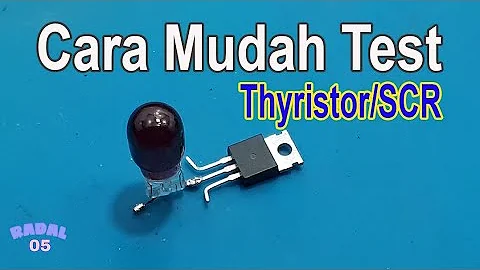
Cara Test Thyristor atau SCR BT151 Ide Kretaif DIY
BT151 Description
The BT151 is a medium power 12A silicon-controlled rectifier that comes in a TO-220 package that can be used to switch medium power AC/DC loads and can handle high DC pulses.
The BT151 is a planar passivated Silicon Controlled Rectifier in a SOT78 plastic package designed for applications requiring excellent thermal cycling performance and good bidirectional blocking voltage capability.
BT151 Pinout
The following is BT151 Pinout.

Pinout
| Pin Number | Pin Name | Description |
| 1 | Cathode | Conventional current flows out of the cathode. |
| 2 | Anode | Conventional current flows into the anode. |
| 3 | Gate | Controls conduction between the anode and cathode. |
| 4 | Tab | Electrically connected to the anode. |
BT151 CAD Model


BT151 Features
• High thermal cycling performance
• Good bidirectional blocking voltage capabilities
• Maximum anode-cathode voltage (off state): 650V
• Maximum RMS current: 12A
• Pulsed DC current: 120A
• Gate trigger current: 15mA max
• Holding current: 20mA max
• Latching current: 40mA max
• Available in the TO-220AB package
Specifications
- TypeParameter
- Mounting Type
The "Mounting Type" in electronic components refers to the method used to attach or connect a component to a circuit board or other substrate, such as through-hole, surface-mount, or panel mount.
Through Hole - Package / Case
refers to the protective housing that encases an electronic component, providing mechanical support, electrical connections, and thermal management.
TO-220-3 - Surface Mount
having leads that are designed to be soldered on the side of a circuit board that the body of the component is mounted on.
NO - Number of Elements1
- Voltage-Off State500V
- Operating Temperature
The operating temperature is the range of ambient temperature within which a power supply, or any other electrical equipment, operate in. This ranges from a minimum operating temperature, to a peak or maximum operating temperature, outside which, the power supply may fail.
-40°C~125°C - Packaging
Semiconductor package is a carrier / shell used to contain and cover one or more semiconductor components or integrated circuits. The material of the shell can be metal, plastic, glass or ceramic.
Tube - JESD-609 Code
The "JESD-609 Code" in electronic components refers to a standardized marking code that indicates the lead-free solder composition and finish of electronic components for compliance with environmental regulations.
e3 - Part Status
Parts can have many statuses as they progress through the configuration, analysis, review, and approval stages.
Active - Moisture Sensitivity Level (MSL)
Moisture Sensitivity Level (MSL) is a standardized rating that indicates the susceptibility of electronic components, particularly semiconductors, to moisture-induced damage during storage and the soldering process, defining the allowable exposure time to ambient conditions before they require special handling or baking to prevent failures
1 (Unlimited) - Number of Terminations3
- ECCN Code
An ECCN (Export Control Classification Number) is an alphanumeric code used by the U.S. Bureau of Industry and Security to identify and categorize electronic components and other dual-use items that may require an export license based on their technical characteristics and potential for military use.
EAR99 - Terminal Finish
Terminal Finish refers to the surface treatment applied to the terminals or leads of electronic components to enhance their performance and longevity. It can improve solderability, corrosion resistance, and overall reliability of the connection in electronic assemblies. Common finishes include nickel, gold, and tin, each possessing distinct properties suitable for various applications. The choice of terminal finish can significantly impact the durability and effectiveness of electronic devices.
Tin (Sn) - HTS Code
HTS (Harmonized Tariff Schedule) codes are product classification codes between 8-1 digits. The first six digits are an HS code, and the countries of import assign the subsequent digits to provide additional classification. U.S. HTS codes are 1 digits and are administered by the U.S. International Trade Commission.
8541.30.00.80 - Terminal Position
In electronic components, the term "Terminal Position" refers to the physical location of the connection points on the component where external electrical connections can be made. These connection points, known as terminals, are typically used to attach wires, leads, or other components to the main body of the electronic component. The terminal position is important for ensuring proper connectivity and functionality of the component within a circuit. It is often specified in technical datasheets or component specifications to help designers and engineers understand how to properly integrate the component into their circuit designs.
SINGLE - Reach Compliance Code
Reach Compliance Code refers to a designation indicating that electronic components meet the requirements set by the Registration, Evaluation, Authorization, and Restriction of Chemicals (REACH) regulation in the European Union. It signifies that the manufacturer has assessed and managed the chemical substances within the components to ensure safety and environmental protection. This code is vital for compliance with regulations aimed at minimizing risks associated with hazardous substances in electronic products.
not_compliant - Base Part Number
The "Base Part Number" (BPN) in electronic components serves a similar purpose to the "Base Product Number." It refers to the primary identifier for a component that captures the essential characteristics shared by a group of similar components. The BPN provides a fundamental way to reference a family or series of components without specifying all the variations and specific details.
BT151 - Reference Standard
In the context of electronic components, the term "Reference Standard" typically refers to a specific set of guidelines, specifications, or requirements that serve as a benchmark for evaluating the quality, performance, and characteristics of the component. These standards are established by organizations such as the International Electrotechnical Commission (IEC), the Institute of Electrical and Electronics Engineers (IEEE), or specific industry bodies.Reference standards help ensure consistency and interoperability among different components, as they provide a common framework for manufacturers, designers, and users to adhere to. They outline parameters such as electrical properties, mechanical dimensions, environmental conditions, and safety considerations that the component must meet to be considered compliant.By referencing these standards, manufacturers can design and produce components that meet industry-recognized criteria, which in turn helps users select the right components for their applications with confidence. Adhering to reference standards also facilitates regulatory compliance and promotes overall quality and reliability in electronic systems.
IEC-60134 - JESD-30 Code
JESD-30 Code refers to a standardized descriptive designation system established by JEDEC for semiconductor-device packages. This system provides a systematic method for generating designators that convey essential information about the package's physical characteristics, such as size and shape, which aids in component identification and selection. By using JESD-30 codes, manufacturers and engineers can ensure consistency and clarity in the specification of semiconductor packages across various applications and industries.
R-PSFM-T3 - Configuration
The parameter "Configuration" in electronic components refers to the specific arrangement or setup of the components within a circuit or system. It encompasses how individual elements are interconnected and their physical layout. Configuration can affect the functionality, performance, and efficiency of the electronic system, and may influence factors such as signal flow, impedance, and power distribution. Understanding the configuration is essential for design, troubleshooting, and optimizing electronic devices.
SINGLE - Case Connection
Case Connection refers to the method by which an electronic component's case or housing is connected to the electrical circuit. This connection is important for grounding purposes, mechanical stability, and heat dissipation. The case connection can vary depending on the type of component and its intended application. It is crucial to ensure a secure and reliable case connection to maintain the overall performance and safety of the electronic device.
ANODE - JEDEC-95 Code
JEDEC-95 Code is a standardized identification system used by the Joint Electron Device Engineering Council to categorize and describe semiconductor devices. This code provides a unique alphanumeric identifier for various memory components, ensuring consistency in documentation and communication across the electronics industry. The format includes information about the type, capacity, and technology of the device, facilitating easier specification and understanding for manufacturers and engineers.
TO-220AB - Trigger Device Type
Trigger Device Type is a parameter in electronic components that refers to the type of device or mechanism used to initiate a specific action or function within the component. This parameter specifies the specific trigger device, such as a sensor, switch, or signal input, that is required to activate or control the operation of the component. Understanding the trigger device type is crucial for proper integration and operation of the electronic component within a larger system or circuit. By specifying the appropriate trigger device type, engineers and designers can ensure that the component functions correctly and responds to the intended input signals or conditions.
SCR - Voltage - Gate Trigger (Vgt) (Max)
Voltage - Gate Trigger (Vgt) (Max) refers to the maximum voltage level required to trigger the gate of a semiconductor device, such as a thyristor or triac, into the conductive state. When the gate receives this voltage, it initiates the device's conduction, allowing current to flow between its anode and cathode. Exceeding this voltage can lead to unwanted behavior or damage to the component, making it a critical parameter in designing circuits that utilize these devices. Understanding Vgt is essential for ensuring proper operation and reliability in electronic applications.
1.5V - Current - Non Rep. Surge 50, 60Hz (Itsm)
The parameter "Current - Non Rep. Surge 50, 60Hz (Itsm)" in electronic components refers to the maximum non-repetitive surge current that a component can withstand without damage during a single surge event at frequencies of 50Hz or 60Hz. This parameter is important for assessing the robustness and reliability of the component in handling sudden spikes or surges in current that may occur in the electrical system. It helps in determining the level of protection needed for the component to ensure its longevity and proper functioning in various operating conditions. Manufacturers provide this specification to guide engineers and designers in selecting the appropriate components for their applications based on the expected surge current levels.
100A 110A - Current - Gate Trigger (Igt) (Max)
Current - Gate Trigger (Igt) (Max) refers to the maximum gate trigger current required to activate a semiconductor device, such as a thyristor or triac. It is the minimum current that must flow into the gate terminal to ensure that the device turns on and conducts current between its anode and cathode. Exceeding this value can lead to unnecessary power consumption, while insufficient current may prevent the device from turning on effectively. This parameter is crucial for circuit design, as it influences the selection of gate driving circuits.
15mA - Current - Hold (Ih) (Max)
The parameter "Current - Hold (Ih) (Max)" in electronic components refers to the maximum current required to maintain the component in a latched or on-state after it has been triggered. This parameter is commonly associated with relays, switches, and other devices that have a latching function. It is important because it determines the minimum current that must be supplied to keep the component in its activated state, ensuring reliable operation. Exceeding the maximum Ih value can lead to the component failing to hold its state, potentially causing malfunctions or disruptions in the circuit.
20mA - Current - On State (It (RMS)) (Max)
The parameter "Current - On State (It (RMS)) (Max)" refers to the maximum root mean square (RMS) current that an electronic component, typically a semiconductor device like a thyristor or a transistor, can handle while in the on state without sustaining damage. This value is crucial for ensuring that the component operates safely under load conditions. Exceeding this maximum rating can result in overheating, degradation, or failure of the component over time. It is an important specification for designers to consider when selecting components for a circuit to ensure reliable performance.
12A - Repetitive Peak Off-state Voltage
The Repetitive Peak Off-state Voltage (Vdrm) is a key parameter in electronic components, particularly in devices like thyristors and triacs. It refers to the maximum voltage that can be applied across the component when it is in the off-state without triggering it to turn on. This parameter is crucial for ensuring the proper functioning and reliability of the component in various circuit applications. It helps determine the voltage level at which the component can safely operate without experiencing unintended conduction. Designers need to consider the Vdrm rating to prevent damage to the component and maintain the overall performance of the circuit.
500V - Current - On State (It (AV)) (Max)
The parameter "Current - On State (It (AV)) (Max)" in electronic components refers to the maximum average current that a component, typically a switch or semiconductor device, can handle while in the 'on' state without overheating or failing. This rating is crucial for ensuring reliable operation in circuits where the component is subjected to continuous current flow. Exceeding this maximum value can lead to damage or malfunction, so it is important for designers to consider it when selecting components for their applications.
7.5A - SCR Type
SCR Type refers to a category of semiconductor devices specifically designed to control and manage electrical energy in electronic circuits. It stands for Silicon Controlled Rectifier, which is a type of thyristor that can switch and control voltage and current flow. SCRs are commonly used in applications such as motor control, power regulation, and lighting control due to their ability to handle high power loads. The SCR Type includes variations like standard SCRs, gate turn-off thyristors, and triacs, each serving specific purposes in power electronics.
Standard Recovery - Voltage - On State (Vtm) (Max)
The parameter "Voltage - On State (Vtm) (Max)" refers to the maximum voltage drop across a semiconductor device when it is in the on state and conducting current. It is a critical specification for devices such as transistors, diodes, and thyristors, as it affects the overall power loss and efficiency of the component during operation. A lower Vtm value indicates better efficiency, as it leads to reduced power dissipation in the form of heat. This parameter is essential for engineers to consider when designing circuits that require low voltage drops for optimal performance.
1.75V - Current - Off State (Max)
The parameter "Current - Off State (Max)" refers to the maximum current that can flow through an electronic component when it is in the off state, typically when the component is not conducting electricity. This specification is important for components such as transistors, diodes, and switches, as it indicates the maximum leakage current that can occur when the component is supposed to be non-conductive. Exceeding this maximum off-state current can lead to unintended power consumption, overheating, or malfunction of the component. Designers need to consider this parameter to ensure proper functioning and reliability of the electronic circuit.
500μA - Repetitive Peak Reverse Voltage
The Repetitive Peak Reverse Voltage (VRRM) is a key parameter in electronic components, particularly in diodes and rectifiers. It refers to the maximum reverse voltage that a component can withstand in repetitive peak reverse polarity conditions without breaking down. This parameter is crucial for ensuring the reliable operation and longevity of the component in circuits where reverse voltage may be present intermittently or periodically. It is important to select a component with a VRRM rating higher than the maximum reverse voltage expected in the circuit to prevent damage or failure.
500V - RoHS Status
RoHS means “Restriction of Certain Hazardous Substances” in the “Hazardous Substances Directive” in electrical and electronic equipment.
RoHS Compliant
How to use BT151 Rectifier
The BT151 can be used to give pulsed DC current to various appliances as a rectifier. A basic dimming circuit for controlling the brightness of a lamp is shown in the diagram below.

Dimming Circuit
The 10K variable resistor and 1uF capacitor operate as an RC time delay, allowing the load to regulate how much of one AC half cycle is seen. As a result, the SCR serves as an effective power controller.
BT151 Rectifiers in DC Circuits
The following shows BT151 Rectifiers in DC Circuits.

DC Power Switching
Thyristors can switch low voltage low current devices as well as extremely large currents at mains (line) voltages, and they can regulate AC or DC loads. The image above shows a simple example of a thyristor managing a DC load, such as a small DC motor. A BT151 thyristor is used to link the motor to a 12V DC supply, however, it will not run until the thyristor is made to conduct. This is accomplished by briefly shutting the start switch, which sends a pulse of current to the thyristor's gate terminal. The motor now runs as soon as the thyristor is turned on, and its resistance has plummeted.
There is no gate current when the start switch returns to its normally open state, but the thyristor continues to conduct, and in a DC circuit, the current continues to flow and the motor continues to drive. Any subsequent operations on the start switch are now ineffective. Only if the current flow falls below the thyristor's holding current threshold will the thyristor turn off.
This is accomplished by briefly shutting the stop switch, which shorts out the thyristor. Because the SCR current is now less than the holding current value, the circuit current now passes through the stop switch rather than the thyristor, which turns off instantly. A normally closed switch in series with the thyristor may also be used to stop the motor. When pressed, the normally closed switch would also momentarily stop current flow through the thyristor, allowing the thyristor to turn off.
BT151 Alternatives
| Part Number | Description | Manufacturer |
| BT151-500LTRIGGER DEVICES | Silicon Controlled Rectifier, 12 A, 500 V, SCR, TO-220AB, PLASTIC, SC-46, 3 PIN | NXP Semiconductors |
| BT151-500L,127TRIGGER DEVICES | Silicon Controlled Rectifier, 12A I(T)RMS, 500V V(DRM), 500V V(RRM), 1 Element, TO-220AB, PLASTIC, SC-46, 3 PIN | WeEn Semiconductor Co Ltd |
BT151 Applications
• Voltage Regulation
• Ignition Circuits
• Motor Control
• Protection Circuits
• Static Switching
BT151 Package

BT151 Manufacturer
WeEn Semiconductors Co., Ltd is a Chinese semiconductor company based in Shang, China. It was created in January 2016 and is registered in Nanchang, China. In Jilin, Shanghai, Hong Kong, the United Kingdom, and other places, it has expanded its subsidiaries and branches. WeEn is committed to providing a broad range of innovative bipolar power products based on their cutting-edge bipolar power technology.
Silicon-controlled rectifiers, power diodes, high voltage transistors, and silicon carbide are among the goods that are widely utilized in markets such as automotive, telecommunications, computers and consumer electronics, intelligent home appliances, lighting, and power management. They want to improve China's development by making manufacturing more intelligent and cost-effective.
Trend Analysis
Datasheet PDF
- PCN Part Status Change :
- Datasheets :
- PCN Assembly/Origin :
- PCN Other :
- PCN Packaging :
1.How is the BT151 unidirectional thyristor pin distribution?
Face the BT151 literally toward you, with the pins facing downwards. The first pin on the left is the trigger pole, the middle pin is the anode, which is connected to the heat sink, and the right pin is the cathode.
The SCR is facing up, the first is K, the second is A, and the third is G.
2.What type of transistor can be used instead of BT151?
BT151 is a one-way thyristor, which can be replaced by ordinary CR10AM.
3.How to judge the quality of BT151 SCR?
Use the universal meter to measure whether the gate and cathode are short-circuited.
The low-power thyristor is measured with the resistance profile of a universal meter. The two poles that do not work in the forward and reverse directions are the A and K poles, and the remaining pin is the G pin. When using R*1 to measure the resistance between the A and K pins, touch one of the tests leads to the G pole and then disconnect it. At this time, the A and K poles are blocked, except for the resistance when touching the G pole. In addition to the on-state, if the G pole is disconnected and the on-state can still be maintained (it has been triggered), the thyristor is good.
4.What type of rectifier is the BT151?
Medium power 12A silicon-controlled rectifier.
5.In what plastic package is the BT151 a planar passivated Silicon Controlled Rectifier?
SOT78.
![The Comprehensive Introductions to SR920(370) Battery [FAQ]](https://res.utmel.com/Images/Article/20a1e582-4e2b-49d9-a070-8a07d3d3c5ec.jpg) The Comprehensive Introductions to SR920(370) Battery [FAQ]
The Comprehensive Introductions to SR920(370) Battery [FAQ]01 July 20227479
 CR123A 3V Lithium Battery, CR123 VS CR123A, CR123A Equivalents
07 March 202233820
 Overview of CH340 USB Converter Chip
12 October 202119487
 A Comprehensive Technical Guide to Microchip PIC16F1829TIML Microcontroller
29 February 2024284
 INA115BU Instrumentation Amplifier:Datasheet, Application, Circuit
17 September 20211733
 STM32F401VDH6 Microcontroller: Pinout, Datasheet, Features
29 July 20214635
 A Comprehensive Guide to LTC6702HDC#TRMPBF Linear Comparator
06 March 2024267
 LM234 Current Source: Pinout, 3D Model and Datasheet
29 October 20212741
 AI Server MLCCs: Why NVIDIA Rubin Racks Require Over 600,000 Capacitors
02 June 20263716
 Supercapacitors Explained: How EDLC, Pseudo, and Hybrid Capacitors Store Power
14 July 202611715
 What Determines the Maximum Operating Frequency of a Diode?
29 June 202213427
 Designing Application-Specific Integrated Circuits
07 March 20252581
 Why does a MOSFET with a Small Internal Resistance Heat Up?
09 May 20224095
 Global Power Technology Authorized Distributor | UTMEL Electronics
21 November 20234423
 What is SMT (Surface Mount Technology)?
02 December 20219048
 Microcontroller (MCU) Market Analysis
09 February 20226555
WeEn Semiconductors
In Stock: 695
Minimum: 1 Multiples: 1
Qty
Unit Price
Ext Price
1
$0.968530
$0.97
10
$0.913708
$9.14
100
$0.861988
$86.20
500
$0.813196
$406.60
1000
$0.767166
$767.17
Not the price you want? Send RFQ Now and we'll contact you ASAP.
Inquire for More Quantity
![BT152-600R,127]() BT152-600R,127
BT152-600R,127WeEn Semiconductors
![BT152-800R,127]() BT152-800R,127
BT152-800R,127WeEn Semiconductors
![BT258-800R,127]() BT258-800R,127
BT258-800R,127WeEn Semiconductors
![BT145-800R,127]() BT145-800R,127
BT145-800R,127WeEn Semiconductors
![BT151S-650R,118]() BT151S-650R,118
BT151S-650R,118WeEn Semiconductors
![BT258X-800R,127]() BT258X-800R,127
BT258X-800R,127WeEn Semiconductors
![BT145-800RTQ]() BT145-800RTQ
BT145-800RTQWeEn Semiconductors
![BT151X-800C,127]() BT151X-800C,127
BT151X-800C,127WeEn Semiconductors
![TYN20X-800T,127]() TYN20X-800T,127
TYN20X-800T,127WeEn Semiconductors
![TYN16X-600RT,127]() TYN16X-600RT,127
TYN16X-600RT,127WeEn Semiconductors


