 Product
 Brand
 Articles
 Tools

DS18B20 1-Wire Digital Thermometer:Pinout, Datasheet, and Applications

Bulk Digital, Local 3V~5.5V Through Hole -55°C~125°C 1-Wire® ±0.5°C (±2°C) 12 b 1 (Unlimited)


Bulk Digital, Local 3V~5.5V Through Hole -55°C~125°C 1-Wire® ±0.5°C (±2°C) 12 b 1 (Unlimited)
Hey Guys, this time i wanna introduce you all a very useful thing called DS18B20 which communicates over a 1-Wire bus that by definition requires only one data line (and ground) for communication with a central microprocessor. In addition, the DS18B20 can derive power directly from the data line (“parasite power”),eliminating the need for an external power supply.
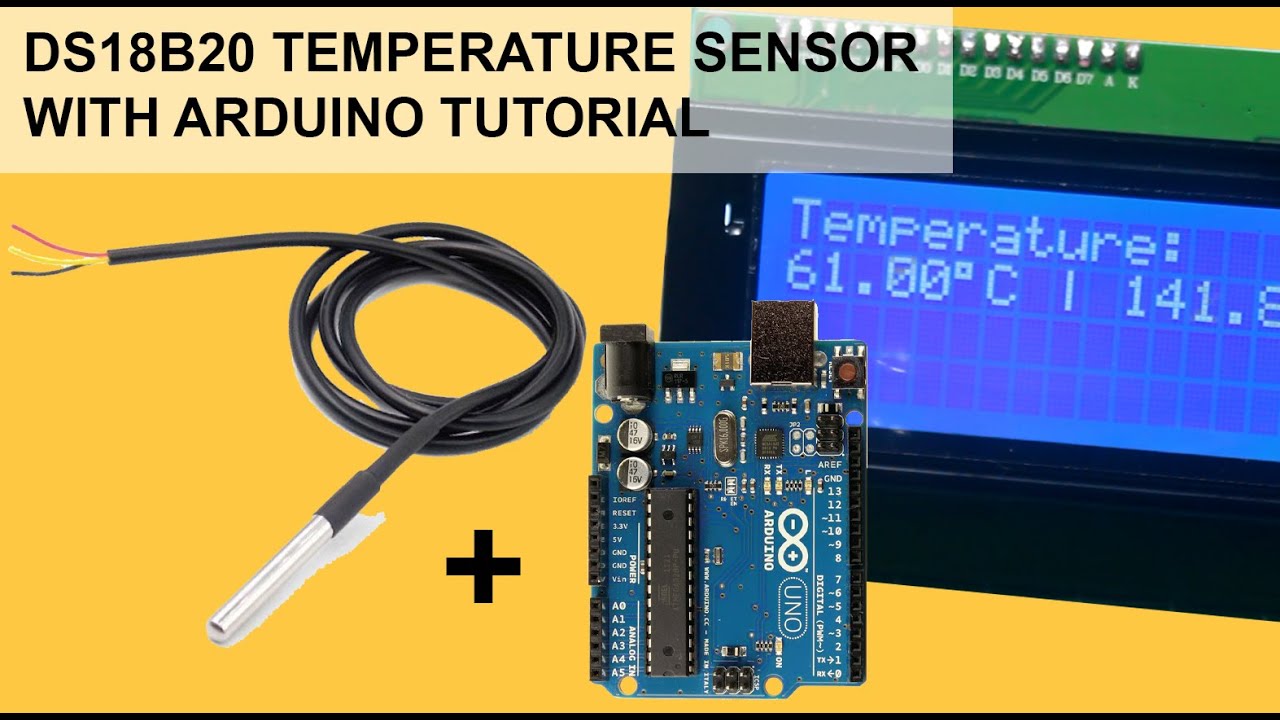
DS18B20 Arduino Temperature Sensor - How to Tutorial
DS18B20 Descriptions
The DS18B20 digital thermometer provides 9-bit to 12-bit Celsius temperature measurements and has an alarm function with nonvolatile user-programmable upper and lower trigger points. The DS18B20 communicates over a 1-Wire bus that by definition requires only one data line (and ground) for communication with a central microprocessor. In addition, the DS18B20 can derive power directly from the data line (“parasite power”), eliminating the need for an external power supply.
Each DS18B20 has a unique 64-bit serial code, which allows multiple DS18B20s to function on the same 1-Wire bus. Thus, it is simple to use one microprocessor to control many DS18B20s distributed over a large area. Applications that can benefit from this feature include HVAC environmental controls, temperature monitoring systems inside buildings, equipment, or machinery, and process monitoring and control systems.
DS18B20 Pinout

DS18B20 Pinout
DS18B20 CAD Model

DS18B20 Symbol
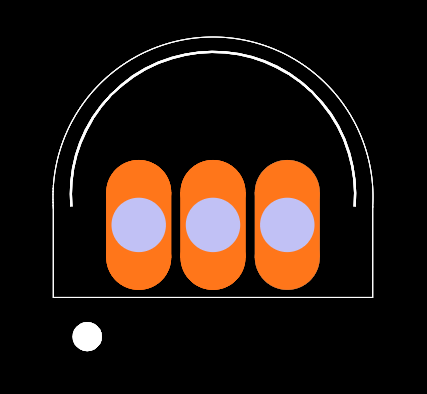
DS18B20 Footprint

DS18B20 3D Model
DS18B20 Features
● Unique 1-Wire® Interface Requires Only One Port Pin for Communication
● Reduce Component Count with Integrated Temperature Sensor and EEPROM
• Measures Temperatures from -55°C to +125°C (-67°F to +257°F)
• ±0.5°C Accuracy from -10°C to +85°C
• Programmable Resolution from 9 Bits to 12 Bits
• No External Components Required
● Parasitic Power Mode Requires Only 2 Pins for Operation (DQ and GND)
● Simplifies Distributed Temperature-Sensing Applications with Multidrop Capability
• Each Device Has a Unique 64-Bit Serial Code Stored in On-Board ROM
● Flexible User-Definable Nonvolatile (NV) Alarm Settings with Alarm Search Command Identifies Devices with Temperatures Outside Programmed Limits
● Available in 8-Pin SO (150 mils), 8-Pin µSOP, and 3-Pin TO-92 Packages
Specifications
- TypeParameter
- Factory Lead Time7 Weeks
- Mount
In electronic components, the term "Mount" typically refers to the method or process of physically attaching or fixing a component onto a circuit board or other electronic device. This can involve soldering, adhesive bonding, or other techniques to secure the component in place. The mounting process is crucial for ensuring proper electrical connections and mechanical stability within the electronic system. Different components may have specific mounting requirements based on their size, shape, and function, and manufacturers provide guidelines for proper mounting procedures to ensure optimal performance and reliability of the electronic device.
PCB, Through Hole - Mounting Type
The "Mounting Type" in electronic components refers to the method used to attach or connect a component to a circuit board or other substrate, such as through-hole, surface-mount, or panel mount.
Through Hole - Package / Case
refers to the protective housing that encases an electronic component, providing mechanical support, electrical connections, and thermal management.
TO-226-3, TO-92-3 (TO-226AA) - Number of Pins3
- Weight453.59237mg
- Test Conditions-10°C ~ 85°C (-55°C ~ 125°C)
- Operating Temperature
The operating temperature is the range of ambient temperature within which a power supply, or any other electrical equipment, operate in. This ranges from a minimum operating temperature, to a peak or maximum operating temperature, outside which, the power supply may fail.
-55°C~125°C - Packaging
Semiconductor package is a carrier / shell used to contain and cover one or more semiconductor components or integrated circuits. The material of the shell can be metal, plastic, glass or ceramic.
Bulk - Published2000
- JESD-609 Code
The "JESD-609 Code" in electronic components refers to a standardized marking code that indicates the lead-free solder composition and finish of electronic components for compliance with environmental regulations.
e3 - Pbfree Code
The "Pbfree Code" parameter in electronic components refers to the code or marking used to indicate that the component is lead-free. Lead (Pb) is a toxic substance that has been widely used in electronic components for many years, but due to environmental concerns, there has been a shift towards lead-free alternatives. The Pbfree Code helps manufacturers and users easily identify components that do not contain lead, ensuring compliance with regulations and promoting environmentally friendly practices. It is important to pay attention to the Pbfree Code when selecting electronic components to ensure they meet the necessary requirements for lead-free applications.
yes - Part Status
Parts can have many statuses as they progress through the configuration, analysis, review, and approval stages.
Active - Moisture Sensitivity Level (MSL)
Moisture Sensitivity Level (MSL) is a standardized rating that indicates the susceptibility of electronic components, particularly semiconductors, to moisture-induced damage during storage and the soldering process, defining the allowable exposure time to ambient conditions before they require special handling or baking to prevent failures
1 (Unlimited) - Number of Terminations3
- Termination
Termination in electronic components refers to the practice of matching the impedance of a circuit to prevent signal reflections and ensure maximum power transfer. It involves the use of resistors or other components at the end of transmission lines or connections. Proper termination is crucial in high-frequency applications to maintain signal integrity and reduce noise.
SMD/SMT - ECCN Code
An ECCN (Export Control Classification Number) is an alphanumeric code used by the U.S. Bureau of Industry and Security to identify and categorize electronic components and other dual-use items that may require an export license based on their technical characteristics and potential for military use.
EAR99 - Terminal Finish
Terminal Finish refers to the surface treatment applied to the terminals or leads of electronic components to enhance their performance and longevity. It can improve solderability, corrosion resistance, and overall reliability of the connection in electronic assemblies. Common finishes include nickel, gold, and tin, each possessing distinct properties suitable for various applications. The choice of terminal finish can significantly impact the durability and effectiveness of electronic devices.
Matte Tin (Sn) - Voltage - Supply
Voltage - Supply refers to the range of voltage levels that an electronic component or circuit is designed to operate with. It indicates the minimum and maximum supply voltage that can be applied for the device to function properly. Providing supply voltages outside this range can lead to malfunction, damage, or reduced performance. This parameter is critical for ensuring compatibility between different components in a circuit.
3V~5.5V - Base Part Number
The "Base Part Number" (BPN) in electronic components serves a similar purpose to the "Base Product Number." It refers to the primary identifier for a component that captures the essential characteristics shared by a group of similar components. The BPN provides a fundamental way to reference a family or series of components without specifying all the variations and specific details.
DS18B20 - Output Type
The "Output Type" parameter in electronic components refers to the type of signal or data that is produced by the component as an output. This parameter specifies the nature of the output signal, such as analog or digital, and can also include details about the voltage levels, current levels, frequency, and other characteristics of the output signal. Understanding the output type of a component is crucial for ensuring compatibility with other components in a circuit or system, as well as for determining how the output signal can be utilized or processed further. In summary, the output type parameter provides essential information about the nature of the signal that is generated by the electronic component as its output.
1-Wire® - Interface
In electronic components, the term "Interface" refers to the point at which two different systems, devices, or components connect and interact with each other. It can involve physical connections such as ports, connectors, or cables, as well as communication protocols and standards that facilitate the exchange of data or signals between the connected entities. The interface serves as a bridge that enables seamless communication and interoperability between different parts of a system or between different systems altogether. Designing a reliable and efficient interface is crucial in ensuring proper functionality and performance of electronic components and systems.
Serial - Nominal Supply Current
Nominal current is the same as the rated current. It is the current drawn by the motor while delivering rated mechanical output at its shaft.
1mA - Output Current
The rated output current is the maximum load current that a power supply can provide at a specified ambient temperature. A power supply can never provide more current that it's rated output current unless there is a fault, such as short circuit at the load.
4mA - Number of Bits12
- Current - Supply
Current - Supply is a parameter in electronic components that refers to the maximum amount of electrical current that the component can provide to the circuit it is connected to. It is typically measured in units of amperes (A) and is crucial for determining the power handling capability of the component. Understanding the current supply rating is important for ensuring that the component can safely deliver the required current without overheating or failing. It is essential to consider this parameter when designing circuits to prevent damage to the component and ensure proper functionality of the overall system.
1.5mA - Resolution
Resolution in electronic components refers to the smallest increment of measurement or change that can be detected or represented by the component. It is a crucial specification in devices such as sensors, displays, and converters, as it determines the level of detail or accuracy that can be achieved. For example, in a digital camera, resolution refers to the number of pixels that make up an image, with higher resolution indicating a greater level of detail. In analog-to-digital converters, resolution is the number of discrete values that can be represented in the digital output, determining the precision of the conversion process. Overall, resolution plays a significant role in determining the performance and capabilities of electronic components in various applications.
12 b - Sensor Type
In electronic components, the parameter "Sensor Type" refers to the specific type of sensor technology used in a particular component to detect and measure physical phenomena such as light, temperature, pressure, motion, or proximity. Different sensor types utilize various principles and mechanisms to convert the detected input into an electrical signal that can be processed by the electronic component. Common sensor types include photodiodes, thermistors, accelerometers, and proximity sensors, each designed for specific applications and environments. Understanding the sensor type is crucial for selecting the right component for a given task and ensuring accurate and reliable sensing capabilities in electronic systems.
Digital, Local - Max Supply Voltage (DC)
The parameter "Max Supply Voltage (DC)" in electronic components refers to the maximum voltage that can be safely applied to the component without causing damage. This specification is crucial for ensuring the reliable operation and longevity of the component within a given circuit. Exceeding the maximum supply voltage can lead to overheating, breakdown of internal components, or even permanent damage. It is important to carefully adhere to this specification when designing or using electronic circuits to prevent potential failures and ensure the safety of the components.
5.5V - Min Supply Voltage (DC)
The parameter "Min Supply Voltage (DC)" in electronic components refers to the minimum voltage level required for the component to operate properly. It indicates the lowest voltage that can be safely applied to the component without causing damage or malfunction. This parameter is crucial for ensuring the reliable and stable operation of the component within its specified operating range. It is important for designers and engineers to adhere to the specified minimum supply voltage to prevent potential issues such as erratic behavior, reduced performance, or permanent damage to the component.
3V - Housing
Housing in electronic components refers to the physical enclosure that protects the internal circuitry and components from environmental factors such as dust, moisture, and mechanical damage. It provides structural support and electrical insulation while facilitating heat dissipation. The design and materials used for housing are crucial for the reliability and performance of the electronic device, as they impact factors like thermal management, electromagnetic interference, and overall aesthetics.
PLASTIC - Accuracy - Highest (Lowest)
In electronic components, "Accuracy - Highest (Lowest)" refers to the range within which the actual value of a parameter can deviate from the ideal or specified value. The term "Highest" indicates the upper limit of this range, while "Lowest" indicates the lower limit. For example, if a component has an accuracy of ±5%, the highest accuracy would mean that the actual value could be within 5% above the specified value, while the lowest accuracy would mean it could be within 5% below the specified value. This parameter is crucial for ensuring the reliability and performance of electronic devices by determining how closely the component's output matches the desired value.
±0.5°C (±2°C) - Sensing Temperature - Local
Sensing Temperature - Local refers to the capability of an electronic component to measure the temperature in its immediate environment or vicinity. This parameter is crucial for applications that require monitoring of temperature for performance, safety, or stability purposes. It often involves temperature sensors integrated within components like microcontrollers, power regulators, or other integrated circuits. The local sensing allows for accurate temperature readings that help in adjusting operational conditions, ensuring optimal performance, and preventing thermal-related failures.
-55°C~125°C - Accuracy-Max
Accuracy-Max refers to the maximum permissible error in the output of an electronic component or system, typically expressed as a percentage of the nominal value. It indicates the extent to which the measured or calculated value can deviate from the true value under specified conditions. This parameter is crucial for ensuring reliable performance, especially in applications where precision is critical. A lower Accuracy-Max signifies better accuracy and higher quality in measurement and control processes.
0.5 Cel - Features
In the context of electronic components, the term "Features" typically refers to the specific characteristics or functionalities that a particular component offers. These features can vary depending on the type of component and its intended use. For example, a microcontroller may have features such as built-in memory, analog-to-digital converters, and communication interfaces like UART or SPI.When evaluating electronic components, understanding their features is crucial in determining whether they meet the requirements of a particular project or application. Engineers and designers often look at features such as operating voltage, speed, power consumption, and communication protocols to ensure compatibility and optimal performance.In summary, the "Features" parameter in electronic components describes the unique attributes and capabilities that differentiate one component from another, helping users make informed decisions when selecting components for their electronic designs.
Output Switch, Programmable Limit, Programmable Resolution - Width3.94mm
- Height4.95mm
- Length4.95mm
- REACH SVHC
The parameter "REACH SVHC" in electronic components refers to the compliance with the Registration, Evaluation, Authorization, and Restriction of Chemicals (REACH) regulation regarding Substances of Very High Concern (SVHC). SVHCs are substances that may have serious effects on human health or the environment, and their use is regulated under REACH to ensure their safe handling and minimize their impact.Manufacturers of electronic components need to declare if their products contain any SVHCs above a certain threshold concentration and provide information on the safe use of these substances. This information allows customers to make informed decisions about the potential risks associated with using the components and take appropriate measures to mitigate any hazards.Ensuring compliance with REACH SVHC requirements is essential for electronics manufacturers to meet regulatory standards, protect human health and the environment, and maintain transparency in their supply chain. It also demonstrates a commitment to sustainability and responsible manufacturing practices in the electronics industry.
No SVHC - Radiation Hardening
Radiation hardening is the process of making electronic components and circuits resistant to damage or malfunction caused by high levels of ionizing radiation, especially for environments in outer space (especially beyond the low Earth orbit), around nuclear reactors and particle accelerators, or during nuclear accidents or nuclear warfare.
No - RoHS Status
RoHS means “Restriction of Certain Hazardous Substances” in the “Hazardous Substances Directive” in electrical and electronic equipment.
ROHS3 Compliant - Lead Free
Lead Free is a term used to describe electronic components that do not contain lead as part of their composition. Lead is a toxic material that can have harmful effects on human health and the environment, so the electronics industry has been moving towards lead-free components to reduce these risks. Lead-free components are typically made using alternative materials such as silver, copper, and tin. Manufacturers must comply with regulations such as the Restriction of Hazardous Substances (RoHS) directive to ensure that their products are lead-free and environmentally friendly.
Lead Free
DS18B20 Functional Block Diagram

DS18B20 Functional Block Diagram
DS18B20 Electrical Characteristics
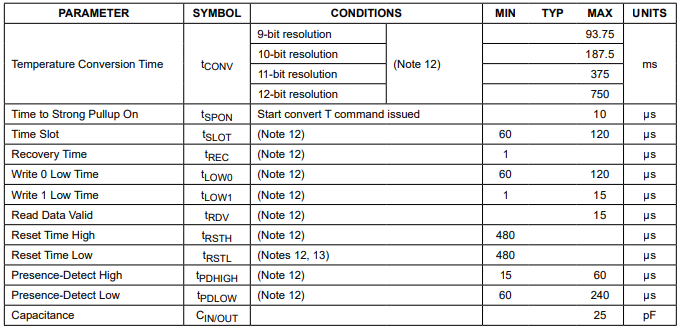
DS18B20 Electrical Characteristics
DS18B20 Temperature/Data Relationship
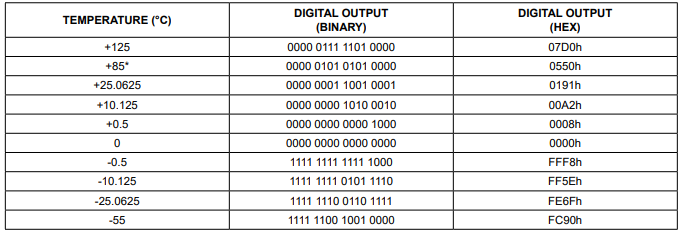
DS18B20 Temperature/Data Relationship
Parts with Similar Specs
- ImagePart NumberManufacturerPackage / CaseNumber of PinsMountOperating TemperatureResolutionInterfaceMin Supply Voltage (DC)Max Supply Voltage (DC)View Compare
![DS18B20]()
DS18B20
TO-226-3, TO-92-3 (TO-226AA)
3
PCB, Through Hole
-55°C ~ 125°C
12 b
Serial
3 V
5.5 V
![DS18B20 T&R]()
TO-226-3, TO-92-3 (TO-226AA)
3
PCB, Through Hole
-55°C ~ 125°C
8 b
Serial
3 V
5.5 V
![DS18B20-PAR T&R]()
TO-226-3, TO-92-3 (TO-226AA)
3
Through Hole
-55°C ~ 125°C
11 b
Serial
3 V
5.5 V
![DS1822]()
TO-226-3, TO-92-3 (TO-226AA) (Formed Leads)
3
Through Hole
-55°C ~ 125°C
12 b
Serial
3 V
5.5 V
![DS18S20]()
TO-226-3, TO-92-3 (TO-226AA) (Formed Leads)
3
Through Hole
-55°C ~ 125°C
12 b
Serial
3 V
5.5 V


DS18B20 Manufacturer
Maxim Integrated, a subsidiary of Analog Devices, designs, manufactures, and sells analog and mixed-signal integrated circuits for the automotive, industrial, communications, consumer, and computing markets. Maxim's product portfolio includes power and battery management ICs, sensors, analog ICs, interface ICs, communications solutions, digital ICs, embedded security, and microcontrollers. The company is headquartered in San Jose, California, and has design centers, manufacturing facilities, and sales offices worldwide
Trend Analysis
Datasheet PDF
- Datasheets :
- Other Related Documents :
- Application Notes :
- Environmental Information :
- ConflictMineralStatement :
How does a DS18B20 work?
The DS18B20 is one type of temperature sensor and it supplies 9-bit to 12-bit readings of temperature. These values show the temperature of a particular device. The communication of this sensor can be done through a one-wire bus protocol which uses one data line to communicate with an inner microprocessor.
What type of temperature sensor is DS18B20?
The core functionality of the DS18B20 is its direct-to- digital temperature sensor. The resolution of the tempera- ture sensor is user-configurable to 9, 10, 11, or 12 bits, corresponding to increments of 0.5°C, 0.25°C, 0.125°C, and 0.0625°C, respectively. The default resolution at power-up is 12-bit.
How accurate is DS18B20?
Meanwhile after the calibration using the proposed method, the DS18B20 sensor has a smaller mean error of ± 0.85 %, so that obtained a more accurate sensor and it can be used for testing of Grashof Portable Incubator made by University of Indonesia. Temperature is one of the main parameters in a baby incubator.
What type is DS18B20?
DS18B20 is 1-Wire interface Temperature sensor manufactured by Dallas Semiconductor Corp. The unique 1-Wire® Interface requires only one digital pin for two way communication with a microcontroller.
 TL494CN PWM Controllers[FAQ+Video]:Circuit, datasheet, Alternatives
13 April 20228818
 1N914 Diode: Alternatives, Features and Datasheet
09 August 20219372
 PIC16F1776ISS Microcontroller Datasheet Overview
29 February 2024328
 TL081 Series JFET-Input Operational Amplifier Design Guide
20 January 20261088
 CR2450 VS LIR2450[FAQ+Video]: Are they interchangeable?
22 April 20228028
 Difference Between TDA7293 vs. TDA7294 Audio Amplifier [Video&FAQ]
24 April 202228087
 L9110S 2-Channel Motor driver: Circuit, Pinout, and How to work [Video&FAQ]
25 April 202224618
 KBPC5010 Rectifier: Package, Pinout, and Datasheet [Video&FAQ]
14 October 202128703
 The Ultimate Guide to Maintaining Your L1154 Battery
16 June 20251194
 Introduction to Pi Filter
19 February 202116292
 Constructing Hybrid Photovoltaics from Amorphous Silicon and Hybrid Semiconductor Nanocrystals
24 October 20221865
 Why does a MOSFET with a Small Internal Resistance Heat Up?
09 May 20224174
 Introduction to TTL and CMOS Logic Gate Circuits
24 November 202524849
 What is a Digital Integrated Circuit and How Do We Use It?
20 October 202519695
 What is a Force Sensor?
19 April 202112518
 A Guide to AVR Microcontroller [PDF]
15 October 202510618
Maxim Integrated
In Stock: 81
United States
China
Canada
Japan
Russia
Germany
United Kingdom
Singapore
Italy
Hong Kong(China)
Taiwan(China)
France
Korea
Mexico
Netherlands
Malaysia
Austria
Spain
Switzerland
Poland
Thailand
Vietnam
India
United Arab Emirates
Afghanistan
Åland Islands
Albania
Algeria
American Samoa
Andorra
Angola
Anguilla
Antigua & Barbuda
Argentina
Armenia
Aruba
Australia
Azerbaijan
Bahamas
Bahrain
Bangladesh
Barbados
Belarus
Belgium
Belize
Benin
Bermuda
Bhutan
Bolivia
Bonaire, Sint Eustatius and Saba
Bosnia & Herzegovina
Botswana
Brazil
British Indian Ocean Territory
British Virgin Islands
Brunei
Bulgaria
Burkina Faso
Burundi
Cabo Verde
Cambodia
Cameroon
Cayman Islands
Central African Republic
Chad
Chile
Christmas Island
Cocos (Keeling) Islands
Colombia
Comoros
Congo
Congo (DRC)
Cook Islands
Costa Rica
Côte d’Ivoire
Croatia
Cuba
Curaçao
Cyprus
Czechia
Denmark
Djibouti
Dominica
Dominican Republic
Ecuador
Egypt
El Salvador
Equatorial Guinea
Eritrea
Estonia
Eswatini
Ethiopia
Falkland Islands
Faroe Islands
Fiji
Finland
French Guiana
French Polynesia
Gabon
Gambia
Georgia
Ghana
Gibraltar
Greece
Greenland
Grenada
Guadeloupe
Guam
Guatemala
Guernsey
Guinea
Guinea-Bissau
Guyana
Haiti
Honduras
Hungary
Iceland
Indonesia
Iran
Iraq
Ireland
Isle of Man
Israel
Jamaica
Jersey
Jordan
Kazakhstan
Kenya
Kiribati
Kosovo
Kuwait
Kyrgyzstan
Laos
Latvia
Lebanon
Lesotho
Liberia
Libya
Liechtenstein
Lithuania
Luxembourg
Macao(China)
Madagascar
Malawi
Maldives
Mali
Malta
Marshall Islands
Martinique
Mauritania
Mauritius
Mayotte
Micronesia
Moldova
Monaco
Mongolia
Montenegro
Montserrat
Morocco
Mozambique
Myanmar
Namibia
Nauru
Nepal
New Caledonia
New Zealand
Nicaragua
Niger
Nigeria
Niue
Norfolk Island
North Korea
North Macedonia
Northern Mariana Islands
Norway
Oman
Pakistan
Palau
Palestinian Authority
Panama
Papua New Guinea
Paraguay
Peru
Philippines
Pitcairn Islands
Portugal
Puerto Rico
Qatar
Réunion
Romania
Rwanda
Samoa
San Marino
São Tomé & Príncipe
Saudi Arabia
Senegal
Serbia
Seychelles
Sierra Leone
Sint Maarten
Slovakia
Slovenia
Solomon Islands
Somalia
South Africa
South Sudan
Sri Lanka
St Helena, Ascension, Tristan da Cunha
St. Barthélemy
St. Kitts & Nevis
St. Lucia
St. Martin
St. Pierre & Miquelon
St. Vincent & Grenadines
Sudan
Suriname
Svalbard & Jan Mayen
Sweden
Syria
Tajikistan
Tanzania
Timor-Leste
Togo
Tokelau
Tonga
Trinidad & Tobago
Tunisia
Turkey
Turkmenistan
Turks & Caicos Islands
Tuvalu
U.S. Outlying Islands
U.S. Virgin Islands
Uganda
Ukraine
Uruguay
Uzbekistan
Vanuatu
Vatican City
Venezuela
Wallis & Futuna
Yemen
Zambia
Zimbabwe
![DS1620S-001/TR]() DS1620S-001/TR
Analog Devices Inc./Maxim Integrated
![MAX6657MSA-TG069]() MAX6657MSA-TG069
Analog Devices Inc./Maxim Integrated
![MAX1989MEE-TG11]() MAX1989MEE-TG11
Analog Devices Inc./Maxim Integrated
![MAX7504MUA T]() MAX7504MUA T
Maxim Integrated
![MAX1450CAP]() MAX1450CAP
Analog Devices Inc./Maxim Integrated
![MAX6519UKP095-T]() MAX6519UKP095-T
Analog Devices Inc./Maxim Integrated
![MAX1457CCJ]() MAX1457CCJ
Analog Devices Inc./Maxim Integrated
![MAX6678AEP94]() MAX6678AEP94
Analog Devices Inc./Maxim Integrated
![MAX6678AEP90]() MAX6678AEP90
Analog Devices Inc./Maxim Integrated
![MAX6610AUT T]() MAX6610AUT T
Maxim Integrated