Product
 Brand
Brand Articles
 Tools
Tools
NRF24L01 Transceiver: NRF24L01 Arduino, Datasheet, Pinout

TxRx Only 2.4GHz 1.9V~3.6V SPI 2Mbps 11.1mA~12.3mA - Receiving 7mA~11.3mA - Transmitting GFSK 20-VFQFN Exposed Pad


TxRx Only 2.4GHz 1.9V~3.6V SPI 2Mbps 11.1mA~12.3mA - Receiving 7mA~11.3mA - Transmitting GFSK 20-VFQFN Exposed Pad
NRF24L01 is a single-chip 2.4GHz Transceiver. This article mainly covers its pinout, datasheet, Arduino and more detailed information about NRF24L01. There is a huge range of Semiconductors, Capacitors, Resistors and ICs in stock. Welcome RFQ!

Arduino Wireless Communication – NRF24L01 Tutorial
NRF24L01 Description
The nRF24L01 is a single-chip 2.4GHz transceiver with an embedded baseband protocol engine (Enhanced ShockBurst™), designed for ultra low power wireless applications.
The nRF24L01 is designed for operation in the worldwide ISM frequency band at 2.400 - 2.4835GHz. An MCU (microcontroller) and very few external passive components are needed to design a radio system with the nRF24L01.
The nRF24L01 is configured and operated through a Serial Peripheral Interface (SPI.) Through this interface the register map is available. The register map contains all configuration registers in the nRF24L01 and is accessible in all operation modes of the chip.
NRF24L01 Pinout

NRF24L01 Pinout
NRF24L01 CAD Model
Symbol

NRF24l01 Symbol
Footprint

NRF24l01 Footprint
3D Model
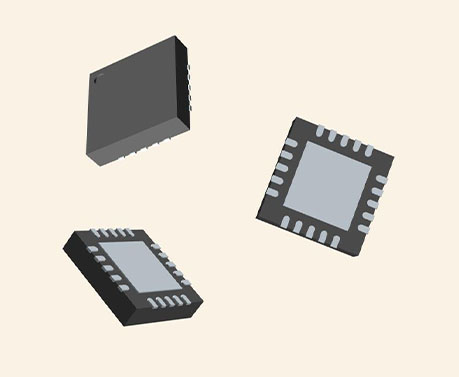
NRF24l01 3D Model
NRF24L01 Features
• Worldwide 2.4GHz ISM band operation
• Up to 2Mbps on air data rate
• Ultra low power operation
• 11.3mA TX at 0dBm output power
• 12.3mA RX at 2Mbps air data rate
• 900nA in power down
• 22µA in standby-I
• On chip voltage regulator
• 1.9 to 3.6V supply range
• Enhanced ShockBurst™
• Automatic packet handling
• Auto packet transaction handling
• 6 data pipe MultiCeiver™
• Air compatible with nRF2401A, 02, E1 and E2
• Low cost BOM
• ±60ppm 16MHz crystal
• 5V tolerant inputs
• Compact 20-pin 4x4mm QFN package
NRF24L01 Block Diagram

NRF24L01 Block Diagram
Specifications
- TypeParameter
- Factory Lead Time20 Weeks
- Mounting Type
The "Mounting Type" in electronic components refers to the method used to attach or connect a component to a circuit board or other substrate, such as through-hole, surface-mount, or panel mount.
Surface Mount - Package / Case
refers to the protective housing that encases an electronic component, providing mechanical support, electrical connections, and thermal management.
20-VFQFN Exposed Pad - Surface Mount
having leads that are designed to be soldered on the side of a circuit board that the body of the component is mounted on.
YES - Number of Pins20
- Operating Temperature
The operating temperature is the range of ambient temperature within which a power supply, or any other electrical equipment, operate in. This ranges from a minimum operating temperature, to a peak or maximum operating temperature, outside which, the power supply may fail.
-40°C~85°C - Packaging
Semiconductor package is a carrier / shell used to contain and cover one or more semiconductor components or integrated circuits. The material of the shell can be metal, plastic, glass or ceramic.
Tray - Published2005
- Part Status
Parts can have many statuses as they progress through the configuration, analysis, review, and approval stages.
Active - Moisture Sensitivity Level (MSL)
Moisture Sensitivity Level (MSL) is a standardized rating that indicates the susceptibility of electronic components, particularly semiconductors, to moisture-induced damage during storage and the soldering process, defining the allowable exposure time to ambient conditions before they require special handling or baking to prevent failures
3 (168 Hours) - Number of Terminations20
- TypeTxRx Only
- HTS Code
HTS (Harmonized Tariff Schedule) codes are product classification codes between 8-1 digits. The first six digits are an HS code, and the countries of import assign the subsequent digits to provide additional classification. U.S. HTS codes are 1 digits and are administered by the U.S. International Trade Commission.
8542.39.00.01 - Voltage - Supply
Voltage - Supply refers to the range of voltage levels that an electronic component or circuit is designed to operate with. It indicates the minimum and maximum supply voltage that can be applied for the device to function properly. Providing supply voltages outside this range can lead to malfunction, damage, or reduced performance. This parameter is critical for ensuring compatibility between different components in a circuit.
1.9V~3.6V - Terminal Position
In electronic components, the term "Terminal Position" refers to the physical location of the connection points on the component where external electrical connections can be made. These connection points, known as terminals, are typically used to attach wires, leads, or other components to the main body of the electronic component. The terminal position is important for ensuring proper connectivity and functionality of the component within a circuit. It is often specified in technical datasheets or component specifications to help designers and engineers understand how to properly integrate the component into their circuit designs.
QUAD - Number of Functions1
- Supply Voltage
Supply voltage refers to the electrical potential difference provided to an electronic component or circuit. It is crucial for the proper operation of devices, as it powers their functions and determines performance characteristics. The supply voltage must be within specified limits to ensure reliability and prevent damage to components. Different electronic devices have specific supply voltage requirements, which can vary widely depending on their design and intended application.
3V - Terminal Pitch
The center distance from one pole to the next.
0.5mm - Depth
In electronic components, "Depth" typically refers to the measurement of the distance from the front to the back of the component. It is an important parameter to consider when designing or selecting components for a project, as it determines how much space the component will occupy within a circuit or device. The depth of a component can impact the overall size and layout of the circuit board or enclosure in which it will be installed. It is usually specified in millimeters or inches and is crucial for ensuring proper fit and functionality within the intended application.
4mm - Frequency
In electronic components, the parameter "Frequency" refers to the rate at which a signal oscillates or cycles within a given period of time. It is typically measured in Hertz (Hz) and represents how many times a signal completes a full cycle in one second. Frequency is a crucial aspect in electronic components as it determines the behavior and performance of various devices such as oscillators, filters, and communication systems. Understanding the frequency characteristics of components is essential for designing and analyzing electronic circuits to ensure proper functionality and compatibility with other components in a system.
2.4GHz - Power Supplies
an electronic circuit that converts the voltage of an alternating current (AC) into a direct current (DC) voltage.?
3V - Power - Output
Power Output in electronic components refers to the amount of electrical power that a device can deliver to a load. It is typically measured in watts and indicates the effectiveness of the component in converting electrical energy into usable work or signal. Power Output can vary based on the component's design, operating conditions, and intended application, making it a critical factor in the performance of amplifiers, power supplies, and other electronic devices. Understanding the Power Output helps in selecting appropriate components for specific applications to ensure efficiency and reliability.
0dBm - RF Family/Standard
The parameter "RF Family/Standard" in electronic components refers to the specific radio frequency (RF) technology or standard that the component complies with or is designed for. RF technology encompasses a wide range of frequencies used for wireless communication, such as Wi-Fi, Bluetooth, cellular networks, and more. Different RF standards dictate the frequency bands, modulation techniques, data rates, and other specifications for communication systems. Understanding the RF family/standard of a component is crucial for ensuring compatibility and optimal performance in RF applications.
General ISM > 1GHZ - Data Rate (Max)
Data Rate (Max) refers to the maximum rate at which data can be transferred or processed within an electronic component or device. It is typically measured in bits per second (bps) or megabits per second (Mbps). This parameter is important for determining the speed and efficiency of data transmission or processing in various electronic applications such as computer systems, networking devices, and memory modules. A higher data rate indicates that the component is capable of handling larger volumes of data at a faster pace, leading to improved performance and responsiveness in electronic systems. It is crucial to consider the Data Rate (Max) specification when selecting electronic components to ensure compatibility and optimal functionality for specific applications.
2Mbps - Serial Interfaces
A serial interface is a communication interface between two digital systems that transmits data as a series of voltage pulses down a wire. Essentially, the serial interface encodes the bits of a binary number by their "temporal" location on a wire rather than their "spatial" location within a set of wires.
SPI - Current - Receiving
Current - Receiving refers to the amount of electrical current that an electronic component or device is capable of accepting from a power source or another component in a circuit. It indicates the maximum current that can be safely received without causing damage or malfunction. This parameter is crucial for ensuring compatibility and reliability in electronic designs, as exceeding the rated receiving current can lead to overheating or failure of the component.
11.1mA~12.3mA - Current - Transmitting
Current - Transmitting is a parameter used to describe the maximum amount of electrical current that an electronic component can handle while in the transmitting mode. This parameter is crucial for components such as transistors, diodes, and integrated circuits that are involved in transmitting signals or power within a circuit. Exceeding the specified current transmitting rating can lead to overheating, component failure, or even damage to the entire circuit. Designers and engineers must carefully consider this parameter when selecting components to ensure the reliability and performance of the electronic system.
7mA~11.3mA - Modulation
In electronic components, modulation refers to the process of varying one or more properties of a periodic waveform, known as the carrier signal, in order to encode information. This modulation technique is commonly used in communication systems to transmit data efficiently over long distances. By modulating the carrier signal, information such as audio, video, or data can be embedded onto the signal for transmission and then demodulated at the receiving end to retrieve the original information. There are various types of modulation techniques, including amplitude modulation (AM), frequency modulation (FM), and phase modulation (PM), each with its own advantages and applications in different communication systems.
GFSK - Sensitivity (dBm)
Sensitivity (dBm) is a parameter used to measure the minimum input power level required for an electronic component or device to operate effectively. It is typically expressed in decibels relative to one milliwatt (dBm), which is a common unit of power measurement in the field of electronics. A higher sensitivity value indicates that the component can detect weaker input signals, making it more responsive and capable of functioning in low-power conditions. Sensitivity is an important specification for devices like receivers, sensors, and transducers, as it directly impacts their ability to detect and process signals accurately. Manufacturers often provide sensitivity ratings to help users understand the performance capabilities of the component in different operating conditions.
-85 dBm - Length4mm
- Height Seated (Max)
Height Seated (Max) is a parameter in electronic components that refers to the maximum allowable height of the component when it is properly seated or installed on a circuit board or within an enclosure. This specification is crucial for ensuring proper fit and alignment within the overall system design. Exceeding the maximum seated height can lead to mechanical interference, electrical shorts, or other issues that may impact the performance and reliability of the electronic device. Manufacturers provide this information to help designers and engineers select components that will fit within the designated space and function correctly in the intended application.
0.95mm - Radiation Hardening
Radiation hardening is the process of making electronic components and circuits resistant to damage or malfunction caused by high levels of ionizing radiation, especially for environments in outer space (especially beyond the low Earth orbit), around nuclear reactors and particle accelerators, or during nuclear accidents or nuclear warfare.
No - RoHS Status
RoHS means “Restriction of Certain Hazardous Substances” in the “Hazardous Substances Directive” in electrical and electronic equipment.
ROHS3 Compliant
Parts with Similar Specs
- ImagePart NumberManufacturerPackage / CaseNumber of PinsFrequencyCurrent - ReceivingCurrent - TransmittingSensitivity (dBm)Supply VoltageTerminal PitchView Compare
![NRF24L01]()
NRF24L01
20-VFQFN Exposed Pad
20
2.4GHz
11.1mA ~ 12.3mA
7mA ~ 11.3mA
-85 dBm
3 V
0.5 mm
![CC2500RGP]()
20-VFQFN Exposed Pad
20
2.4GHz
13.3mA ~ 19.6mA
11.1mA ~ 21.5mA
-104 dBm
3 V
0.5 mm
![SI4455-B1A-FM]()
20-VFQFN Exposed Pad
20
284MHz ~ 960MHz
10.9mA
19mA ~ 24mA
-115 dBm
3.3 V
0.5 mm
![SI4455-B1A-FMR]()
20-VFQFN Exposed Pad
20
283MHz ~ 960MHz
10mA
18mA ~ 30mA
-116 dBm
3.3 V
0.5 mm
![SI4455-C2A-GM]()
20-VFQFN Exposed Pad
20
283MHz ~ 960MHz
10mA
18mA ~ 30mA
-116 dBm
3.3 V
0.5 mm


NRF24L01 Application
• Wireless PC Peripherals
• Mouse, keyboards and remotes
• 3-in-one desktop bundles
• Advanced Media center remote controls
• VoIP headsets
• Game controllers
• Sports watches and sensors
• RF remote controls for consumer electronics
• Home and commercial automation
• Ultra low power sensor networks
• Active RFID
• Asset tracing systems
• Toys
NRF24L01 Schematic
NRF24L01 schematic for RF layouts with single ended 50Ω RF output

NRF24L01 Schematic
NRF24L01 Compatibility
How to set up NRF24L01 to receive from an NRF2401/NRF2402/NRF24E1/NRF24E2:
1. Use the same CRC configuration as the nRF2401/nRF2402/nRF24E1/nRF24E2
2. Set the PWR_UP and PRIM_RX bit to 1
3. Disable auto acknowledgement on the data pipe that is addressed
4. Use the same address width as the PTX device
5. Use the same frequency channel as the PTX device
6. Select data rate 1Mbps on both NRF24L01 and NRF2401/NRF2402/NRF24E1/NRF24E2
7. Set correct payload width on the data pipe that is addressed
8. Set CE high
How to set up NRF24L01 to transmit to an nRF2401/nRF24E1:
1. Use the same CRC configuration as the NRF2401/NRF2402/NRF24E1/NRF24E22
2. Set the PRIM_RX bit to 0
3. Set the Auto Retransmit Count to 0 to disable the auto retransmit functionality
4. Use the same address width as the NRF2401/NRF2402/NRF24E1/NRF24E2uses
5. Use the same frequency channel as the NRF2401/NRF2402/NRF24E1/NRF24E2uses
6. Select data rate 1Mbps on both NRF2401/NRF2402/NRF24E1/NRF24E2
7. Set PWR_UP high
8. Clock in a payload that has the same length as the NRF2401/NRF2402/NRF24E1/NRF24E2 is
configured to receive
9. Pulse CE to transmit the packet
NRF24L01 Package

NRF24L01 Manufacturer
Nordic Semiconductor is a fabless semiconductor company specializing in short-range wireless and low-power cellular IoT. Nordic pioneered ultra-low-power wireless and helped develop Bluetooth Low Energy, a widely-adopted wireless technology. Nordic’s reputation is built on the supply of leading-edge wireless technologies and development tools that shield designers from RF complexity.
Datasheet PDF
- Datasheets :
- PCN Packaging :
Popularity by Region
What is the difference between NRF24L01+ and NRF24L01?
Here's the difference:
The NRF24L01+ is a newer version of the NRF24L01, capable of doing an extra 250kbps of on-air data rate while the one without “+” has only 1Mbps and 2Mbps. Both versions can be mixed together as long as 1 or 2 MBps is being used as the data rate.
How do I implement an NRF24l01 connection with Arduino?
In this Arduino Tutorial, we will learn how to make wireless communication between two Arduino boards using the NRF24L01 transceiver module. You can watch the following video or read the written tutorial below.
Where can I find an NRF24l01 library download?
Newly Updated/Optimized (2015) NRF24L01+ Library for Arduino, ATTiny, Due, and Raspberry Pi includes features/fixes from various forks and major updates RF24 Repo The same developer has created a few more useful libraries to simplify using an NRF24L01+ radio or even add new features to it.
How do I design an antenna for the NRF24l01?
[RonM9] wasn’t happy with his 50-foot range on his NRF24L01 project. The RF had to cut through four walls, but with the stock modules, the signal was petering out after two or three walls. A reasonably simple external dipole antenna managed to increase the range enough to do the job.
How do I fix the range for an NRF24l01?
nRF24L01+ PA/LNA module specs look great on paper. Wireless communication up to 1000m in a small package readily available from a variety of cheap sources in China? The hard work of software connectivity already done by a variety of open-source projects?
How do I hook up an NRF24l01 with a Raspberry Pi?
Step-by-step procedure to connect the NRF24L01+ to the GPIO pins and use the Raspberry as a Serial Gateway (MySensors 1. x)
Where can I find an NRF24l01 tutorial?
This is a simple short and easy tutorial for NRF24L01 Radio 2.4GHz Transmitter Receiver. In this tutorial I am going to control led using a pair of NRF24L01 transceiver.
What does NRF24L01 stand for?
nRF24L01 is a single-chip radio transceiver for the worldwide 2.4 - 2.5 GHz ISM band. The transceiver consists of a fully integrated frequency synthesizer, a power amplifier, a crystal oscillator, a demodulator, modulator and an Enhanced ShockBurst™ protocol engine.
![TIP3055 NPN transistor:Datasheet, Equivalent, Pinout[Video+FAQ]](https://res.utmel.com/Images/Article/cf4babfd-fead-448d-b8db-9d6481d31760.jpg) TIP3055 NPN transistor:Datasheet, Equivalent, Pinout[Video+FAQ]
TIP3055 NPN transistor:Datasheet, Equivalent, Pinout[Video+FAQ]08 April 202214967
 IRLZ34N N-Channel Power MOSFET: Pinout, Equivalent and Datasheet
22 October 202112882
 Unraveling the Microchip ATSAMD21E17AMUT Microcontroller
28 February 2024319
 DS1307 RTC: Pinout, Equivalent, Datasheet
17 August 20214281
 IRFP9240 Power MOSFET : Datasheet, Pinout and Equivalent
26 August 20218402
![L9110S 2-Channel Motor driver: Circuit, Pinout, and How to work [Video&FAQ]](https://res.utmel.com/Images/Article/085c82a8-d35a-437e-b4ec-b80c4165ea2c.png) L9110S 2-Channel Motor driver: Circuit, Pinout, and How to work [Video&FAQ]
L9110S 2-Channel Motor driver: Circuit, Pinout, and How to work [Video&FAQ]25 April 202224322
 AD9144 DAC Integration Notes: JESD204B Synchronization, Blanking Instability, and Replacements
13 July 2026422
 MSP430G2x03 and MSP430G2x33 Ultra-Low-Power Mixed Signal Microcontrollers: Comprehensive Technical Overview
29 February 2024346
 ITA-3: A Step Towards a Sustainable Future for Global ICT and Economy
14 September 20234383
 How to Increase Laptop Battery Life
03 July 20213716
 Characteristics, Types, and Functions of Electrolytic Capacitors
17 October 202511080
 SiC MOSFET Shortage 2026: Supply, Lead Times & Alternatives
02 July 20261934
 PWM vs MPPT Solar Charge Controllers: A Complete Comparison Guide
06 June 20254966
 Top 10 IC Design Companies in China
13 January 202210991
 Japanese Companies Increase Investment in Power Semiconductors
17 March 20225399
 The Complete Guide to DPDT Switches: Function, Wiring, and Applications
23 May 20263164
Nordic Semiconductor ASA
In Stock: 10
United States
China
Canada
Japan
Russia
Germany
United Kingdom
Singapore
Italy
Hong Kong(China)
Taiwan(China)
France
Korea
Mexico
Netherlands
Malaysia
Austria
Spain
Switzerland
Poland
Thailand
Vietnam
India
United Arab Emirates
Afghanistan
Åland Islands
Albania
Algeria
American Samoa
Andorra
Angola
Anguilla
Antigua & Barbuda
Argentina
Armenia
Aruba
Australia
Azerbaijan
Bahamas
Bahrain
Bangladesh
Barbados
Belarus
Belgium
Belize
Benin
Bermuda
Bhutan
Bolivia
Bonaire, Sint Eustatius and Saba
Bosnia & Herzegovina
Botswana
Brazil
British Indian Ocean Territory
British Virgin Islands
Brunei
Bulgaria
Burkina Faso
Burundi
Cabo Verde
Cambodia
Cameroon
Cayman Islands
Central African Republic
Chad
Chile
Christmas Island
Cocos (Keeling) Islands
Colombia
Comoros
Congo
Congo (DRC)
Cook Islands
Costa Rica
Côte d’Ivoire
Croatia
Cuba
Curaçao
Cyprus
Czechia
Denmark
Djibouti
Dominica
Dominican Republic
Ecuador
Egypt
El Salvador
Equatorial Guinea
Eritrea
Estonia
Eswatini
Ethiopia
Falkland Islands
Faroe Islands
Fiji
Finland
French Guiana
French Polynesia
Gabon
Gambia
Georgia
Ghana
Gibraltar
Greece
Greenland
Grenada
Guadeloupe
Guam
Guatemala
Guernsey
Guinea
Guinea-Bissau
Guyana
Haiti
Honduras
Hungary
Iceland
Indonesia
Iran
Iraq
Ireland
Isle of Man
Israel
Jamaica
Jersey
Jordan
Kazakhstan
Kenya
Kiribati
Kosovo
Kuwait
Kyrgyzstan
Laos
Latvia
Lebanon
Lesotho
Liberia
Libya
Liechtenstein
Lithuania
Luxembourg
Macao(China)
Madagascar
Malawi
Maldives
Mali
Malta
Marshall Islands
Martinique
Mauritania
Mauritius
Mayotte
Micronesia
Moldova
Monaco
Mongolia
Montenegro
Montserrat
Morocco
Mozambique
Myanmar
Namibia
Nauru
Nepal
New Caledonia
New Zealand
Nicaragua
Niger
Nigeria
Niue
Norfolk Island
North Korea
North Macedonia
Northern Mariana Islands
Norway
Oman
Pakistan
Palau
Palestinian Authority
Panama
Papua New Guinea
Paraguay
Peru
Philippines
Pitcairn Islands
Portugal
Puerto Rico
Qatar
Réunion
Romania
Rwanda
Samoa
San Marino
São Tomé & Príncipe
Saudi Arabia
Senegal
Serbia
Seychelles
Sierra Leone
Sint Maarten
Slovakia
Slovenia
Solomon Islands
Somalia
South Africa
South Sudan
Sri Lanka
St Helena, Ascension, Tristan da Cunha
St. Barthélemy
St. Kitts & Nevis
St. Lucia
St. Martin
St. Pierre & Miquelon
St. Vincent & Grenadines
Sudan
Suriname
Svalbard & Jan Mayen
Sweden
Syria
Tajikistan
Tanzania
Timor-Leste
Togo
Tokelau
Tonga
Trinidad & Tobago
Tunisia
Turkey
Turkmenistan
Turks & Caicos Islands
Tuvalu
U.S. Outlying Islands
U.S. Virgin Islands
Uganda
Ukraine
Uruguay
Uzbekistan
Vanuatu
Vatican City
Venezuela
Wallis & Futuna
Yemen
Zambia
Zimbabwe
![NRF52840-QIAA-R]() NRF52840-QIAA-R
NRF52840-QIAA-RNordic Semiconductor ASA
![NRF51822-QFAA-R7]() NRF51822-QFAA-R7
NRF51822-QFAA-R7Nordic Semiconductor ASA
![NRF52832-QFAA-R]() NRF52832-QFAA-R
NRF52832-QFAA-RNordic Semiconductor ASA
![NRF51822-QFAB-R]() NRF51822-QFAB-R
NRF51822-QFAB-RNordic Semiconductor ASA
![NRF51822-QFAC-R]() NRF51822-QFAC-R
NRF51822-QFAC-RNordic Semiconductor ASA
![NRF51822-QFAA-R]() NRF51822-QFAA-R
NRF51822-QFAA-RNordic Semiconductor ASA
![NRF52810-CAAA-R]() NRF52810-CAAA-R
NRF52810-CAAA-RNordic Semiconductor ASA
![NRF51822-CEAA-R]() NRF51822-CEAA-R
NRF51822-CEAA-RNordic Semiconductor ASA
![NRF51822-QFAA-T]() NRF51822-QFAA-T
NRF51822-QFAA-TNordic Semiconductor ASA
![NRF8001-R2Q32-R]() NRF8001-R2Q32-R
NRF8001-R2Q32-RNordic Semiconductor ASA