

 Product
 Brand
Brand Articles
 Tools
Tools
TL431 Shunt Regulator: Where & How to Use TL431?


0°C~70°C TA Adjustable PMIC TL431 1 Channel TO-226-2, TO-92-2 (TO-226AC)
The TL431 is an adjustable shunt voltage reference with guaranteed temperature stability over the entire operating temperature range. This post will unlock more details about TL431. There is a huge range of Semiconductors, Capacitors, Resistors and ICs in stock. Welcome RFQ.

This IC is Multifunctional - TL431 Circuits
TL431 Pinout
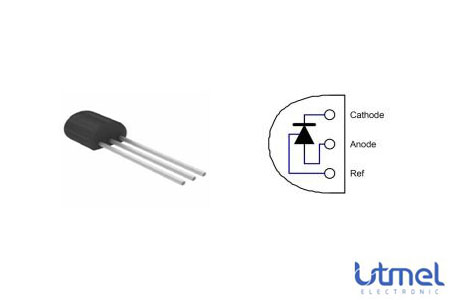
TL431 Pinout
Pin Number | Pin Name | Description |
1 | Reference | This pin sets the voltage rating of the Zener diode. |
2 | Anode | Anode of the equivalent Zener diode |
3 | Cathode | The cathode of the equivalent Zener diode |
TL431 CAD Model
Symbol

TL431 Symbol
Footprint
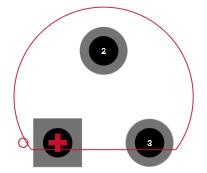
TL431 Footprint
CAD Model
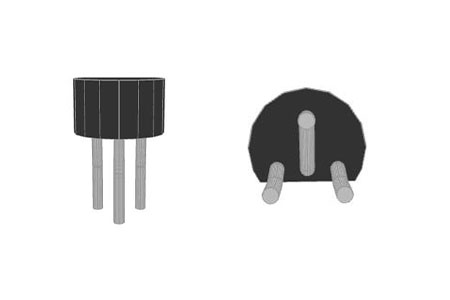
TL431 3D Model
What is TL431?
The TL431 is an adjustable shunt voltage reference with guaranteed temperature stability over the entire operating temperature range. The device temperature range is extended for the automotive version from -40 °C up to +125 °C. The output voltage can be set to any value between 2.5 and 36 V with two external resistors. The TL431 operates with a wide current range from 1 to 100 mA with a typical dynamic impedance of 0.22 Ω.
Where & How to use TL431?
The TL431 is a programmable shunt regulator with positive and negative reference voltages. It's a Zener diode with a variable voltage rating determined by the value of resistors attached to the reference pin. It's often utilized in isolated power supply circuits as a low-cost reference voltage supplier.
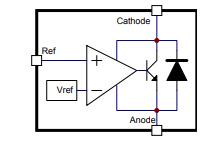
TL431 Circuit
We can see from the TL431's internal circuit layout that it comprises an NPN transistor with an op-amp with an exact voltage of 2.5V on the non-inverting terminal. The IC's cathode and anode terminals are formed by the transistor's collector and emitter pins, respectively. You may now think of the IC as a comparator, with one side having a precise 2.5V and the other side being set through the reference pin.
This feature is particularly useful in switching power supply, where the TL431 can compare the output voltage to the target voltage and offer feedback to manage the switching frequency. In most cases, an optocoupler is employed to isolate the high voltage side of this setup. Apart from that, the IC can be used in a variety of circuits where a Zener diode can be utilized, but only a handful of them.
TL431 Feature
AEC-Q100 qualified
Adjustable output voltage: 2.5 to 36 V
Sink current capability: 1 to 100 mA
Typical output impedance: 0.22 Ω
1% and 2% voltage precision
Automotive temp. range -40 °C to +125 °C
TL431 Application Notes
Switch mode Power supplies
Isolated Power supply circuits
Voltage comparators
Current Regulation circuits
TL431 Variants
The variants for TL431
TLV431
TS431LI
LM431
KA431
TL431 Package
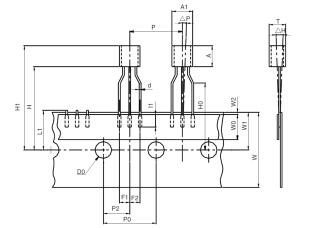
TO-92 ammo pack and tape and reel package outline
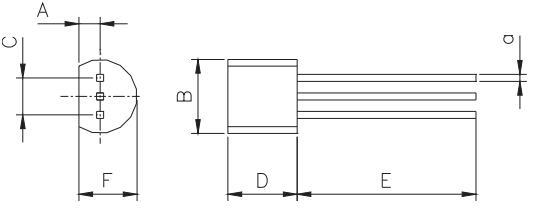
TO-92 bulk package outline
TL431 Manufacturer
STMicroelectronics is a globally recognized semiconductor company. They are dedicated to developing semiconductor solutions for various microelectronics applications. STMicroelectronics enjoys unrivalled silicon and system expertise, strong manufacturing strength, IP portfolio, and solid relationships with their strategic partners. Based on these advantages, STMicroelectronics has become a pioneer in System-on-Chip (SoC) technology and its products have a positive effect in realizing today's convergence trends.
Parts with Similar Specs
- ImagePart NumberManufacturerPackage / CaseNumber of PinsMax Output CurrentMax Input VoltageMin Output VoltageOutput VoltageMax Output VoltageToleranceTemperature CoefficientView Compare
![TL431ACZ]()
TL431ACZ
TO-226-2, TO-92-2 (TO-226AC)
3
100 mA
37 V
2.495 V
36 V
36 V
±1%
100 ppm/°C
![TL431ACZ-AP]()
TO-226-2, TO-92-2 (TO-226AC)
3
100 mA
37 V
2.495 V
36 V
36 V
±1%
100 ppm/°C
![TL431ACLPR]()
TO-226-3, TO-92-3 (TO-226AA) (Formed Leads)
3
100 mA
37 V
2.495 V
36 V
36 V
±1%
100 ppm/°C
![TL431ACZT]()
TO-226-3, TO-92-3 (TO-226AA) (Formed Leads)
3
100 mA
37 V
2.495 V
36 V
36 V
±1%
34 ppm/°C
![TL431AILPM]()
TO-226-3, TO-92-3 (TO-226AA) (Formed Leads)
3
100 mA
37 V
2.5 V
36 V
36 V
±1%
34 ppm/°C


Specifications
- TypeParameter
- Lifecycle Status
Lifecycle Status refers to the current stage of an electronic component in its product life cycle, indicating whether it is active, obsolete, or transitioning between these states. An active status means the component is in production and available for purchase. An obsolete status indicates that the component is no longer being manufactured or supported, and manufacturers typically provide a limited time frame for support. Understanding the lifecycle status is crucial for design engineers to ensure continuity and reliability in their projects.
ACTIVE (Last Updated: 7 months ago) - Factory Lead Time8 Weeks
- Mount
In electronic components, the term "Mount" typically refers to the method or process of physically attaching or fixing a component onto a circuit board or other electronic device. This can involve soldering, adhesive bonding, or other techniques to secure the component in place. The mounting process is crucial for ensuring proper electrical connections and mechanical stability within the electronic system. Different components may have specific mounting requirements based on their size, shape, and function, and manufacturers provide guidelines for proper mounting procedures to ensure optimal performance and reliability of the electronic device.
Through Hole - Mounting Type
The "Mounting Type" in electronic components refers to the method used to attach or connect a component to a circuit board or other substrate, such as through-hole, surface-mount, or panel mount.
Through Hole - Package / Case
refers to the protective housing that encases an electronic component, providing mechanical support, electrical connections, and thermal management.
TO-226-2, TO-92-2 (TO-226AC) - Number of Pins3
- Weight4.535924g
- Operating Temperature
The operating temperature is the range of ambient temperature within which a power supply, or any other electrical equipment, operate in. This ranges from a minimum operating temperature, to a peak or maximum operating temperature, outside which, the power supply may fail.
0°C~70°C TA - Packaging
Semiconductor package is a carrier / shell used to contain and cover one or more semiconductor components or integrated circuits. The material of the shell can be metal, plastic, glass or ceramic.
Tube - Tolerance
In electronic components, "tolerance" refers to the acceptable deviation or variation from the specified or ideal value of a particular parameter, such as resistance, capacitance, or voltage. It indicates the range within which the actual value of the component can fluctuate while still being considered acceptable for use in a circuit. Tolerance is typically expressed as a percentage or a specific value and is important for ensuring the accuracy and reliability of electronic devices. Components with tighter tolerances are more precise but may also be more expensive. It is crucial to consider tolerance when selecting components to ensure proper functionality and performance of the circuit.
±1% - JESD-609 Code
The "JESD-609 Code" in electronic components refers to a standardized marking code that indicates the lead-free solder composition and finish of electronic components for compliance with environmental regulations.
e3 - Part Status
Parts can have many statuses as they progress through the configuration, analysis, review, and approval stages.
Active - Moisture Sensitivity Level (MSL)
Moisture Sensitivity Level (MSL) is a standardized rating that indicates the susceptibility of electronic components, particularly semiconductors, to moisture-induced damage during storage and the soldering process, defining the allowable exposure time to ambient conditions before they require special handling or baking to prevent failures
1 (Unlimited) - Number of Terminations3
- ECCN Code
An ECCN (Export Control Classification Number) is an alphanumeric code used by the U.S. Bureau of Industry and Security to identify and categorize electronic components and other dual-use items that may require an export license based on their technical characteristics and potential for military use.
EAR99 - Temperature Coefficient
The resistance-change factor per degree Celsius of temperature change is called the temperature coefficient of resistance. This factor is represented by the Greek lower-case letter “alpha” (α). A positive coefficient for a material means that its resistance increases with an increase in temperature.
100 ppm/°C - Terminal Finish
Terminal Finish refers to the surface treatment applied to the terminals or leads of electronic components to enhance their performance and longevity. It can improve solderability, corrosion resistance, and overall reliability of the connection in electronic assemblies. Common finishes include nickel, gold, and tin, each possessing distinct properties suitable for various applications. The choice of terminal finish can significantly impact the durability and effectiveness of electronic devices.
Matte Tin (Sn) - annealed - Terminal Position
In electronic components, the term "Terminal Position" refers to the physical location of the connection points on the component where external electrical connections can be made. These connection points, known as terminals, are typically used to attach wires, leads, or other components to the main body of the electronic component. The terminal position is important for ensuring proper connectivity and functionality of the component within a circuit. It is often specified in technical datasheets or component specifications to help designers and engineers understand how to properly integrate the component into their circuit designs.
BOTTOM - Number of Functions1
- Base Part Number
The "Base Part Number" (BPN) in electronic components serves a similar purpose to the "Base Product Number." It refers to the primary identifier for a component that captures the essential characteristics shared by a group of similar components. The BPN provides a fundamental way to reference a family or series of components without specifying all the variations and specific details.
TL431 - Pin Count
a count of all of the component leads (or pins)
3 - Number of Outputs1
- Output Voltage
Output voltage is a crucial parameter in electronic components that refers to the voltage level produced by the component as a result of its operation. It represents the electrical potential difference between the output terminal of the component and a reference point, typically ground. The output voltage is a key factor in determining the performance and functionality of the component, as it dictates the level of voltage that will be delivered to the connected circuit or load. It is often specified in datasheets and technical specifications to ensure compatibility and proper functioning within a given system.
36V - Output Type
The "Output Type" parameter in electronic components refers to the type of signal or data that is produced by the component as an output. This parameter specifies the nature of the output signal, such as analog or digital, and can also include details about the voltage levels, current levels, frequency, and other characteristics of the output signal. Understanding the output type of a component is crucial for ensuring compatibility with other components in a circuit or system, as well as for determining how the output signal can be utilized or processed further. In summary, the output type parameter provides essential information about the nature of the signal that is generated by the electronic component as its output.
Adjustable - Max Output Current
The maximum current that can be supplied to the load.
100mA - Number of Channels1
- Trim/Adjustable Output
Trim or adjustable output refers to the ability of an electronic component, such as a voltage regulator or power supply, to produce an output voltage that can be finely tuned or adjusted to meet specific requirements. This feature allows for precise control over the output voltage level, accommodating variations in load conditions or desired operational parameters. Users can typically achieve this adjustment through external resistors, potentiometers, or internal calibration mechanisms, ensuring optimal performance in diverse applications.
YES - Analog IC - Other Type
Analog IC - Other Type is a parameter used to categorize electronic components that are integrated circuits (ICs) designed for analog signal processing but do not fall into more specific subcategories such as amplifiers, comparators, or voltage regulators. These ICs may include specialized analog functions such as analog-to-digital converters (ADCs), digital-to-analog converters (DACs), voltage references, or signal conditioning circuits. They are typically used in various applications where precise analog signal processing is required, such as in audio equipment, instrumentation, communication systems, and industrial control systems. Manufacturers provide detailed specifications for these components to help engineers select the most suitable IC for their specific design requirements.
THREE TERMINAL VOLTAGE REFERENCE - Nominal Supply Current
Nominal current is the same as the rated current. It is the current drawn by the motor while delivering rated mechanical output at its shaft.
1mA - Accuracy
Accuracy in electronic components refers to the degree to which a measured value agrees with the true or accepted value. It evaluates the precision of a component in providing correct output or measurement under specified conditions. High accuracy indicates minimal deviation from the actual value, while low accuracy shows significant error in measurement. This parameter is crucial in applications where precise data is essential for reliable performance and decision-making.
1 % - Max Output Voltage
The maximum output voltage refers to the dynamic area beyond which the output is saturated in the positive or negative direction, and is limited according to the load resistance value.
36V - Max Input Voltage
Max Input Voltage refers to the maximum voltage level that an electronic component can safely handle without getting damaged. This parameter is crucial for ensuring the proper functioning and longevity of the component. Exceeding the specified maximum input voltage can lead to overheating, electrical breakdown, or permanent damage to the component. It is important to carefully adhere to the manufacturer's guidelines regarding the maximum input voltage to prevent any potential issues and maintain the reliability of the electronic device.
37V - Reference Voltage
A voltage reference is an electronic device that ideally produces a fixed (constant) voltage irrespective of the loading on the device, power supply variations, temperature changes, and the passage of time. Voltage references are used in power supplies, analog-to-digital converters, digital-to-analog converters, and other measurement and control systems. Voltage references vary widely in performance; a regulator for a computer power supply may only hold its value to within a few percent of the nominal value, whereas laboratory voltage standards have precisions and stability measured in parts per million.
36V - Reference Type
a code object that is not stored directly where it is created, but that acts as a kind of pointer to a value stored elsewhere.
Shunt - Min Output Voltage
Min Output Voltage refers to the lowest voltage level that an electronic component, such as a voltage regulator or power supply, can provide reliably under specified conditions. It indicates the minimum threshold required for proper operation of connected devices. Operating below this voltage may lead to device malfunction or failure to operate as intended.
2.495V - Temp Coef of Voltage-Max
The parameter "Temp Coef of Voltage-Max" refers to the temperature coefficient of the maximum voltage rating of an electronic component. It indicates how the maximum voltage that the component can handle varies with temperature changes. A positive temperature coefficient means that the maximum voltage increases with temperature, while a negative coefficient indicates a decrease. This parameter is crucial for ensuring reliable performance and preventing breakdowns under different operating temperatures.
85.886 ppm/°C - Current - Cathode
Current - Cathode refers to the flow of electric current through the cathode terminal of an electronic component, such as a diode or a vacuum tube. It represents the amount of charge carriers, typically electrons, moving towards the cathode during operation. This parameter is crucial for determining the component's functionality and performance characteristics, as it influences the efficiency and stability of the circuit. High cathode current can indicate increased power consumption or potential overheating issues if not managed properly.
600μA - Height4.4mm
- Length4.7mm
- Width3.7mm
- REACH SVHC
The parameter "REACH SVHC" in electronic components refers to the compliance with the Registration, Evaluation, Authorization, and Restriction of Chemicals (REACH) regulation regarding Substances of Very High Concern (SVHC). SVHCs are substances that may have serious effects on human health or the environment, and their use is regulated under REACH to ensure their safe handling and minimize their impact.Manufacturers of electronic components need to declare if their products contain any SVHCs above a certain threshold concentration and provide information on the safe use of these substances. This information allows customers to make informed decisions about the potential risks associated with using the components and take appropriate measures to mitigate any hazards.Ensuring compliance with REACH SVHC requirements is essential for electronics manufacturers to meet regulatory standards, protect human health and the environment, and maintain transparency in their supply chain. It also demonstrates a commitment to sustainability and responsible manufacturing practices in the electronics industry.
No SVHC - Radiation Hardening
Radiation hardening is the process of making electronic components and circuits resistant to damage or malfunction caused by high levels of ionizing radiation, especially for environments in outer space (especially beyond the low Earth orbit), around nuclear reactors and particle accelerators, or during nuclear accidents or nuclear warfare.
No - RoHS Status
RoHS means “Restriction of Certain Hazardous Substances” in the “Hazardous Substances Directive” in electrical and electronic equipment.
ROHS3 Compliant - Lead Free
Lead Free is a term used to describe electronic components that do not contain lead as part of their composition. Lead is a toxic material that can have harmful effects on human health and the environment, so the electronics industry has been moving towards lead-free components to reduce these risks. Lead-free components are typically made using alternative materials such as silver, copper, and tin. Manufacturers must comply with regulations such as the Restriction of Hazardous Substances (RoHS) directive to ensure that their products are lead-free and environmentally friendly.
Lead Free
Datasheet PDF
- Datasheets :
Trend Analysis
What is TL431 used for?
The TL431 in open-loop configuration is often used as a voltage comparator, Undervoltage monitor, overvoltage monitor, window voltage detector and many other types of uses. The TL431 is a shunt voltage reference commonly used for these applications.
Why call TL431 transistor?
The TL431 is a three-terminal adjustable precision shunt voltage regulator integrated circuit. The circuit can control power transistors directly; combinations of the TL431 with power MOS transistors are used in high efficiency, very low dropout linear regulators.
What is a shunt regulator?
A shunt regulator detects output voltage variation via external resistors by using an error amplifier and controls a transistor connected in parallel to the load to keep the output voltage constant.
How does a shunt regulator work?
The shunt regulator or shunt voltage regulator is a form of voltage regulator where the regulating element shunts the current to the ground. The shunt regulator operates by maintaining a constant voltage across its terminals and it takes up the surplus current to maintain the voltage across the load.
How can I calculate the values for TL431 shunt regulator?
TL431 Calculator.
Where can I find a TL431 voltage regulator circuit?
Where can I find a TL431 voltage regulator circuit?
Where can I download a TL431 Spice model?
TL431 is commonly used to create a voltage reference or small linear shunt regulator. It is often considered to be a “programmable Zener”. Though, there is a big difference betweenTL431 and a Zener diode. Like many other feedback systems, TL431 can oscillate if inappropriately decoupled.
 RH850/F1L Microcontroller for Automotive Body Applications: Datasheet Overview
29 February 2024315
 How STM32G070KBT6 Enhances Embedded Applications
24 July 2025231
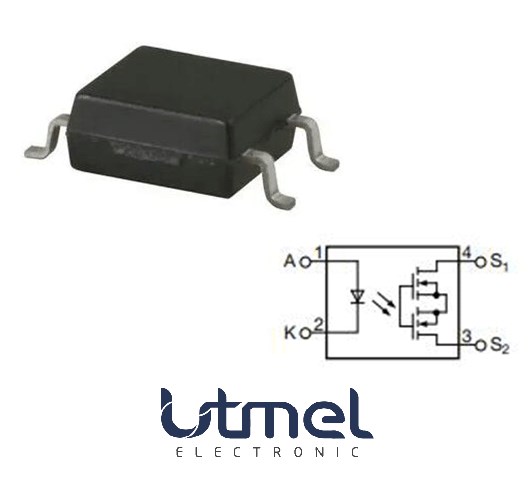 VO1400AEFTR:60v,pinout, datasheet and circuit
16 March 2022552
 ATTINY85 8-bit Microcontroller: Architecture, Pinout, and Design Guide
15 January 20261632
 TCA6424ARGJR Expander: Features, Applications and Datasheet
06 November 20231080
 ADG1408 Multiplexer: Datasheet, Circuit and Price
12 November 20214301
 2N5109 NPN Transistor: Datasheet, 2N5109 RF Amplifier, Replacement
10 December 20216808
 How to use BME280 with Arduino?
07 June 20224048
 Dynamic On-Resistance and its Impact on Power Converters
28 August 20232881
 Temperature Sensor Types Comparison: Thermocouple, RTD, and Semiconductor IC Selection Guide
17 August 2026180
 Intel Launches Industry's First Stackable, Shareable and Transferable One-Year Semiconductor Technician Certificate Program
26 September 20233141
 The Introduction of Oscilloscope Probes
11 January 20228133
 Emerging Trends in Complex Programmable Logic Devices Market 2025
16 June 2025977
 Introduction to MD8002A Audio Amplifier
27 March 20259528
 Function and Application of Laser Sensors
28 October 20258493
 What is 3D Printing Technology (3DP)?
18 January 20224336
STMicroelectronics
In Stock: 30000
United States
China
Canada
Japan
Russia
Germany
United Kingdom
Singapore
Italy
Hong Kong(China)
Taiwan(China)
France
Korea
Mexico
Netherlands
Malaysia
Austria
Spain
Switzerland
Poland
Thailand
Vietnam
India
United Arab Emirates
Afghanistan
Åland Islands
Albania
Algeria
American Samoa
Andorra
Angola
Anguilla
Antigua & Barbuda
Argentina
Armenia
Aruba
Australia
Azerbaijan
Bahamas
Bahrain
Bangladesh
Barbados
Belarus
Belgium
Belize
Benin
Bermuda
Bhutan
Bolivia
Bonaire, Sint Eustatius and Saba
Bosnia & Herzegovina
Botswana
Brazil
British Indian Ocean Territory
British Virgin Islands
Brunei
Bulgaria
Burkina Faso
Burundi
Cabo Verde
Cambodia
Cameroon
Cayman Islands
Central African Republic
Chad
Chile
Christmas Island
Cocos (Keeling) Islands
Colombia
Comoros
Congo
Congo (DRC)
Cook Islands
Costa Rica
Côte d’Ivoire
Croatia
Cuba
Curaçao
Cyprus
Czechia
Denmark
Djibouti
Dominica
Dominican Republic
Ecuador
Egypt
El Salvador
Equatorial Guinea
Eritrea
Estonia
Eswatini
Ethiopia
Falkland Islands
Faroe Islands
Fiji
Finland
French Guiana
French Polynesia
Gabon
Gambia
Georgia
Ghana
Gibraltar
Greece
Greenland
Grenada
Guadeloupe
Guam
Guatemala
Guernsey
Guinea
Guinea-Bissau
Guyana
Haiti
Honduras
Hungary
Iceland
Indonesia
Iran
Iraq
Ireland
Isle of Man
Israel
Jamaica
Jersey
Jordan
Kazakhstan
Kenya
Kiribati
Kosovo
Kuwait
Kyrgyzstan
Laos
Latvia
Lebanon
Lesotho
Liberia
Libya
Liechtenstein
Lithuania
Luxembourg
Macao(China)
Madagascar
Malawi
Maldives
Mali
Malta
Marshall Islands
Martinique
Mauritania
Mauritius
Mayotte
Micronesia
Moldova
Monaco
Mongolia
Montenegro
Montserrat
Morocco
Mozambique
Myanmar
Namibia
Nauru
Nepal
New Caledonia
New Zealand
Nicaragua
Niger
Nigeria
Niue
Norfolk Island
North Korea
North Macedonia
Northern Mariana Islands
Norway
Oman
Pakistan
Palau
Palestinian Authority
Panama
Papua New Guinea
Paraguay
Peru
Philippines
Pitcairn Islands
Portugal
Puerto Rico
Qatar
Réunion
Romania
Rwanda
Samoa
San Marino
São Tomé & Príncipe
Saudi Arabia
Senegal
Serbia
Seychelles
Sierra Leone
Sint Maarten
Slovakia
Slovenia
Solomon Islands
Somalia
South Africa
South Sudan
Sri Lanka
St Helena, Ascension, Tristan da Cunha
St. Barthélemy
St. Kitts & Nevis
St. Lucia
St. Martin
St. Pierre & Miquelon
St. Vincent & Grenadines
Sudan
Suriname
Svalbard & Jan Mayen
Sweden
Syria
Tajikistan
Tanzania
Timor-Leste
Togo
Tokelau
Tonga
Trinidad & Tobago
Tunisia
Turkey
Turkmenistan
Turks & Caicos Islands
Tuvalu
U.S. Outlying Islands
U.S. Virgin Islands
Uganda
Ukraine
Uruguay
Uzbekistan
Vanuatu
Vatican City
Venezuela
Wallis & Futuna
Yemen
Zambia
Zimbabwe
![TS2431AILT]() TS2431AILT
TS2431AILTSTMicroelectronics
![TL431AIL3T]() TL431AIL3T
TL431AIL3TSTMicroelectronics
![TL431CDT]() TL431CDT
TL431CDTSTMicroelectronics
![TS3431BILT]() TS3431BILT
TS3431BILTSTMicroelectronics
![TL431ACDT]() TL431ACDT
TL431ACDTSTMicroelectronics
![TL431AIDT]() TL431AIDT
TL431AIDTSTMicroelectronics
![TS3431ILT]() TS3431ILT
TS3431ILTSTMicroelectronics
![TS4041DILT-1.2]() TS4041DILT-1.2
TS4041DILT-1.2STMicroelectronics
![TS2431BILT]() TS2431BILT
TS2431BILTSTMicroelectronics
![TS4061AILT-1.25]() TS4061AILT-1.25
TS4061AILT-1.25STMicroelectronics


