

 Product
 Brand
Brand Articles
 Tools
Tools
TS5V330D Video Switch: Pinout, Features and Specification

16 Termination 1.27mm 5V Analog Switch TS5V330 16 Pin 300MHz 5V 16-SOIC (0.154, 3.90mm Width)
Unit Price: $0.610862
Ext Price: $0.61


16 Termination 1.27mm 5V Analog Switch TS5V330 16 Pin 300MHz 5V 16-SOIC (0.154, 3.90mm Width)
The TS5V330D is a Texas Instruments’ video switch IC. It is a 4-bit 1-of-2 multiplexer/demultiplexer. This blog mainly introduces pinout, equivalents, features, and other detailed information about TS5V330D.
Pinout
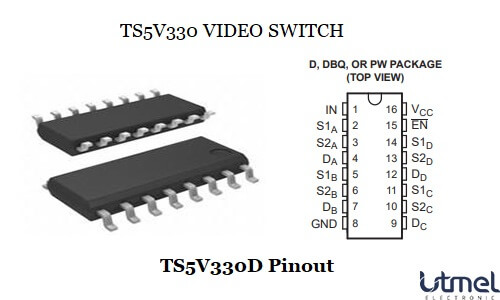
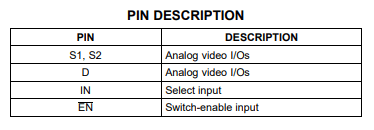
CAD Model
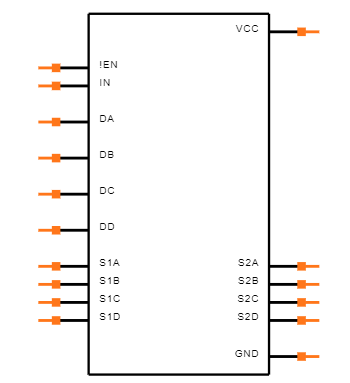
TS5V330D Symbol
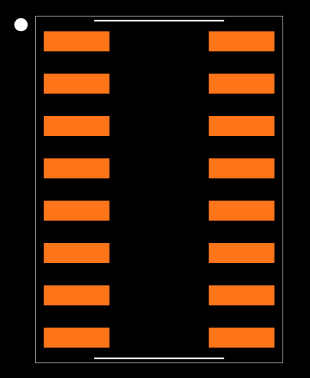
TS5V330D Footprint
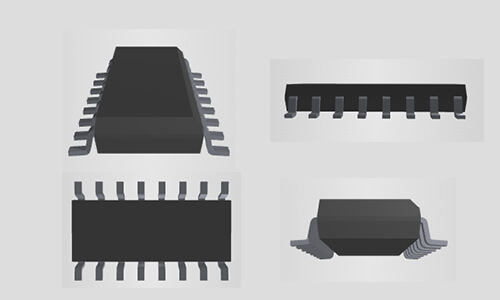
TS5V330D 3D model
Features
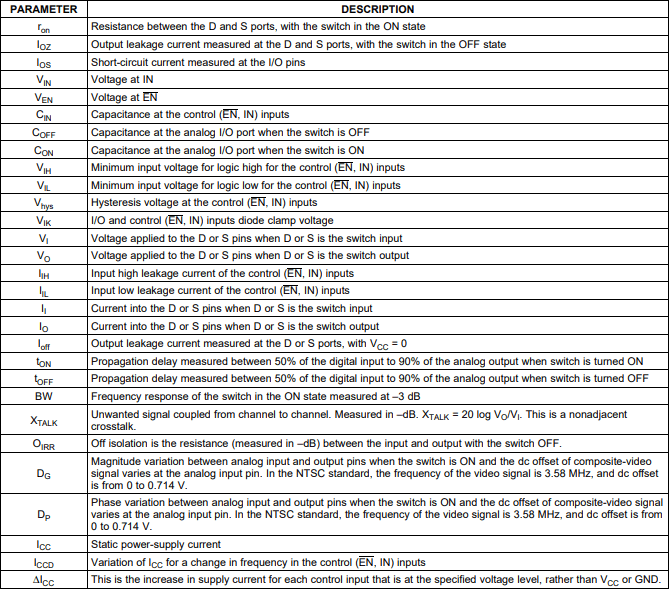
• Low Differential Gain and Phase (DG = 0.64%, DP = 0.1 Degrees Typ)
• Wide Bandwidth (BW = 300 MHz Min)
• Low Crosstalk (XTALK = –63 dB Typ)
• Low Power Consumption (ICC = 3 µA Max)
• Bidirectional Data Flow With Near-Zero Propagation Delay
• Low ON-State Resistance (ron = 3 Ω Typ)
• VCC Operating Range From 4.5 V to 5.5 V
• Ioff Supports Partial-Power-Down ModeOperation
• Data and Control Inputs Provide Undershoot Clamp Diode
• Control Inputs Can Be Driven by TTL or 5-V/3.3-V CMOS Outputs
• Latch-Up Performance Exceeds 100 mA Per JESD 78, Class II
• ESD Performance Tested Per JESD 22– 1000-V Charged-Device Model (C101)
• Suitable for Both RGB and Composite-Video Switching
Advantage
The TS5V330 is an ideal solution for video graphics cards.
Low RON, CON (3 Ω, 14 pF typ.): Maintains good signal quality at frequencies up to 300 MHz;
High off-isolation (–60 dB typ.): Excellent isolation at high frequencies when video switch is open;
Low crosstalk (–63 dB typ.): Excellent isolation between channels to prevent unwanted interference;
Low differential gain, phase (0.64%, 0.1º typ.): Very low signal distortion;
Space-saving, QFN package: Smallest PCB footprint.
Specifications
- TypeParameter
- Lifecycle Status
Lifecycle Status refers to the current stage of an electronic component in its product life cycle, indicating whether it is active, obsolete, or transitioning between these states. An active status means the component is in production and available for purchase. An obsolete status indicates that the component is no longer being manufactured or supported, and manufacturers typically provide a limited time frame for support. Understanding the lifecycle status is crucial for design engineers to ensure continuity and reliability in their projects.
ACTIVE (Last Updated: 6 days ago) - Factory Lead Time6 Weeks
- Mount
In electronic components, the term "Mount" typically refers to the method or process of physically attaching or fixing a component onto a circuit board or other electronic device. This can involve soldering, adhesive bonding, or other techniques to secure the component in place. The mounting process is crucial for ensuring proper electrical connections and mechanical stability within the electronic system. Different components may have specific mounting requirements based on their size, shape, and function, and manufacturers provide guidelines for proper mounting procedures to ensure optimal performance and reliability of the electronic device.
Surface Mount - Mounting Type
The "Mounting Type" in electronic components refers to the method used to attach or connect a component to a circuit board or other substrate, such as through-hole, surface-mount, or panel mount.
Surface Mount - Package / Case
refers to the protective housing that encases an electronic component, providing mechanical support, electrical connections, and thermal management.
16-SOIC (0.154, 3.90mm Width) - Number of Pins16
- Weight141.690917mg
- Turn Off Delay Time
It is the time from when Vgs drops below 90% of the gate drive voltage to when the drain current drops below 90% of the load current. It is the delay before current starts to transition in the load, and depends on Rg. Ciss.
6 ns - Operating Temperature
The operating temperature is the range of ambient temperature within which a power supply, or any other electrical equipment, operate in. This ranges from a minimum operating temperature, to a peak or maximum operating temperature, outside which, the power supply may fail.
-40°C~85°C TA - Packaging
Semiconductor package is a carrier / shell used to contain and cover one or more semiconductor components or integrated circuits. The material of the shell can be metal, plastic, glass or ceramic.
Tube - JESD-609 Code
The "JESD-609 Code" in electronic components refers to a standardized marking code that indicates the lead-free solder composition and finish of electronic components for compliance with environmental regulations.
e4 - Pbfree Code
The "Pbfree Code" parameter in electronic components refers to the code or marking used to indicate that the component is lead-free. Lead (Pb) is a toxic substance that has been widely used in electronic components for many years, but due to environmental concerns, there has been a shift towards lead-free alternatives. The Pbfree Code helps manufacturers and users easily identify components that do not contain lead, ensuring compliance with regulations and promoting environmentally friendly practices. It is important to pay attention to the Pbfree Code when selecting electronic components to ensure they meet the necessary requirements for lead-free applications.
yes - Part Status
Parts can have many statuses as they progress through the configuration, analysis, review, and approval stages.
Active - Moisture Sensitivity Level (MSL)
Moisture Sensitivity Level (MSL) is a standardized rating that indicates the susceptibility of electronic components, particularly semiconductors, to moisture-induced damage during storage and the soldering process, defining the allowable exposure time to ambient conditions before they require special handling or baking to prevent failures
1 (Unlimited) - Number of Terminations16
- Resistance
Resistance is a fundamental property of electronic components that measures their opposition to the flow of electric current. It is denoted by the symbol "R" and is measured in ohms (Ω). Resistance is caused by the collisions of electrons with atoms in a material, which generates heat and reduces the flow of current. Components with higher resistance will impede the flow of current more than those with lower resistance. Resistance plays a crucial role in determining the behavior and functionality of electronic circuits, such as limiting current flow, voltage division, and controlling power dissipation.
10Ohm - Terminal Finish
Terminal Finish refers to the surface treatment applied to the terminals or leads of electronic components to enhance their performance and longevity. It can improve solderability, corrosion resistance, and overall reliability of the connection in electronic assemblies. Common finishes include nickel, gold, and tin, each possessing distinct properties suitable for various applications. The choice of terminal finish can significantly impact the durability and effectiveness of electronic devices.
Nickel/Palladium/Gold (Ni/Pd/Au) - Applications
The parameter "Applications" in electronic components refers to the specific uses or functions for which a component is designed. It encompasses various fields such as consumer electronics, industrial automation, telecommunications, automotive, and medical devices. Understanding the applications helps in selecting the right components for a particular design based on performance, reliability, and compatibility requirements. This parameter also guides manufacturers in targeting their products to relevant markets and customer needs.
Video - Terminal Position
In electronic components, the term "Terminal Position" refers to the physical location of the connection points on the component where external electrical connections can be made. These connection points, known as terminals, are typically used to attach wires, leads, or other components to the main body of the electronic component. The terminal position is important for ensuring proper connectivity and functionality of the component within a circuit. It is often specified in technical datasheets or component specifications to help designers and engineers understand how to properly integrate the component into their circuit designs.
DUAL - Terminal Form
Occurring at or forming the end of a series, succession, or the like; closing; concluding.
GULL WING - Peak Reflow Temperature (Cel)
Peak Reflow Temperature (Cel) is a parameter that specifies the maximum temperature at which an electronic component can be exposed during the reflow soldering process. Reflow soldering is a common method used to attach electronic components to a circuit board. The Peak Reflow Temperature is crucial because it ensures that the component is not damaged or degraded during the soldering process. Exceeding the specified Peak Reflow Temperature can lead to issues such as component failure, reduced performance, or even permanent damage to the component. It is important for manufacturers and assemblers to adhere to the recommended Peak Reflow Temperature to ensure the reliability and functionality of the electronic components.
260 - Number of Functions4
- Supply Voltage
Supply voltage refers to the electrical potential difference provided to an electronic component or circuit. It is crucial for the proper operation of devices, as it powers their functions and determines performance characteristics. The supply voltage must be within specified limits to ensure reliability and prevent damage to components. Different electronic devices have specific supply voltage requirements, which can vary widely depending on their design and intended application.
5V - Terminal Pitch
The center distance from one pole to the next.
1.27mm - Frequency
In electronic components, the parameter "Frequency" refers to the rate at which a signal oscillates or cycles within a given period of time. It is typically measured in Hertz (Hz) and represents how many times a signal completes a full cycle in one second. Frequency is a crucial aspect in electronic components as it determines the behavior and performance of various devices such as oscillators, filters, and communication systems. Understanding the frequency characteristics of components is essential for designing and analyzing electronic circuits to ensure proper functionality and compatibility with other components in a system.
300MHz - Base Part Number
The "Base Part Number" (BPN) in electronic components serves a similar purpose to the "Base Product Number." It refers to the primary identifier for a component that captures the essential characteristics shared by a group of similar components. The BPN provides a fundamental way to reference a family or series of components without specifying all the variations and specific details.
TS5V330 - Pin Count
a count of all of the component leads (or pins)
16 - Number of Outputs8
- Operating Supply Voltage
The voltage level by which an electrical system is designated and to which certain operating characteristics of the system are related.
5V - Power Supplies
an electronic circuit that converts the voltage of an alternating current (AC) into a direct current (DC) voltage.?
5V - Number of Channels4
- Max Supply Voltage
In general, the absolute maximum common-mode voltage is VEE-0.3V and VCC+0.3V, but for products without a protection element at the VCC side, voltages up to the absolute maximum rated supply voltage (i.e. VEE+36V) can be supplied, regardless of supply voltage.
5.5V - Min Supply Voltage
The minimum supply voltage (V min ) is explored for sequential logic circuits by statistically simulating the impact of within-die process variations and gate-dielectric soft breakdown on data retention and hold time.
4V - Nominal Supply Current
Nominal current is the same as the rated current. It is the current drawn by the motor while delivering rated mechanical output at its shaft.
3μA - Propagation Delay
the flight time of packets over the transmission link and is limited by the speed of light.
5 ns - Turn On Delay Time
Turn-on delay, td(on), is the time taken to charge the input capacitance of the device before drain current conduction can start.
6 ns - Current - Supply
Current - Supply is a parameter in electronic components that refers to the maximum amount of electrical current that the component can provide to the circuit it is connected to. It is typically measured in units of amperes (A) and is crucial for determining the power handling capability of the component. Understanding the current supply rating is important for ensuring that the component can safely deliver the required current without overheating or failing. It is essential to consider this parameter when designing circuits to prevent damage to the component and ensure proper functionality of the overall system.
3μA - Number of Inputs4
- Supply Type
Supply Type in electronic components refers to the classification of power sources used to operate the component. It indicates whether the component requires DC or AC power, and if DC, specifies the voltage levels such as low, medium, or high. Different supply types can affect the performance, compatibility, and application of the component in electronic circuits. Understanding the supply type is crucial for proper component selection and integration into electronic designs.
Single - Supply Current-Max (Isup)
Supply Current-Max (Isup) refers to the maximum amount of current that an electronic component can draw from its power supply during operation. It represents the peak current demand of the device under normal operating conditions and is critical for ensuring that the power supply can adequately support the component's needs without risking damage or malfunction. This parameter is essential for designing circuits and selecting appropriate power supply units to prevent overloading and ensure reliable performance.
0.003mA - -3db Bandwidth
The "-3dB bandwidth" of an electronic component refers to the frequency range over which the component's output signal power is reduced by 3 decibels (dB) compared to its maximum output power. This parameter is commonly used to describe the frequency response of components such as amplifiers, filters, and other signal processing devices. The -3dB point is significant because it represents the half-power point, where the output signal power is reduced to half of its maximum value. Understanding the -3dB bandwidth is important for designing and analyzing electronic circuits to ensure that signals are accurately processed within the desired frequency range.
300MHz Min - On-State Resistance (Max)
The "On-State Resistance (Max)" parameter in electronic components refers to the maximum resistance exhibited by the component when it is in the fully conducting state. This resistance is typically measured when the component is carrying the maximum specified current. A lower on-state resistance indicates better conductivity and efficiency of the component when it is in the on-state. It is an important parameter to consider when selecting components for applications where low power dissipation and high efficiency are critical factors.
10Ohm - Multiplexer/Demultiplexer Circuit
A Multiplexer/Demultiplexer Circuit is an electronic component used in digital circuits to select one of several input signals and route it to a single output. A multiplexer, also known as a "mux," is used to combine multiple input signals into a single output, while a demultiplexer, also known as a "demux," is used to take a single input and route it to one of several possible outputs. These circuits are commonly used in data transmission, communication systems, and digital signal processing applications to efficiently manage and control the flow of data. Multiplexers and demultiplexers play a crucial role in optimizing the use of resources and improving the overall performance of electronic systems.
2:1 - Off-state Isolation-Nom
Off-state Isolation-Nom is a parameter used to measure the level of isolation between two electronic components or circuits when one of them is in the off state. It indicates the ability of the component to prevent unwanted signals or interference from passing through when it is not actively conducting. The parameter is typically expressed in decibels (dB) and is an important consideration in designing and selecting components for applications where isolation between different parts of a circuit is critical to prevent crosstalk or interference. Higher values of Off-state Isolation-Nom indicate better isolation performance, leading to improved overall system reliability and performance.
60 dB - Switch Circuit
establishes connections between links, on demand and as available, in order to establish an end-to-end circuit between devices.
SPDT - Switching
In electronic components, "Switching" refers to the process of turning a device on or off, or changing its state from one condition to another. This parameter is crucial in determining the speed and efficiency of a component's operation. It is often measured in terms of switching time, which is the time taken for a device to transition from one state to another. The switching characteristics of a component play a significant role in its overall performance and reliability in electronic circuits.
BREAK-BEFORE-MAKE - Voltage - Supply, Single (V+)
Voltage - Supply, Single (V+) refers to the positive voltage supply needed for an electronic component to operate. It indicates the range of voltage levels that can be applied to the component from a single power source. This parameter is crucial for determining compatibility with other components in a circuit and ensuring proper functionality. It typically defines the minimum and maximum voltage limits within which the device can safely and effectively operate.
4V~5.5V - Normal Position
Normal Position in electronic components refers to the standard or default state of a component when no external forces or inputs are acting upon it. It indicates the condition in which the component operates without any applied voltage or current, often defining its baseline behavior. In mechanical terms, it may relate to the default positioning of switches, relays, or other devices when they are not energized. This concept is crucial for understanding the operational characteristics and behavior of electronic systems.
NO - Features
In the context of electronic components, the term "Features" typically refers to the specific characteristics or functionalities that a particular component offers. These features can vary depending on the type of component and its intended use. For example, a microcontroller may have features such as built-in memory, analog-to-digital converters, and communication interfaces like UART or SPI.When evaluating electronic components, understanding their features is crucial in determining whether they meet the requirements of a particular project or application. Engineers and designers often look at features such as operating voltage, speed, power consumption, and communication protocols to ensure compatibility and optimal performance.In summary, the "Features" parameter in electronic components describes the unique attributes and capabilities that differentiate one component from another, helping users make informed decisions when selecting components for their electronic designs.
Bi-Directional, RGB - Height1.75mm
- Length9.9mm
- Width3.91mm
- Thickness
Thickness in electronic components refers to the measurement of how thick a particular material or layer is within the component structure. It can pertain to various aspects, such as the thickness of a substrate, a dielectric layer, or conductive traces. This parameter is crucial as it impacts the electrical, mechanical, and thermal properties of the component, influencing its performance and reliability in electronic circuits.
1.58mm - REACH SVHC
The parameter "REACH SVHC" in electronic components refers to the compliance with the Registration, Evaluation, Authorization, and Restriction of Chemicals (REACH) regulation regarding Substances of Very High Concern (SVHC). SVHCs are substances that may have serious effects on human health or the environment, and their use is regulated under REACH to ensure their safe handling and minimize their impact.Manufacturers of electronic components need to declare if their products contain any SVHCs above a certain threshold concentration and provide information on the safe use of these substances. This information allows customers to make informed decisions about the potential risks associated with using the components and take appropriate measures to mitigate any hazards.Ensuring compliance with REACH SVHC requirements is essential for electronics manufacturers to meet regulatory standards, protect human health and the environment, and maintain transparency in their supply chain. It also demonstrates a commitment to sustainability and responsible manufacturing practices in the electronics industry.
No SVHC - Radiation Hardening
Radiation hardening is the process of making electronic components and circuits resistant to damage or malfunction caused by high levels of ionizing radiation, especially for environments in outer space (especially beyond the low Earth orbit), around nuclear reactors and particle accelerators, or during nuclear accidents or nuclear warfare.
No - RoHS Status
RoHS means “Restriction of Certain Hazardous Substances” in the “Hazardous Substances Directive” in electrical and electronic equipment.
ROHS3 Compliant - Lead Free
Lead Free is a term used to describe electronic components that do not contain lead as part of their composition. Lead is a toxic material that can have harmful effects on human health and the environment, so the electronics industry has been moving towards lead-free components to reduce these risks. Lead-free components are typically made using alternative materials such as silver, copper, and tin. Manufacturers must comply with regulations such as the Restriction of Hazardous Substances (RoHS) directive to ensure that their products are lead-free and environmentally friendly.
Lead Free
Parameter
Functional Block Diagram

Alternative/Equivalent
TS5V330DBQR
TS5V330DR
TS5V330PW
TS5V330PWR
TS5V330RGYR
TS5V330DBQRE4
TS5V330DBQRG4
TS5V330RGYRG4
Parts with Similar Specs
- ImagePart NumberManufacturerPackage / CaseNumber of InputsNumber of PinsMin Supply VoltageSupply VoltageMax Supply VoltageMountPin CountView Compare
![TS5V330D]()
TS5V330D
16-SOIC (0.154, 3.90mm Width)
4
16
4 V
5 V
5.5 V
Surface Mount
16
![TS5V330DG4]()
SOIC
4
16
4 V
5 V
5.5 V
Surface Mount
16
![TS5V330DR]()
16-SOIC (0.154, 3.90mm Width)
4
16
4 V
5 V
5.5 V
Surface Mount
16
![TS5V330DE4]()
SOIC
4
16
4 V
5 V
5.5 V
Surface Mount
16


Application
Video Projectors
HDTV Monitors/Receivers
Notebook Computers
Digital HDTV Switch Boxes/Tuners
Multimedia Audio/Video Switchers
Servers/Routers with DVI Interfaces
The TS5V330 video switch is a 4-bit 1-of-2 multiplexer/demultiplexer with a single switch-enable (EN) input.
When EN is low, the switch is enabled and the D port is connected to the S port. When EN is high, the switch is disabled and the high-impedance state exists between the D and S ports. The select (IN) input controls the data path of the multiplexer/demultiplexer.
Low differential gain and phase make this switch ideal for composite and RGB video applications. This device has wide bandwidth and low crosstalk, making it suitable for high-frequency applications as well.
This device is fully specified for partial-power-down applications using Ioff. The Ioff feature ensures that damaging current will not backflow through the device when it is powered down. This switch maintains isolation during power off.
Package
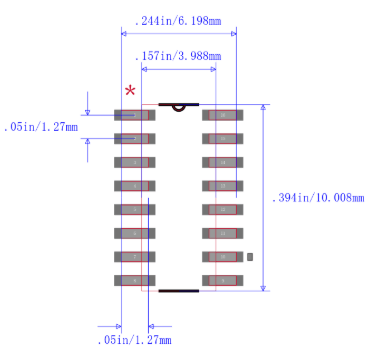
TS5V330 package drawing

TS5V330 package information
Manufacturer
As a global semiconductor company operating in 35 countries, Texas Instruments (TI) is first and foremost a reflection of its people. From the TIer who unveiled the first working integrated circuit in 1958 to the more than 30,000 TIers around the world today who design, manufacture, and sell analog and embedded processing chips, we are problem-solvers collaborating to change the world through technology.
Trend Analysis
Datasheet PDF
- PCN Design/Specification :
- Datasheets :
1.Why is a Video Switch Needed?
With today’s growing demand for feature-rich applications, an original equipment manufacturer (OEM) can gain an edge on its competition by providing a high-performance, cost-effective solution to a recurring trend in video applications—multiplexing video signals. Texas Instruments (TI) now offers the quad SPDT (1:2 MUX/DEMUX) TS5V330 video switch in its specialty switches portfolio to address these applications.
2.How do video switches work?
Video switches work by taking analogue signals and switching them to different types of outputs such as HDMI. An example of this would be being able to output your laptop device via HDMI to an external monitor.
3.What is a analogue switch?
The analogue (or PETR) switch, also called the bilateral switch, is an electronic component that behaves in a similar way to a relay, but has no moving parts.
4.How does an analog switch work?
An analog switch acts like a solid-state relay (i.e., with no moving parts). Analog switches can also isolate devices at their terminals when the analog switch is OFF. When ON, they conduct both analog and digital signals, regardless of the direction in which the signal is traveling.
 74HCT00 Quad 2-input NAND Gate: Pinout, Features and Datasheet
10 November 20213395
 XC7S25-1FTGB196I FPGA Review: Performance vs Modern Alternatives
06 June 2025958
 LM2901 Quad Comparator: Pinout, Equivalent and Datasheet
28 December 20214765
 MCP4822 Digital-to-Analog Converter: Datasheet, Pinout and MCP4822 Arduino
25 November 20216006
![SR621SW VS SR626SW[Video]: Are they interchangeable?](https://res.utmel.com/Images/Article/8315377c-9405-40cb-9b4b-217b4614994e.png) SR621SW VS SR626SW[Video]: Are they interchangeable?
SR621SW VS SR626SW[Video]: Are they interchangeable?21 April 20253661
 BT136-600E 4Q TRIAC: Datasheet, Circuit and Equivalent
18 October 202132095
 A Comprehensive Guide to LTC6813HLWE-1#3ZZPBF Battery Management PMIC
06 March 2024662
 LT1637 Over-The-Top Op Amp Integration Notes: High-Voltage Operation vs. Precision Tradeoffs
12 May 2026766
 UTMEL Showcases One-Stop Electronic Component Sourcing Services at electronica Shanghai 2026
07 July 2026368
 Understanding Power Management Units (PMUs)
06 June 20252943
 European Chipmakers Experience Decline Following SMIC's Profit Slump
20 November 20233392
 Top 10 High-Performance End Mills for Metalworking in 2025
17 July 20255595
 Designing a GaN-based Dual Active Bridge for PHEV Chargers
17 May 20242554
 Component Date Code Verification: How to Validate CoCs and Ensure Traceability
08 June 2026860
 Thermistor: Characteristics, Classification, Symbol and Applications
10 December 202525959
 7 Common Functions of MOSFET Gate Circuits
22 January 20227732
Texas Instruments
In Stock: 134
Minimum: 1 Multiples: 1
Qty
Unit Price
Ext Price
1
$0.610862
$0.61
10
$0.576285
$5.76
100
$0.543665
$54.37
500
$0.512892
$256.45
1000
$0.483860
$483.86
Not the price you want? Send RFQ Now and we'll contact you ASAP.
Inquire for More Quantity
![TS3L301DGGR]() TS3L301DGGR
TS3L301DGGRTexas Instruments
![TS3USB221DRCR]() TS3USB221DRCR
TS3USB221DRCRTexas Instruments
![TS3USB30ERSWR]() TS3USB30ERSWR
TS3USB30ERSWRTexas Instruments
![TS3USB221ERSER]() TS3USB221ERSER
TS3USB221ERSERTexas Instruments
![TS3USB221RSER]() TS3USB221RSER
TS3USB221RSERTexas Instruments
![TS3USB221AQRSERQ1]() TS3USB221AQRSERQ1
TS3USB221AQRSERQ1Texas Instruments
![TS3USB221ARSER]() TS3USB221ARSER
TS3USB221ARSERTexas Instruments
![TS3USBA225RUTR]() TS3USBA225RUTR
TS3USBA225RUTRTexas Instruments
![TS5USBC400YFPT]() TS5USBC400YFPT
TS5USBC400YFPTTexas Instruments
![TS3USB3000RSER]() TS3USB3000RSER
TS3USB3000RSERTexas Instruments


