

 Product
 Brand
Brand Articles
 Tools
Tools
TPS2553DBVR Power-Distribution Switch: Layout, Pinout, and Datasheet


N-Channel 0.95mm PMIC TPS2553 6 Pin 5V SOT-23-6
The TPS2553DBVR power-distribution switch provides up to 1.5 A of continuous load current and is designed for situations requiring precision current limiting or heavy capacitive loads and short circuits. This article mainly introduces Layout, Pinout, Datasheet and other detailed information about Texas Instruments TPS2553DBVR.
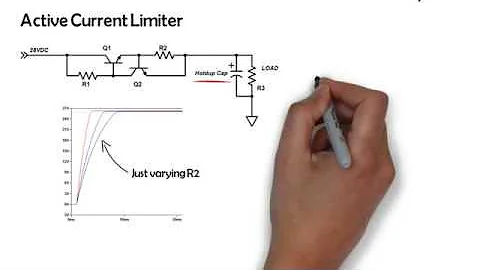
Active Current Limiting Circuit Schematic
- TPS2553DBVR Description
- TPS2553DBVR Pinout
- TPS2553DBVR CAD Model
- TPS2553DBVR Features
- Specifications
- Parts with Similar Specs
- TPS2553DBVR Functional Block Diagram
- TPS2553DBVR Layout
- TPS2553DBVR Typical Application
- TPS2553DBVR Alternatives
- TPS2553DBVR Applications
- TPS2553DBVR Package
- TPS2553DBVR Manufacturer
- Trend Analysis
- Datasheet PDF
TPS2553DBVR Description
The TPS2553DBVR power-distribution switch provides up to 1.5 A of continuous load current and is designed for situations requiring precision current limiting or heavy capacitive loads and short circuits. Through an external resistor, these devices provide a configurable current-limit threshold between 75 mA and 1.7 A (typical). At the higher current-limit levels, current-limit accuracy of up to 6% can be reached. To reduce current surges during turnon and turnoff, the rise and fall times of the power switch are managed.
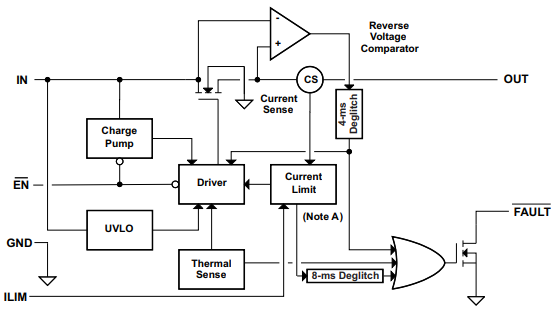
When the output load exceeds the current-limit threshold, the TPS2553DBVR device uses a constant-current mode to limit the output current to a safe level. To protect devices on the input side of the switch, an inbuilt reverse-voltage comparator disables the power switch when the output voltage is driven higher than the input voltage. During overcurrent and reverse-voltage circumstances, the FAULT output asserts low.
TPS2553DBVR Pinout
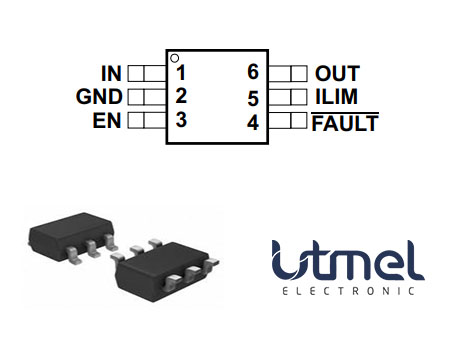
The following figure is TPS2553DBVR Pinout.
Pinout
| Pin Number | Pin Name | Description |
| 3 | EN | Enable input, logic low turns on power switch |
| 4 | FAULT | Active-low open-drain output, asserted during overcurrent, overtemperature, or reverse-voltage conditions. |
| 2 | GND | Ground connection; connect externally to PowerPAD |
| 5 | ILIM | External resistor used to set current-limit threshold; recommended 15 kΩ ≤ RILIM ≤ 232 kΩ. |
| 1 | IN | Input voltage; connect a 0.1 μF or greater ceramic capacitor from IN to GND as close to the IC as possible. |
| 6 | OUT | Power-switch output |
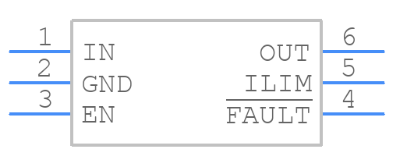
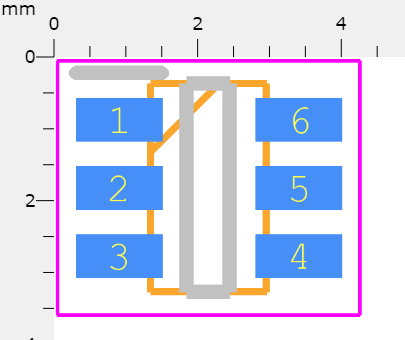
TPS2553DBVR CAD Model
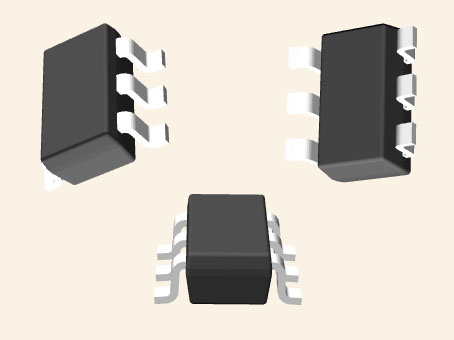
TPS2553DBVR Features
• Up to 1.5-A Maximum Load Current
• ±6% Current-Limit Accuracy at 1.7 A (Typical)
• Meets USB Current-Limiting Requirements
• Adjustable Current Limit: 75 mA to 1700 mA (Typical)
• Constant-Current
• Fast Overcurrent Response - 2 µs (Typical)
• 85-mΩ High-Side MOSFET (DBV Package)
• Reverse Input-Output Voltage Protection
• Operating Range: 2.5 V to 6.5 V
• Built-In Soft Start
• 15-kV ESD Protection per IEC 61000-4-2 (With External Capacitance)
• UL Listed – File No. E169910 and NEMKO IEC60950-1-am1 ed2.0
• See the TI Switch Portfolio
Specifications
- TypeParameter
- Lifecycle Status
Lifecycle Status refers to the current stage of an electronic component in its product life cycle, indicating whether it is active, obsolete, or transitioning between these states. An active status means the component is in production and available for purchase. An obsolete status indicates that the component is no longer being manufactured or supported, and manufacturers typically provide a limited time frame for support. Understanding the lifecycle status is crucial for design engineers to ensure continuity and reliability in their projects.
ACTIVE (Last Updated: 21 hours ago) - Factory Lead Time12 Weeks
- Mounting Type
The "Mounting Type" in electronic components refers to the method used to attach or connect a component to a circuit board or other substrate, such as through-hole, surface-mount, or panel mount.
Surface Mount - Package / Case
refers to the protective housing that encases an electronic component, providing mechanical support, electrical connections, and thermal management.
SOT-23-6 - Surface Mount
having leads that are designed to be soldered on the side of a circuit board that the body of the component is mounted on.
YES - Number of Pins6
- Weight36.003894mg
- Operating Temperature
The operating temperature is the range of ambient temperature within which a power supply, or any other electrical equipment, operate in. This ranges from a minimum operating temperature, to a peak or maximum operating temperature, outside which, the power supply may fail.
-40°C~150°C TJ - Packaging
Semiconductor package is a carrier / shell used to contain and cover one or more semiconductor components or integrated circuits. The material of the shell can be metal, plastic, glass or ceramic.
Tape & Reel (TR) - JESD-609 Code
The "JESD-609 Code" in electronic components refers to a standardized marking code that indicates the lead-free solder composition and finish of electronic components for compliance with environmental regulations.
e4 - Pbfree Code
The "Pbfree Code" parameter in electronic components refers to the code or marking used to indicate that the component is lead-free. Lead (Pb) is a toxic substance that has been widely used in electronic components for many years, but due to environmental concerns, there has been a shift towards lead-free alternatives. The Pbfree Code helps manufacturers and users easily identify components that do not contain lead, ensuring compliance with regulations and promoting environmentally friendly practices. It is important to pay attention to the Pbfree Code when selecting electronic components to ensure they meet the necessary requirements for lead-free applications.
yes - Part Status
Parts can have many statuses as they progress through the configuration, analysis, review, and approval stages.
Active - Moisture Sensitivity Level (MSL)
Moisture Sensitivity Level (MSL) is a standardized rating that indicates the susceptibility of electronic components, particularly semiconductors, to moisture-induced damage during storage and the soldering process, defining the allowable exposure time to ambient conditions before they require special handling or baking to prevent failures
1 (Unlimited) - Number of Terminations6
- ECCN Code
An ECCN (Export Control Classification Number) is an alphanumeric code used by the U.S. Bureau of Industry and Security to identify and categorize electronic components and other dual-use items that may require an export license based on their technical characteristics and potential for military use.
EAR99 - Resistance
Resistance is a fundamental property of electronic components that measures their opposition to the flow of electric current. It is denoted by the symbol "R" and is measured in ohms (Ω). Resistance is caused by the collisions of electrons with atoms in a material, which generates heat and reduces the flow of current. Components with higher resistance will impede the flow of current more than those with lower resistance. Resistance plays a crucial role in determining the behavior and functionality of electronic circuits, such as limiting current flow, voltage division, and controlling power dissipation.
85mOhm - Terminal Finish
Terminal Finish refers to the surface treatment applied to the terminals or leads of electronic components to enhance their performance and longevity. It can improve solderability, corrosion resistance, and overall reliability of the connection in electronic assemblies. Common finishes include nickel, gold, and tin, each possessing distinct properties suitable for various applications. The choice of terminal finish can significantly impact the durability and effectiveness of electronic devices.
Nickel/Palladium/Gold (Ni/Pd/Au) - Max Power Dissipation
The maximum power that the MOSFET can dissipate continuously under the specified thermal conditions.
625mW - Terminal Position
In electronic components, the term "Terminal Position" refers to the physical location of the connection points on the component where external electrical connections can be made. These connection points, known as terminals, are typically used to attach wires, leads, or other components to the main body of the electronic component. The terminal position is important for ensuring proper connectivity and functionality of the component within a circuit. It is often specified in technical datasheets or component specifications to help designers and engineers understand how to properly integrate the component into their circuit designs.
DUAL - Terminal Form
Occurring at or forming the end of a series, succession, or the like; closing; concluding.
GULL WING - Peak Reflow Temperature (Cel)
Peak Reflow Temperature (Cel) is a parameter that specifies the maximum temperature at which an electronic component can be exposed during the reflow soldering process. Reflow soldering is a common method used to attach electronic components to a circuit board. The Peak Reflow Temperature is crucial because it ensures that the component is not damaged or degraded during the soldering process. Exceeding the specified Peak Reflow Temperature can lead to issues such as component failure, reduced performance, or even permanent damage to the component. It is important for manufacturers and assemblers to adhere to the recommended Peak Reflow Temperature to ensure the reliability and functionality of the electronic components.
260 - Number of Functions1
- Supply Voltage
Supply voltage refers to the electrical potential difference provided to an electronic component or circuit. It is crucial for the proper operation of devices, as it powers their functions and determines performance characteristics. The supply voltage must be within specified limits to ensure reliability and prevent damage to components. Different electronic devices have specific supply voltage requirements, which can vary widely depending on their design and intended application.
5V - Terminal Pitch
The center distance from one pole to the next.
0.95mm - Base Part Number
The "Base Part Number" (BPN) in electronic components serves a similar purpose to the "Base Product Number." It refers to the primary identifier for a component that captures the essential characteristics shared by a group of similar components. The BPN provides a fundamental way to reference a family or series of components without specifying all the variations and specific details.
TPS2553 - Pin Count
a count of all of the component leads (or pins)
6 - Number of Outputs1
- Output Type
The "Output Type" parameter in electronic components refers to the type of signal or data that is produced by the component as an output. This parameter specifies the nature of the output signal, such as analog or digital, and can also include details about the voltage levels, current levels, frequency, and other characteristics of the output signal. Understanding the output type of a component is crucial for ensuring compatibility with other components in a circuit or system, as well as for determining how the output signal can be utilized or processed further. In summary, the output type parameter provides essential information about the nature of the signal that is generated by the electronic component as its output.
N-Channel - Number of Channels1
- Interface
In electronic components, the term "Interface" refers to the point at which two different systems, devices, or components connect and interact with each other. It can involve physical connections such as ports, connectors, or cables, as well as communication protocols and standards that facilitate the exchange of data or signals between the connected entities. The interface serves as a bridge that enables seamless communication and interoperability between different parts of a system or between different systems altogether. Designing a reliable and efficient interface is crucial in ensuring proper functionality and performance of electronic components and systems.
On/Off - Analog IC - Other Type
Analog IC - Other Type is a parameter used to categorize electronic components that are integrated circuits (ICs) designed for analog signal processing but do not fall into more specific subcategories such as amplifiers, comparators, or voltage regulators. These ICs may include specialized analog functions such as analog-to-digital converters (ADCs), digital-to-analog converters (DACs), voltage references, or signal conditioning circuits. They are typically used in various applications where precise analog signal processing is required, such as in audio equipment, instrumentation, communication systems, and industrial control systems. Manufacturers provide detailed specifications for these components to help engineers select the most suitable IC for their specific design requirements.
POWER SUPPLY SUPPORT CIRCUIT - Output Configuration
Output Configuration in electronic components refers to the arrangement or setup of the output pins or terminals of a device. It defines how the output signals are structured and how they interact with external circuits or devices. The output configuration can determine the functionality and compatibility of the component in a circuit design. Common types of output configurations include single-ended, differential, open-drain, and push-pull configurations, each serving different purposes and applications in electronic systems. Understanding the output configuration of a component is crucial for proper integration and operation within a circuit.
High Side - Output Current
The rated output current is the maximum load current that a power supply can provide at a specified ambient temperature. A power supply can never provide more current that it's rated output current unless there is a fault, such as short circuit at the load.
1.5A - Voltage - Supply (Vcc/Vdd)
Voltage - Supply (Vcc/Vdd) is a key parameter in electronic components that specifies the voltage level required for the proper operation of the device. It represents the power supply voltage that needs to be provided to the component for it to function correctly. This parameter is crucial as supplying the component with the correct voltage ensures that it operates within its specified limits and performance characteristics. It is typically expressed in volts (V) and is an essential consideration when designing and using electronic circuits to prevent damage and ensure reliable operation.
Not Required - Adjustable Threshold
The "Adjustable Threshold" parameter in electronic components refers to the ability to manually set or modify the threshold level at which a specific function or operation is triggered. This feature allows users to customize the sensitivity or activation point of the component according to their specific requirements or preferences. By adjusting the threshold, users can fine-tune the performance of the component to suit different applications or environmental conditions. This flexibility in threshold adjustment can be particularly useful in various electronic devices and systems where precise control over triggering levels is necessary for optimal functionality.
YES - Input Type
Input type in electronic components refers to the classification of the signal or data that a component can accept for processing or conversion. It indicates whether the input is analog, digital, or a specific format such as TTL or CMOS. Understanding input type is crucial for ensuring compatibility between different electronic devices and circuits, as it determines how signals are interpreted and interacted with.
Non-Inverting - Switch Type
Based on their characteristics, there are basically three types of switches: Linear switches, tactile switches and clicky switches.
General Purpose - Min Input Voltage
The parameter "Min Input Voltage" in electronic components refers to the minimum voltage level that must be applied to the component for it to operate within its specified parameters. This value is crucial as providing a voltage below this minimum threshold may result in the component malfunctioning or not functioning at all. It is important to adhere to the specified minimum input voltage to ensure the proper operation and longevity of the electronic component. Failure to meet this requirement may lead to potential damage to the component or the overall system in which it is used.
2.5V - Max Input Voltage
Max Input Voltage refers to the maximum voltage level that an electronic component can safely handle without getting damaged. This parameter is crucial for ensuring the proper functioning and longevity of the component. Exceeding the specified maximum input voltage can lead to overheating, electrical breakdown, or permanent damage to the component. It is important to carefully adhere to the manufacturer's guidelines regarding the maximum input voltage to prevent any potential issues and maintain the reliability of the electronic device.
6.5V - Nominal Input Voltage
The actual voltage at which a circuit operates can vary from the nominal voltage within a range that permits satisfactory operation of equipment. The word “nominal” means “named”.
6.5V - Ratio - Input:Output
The parameter "Ratio - Input:Output" in electronic components refers to the relationship between the input and output quantities of a device or system. It is a measure of how the input signal or energy is transformed or converted into the output signal or energy. This ratio is often expressed as a numerical value or percentage, indicating the efficiency or effectiveness of the component in converting the input to the desired output. A higher ratio typically signifies better performance or higher efficiency, while a lower ratio may indicate losses or inefficiencies in the conversion process. Understanding and optimizing the input-output ratio is crucial in designing and evaluating electronic components for various applications.
1:1 - Voltage - Load
Voltage - Load refers to the voltage across a load component in an electronic circuit when it is connected and operational. It represents the electrical potential difference that drives current through the load, which can be a resistor, motor, or other devices that consume electrical power. The voltage - load relationship is crucial for determining how much power the load will utilize and how it will affect the overall circuit performance. Properly managing voltage - load is essential for ensuring devices operate efficiently and safely within their specified limits.
2.5V~6.5V - Fault Protection
Protection against electric shock under. single fault conditions.
Current Limiting (Adjustable), Over Temperature, UVLO - Rds On (Typ)
The parameter "Rds On (Typ)" in electronic components refers to the typical on-state resistance of a MOSFET (Metal-Oxide-Semiconductor Field-Effect Transistor) when it is fully conducting. This parameter indicates the resistance encountered by the current flowing through the MOSFET when it is in the on-state, which affects the power dissipation and efficiency of the component. A lower Rds On value indicates better conduction and lower power loss in the MOSFET. Designers often consider this parameter when selecting components for applications where minimizing power loss and maximizing efficiency are critical factors.
85m Ω - Features
In the context of electronic components, the term "Features" typically refers to the specific characteristics or functionalities that a particular component offers. These features can vary depending on the type of component and its intended use. For example, a microcontroller may have features such as built-in memory, analog-to-digital converters, and communication interfaces like UART or SPI.When evaluating electronic components, understanding their features is crucial in determining whether they meet the requirements of a particular project or application. Engineers and designers often look at features such as operating voltage, speed, power consumption, and communication protocols to ensure compatibility and optimal performance.In summary, the "Features" parameter in electronic components describes the unique attributes and capabilities that differentiate one component from another, helping users make informed decisions when selecting components for their electronic designs.
Slew Rate Controlled, Status Flag - Height1.45mm
- Length2.9mm
- Width1.6mm
- Thickness
Thickness in electronic components refers to the measurement of how thick a particular material or layer is within the component structure. It can pertain to various aspects, such as the thickness of a substrate, a dielectric layer, or conductive traces. This parameter is crucial as it impacts the electrical, mechanical, and thermal properties of the component, influencing its performance and reliability in electronic circuits.
1.2mm - REACH SVHC
The parameter "REACH SVHC" in electronic components refers to the compliance with the Registration, Evaluation, Authorization, and Restriction of Chemicals (REACH) regulation regarding Substances of Very High Concern (SVHC). SVHCs are substances that may have serious effects on human health or the environment, and their use is regulated under REACH to ensure their safe handling and minimize their impact.Manufacturers of electronic components need to declare if their products contain any SVHCs above a certain threshold concentration and provide information on the safe use of these substances. This information allows customers to make informed decisions about the potential risks associated with using the components and take appropriate measures to mitigate any hazards.Ensuring compliance with REACH SVHC requirements is essential for electronics manufacturers to meet regulatory standards, protect human health and the environment, and maintain transparency in their supply chain. It also demonstrates a commitment to sustainability and responsible manufacturing practices in the electronics industry.
No SVHC - Radiation Hardening
Radiation hardening is the process of making electronic components and circuits resistant to damage or malfunction caused by high levels of ionizing radiation, especially for environments in outer space (especially beyond the low Earth orbit), around nuclear reactors and particle accelerators, or during nuclear accidents or nuclear warfare.
No - RoHS Status
RoHS means “Restriction of Certain Hazardous Substances” in the “Hazardous Substances Directive” in electrical and electronic equipment.
ROHS3 Compliant - Lead Free
Lead Free is a term used to describe electronic components that do not contain lead as part of their composition. Lead is a toxic material that can have harmful effects on human health and the environment, so the electronics industry has been moving towards lead-free components to reduce these risks. Lead-free components are typically made using alternative materials such as silver, copper, and tin. Manufacturers must comply with regulations such as the Restriction of Hazardous Substances (RoHS) directive to ensure that their products are lead-free and environmentally friendly.
Lead Free
Parts with Similar Specs
- ImagePart NumberManufacturerPackage / CaseNumber of PinsNumber of OutputsOutput CurrentInterfaceSupply VoltageRadiation HardeningMoisture Sensitivity Level (MSL)View Compare
![TPS2553DBVR]()
TPS2553DBVR
SOT-23-6
6
1
1.5 A
On/Off
5 V
No
1 (Unlimited)
![TPS2552DBVR]()
SOT-23-6
6
1
-
On/Off
5 V
No
1 (Unlimited)
![MIC2009YM6-TR]()
SOT-23-6
6
1
-
On/Off
-
No
1 (Unlimited)
![TPS2552DBVT]()
SOT-23-6
6
1
1.1 A
On/Off
3.3 V
No
1 (Unlimited)
![TPS2550DBVT]()
SOT-23-6
6
1
-
On/Off
5 V
No
1 (Unlimited)


TPS2553DBVR Functional Block Diagram
TPS2553DBVR Layout
Layout Guidelines
• The 100-nF bypass capacitor should be placed near the IN and GND pins, and the connections should be made with a low-inductance trace, according to TI.
• When substantial transient currents are predicted on the output, TI suggests using a high-value electrolytic capacitor and a 100-nF bypass capacitor on the output pin.
• To avoid parasitic effects on the current limit accuracy, the traces routing the RILIM resistor to the device must be as short as feasible.
• A wide and short copper trace must be used to link the PowerPAD to the PCB ground plane.
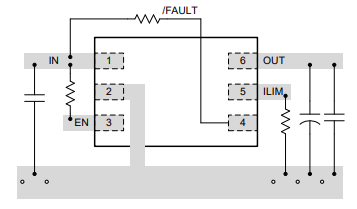
Layout
TPS2553DBVR Typical Application
The TPS2553DBVR Typical Application is shown as follows.
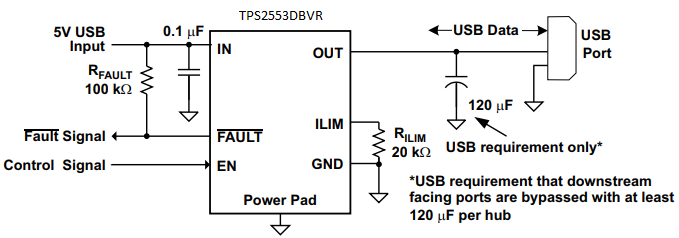
Typical Application
Depending on the external system conditions, some applications require varying current-limit thresholds. An implementation for an externally controlled, two-level current-limit circuit is shown in the diagram below. The total resistance from ILIM to GND determines the current-limit threshold. MOSFET Q1 is enabled or disabled by a logic-level input, and the current-limit threshold is changed by changing the total resistance from ILIM to GND. To expand the number of extra current-limit levels, more MOSFET and resistor combinations can be utilized in parallel with Q1/R2.
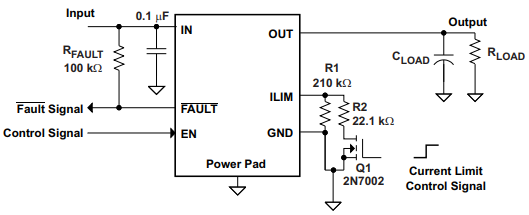
Two-Level Current-Limit Circuit
TPS2553DBVR Alternatives
| Part Number | Description | Manufacturer |
| TPS2553DBVTPOWER CIRCUITS | 0.075-1.7A adj. ILIMIT, 2.5-6.5V, 85mΩ USB power switch, active-high, reverse blocking 6-SOT-23 -40 to 125 | Texas Instruments |
TPS2553DBVR Applications
• USB Ports and Hubs
• Digital TVs
• Set-Top Boxes
• VOIP Phones
• Power Management
TPS2553DBVR Package
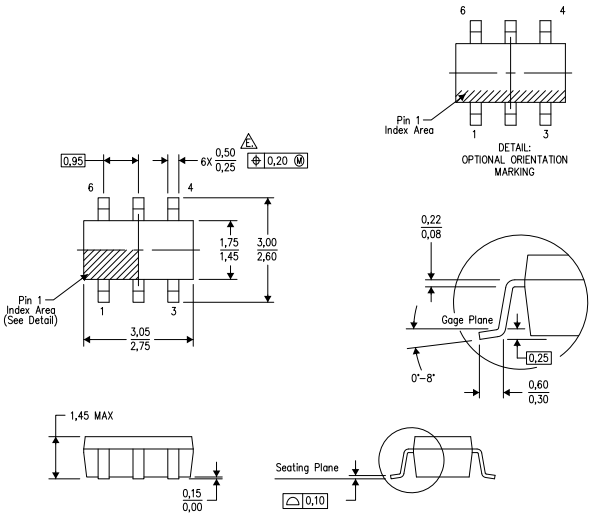
TPS2553DBVR Manufacturer
As a global semiconductor company operating in 35 countries, Texas Instruments (TI) is first and foremost a reflection of its people. From the TIer who unveiled the first working integrated circuit in 1958 to the more than 30,000 TIers around the world today who design, manufacture and sell analog and embedded processing chips, we are problem-solvers collaborating to change the world through technology.
Trend Analysis
Datasheet PDF
- Datasheets :
- PCN Assembly/Origin :
- PCN Design/Specification :
What is a current limited power switch?
When continuous heavy overloads and short-circuits increase the power dissipation in the switch, causing the junction temperature to rise, a thermal protection circuit shuts off the switch to prevent damage. This power-distribution switch is designed to set the current limit at 0.5 A typically.
How does current limiting work?
As the name suggests, the current limiting circuit limits the current from the regulated power supply to a maximum amount determined by the circuit, and in this way, severe damage to the circuits, both the power supply and the circuit being powered can be avoided.
How much continuous load current does the TPS2553DBVR power-distribution switch provide?
1.5 A.
What device provides a configurable current-limit threshold between 75 mA and 1.7 A?
External resistor.
What is the current-limit accuracy of the TPS2553DBVR power-distribution switch?
6%.
What is the purpose of the TPS2553DBVR power-distribution switch?
Reduce current surges.
What mode does the TPS2553DBVR device use to limit the output current to a safe level?
Constant-current mode.
What disables the power switch when the output voltage is driven higher than the input voltage?
An inbuilt reverse-voltage comparator.
What asserts low during overcurrent and reverse-voltage circumstances?
FAULT output.
 AD9253 Quad 14-Bit ADC: Integration Notes, Reset Timing, and Drop-In Alternatives
07 May 2026199
 IL511 Digital Isolators: Datasheet, Pinout and Applications
28 August 2021457
 STM8S003F3P6TR: Overview, Features, and Applications
05 December 20232298
 Technical Features and Specifications of STM32F030R8T6 Microcontroller
24 July 2025390
 LM5164QDDARQ1: LM5164, Converter, 48V, 100V Input
16 August 20246866
 A Comprehensive Guide to LTC7841EUHE#PBF DC/DC Switching Controller
06 March 2024134
 Eliminating Rectifier Heat: LT4320 / LT4320-1 9V-72V Ideal Diode Bridge Controller Deep Dive
25 February 2026559
 1N914 vs. 1N4148: What Difference is between 1N914 and 1N4148?
23 November 202111512
 What is a Cascode Amplifier?
27 March 202515395
 AI Server Components: Engineering Next-Gen Data Center Hardware for 100kW Racks
15 May 2026317
 Rotary Switches Brand Comparison for Engineers and Buyers
11 July 20253905
![Comprehensive Guide to Car Chips [FAQs]](https://res.utmel.com/Images/Article/e686e156-9363-4bbc-b1fd-c44fbe3ecbda.jpg) Comprehensive Guide to Car Chips [FAQs]
Comprehensive Guide to Car Chips [FAQs]11 January 20226167
 How does a Resettable Fuse Work?
26 August 202037194
 What is Chiplet?
17 November 20214192
 Capacitor Basic: How do Capacitors Work?
18 April 202515854
 Shift Registers Made Simple for New Learners
15 July 20253312
Texas Instruments
In Stock: 51083
United States
China
Canada
Japan
Russia
Germany
United Kingdom
Singapore
Italy
Hong Kong(China)
Taiwan(China)
France
Korea
Mexico
Netherlands
Malaysia
Austria
Spain
Switzerland
Poland
Thailand
Vietnam
India
United Arab Emirates
Afghanistan
Åland Islands
Albania
Algeria
American Samoa
Andorra
Angola
Anguilla
Antigua & Barbuda
Argentina
Armenia
Aruba
Australia
Azerbaijan
Bahamas
Bahrain
Bangladesh
Barbados
Belarus
Belgium
Belize
Benin
Bermuda
Bhutan
Bolivia
Bonaire, Sint Eustatius and Saba
Bosnia & Herzegovina
Botswana
Brazil
British Indian Ocean Territory
British Virgin Islands
Brunei
Bulgaria
Burkina Faso
Burundi
Cabo Verde
Cambodia
Cameroon
Cayman Islands
Central African Republic
Chad
Chile
Christmas Island
Cocos (Keeling) Islands
Colombia
Comoros
Congo
Congo (DRC)
Cook Islands
Costa Rica
Côte d’Ivoire
Croatia
Cuba
Curaçao
Cyprus
Czechia
Denmark
Djibouti
Dominica
Dominican Republic
Ecuador
Egypt
El Salvador
Equatorial Guinea
Eritrea
Estonia
Eswatini
Ethiopia
Falkland Islands
Faroe Islands
Fiji
Finland
French Guiana
French Polynesia
Gabon
Gambia
Georgia
Ghana
Gibraltar
Greece
Greenland
Grenada
Guadeloupe
Guam
Guatemala
Guernsey
Guinea
Guinea-Bissau
Guyana
Haiti
Honduras
Hungary
Iceland
Indonesia
Iran
Iraq
Ireland
Isle of Man
Israel
Jamaica
Jersey
Jordan
Kazakhstan
Kenya
Kiribati
Kosovo
Kuwait
Kyrgyzstan
Laos
Latvia
Lebanon
Lesotho
Liberia
Libya
Liechtenstein
Lithuania
Luxembourg
Macao(China)
Madagascar
Malawi
Maldives
Mali
Malta
Marshall Islands
Martinique
Mauritania
Mauritius
Mayotte
Micronesia
Moldova
Monaco
Mongolia
Montenegro
Montserrat
Morocco
Mozambique
Myanmar
Namibia
Nauru
Nepal
New Caledonia
New Zealand
Nicaragua
Niger
Nigeria
Niue
Norfolk Island
North Korea
North Macedonia
Northern Mariana Islands
Norway
Oman
Pakistan
Palau
Palestinian Authority
Panama
Papua New Guinea
Paraguay
Peru
Philippines
Pitcairn Islands
Portugal
Puerto Rico
Qatar
Réunion
Romania
Rwanda
Samoa
San Marino
São Tomé & Príncipe
Saudi Arabia
Senegal
Serbia
Seychelles
Sierra Leone
Sint Maarten
Slovakia
Slovenia
Solomon Islands
Somalia
South Africa
South Sudan
Sri Lanka
St Helena, Ascension, Tristan da Cunha
St. Barthélemy
St. Kitts & Nevis
St. Lucia
St. Martin
St. Pierre & Miquelon
St. Vincent & Grenadines
Sudan
Suriname
Svalbard & Jan Mayen
Sweden
Syria
Tajikistan
Tanzania
Timor-Leste
Togo
Tokelau
Tonga
Trinidad & Tobago
Tunisia
Turkey
Turkmenistan
Turks & Caicos Islands
Tuvalu
U.S. Outlying Islands
U.S. Virgin Islands
Uganda
Ukraine
Uruguay
Uzbekistan
Vanuatu
Vatican City
Venezuela
Wallis & Futuna
Yemen
Zambia
Zimbabwe
![TPS22913CYZVR]() TPS22913CYZVR
TPS22913CYZVRTexas Instruments
![TPS2052BDR]() TPS2052BDR
TPS2052BDRTexas Instruments
![TPS2051BDGNR]() TPS2051BDGNR
TPS2051BDGNRTexas Instruments
![TPS2044BD]() TPS2044BD
TPS2044BDTexas Instruments
![TPS2042BDR]() TPS2042BDR
TPS2042BDRTexas Instruments
![ULQ2003ADR]() ULQ2003ADR
ULQ2003ADRTexas Instruments
![TPS22945DCKR]() TPS22945DCKR
TPS22945DCKRTexas Instruments
![TPS2042BDGN]() TPS2042BDGN
TPS2042BDGNTexas Instruments
![TPS2557DRBT]() TPS2557DRBT
TPS2557DRBTTexas Instruments
![TPS2044BDR]() TPS2044BDR
TPS2044BDRTexas Instruments


