

 Product
 Brand
Brand Articles
 Tools
Tools
SX1276 Transceiver: Datasheet, SX1276 vs. SX1272

137MHz~1.02GHz General ISM < 1GHz -40°C~85°C 1.8V~3.7V SPI Bulk Antenna Not Included, SMA 300kbps 20dBm -148dBm Module


137MHz~1.02GHz General ISM < 1GHz -40°C~85°C 1.8V~3.7V SPI Bulk Antenna Not Included, SMA 300kbps 20dBm -148dBm Module
Semtech's SX1276/77/78 family provides an ultra-long-range while maintaining low current consumption, making it optimal for numerous applications. This article will unlock more details about SX1276. There is a huge range of Semiconductors, Capacitors, Resistors and ICs in stock. Welcome RFQ.

LORAWAN DEVICE TUTORIAL BASED ON ARDUINO MEGA WITH LMIC LIBRARY - STEP BY STEP WITH RF96 / SX1276
SX1276 Pinout
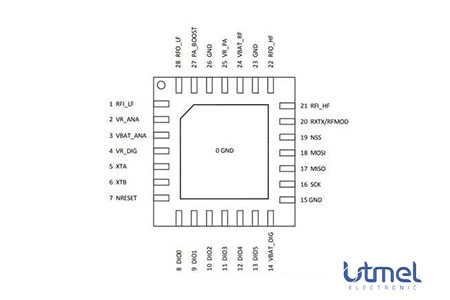
SX1276 Pinout
SX1276 Overview
The LoRa® long-range modem in the SX1276 transceivers delivers ultra-long-range spread spectrum communication and high interference immunity while consuming minimal current.
SX1276 can reach a sensitivity of over -148 dBm using Semtech's unique LoRa modulation technology with a low-cost crystal and bill of materials. The combination of high sensitivity and an included +20 dBm power amplifier results in an industry-leading link budget, making it ideal for any application needing range or durability.
LoRa also outperforms classic modulation approaches in terms of blocking and selectivity, resolving the traditional design compromise between range, interference immunity, and energy consumption.
For systems like as WMBus and IEEE802.15.4g, these devices additionally enable high-performance (G)FSK modes. The SX1276 outperforms rival devices in terms of phase noise, selectivity, receiver linearity, and IIP3 while consuming much less current.
SX1276 Manufacturer
Semtech Corporation ranks as a leading provider of analogue and mixed-signal semiconductor platforms with high performance and advanced algorithms. They are committed to developing proprietary platforms which differ from each other in size, efficiency, performance, reach, and innovation. They have developed their unique solutions used for innovative systems or products including smartphones, LCD TVs, notebooks, IoT, PON, wireless infrastructure, and other fast-growing markets today.
Specifications
- TypeParameter
- Factory Lead Time12 Weeks
- Mount
In electronic components, the term "Mount" typically refers to the method or process of physically attaching or fixing a component onto a circuit board or other electronic device. This can involve soldering, adhesive bonding, or other techniques to secure the component in place. The mounting process is crucial for ensuring proper electrical connections and mechanical stability within the electronic system. Different components may have specific mounting requirements based on their size, shape, and function, and manufacturers provide guidelines for proper mounting procedures to ensure optimal performance and reliability of the electronic device.
Through Hole - Mounting Type
The "Mounting Type" in electronic components refers to the method used to attach or connect a component to a circuit board or other substrate, such as through-hole, surface-mount, or panel mount.
Through Hole - Package / Case
refers to the protective housing that encases an electronic component, providing mechanical support, electrical connections, and thermal management.
Module - Operating Temperature
The operating temperature is the range of ambient temperature within which a power supply, or any other electrical equipment, operate in. This ranges from a minimum operating temperature, to a peak or maximum operating temperature, outside which, the power supply may fail.
-40°C~85°C - Packaging
Semiconductor package is a carrier / shell used to contain and cover one or more semiconductor components or integrated circuits. The material of the shell can be metal, plastic, glass or ceramic.
Bulk - Series
In electronic components, the "Series" refers to a group of products that share similar characteristics, designs, or functionalities, often produced by the same manufacturer. These components within a series typically have common specifications but may vary in terms of voltage, power, or packaging to meet different application needs. The series name helps identify and differentiate between various product lines within a manufacturer's catalog.
LoRa™ - Published2013
- Part Status
Parts can have many statuses as they progress through the configuration, analysis, review, and approval stages.
Active - Moisture Sensitivity Level (MSL)
Moisture Sensitivity Level (MSL) is a standardized rating that indicates the susceptibility of electronic components, particularly semiconductors, to moisture-induced damage during storage and the soldering process, defining the allowable exposure time to ambient conditions before they require special handling or baking to prevent failures
1 (Unlimited) - Max Operating Temperature
The Maximum Operating Temperature is the maximum body temperature at which the thermistor is designed to operate for extended periods of time with acceptable stability of its electrical characteristics.
85°C - Min Operating Temperature
The "Min Operating Temperature" parameter in electronic components refers to the lowest temperature at which the component is designed to operate effectively and reliably. This parameter is crucial for ensuring the proper functioning and longevity of the component, as operating below this temperature may lead to performance issues or even damage. Manufacturers specify the minimum operating temperature to provide guidance to users on the environmental conditions in which the component can safely operate. It is important to adhere to this parameter to prevent malfunctions and ensure the overall reliability of the electronic system.
-40°C - Voltage - Supply
Voltage - Supply refers to the range of voltage levels that an electronic component or circuit is designed to operate with. It indicates the minimum and maximum supply voltage that can be applied for the device to function properly. Providing supply voltages outside this range can lead to malfunction, damage, or reduced performance. This parameter is critical for ensuring compatibility between different components in a circuit.
1.8V~3.7V - Frequency
In electronic components, the parameter "Frequency" refers to the rate at which a signal oscillates or cycles within a given period of time. It is typically measured in Hertz (Hz) and represents how many times a signal completes a full cycle in one second. Frequency is a crucial aspect in electronic components as it determines the behavior and performance of various devices such as oscillators, filters, and communication systems. Understanding the frequency characteristics of components is essential for designing and analyzing electronic circuits to ensure proper functionality and compatibility with other components in a system.
137MHz~1.02GHz - Base Part Number
The "Base Part Number" (BPN) in electronic components serves a similar purpose to the "Base Product Number." It refers to the primary identifier for a component that captures the essential characteristics shared by a group of similar components. The BPN provides a fundamental way to reference a family or series of components without specifying all the variations and specific details.
SX127 - Interface
In electronic components, the term "Interface" refers to the point at which two different systems, devices, or components connect and interact with each other. It can involve physical connections such as ports, connectors, or cables, as well as communication protocols and standards that facilitate the exchange of data or signals between the connected entities. The interface serves as a bridge that enables seamless communication and interoperability between different parts of a system or between different systems altogether. Designing a reliable and efficient interface is crucial in ensuring proper functionality and performance of electronic components and systems.
SPI - Data Rate
Data Rate is defined as the amount of data transmitted during a specified time period over a network. It is the speed at which data is transferred from one device to another or between a peripheral device and the computer. It is generally measured in Mega bits per second(Mbps) or Mega bytes per second(MBps).
300kbps - Power - Output
Power Output in electronic components refers to the amount of electrical power that a device can deliver to a load. It is typically measured in watts and indicates the effectiveness of the component in converting electrical energy into usable work or signal. Power Output can vary based on the component's design, operating conditions, and intended application, making it a critical factor in the performance of amplifiers, power supplies, and other electronic devices. Understanding the Power Output helps in selecting appropriate components for specific applications to ensure efficiency and reliability.
20dBm - RF Family/Standard
The parameter "RF Family/Standard" in electronic components refers to the specific radio frequency (RF) technology or standard that the component complies with or is designed for. RF technology encompasses a wide range of frequencies used for wireless communication, such as Wi-Fi, Bluetooth, cellular networks, and more. Different RF standards dictate the frequency bands, modulation techniques, data rates, and other specifications for communication systems. Understanding the RF family/standard of a component is crucial for ensuring compatibility and optimal performance in RF applications.
General ISM < 1GHz - Antenna Type
There are several different types of antennas in three broad categories: omni-directional, directional, and semi-directional.
Antenna Not Included, SMA - Sensitivity
Sensitivity in electronic components refers to the degree to which the output of a device responds to changes in input. It indicates how effectively a component translates a specific input signal into an observable output. High sensitivity means that even small variations in input can produce significant changes in output, making the device more responsive to signals. Sensitivity is crucial in applications where precise measurements or signal detection are required.
-148dBm - Serial Interfaces
A serial interface is a communication interface between two digital systems that transmits data as a series of voltage pulses down a wire. Essentially, the serial interface encodes the bits of a binary number by their "temporal" location on a wire rather than their "spatial" location within a set of wires.
SPI - Current - Receiving
Current - Receiving refers to the amount of electrical current that an electronic component or device is capable of accepting from a power source or another component in a circuit. It indicates the maximum current that can be safely received without causing damage or malfunction. This parameter is crucial for ensuring compatibility and reliability in electronic designs, as exceeding the rated receiving current can lead to overheating or failure of the component.
12mA - Current - Transmitting
Current - Transmitting is a parameter used to describe the maximum amount of electrical current that an electronic component can handle while in the transmitting mode. This parameter is crucial for components such as transistors, diodes, and integrated circuits that are involved in transmitting signals or power within a circuit. Exceeding the specified current transmitting rating can lead to overheating, component failure, or even damage to the entire circuit. Designers and engineers must carefully consider this parameter when selecting components to ensure the reliability and performance of the electronic system.
120mA - Modulation
In electronic components, modulation refers to the process of varying one or more properties of a periodic waveform, known as the carrier signal, in order to encode information. This modulation technique is commonly used in communication systems to transmit data efficiently over long distances. By modulating the carrier signal, information such as audio, video, or data can be embedded onto the signal for transmission and then demodulated at the receiving end to retrieve the original information. There are various types of modulation techniques, including amplitude modulation (AM), frequency modulation (FM), and phase modulation (PM), each with its own advantages and applications in different communication systems.
FSK, GFSK, GMSK, MSK, OOK - Sensitivity (dBm)
Sensitivity (dBm) is a parameter used to measure the minimum input power level required for an electronic component or device to operate effectively. It is typically expressed in decibels relative to one milliwatt (dBm), which is a common unit of power measurement in the field of electronics. A higher sensitivity value indicates that the component can detect weaker input signals, making it more responsive and capable of functioning in low-power conditions. Sensitivity is an important specification for devices like receivers, sensors, and transducers, as it directly impacts their ability to detect and process signals accurately. Manufacturers often provide sensitivity ratings to help users understand the performance capabilities of the component in different operating conditions.
-148 dBm - RoHS Status
RoHS means “Restriction of Certain Hazardous Substances” in the “Hazardous Substances Directive” in electrical and electronic equipment.
RoHS Compliant - Lead Free
Lead Free is a term used to describe electronic components that do not contain lead as part of their composition. Lead is a toxic material that can have harmful effects on human health and the environment, so the electronics industry has been moving towards lead-free components to reduce these risks. Lead-free components are typically made using alternative materials such as silver, copper, and tin. Manufacturers must comply with regulations such as the Restriction of Hazardous Substances (RoHS) directive to ensure that their products are lead-free and environmentally friendly.
Lead Free
Parts with Similar Specs
- ImagePart NumberManufacturerPackage / CaseFrequencyData RateInterfaceOperating TemperatureRoHS StatusPower - OutputSerial InterfacesView Compare
![SX1276MB1LAS]()
SX1276MB1LAS
Module
137MHz ~ 1.02GHz
300kbps
SPI
-40°C ~ 85°C
RoHS Compliant
20dBm
SPI
![CC-9P-V513-C]()
Module
2.4GHz, 5GHz
54Mbps
I2C, SPI, UART
-40°C ~ 85°C
RoHS Compliant
12dBm
Ethernet, I2C, SPI, UART
![CC-9P-V513-LX]()
Module
2.4GHz, 5GHz
54Mbps
I2C, SPI, UART
-40°C ~ 85°C
RoHS Compliant
12dBm
Ethernet, I2C, SPI, UART
![CC-9P-V524-LX]()
Module
2.4GHz, 5GHz
54Mbps
I2C, SPI, UART
-40°C ~ 85°C
RoHS Compliant
12dBm
Ethernet, I2C, SPI, UART
![CC-9P-V502-C]()
Module
2.4GHz, 5GHz
54Mbps
I2C, SPI, UART
-40°C ~ 85°C
RoHS Compliant
12dBm
Ethernet, I2C, SPI, UART


SX1276 Features
168 dB maximum link budget
+20 dBm - 100 mW constant RF output vs. V supply
+14 dBm high-efficiency PA
Programmable bit rate up to 300 kbps
High sensitivity: down to -146.5 dBm
Bullet-proof front end: IIP3 = -12 dBm
100 dB blocking immunity
Low RX current of 10 mA, 200 nA register retention
Fully integrated synthesizer with a resolution of 61 Hz
FSK, GFSK, MSK, GMSK, LORA and OOK modulations
Built-in bit synchronizer for clock recovery
Sync word recognition
Preamble detection
115 dB+ Dynamic Range RSSI
Automatic RF Sense with ultra-fast AFC
Packet engine up to 64 bytes with CRC
Built-in temperature sensor and Low Battery indicator
SX1276 Application
Automated Meter Reading
Wireless Sensor Networks
Home and Building Automation
Wireless Alarm and Security Systems
Industrial Monitoring and Control
SX1276 Block Diagram
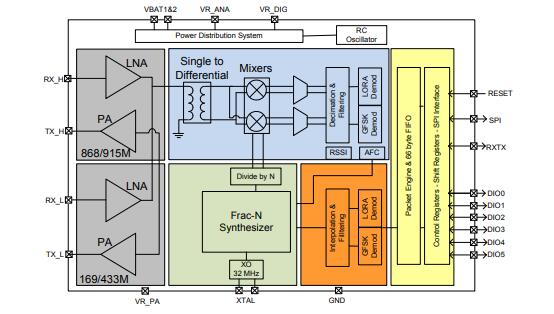
SX1276 Block Diagram
SX1276 Application Circuit
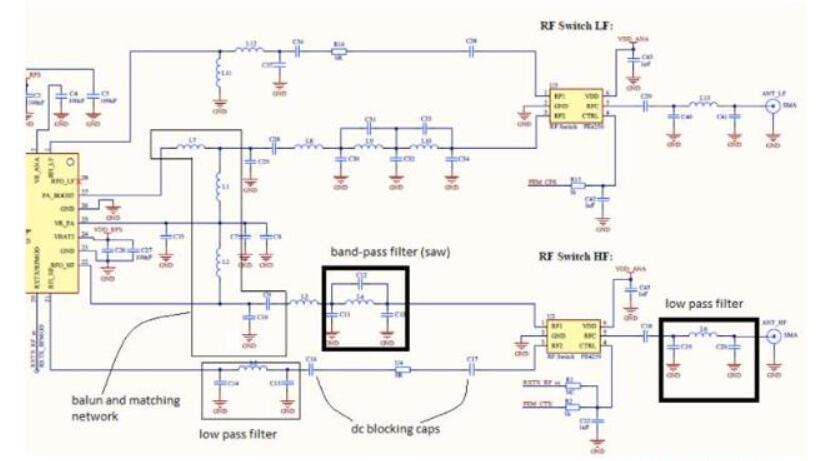
SX1276 Application Circuit
SX1276 vs. SX1272
Parts | SX1276 | SX1272 |
Frequency bands of operation | 169 MHz, 433 MHz, 850 MHz to 1 GHz | 850 MHz to 1 GHz |
Programmable Bandwidth | 7.8 KHz, 10.4 KHz, 15.6 KHz, 20.8 KHz, 31.2 KHz, 41.7 KHz, 62.5 KHz. 125 kHz, 250 kHz, 500 kHz | 125 kHz, 250 kHz, 500 kHz |
Receiver Sensitivity | Better than SX1272, (down up to -148 dBm) | Good (down up to -137dBm) |
Max. Link Budget | 168 dB | 157 dB |
IIP3 | -11 dBm | -12.5 dBm |
Rx current | 9.9 mA, 200nA register retention | 10 mA, 100nA register retention |
Modulation types supported | Same as SX1272 | GFSK, FSK, MSK, GMSK, LoRa |
Dynamic Range (RSSI) | 127 dB | 127 dB |
Temperature sensor and low battery indication | YES | YES |
packet engine size | 256 bytes | 256 bytes |
Blocking Immunity | Excellent | 89 dB |
Bit Synchronizer | YES | YES |
Preamble detection | YES | YES |
Analog IC - Other Type | ANALOG CIRCUIT | ANALOG CIRCUIT |
JESD-30 Code | R-PDSO-G8 | R-PDSO-G8 |
JESD-609 Code | e0 | e3 |
Length | 4.9 mm | 4.9 mm |
Moisture Sensitivity Level | 1 | 1 |
Number of Functions | 1 | 1 |
Number of Terminals | 8 | 8 |
Operating Temperature-Max | 85 °C | 125 °C |
Operating Temperature-Min | -20 °C | -40 °C |
Package Body Material | PLASTIC/EPOXY | PLASTIC/EPOXY |
Package Code | SOP | SOP |
Package Shape | RECTANGULAR | RECTANGULAR |
Package Style | SMALL OUTLINE | SMALL OUTLINE |
Peak Reflow Temperature (Cel) | 245 | NOT SPECIFIED |
Qualification Status | Not Qualified | Not Qualified |
Seated Height-Max | 1.75 mm | 1.75 mm |
Supply Voltage-Max (Vsup) | 5.5 V | 3.6 V |
Supply Voltage-Min (Vsup) | 3 V | 3 V |
Supply Voltage-Nom (Vsup) | 3.3 V | 3.3 V |
Surface Mount | YES | YES |
Technology | BICMOS | |
Temperature Grade | OTHER | AUTOMOTIVE |
Terminal Finish | Tin/Lead (Sn/Pb) | Matte Tin (Sn) |
Terminal Form | GULLWING | GULLWING |
Terminal Pitch | 1.27 mm | 1.27 mm |
Terminal Position | DUAL | DUAL |
Time@Peak Reflow Temperature-Max (s) | NOT SPECIFIED | NOT SPECIFIED |
Width | 3.9 mm | 3.9 mm |
Base Number Matches | 4 | 2 |
Package Equivalence Code | SOP8,25 | |
Power Supplies | 3.3 V | |
Supply Current-Max (Isup) | 1.5 mA |
Datasheet PDF
- PCN Packaging :
- Design Resources :
- Datasheets :
What is SX1276?
Semtech SX1276 The SX1276/77/78/79 transceivers feature the LoRa® long range modem that provides ultra-long range spread spectrum communication and high interference immunity whilst minimizing current consumption.
What is a LoRa module?
Lora stands for Long Range Radio and is mainly targeted for M2M and IoT networks. This technology will enable public or multi-tenant networks to connect a number of applications running on the same network. Each LoRa gateway has the ability to handle up to millions of nodes.
What are the characteristics of transceiver?
In radio communication, a transceiver is an electronic device that is a combination of a radio transmitter and a receiver, hence the name. It can both transmit and receive radio waves using an antenna, for communication purposes.
 CA3130EZ BiMOS Operational Amplifier: Schematic, Pinout, and Datasheet
14 February 20222663
![RG8 VS LMR400[FAQ]: Differentiate the differences between them.](https://res.utmel.com/Images/Article/001960bf-022b-4557-968e-67dcf2b7c44f.png) RG8 VS LMR400[FAQ]: Differentiate the differences between them.
RG8 VS LMR400[FAQ]: Differentiate the differences between them.12 June 202423612
 AO6800:30V Dual N-Channel MOSFET
08 March 2022646
 TLV62568DRLT: Datasheet, Pinout, Step-down
12 February 2022967
 HMC462LP5 Low Noise Amplifier: Datasheet, Pinout, Price
20 December 2021460
 LM3886T Audio Power Amplifier: Application, Features and CAD Model
16 August 20244478
 IRF830 Power MOSFET: Pinout, Datasheet, and Test Circuit
14 July 20215820
 STM32F429ZIT6 Microcontroller: 180MHz,144-LQFP, Pinout and Features
12 February 20224818
 US Set to Close Loopholes in AI Chip Export Restrictions to China
23 October 20232257
 The History of Microscope
21 October 20218507
 Capacitor Basic: How do Capacitors Work?
18 April 202516628
 How are Integrated Circuits produced?
20 October 202526968
 An Overview of Development Board
18 December 202516132
 What are Proximity Sensors?
24 October 20259007
 Active Electroacoustic Resonator-Silent Speaker
10 November 20216218
 Introduction to Wireless Sensor Networks
20 August 20205162
Semtech Corporation
In Stock: 79
United States
China
Canada
Japan
Russia
Germany
United Kingdom
Singapore
Italy
Hong Kong(China)
Taiwan(China)
France
Korea
Mexico
Netherlands
Malaysia
Austria
Spain
Switzerland
Poland
Thailand
Vietnam
India
United Arab Emirates
Afghanistan
Åland Islands
Albania
Algeria
American Samoa
Andorra
Angola
Anguilla
Antigua & Barbuda
Argentina
Armenia
Aruba
Australia
Azerbaijan
Bahamas
Bahrain
Bangladesh
Barbados
Belarus
Belgium
Belize
Benin
Bermuda
Bhutan
Bolivia
Bonaire, Sint Eustatius and Saba
Bosnia & Herzegovina
Botswana
Brazil
British Indian Ocean Territory
British Virgin Islands
Brunei
Bulgaria
Burkina Faso
Burundi
Cabo Verde
Cambodia
Cameroon
Cayman Islands
Central African Republic
Chad
Chile
Christmas Island
Cocos (Keeling) Islands
Colombia
Comoros
Congo
Congo (DRC)
Cook Islands
Costa Rica
Côte d’Ivoire
Croatia
Cuba
Curaçao
Cyprus
Czechia
Denmark
Djibouti
Dominica
Dominican Republic
Ecuador
Egypt
El Salvador
Equatorial Guinea
Eritrea
Estonia
Eswatini
Ethiopia
Falkland Islands
Faroe Islands
Fiji
Finland
French Guiana
French Polynesia
Gabon
Gambia
Georgia
Ghana
Gibraltar
Greece
Greenland
Grenada
Guadeloupe
Guam
Guatemala
Guernsey
Guinea
Guinea-Bissau
Guyana
Haiti
Honduras
Hungary
Iceland
Indonesia
Iran
Iraq
Ireland
Isle of Man
Israel
Jamaica
Jersey
Jordan
Kazakhstan
Kenya
Kiribati
Kosovo
Kuwait
Kyrgyzstan
Laos
Latvia
Lebanon
Lesotho
Liberia
Libya
Liechtenstein
Lithuania
Luxembourg
Macao(China)
Madagascar
Malawi
Maldives
Mali
Malta
Marshall Islands
Martinique
Mauritania
Mauritius
Mayotte
Micronesia
Moldova
Monaco
Mongolia
Montenegro
Montserrat
Morocco
Mozambique
Myanmar
Namibia
Nauru
Nepal
New Caledonia
New Zealand
Nicaragua
Niger
Nigeria
Niue
Norfolk Island
North Korea
North Macedonia
Northern Mariana Islands
Norway
Oman
Pakistan
Palau
Palestinian Authority
Panama
Papua New Guinea
Paraguay
Peru
Philippines
Pitcairn Islands
Portugal
Puerto Rico
Qatar
Réunion
Romania
Rwanda
Samoa
San Marino
São Tomé & Príncipe
Saudi Arabia
Senegal
Serbia
Seychelles
Sierra Leone
Sint Maarten
Slovakia
Slovenia
Solomon Islands
Somalia
South Africa
South Sudan
Sri Lanka
St Helena, Ascension, Tristan da Cunha
St. Barthélemy
St. Kitts & Nevis
St. Lucia
St. Martin
St. Pierre & Miquelon
St. Vincent & Grenadines
Sudan
Suriname
Svalbard & Jan Mayen
Sweden
Syria
Tajikistan
Tanzania
Timor-Leste
Togo
Tokelau
Tonga
Trinidad & Tobago
Tunisia
Turkey
Turkmenistan
Turks & Caicos Islands
Tuvalu
U.S. Outlying Islands
U.S. Virgin Islands
Uganda
Ukraine
Uruguay
Uzbekistan
Vanuatu
Vatican City
Venezuela
Wallis & Futuna
Yemen
Zambia
Zimbabwe
![SX1276MB1MAS]() SX1276MB1MAS
SX1276MB1MASSemtech Corporation
![SX1276RF1JAS]() SX1276RF1JAS
SX1276RF1JASSemtech Corporation
![SX1272RF1CAS]() SX1272RF1CAS
SX1272RF1CASSemtech Corporation
![SX1276RF1IAS]() SX1276RF1IAS
SX1276RF1IASSemtech Corporation
![SX1276RF1KAS]() SX1276RF1KAS
SX1276RF1KASSemtech Corporation
![SM1231E915A]() SM1231E915A
SM1231E915ASemtech Corporation
![SX1272RF1BAS]() SX1272RF1BAS
SX1272RF1BASSemtech Corporation
![XM1205C915XE1]() XM1205C915XE1
XM1205C915XE1Semtech Corporation
![XM1205C433XE1]() XM1205C433XE1
XM1205C433XE1Semtech Corporation


