

 Product
 Brand
Brand Articles
 Tools
Tools
2N2646 PN Unijunction Transistor: Datasheet, Pinout and Equivalent

NEW JERSEY SEMICONDUCTOR PRODUCTS INC
2N2646 datasheet pdf and Unclassified product details from NEW JERSEY SEMICONDUCTOR PRODUCTS INC stock available at Utmel


2N2646 is a general-purpose silicon PN Unijunction Transistor that is designed for general purpose industrial applications. This article mainly covers datasheet, current, equivalent, pinout, and other details about the 2N2646 transistor. Furthermore, there is a huge range of semiconductors, capacitors, resistors, and ICs in stock. Welcome your RFQ!

UJT Unijunction Transistor Testing and Circuit Demo
What is 2N2646?
The 2N2646 is a silicon PN Unijunction Transistor that can be used in a variety of industrial applications. The device is commonly used as a triggering device and is not designed to drive high-current loads.
This transistor is made out of n-type semiconductors, with the length of the p-type material controlled to help fix the intrinsic standoff ratio parameter. Emitter, base, and collector are the three terminals on a typical 2n2646 UJT.
2N2646 Pinout
The conductive casing is also connected to a terminal on the 2N2646, making it a three-terminal device. The following is the 2N2646 Pinout diagram of the 2N2646 Unijunction transistor.

2N2646 Pinout
| Pin | Name | Description |
| 1 | Base 1 | Normally connected to Power |
| 2 | Emitter | An emitter is used for triggering transistor ON and OFF |
| 3 | Base 2 | Normally connected to Load |
| Case | Connected to Base 2 pin internally |
2N2646 CAD Model
Symbol

2N2646 Symbol
Footprint

2N2646 Footprint
Specifications
- TypeParameter
- RoHS Status
RoHS means “Restriction of Certain Hazardous Substances” in the “Hazardous Substances Directive” in electrical and electronic equipment.
Non-RoHS Compliant
2N2646 Features
Low Peak Point Current: 5A (Max)
Low Emitter Reverse Current:005A (Typ)
Maximum voltage between two bases (VB2B1): 35V
Maximum emitters reverse voltage (VB2E): 30V
Maximum RMS emitter current (Ie): 50mA
Maximum peak emitter current (Ie): 2A
Operating temperature range: -65ºC to +150ºC
Maximum power dissipation: 300mW
Passivated Surface for Reliability & Uniformity
Available as “HR” (high reliability)
Available as non-RoHS (Sn/Pb plating)
2N2646 Applications
Timing circuit
Voltage detector
SCR firing circuits
Hobby projects
Phase control circuit
Sawtooth wave generator
Relaxation oscillator
General-purpose industrial applications
2N2646 Equivalents
2N2647, 2N4870, 2N4871, 2N1671
Where to Use 2N2646 Uni Junction Transistor
The 2N2646 is mostly employed in the design of firing circuits (for Silicon Controlled Rectifiers) rather than amplifier circuits such as transistors. Other applications that demand a guaranteed minimum pulse amplitude, as well as a low emitter leakage current and a low peak point emitter current (trigger current), favor the device. Many low-cost industrial applications use the 2N2646 transistor.
How to Use 2N2646 Uni Junction Transistor
The circuit diagram employing the 2N2646 unijunction transistor is given below. This circuit runs on 9V to 12V DC. A 9V to 12V battery, 2N2646 UJT, LED, 10K and 390 resistors, breadboard, and connecting wires are all needed to make this circuit.

2N2646 Circuit
In this circuit, a 390-ohm resistor is primarily utilized to limit the flow of current via the transistor and LED. The R1 and C1 parameters are mostly responsible for the LED flashing frequency. We can conduct some short experiments using these variables to determine the appropriate LED flashing rate.
We can use any value between 10K and 1M for the resistor 'R1.' In the circuit above, the resistor 'R1' is a 1M potentiometer or variable resistor, while the capacitor 'C1' can be any value between 1uF and 100uF.
Working of 2N2646 Uni Junction Transistor
When this transistor is turned on, the emitter current is allowed to increase until it is limited by the power supply in the emitter terminal. Because of its negative resistance, this transistor can also be used as an oscillator.
A potential drop occurs when a positive supply is applied to the two base terminals of this transistor. Once the emitter voltage is increased one diode voltage above the voltage where P-type material diffusion occurs, current will flow from the emitter terminal to the base.
As a result of the additional current on the base region, the resistance between the emitter (E) and the base region is reduced, and the UJT's conductivity improves. As a result of the resistance drop, the emitter terminal will connect in forwarding bias, allowing more current to be injected. As a result of the resistance drop, the UJT will be able to operate above negative resistance. As a result, it is extremely useful for oscillators’ circuits.
2N2646 Mechanical Outline

2N2646 Mechanical Outline
2N2646 Manufacturer
New Jersey Semiconductor has been designing, manufacturing, and producing highly reliable electronic devices since 1957. Our mission is to supply you with high-quality, cost-effective discrete devices for commercial, industrial, and military applications.
Trend Analysis
What is 2N2646 used for?
The 2N2646 is designed for use in pulse and timing circuits, sensing circuits, and thyristor trigger circuits.
How does 2N2646 work?
The current will flow from the emitter terminal to the base, once the voltage of the emitter is increased one diode voltage over the voltage wherever P-type material diffusion occurs. So, this resistance drop will make the UJT operate above the negative resistance
 CR2354 Lithium Battery: CR2354 Battery Equivalent, 3V Coin CR2354, and Replacement
18 November 202119170
 C1815 NPN Transistor: Pinout, Equivalents, and Uses
11 August 202144935
 A Comprehensive Guide to LTM9008CY-14#PBF 14-Bit Simultaneous Sampling ADC
06 March 2024231
 L7912CV Voltage Regulators: Features, Pinout, and Datasheet
16 November 202113998
 ULN2004A Darlington Array: Pinout, Equivalent and Datasheet
29 November 20217707
 CP2102 Bridge Driver: Alternative, Pinout and Datasheet
14 July 202111986
 Unraveling the Texas Instruments MSP430F1612IPM Microcontroller: A Comprehensive Technical Analysis
29 February 2024213
 Unveiling the MSP430F437IPZ Mixed Signal Microcontroller: Features, Specifications, and Applications2.
29 February 2024207
 HDMI RF Modulators: Architecture, Setup, Types, and Commercial Applications
18 May 2026866
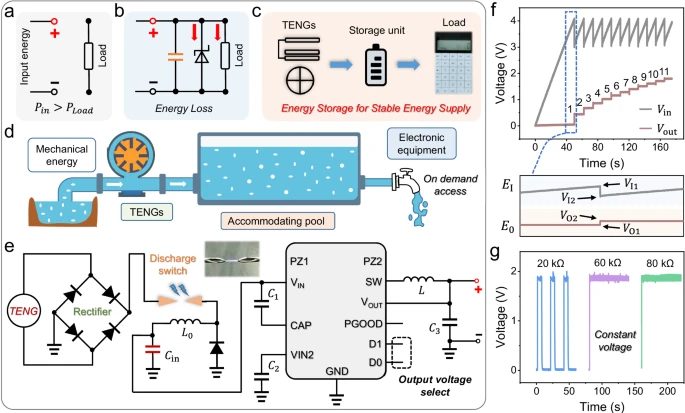 Improving the Energy Conversion Efficiency of Triboelectric Nanogenerators
19 November 20243296
 What Is a Decoupling Capacitor? Function, Placement, and Selection Guide
14 July 202614046
 What is UWB (Ultra-wideband)?
04 June 20218657
 Norton's Theorem: Working Principle, Circuit Design, and Modern Applications
27 May 20261298
 Semiconductor Cleaning: Processes, Methods and Reasons
20 April 202221301
 Top 10 IC Design Companies in China
13 January 202210956
 Power Semiconductor Procurement After the Nexperia Shake-Up—NXP for Stability, ON for Technology, or Nexperia for Value?
04 November 20254971
NEW JERSEY SEMICONDUCTOR PRODUCTS INC
In Stock
United States
China
Canada
Japan
Russia
Germany
United Kingdom
Singapore
Italy
Hong Kong(China)
Taiwan(China)
France
Korea
Mexico
Netherlands
Malaysia
Austria
Spain
Switzerland
Poland
Thailand
Vietnam
India
United Arab Emirates
Afghanistan
Åland Islands
Albania
Algeria
American Samoa
Andorra
Angola
Anguilla
Antigua & Barbuda
Argentina
Armenia
Aruba
Australia
Azerbaijan
Bahamas
Bahrain
Bangladesh
Barbados
Belarus
Belgium
Belize
Benin
Bermuda
Bhutan
Bolivia
Bonaire, Sint Eustatius and Saba
Bosnia & Herzegovina
Botswana
Brazil
British Indian Ocean Territory
British Virgin Islands
Brunei
Bulgaria
Burkina Faso
Burundi
Cabo Verde
Cambodia
Cameroon
Cayman Islands
Central African Republic
Chad
Chile
Christmas Island
Cocos (Keeling) Islands
Colombia
Comoros
Congo
Congo (DRC)
Cook Islands
Costa Rica
Côte d’Ivoire
Croatia
Cuba
Curaçao
Cyprus
Czechia
Denmark
Djibouti
Dominica
Dominican Republic
Ecuador
Egypt
El Salvador
Equatorial Guinea
Eritrea
Estonia
Eswatini
Ethiopia
Falkland Islands
Faroe Islands
Fiji
Finland
French Guiana
French Polynesia
Gabon
Gambia
Georgia
Ghana
Gibraltar
Greece
Greenland
Grenada
Guadeloupe
Guam
Guatemala
Guernsey
Guinea
Guinea-Bissau
Guyana
Haiti
Honduras
Hungary
Iceland
Indonesia
Iran
Iraq
Ireland
Isle of Man
Israel
Jamaica
Jersey
Jordan
Kazakhstan
Kenya
Kiribati
Kosovo
Kuwait
Kyrgyzstan
Laos
Latvia
Lebanon
Lesotho
Liberia
Libya
Liechtenstein
Lithuania
Luxembourg
Macao(China)
Madagascar
Malawi
Maldives
Mali
Malta
Marshall Islands
Martinique
Mauritania
Mauritius
Mayotte
Micronesia
Moldova
Monaco
Mongolia
Montenegro
Montserrat
Morocco
Mozambique
Myanmar
Namibia
Nauru
Nepal
New Caledonia
New Zealand
Nicaragua
Niger
Nigeria
Niue
Norfolk Island
North Korea
North Macedonia
Northern Mariana Islands
Norway
Oman
Pakistan
Palau
Palestinian Authority
Panama
Papua New Guinea
Paraguay
Peru
Philippines
Pitcairn Islands
Portugal
Puerto Rico
Qatar
Réunion
Romania
Rwanda
Samoa
San Marino
São Tomé & Príncipe
Saudi Arabia
Senegal
Serbia
Seychelles
Sierra Leone
Sint Maarten
Slovakia
Slovenia
Solomon Islands
Somalia
South Africa
South Sudan
Sri Lanka
St Helena, Ascension, Tristan da Cunha
St. Barthélemy
St. Kitts & Nevis
St. Lucia
St. Martin
St. Pierre & Miquelon
St. Vincent & Grenadines
Sudan
Suriname
Svalbard & Jan Mayen
Sweden
Syria
Tajikistan
Tanzania
Timor-Leste
Togo
Tokelau
Tonga
Trinidad & Tobago
Tunisia
Turkey
Turkmenistan
Turks & Caicos Islands
Tuvalu
U.S. Outlying Islands
U.S. Virgin Islands
Uganda
Ukraine
Uruguay
Uzbekistan
Vanuatu
Vatican City
Venezuela
Wallis & Futuna
Yemen
Zambia
Zimbabwe