

 Product
 Brand
Brand Articles
 Tools
Tools
2P4M SCR: Datasheet, Pin and Circuit


2P4M is a solid-state semiconductor device called Thyristor or SCR (Silicon Controlled Rectifier). This article is going to introduce a pin diagram, datasheet, circuit, replacements, and more details about 2P4M SCR. Furthermore, there is a huge range of semiconductors, capacitors, resistors, and ICs in stock. Welcome your RFQ!

How to configuring scr 2P4M using digital watch and use a timer
What is 2P4M SCR?
2P4M is a Thyristor or SCR, which is a solid-state semiconductor device (Silicon Controlled Rectifier). The device is designed to have extremely sensitive trigger levels, making it ideal for applications with limited gate currents.
2P4M is mostly utilized in applications with limited gate currents, such as capacitive discharge ignitions, motor control in kitchen appliances, and overvoltage protection in low-power supply. Low voltage AC rectifier and RMS voltage controller applications also employ the device.
2P4M Pinout
This is a 3-terminal semiconductor device. The 3 terminals are Anode, Cathode, and Gate. The 2P4M SCR pin configuration/pin diagram is illustrated in the figure below.

2P4M Pinout
| Pin | Name | Function |
| 1 | Cathode | Connected to neutral |
| 2 | Gate | The low voltage trigger pulse is given to this pin to turn ON the SCR |
| 3 | Anode | Connected to Load |
2P4M SCR Features
The less holding current distribution provides free application design
Peak reverse blocking voltage: 500V
Peak on-state current: 2A
Peak gate current: 0.2A
Peak gate reverse voltage: 6V
Operating junction temperature range: -40ºC to +125ºC
Storage temperature range: -55ºC to +150ºC
2P4M SCR Applications
Electric blanket, Electronic jar, various temperature control
Electric sewing machine, Speed control of miniature type motor
Light display equipment, Lamp dimmer such as a display for entertainment.
Automatic gas lighter, Battery charger
Solid-state static switches
Light dimmer
Battery chargers
Motor controllers
Capacitor discharge ignition
Different temperature-controlled devices
AC rectifiers
Equivalents for 2P4M SCR
SN102, TIC206D, BT169, TYN604, 2N1596, 2N1595
How to Use 2P4M SCR
The application with a simple circuit diagram using the 2P4M SCR is illustrated in the figure below. The components required for this application circuit of the device are 2P4M SCR, Buttons -2, Resistors & Voltage source.

2P4M SCR Circuit
The DC voltage source is depicted as V1 in the circuit diagram above, as is the gate voltage, which represents the trigger voltage at the device's gate.
The load resistor is connected to the SCR in series.
By default, when button B2 is pressed, it closes and breaks the circuit.
The load is linked to the SCR's anode terminal.
The SCR's cathode terminal is connected to the source's opposite end.
The button B1 is not pressed in the beginning, and the SCR is in a non-conducting condition due to the lack of gate voltage. The total voltage drop across the device appears when Vg=0V or no trigger is applied to the SCR's gate terminal, and the voltage at the load is 0V (Vload=0V). This is depicted in the graph above. This condition is maintained until a voltage pulse is applied to the device's gate. Only when button B1 is pushed is this state feasible.
Consider the case where button B1 is touched at time T1. The 2P4M SCR conducts in this state, and the total voltage appears across the load, as shown in the graph above. The SCR is triggered ON and remains in the conducting mode due to the DC power source. Even if the gate voltage is removed once the SCR is triggered, the device conducts.
The current flowing through the 2P4M SCR should now be '0' for some time in order to recover the device in a high resistance state. When the current is '0' or cuts off, the device's stored charge is dissipated, allowing it to return to its initial state, which is forward blocking.
The button B2 should be pressed to bring the current flowing through the device to '0.' The circuit loop is broken and the current flowing in the gadget becomes '0' when button B2 is pressed once. As a result, the voltage across the load drops to zero, and the device begins to restore its condition, as seen in the graph above. This is because when the B2 is hit, the loop breaks.

2P4M SCR Waveform
The gadget stops the forward DC voltage and waits for the trigger voltage once you release button B2 (gate pulse). Until the button B2 is touched, the load voltage will be '0.' The load voltage after the first and second trigger pulses is shown in the graph above. This cycle of triggering and breaking continues.
2P4M SCR Dimensions
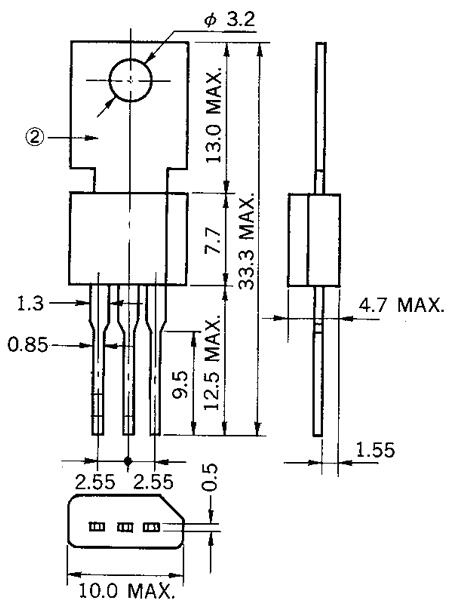
2P4M SCR Dimensions
2P4M SCR Manufacturer
As the leading provider of registry and information management services for public data and records, ISC is the partner of choice for governments and private-sector organizations seeking management of their information with confidence.
What is the current and voltage rating of SCR 2P4M?
The 2P4M to 2P6M is P-gate all diffused plastic molded type SCR granted average on-state current 2 Amps (Tc 77 with rated voltages up to 600 volts.
What is the use of 2P4M?
2P4M is used in applications where gate currents are limited, such as capacitive discharge ignitions, motor control in kitchen aids, and over-voltage protection in low power supplies. The device is also used in low voltage AC rectifier and RMS voltage controller applications.
How does SCR control motor speed?
SCR control is the most basic speed control available. Very simply, it places a single SCR in series with the DC motor's armature winding as shown in Figure 1A. This converts the AC into DC by simply blocking the negative half cycle of the AC sine wave.
 How STM32G070KBT6 Enhances Embedded Applications
24 July 2025214
 AVX TAJA106K016RNJ Datasheet Guide: Complete Tantalum Capacitor Specs
08 September 20251208
 AD8602 Amplifier Guide: Features, Applications & Benefits
03 July 2025303
 TPS63070RNMR Buck-Boost Converter, 2V-16V Wide input voltage
18 March 20222516
 TDA7492 Amplifier: Pinout, Datasheet, and Block Diagram
07 July 20217674
 ATtiny202 tinyAVR 0-series 20MHz Microcontroller: Datasheet, Pinout, and UPDI Programming Analysis
10 March 20261285
 SB330 Schottky Barrier Rectifier: Package, Pinout, and Datasheet
18 April 20221589
 PIC18F66K80 Family of Microcontrollers: Technical Overview
29 February 2024402
 What is a Variable Resistor?
10 June 202631684
 Analysis and Solutions of Common Causes of Serial Port Lost Data
15 August 20225184
 In-depth Analysis of the Global Semiconductor Supply Chain
20 January 202213379
 Introduction to Reluctance Motor
08 March 20216240
 Google Co-releases SayCan Model for Bots to Give Sensible Answers
30 August 20223849
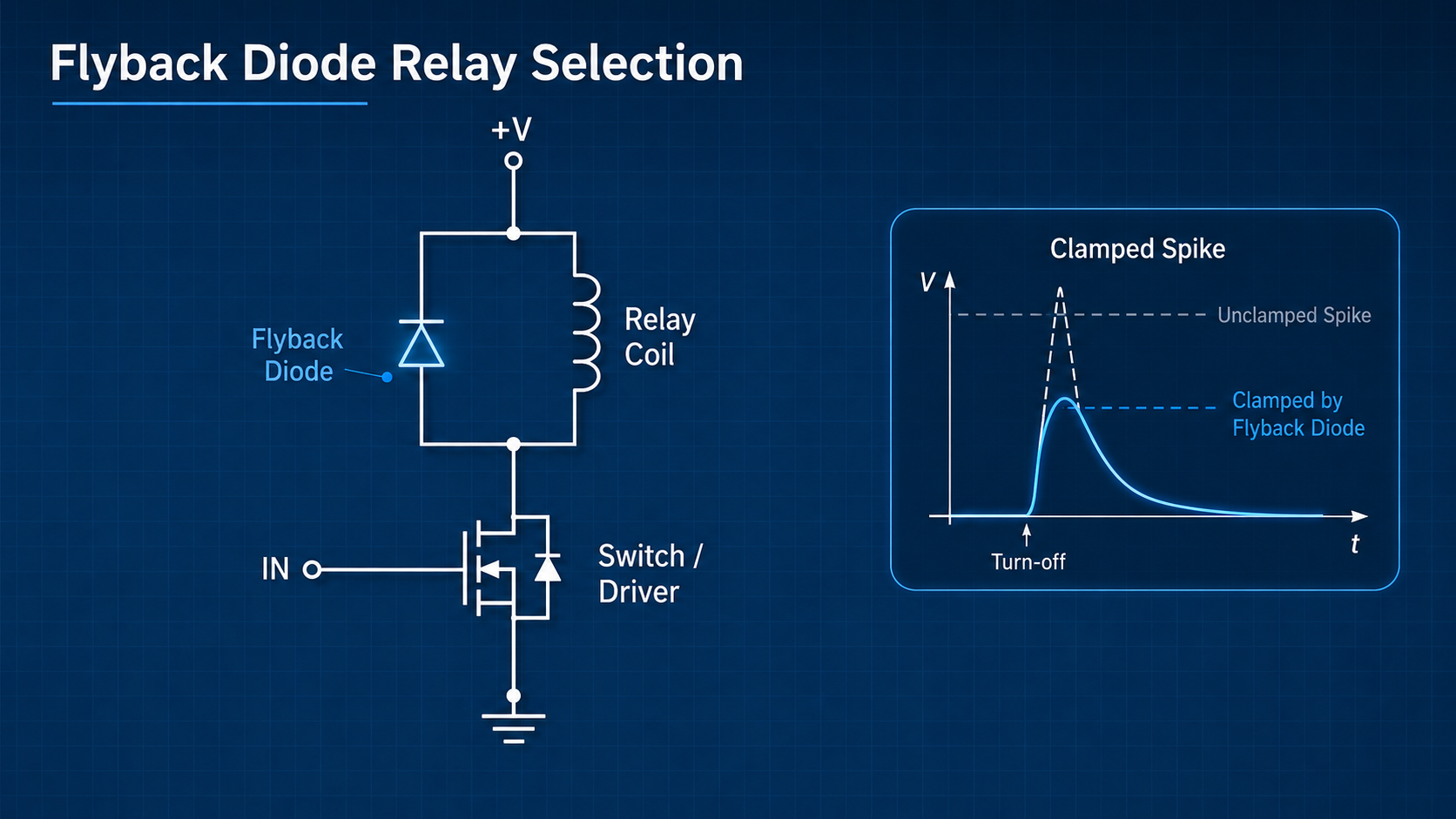 Flyback Diode Relay Selection: How to Choose the Right Diode for a Relay Coil
11 June 20261331
 Foxconn Announces Investment of $9 Billion to Build a Chip Factory in Saudi Arabia
15 March 20227282
 Enhancing Frequency Stability in Modern Distributed Power Systems
21 September 20244399
ISC
In Stock
United States
China
Canada
Japan
Russia
Germany
United Kingdom
Singapore
Italy
Hong Kong(China)
Taiwan(China)
France
Korea
Mexico
Netherlands
Malaysia
Austria
Spain
Switzerland
Poland
Thailand
Vietnam
India
United Arab Emirates
Afghanistan
Åland Islands
Albania
Algeria
American Samoa
Andorra
Angola
Anguilla
Antigua & Barbuda
Argentina
Armenia
Aruba
Australia
Azerbaijan
Bahamas
Bahrain
Bangladesh
Barbados
Belarus
Belgium
Belize
Benin
Bermuda
Bhutan
Bolivia
Bonaire, Sint Eustatius and Saba
Bosnia & Herzegovina
Botswana
Brazil
British Indian Ocean Territory
British Virgin Islands
Brunei
Bulgaria
Burkina Faso
Burundi
Cabo Verde
Cambodia
Cameroon
Cayman Islands
Central African Republic
Chad
Chile
Christmas Island
Cocos (Keeling) Islands
Colombia
Comoros
Congo
Congo (DRC)
Cook Islands
Costa Rica
Côte d’Ivoire
Croatia
Cuba
Curaçao
Cyprus
Czechia
Denmark
Djibouti
Dominica
Dominican Republic
Ecuador
Egypt
El Salvador
Equatorial Guinea
Eritrea
Estonia
Eswatini
Ethiopia
Falkland Islands
Faroe Islands
Fiji
Finland
French Guiana
French Polynesia
Gabon
Gambia
Georgia
Ghana
Gibraltar
Greece
Greenland
Grenada
Guadeloupe
Guam
Guatemala
Guernsey
Guinea
Guinea-Bissau
Guyana
Haiti
Honduras
Hungary
Iceland
Indonesia
Iran
Iraq
Ireland
Isle of Man
Israel
Jamaica
Jersey
Jordan
Kazakhstan
Kenya
Kiribati
Kosovo
Kuwait
Kyrgyzstan
Laos
Latvia
Lebanon
Lesotho
Liberia
Libya
Liechtenstein
Lithuania
Luxembourg
Macao(China)
Madagascar
Malawi
Maldives
Mali
Malta
Marshall Islands
Martinique
Mauritania
Mauritius
Mayotte
Micronesia
Moldova
Monaco
Mongolia
Montenegro
Montserrat
Morocco
Mozambique
Myanmar
Namibia
Nauru
Nepal
New Caledonia
New Zealand
Nicaragua
Niger
Nigeria
Niue
Norfolk Island
North Korea
North Macedonia
Northern Mariana Islands
Norway
Oman
Pakistan
Palau
Palestinian Authority
Panama
Papua New Guinea
Paraguay
Peru
Philippines
Pitcairn Islands
Portugal
Puerto Rico
Qatar
Réunion
Romania
Rwanda
Samoa
San Marino
São Tomé & Príncipe
Saudi Arabia
Senegal
Serbia
Seychelles
Sierra Leone
Sint Maarten
Slovakia
Slovenia
Solomon Islands
Somalia
South Africa
South Sudan
Sri Lanka
St Helena, Ascension, Tristan da Cunha
St. Barthélemy
St. Kitts & Nevis
St. Lucia
St. Martin
St. Pierre & Miquelon
St. Vincent & Grenadines
Sudan
Suriname
Svalbard & Jan Mayen
Sweden
Syria
Tajikistan
Tanzania
Timor-Leste
Togo
Tokelau
Tonga
Trinidad & Tobago
Tunisia
Turkey
Turkmenistan
Turks & Caicos Islands
Tuvalu
U.S. Outlying Islands
U.S. Virgin Islands
Uganda
Ukraine
Uruguay
Uzbekistan
Vanuatu
Vatican City
Venezuela
Wallis & Futuna
Yemen
Zambia
Zimbabwe